— — — —— — —
×
— —— —
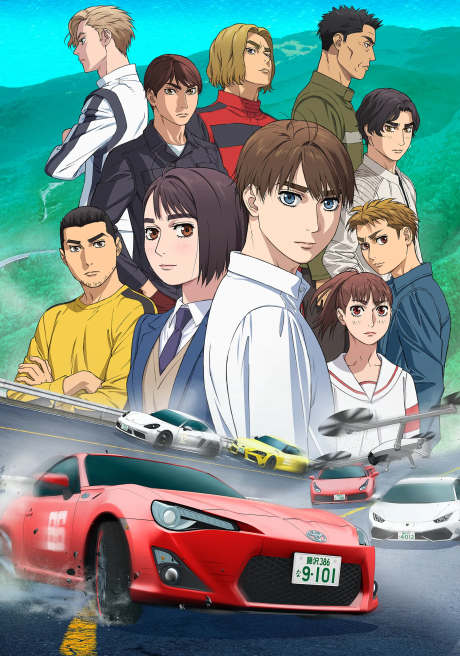
I haven’t written a review for an anime in quite some time, but how badly MF Ghost butchers the original spirit of the Initial D series has pushed me to vent my gripes with this trash heap. For context I got into Initial D quite late, around 2019. I had only just entered adulthood at the time, and the series pushed me into viewing cars as more than just transportation. I now own a Nissan 370z I love driving infinitely more than my shitbox base model Ford Fiesta that whipped me into a guardrail one winter. Fun times. That aside, Initial D had some ups and downs with its seasons, but I felt the low points never became a slog to sit through. The writing was just a bit silly and disjointed at times. Even the filler episodes focused on the main characters doing things that in some way related to the main attraction of the series: racing. Things like Takumi getting to know his opponent or stumbling through broken love developed tension for how it might affect his or his opponent’s ability in their next race. There was consistently a great balance between keeping the action going while developing characters as humans with their own lives.
That original charm and balance between “filler” and racing is completely absent in MF Ghost.
Initial D opens with a very simple premise and slowly introduces the main characters without much filler. Characters like Takumi and his friends come from humble backgrounds with the simple interest in cars and racing as a passion. The introduction of Takumi into street racing felt natural and seeing him begin to apply his knowledge in a competitive environment was captivating as a story element. However MF Ghost introduces every competitior in the story as a forced shotgun blast of information before any of the characters are introduced naturally, and therefore nobody could possibly care about who or what those characters do. It would be like if initial D introduced every significant racer for every togue road in Japan in episode 2 of the first season. Nobody is going to retain that information and nobody is going to develop a sense of suspense for when the main character faces the future opponents. During this shotgun blast of hollow information, the main character and the forced love interest is introduced. The writing is so bad that I find it hard to organize my thoughts into focusing on writing about one aspect at a time, because multiple aspects like this are being pushed along at the same time in the anime. The main character's background consists of being a rich kid from England who had rich parents who could put him into racing school, and is now introduced into formal racing in Japan, but apparently these rich parents aren’t rich enough to fund his actual professional racing in any capacity. It's a decent enough of a premise, but there's no effort put into developing a proper background and motivation for racing. For all we know, he's just doing it to do it, like a nine-to-five job. He has the plot armor-tier skillset of Takumi in Initial D, but the only way he could've possibly learned any of it can only be chalked down to "he went to racing school". You don't learn the high-end skills of a field by studying it. Takumi learned his skillset by hand spending years of his life from a young age doing deliveries to businesses through togue roads and challenging himself to be faster. It's an equally simple premise, but it develops the background of a character so much better and lets the viewer envision a sense of depth for what the main character does on a day-to-day basis. I don't know what the main character of MF Ghost was doing before racing school, I don't know anything about his upbringing, I don't know why he wants to participate in races, and his unusually developed skillset means nothing to me as a viewer. It is such unenthusiastic character writing that I’m dumbfounded how any of this could’ve been written by the author of Initial D himself. MF Ghost truly feels like nothing more than the cheapest copy of Initial D possible.
We are simultaneously shown the forced love interest. Initial D's love story aspects were fairly grounded in reality and successfully built tension, but more importantly, they were kept BRIEF. Nobody is watching Initial D or MF Ghost for a half-assed slice of life romance with no relation to the rest of the story. The main character doesn't even have an initial attraction to his forced love interest: the daughter of the family he is living under who also works as a model for the racing association. He literally could not be forced any further into being close to this girl unless he was stitched to her like a human centipede. This girl convinces the main character into going on dates with her, and these dates consist of nothing more than the two participating in stereotypical anime dating activities, like walking on a beach and visiting a shrine. They do not even have any conversation relevant to the story during these dates. They really are nothing more than forcing the two into a love story. These scenes feel longer and more frequent than the actual racing itself, which I will touch on next.
What do you envision in your head when you think of Initial D? Even if you haven’t watched a single episode of the series, you still think of the same thing as anyone who has watched every episode of the series: the classic Toyota AE-86 in its panda color scheme with the iconic logo across the side drifting around a tight corner while battling a flashier sports car at night. The darkness emphasizing the headlights and taillights while classic eurobeat almost drowns out the roaring engines and squealing tires. What do we get in MF Ghost? A few minutes every other episode of the main character driving down a straight or through a gentle bend on his own while his racing partner commentates over every simple movement he performs. There are currently four episodes available, and the last two minutes of this fourth episode have only just begun to show the main character in a proper race, and yet again, every movement is being commentated by others, and we do not get any real insight as to what’s going through his mind during the race like Initial D did with Takumi’s thoughts. All the while, the most generic and unenthusiastic eurobeat sometimes plays in the background, muted by the blaring pointless commentary and thrum of stock engines with muted exhaust notes. There are no street racing teams and flashy sports cars adorned with carbon fiber and logo stickers. There are only stock vehicles piloted by random individuals, many of which are luxury vehicles not known for their significance in street racing. Even the more iconic vehicles such as the R35 GT-R are straight from the factory, with muted exhaust notes and factory bodywork. It’s soulless, like the introductory races in racing games where you’re typically pitted against stock, slow vehicles driven by nobodies. It is not only an insult to the spirit of Initial D, but an insult to street racing enthusiast culture as a whole.
In terms of aesthetics, there’s not much going for MF Ghost either. The cars are fairly detailed and accurate to their real-world counterparts, which means nothing today, as manufacturers can often directly provide accurate 3D models for commercial usage. The sense of speed feels off somehow, and generally feels like there was no more attention put into the racing scenes compared to any other character dialogue scene. The first season of Initial D often gets clowned on for being very simplistic, but it at least had a charm to it. Despite the limitations of early 3D modeling, the sense of speed was captured perfectly, if not a bit emphasized if anything. More importantly, the courses being raced on were interesting, with tight bends and significant points of interest for competitors, such as the gutter run, the kansei drift technique, and the Irohazaka jump. These elements developed worldbuilding, and established varying degrees of skill and knowledge of routes. For those who could call these areas their home turf, these risky and flashy maneuvers could be performed flawlessly, while some were too risky and unknown even to Takumi at times. It’s these elements that are completely absent from MF Ghost – compounded with the issues of cheap writing – make for a completely hollow and soulless experience. Once again, we are four episodes in. Of these four episodes, there are only two “significant” areas that were driven. A straight where cars can often reach their top speed, and a bend right afterwards, where the main character did a bit of a drift, much to the amazement and incessant commentary of everyone watching.
So, what do I see going forward with MF Ghost? Despite my gripes with what I’ve seen so far, I’m starving for more of what made Initial D so special. I’m watching on 4x speed and only really focusing on when there’s actually a scene with a car on the road. It’s been established that there will never be a character worth paying attention to, so I’m hoping there will at least be a couple decent racing scenes on more significant togue roads. Would I recommend anyone else waste their time doing the same? Absolutely not. If you’re looking for more of what made Initial D special, I’d recommend watching Wangan Midnight instead. It focuses on high-speed Japanese highway racing of the same era. It falls off a bit on the later episodes, which has made it difficult me to finish watching it, but the earlier episodes have a very similar vibe and balance of the early Intial D episodes. But more importantly, THEY SPEND MORE THAN FIVE MINUTES EVERY FEW EPISODES ACTUALLY SHOWING RACING. Seriously, I get that these are the early episodes of MF Ghost, but if you showed me these episodes not establishing that the series is related to Initial D or supposed to be a racing anime, I’d truly believe this was more of a drama or slice of life anime from a really low budget studio that just churns out everything as fast as possible. Genuinely one of the worst stories I’ve had the displeasure of watching.
Furthermore, the travesty of MF Ghost has spurred me to recapture the fun I had in watching Initial D. I've started playing Tokyo Xtreme Racer Drift 2, which I would highly recommend for any Initial D fan. It is very clunky in terms of gameplay and UI design by modern standards, but it has a lot of soul to it. The handling of vehicles, in my opinion, sits somewhere between Forza Horizon and Assetto Corsa, with a degree of pure arcade-type handling for crashes and other types of impacts. Aside from that, also began to rewatch Initial D itself, which further cemented my belief that the writing of MF Ghost is an absolute insult to its legacy. Initial D opens in the first few seconds with the classic 86 drifting around togue roads with eurobeat blasting in the background. The episode flawlessly introduces the viewer to the life of Takumi, his romance, his friends, his family, and the world in terms of street racing. MF Ghost does all this, if you prompted it to write such an episode in Chat GPT in a generic anime style. What I noticed most of all is the romance storyline, where Takumi's love interest in Initial D is written to be a somewhat ditzy high school girl that can't really comprehend how the world works, and develops throughout the storyline. There is a backstory establishing why there is a relationship at all between Takumi and herself, which is hinted only enough to establish it in the first episode. This alone does so much more than anything in MF Ghost. All we get now, is a generic anime girl who immediately turns into a stereotype when she forces the main character into a date, during which nothing is progressed story-wise. Whereas in Initial D's first episode, during a date with Takumi and the love interest, Natsuki, there is a date focusing on her request for Takumi to go on a driving date with her, as he "just got his driving license", establishing the racing life and nonchalant attitude towards racing Takumi holds. Writing a direct synopsis of the scene perhaps does not do the quality of it much justice, but the point I'm trying to make is that Initial D has thought put into the writing of its story and character establishment, whereas MF Ghost does not attempt such whatsoever.
Is this review an excuse for a long-winded rant? Absolutely. Did you skip to the end here for a TL;DR? I don't blame you. Here it is: watch Initial D instead. Already watched it? Re-watch it, play a togue racing game from the era, or watch Wangan Midnight. All you'll get from MF Ghost is disappointment and further frustration at the state of modern car enthusiast and anime culture/industry.

This is less of a review and moreso just me collecting my thoughts on this anime since it's been constantly stuck in my mind since finishing it in one binge session. I will try to avoid spoilers.
Serial Experiments Lain is a relatively popular anime, making its debut in the summer of 1998. It's difficult to tell someone what this anime is about without giving away massive spoilers. I believe even the AL description itself is a spoiler, though only to a mild degree. The best description I've seen so far is off IMDB, and though you've undeniably already read AL's, I strongly urge you to focus on this instead:
Strange events begin to occur as a withdrawn girl named Lain becomes obsessed with interconnected virtual realm of "The Wired".
From both my own views and what experiences I've heard others have, Lain is a type of media, anime or otherwise, that feels like you neeed to put effort into sitting down and watching it someday, months after you discover it. Without sounding like I'm rushing you to dive into it, most people really over-exaggerate its complexity, making it seem like an incomprehensible schizo series. I understood most everything watching it in one sitting, and reading the Wikipedia article filled in the few gaps in any objective understanding I lacked. Objective being a very key word, as there is plenty of themes in Lain to consider in your own personal perspectives.
The story of Serial Experiments Lain is greatly underappreciated by so many different mediums and genres. Not only did Lain normalize and set a tone for future anime within the psychological horror and sci-fi genre, I have a strong reason to believe that this is one of the most influential pieces of cyberpunk media within recent history, and I am incredibly eager to see how much of its influence is visible within Cyberpunk 2077 when it comes out.
Serial Experiments Lain is as unique as any _story _can get. This is barring any influence from general concepts and influence from sourceless and unfounded common urban legends, particularly within modern Japanese culture. The story is written with such surgical precision, as it intends to pace and control your thoughts like a string puppet throughout your viewing duration. It clearly feels like the absolute number one rule for its writing is to avoid giving the viewer a god perspective. The viewer doesn't know anything more than a fly on the wall present in every shown location of every episode would know. There's various purposeful, small gaps in the story that are left for the viewer to fill in, and the mental stimulation from doing so is like filling that one final empty space in a 300 piece puzzle you did when you were six.
Lain definitely isn't a slice of life with a very mindless and relaxed pace (not that there's anything wrong with that genre, it's actually my favorite), it is a show that makes you actively watch rather than passively. It is filled with symbolism and questions of the future of the human society. Ergo Proxy came out 8 years afterwards, and feels strongly influenced off Lain. However, I didn't really enjoy Ergo Proxy. It felt like it was going out of its way to be confusing and overly symbolic at times. Lain is multiplication and simple equations as Ergo Proxy is to college-level calculus. I understand Lain, and while I have to put some effort into thinking about how the plot fits together, I don't have to necessarily go to the teacher or the Indian tutorials on YouTube for help answering half the questions (some explanations of Ergo Proxy are dozens, even hundreds of paragraphs long for a full explanation).
The themes Serial Experiments Lain explores and the questions it brings up alone nearly makes it a masterpiece outright. Though it came out 22 years ago and was undeniably in production for at least a few years prior, it was incredibly ahead of its time.
In short, a lot of what could be said about the story applies to the characters. The characters are unique, well-written, and heavily tied to the various themes throughout Serial Experiments Lain. Explaining the topic of characters within Lain any further, I believe, would delve into spoiler territory, so I'm going to ignore discussing the subject any further, leaving the rest for you to discover on your own.
The artstyle of Serial Experiments Lain ties perfectly into the themes, and arguably more importantly, successfully promotes exactly the overall mood the creator was shooting for. It is uniquely depressing, dreary, psychedelic, and horrific. Somewhere between a rainy day, an album of liminal spaces, and a cyberpunk version of Twin Peaks set in Kowloon. Does that make sense? Probably not, but there isn't any one word to explain this kind of style.
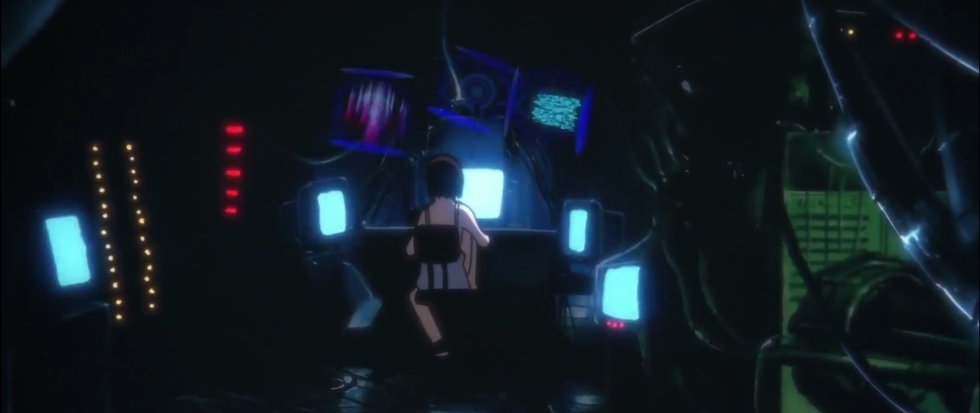

Aside from symbolism and whatnot, the general quality is very good. Ahead of its time, probably not enough so to be a benchmark for future works, but enough to be appreciated in its own right, even against modern anime.
Okay, I admit that the music may have been stuck in the forefront of my mind morseo than the actual story and symbolism. The opening theme is an absolute bop, and the music within the episodes themselves very well may be the best fitting music within any anime I've seen. Here's just a couple short samplers to explain with actual audio rather than my shit explanation:
To keep something brief out of this review, there's so much to Serial Experiments Lain I'd like to put into words, but can't due to a lack of words existing in the English vocabulary and my general lack of intelligence. It deserves so much more recognition for its incredible influence in so many different forms of media and genres. I don't give perfect 10/10 scores to things only if they're the best of something I've experienced, but rather if I don't have any complaints against that thing be it personal or objective. Serial Experiments Lain is both damn well nearing perfection, as well as being something I don't have any criticisms against. I do not feel like I've let it marinate in my mind long enough to call it an absolute masterpiece, but it's likely I'll give it the title in the near future.

To merely call Little Witch Academia a "Japanese Harry Potter", I believe, is a great disservice. While true, the settings are similar; a school teaching magic arts - that is where the similarities end. The Little Witch Academia TV series is a result of incredible dedication and talent from everyone involved. I love everything about the short film, movie, and series all together, but for this review, I must retain it only to the TV series.
Little Witch Academia (now on referred as LWA) has the charms of an absolutely banger original story, despite anything the creators may or may not have taken inspiration from, purposefully or otherwise. From the beginning of the first episode, I was entranced by a wondrous fantastical world, brimming with lore and everything beyond imagination. Every episode feels like its own unique chapter in a greater overall story, and they absolutely are. Now, granted, I've came across a patch of free time to allow me to do this, but LWA is the only anime I've felt compelled to binge-watch over the course of two days, despite me knowing it'd be much better to separate my watching into more sessions. The story and the characters were all just too gripping.
Artistically, the LWA TV series is above par, but for understandable budget and time restraints, the original LWA short film is still far superior. But this really isn't to trash the TV series' art. From the unique design of every individual character, to the very talented animation of complex scenery (not to forget all things silly as well), the LWA TV series is a modern, moving Mona Lisa.
The music should almost be included in the art category because of its quality. I believe in anime, quality of music cannot always be judged by the raw, upfront quality of the music, but also by how well it suits any given scene, and how often that music is recycled. LWA's music feels like a suit custom-made by some fancy yuppie tailor in 1980 Paris who charges more than you make in a year for one suit. There are some cases of recycled tracks, but not nearly as many as most anime, and it's only briefly used, so the overall charm of the music is never lost.
On the category of characters; this is a tricky one. The topic of character writing in regards to LWA is something I feel is deserving of an in-depth analysis many pages long written by someone far more talented than I. Though I'll try to put my emotion and beliefs into words the best I can here.
Overall, I must say, the character writing is LWA's strongest feature. As mentioned previously, every character feels unique in their own ways, from their appearance, down to their emotions, actions, and motivations.
Kagari Atsuko, the main character, is written in such a way to be relatable to many viewers, specifically younger adults and teenagers who might find themselves lost in the modern society that constantly tells them what to do, resulting in an individual unable to pursue their true passion for a fear of failure or embarrassment. The role of Atsuko is to assure those viewers that anything they desire is possible as long as you truly want something. Sometimes you fall down, sometimes you fall down a hundred times, perhaps you even feel like you ONLY fall down, but as long as you keep picking yourself up, you still have a chance to make your dreams a reality.
With the gushy gushy aside, the character writing in LWA does have its downfalls (mostly due to time/budget restraints, which are understandable for such an expansive story, even a well-funded one). Particularly with introduced characters who don't get much of a spotlight, even though they clearly had effort into their development at one point. Specifically with Frank and Jasminka. I do not wish to spoil anything for anyone who hasn't watched the show yet, but for those who have, I urge you to consider how much screentime they got and what that screentime was for.
Overall, Little Witch Academia was an emotional roller coaster that never slowed down at any one point, and genuinely touched me passionately. From the lessons we can learn from some of the characters, to the immense amount of dedication put behind the creation of this story - short film, movie, and all - there are a lot of good lessons even older adults can still learn from Little Witch Academia. I give a heartfelt thank you to everyone who contributed to the inception of such a gem.

Simply put; if you like slice of life anime, you'll love this. Non Non Biyori is a wholesome and beautifully crafted anime, giving viewers a taste of what it's like living outside of the depressing concrete jungles that are cities.
The first thing you'll notice with this show is the art. This is seriously some of the best, most beautiful and realistic scenery you'll find in anime. With cozy rice farming villages, majestic mountains, and lush forests, if this show somehow fails to entertain you in any other way, everyone should be able to appreciate how gorgeous the scenery is in this anime.
Non Non Biyori is particularly immersive for the slice of life genre. While there are very few cliche anime design choices, like Renge's purple magician hair, the rest of the world feels very tame and realistic. Even though very few, if any, viewers have had a childhood anywhere remotely similar to that of the characters in Non Non Biyori, this anime does not fail to make you homesick for a childhood that you never had.
Next is something I'm particularly picky about; the characters. Characters are what makes a show, anime or not, worth watching. As slice of life does not particularly rely on story elements, character design carries the full weight of a show. In the case of Non Non Biyori, it does not disappoint. Every character feels distinct, alive, and memorable. The synergy and conversation every character has with each other is simply fantastic. As this takes place in a relatively small, remote farming village, the relationships adults of different families and children of these families have with each other feels strong and believable.
Music is something I personally struggle to pay attention to in anime, but when I notice it, boy oh boy do I notice it. Non Non Biyori's music choice between the openings, endings, and all the music in the episodes themselves is beautiful and perfectly fitting. You can see this for yourself as soon as the first episode begins. This show somehow managed to perfectly immerse the viewer in a relaxing childhood set in a countryside village right off the bat.
It's honestly difficult to find anything wrong with this anime, and I simply can't think of anything myself. If you like the genre, you'll love this show. If you don't like the genre, you probably won't like this show. Simple as that.
A little note: This first season and the movie are the two high points of the series. The second season (repeat) felt a little lacking compared to the first, but was still pretty good, maintaining a lot of what makes Non Non Biyori special. The two OVAs were honestly lacking and I didn't enjoy them much, though it's been a while since I watched them as of adding this note. I am still eagerly waiting for the third season to release after its announcement with high hopes.
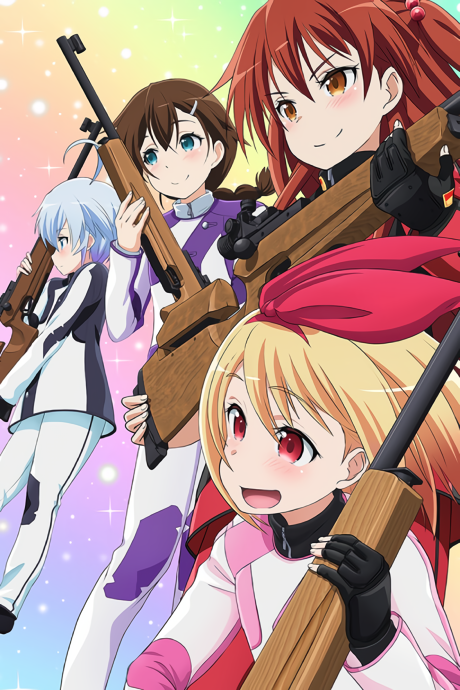
As someone who loves all things firearms, I did not enjoy Chidori RSC enough to continue watching it.
The story is quite unoriginal and feels like a direct copy of many anime from the 2000s onward. Everyone's description of the anime is also pretty misleading, since firearms are nowhere to be found within the anime. Chidori RSC is about Olympic-style competitive beam rifle shooting, something closer to laser tag against paper targets than actual target shooting with real gunpowder and lead. A minor difference to some, but as someone who has a raging hard-on for firearms, I was very disappointed by this.
The characters are bland and unoriginal, from their writing to their design. I couldn't even distinguish everyone's personality and appearance from one another if you paid me to. Everyone's design is based around stereotypical flashy neon color schemes and overused anime character tropes with the depth of a kiddie pool. Altogether, this makes for a great recipe if you're aiming to release an anime that feels like unflavored nutrient paste.
The background visuals and audio design are just as bland as the character design, and I struggle to find many words to describe it with. The animation is typical "we want to make a full-fledged 20-something minute 12-episode anime but don't know how successful it will be so we'll just make do with a tight budget" sort of animation, with corners clearly being cut and nothing flashy added to garnish the final product. Audio is... I don't even remember. It's hard to have downright bad music in anime, but it's oh so common to use bland, lackluster music that would fail to impress even someone who has been deaf since birth trying on some new miracle hearing aids. Compared to the highly realistic orchestral recordings of Hibike! Euphonium or Girls' Last Tour's exotic selection of original and remixed tracks that amazingly suit scenes like fresh gravy on warm biscuits, This anime simply fails to impress me in any way.
An anime about realistic, casual shooting might be niche, but is highly desired by that niche. There's so much untapped potential a few studios have already tried to crack open, but they all ultimately failed miserably. In my opinion, Upotte! of all things is still the only anime that has successfully catered to borderline (or fully) autistic gun nuts like myself, if only because they got most of the dynamics of realistic firearms right. I really hate to give a low rating to a debut of pseudo-firearms into the normie market and discourage the viewing of such a subject, but Chidori RSC really just isn't that good of an anime, be it for someone who simply wants to watch an anime, or for anyone interested in it for its supposed "shooting" aspects.

For some reason, I have very good luck discovering gems like this through screencapped memes. I'm surprised I've never heard of this anime until very recently.
Joshiraku is the pinnacle of anime comedy. I wouldn't be surprised if non-anime fans could find this show very enjoyable as well. Throughout every episode, comedic momentum is maintained quite well. There are no dull moments, and the contents of the show don't pander to any particular viewerbase. Instead, Joshiraku is overflowing past the brim with destruction of the fourth wall, and pokes fun at many stereotypical anime cliches spanning every genre. Joshiraku somehow manages to be something incredibly unique to the anime scene, while not doing anything much more complex than making fun of every other genre.
The one and only negative thing I can say about the show is that many jokes rely on the intricacies of kanji, and only native Japanese speakers or someone very fluent in the language would understand them. Just beginning to study the language, I can understand the gist of some of these jokes, but definitely not enough to fully appreciate them. But again, while there are many occurrences of these jokes, the majority of the comedy would be appreciated by anyone, Japanese speaking or not.
Digging deeper, the story is nonexistent. Period. This isn't a bad thing; Joshiraku doesn't need to rely on a story to be interesting. There's not much else to say about this.
The art is clean, smooth, and palatable for a lack of a better word. There's no girls with neon pink hair and breasts the size of pumpkins to deter normies or attract hentai fans. Backdrops are well-made and cozy as well.
The music is simply fantastic. I can confidently say this is the only anime I've never skipped an OP/ED on. They're catchy as hell, absolute bangers. 10/10
The characters feel unique and have good synergy with each other. Obviously they need to have the most effort put into making them out of anything else in the anime, as it's a comedy that does not rely on any story whatsoever. In short, the writers did good.
Overall, this was an extremely enjoyable anime. Would love a second season, but as it is said in the ending, all things inevitably end, and media such as shows or anime are often better ended sooner than later.
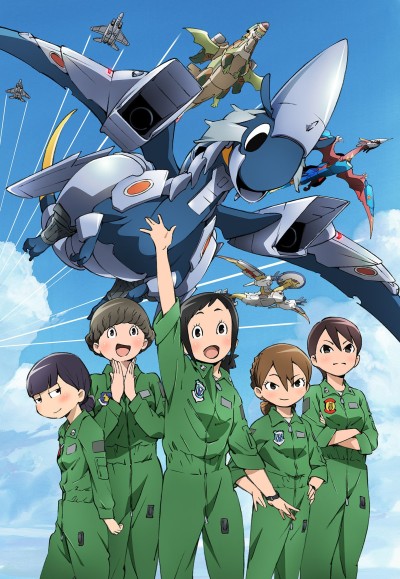
LIGHT SPOILERS (MARKED) AT THE END OF THIS REVIEW, DOES NOT SAY ANYTHING DIRECTLY ABOUT PLOT OR STORY.
I never saw myself saying this in a million years prior to watching Dragon Pilot, but this anime truly is the most tasteful vore in the industry.
What many see as an average or even below average anime, I see something fantastic. I've rated all categories a perfect 10 deliberately. Dragon Pilot is high up on my list of favorite anime, and has only been even more enjoyable watching it a second time. So many things are done right in this show, and my review certainly can't do it all justice.
The hook of the story is simple; a girl with no aspirations in life finds a meaning in life through becoming a dragon pilot. Dragon Pilot turns this relatively simple yet versatile prompt into 12 substantial episodes, without a single episode being considerably less enjoyable than the others. It's hard to say much about the story without spoiling anything, as most of it is developed in the second half of the anime, so I'll just leave it at saying it's definitely worth getting invested in.
The art is great. I'm no artist, so I really don't know what exactly makes good art good, but Dragon Pilot has a unique and memorable art style that doesn't feel like the creators sacrificed clarity simple for the sake of being different. One thing that particularly stood out to me in Dragon Pilot is the animation. Body animations and facial expressions are noticeably more expressive and realistic than many other anime, and it adds so much substance to the overall final product. And if you care about it, the aircraft look accurate, unless you're some kind of aeromorph lover who never got into trains as a kid instead. I'm sure someone like that could find flaws there.
The sound, more specifically, the sound track, is great. There are some repeat songs, but they still fit perfectly into the scenes they're used in, so I won't deduct any points from this category of the review. The music is memorable, adds so much emotion to scenes, and is good music even if you listened to it outside of the anime.
And finally, the characters. This is a character-centric show, and the creators pulled this off perfectly. Even characters only shown in a handful of scenes feel like they have a deeply developed character that fits well into the story and can have good synergy with other, more prominent characters. I think what makes the characters so perfectly in Dragon Pilot is ironically their imperfections. The characters aren't some invincible stereotypical anime protagonists who defeat all evil without ever breaking a sweat and can overcome any hurdle within the span of half an episode, rather everyone is unique and realistic, with believable strengths, clear goals, and unique yet realistic weaknesses. Altogether, these personalities create a diverse and interesting ecosystem of JASDF members on an airbase.
Overall, Dragon Pilot was a surprise gem for me, and I couldn't be happier that I chose to watch it. I've just finished my first rewatch, and I can see myself rewatching many more times in the future. It fulfills my need for an anime with a perfect blend of seriousness and lighthearted comedy. Media of any kind rarely captures somewhat realistic military slice-of-life well, so seeing it done well in an anime is quite satisfying.
--------------------LIGHT SPOILERS--------------------
Dragon Pilot carries a prominent message. It's not the forefront of the show, but it definitely feels like the creators wanted to say something through the medium of anime. Dragon Pilot encourages one not to blindly follow tradition or authority figures, especially if something or someone is at risk of being lost or harmed, particularly for an unknown "greater good". I don't wish to directly spoil anything from this absolute masterpiece of a show, so I'll just leave it at that. It's just something I found particularly interesting while watching that was made more clear when I rewatched.

EDIT:
A bit over a month later and I've decided to rewatch this movie as I'm on a bit of a Kyo Ani binge right now, and I'm enjoying it a lot! I've certainly found a new appreciation for the studio and their work, and I felt like this review was deserving of a little bit of a touch-up. I will not edit the original review itself as I believe it's worth keeping as-is to represent what someone less familiar with Kyoto Animation's works would see this as. Here's some things I've changed my mind on:
Was initially very uninterested in this, as the concept didn't really hook me in. Had an evening to kill relaxing and decided to give it a watch, as it seems to have plenty of praise. Such an emotional roller coaster. Didn't make me cry, but definitely got me feeling and moistened the eyes.
I haven't read the manga, but Koe no Katachi definitely seems like something that would shine best in the manga format. As a movie, it's not half bad, and it's about the best it could be in a non-manga format. The movie format maintains very solid momentum that would be lost as an anime series at the sacrifice of fleshing out side characters and amount of content. However, nothing about Koe no Katachi as a movie is particularly "bad". Someone who's read the manga would know more about this comparison than I.
The story is unique and very well written, certainly a tearjerker from start to finish, whether from sadness or happiness. Movies, anime or otherwise, tend to leave me bored at times, but Koe no Katachi was a refreshing outlier. I can't commend everyone involved in making this movie enough for simply maintaining momentum and keeping me interested for a solid two hours. The storyline is also very coherent, no forced twists or time jumps that would simply leave viewers confused. It feels like every film does this nowadays, so it was very refreshing to just have a normal, well-written timeline.
The characters of Koe no Katachi feel realistic and lively. Almost everyone has traits that reminded me of either myself or people I know. Most everyone who's old enough to have gone through high school will find at least a few characters very relatable. This is probably the most hard-hitting emotional aspect of the movie, and it's executed very well. Could easily get me crying if it caught me int he right mindset.
There is some controversy regarding the story's focus on a disabled character, but the people who view this as controversial are the same people who want to see more disabled/minority characters in media for equality's sake. Personally, I believe the disabled character in Koe no Katachi is certainly not representative of all deaf people, and you'd be foolish to believe otherwise. This is a fictional character in a piece of media ultimately meant to entertain viewers. Of course there's a life lesson to be learned about treating people with kindness and overcoming your past mistakes through bettering yourself, but media like anime or movies don't become popular if they aren't enjoyable. Writers shouldn't limit their potential on what a handful of people would consider offensive.
That said, here are some things that are better suited as a bullet-point list than single sentence paragraphs:
Overall, I liked it. It's not the best thing since sliced bread and it didn't change my life, but it's the first movie I've enjoyed for reasons other than realistic and high-adrenaline action in a long time. Its quality is a bit over-exaggerated as is most everything on the internet, but Koe no Katachi certainly isn't bad.

I had to rate Violet Evergarden a perfect 11 in every category. This is truly one of the best stories of our time, not just in the anime genre. Violet Evergarden succeeds in keeping viewers interested and enthusiastic about the show, and can crack the emotions of even the hardest of men.
Violet Evergarden is something every drama aspires to be, anime or otherwise. The story is intriguing from the first scene to the last, and the focus does not stagnate on just a few characters, nor does it attempt to be a matter of quantity over quality. Characters seen more than once are thouroughly fleshed out and unique, and characters unseen outside of a single episode still feel like real people with a genuine purpose. The tone of the show is brutally realistic and blunt. Even in the most beautiful of worlds, not everything is always going to be happy any perfect. Wars will rage, people will die, and not everything will go the way we want it to. The only thing anyone can do is learn to live with it, and make the best of our unpredictably short lives on this bitch of a planet. It's what makes us human, and a girl's journey towards learning this message is the focus of Violet Evergarden.
The art, in my opinion, is one of Kyoto Animation's best works. The landscapes are simply gorgeous, the cities fit perfectly into the fantastical theme the writers attempt (and succeed) to establish, and the style/animation of the characters themselves is painstakingly detailed. Things like fabric and hair swaying in the wind obviously have had monumental amounts of effort put into giving the viewers the best quality possible, barring any budget and time constraints, which clearly have not detrimented any detail of the show.
Music is something that prevents many otherwise fantastic anime from getting perfect scores. Many studios are simply content with "good enough", or just don't even put any effort towards finding music that truly emphasizes the emotion meant to be portrayed in a given scene in the first place. The creators behind Violet Evergarden obviously put in good effort towards making sure the music they put into their product would truly compliment and emphasize every scene. The opening and ending theme are fitting of the anime overall and are beautiful all on their own.
Relying on characters to directly pull the weight of a story is something many creators will do in a world where the most profit now generally lies within quick-to-produce content that has no soul. Violet Evergarden manages to create both an immersive world full of depth, as well as unique characters that display a wide variety of emotions with their own meaningful goals and desires. Many of these characters have had struggles in their lives, which compliment the struggle our main character, Violet Evergarden, faces within the show. The balance between focusing on the main character, writing meaningful side characters, and creating an immersive, breathing world is something everyone involved in the making of Violet Evergarden perfected with this anime.
Overall, I consider myself very picky about the quality of media I watch, be it anime or otherwise. I personally can not find any issues with Violet Evergarden that would detract any amount of enjoyment and appreciation I have for this modern masterpiece. I've only ever cried ONCE from an anime, though I've gotten teary eyed from a couple more. Violet Evergarden managed to make me cry a handful of times on GOOD days, and made me teary eyed more times than I could count. This is such a touching and heartfelt piece of absolute art that everyone should watch. I look forward to any and all specials, movies, or other content planned for the future of this series, and I can see myself rewatching this many times in the future with just as much, if not more enjoyment and emotion than I did watching this for the first time.
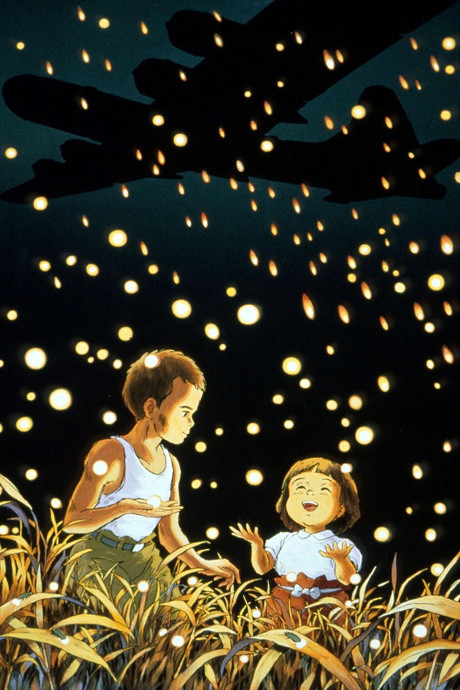
Spoilers. There is no way to properly review this movie without spoilers. That being said, I would urge anyone considering watching Grave of the Fireflies to avoid doing so. Here's why:
This film is a perfect example of why reviews and recommendations are not the word of god and can often be wrong. With an 8.5/10 (as of writing this review) on both IMDB and MAL, you'd think this is something special, right? I first heard of this movie when a US veteran I know mentioned it as a "must see". Though he's a cool guy and I like him, it should be known that his service consisted of a few years stationed at some camp in a Louisiana swamp, and he did not see any combat.
First, let me say what this film does alright/good. The story is a solid concept that could be molded into something much better than this turned out to be. The art is great, especially considering its age. Sadly, the artists put much more effort into this film than the writers.
Here's where Grave of the Fireflies turns sour.
Most of the film represents a young teenager in war-torn Japan during WWII "struggling" to keep him and his younger sister alive. The sister is a generic, energetic yet powerless and unstable child. Fairly realistic, but nothing interesting for a film. The brother, on the other hand, unrealistically matches his sister's infancy. He doesn't just play hide and seek every now and then to keep her entertained, he ONLY plays with his sister. As cities burn around him and the rest of his family is dying to support themselves, each other, or their country. This absolute bullshit and backwards-ass thinking kills himself and his sister, as they run out of food, money, and their health deteriorates. At no point did this perfectly capable and at one point healthy young man consider getting a job to afford food for himself and his sister.
Early in the movie, their aunt and some other family provide the main characters a roof over their head, as their home town is reduced to ashes and both of their parents are dead as a doornail. Understandably they're currently struggling and family is there to help, right? They even get fed for some time, though the amount they get is slowly reduced as the aunt realizes this kid has absolutely ZERO aspirations to exert any effort. Obviously this teen with nothing in his name gives nothing in return. They don't even do so much as sweep the floors. Instead of realizing how big of a leech they're being on their family, they take their aunt's scolding as a personal insult to their dignity, and run away to live in a cave. They have some money (which they only got because they leeched it out of their dead mother's bank account), and buy small amounts of food from a farmer. This farmer, the only person with half a brain cell in the entire film, tells the brother to swallow his pride and apologize to his aunt, so he can have a roof over his head while he looks for a job. What does the brother do? Ignores this wisdom as if he didn't even know what words the farmer was uttering.
The rest of the film is pretty repetitive. "Oh no brother I'm starving!", "Sorry sis, let's play!", "Oh shit she's starving pretty bad, I should steal food.", "Brother I'm still starving I'm gonna die oh no"
It feels pointlessly depressing. Have you ever had a writing project in middle school or high school where you want to write something that sounds really cool but you also don't want to put in any effort and it's much more than what the assignment asks for anyways? Grave of the Fireflies feels like one of those projects. It's obvious the writers wanted to portray some kind of message, but there's no message to be found in the movie, besides don't be a lazy piece of shit and resort to thievery from honest, hardworking and struggling citizens because the thought of honest work never crossed your mind. Clearly that wasn't the intended message though.
As for why I don't recommend watching this in the first place, like I said; it's pointlessly depressing. It's not a cinematic masterpiece, it's not going to make you cry, it's just going to make you frustrated and angry that people who mindlessly watched this film never paying attention to a single word of dialogue or story rated this a perfect 10/10 and told you to watch it because it's "so deep and sad dude!" and a "unique take on war!"

I can wholeheartedly say that K-on! is my favorite show of all time, anime or otherwise. If I could only watch one show for the rest of my life, this would be the one. K-on! truly allows viewers to get to know all of the wonderful characters in this series as friends, and you end up feeling like you're growing up and going through high school with all of them. As creepy as that sounds, it's really not creepy, it's just the only way I know how to word it. It's honestly just heart touching and really wholesome.
There's really no story as is the case with most slice of life anime, and it's not a bad thing. There's a general foundation for why everyone is in the show and what they do, but after that, the show solely relies on characters to entertain the viewer. Looking back at it now, K-on! was one of the first slice of life anime I watched, and I think it's what really got me into the genre. Not all slice of life is great, but every episode of K-on! manages to be the genre perfected. If you haven't completely turned away from the genre yet and are interested to see the best of what it has to offer, look no further.
The artstyle of K-on! became somewhat of a standard for its time. Many other shows tried to mimic the style and get on the bandwagon of its popularity. It's really quite a nice style that manages to be distinct, stylish, and cozy. I'm no artist so I can't tell you exactly what's responsible for this, but the overall quality is just really nice to me. The animation itself is fantastic as well, and all the characters manage to be very expressive and alive. K-on! doesn't try to be artsy or anything, it's just good quality. And for that, it's a favorite of mine.
Sound is obviously going to be very important for an anime about a tight-knit band, and honestly, the music isn't really to my taste, but I still love every bit of it. The story leading up to the performance of the songs in-show make them so much more enjoyable, and a couple of them get the tears rolling just after hearing the first few beats. Aside from the actual performed songs, the background music is nice, but is repeated often. Even with the repetition, the music fits so well with the characters and their hijinks.
As I mentioned when going over the story aspects, characters are what fuel the slice of life genre. There's not a single dislikable character in K-on! Everyone is just so wholesome and cute, it really makes you wish real life would be this perfect. However, each episode strives to immerse you in such a world for twenty minutes or so. There's some minor character progression from a couple characters, but at the end of the day, slice of life is meant to portray everyday life of a character or group of characters. There's epic fantasy tales where heroes and villains do complete 180s and I'm sure some of them do this well, but slice of life just wouldn't be slice of life if it did that. The synergy between any two or more given characters really is flawless and great fun to watch.
I first watched K-on! earlier this year (late to the party, I know), and just finished rewatching it. I can very easily see myself rewatching this series every few months from now on. None of the enjoyment or emotional impact is lost through the second time around. That's a sign of a good show if I've ever seen one.
IMPORTANT: If you're going to watch the show, PLEASE do yourself a favor and watch Keikaku! and the movie before watching episode 24 in the second season. The storyline will make much more sense and I honestly don't know why this isn't more common knowledge :(
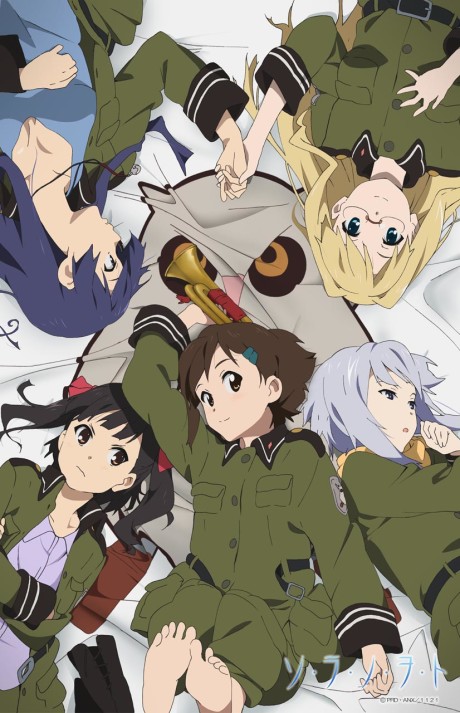
A fantastic story that could've greatly benefited from a slower pace spread between two or three seasons (I'll dig into the pacing later). Sound of the Sky is a military slice of life at its core, and had very little to do with music aside from one character who only focuses on the musical aspect of this show in a handful of scenes spread thin and widely across twelve episodes. Many people seem to relate Sound of the Sky to K-On! and while some of the character dynamics are similar, I think some of these recommendations are simply because both anime are tagged under "music". It even got me confused writing this review originally. Editing this review in hindsight, I would recommend a viewer of either anime to watch the other.
The story of Sound of the Sky is the spotlight. Slice of life as a genre generally relies on character interaction to keep the viewer watching, but Sound of the Sky generally trickle-feeds you the tale of an in-depth story and a lively world through the lives of a group of soldier girls stationed in a quiet town at the edge of the world. The world of Sound of the Sky is incredibly unique and intriguing, offering a great platform for interesting lore and life-like enjoyable characters. "A world on the brink of a mass-extinction apocalypse, engulfed in war" is something I rarely see in media, new or old. People have been fighting a civil war fueled by the petty squabbles of politicians and generals for decades, and everyone has lost friends, family, and their homes. Nobody wants to fight, but they are forced to. The viewer learns how the average peoples of this world view such a war through the lives of the main characters and their interactions with the people they meet. It's really an incredibly intriguing story that portrays war in a very realistic and human manner.
All that said about the story, it does suffer from a major flaw; it's simply too complex and overflowing with lore that 12 episodes simply don't do it the justice it deserves. The majority of lore, both the world and its characters, is revealed in the last two episodes. The majority of that majority is in the last episode alone. Sound of the Sky would've been an absolute masterpiece if the creators were given the span of two to three seasons, or two seasons and a movie to work with. It's probably an issue more with the funding rather than any creative decisions, though.
The art is just as unique and memorable as the story. It consistently gave me slavic-Witcher-3 vibes, though the main setting of Sound of the Sky is geographically based off a town called Cuenca in Spain, and it was seems to be as lovingly recreated as some of the scenery in Initial D (if you don't know how much that is, a lot of the scenery appears to be traced from real photography). Any shot of the atmosphere in this show could be framed and make a great piece of art to hang on your walls. It's unique, yet believable to be on Earth and immersive. The world is gorgeous, yet gritty and scarred from decades of meaningless and brutal war. Though it could be said that the scarring can make it even more beautiful in a dark way.
Music really is only a loose focus of Sound of the Sky. It's just one character's infatuation, and the creators use it as a message for the overall story that I will not spoil. The actual soundtrack of Sound of the Sky is very nice and fits the setting perfectly, though. Catchy OP/ED as well.
I see some people criticize the characters of Sound of the Sky for being boring or stereotypical, and I feel they completely miss the point of the show. This isn't some epic gundam battle anime where the main characters are all incredible supersoldiers. The characters of Sound of the Sky are just average citizens wrapped up in a civil war they never wanted to fight, and I think that makes them all the more interesting. Sadly, the characters suffer just as much as the story from the lack of time and freedom of pacing the creators were given to work with. I still think everyone involved did a fantastic job doing the best they could with what they had. Sound of the Sky mostly a slice of life show, and it succeeds in being that. You move with the emotions of the characters and you grow to become attached to them.
Overall, I really enjoyed Sound of the Sky for what it offered. This could've been a perfect 10/10 and become a solid favorite of mine if the pacing wasn't such a hackjob. Military slice of life is my favorite niche genre of anime, and I enjoyed Sound of the Sky as a slice of life, while being pleasantly surprised by its intriguing and unique world lore. I'd give this a very strong 8.5/10 to a weak 9/10.
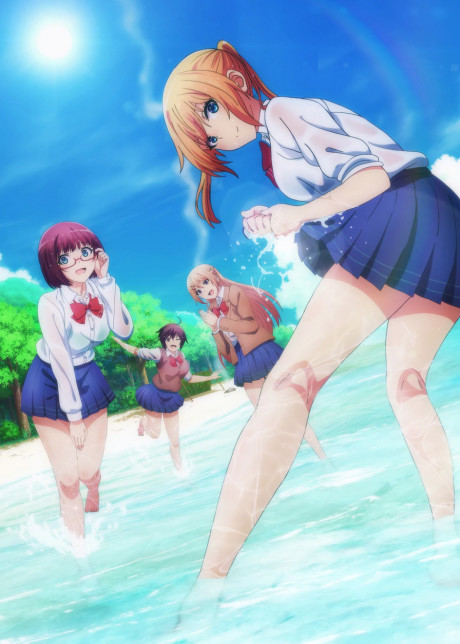
Sounan Desu ka? takes the very unoriginal general concept of "what if you got stranded on a deserted island?" and applies it to the anime industry, where it's actually something somewhat original (if there's more survival anime that came out before this, let me know and I'll eat my hat). However, as original of a concept as it may be, it still falls short as an anime series.
The story is the only decent category, followed by the music. It's not something every anime does, and I have to give it some credit for that. It's a concept that's been done worse by others, but it's also been done far, far better. Adding school girls to the mix will only get you so far.
The art is lackluster and even bad at some points. Maybe I've been spoiled by KyoAni and other big-budget studios, but a lot of animation feels lifeless, robotic, and choppy. Character designs are about as bland as unflavored gelatin and the background scenery isn't anything to write home about.
As I said previously, the music is alright. It's more memorable than most anime, but not anything I'd go out of my way to listen to outside the anime.
The characters are stupid and fall victim to almost every stereotype in anime. There was a moment about six episodes in where it felt like one character was about to have some character development, and then there was nothing to follow through afterwards. There's really not much to see here besides "girls are the cutest when they're almost retarded".
Overall, Sounan Desu ka? was just barely on the border between being bad enough to drop, and decent enough to keep watching. The first couple of episodes really made me want to drop it, but I decided to keep watching and was not really rewarded for my time. The first one or two episodes are a very good indicator as to if you'll like the rest of this.
MINOR SPOILERS, THE STORY IS NONEXISTENT ANYWAYS, I DON'T KNOW WHY YOU'D REALLY CARE ABOUT SPOILERS
There really is no ending. Two girls spit bird poop water into each other's asses and then there's a ten second very ambiguous clip that solves nothing and gives no solid ending. You are not missing anything by dropping this show if you do not enjoy it at any point.

Another spectacular slice of life comedy from Doga Kobo. This anime feels like a twin sibling to Kobayashi's Dragon Maid, but one of the siblings is emo and just different enough to be considered a separate personality.
As much as I'm a sucker for comfy slice of life anime with cute girls, I find it increasingly difficult to review them in a way that doesn't make them sound bland as ever. I really do like the genre as a way to wind down and relax at the end of the day, maybe get a few smiles before going to bed, but I understand why some people may consider it boring. It's not something I particularly find myself watching in the middle of the day when I'm bored. There's rarely any story and it can be very mindless entertainment at times. All that said, I'll still attempt to review this gem sprouted from the moe slice of life mines.
Slice of life, as I stated, rarely has a story. It's easier to re-class story in slice of life reviews more as a premise. The premise of Gabriel Dropout is unique, and not overly fantasized, something I don't really care for in anime, especially when it's been done to death since anime was ever a thing. The setting allows for many laughs to consistently be had in every episode, so Gabriel Dropout succeeds in being comedic. Between the unique dynamics of character interactions and the tongue-in-cheek fanservice that just gets comedically strange at times, there's never a stale moment in this anime.
I'm a fan of Doga Kobo's style. It's clean, the animations are lively, and the setting/background art isn't half bad. It's obviously no Kyoto Animation Koe no Katachi tier of artwork, but it's definitely above average when compared to many anime of the same era. Doga Kobo was not responsible for this, but the character design is very nice as well. Distinct family traits and unique appearances with minimal reliance on stereotypical neon pink anime girl hair designs and whatnot.
Sound isn't terribly important for comedy, but I'm giving Gabriel Dropout a good rating for a nice OP/ED.
Aside from the physical artistic design of the characters, they're written uniquely and lively. Every character is extremely distinct from one another, even within their own families. Obviously they rarely act realistic and human-like, as this is a comedic anime. Plenty of wacky shit happens that just makes this a fantastic comedy. As I mentioned earlier, the synergy between any given character really works well and makes every character likable in their own ways.
Overall, this was one of the anime I reserved for watching before bed to just relax at the end of the day and have a few laughs. There's not a whole lot to say about Gabriel Dropout besides it being funny and having a relatively good production value. I might even look into reading the manga, as I could see myself craving more of these hilarious characters in the near future. I'm not really a manga person, but this was definitely an enjoyable watch that caught my interest and kept me interested through every episode. A good watch if you enjoy comedy or slice of life.

The second season of Hibike! Euphonium, in my opinion, is better than the first. This season feels like a more refined and concentrated version of what Hibike! Euphonium is, and that improvement alone turns a good anime into a great anime.
The story isn't any different on paper. The Kitauji high school orchestra continues working hard to achieve their goal of playing at the nationals. However, this second season shifts the main focus from playing in a respectable competition to the individual characters behind the music, their personal struggles, and giving some insight to the history that made them who they are today, and how it sets them on a path for the future. I think this is a fantastic direction to take this series. As great as the music is in Hibike! Euphonium, the characters all have so much potential to flourish and tell very captivating and emotional stories. Without spoiling anything, the ending for this season is well-written and satisfying, and the meat of the season consisting of character building also makes for a great watch.
The art is still consistent with modern Kyoto Animation quality, which doesn't need an introduction assuming you've already watched the first season or other Kyoto Animation works. However, I noticed this season had many more scenic views, which I personally loved. Seriously, some of the scenes in this season are so crisp and high-quality with an immense amount of attention to detail, resulting in gorgeous and lifelike shots of suburban scenery and city night views. The animation and character design is still fantastic, resulting in an all-around 10/10 from me in the art department.
The music in this season, though it did not feel like the main focus for me, was still great. The band performances have a tsunami of emotion behind them, and the background music for other scenes is beautiful. There's some fantastic cello pieces that really make me miss playing the cello and even evoked regret for not sticking with it longer. Emotional and impactful music like this can really add depth to anime, and is refreshing to see when most everyone else in the industry considers music an afterthought.
As stated previously, character development really feels like the spotlight of this season. Though it's still not perfect, it's much better than the first season and it's still very much enjoyable to watch. There's still plenty of drama to be had, enough to make you feel like a single middle-aged wine cat mom getting invested into her favorite soap opera. However, Hibike! Euphonium's drama, unlike most soap operas, is very high quality. The drama between characters this season, mostly relating to character backstory, feels emotional and realistic. Maybe it was just because I could deeply relate to some moments, but Hibike! Euphonium definitely feels like it's a few steps above the typical high school anime "character A loves character B but character C likes character B as well" character interactions. Romance, while still not a main focus of the series, feels much more substantial and less forced than it was in the first season. It's still not perfect, nor is it what I keep watching the series for, but it definitely adds more than it takes away from the series.
Overall, this season was a considerable improvement to an already good anime. The ending was well-written and interesting, and set what feels like a good foundation for future content to the series. I will definitely continue to watch what this series has to offer beyond the second season, and I hope that Kyoto Animation recovers soon to continue doing what they love and making great anime like this.