— — — —— — —
×
— —— —
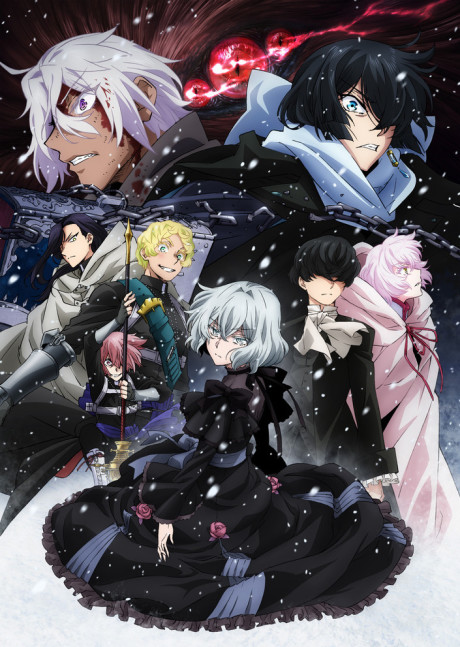
Note: This reviews both part one and part two, since Vanitas no Carte (VnC) is a two cour series. Plot spoilers are marked.
.
.
There are quite a few big names in this production. VnC adapts the manga of the same name by Jun Mochizuki, mangaka of the highly rated manga Pandora Hearts (RIP the anime). VnC is animated by Bones, which has a history with action (My Hero Academia, Bungo Stray Dogs, Mob Psycho 100), and directed by Tomoyuki Itamura, known for his flamboyant style in the Monogatari Series. The queen of anime music Yuki Kajiura (Magical Girl Madoka Magica, Demon Slayer, the Fate franchise, Sword Art Online, and of course Pandora Hearts) composes the OST. The two leads of the story–Vanitas and Noe– are narrated by Natsuki Hanae (Tanjiro in Demon Slayer) and Kaito Ishikawa (Naofumi in The Rising of the Shield Hero).
Now, how well did these big names come together?
.

Adventures of human Sherlock, vampire Watson, and friends in steampunk Paris.
Vampires are going berserk. A self-proclaimed vampire doctor, who is himself human and goes by the name Vanitas, journeys to save those vampires using the Book of Vanitas. After vampire Noe meets Vanitas, he joins Vanitas’s adventures and the two become embroiled in the developing conflict between humans and vampires.
Now, I wish I could elaborate more on the last sentence. But the story is incomplete with the manga ongoing for the long haul. Mochizuki has said that she wants to write about death that is not rewarded; no major character has (yet?) died. Vanitas himself is one of the mysteries that drives the show and more remains to be revealed. Some bombs (such as Ruthven’s hold over Noe) are planted but not yet triggered. The rollercoaster has not yet reached the top of the ramp so while I have high expectations, I’m withholding judgment on this front.
.
This is a double protagonist story. Noe and Vanitas are opposites of each other from their personalities to their world views. Noe is cheerful, naive, wears his heart on his sleeve and is openly caring. Vanitas is brooding, shrewd, purposefully ostentatious and guarded. Noe was raised by adoptive human grandparents, then befriended vampires. Having received kindness from both, he loves both humans and vampires. Vanitas, having experienced cruelty from both races, says that both humans and vampires are "monstrous and endlessly selfish creatures” (ep 9). They are attracted to each other’s differences, and as they work together to save vampires, Noe and Vanitas learn from each other and teach each other something new.
This dynamic makes their interactions ever interesting and their growth heartwarming. Throughout the two cours, Noe learns from Vanitas to be more tactical and assertive in the face of a foe (against Roland in the Catacombs, Astolfo in Gevaudan), and Vanitas learns from Noe to open up to and rely on others (Roland in the Catacombs, and of course, Noe!), however little.
In addition to the protagonists, most other characters also have deep and meaningful relationships. Mochizuki has expertly balanced Dominique’s vulnerability and her strength. While she appears strong at first, viewers eventually learn that she has been putting on a tough front to hide her trauma and self-doubt to protect Noe’s feelings. Her caring nature and love (romantic and platonic) are the real sources of her strength. The fact that she and Noe have always been secretly watching over and caring for each other is both sweet and precious. It’s clear that Domi is very protective of Noe because she blames herself and never wants to see Noe hurt again. She has scared off anybody who may cause Noe harm, which is perhaps why 19 year old Noe remains so innocent and precious, as Vanitas conjectures (ep 4).
However, their relationship and Domi’s character have been undermined in the anime because some clarifying details never made it into the anime, leaving Domi in a misunderstanding light for anime-onlys. The collar Domi put on Noe to prevent him from getting lost (ep 3) is a gift from Veronica. The torture room in ep 4 belongs to Veronica, not Domi.
Other character details that the anime left out have also left the characters and their relationships more shallow and less believable. Domi’s popularity with women and her potential bisexuality (tho she loves Noe), cuts of Noe that suggests that he has a small crush are Jeanne, Riche’s (do people even remember her?) nerdiness, and Marquis Mechina’s appearances, are all small details that add life to the characters which I wish made it into the anime. The large side cast, to no one’s surprise, suffers the most from all the cuts and was left bland.
Back to the pros. Many shounen anime suffer from female characters who are only defined by their relationship to the male protagonist. That is not the case in the Case Study of Vanitas (ok fine that was a bad poun). Female characters live their own lives as much as the male characters (and agender character) do. Domi’s obsession with Noe is not superficial; it is deeply rooted in their shared traumatic experience. She is popular with the ladies and befriends Jeanne, who has her own life and struggles.
Jeanne is also multi-faceted, even though she is the least well-written character of the main cast in my opinion. Jeanne is another character with a tragic past that chains (pun intended for Pandora Hearts fans) her, but as she breaks free she also proves to be strong and assertive. She is a bit of a push-over (as Domi comments) but bold when she knows what she wants. As for her relationship with other characters, although some moments are hilarious, I absolutely hate that her relationship with Vanitas started with his sexual harrassment (so go make him regret it by wrapping him around your little finger, girl!).

But until the tides turn, the joke’s on you Jeanne
In contrast to the main cast, the side cast has little time to be fleshed out, as previously mentioned. Nevertheless, they are given enough attention and contribute to the setting.

The side characters are cool and they know it
.


If they aren’t trying to promote tourism, idk what else they’re trying to do here
19th century France in an alternative steampunk timeline where vampires are created makes for a wild setting. There are many terminologies and details that can be overwhelming but are tied together neatly to contribute to the rich world building, lore, and conflicts. In addition to completely fictional details, there are some real world references that help you to keep track of them.
Vanitas’s birth flower is the blue forget-me-not; Noe’s is the purple aster. Noe Archiviste’s name hints to his memory reading ability and his role in the story. He is an archiver to remember the forget-me-not and a witness to other people’s experiences.
TLDR: Mochizuki crafted an incredible amount of details into the setting. Some of them refer to a character’s role in the story, some of them just exist for the world building. There’s a lot to interpret (but don’t look up the Song of Roland if you don’t want to see flags). For viewers who enjoy digging and analyzing, VnC can be a very rewarding experience. For those who just want to relax, VnC can be overwhelming and very confusing.
.
Luckily, Mochizuki introduces the numerous terminologies by drip feeding. She slowly unravels the world, which works well for a mystery story. Many details are well-thought out. And although VnC is not yet complete, the small arcs so far have been cohesive, revealing, and building up to something greater. The storytelling balances serious plot with light-hearted moments often by alternating between them. While the shifts are abrupt, they give viewers a break from the heavy content and make the happy moments all the brighter while making the sad moments all the more gut-wrenching. Still, even the darkest moments have happy parts to them, making VnC heartwarming on its rainiest days.

The calm before the storm
.
 before
.
While the larger narrative has been smooth, the moments that tie it together have been bumpy. A lot of the slapstick humor did not work for me and unfortunately, the anime added some and exaggerated some. Although the characters are young, VnC is a fairly mature piece of work and much of the screaming feels out of place. Thankfully, the screaming and overflowing chibi cuts tone down and abate over the two cours.
The anime also did not have time for some of the larger conflicts building up behind the scenes. The pacing is sometimes rushed, especially near the ending. Still, considering that the manga is both very dense and often amounts to more than 40 pages a chapter, it’s a very difficult job to pace the content into bite-sized 20 min episodes in 24 episodes.
.
There are other stylistic choices that didn’t fit the aesthetic, in my opinion. A lot of the art, animation, and voice acting are over the top.
Mochizuki has gifted VnC with eye candy character designs, and she plays with the style and goes off-model to convey the mood ranging from wonder to horror. Bones, though, perhaps in trying to capture her dynamic style, chooses some odd moments for going off-model.

VnC, especially in the beginning, also makes some disorienting color and filter choices. This is a scene where Vanitas invites Noe to work together (ep 10), yet the color choices force the viewer’s focus onto the art instead of the significance of the duo's relationship.

Imagine a scene with all the saturated colors and they appear every episode. My eyes…
Moving on to the animation that jump cuts for too much dramatic effect…It’s a style that Itamura brought from the Monogatari Series and now overpopulates the first cour of VnC.
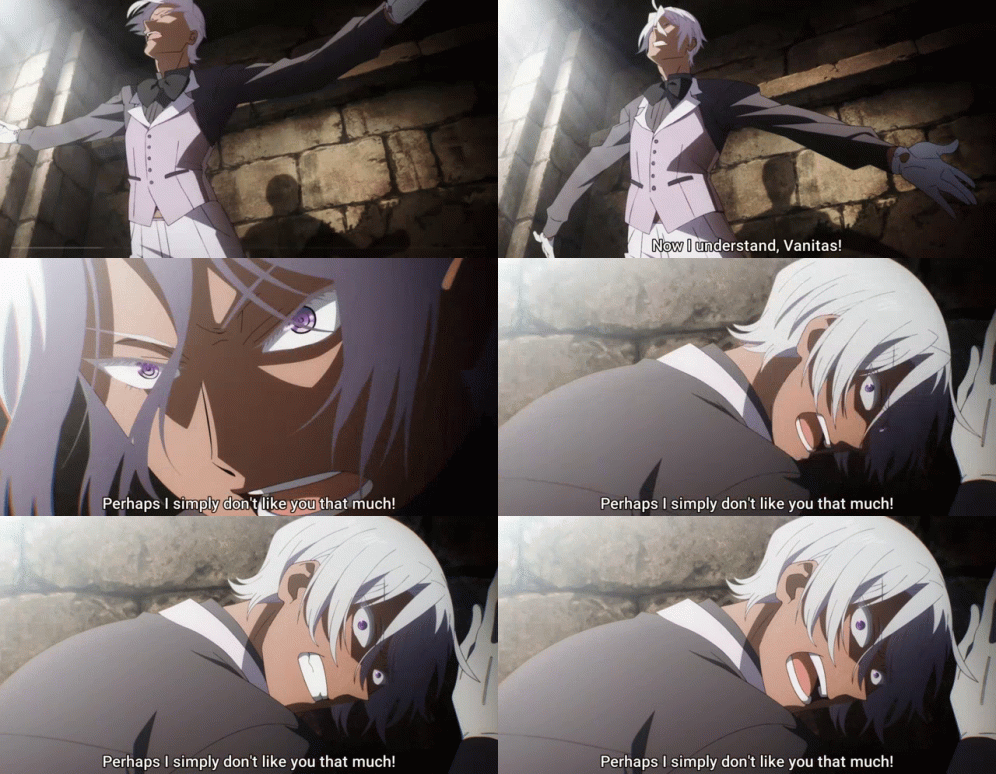
Natsuki Hanae’s voice acting of Vanitas feels at times goes over the board with Vanitas’s emoness. Granted, Vanitas is an emo character and he is young, as Mochizuki remarks of Hanae’s performance. Still, I personally wish Hanae toned down a little (pun intended) so that Vanitas’s more nuanced moments can shine.
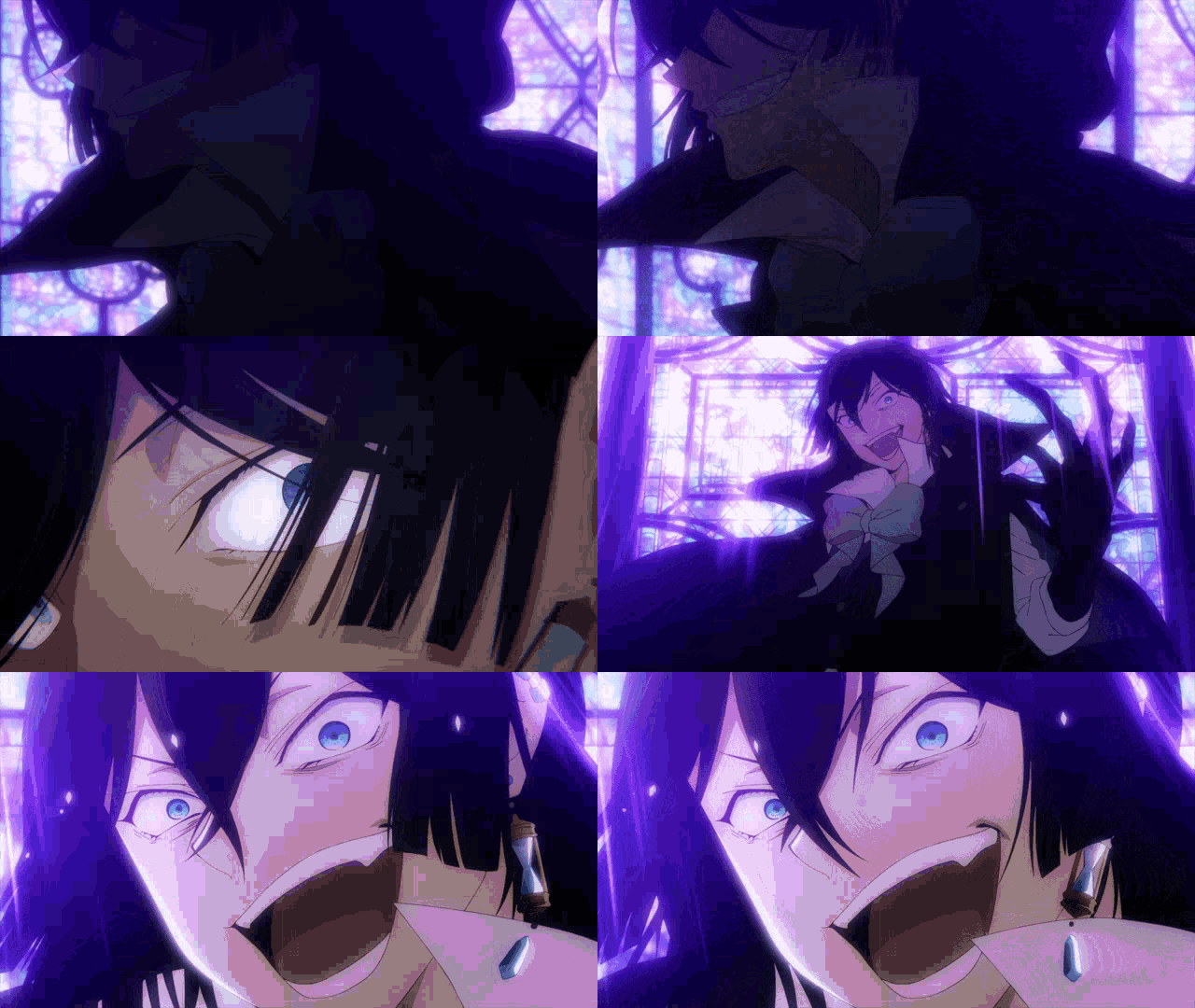

“I will save you vampires, muahaha, ahaha”... ... .. ... ... ... ... ... ... ... ... ... ... ... ... ↑ so who this :/ ?
The reason that I wish that these elements are less ostentatious than they are is because VnC is great at its relationships, storytelling, and characters. It doesn’t need such blinding colors to cover the joy shared by its characters, dramatic jump cuts to garner attention, or overblown voice acting to inflate its characters. In fact, the loud flamboyant style drowns out and distracts from the quiet moments where VnC is at its best. It’s exactly what critics have said of The Great Gatsby movie.
While certainly ambitious—and every bit as visually dazzling as one might expect—Baz Luhrmann's The Great Gatsby emphasizes visual splendor at the expense of its source material's vibrant heart.
—Critics Consensus, Rotten Tomatoes
Luckily, the style improves during the second cour, perhaps because they ran out of time or budget. Eventually, the stylistic choices do add to the emotions of the scenes rather than overwrite them.
That said, there are also many aspects of the production I appreciate. Although some details have to be lost when they are adapted, the designs and backgrounds are still stunning.


Well hello, gorgeous . . . . . . . . . . . . . . . . . Hey there, still gorgeous

If only we had more of these beautiful backdrops in cour 2 as well. They forgot to promote tourism for the woods of Gevaudan.
Graphic content warning and ep 5 spoilers

No I don’t enjoy Louis dying I’m celebrating the art
Many aspects of the show dropped in cour two. In cour one, Bones also used CGI in VnC in a way that contributes to the story’s narrative. CGI on the Book of Vanitas (which, given its already ethereal design it must be really difficult to animate) gave it an otherworldly aura. Bones probably liked the outcome and used CGI again in cour two for the landscape of Gevaudan. As a result, Gevaudan certainly doesn’t look as breathtaking as Paris in cour 1 does.

Magical girl book transformation music playing
For those who love fight scenes, the fight sequences are also well animated in both cour one and cour two. While VnC isn’t a battle shounen, so the fight scenes were rarely the focus, Bones gave them the budget to look gorgeous and exciting. There are some minor errors and poor transitions (ep 1, where Amelia almost pulls off Noe's bowtie but it magically went back), but one would really have to rewatch and look to notice. And did I mention the fights are synced with Kajiura’s music? It really accents the historical tone and polishes the fantasy setting of the show.
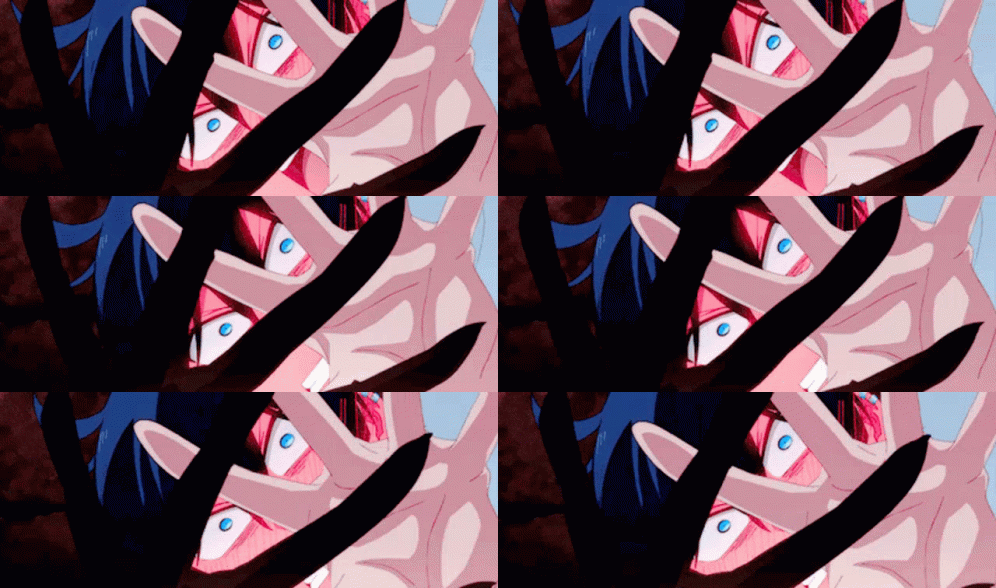
Considering the vampiric setting, the fan service scenes shouldn’t have surprised me as much as they did. This is because readers get to pace themselves when reading the manga, but when viewers watch the anime they just sit when the production decides to dial up the sensuality and listen to 30 seconds of moaning. But hey, Bones has got to make sure the DVDs sell. And shared sexual activity (although the coercive nature of Jeanne and Vanitas’s relationship ought to be critisized) is arguably better than boob cuts. I am happy that the production didn’t frame the female characters as just parts of their body which would irreparably damage their characters. Rather, when they are portrayed in sexual light, it is done in a realist manner that impacts the male characters.
.

Looking at VnC gifs has become my new hobby
Personally, VnC’s strengths spoke to me and its weaknesses pale in significance. I’ve always placed more significance on the story elements such as character growth and plot than production elements such as animation anyway. The adaptation didn’t exactly handle the differences in media well, but I’m still happy to watch the story told in anime format.
VnC is a story on the more mature side, with complex worldbuilding, well-thought out characters, and dynamic relationships. The amount of details it packs and leaves out can make the show difficult to process, but analyzing it is its most rewarding part for those who enjoy analysis. The show is ambitious but not without its flaws. There are poor stylistic elements that gradually improve, production values that decline somewhat, but neither of these problems are significant enough to make the show unenjoyable thanks to the strength of the source material. It has moments where it shines, moments where it shines too much, moments of hilarity, moments where the humor falls flat on its face, moments of beauty, and moments of pain.
Pacing issues aside, the overall story structure builds up wonderfully to, uh, a climax that is not yet reached, because the journey is ongoing. But you can still enjoy VnC, because it’s not the destination that matters the most, it’s the journey! That’s the point VnC makes by telling you how the entire story ends in the very first episode.
VnC is not for everyone. But if you enjoy depth, emotional rollercoasters, rich characters, good storytelling, and cute cats, don’t sleep on this one.