— — — —— — —
×
— —— —
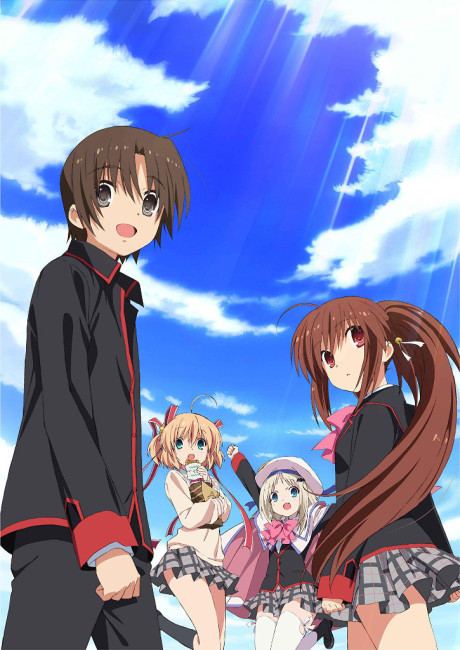
With how much love the Clannad anime by Kyoto Animation gets, I’m surprised the Little Busters! adaptation by J.C. Staff doesn’t receive similar appreciation, despite doing almost the exact same thing Clannad did. Both took on the Herculean task of adapting visual novels with over 50 hours of content, both developed by Key and written by Jun Maeda. In some ways, Little Busters! is even more impressive because it actually manages to adapt all the routes instead of just most of them, even if J.C. Staff had to use OVA specials for the Ecstasy routes.
Structurally, Little Busters! Season 1 follows Clannad’s approach almost exactly—mixing common route content with main heroine drama in between. Does it always work cleanly? Not really. But for the most part, it balances the tone well enough so you're not stuck in endless friendship-focused slice-of-life scenes, waiting forever for the actual drama to kick in.
Comparing it to Clannad, I’d even argue that Little Busters! Season 1 is better than Clannad's first season. I’ve always liked the concept of Little Busters! just a bit more, even though both are great. It puts a stronger emphasis on group friendship. The Clannad anime tried to create a strong friend group dynamic, but in the original visual novel, many characters rarely interacted with each other. Little Busters! fixes this by making sure the main cast of ten characters is consistently interacting from the start. Many visual novels and anime struggle to make ensemble casts feel both memorable and dynamic, but Little Busters! nails it.
While Clannad is all about family and growing up, Little Busters! goes all in on the power of friendship—but not in a cheesy, over-the-top shounen way. The series does an amazing job of slowly growing its core group from five childhood friends to a much larger circle. Watching these characters genuinely enjoy spending time together, while still having their own interests, feels relatable in a way that many anime, manga, and visual novels struggle to capture. The series does this extremely well, with the characters doing goofy things together like cafeteria competitions, hanging out in dorms, and most importantly, playing baseball.
Sure, some of these scenes get a little repetitive with the same gags, but that’s outweighed by how genuine and sincere the friendships feel. It’s the kind of show where you actually want to be part of the friend group because of how fun, goofy, and wholesome they are.
The cast itself is a huge part of what makes the series work. The five childhood friends have a solid dynamic on their own, but when they bring in five more girls, it livens up the group even more. Not only do we get a lot of fun, sincere slice-of-life moments, but we also get to explore the new characters’ personalities and deep insecurities.
That said, as much as I love the character interactions and group dynamic, Little Busters! has one unfortunate issue—the main heroine drama stories themselves... aren’t that great.
Since Little Busters! is a Key and Jun Maeda work, it's expected to me at least the non-true heroine stories tend to be hit-or-miss. But even when they aren’t as strong, they usually at least have an emotional core that feels grounded and can pull at the heartstrings. The problem here is that, aside from maybe Haruka’s arc, the heroine stories lean too much into supernatural elements, which feels out of place in an otherwise down-to-earth setting. They get a little too over-the-top, and while it's nice to take a break from the slice-of-life segments to explore the characters’ pasts, the execution doesn’t always work. If they had toned down the supernatural aspects and avoided introducing random plot twists out of nowhere, the melodrama would have felt more sincere, instead of clearly trying too hard to get an emotional reaction from the audience.
Haruka’s arc is the one I kind of liked because it focuses on family drama without relying on supernatural elements. Even then, it wasn’t amazing compared to other Key and Maeda stories, but it was definitely an improvement over the others.
Thankfully, the first season ends with the baseball rivalry that had been slowly built up over the course of the season, and that climax is handled really well. I’m glad they mixed in the weaker heroine arcs alongside the more lighthearted baseball conflict, because that part was much stronger and made for a better ending.
Overall, Little Busters! Season 1 is a solid but not amazing show. I think it’s on par with, if not better than, Clannad's first season. The only reason people seem to skip it is because it wasn’t animated by Kyoto Animation. Sure, J.C. Staff doesn’t have the same polished animation or attention to detail as KyoAni, but to me, that’s not a good enough reason to ignore a story that’s just as good—if not better—than Clannad or even other Key works that KyoAni adapted.
Little Busters! Season 1 has a really fun cast with some decent (if flawed) melodrama, and it’s a shame that people overlook it just because they’re obsessed with specific animation studios.
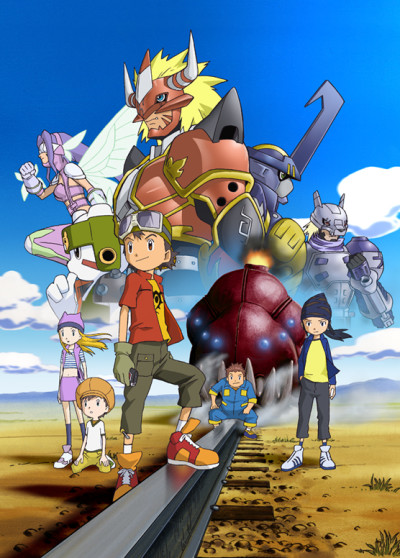
Ever since the success of the first season of Digimon, it's clear Toei wanted to recreate that success with the same IP but without using the exact same cast—at least until more recently.
Sadly, despite the high praise for Tamers and the direct continuation with 02, none have come close to the popularity and nostalgia of the first season.
Nevertheless, Toei kept trying, and one interesting idea was to create a Digimon series without partner Digimon—opting for a Super Sentai/ Power Rangers-style approach where humans transform into Digimon to fight.
In theory, this is actually pretty cool. While Digi-evolutions were always a highlight of the series, I'd argue that Frontier has the best ones, even as early as their first transformations. In previous Digimon series, Champion forms were still kind of cool but rather basic. Meanwhile, even the earliest humanoid Digimon transformations in Frontier feel like a huge upgrade.
Outside of the transformation gimmick and lack of partners, Frontier surprisingly still follows the story formula of the first three seasons—for better or worse. It features six human characters by the end, all of whom get "isekai’d" into the Digital World. They have personal struggles to work through while being stuck there for almost the entire series, only reaching the human world near the very end, which contrasts with previous seasons.
At the end of the day, this is still a shounen kids’ show, so the emphasis is on flashy attacks and cheesy humor (especially in the English dub). However, there’s still a degree of character depth. These middle school kids have to figure out how to escape, understand the Digital World, and confront their own issues, which ultimately creates a simple yet surprisingly serious story at times.
As much as I wish I could praise the series more, there are many reasons why it’s considered one of the more forgettable, mediocre, or outright terrible Digimon entries.
The story itself is a major issue. While the goal of capturing and purifying all the spirits is decent, it just isn’t as compelling as previous seasons. With only five human characters for most of the first half, their interactions and development feel weak. They have potential depth and backstories, but they lack the charisma and chemistry of previous casts. They aren’t necessarily bad characters, but they’re not memorable, and when they’re not getting direct backstory moments, they just don’t stand out.
Even conflicts between characters, like Takuya and Koji’s natural clashes, don’t go far enough. There’s barely any leadership dynamic, and every episode just feels like an excuse for the humans to transform, fight, and get a new spirit.
Unfortunately, the only female character, Izumi/Zoe, has it rough. Unlike the others, who at least win some fights, she barely gets any victories, and many of her spirit battles don’t end in success.
The second half of the series only worsens things. When the sixth kid joins, you’d expect the group to fully bond and develop after everything they went through. Instead, Frontier copies the worst aspects of the first two seasons—making Takuya and Koji the only characters who matter in fights. The first half at least let the others have some cool moments, but in the second half, they’re reduced to handing over their powers so Takuya and Koji can get their final transformations. This makes the series more boring and repetitive than it needs to be.
It doesn’t help that the characters never return to the human world mid-series, limiting their development. They’re stuck with only each other and a few Digimon who don’t know much about the real world or their personal struggles.
To make matters worse, about ten episodes in the latter half are just a rinse-and-repeat cycle of Takuya and Koji fighting the Royal Knights. While the Knights have cool designs, every episode plays out the same way—go to a new area, fight them, get beaten, rinse and repeat—until the real final boss shows up for the last few episodes.
It’s a real shame. I legitimately like the idea of a Digimon Power Rangers-style series. There are cool designs, fights, and transformations, and sometimes even interesting character depth. But limiting the cast to six, removing partner Digimon, skipping human world development, and relying on a few comedic sidekicks ultimately hurt the series’ long-term appeal.
While it was cool that Toei experimented, and it led to some iconic designs and fights, it’s for the best that future Digimon series returned to the traditional human-partner dynamic.

With how much love Naruto Shippuden gets—aside from maybe its final arc—I'm personally surprised the time skip (or Shippuden, as the anime calls it) isn’t criticized more for its actual issues. I’m not talking about the anime’s slow pacing and filler—that’s been talked about to death. I mean problems that were in the manga itself and just carried over into the anime.
That said, I should be fair and explain my perspective—why I was disappointed, but also what I did like about Shippuden.
In general, I prefer pre-time skip Naruto. Not only was the cast decently sized without feeling bloated, but the tone had a good mix of lightheartedness, magic, and actual strategy. However, due to the events of the Sasuke Retrieval Arc, it’s understandable that Shippuden lost much of its whimsical charm. Even the soundtrack feels more serious and somber. That’s one thing Shippuden does well—consistently emphasizing tragedy. And, oh boy, there’s a lot of it.
While pre-time skip Naruto fumbled with who the real villains were from arc to arc, Shippuden at least has solid villain buildup. Almost every major conflict connects to a larger antagonist, which helps the story feel more cohesive.
I also think Naruto (the character) himself improved. Pre-time skip Naruto had some nice moments but was generally a bit too annoying for me. Post-time skip, he’s more tolerable and has more memorable moments, though he can still be frustrating and occasionally bland.
And while there aren’t as many as I’d like, Shippuden does have some great emotional moments. Some are tied to backstories, but a few present-day scenes stand out and keep things memorable.
Unfortunately, that’s about where my positives end.
Power Creep and Dull Fights
One of my favorite things about pre-time skip Naruto was its balance of magic (ninjutsu) and strategy. Unfortunately, Shippuden gradually reduces the importance of ninja tactics, making fights feel like they’re decided purely by who has the strongest jutsu. Strategy occasionally appears, but it’s subtle—sometimes too subtle. This made many action scenes duller than they should have been. Sure, there are some cool set pieces and hard-hitting moments, but when everyone is just spamming super-powerful ninjutsu, and things like shuriken, bombs, and taijutsu barely matter (outside of that one insane Might Guy moment), it really shows how much power creep affected the fights.
The Bloated Cast and Wasted Potential
Even in pre-time skip Naruto, some characters were already being pushed to the background despite having cool designs or moments. Shippuden takes this issue and dials it up to 100.
So many characters we got to emotionally connect with—or at least see do something cool—get shafted. Asuma, Kurenai, Choji, Shino, Anko, Rock Lee, Neji, Tenten—the list goes on. These were characters we got to know as early as the second arc, yet in Shippuden, they barely do anything.
The only exceptions are a few obvious fan favorites like Shikamaru, Gaara, and I guess Hinata—but that’s about it. You’d think the Fourth Great Ninja War Arc would be the perfect time to make all these characters relevant again, and the series tried, but in my opinion, it fumbled hard.
Why? Because there were too many characters introduced on top of an already large cast. Not only do we still have all the Leaf Village ninjas, but now we also have other village ninja, Kages, Tailed Beast hosts, Sasuke’s new Hebi allies, and temporary replacements for Sasuke and Kakashi in Team 7. With so many characters, most of them don’t get enough development to make us care about them beyond their base personality and powers. And sadly, that applies to the villains too.
Villain Overload and the Kaguya Mess
I do appreciate that the Akatsuki serve as Shippuden’s main antagonists. There was strong buildup for who should have been the final villain.
But then there’s Kaguya.
Without getting into spoilers, the lack of buildup for her is one of the most universally criticized aspects of Shippuden. There’s a bunch of nonsense about fate and reincarnation, and at this point, the ninja world’s reliance on magic becomes obnoxious. But honestly, Kaguya is just a symptom of a larger problem—Shippuden’s escalating power creep, which had been growing worse long before she even appeared.
The Team 7 Disaster
What’s probably the most disappointing for me is how Shippuden handled Team 7—the core reason the time skip even happened.
By the end of pre-time skip Naruto, Sasuke’s character was already heading down a dark path. And let’s just say he becomes a lot more unlikable post-time skip. While there are good reasons for his descent, and some of it is due to certain characters withholding information from him, he still comes across as a moody, irrational mess. He constantly shifts his motives, becomes increasingly cruel, and gets way too much forgiveness for the terrible things he does.
Then there’s Naruto and Sakura. They make so many dumb choices in their quest to “bring back" Sasuke. I get that this is the heart of the story, but the way it plays out is exhausting. Watching Naruto and Sakura regress personality-wise just to make this happen was frustrating, and by the end, I didn’t even find their resolution satisfying. Their dynamic, which should have been a highlight of Shippuden, ended up being one of its biggest headaches.
I honestly feel bad for Kakashi—he had to deal with a bunch of emotionally unstable teenagers who eventually gained god-like powers and affected the world because of some melodramatic love-friendship nonsense.
Final Thoughts
Shippuden has its moments—a stronger, more somber tone, some cool fights, and a handful of emotional scenes. But the things it focused on just weren’t for me. The bloated cast, the increasingly dull fights, and the Team 7 drama made it a slog. And the slow pacing certainly didn’t help.
I wish I could have enjoyed it more, but we got what we got.
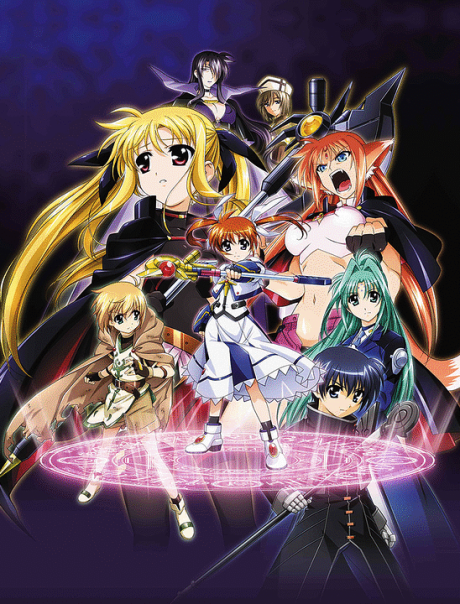
The original Magical Girl Lyrical Nanoha TV series was a surprise hit for many. It was one of the first magical girl series to specifically appeal to a shonen audience, especially those who liked yuri bait, since magical girl shows were usually aimed at female viewers.
While the show had a solid plot with a strong emotional core and some fun action scenes, it kind of suffered from being the first in its series. It was still figuring out what it wanted to be before the franchise went all-in with A’s. A lot of the early episodes felt a little too slow and slice-of-lifey, while some of the later drama seemed kind of random, like it was just there to get a cheap emotional reaction.
Thankfully, this movie—a full-on remake of Magical Girl Lyrical Nanoha Season 1—took the best parts of the TV series, tightened up the continuity, and fixed the pacing so things got right to the point. It still gave everything enough breathing room while, of course, modernizing the animation and making the battle scenes look better than ever.
Just these changes alone make this the best way to experience the first season of Nanoha, and honestly, I’m surprised this movie isn’t recommended more often.
It still covers Nanoha’s introduction, where she gets the typical call to action after a chance meeting with Yuuno and realizes she has the potential to shoot big-ass laser beams like a Gundam. The only minor downside is that, by cutting the original monster-of-the-week arc from the TV series, Nanoha doesn’t get as much time to bond with Yuuno. But I always thought he was just an okay character anyway, so it wasn’t that big of a deal.
What really sold it for me, though, was the enemies-to-best-friends dynamic between Nanoha and Fate. The movie went much harder on making Fate a more tragic, unwilling villain from the start, instead of the original TV series, where the writers clearly weren’t sure what to do at first.
This also extends to Fate’s mom, Precia. In the original, she was just a completely unredeemable monster of a villain. The movie rewrote her to show more of a human side to her downfall while still making it clear that she’s an abusive villain who needs to be stopped.
And as I mentioned before, the animation in the Nanoha movie remake is just outstanding. Nanoha’s Gundam-like beams and Fate’s super cool yellow scythe powers have never looked better. Watching them fight—whether against each other or their other enemies—is just awesome.
Honestly, I don’t know what else to critique. I think this is one of the best anime remakes I’ve ever seen, and it’s a shame it doesn’t get talked about more.
If you want a magical girl show with a strong emotional plot, little to no monster-of-the-week filler, and some solid yuri bait, the Nanoha series is for you. And I think this first movie is easily the best place to start.

Even though Naruto wasn't my first shonen anime—Dragon Ball Z holds that spot—it was the second anime I ever got hooked on when I was still relatively new to the genre. The combination of ninjas with cool powers, surprisingly strong emotional stakes, and, most importantly, interesting strategy played a huge role in transitioning me from a casual viewer with no real understanding of anime into someone who started exploring more hardcore series.
The first season of Naruto certainly has its issues, mostly with Naruto’s initial immaturity and the anime adaptation’s excessive filler. Thankfully, those filler arcs are easy to skip, so I won’t dwell on them. That said, I’d take any of the issues from pre-time skip Naruto over the disappointment that is post-time skip Naruto: Shippuden, which I’ll cover in a later review.
Of all the major battle shonen series, I think Naruto has the best first episode, immediately establishing the emotional core and potential of the story. It introduces Naruto as an underdog who has to properly train and learn his true potential, which we don’t fully understand until much later.
While Naruto starts off immature due to his loneliness, I like how he gradually makes acquaintances and friends, including his teammates in Team 7. It’s unfortunate what happens to them post-time skip, but in season one, they serve as the core of the series, each with distinct personalities and a fair amount of character development. Sure, pre-time skip Sakura isn’t particularly useful outside of a few moments, but it’s well-known that Masashi Kishimoto seems to low-key dislike female characters, rarely giving them major moments.
Despite Naruto being set in a world of ninjas, there’s a surprising amount of magic involved. The jutsu system is well thought out, and at least pre-time skip, the series mostly sticks to its rules. There’s a good balance between physical fighting (taijutsu), magical abilities (ninjutsu), psychological warfare (genjutsu), and classic ninja tactics like shuriken, bombs, and unique weapons—big-ass swords included. Pre-time skip Naruto maintained a solid balance where anything could be useful in the right situation, and you didn’t necessarily need a strong bloodline or god-tier abilities to compete.
It also helps that the focus remains largely on a young, teenage cast. While not all of them get the development they deserve, the Chuunin Exams and Sasuke Retrieval arcs do a great job of showcasing their potential. Almost every canon arc has solid writing and pacing. Zabuza’s Arc establishes the true grit of the ninja world, the Chuunin Exams highlight the crazy variety of abilities in this universe, the Tsunade Arc dives into ninja politics, and the Sasuke Retrieval Arc explores the darker sides of being a ninja.
That said, Naruto season one has its flaws. As I mentioned, Naruto starts off pretty immature, and while he grows, he still retains a childish nature even by the end. Shippuden improves on this, but unfortunately, Sakura and Sasuke are also a bit immature in this season. However, given their age, it makes sense. Sasuke, in particular, is a decently likable character until Shippuden completely ruins him. Meanwhile, Kakashi remains the most consistently likable member of Team 7.
The anime adaptation suffered from way too much filler, which was largely a product of its time, when anime didn’t have fixed seasonal airing schedules. If Naruto had been structured with one or two core seasons per arc, the pacing would have been much better, avoiding filler altogether and potentially solving the post-time skip pacing issues, which somehow ended up even worse.
Even though the cast size in pre-time skip Naruto is reasonable, with decent character development, by the end of the last arc, you can already see the beginning of a problem—what I’d call “character screen-time creep.” Many characters introduced during the Chuunin Exams barely have any role in later arcs, which was a bad sign for how they’d be treated post-time skip. That’s a shame because the series introduces a lot of great characters, and the few that do get proper development end up having some really satisfying moments.
Overall, pre-time skip Naruto is a very solid, well-balanced battle shonen with a great world, a mostly likable cast, cool and relatively balanced powers, and a good mix of unique magical abilities alongside actual ninja-like strategy. The villains are memorable, the arcs have great pacing, and the progression makes it clear why this series became so popular.
It’s just a shame about all the filler—and that post-time skip Shippuden ruined so much of what made the pre-time skip era so good.
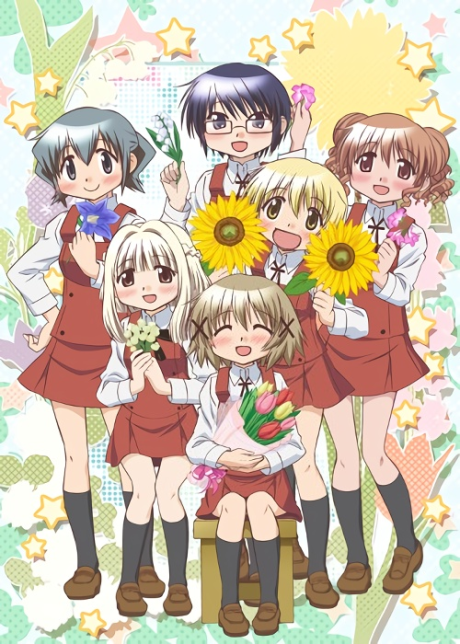
Hidamari Sketch, in theory, should be one of my all-time favorite iyashikei for wholesome, relaxing slice-of-life. I like the idea of relatively nice girls with different personalities all attending the same art school, sometimes crossing paths, sometimes doing their own thing.
However, I found that Seasons 1 and 2 were inconsistently likable—sometimes a little too slow-paced and uninteresting, even for me. I tended to enjoy the episodes that slowly developed Yuno, along with the occasional ones where they all just hung out and had some comedy. But overall, I only liked the show sometimes.
As it turns out, the best way for me to more consistently enjoy the series was by Hoshimittsu (Season 3) introducing two very memorable, likable underclassmen: Nazuna and Nori. If I’m being honest, I think this duo is much more interesting and fun than Hiro and Sae, who mostly function as okay upperclassmen that occasionally give advice but not much more.
Shifting the dorm dynamics to six characters adds much-needed variety—not just for comedy but also for character growth and unique interactions.
For example, like the two other notable pairings, Yuno & Miyako and Hiro & Sae, Nazuna and Nori have their own yuri-bait close female friendship. They have a natural opposites-attract dynamic, with Nazuna being very shy and Nori being direct and blunt. Their interactions alone are super charming, but I also love how they affect the rest of the group.
They give Hiro and Sae more opportunities to lean into their low-key, mature, caregiving roles, and they allow more goofy moments for Miyako’s quirky humor. But most importantly—on a personal level, as someone who likes Yuno the most—this change gives Yuno a chance to grow even more.
In Seasons 1 and 2, most of Yuno’s memorable character development revolved around her lack of self-confidence. She’s an art major whose best friend is kind of an art genius, so she often doubted herself. But by the end of Season 2, she gained more confidence, and in Season 3, she gets to take on the role of a proper upperclassman for Nazuna and Nori. It’s great to see her naturally shift from the meek new girl to someone who applies what she’s learned to her two new friends.
Most of what makes the Hidamari series good (and sometimes not as good) is still here. There are plenty of scenes where the six characters just hang out, plus some interesting art discussions since almost all of them (except Nazuna) are art majors at an art-focused school. Those moments are thought-provoking in terms of how they improve their art.
Unfortunately, the most recurring character I don’t like is still around: Yoshinoya-sensei. I guess I can see why some people enjoy an adult female character who’s a little immature, likes being attractive, and craves attention, but by this point in the series, I’m really sick of the same joke. She tries too hard to get attention from students, the principal rebukes her, rinse and repeat. It’s not as annoying in Hoshimittsu, but the joke was already stale by the second or third time in earlier seasons. The fact that they keep doing it almost every episode is a case of Japan overdoing quirky humor until it gets really, really old.
While I liked the average episode of the girls just hanging out much more than in Seasons 1 and 2, there are still some dull moments, even as someone who enjoys cute girls doing cute things, slice-of-life, and hangout series.
That said, I still really like Hidamari Sketch Hoshimittsu for pushing the series in a much more consistently great direction—just by adding two new, very likable characters. It’s a shame this is one of SHAFT’s more underrated shows because some days, I consider it on par with Madoka Magica—and definitely way better than the -monogatari series.
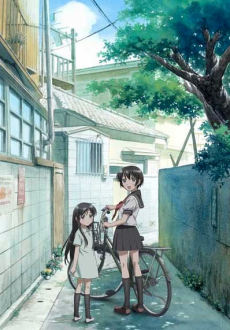
One of my favorite anime genres is iyashikei, or wholesome slice-of-life, which is all about appreciating the smaller things in life. And what better way to do that than with a story about two poor sisters struggling to make it through each day?
With a title like Binbou Shimai Monogatari (Poor Girls’ Story), you might expect some dark, gritty drama. But despite the first episode being a little melodramatic about the sisters' situation, the show isn’t really about suffering. If anything, its strength lies in the contrast—these two sisters are barely scraping by, yet they appreciate what little they have and, most importantly, they cherish each other. That’s what makes this one of the most underrated wholesome slice-of-life shows I’ve ever watched.
The story follows Kyou (15) and Asu (9), who live in a rundown, cheap apartment. Kyou is the breadwinner, delivering newspapers instead of attending school, while Asu takes care of cooking, cleaning, and attending school in her sister’s place. It’s a surprisingly fair and well-thought-out dynamic—you can tell they worked it out themselves because they love each other and want to contribute equally to their simple but harsh lifestyle.
If you’re interested in seeing how people who are poor—but don’t necessarily hate their lives—live day to day, this anime offers a great perspective. I have a distant relative who has talked a lot about her experiences growing up poor, and watching this show made me feel like I got a glimpse into the mindset of someone in that situation. Some people, even when given the chance for a better life, might hesitate to leave what they’re used to—even if it’s objectively more comfortable.
To me, that’s the beauty of this show. It takes a premise that might seem depressing at first but writes it in a way that makes you appreciate a different perspective—people who might not have material wealth but still find ways to live with gratitude and warmth.
The sisters themselves are fantastic characters with a great dynamic, but the side characters are also surprisingly charming. Their old-man landlord is a kind and friendly presence in their lives, and the Echigoya sisters serve as interesting foils to Kyou and Asu. Since the story is mostly told through Asu’s eyes, we get to see how she perceives her schoolmate Ginko, who comes off as much haughtier and less kind than Asu but has a complex relationship with her own older sister.
While I really love this show and its premise, its biggest strengths are also its biggest weaknesses. The focus on appreciating the small things in life is great, but there’s only so much you can do with that theme before things start feeling repetitive. Some episodes feel like slight variations of previous ones, just with a different scenario or minor dialogue changes.
The few moments of melodrama—especially in episode 1—sometimes feel a little out of place. The occasional reflection on poverty is interesting, but when the drama is just about characters getting frustrated or mad at each other, it doesn’t feel like it adds much to their development or the story (or lack thereof).
That said, if you can somehow find a way to watch this super niche series (seriously, I barely know anyone who’s even heard of it), I think Binbou Shimai Monogatari is worth checking out—especially if you're looking for a unique iyashikei slice-of-life experience.
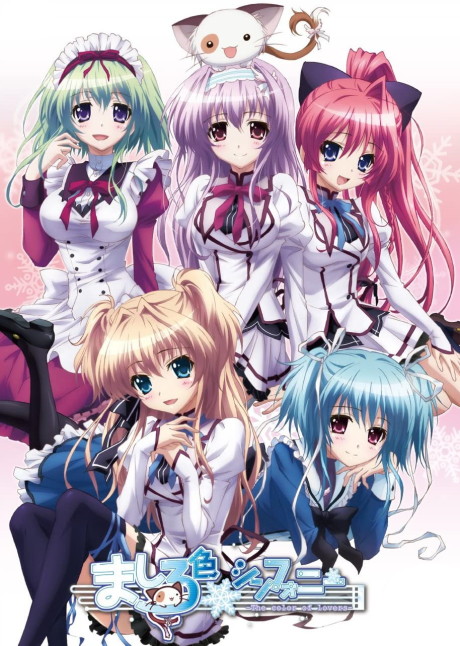
In the visual novel scene, one of the more hyped-up moege (or slice-of-life heavy romance visual novels) to get a translation was Mashiroiro Symphony. It was once considered a classic, even getting a visual novel remaster a decade later with HD resolution and updates to its most popular heroine, Sana.
If you're too scared to try out a dating sim or a heavy romance visual novel that takes at least 20 to 30 hours to read in full, I think this anime adaptation is a decent way to check if the setting, story, and characters fit your tastes.
While not the most common setting, the premise of a male protagonist suddenly having to interact with heroines from a previously all-girls school is sort of a recurring trope. The first half of the series actually does a relatively realistic job of portraying how two schools—one co-ed and one previously an all-girls school filled with rich students—would handle merging. Many girls, used to their isolated life, might be scared of guys or resistant to change. This sets up the initial conflict with Airi Sena, the daughter of the principal of the former all-girls school.
Watching Airi slowly warm up to the main cast—especially those from the co-ed school—was a nice development. She also had some solid character growth in her interactions with Shingo, the protagonist, who is easily one of the most saintly, nice guys I've seen in a harem series.
Now, based on the first half of the anime, you’d think Airi would eventually be the main romance target. But… since this is a visual novel adaptation, things take a turn. Instead, Shingo ends up romantically involved with the mature upperclassman Miu.
In the original visual novel, there are four romance routes, meaning you can choose who to pursue (which is why I generally think visual novels are better than anime if you care about “best girls”). However, there’s a catch: Sana, a character closely associated with Miu, ended up being the most popular heroine. I’m guessing that’s why the anime adapted Miu’s route instead of Airi’s—popularity power. While Miu was decently popular, Sana blew up in popularity because of her character arc within Miu’s route.
I’ll try my hardest not to spoil too much, but let’s just say Sana’s arc ends up very similar to Airi’s in the first half. It’s kind of funny how Mashiroiro Symphony always has to have a tsundere in conflict with guys merging into an all-girls school. Once Airi finally warms up, boom, now Sana has to shift from being a seemingly chill girl to showing her true colors—being distrustful of guys and, more specifically, simping hard for her best friend, Miu.
Sadly, this twist really brought down the anime for me. I was perfectly fine with Miu being the romance pick since she’s likable, but the story ended up focusing way more on developing Sana’s tsundere arc—almost like it was trying to overshadow Miu’s much more interesting conflict with her pet, Pannyan.
Once Sana’s true personality is revealed, I found her way more unlikable than Airi ever was. Her “I hate guys” jokes got old fast, and honestly, it wasn’t worth sitting through her incredibly annoying, man-hating tantrums. Like I said earlier, Shingo is basically a saint for dealing with all this when he’s already been super helpful to all the girls and the school merger.
If the anime was going to let Sana take over so much, they should have just adapted Airi’s route instead. Shingo had the best chemistry and development with Airi, especially since the first half was all about her natural character growth. Instead, they went with Miu’s route just to appeal to a fanbase that loves tsunderes who call guys “scum” before having a change of heart.
It’s a shame I couldn’t even talk much about the quirky side heroines, Ange the maid and Sakuno, who I really liked—especially Ange, who was by far the funniest and weirdest girl in the cast. But unfortunately, the anime barely gave them anything to do, awkwardly shoving in like 5–10% of their romance plots just for fanservice while mostly focusing on Airi, Miu, and Sana.
That said, when Sana isn’t ruining the mood, Mashiroiro Symphony does have a nice, wholesome (if slow-paced) vibe. It’s just a shame the anime is so inconsistent in quality and that they adapted the romance route with by far the most annoying character as a major focus.

One of the biggest complaints I hear about Angel Beats is that it was cut way too short and needed at least a two-cour season to tell its story. I get where people are coming from, especially if they liked one of the many characters in this ensemble, but I couldn’t disagree more. I think the pacing of Angel Beats, at least in terms of its main story, was done perfectly.
Even though I tend to like series developed by Key, whether through anime or visual novels, (Kanon, Air, Clannad, Little Busters, Rewrite, Summer Pockets, etc) one of their biggest flaws is that their stories are just incredibly bloated. There’s way too much time spent on repetitive slice-of-life gags before getting to the dramatic stuff. Similarly, since they feel obligated to develop full routes and stories for at least four to five heroines, they have to dedicate time to building up all of them—even when many have similar themes—just to justify a full-length product worth the money or time investment.
Angel Beats, to me, is the perfect example of capturing Key’s essence without wasting too much time—or going to the other extreme like Planetarian, Harmonia, or Lunaria, where there's not enough time to fully invest in the characters and story. Angel Beats finds a great balance, giving us a memorable ensemble cast with a ton of over-the-top and varied humor. Instead of relying on repetitive gags from the same few characters, as most Key stories do, it keeps things fresh with its large cast.
However, if there’s one thing Angel Beats truly shines at, and what makes it a contender for my favorite Key work, it’s how well it uses its unique supernatural setting.
One of my biggest issues with Key’s storytelling is that, despite having memorable characters, humor, and drama, they tend to introduce the supernatural after the heroines' stories are already underway. Instead of establishing the supernatural early on, they give the impression that the story is grounded in reality—when, in fact, it’s not nearly as down-to-earth as it seems.
Angel Beats avoids this by establishing right away that it takes place in some kind of purgatory equivalent—which, of course, just so happens to include a high school. Because of this, the story can fully embrace its supernatural elements from the start, allowing characters to do outright ridiculous things that only work in a pseudo-afterlife. This makes the supernatural drama and twists that happen later on much easier to buy into.
This is especially important when it comes to the ending. Key stories—especially those written by Jun Maeda, or ones like Summer Pockets that clearly copy his style—tend to start off lighthearted before diving into serious life-and-death drama, or at least incredibly depressing character-driven drama. Then, they suddenly pull a happy ending out of nowhere, often with some supernatural deus ex machina. I’ve always hated those moments in Key stories.
Angel Beats fixes this problem by establishing its themes from the very beginning. It leads into a really good twist about three-quarters through and executes it consistently all the way to the end. There is a final twist tied to the anime’s title that feels a little too convenient, but I’d still take that over the usual deus ex machina nonsense that Key tends to rely on in their other stories.
As for the characters, like I said, there are a lot of likable ones—as you’d expect from Key. I’ll admit that, on average, the character writing might not be as strong as in some of their other works since Angel Beats focuses more on the ensemble cast rather than explicitly developing each main heroine. But that’s not to say they don’t develop the characters—far from it. The unique purgatory-like setting lets us see flashbacks of the main characters’ past lives, and the ones they chose to focus on fit perfectly with the anime’s main themes and emotions.
And that’s something I feel is underrated when critiquing stories: focus and pacing.
In the anime and visual novel scene, there’s this weird perception that a story has to be as long as possible, fleshing out every little detail and world-building element. Personally, while I love a good long story, I find that a lot of fan-favorite long stories have way too much unnecessary padding—whether through repetitive slice-of-life jokes, drawn-out drama, or world-building or infodumping that ultimately doesn’t matter.
Angel Beats avoids this by keeping its story focused. It uses its ensemble cast well while fleshing out only a handful of characters that directly tie into its themes, which is the perfect way to pace a story within 13 episodes. Sure, it would’ve been nice to see more backstories, but that’s what supplementary material should have been for (if Maeda had actually continued the Angel Beats visual novels past 1st Beat).
Now, as much as I love Angel Beats and even consider it possibly my favorite Key work, I’ll admit it has flaws.
While I generally like the humor, there are a few times when it falls into the typical Japanese comedy trap of repeating certain gimmicks a little too much.
While I said I liked the backstories they did cover, there are one or two where I think they could have gone even further—showing more of what led those characters to become the people they were in this pseudo-afterlife.
And while I think the ending is way better than most other Key stories, there are still small issues with it. Like I mentioned before, the twist tied to the anime’s title feels too convenient, and the epilogue is just a little too short and vague—potentially even contradicting an OVA.
As for the protagonist, Yuzuru Otonashi, I generally like him—especially for some of his actions later in the series—but he starts off a little too bland for my liking.
That being said, I really love Angel Beats, and I think it’s actually one of the more beginner-friendly Key stories. It’s not too short, not too long—it gives you enough time to get to know the main characters while showing you how Key typically handles humor, drama, supernatural elements, and endings, but without falling prey to the flaws of their earlier works.
In my opinion, if you could only experience one Key story and didn’t want to commit to something super long, I’d 100% recommend Angel Beats.

So many sports-themed anime have come and gone over the years. In modern times, you've got stuff like Haikyuu!!, which focuses on competitive volleyball, and Blue Lock, which is all about soccer (football non-americano). Then there's baseball drama like Major or hype basketball series like Slam Dunk and Kuroko no Basket.
But for my money, my personal all-time favorite is Hajime no Ippo—or rather, just Season 1 of the anime.
See, unfortunately, the Ippo series now has the unfortunate reputation of its manga being incredibly dragged out and inconsistent in quality, yet it's still ongoing. The stuff I hear about supposed plot twists or lack of progression is really disappointing from people who actually read the manga.
However, to me, there’s a reason why this series got so popular and lasted so long to begin with. Season 1 of Hajime no Ippo specifically does basically everything I want from a sports-focused shounen series. Hell, I’d go as far as to say it does everything I want in a character development and action series combined into a 75-episode run.
The name of the game in this series is boxing, and Hajime no Ippo does the classic underdog story—starting with a protagonist who works his way to the top. For some reason, future seasons (and apparently the manga) tried to keep Ippo an underdog much longer than necessary, but in Season 1, his growth and progression made perfect sense all the way to the end.
I don’t know how much this aspect resonates with other people, but personality-wise, I actually relate to Ippo Makunouchi himself. I have a tendency to be overly passive and shy, and while I recognize that I have potential, I get locked into my comfort zone. Obviously, in my case, it's more about computers, programming, and anime, whereas Ippo just starts off wanting to help his mom with their fishing business and, as a result, gets physically strong.
Once he gets recruited into his local boxing gym and beats his rival Miyata for the first time, that was the hook that got me to binge the rest of the anime.
Hajime no Ippo does a great job introducing boxing terms for people who don’t know much about the sport—like me when I first watched it. At best, I only knew the basics because, as someone from a Filipino family, I was basically obligated to watch Manny Pacquiao fights when he was in his prime. But the show really takes its time showing all the little things a boxer has to do to train and get ready for fights in a surprisingly engaging and well-paced way.
Despite being 75 episodes long, I never once felt like a single episode was wasted. Whether it was training, character-building, or boxing fights, everything felt connected to Ippo’s journey while also giving some love to the side characters in his gym. A lot of battle shounen series—even ones shorter than this—suffer from pacing issues or filler episodes, but I never felt that way about Ippo.
And while the character development and storytelling are great, at the end of the day, this is still a combat sports anime, and the fights themselves are amazing. Don’t get me wrong, I love a good over-the-top fantasy action shounen like DBZ, Naruto, or My Hero Academia, but Hajime no Ippo proves you don’t need supernatural powers to make a fight scene hype. The animation is incredibly well-done, easy to follow, and packed with emotional weight.
Ippo starts with basic boxing techniques like jabs, hooks, and uppercuts before figuring out moves that specifically fit his style, like the super-awesome Dempsey Roll. The pacing of the fights is great, and the finishers feel satisfying every time.
Another thing I appreciate is how almost every opponent Ippo faces has a backstory that makes them feel like real people rather than just generic villains. It avoids the overdone trope of evil-for-the-sake-of-evil antagonists and instead makes every fight feel meaningful.
The series does a great job balancing Ippo’s progression—he rises to the top, makes mistakes, and forms strong friendships, both with his gym mates and even some of his former opponents. That said, there are a few flaws that hold it back from being completely perfect.
Most of the humor lands well, but some jokes get a bit repetitive—like Ippo’s apparently massive crotch size or Takamura being, well… kind of an ass. Ippo’s budding relationship with Kumi Mashiba is also a bit shaky at first. It’s cute once they’re clearly into each other, but early on, I struggled to see why Kumi liked Ippo in the first place.
And while Ippo winning the vast majority of his fights is necessary for the story, there were times he felt a little too invincible. That said, the few fights he does lose are crucial to his development, so it’s not a huge issue—just something that occasionally stretched believability in an otherwise grounded sports anime.
But honestly, if those are my biggest complaints, that just goes to show how much I love Hajime no Ippo Season 1. It nails the perfect progression for a main character, gets newcomers invested in boxing without dragging things out, delivers amazing fight scenes with solid technique progression, and wraps it all up with cathartic, hype-worthy finishes.
To me, Ippo Season 1 is peak shounen anime, and it’s a shame that other shounen series—even later seasons of Ippo itself—don’t quite reach this level of quality.
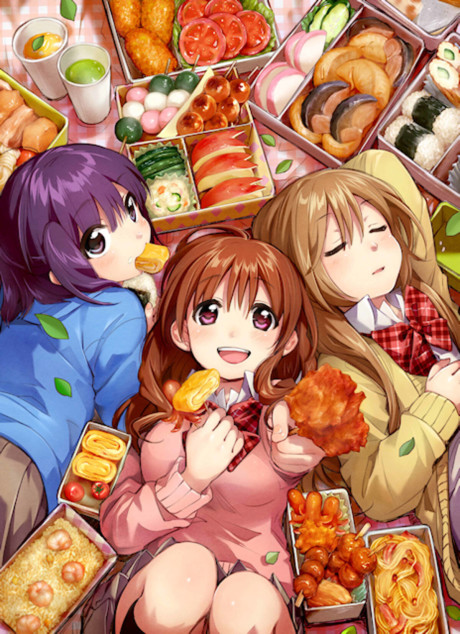
You ever heard the saying that good food tastes better when you eat it with others? Gourmet Girl Graffiti is literally that concept turned into a wholesome Slice of Life series, and I’m all for it.
Relaxing Slice of Life series that focus on appreciating the small things—like ARIA and Hidamari Sketch—are probably my favorite overall subgenre in anime and manga. Graffiti took that vibe and combined it with one of my favorite things: enjoying food, especially Japanese food. It was a combo I didn’t know I needed until this aired in the mid-2010s.
The first episode does a great job of setting up the theme. The main character, Ryou, is a nice but shy and modest girl who’s naturally a good cook. The animation shows off her food beautifully, but she feels like something is missing—her cooking doesn’t taste right, even though she follows the same recipes she was taught as a kid.
Then there’s her second cousin, Kirin. Despite being family, she’s basically Ryou’s complete opposite—hyperactive, curious, and full of energy. She loves Ryou’s cooking, but more than that, she specifically emphasizes that eating it together is what makes it so good. This simple but emotionally effective moment hooked me for the rest of the series, and that warm, comforting tone is why I love it so much.
Slice of Life often gets criticized for being slow or uneventful, but to me, Graffiti proves that just a little theming and two likable, contrasting main characters are enough to make a show feel engaging and comfy.
I love the dynamic between Ryou and Kirin. Despite their differences, they’re always so happy just hanging out, trying new recipes, and describing why they love food so much. Honestly, even though I’m not a girl, their friendship reminds me of the kind I wished I had growing up.
A good Slice of Life keeps a consistent tone and stays entertaining, but what elevates a good one to a great one is emotional depth and character development. While Graffiti doesn’t go super deep, the little growth we get is satisfying. Ryou starts off as someone who enjoys cooking but learns to appreciate the experience of sharing food and company. Meanwhile, Kirin, despite being the hyper one, gets some surprisingly strong moments later in the season. Let’s just say that while Ryou does most of the cooking, Kirin isn’t completely out of the picture—and when she does get involved, it’s really well done.
Aside from the wholesome interactions, there’s some quirky humor sprinkled in. It’s never too over-the-top or out of place for this kind of show, which just goes to show how well the writing balances the comedy and comfy vibes.
That said, as much as I love the vibe, the emphasis on beautifully animated Japanese food, and the main duo’s interactions, I have to admit Graffiti isn’t perfect. One thing that could be a hit or miss for viewers is the way it presents the characters’ lowkey sensual enjoyment of food. Even in something like Shokugeki no Souma (Food Wars), the “foodgasms” can be divisive. Graffiti has similar moments—super slow, detailed close-ups of slicing, picking up, and eating food. As a foodie, I actually love this; the attention to detail makes me hungry. But then there’s the other aspect.
I haven’t mentioned this yet, but both Ryou and Kirin are middle schoolers. Look, anime already has a habit of sexualizing high schoolers, which is a gray area I’ve had to come to terms with over the years. But middle schoolers? In a show that’s supposed to be about wholesome food appreciation? Occasionally lewding them feels unnecessary and just weird.
Another issue is that while there’s solid character development, some episodes feel repetitive—reusing the same themes but with different food. It doesn’t ruin the show, but it happens a little too often for my liking.
Then there’s Shiina, the third main character. She’s chill and makes fun commentary about Ryou and Kirin’s dynamic, but she’s barely around. When she is there, she feels more like a third wheel than a real part of the group. Maybe if there were more recurring side characters for her to bounce off, she’d have more of a role, but as is, she’s just likable enough without being fully utilized.
Otherwise, I can’t find too much to criticize objectively. It’s a super wholesome Slice of Life that nails the iyashikei vibe, has a great family dynamic, and—shockingly—doesn’t rely on yuri-baiting. Plus, the focus on Japanese food is right up my alley.
It’s a shame the series never got popular enough for a second season or even full manga scanlations. Honestly, this should be the poster child for how to do a good, wholesome, down-to-earth Slice of Life.
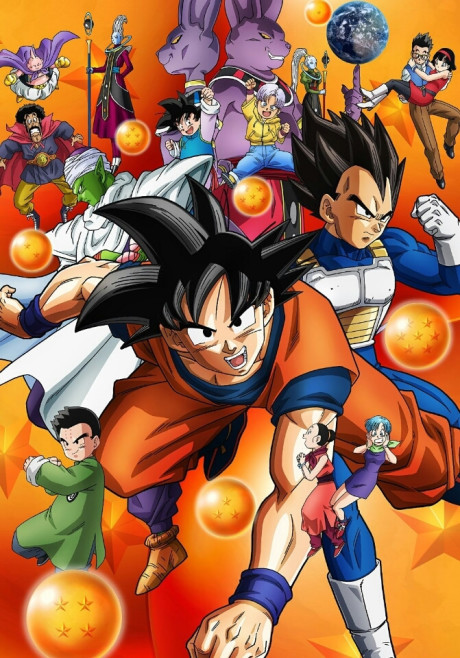
I'm just going to be upfront—if I were to take pure subjectivity into this review, I think Dragon Ball Super is just as good as Dragon Ball Z, maybe even better in some ways. At the very least, I consider it a way better sequel than Dragon Ball GT.
However, even I can admit that objectively, Dragon Ball Super is very flawed, and there's a reason it's probably the most controversial Dragon Ball media of all time. GT is mostly disliked, with a handful of people who heavily defend it, while Super seems to have just as many loud fans as it does loud detractors, plus a bunch of people who are mixed on its execution.
That said, this is my review, so I'm going to start with what I personally love about it.
I really enjoy the tone correction that Toriyama and the writers continued from the Buu saga—bringing back the mix of OG Dragon Ball’s lighthearted comedy with the more serious, over-the-top fighting of Dragon Ball Z. Unlike GT, which tried to copy Toriyama’s goofy humor and failed, Super actually nails it. A lot of the jokes feel like something Toriyama himself would write, which makes sense since he supervised the series.
While the animation quality had some issues early on, by the later arcs, it looked fantastic, especially in some of the fight scenes. The fact that Super stays true to the original Dragon Ball art style but modernized it really worked for me.
Now, let’s go over my thoughts on each major arc.
I don’t think it was a great idea for Super to retell Battle of Gods and Resurrection 'F', especially since they stretched the stories and made some scenes weaker than in the movies. However, if you never watched the movies, these arcs work as fun alternatives. Some added scenes, like the lead-up to Battle of Gods, were enjoyable. I liked that the arc took place on Bulma’s private ship, even if it meant losing the god-tier bingo scene from the movie. I also preferred the TV version of the Super Saiyan God transformation—it felt more epic and drawn out.
The Resurrection 'F' arc gets a lot of criticism, often called the worst or most skippable Super arc. I can see why, but I personally never had an issue with it. I probably still consider it better than Battle of Gods as a whole. Super Saiyan Blue could have used better buildup, but I always liked it as a form, even if it's as Frieza put it—Super Saiyan with blue hair dye. I prefer its simplicity and emphasis on calmness over the busy, furry Super Saiyan 4. This arc also marked the return of secondary characters to battle, which was nice, even if Master Roshi got powered up a little too much and Krillin’s fear of some goons was questionable. I also liked that Goku and Vegeta were so powerful that they didn’t even take Frieza seriously at first.
Moving on to the original content, the Universe 6 Tournament arc was the first full tournament we've had since the Piccolo Jr. fight way back in Dragon Ball. Some parts were weak, like Monaka being a joke, Piccolo getting screwed over by bad luck, and the first of many instances of Majin Buu being written out for convenience. But overall, I loved this arc because it fully embraced Super's tone—balancing OG Dragon Ball's campy humor with Z's badass fights. Expanding the story to include alternate universes was a great way to introduce antagonists who weren’t just villains. I mentioned in my Dragon Ball Z Kai: Final Chapters review that I was getting tired of every Dragon Ball antagonist just being a power-hungry villain. This arc gave us a tournament with something of stakes, but its main purpose was a petty sibling rivalry, allowing Goku to still seek out strong opponents without major repercussions.
The Future Trunks/Goku Black arc is the one arc in Super that felt fully serious like Dragon Ball Z. It’s easy to see why it’s a favorite for many. Goku Black could have been a generic evil Goku, but his backstory was surprisingly engaging, and he had just the right amount of camp while still carrying Goku’s instincts. Bringing Future Trunks back was also great, and Goku and Vegeta had some sick moments. Unfortunately, the arc had a few big issues, like Trunks getting an absurd power boost and ultimate ability out of nowhere. Worst of all, the ending was easily the worst in any canon Dragon Ball arc. I get that Toriyama likes to throw curveballs, but I have no idea why this one needed to be so depressing and anticlimactic. I don’t know anyone who likes it.
Surprisingly, I really enjoyed a lot of Super's filler episodes. Goku running from Chichi on a tractor instead of helping Mr. Satan, the baseball match between Universes 6 and 7—some of the funniest Dragon Ball episodes ever. I wasn’t big on the Copy-Vegeta arc, but it was fun just to hear Brian Drummond voice Vegeta again for a bit in the Funimation dub.
Now, onto the Tournament of Power… Oh boy. If this arc were its own season, I would likely give it a 100/100 on AniList. Does it have flaws? Sure. The buildup could have been shorter. Some middle fights could have been trimmed. More universes should have eliminated each other instead of it mostly being Universes 7, 6, and 11 taking out everyone.
But I’m just going to be real. The Tournament of Power is my favorite Dragon Ball arc, period—yes, even more than anything in Z. It has everything I love about Dragon Ball in one package. It’s a tournament arc, which Dragon Ball does best, but with a twist—it’s a team-based battle royale, allowing for side battles and even fake alliances. This arc fully realizes the potential of the Dragon Ball multiverse. I loved almost every fight, even ones that didn’t involve the main cast. People complain about Ribrianne being annoying, but I actually found her whole crew entertaining and very much in line with Toriyama’s humor. Maybe it’s because I like magical girl shows, but I enjoyed their presence.
Jiren gets criticized for being a boring antagonist, but I didn’t mind Super shaking things up by making him a stone wall—a near-invincible powerhouse who wasn’t actively seeking to be the strongest. They could have revealed his backstory earlier, but I liked how he only got involved in fights when he felt it was necessary.
But let’s be real—the fights are what make this arc legendary. Every member of Universe 7 gets a cool moment. Sure, Krillin got taken out early, and Tien and Piccolo didn’t have the most graceful exits, but they still had their moments. Goku, Vegeta, Frieza, 17, and even Gohan and Roshi all got amazing scenes that fit their characters. And yeah, every Ultra Instinct fight is a top 10, if not top 5, fight in the entire series for me.
Now, despite my love for Super, I have to address its flaws, and because of them, I can’t quite give it a 90 on Aniilist.
Goku’s personality regressing to be more immature gets overblown, but yeah, the writers took it a bit too far—especially with that dumb “he’s never kissed before” moment. Super also suffers from the “Goku does everything” problem. Vegeta gets great moments, but he always gets robbed of major wins. Outside of Goku and Vegeta, most characters barely get to do anything outside of Resurrection 'F' mooks and the Tournament of Power.
Some say Super feels like a bunch of disconnected arcs, but I liked that it shows the world post-Z without forcing a single overarching villain. It proves there are still ways to create tension without constantly escalating villain power levels.
So yeah, Dragon Ball Super is messy. The retold arcs drag, silly power creep continues, most characters are just there outside a few arcs, and some comedy falls flat. But for me, it’s the perfect sequel that captures the tone I’ve wanted Dragon Ball to have for years. On some days, I even think it’s better than Z.

Oh boy, Dragon Ball GT is one of the most touchy subjects in the online Dragon Ball community. I still remember when it was super cool to universally hate on GT for basically everything it did to "ruin" Dragon Ball Z.
Nowadays, with Dragon Ball Super, there's a very vocal crowd—let’s call them a vocal minority—that heavily defends GT and at the very least claims it’s better than Super.
On a personal level, I’ve never really hated GT. Admittedly, before I knew it wasn’t canon, there were things I liked about it, but something always felt off—even from the beginning.
The elephant in the room is that making Goku a kid again for the whole series was a terrible idea. It might have worked for one arc, maybe up until the end of the Baby Saga, but for the entire 60+ episodes? I get that the writers were trying to blend the best aspects of OG Dragon Ball and DBZ, but lazily making Goku a kid for most of the series was just not the way to do it.
That said, I don’t hate each major arc conceptually. The way the Black Star Dragon Balls were introduced was lazy and barely explained, but I do like the idea of a small group traveling through space to find them. The execution, though? Not great.
The Baby Arc was a cool way to bring Saiyan lore back into the story, with the Tuffles seeking revenge for their stolen technology. Baby being able to possess people was a creepy ability, clearly an attempt to escalate Majin Buu’s regeneration gimmick.
Before Toriyama gave his own canon vision of Hell in Resurrection ‘F,’ the idea of villains escaping Hell to take over Earth had potential in the Super 17 Arc. It could have been fun fan service.
The Shadow Dragon Arc is probably the best idea conceptually—going back to the overuse of the Dragon Balls and how it should have consequences beyond just waiting a year to use them again.
But at the end of the day, Dragon Ball GT is the ultimate case of great concepts with incredibly sloppy execution.
While I liked the idea of searching for the Dragon Balls in space, the Black Star Dragon Balls came out of nowhere, so I had no reason to care about them. Outside of Goku, I didn’t care for the other two characters on the journey—Pan was annoying, and Trunks had no real personality. GT tried to copy Toriyama’s OG Dragon Ball adventure vibe, but most of the planets they visited were just boring. There’s a reason the original FUNimation dub skipped over this whole section.
The Baby Arc was probably the least flawed in terms of pacing. The idea of Baby taking over the Z Fighters and Goku having to fight corrupted versions of them was solid. But the way it was done made Baby way too overpowered—more so than even Majin Buu. This was also where GT fully became "The Goku Show." Uub being Goku’s pupil amounted to nothing, and his fusion with Fat Buu was dumb. Also, while I liked the idea of bringing back Saiyan tails, the way Goku and Vegeta conveniently got theirs back through magic or random pulling was just ridiculous. These guys are well into their 40s at this point.
Speaking of transformations, this is where Super Saiyan 4 (and to a lesser extent, Baby’s Golden Oozaru form) was introduced. SSJ4 just doesn’t feel like a natural evolution from Super Saiyan 3. SSJ3 had the long hair but still fit the theme, while SSJ4’s weird red monkey design just feels... off. And let’s be real—SSJ4 was just an excuse to bring back adult Goku temporarily because they knew fans wanted it. Golden Oozaru could’ve been cool, but the explanation for merging it with Super Saiyan was weak. And randomly killing off Piccolo? That was just unnecessary.
Then there’s the Super 17 Arc. There’s a reason this is considered the worst arc by far. As I said earlier, the idea of villains escaping Hell had potential, but the execution was one of the dumbest things I’ve ever seen. Dr. Gero and Dr. Myuu somehow making two Android 17s and fusing them to become stronger than Goku? When the original 17 wasn’t even that powerful to begin with? Makes no sense. Goku getting trapped in Hell was dumb, and Piccolo, who shouldn’t have died earlier, got screwed over again just to give him a reason to help Goku escape. It doesn’t help that this was the shortest arc, so there’s almost nothing good to say about it.
The Shadow Dragon Saga is the least bad overall. I love the idea of overusing the Dragon Balls having real consequences, and giving each Shadow Dragon a connection to past wishes was a great touch. There were some fun fights, especially with Nova Shenron and SSJ4 Gogeta vs. Omega Shenron. But half of the Shadow Dragons were lame, with gimmicky fights that relied more on luck than strategy. Nova Shenron was the only one with real charisma, while even Syn/Omega Shenron felt bland for a final boss. And Kid Goku pulling out a Super Spirit Bomb as the final attack—just like in the Buu Saga—felt like a cheap, unearned knockoff. They even had a fusion again, only for it not to be the final move. It just felt like the writers had run out of ideas.
And these are just my critiques of each arc. I haven’t even touched on the bigger issue—out of all Dragon Ball media, GT is the worst when it comes to making it "The Goku Show." At least Dragon Ball Super gives Vegeta stuff to do, and even some side characters get moments.
Sadly, the best thing I can say about GT is that it has a great opening, "Dan Dan Kokoro" (and to a lesser extent, the FUNimation "Grand Tour" rap, which is hilarious to laugh at). It’s just unfortunate that for every good idea GT had, it fumbled the execution every single time.
It’s not completely unwatchable, but I wouldn’t recommend it unless you’re really attached to Super Saiyan 4—which seems to be the main reason people like it. That, and maybe the idea that Goku is more mature here compared to Super.
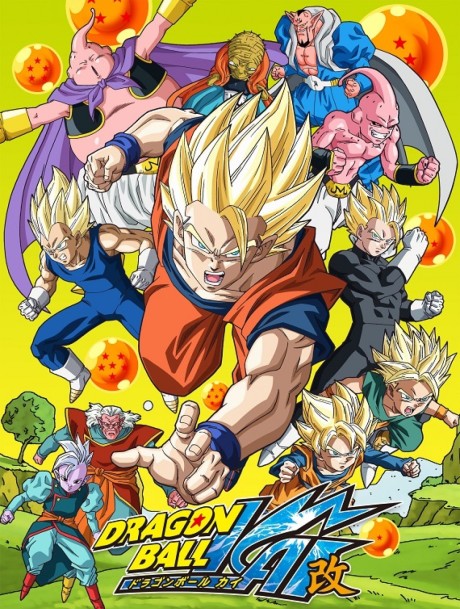
In previous reviews for Dragon Ball Z and the first season of Dragon Ball Z Kai, I mostly talked about how much I love the series. But I was also willing to look past the nostalgia and criticize the parts that I think some Dragon Ball Z fans hype up a little too much—especially in sagas like Frieza’s and, even more so, Cell’s.
For this review, I want to go over a saga that’s widely considered the worst in all of Dragon Ball Z—possibly even the worst in the original manga—the Buu Saga. I won’t deny that this arc has flaws. This was the point where it became painfully obvious that if you weren’t a Saiyan, you weren’t going to be useful. Toriyama didn’t even attempt to make non-Saiyan characters relevant. Even Piccolo was relegated to being a temporary mentor.
That said, I think some of the early Dragon Ball Z arcs are put on a pedestal a little too much, while the Buu Saga, at least to me, gets way too much undeserved hate. The Buu Saga is still enjoyable and important—not just because the Dragon Ball series needed a proper ending back in the ’90s, but also because of its influence on other shonen series and even future Dragon Ball content.
One thing I want to praise right off the bat is what I like to call a tone correction. Starting with the King Piccolo Saga, Toriyama shifted Dragon Ball into a more serious direction. This led to some of the most memorable fights, deaths, and character development in the series. But by the time the Cell Saga came around, I was getting sick of every villain just being "the strongest being in the universe" or "wanting to take over the world." There are only so many times you can do this before it gets old.
Thankfully, the Majin Buu Saga broke that cycle. As the series got more serious, it felt like Toriyama strayed from his original vision—Dragon Ball started as a gag manga. While Dragon Ball Z had some amazing fights, I found myself missing the fun and comedy when doing a full rewatch. The Buu Saga managed to mix the serious tone of DBZ with the goofy humor and magic elements of classic Dragon Ball.
I also think Buu’s origin makes way more sense than the random androids in the Cell Saga. The idea that Majin Buu is a super-powerful villain who has existed for millennia feels a lot more natural than "Dr. Gero made some robots that somehow surpass Super Saiyans."
Now, I’ll admit Buu having like five different forms was a bit overkill. But unlike the Cell Saga, where villains kept getting swapped out, Majin Buu remained the main antagonist the entire time. And at least in my opinion, the justification for his changing forms made more sense in the plot—even if it was obvious that Toriyama was figuring out Buu’s final design as he went.
Unfortunately, a lot of secondary characters like Piccolo, Krillin, and Yamcha were completely sidelined. The only exception was Mr. Satan, who surprisingly became an emotional buffer for the good version of Buu. But despite that, the Buu Saga had some of the most important character development in the entire series.
The most obvious example is Gohan. I’ll admit it’s disappointing that he didn’t get the final kill like Toriyama originally planned. But even back in the Cell Saga, it felt like Toriyama was forgetting that Gohan started off hating fighting and only kept going because bad guys wouldn’t stop showing up. If anything, the almost decade-long time skip between Cell and Buu, with Gohan getting “lazy,” makes perfect sense. He got rusty. Looking back, him regaining his power through an old Kai unlocking it was convenient, but at least 24 hours of non-stop meditation and dealing with weirdness gave him some effort to put in.
Vegeta, though? Hands down the best character development in the entire series. He got a little bit of it at the end of the Cell Saga, but for most of DBZ, he was just an unlikable jerk with a few cool moments. The Buu Saga showed him having a midlife crisis, starting off chill, then regressing, and then ultimately getting the best redemption arc. And I still think the way he helped end Buu was one of the coolest villain defeats in all of Dragon Ball.
But the biggest surprise? The fact that Fat Buu and Mr. Satan of all people got character development. This was a huge subversion—Dragon Ball hadn’t given a villain meaningful development since Vegeta, and even that happened by accident. With Majin Buu, it was clearly planned from the start. And Mr. Satan? The annoying joke character from the Cell Saga actually became likable. His arrogance was played for good instead of just being obnoxious.
The Buu Saga also introduced a ton of major concepts—fusion (both Potara and Fusion Dance), Super Saiyan 3, and even little kids turning Super Saiyan. Yeah, Super Saiyan 3 became kind of a joke in later series, but at the time, you could tell Toriyama wanted it to be a high-risk, high-reward form. And while fusion rarely actually defeats the bad guys, there’s a reason it’s still used in every single piece of Dragon Ball media. It’s just that cool.
And finally—after being hyped up for so long—the Spirit Bomb actually worked as the finishing move. It was so cathartic to see an old ability that should have been a game-changer actually function the way it was supposed to.
Now, as much as I love this saga, I can admit the flaws.
Gohan’s power-up was great, but his character arc was inconsistent and clearly rewritten on the fly. The high school segments were fun, but they dragged on longer than necessary and probably felt weird for fans used to Goku’s adventures.
Majin Buu constantly changing forms was fun, but it also felt like Toriyama was struggling to finalize his design—just like with Cell. And even he couldn’t keep track of which version of Buu was supposed to be the strongest, so you really had to pay attention. His regeneration powers were also way too OP. It was clearly just a way to drag out the saga because, realistically, with how strong the characters were, this arc could have been much shorter if Buu wasn’t regenerating every five seconds.
Like I mentioned earlier, Toriyama didn’t even try to make non-Saiyan characters relevant anymore. And while I personally don’t mind Gotenks and even find him amusing, I get why people were annoyed that two little kids were one of the main forces against the final villain—especially when we’d spent years watching serious, experienced fighters take on these threats.
There was also a ton of wasted potential—like Dabura and the whole Demon Realm, which it took decades for Dragon Ball to finally explore in Daima.
I haven’t talked much about the Kai version of the Buu Saga because, honestly, there’s not much to say. By the time Buu originally aired, there wasn’t much filler outside the high school arc. Kai trimmed that down, which made it a little less annoying for people (including me) who just wanted to get to the tournament.
At the end of the day, though, I think the Buu Saga is incredibly overhated. Sure, there were ideas that could have been refined, and a few characters definitely deserved better treatment. But the number of important concepts it introduced, the nonstop entertainment, the amazing character development, and the most satisfying final villain defeat in the series?
I don’t know—I just think the Buu Saga at least stands on par with the rest of DBZ. And for me? It might just be the best.
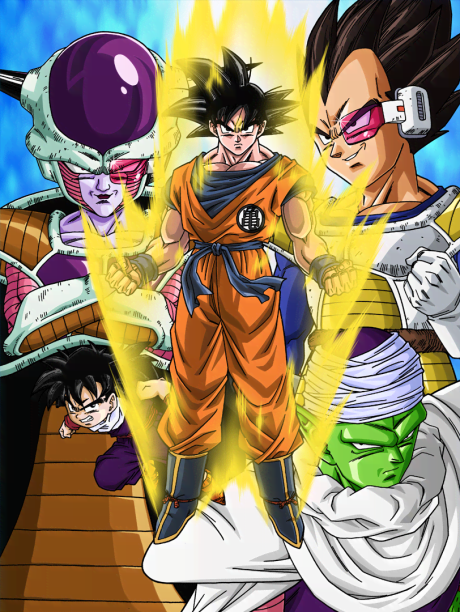
In my original Dragon Ball Z series review, I mentioned that as much as I love the series—and think either the original Z or Kai are great ways to experience it—if you drop the nostalgia and judge it by modern anime standards, especially in English dub form, Kai is easily the better choice.
Dragon Ball Z Kai basically fixes two of the biggest issues with the original Z: the filler episodes and the overall slow pacing. Sure, the series is still long—certainly longer than your average battle shonen—but the way it gets to the point much faster makes it way more enjoyable. You don’t have to sit through episodes of unnecessary padding and events that are never referenced again in any Dragon Ball series.
Now, do these changes suddenly make Kai a perfectly paced series? Obviously not. Even without filler, battle shonen series tend to drag out certain scenes and arcs longer than necessary. But Kai at least trims things down to a more compact, digestible format, which helps a lot.
In my original Dragon Ball Z review, I focused more on the macro level—how the fight scenes are consistently great and, more importantly, how much I love the character growth and interactions. Goku’s love of fighting, Gohan and Piccolo finding their places in the group, Vegeta’s drive to surpass his rival—these elements all add depth beyond just the action.
Now, for this Kai review, I want to give more specific thoughts on the various arcs.
The Saiyan Saga is a great way to introduce the ever-expanding scope of Dragon Ball. Before this, outside of Piccolo’s introduction and Goku’s tail becoming irrelevant, the series was pretty grounded in terms of power progression. The reveal that Goku is an alien was the ultimate retcon in the best way possible. Toriyama opened up the world in a way that explained Goku’s powers beyond just being mysterious. Plus, the Saiyan Saga had real stakes before Dragon Balls became ridiculously overpowered, which added a layer of tragedy that later sagas lacked.
The Frieza Saga, while iconic, is honestly a bit overhyped—or, as the zoomers say, “glazed.” Once the fight with Frieza starts, it’s amazing. But everything leading up to it drags, even with Kai cutting the filler. I like the idea of Gohan, Krillin, and Bulma having to strategize to survive while different groups hunt for the Dragon Balls, but there’s just too much running around that ultimately leads to nothing. This saga also kicks off the annoying trend of sidelining characters while waiting for Goku, to the point where they have to keep knocking him out just so he doesn’t end the arc too early. The Cell Saga at least fixes this by keeping more characters involved, but watching just Gohan, Krillin, and Vegeta go up against various enemies gets dull fast. That said, once Frieza himself finally enters the battle, the long, grueling fight to take him down is incredible and serves as the ultimate payoff to everything set up since Raditz’s arrival.
The Android and Cell Sagas are widely considered the best parts of Dragon Ball Z for good reason. Pacing-wise, they’re the best of the longer arcs, though this happened somewhat by accident due to Toriyama’s editor constantly pushing him to change the main villain. Despite these changes, the saga still feels cohesive, which just shows how good Toriyama is at improvising and making things work with his simple yet engaging writing style. The Cell Arc serves as a necessary turning point for characters like Goku, Vegeta, and Gohan, showcasing their flaws and forcing them to learn from their mistakes. Cell himself is an awesome villain—genuinely terrifying in his early forms and hilariously cocky once he’s perfect.
That said, as much as I love this arc, I have issues with it that keep it from being the “perfect” arc many fans claim it is. The constant villain changes, while interesting, make it hard to take each new villain seriously, knowing they’ll be replaced in 20 episodes. Similarly, while I like the idea of negative character development leading to growth, there are too many moments where characters act downright stupid just to drag the plot out. Characters like Krillin, Android 18, Android 16, Vegeta, Goku, and even Piccolo and Trunks make baffling decisions that stretch things out unnecessarily. It’s entertaining to watch the train wreck that leads to Cell reaching his perfect form, but it’s also frustrating how much of it happens purely because characters act dumb. Also, while this arc tries to keep non-Saiyan characters relevant, it’s obvious Toriyama was struggling. Tien’s Tri-Beam, Krillin’s attempt to deactivate 18, and even Piccolo’s brief power boost all feel like last-ditch efforts before those characters become completely outclassed.
This review might sound a bit harsh for a series I’m ultimately rating very highly, but that’s just because I’m passionate about it. Dragon Ball Z Kai is still one of my favorite anime to just pick up and watch anytime. I just wanted to point out that it’s not flawless, especially since so many fans overhype the pre-Buu Saga arcs.
Regardless, Dragon Ball Z Kai is easily one of my favorite anime of all time and is hands down the best way to watch the series from start to finish—unless you’re really attached to the old-school delivery of certain quotes in the original English dub.
