— — — —— — —
×
— —— —
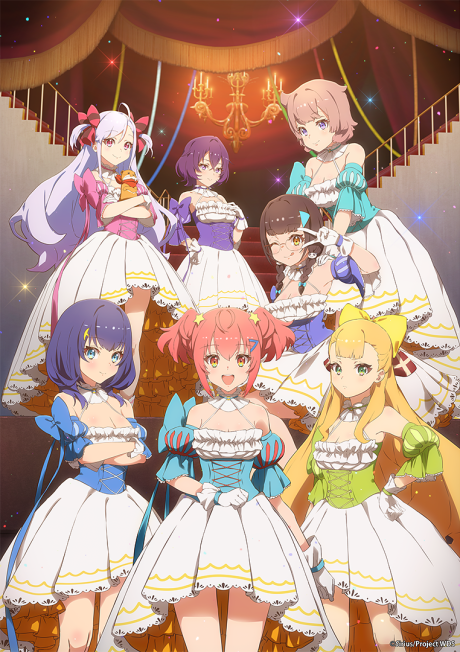
When I think of theatre anime, recent examples jump to mind first. I love Revue Starlight. And Kageki Shoujo was also fun in its own right. And now I can add another one, World Dai Star, to that pocket. And, much like the other entries within this “sub-genre” of theatre shows it takes that concept and adds its own elements. It takes a bit of the realism of Kageki Shoujo and mixes it with the “x-factor” of Revue Starlight, creating an amalgamation of symbolic and thematic through lines with its characters while also brimming with magic.
One of the key components of how I think World Dai Star really excels at its jobs of portraying theatre is in its showing. The concept of World Dai Star is about girls living together in a troupe, with the goal of creating a “World Dai Star” or a top of the line actor. And to do so we must have the characters act in plays, not just to fulfill that requirement of the story but also to show characterization, growth, and, the act of acting.
To act is to take on a character. One must embody the essence of the role, if they are to act as a suave prince hindered by nobility, attempting to free themselves from the chains of society their body language might reflect that. They may stride with energetic jumps, open their arms to show compassion and empathy, welcoming the world. They may hold their head high and raise their voice to be heard. Or if the role is subdued, a princess about to be ferried to the moon, their actions may be reserved, the body language tight and gentle, hesitant in moving because the very act of moving will spirit them away.
What World Dai Star excels in, is being able to show these intricate details in the subtext of acting by animating it in a way that you can really see the characters move, the tiny gestures, the ornate sweeps, every motion really pops out in the animation where it almost feels jarring.
Animation is an important part of anime, and World Dai Star does not skimp out on really making sure key details are emphasized with its production, adding not only a visual treat but also layers of additional meaning that you can take from. It makes seeing these plays not just a plot device for the story but a way to show how characters interpret these plays, and by doing so characterizes them and adds parallels to the theory of acting.
There are different methods of acting, like method acting, embodying the role in an immersive way to have the actor really become the character, even stripping away parts of themselves to mirror a role. There’s textbook acting, understanding the character through analysis and objectivity, playing it as written to the tee because that is the story’s intention and that is how to get the most meaning with the most safety. There’s interpretative acting, having the actor use themselves as a means to create the character and a unique version of that role.All of these methods, with their benefits, and downsides, are showcased in the show. Along with other avenues and intricacies of acting, these are all placed in the forefront with the show’s cast of characters. Each one may feel at first like a trope but beyond that they are instilled with the complications of acting.
For instance, Kathrina shows at first the strengths of textbook acting, how much she can memorize a play to the exact word to replicate a “perfect play,” but that perfect play is flawed. Not because she herself is a poor actor, but that perfection is not interesting, and an audience can easily tire from something that isn’t surprising to the extent that they may as well just read the play themselves. We also see a downside in what happens when a play doesn’t go exactly as planned and the textbook actor has to improvise, which in Kathrina’s case is near impossible since she has spent so much time honing her one craft.
We also have Panda, who shows the strengths of acting for an audience, as in, reading the room and playing the emotions of the audience. If the audience is wowed by a certain action or enamored in a certain way she can bend the play to feed into that. While making sense to garner audience attention and to get a response, if she tunnel visions into that, it can also backfire. Instead of paying attention to making a decent play and making something meaningful for everyone, she’s just pandering. And we see that be shown in the show.
The show is able to introduce and give a bunch of different elements to acting, and critique them, giving pros and cons while also representing that actors can take on any method but also change and advance with them.
Inevitably, not every character got equal amounts of development and so some of these aspects of acting symbolized through the characters may not have gotten equal treatment, but with those that they focused on, they did a good job of really representing them.
But it isn’t just in the characters that represent this, it’s in what the characters can do. Yes they can act, but they can also activate special magical powers. Not in a metaphorical sense either. I mean quite literally these characters have special magical powers that aid them on the stage. This is that x-factor.I think this aspect may push the show into either territories of being extremely cool and flashy, to perhaps a bit goofy in presentation. It’s quite a thing to see a character, for instance, stopping time to memorize the script of a play and then flex on her fellow actors. Or its quite a thing to see a character grow angelic wings while they sing to captivate an audience. But I love it. Each special power represents a different aspect of the characters and helps bring out the aforementioned parallels to real life acting in a visceral way. And it adds intrigue and mystique to the story in a way that really pushes it forward.
Not only are we attached to the plays and the progress made there, on the characters growth, but also in how they may use their powers. How those powers may evolve but how they can create solutions and how they may make certain moments on stage pop out.
Perhaps the way the show explains the powers but not really explains certain powers in concrete terms may be a bit frustrating to some, and I can see that. That and it possibly feeling over the top and goofy with the mixed in realism may not be for everyone. But for me it adds in enough dimension and complexity that really makes the show worth it.
I think World Dai Star is a pretty good show that manages to give enough dimension to a concept that may seem expected through its inclusion of not only realism that ties itself to parallels to the theory of acting but also in its magical realism, in the way it can really shine and bring out spectacle. The show is entertaining, it can be a bit goofy and over the top, it can be sentimental and emotional, it can even be a tad bit cheesy depending on your sensibilities but it’s got heart, and it’s definitely got soul.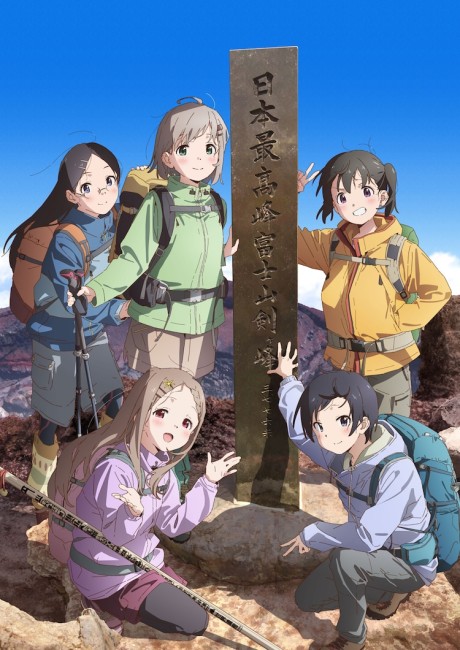
Acknowledging it here, the first four episodes are a recap of the first 3 seasons, which even if I may not like, isn’t something I’m going to really focus on in this review, but I did want to mention it
Yama no Susume’s fourth season in many ways is a culmination and celebration of everything before it. What started first as 4 minute shorts, then became 12 minute half episodes, then a full length special, has now come around to a full length regularly scheduled series. This culmination of accumulated time since its 2013 beginnings has allowed the story to blossom, and for its characters to really show how far they’ve come, just as the length of episodes have grown, so too have the characters.
Yama no Susume is a culmination and celebration of everything before it, even from the people working on the show, having past members of the team come back around, having previous artists and fans of Yama no Susume come to work for the show, and the exceptional scheduling and production leading to cases like an episode having finished 2 years prior to this season’s airing. A lot of this information is documented across various sources, from sakugabooru’s main writer (kVin on twitter) to informed reddit posters (yes, reddit) who have direct links to their sources. In fact many of the reddit discussion threads are a goldmine of information with detailed staff information and work notes, showing the absolute effort that goes into making the show, through location scouting, climbing mountains themselves, and even well documented production of the music from the channel YamazoJP, where you can see them making music for the show.
Does this celebration of the show, of the art and creation of anime, matter so much to the story of Yama no Susume? Some may not see it at so, and to the literal story, maybe not, but to me it’s greatly important. Knowing that the passions are there go a long way.
It’s now not only a solitary journey of seeing the characters grow, a very important theme to the series as whole, but a journey of seeing the team behind the show grow, of seeing how far they’ve come since its 4 minute origins. In a growing age where people debate AI generation as art, I find a great deal of importance and humanity in the people behind these projects showing that love in such outward ways. It’s one part of why a show like Healer Girl is so important to me, or Bocchi the Rock, in that the creators are so open to the love of their work, to the passion that oozes off of these stories and how palpable that is in the production.
But, to move beyond discussion of the backend passion of artistry, I don’t want to take away from the actual show and story we got from Yama no Susume season 4.
One of the best parts of this fourth season is getting closure for a lot of growth and development from Aoi. Her journey has come a long way, from failing to climb Mt Fuji in season 2 and starting to make new friends in season 3. But at the end of the day, she’s still the awkward, often reclusive, and often quick to think about quitting person, as she had been since season 1. What this fourth season does is expand on that and give us even more development on those previous points.
We see this in the recursion of certain plot points, such as Aoi having to go shopping for new mountain climbing equipment. Each successive trip expands to reflect the state of her journey. She first has to buy a backpack, which will allow her to actually carry gear and necessities to climb. Then she needs a jacket, which will allow her to brave the weather and conditions after now being able to go on those journeys in the first place. Later on she even has to find a job, her character going from lounging around to actively funding her own hobbies shows how much she’s matured. Season 3 has her buying shoes, now that she has more experience, she can start making upgrades to her equipment, having proper footwear is quite important, but it wasn’t something the show had given much consideration.
Season 4 is no different, expanding on yet another shopping trip, which, spoilers, is another backpack. The very first thing she had to get when she first started has now come all the way around and she’s picking one out for herself. The arc of her journey has met itself, but this time, she’s far outgrown who she used to be. She’s gone through various failures, learned lessons from those failures and hasn’t stopped climbing despite the allure of quitting constantly following her.
It’s awesome seeing this along with other plot threads expanded on in this season, such as giving us yet another mini arc where she has to climb a smaller mountain for training, and seeing how her mindset changes and deals with these familiar situations. Yama no Susume season 4 doesn’t simply take old plot threads and reuses them, but takes them, complicates them, and shows just how far the characters have gone.
Another big factor of the show isn’t just Aoi, and it’s of course the breadth of friends surrounding her. We get more Hinata, we get more Kokona, and we even get more Honoka, a relatively newer character, who prior, had been slowly integrated throughout season 3 but has now even more specific moments dedicated to her. A lot of the cast gets more moments like this, even if the reach of them all aren’t always as explicit as Aoi.
We get to see Hinata seeing Aoi make strides to have more friends and not feel jealous but it’s not like we get a whole dedicated episode to her. We even get a whole new character that while very fun, is just that, a fun addition to the cast, that fleshes out a bit more of their school life, but we don’t get the same breadth of emotional threading from her.
Regardless, just like with the prior seasons, season 4 allows the exterior cast more chances to shine. Some of them get some really well needed attention, like Aoi’s co-worker, and others are just vibing with the gang, like Aoi’s new suite of friends who still aren’t as fleshed out but add a nice colour and flavor to Aoi’s life regardless.
Four seasons in, and the main formula of Yama no Susume still remains strong, the formula that you might expect having watched the prior seasons, and that isn’t necessarily a bad thing. We have episodes showcasing the characters in a more light hearted way, this is still a slice of life, but in those moments we can get a great deal of growth and characterization.
We have episodes where we go through these smaller arcs, mountain climbing, the main “action,” and these episodes similar to prior seasons do a great deal of expanding on the hobby aspect of the show and having the characters grow and learn with it.
And, as is the hallmark of this series, it does not skimp out on the production, from the beautiful vistas, the well animated character acting, to the serene pieces of music that trace the emotions within a scene.
Yama no Susume season 4 expands on, gives us more of, and absolutely celebrates everything before it. It is the next summit. And it’s here.
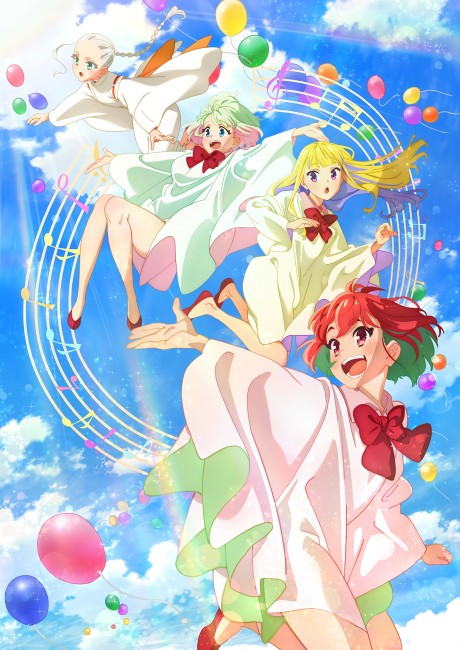
Those who might be familiar with the studio behind Healer Girl, 3Hz, or the director, Yasuhiro Irie, might be keen in the precedent that Healer Girl presents. This precedent is another original show but, a show that has probably never been seen before. A musical.
And I mean “musical” and not “music show” quite literally. As in, the key emotional moments and pivotal character growth happens through song and dance. As in, expect the show to have characters sing during dialogue. Shows like Revue Starlight would be far closer to Healer Girl than idol shows, since Healer Girl is not an idol show. But, the director went on to say he didn’t want an idol show or even a show like Starlight where battle and music was combined. To the utmost ability of his team, he wanted Healer Girl to be one of a kind.
The result is an incredibly unique show oozing passion.
This passion permeates prominently in every episode through the expressive characters, the careful selection of music, and the vibrancy of the writing.
Healer Girl’s narrative can be sectioned into two components: the world (setting), and the characters. The “plot” isn’t necessarily a big part of Healer Girl, and instead it focuses on developing a trio of apprentice healers through slices of their lives. The world of Healer Girl isn’t too far off from reality, with the only exception being the ability for certain people, “healers” able to physically affect others through their voice. This blends perfectly well with the main trio, Kana, Hibiki, and Reimi, who are apprentice healers.
These three serve as the core of the storytelling that Healer Girl employs, which, forgoing a larger overarching arc, is about their development and progression as they become better healers and people.
This can be in the form of literally just training and studying technical terms and practicing harmonics for their healer exams, going out to the country to learn about each other and their goals, and aiding in surgery.
But no matter what situation they find themselves in, the characters are at the core.
Kana is an air-headed leader with splashes of genius honed through her hard work. Though, at the end of the day she’s extremely energetic, and provides an atmosphere of lightness and gentleness whenever she’s on screen.
While Kana might be the leader, it wouldn’t be far off to see that Reimi, who comes from a music family and is very skilled, might be seen as such. Her aura of pride is aggressive, and it shows whenever she’s on screen, even when she isn’t being prideful and just being frenetic. Reimi, just by being herself always seems to take the screen by storm with her presence.
To balance her energy is Hibiki. She’s the reliable mediator, but also has her own subtle brand of brilliance, being quite humble at the things she’s good at. That often creates for humorous situations as we gradually learn about Hibiki’s varied interests and ability to just pick up on things. While being on the more energetic and light-hearted side like Kana, she doesn’t encroach to feel too similar to her at all.
All three of the main cast is so colorful in who they are and it’s shown thoroughly. The team’s care in carefully crafting characters made watching and getting into the world of Healer Girl so gentle and welcoming, but also instill a level of energy that made it fun and engaging.
The watch time for Healer Girl for me is quite unique. For each episode of Healer Girl, my average watch time has undoubtedly reached beyond the 24-minute mark. Was I re-watching and analyzing all of the intricate directing, details and dynamic scenes? Well yeah there is a lot of that, especially in the ornate imagery that the show can provide, especially when they sing, as songs often create explosive imagery and metaphor in the show. But I was also rewinding just so I could listen and watch as the songs unfurl.
The musical selection of Healer Girl ranges from slow, beautiful arrangements that touch upon a layer of sentimentality within the characters, orchestral epics that entice with bewilderment and splendor, and more carefree and silly arrangements akin to taking a vibrant stroll on a sunny Sunday morning.
The range of emotions and the variance of each song make their inclusion always a pleasure. Even when certain songs are reused in terms of melody, the new arrangements are often different enough that it doesn’t feel unsatisfying. And even more so, when a song is reused, it’s often done with enough purpose that bolsters the narrative and of course the audience’s own excitement of hearing it again. This excitement was a huge part in how much fun I had. After all, each episode gave us a different song, and it was always a treat listening to either something new or seeing a spin on something we’ve already heard.
This is not even mentioning that these songs often blend into the episodes naturally. The main cast are healers, whose main job it is to sing. This lets the show wave away some of the more silly musical segments that might appear. After all, in a world that doesn’t treat such moments as silly, then why should we.
If the characters want to sing and give us a musical number while they do something as simple as studying for an exam, hey that makes sense. If the characters want to sing to make each other feel better and to better express their feelings to another, that makes sense. If the characters want to sing to literally heal and mend physical ailment, well, that’s the point of the show.
Everything, from the characters, to the music, feels so purposeful to what the team envisioned.
I’ve mentioned this before, but the main draw of Healer Girl isn’t exactly in the immediate “plot.” While many exciting events do happen, and there is a good deal of drama for the characters to overcome, the show is also hesitant to dive too deeply into darkness. The emotions are definitely there, and the characters do go through struggle, but it’s not plated in an oppressive way, nor do they dwell too long on certain moments.
Healer Girl, by every chord of its being, is a positive show. It’s extremely uplifting in how they resolve conflict. For some that might make the episodes feel a little lacking, and it may make the show feel, well, akin to a slice of life. Events may not seem to string together in a larger way. They might meander and literally just spend some episodes messing around and building their friendship more than anything. And yet, at the same time, the show also has a good handful of episodes that really dive deep into the characters, focused on their unique troubles and again, resolving them in a very “Healer Girl” way, with absolute positivity.
Admittedly, if the show wanted to dial back and really let some of their more poignant moments last, it would have made certain moments stand out even more. But to what they did show, and to the way the show was so stalwart in what it wanted to show, I can’t help but respect the decisions it had.
It wasn’t that I came back to Healer Girl each week because of its outwardly fascinating narrative or “plot,” but that I was having so much fun following the exploits of the main cast, and seeing how they grow with each other in such a gentle and healing way.
Healer Girl is a hard show to recommend, only if you don’t like music shows or musicals. But if you have even the slightest inclination for a music show, then I can’t help but wholeheartedly recommend giving Healer Girl a shot. It may not have the high stakes drama, or engrossing writing as other shows within the genre can have, but Healer Girl doesn’t have to be that. It never threw its gauntlets into that ring at all. Instead, it’s uniquely its own show, with an undeniably passionate team shown through the characters, the music, and the story’s penchant for optimism.


Aquatope’s premise is one that is unique and familiar. The show takes cues from its Working Girls predecessors: Hanasaku Iroha, Shirobako, and Sakura Quest which are about working at an inn, an anime studio, and revitalizing the country side. Aquatope joins the trio with an aquarium. But it’s not just their listless days among fish. It’s an aquarium which is failing, one where the fish swim amongst dread and a looming destruction of its community. And, it’s about the people who work there, who have to come to terms with their dreams, and the future.

Aquatope’s cast while bloated, stays true to the very end with the two main characters that it features, Kukuru and Fuuka. The supporting cast mostly has their development dispersed intermittently but stays thoroughly, support. Whether they are work buddies, children who frequent the aquarium, or even the fish and aquarium itself, there’s always someone familiar. However, as the ocean is filled, it’s hard for them to survive upstream. Most of them don’t get more than a single episode. The hopeful chef works towards her dreams, yet we don’t see her development in the foreground. The troubled worker who was taken in has his past revealed but we don’t really see how the aquarium affects him directly. The part time worker, who is only really there for the sake of it, is shown to struggle with her future, but we only see that in her episode, and not explored further.
Due to this, the show doesn’t skimp out on its main focus. Kukuru and Fuuka change so much throughout the show, that by the end, they’re basically different people. Fuuka starts off directionless, having just lost her previous dream, and sees herself in Kukuru, who gives her a new purpose. Kukuru follows, she starts with undying passion only to lose it, and be directionless, but just like Fuuka she too reignites her passion. Their character arcs are beautifully in parallel. Each one has moments of desperation, drowned in pessimism, and optimism, resurfacing together.
Seeing their growth is more than just a gentle sea breeze. They feel complete and human, struggling as we do when we’re lost on our paths, and like them we can rely on others when we need to and we can even be that helping hand to others in dismay.
Speaking of themes, the show takes on the club classics: the difficulties of knowing what to do for the future, and the strength of family and community. The treatment of both is very strong. We get a complete arc of struggle, compromise, and success, along with the potency of having a family and community as a support network and motivation.
These themes are further enhanced by one of the most surprising elements of Aquatope, magic. The magic comes in the form of illusions which transport the characters to a memory or a vision of what’s to come. However, there’s no formal explanation for them, since it’s not really a sci-fi or fantasy. This is a double edged sword, as this element is done enough in the 1st cour to be important, but not in the 2nd cour, leaving unanswered questions. Dissonance is formed as it feels like a vital part is ripped away without any resistance, which may be a parallel to Kukuru’s character arc, but it still feels bad.
Despite being thrown to the waves and lost at sea, while it’s present, the magical elements not only provide beauty in visuals but reinforce the themes. Having the characters relive their past in a way that’s not a simple flashback, magnifies the importance of memories, showing how vital the past is and how we are shaped by them, by literally merging past into present. These memories are often also associated with family and community, whether it’s remembering one’s sibling, or the helping hand once given to a cherished friend.
But it’s not just that, the aquarium now takes on a new characteristic with these illusions, being a central hub in which these memories can be evoked. This creates complexity because now, it’s not just about how important these ideas of family and past are, it’s about how much we would fight to protect them. If the aquarium is shut down, Kukuru loses not only her memories, but she also loses a place that can evoke those memories and relive them.
Even though that magical element isn’t fully explored, and is left relatively missing throughout the 2nd cour, when it is present, it’s incredibly potent alongside the themes.

One of the biggest parts of this 2 cour show is how both cours operate. The 1st cour has a very clear progression, where each episode, whilst not having a large central conflict, always reminds the audience that the aquarium is one step closer to closure. Natural tension ensues, even if the show maintains a positive atmosphere.
However, once the emotional climax closes the first half, the 2nd half takes on a different direction. While it may feel less connected, the 2nd half answers the interesting question of what happens after the big climatic plot point is over. I initially treated the 2nd cour as an epilogue. It’s nice fan service, with extra character development. But nearing its end I started seeing it in conjunction with the 1st cour a lot more with the parallels of Kukuru and Fuuka, and really came to like the ebb and flow of its disjointed waves.
For me, I didn’t necessarily need the brilliant interwoven movement of the 1st cour, and enjoyed the softened pace, but it does feel very different. It’s undeniable that the 2nd cour has a different presentation, atmosphere, and movement, but I still greatly enjoy moments from both and I appreciate the whole despite the many cracks. Even if the magical aspect is left untouched, and the cast isn’t always accommodated, it had its own flavor. Sure it’s not the same flavor, but it was still pleasant for me.
By the end of the show, a hidden message is revealed to the audience. I have no qualms revealing it, because I don’t think it’s a message that needs to be hidden, and it’s also kind of present in the 1st episode anyway. By the end of the show is a message of ocean preservation. The environmental scheme of an aquarium isn’t something they ignore, and it’s not something we should ignore either. But it’s more than just me trying to shill for the importance of the environment. Aquatope is largely about community and finding where we belong. It’s only fitting for it to also include the earth we live on. Just like the show proposes, I can only hope that someone out there who watches Aquatope will feel inspired by the ocean, by the lost but hopeful people swimming within it, and they can carry on long after its conclusion.
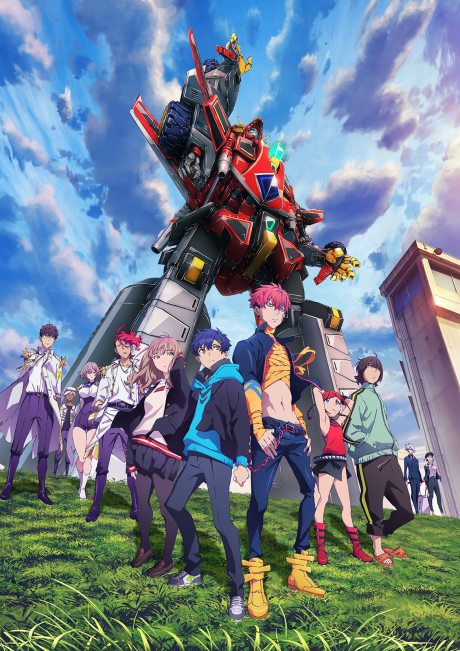

I’ve been wondering what SSSS stood for. Along with this being the biggest reveal in the franchise, I really enjoyed Dynazenon, even more so than I did with Gridman, due to a combination of its directing, powerful and engaging characters, and more succinctly, how the show, despite the giant robot action set pieces, monster of the week formula, mystery and mysticism of the plot, was incredibly human.

Scarred (characters)
One of the most engaging parts of the show was how tightly the character’s lives were weaved together. Dynazenon has 5 main characters, Yomogi, Yume, Koyomi, Chise, and Gauma. With only 1 cour at its disposable along with a varied side cast, it seems quite difficult at first to develop everyone while making a strong and purposeful dynamic, but Dynazenon finds a way. Where other shows might slowly introduce their main cast, episodically building them individually, Dynazenon takes another approach. True to the nature of giant robots that require multiple pilots, Dynazenon introduces all of its characters in the first episode, wasting no time in meandering, making us wonder when the team will assemble. This dynamic of having the cast be up front and directly available to us is exactly how the show carries forth.
This is an ensemble, with each member of the cast serving as a different piece of their giant Kaiju blasting robot, Dynazenon. But what makes these parts shine even further, is their individual problems, development, and characterization that we manage to receive in a tight package filled with symbolism, visual framing and directing, and powerful emotional payoffs. Each of the characters, have a different type of trauma that the show puts at the forefront.

Yume’s problems dealing with her deceased sister is the first strong thematic hook that looks into the themes of trauma, and moving forward from the past. As we see her desperately struggling to find answers and reconcile with the person she lost and the regrets she holds, Yomogi finds his way entangled and entranced, joining in her troubles and being a guiding light. Although Yomogi does have parental issues due to the changes in his family life, and that aspect isn’t explored or fleshed out nearly as much as I would have liked, he himself was still great to have along. Being the catalyst of how the entire plot started in the first place, and also being someone who’s strong and ready to help his friends, he surprisingly served as a nice balance to Yume’s extremely darker issues. In all of his normality, having a character like Yomogi, who is as regular as he comes, can help us follow Yume with a lighter tone, grounding the issues that are presented, making them digestible.
Koyomi and Chise follow along as well, but their problems are interspersed between the main hook of Yume, and although they don’t necessarily intersect, do have strong parallels among themselves. Koyomi is locked behind his past, leaving him shut-in within his home with no prospects of a future, but this is unlocked through a chance encounter over the course of the show, revealing a certain person who has plagued his thoughts throughout his early adult life. Chise, likewise is also locked behind her past. Again, although Chise isn’t as fleshed out as Koyomi, just having her around and be a lighter contrast to him, was a reliable way for the show to present their inner complications.
By the end of the show, almost every character went through major changes in the problems they were dealing with, and it felt very organic. The entire show is spent between the gears of these characters, jumping from Yomogi to Yume, then to Koyomi and Chise, spinning with the dripping oil that was Gauma, the last of our main characters. Gauma, like Chise and Yomogi, wasn’t the strongest character in terms of having a complicated development or arc, but due to how he was written and how enjoyable it was for him to be on screen, that energy was contagious and easily found through my experience. Even if certain pieces of the system are rusted, as a whole, they all functioned beautifully in tandem, reinforcing the ensemble’s strength.

Although I spent a long time building upon the characters and the drama that the show definitely puts at the forefront, Dynazenon, of course, at its brightest, is also about giant robots fighting stupidly larger monsters. It’s inevitable that this part of the show is also very vital, and admittedly at times, felt less bright than the character drama. It wasn’t so much that the fights looked bad, the CG used was just the right amount, and giant robots fighting giant monsters comes with a certain chorographical constraint, but often times the vehicle to move episodes forward were exactly that, needing to insert a giant robot to fulfill the formula. Less often did the show make me feel tense since, Dynazenon was just, Dynazenon, a super hyped robot who can tear apart any futile attempt by the villains, and as it powered up in more bombastic and stupidly exciting ways, the less threatening the monsters were. At a certain point, it felt very rout and mechanical whenever a monster appeared, and although there is good reason for these fights to happen, considering, villains don’t often take vacations, they were sizably less interesting when juxtaposed with the amazingly well done characters.
Did the formula, however, shift and were there moments where the fights served to have more than just stupidly awesome fight scenes? Yes. But those moments for me, were fewer than I would have liked. It’s easily the most ridiculous part of the show, how they destroy the city every other day, and although they do address that in a few episodes, where the characters actually react to mass residential destruction, it still, at the end of the day, is a part of the genre that will always be silly.

I loved SSSS. Gridman. I loved SSSS. Dynazenon, and I’m excited to see what else Trigger can whip up for this franchise. Dynazenon, was an amazing show, with great characters that meshed together, engaging and grounded themes that are explored through those characters, and of course, the patented action spectacles that this genre is known for, but at its core, the insistence of Dynazenon to stay grounded within its human elements, is what elevated the show for me. There were so many moving parts that all fit to make this show special, but regardless of how I thought of the writing, the directing, the structure, at the end of the day, it was incredibly fun, and that’s really all that matters.
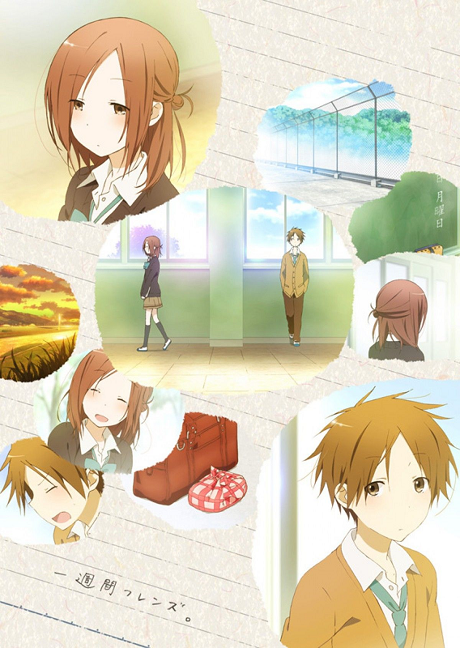
Although the premise and genre and even the events of the story lend itself to be a romance, One Week Friends has a different angle in its presentation and tells a story much more pure and wholesome.

The concept of One Week Friends starts as innocently as any romance story. The main character, Yuki Hase, has a passing interest in the secluded yet eye-catching, Kaori Fujimiya. With the support of his best friend, Shogo Kiryu, Hase starts to approach Fujimiya, and slowly but surely, breeches into her social circle, which, at the start of the show, is non-existent.
Everything so far checks out. We have an innocent, emotional, and naïve lead, who’s holding as much good intentions as he can approaching Fujimiya. Of course, being the heroine, she has a cold exterior in class, but a soft interior when approached outside of class, and this is all too familiar. In fact, it’s this familiarity that the first episode plays on, where we’re led a false sense of security as the ever looming threat of the show’s twist follows behind these two characters. This isn’t as potent to those who may have surmised the premise from the title of the show or have read the synopsis on a streaming site, but, this dramatic irony is what makes this first encounter and twist interesting and engaging. This show isn’t just your ordinary romance.

By the end of the first week and the onset of the next, Hase realizes his task of becoming friends and engaging with Fujimiya is one that would be filled with struggle, heartache, and reward. For reasons related to her childhood, Fujimiya’s memories reset every week, with a specific caveat of being unable to remember friends. This hook helps frame the rest of the show, with every interaction, every moment, and every development having that much more impact on the characters, and story. Although the atmosphere and tone of this show is light hearted and takes elements from slice of life, the fact that the concept of the heroine having memory loss is always relevant makes the stakes so much more potent. It feels strange to say stakes in a story that’s as calming and wholesome as One Week Friends, but the show really does lend itself to be high tension due to the fear and realization of Hase essentially meeting a new Fujimiya every episode and needing to reestablish a relationship that’s built solely on the diary she keeps. Amidst the fluff, amidst the feel good moments of the show, where Hase invites Fujimiya to do things that friends would do, like going out to eat, doing karaoke, creating memories and joy, there’s always going to be this insurmountable distance.

It’s this complexity underlying One Week Friends that makes its tropes and characters, that much more interesting and really did invite me to consider the overlying themes it had. Memory is a huge part of the show, and the way it deals with memory through the relationships of others was an interesting angle, especially since many episodes actively used memory as a point of conflict. Either Fujimiya has a mishap one way or another and loses her diary and memory is lost, or Fujimiya’s memories seem to get better and she’s forming more connections, and memory is gained. No matter what, the theme of memory is always in the show, either in the background or in the foreground and it keeps things fresh. For me, there was hardly a dull moment in the show, as it moved at a nice forward pace, constantly giving us moments of development and characterization while dangling this complex notion of memory. Whenever things seemed to move in the right direction, the show found a way to add a new element, a new member of the cast, or a new situation, and despite the solemn nature the show had, the possibility of the relationships we’ve watched bloom fall apart was always there. Again, it’s a sense of tension we don’t usually get in this kind of show, and it didn’t feel dramatic or unearned whenever it did happen. Earning the development of the characters, earning the emotions that it wanted to display, was I think one of the stronger points of the show with some exceptions, and its unique concept definitely helped in supporting it.

Of course, with the time frame of the show, there inevitably had to be cuts to tell a cohesive story from front to end which means that characterization and development with the entire cast had to be truncated. Some of the side cast that are introduced as the story moved forward was less potent. For me, the weakest part was in the information we didn’t have time to explore, in the side characters that seemed like they could go a myriad of directions and have a strong supporting role. After all, one of the lessons learned by the end of the show is how important making memories are, and we just didn’t have time to explore making memories with the other cast. Other issues I found were in motivations, especially with the main character, Hase, not having the clearest motivations, or at least, not explicit to the audience.
There’s also the obvious, romance show that doesn’t focus on the romance but instead focuses on friendships and this idea of creating memories shouldn’t be called a romance but more of a slice of life or drama, and as such that was also something that felt lacking. To me this show isn’t a romance, despite it wanting to be one. It’s an interesting exploration of the depths of friendships, what we do to create connections, and how important memories are for our lives, and for others. There were honestly some thought provoking moments bundled in this show of warmth but that’s all ignoring what this show presented to us, which was the promise of romance.

At the end of the week, I really enjoyed the show. Its concept is really engaging, adds an interesting twist to a formula we’re familiar with, and contributes to the complexity that the show can offer. The characters were fun, enjoyable, and when they grew and progressed in their world, it felt rewarding to watch. Despite being so wholesome and heartwarming, the show spared no punches and when it hit it was effective. It may not be the most satisfying show if you go in with certain expectations for the characters, but, certainly, the emotions and journey that One Week Friends offer will surely last longer than its name sake.
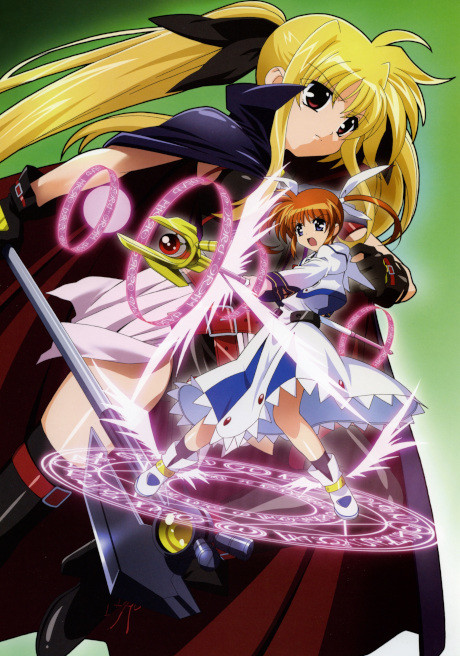
Lately, I’ve been trying to adopt a propensity towards giving shows their rightful due, which involves sticking around till the very end rather than leaving them partially watched. And I feel Nanoha really encapsulated this ideology.
There’s nothing inherently wrong with having a story be slow, but of course it doesn’t hurt to have a story be gripping and engaging right from the start.
Nonetheless, Nanoha’s story starts off as one does with an elementary school girl accidently obtaining magical powers to, essentially, save the earth. Throw in a companion character, a recurring villain, and episodic monsters to fight, and you have a formula of deceptive normalcy.
One of my biggest gripes with how Nanoha starts and sustains even after the half way mark, are these lighter and slower slice of life moments. To a certain degree, it feels very much pandering to a certain audience and atmosphere completely in contrast to the second half. It almost doesn’t belong with the rest of the show and sets itself to be not very interesting, and at times, leading nowhere.
However, there is an argument to be made that Nanoha is, of course, a 3rd grader, and showing off her mundane life, no matter how mundane it is to the audience, is a necessity in her character. Even if none of these characters, or even her family for that matter, really matters much, and any plot relevance they have is there only to set up a pseudo-realistic grounding which is unnecessary considering the bomb drops that happen later on. But I’m glad that they actually stopped doing these, “let’s go to school” moments once the shift happens and actually presented a feasible answer that explains her absence. At least, that much, was cool to see.
If by the time you get introduced to the second main character that makes up the “dynamic duo” as you will of the show, and you are still willing to watch along without giving up all hope, then you will be rewarded. Fate, who appears later on, and is the other girl you see on the cover art, plays both a role in shifting the direction of the plot and the themes. To say that Nanoha is a show about magical girls, isn’t the most accurate description.
A small snippet of some of its greater thematic threads might include: the bonds of family and finding the self within one’s family, the nature of sympathy and empathy, and even finding one’s place in the world or the search for one’s purpose.
Both characters take places trading between these themes, and they really become fleshed out among the cast. Of course, the show does take liberties in screen time, and many side characters are also, for some reason, given light, during their characterizations. Both characters take places trading between these themes, and they really become fleshed out among the cast. Of course, the show does take liberties in screen time, and many side characters are also, for some reason, given light, during their characterizations.
Nanoha, like many shows that deal with fantastical elements, is inherently about the human problems that arise, more so than the magical problems that arise. There is something so amazing, and interesting to me, whenever a show can introduce so many inhuman elements, yet still bound their characterization and thematic cores to something human. Nanoha does this to an amazing tee, becoming something quite beautiful by the end of the show, making me invested in ways I never thought I would be in these characters. It’s really quite nutty how much Nanoha changes and how smooth and somber the transition to its changes are. Despite the slow nature of the first half, once its talons are sunk, its grip is stalwart, and it’s quite a ride.
Some of the other elements of the show, like animation, and sound, are things I’m not sure I can flake on a 2004 show too much. But, surprisingly, it was pretty crisp. The action scenes, despite being dated, of course, were actually really exciting. The transformation scenes were really detailed and reminiscence of the classic transformation scenes one might think of when I say a magical girl transformation scene. A large part of this has to do with the directing, which really made the show flow and the action palpable despite the graininess and jankness they were working with.
The pacing when it needed to be, was great. Of course, the opposite is true, when the pacing was slow, it was slow. But, it at least matched with what was happening, and I can’t fault that at all. The show was working with a story that demanded certain elements, and it took those elements and tried its best to work with what it had.
Along with this, the world of Nanoha also opens itself, during the course of its midway shift, to be something absolutely crazy. Again, this isn’t just a magical girl show, and all of the convening elements that make up Nanoha create an extensive setting for the show to explore, and it does to its best ability. Of course, in its current setting, not everything can be explored or may immediately sit well, and Nanoha season 1 being, Nanoha season 1 becomes extremely glaring as the world opens itself to a, well, world of endless possibilities to say the least.
I can’t say completely I wasn’t entertained in Nanoha’s more uninteresting, slice of life moments, but they weren’t the best either. Of course, they were there, and they were used to set up for an explosive end which was completely worth the slog. But that’s the caveat. There’s a bit of a slog, a bit of what initially appears to be soul searching and charm, but once Nanoha hits what it needs to hit, it seldom stops. Nanoha rode its momentum all the way, breaching into meaningful and intense themes with compelling characters tied to pretty well done action. It comes as a surprise that this was only the beginning of the series, and it definitely has me hooked by the end. If you've got time to spare and are interested in a bit of magical girl history, then definitely give this show a try.