— — — —— — —
×
— —— —
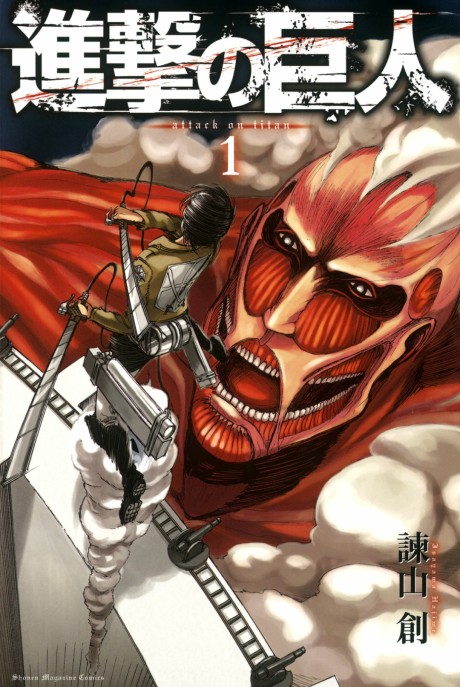
A Retrospective on Shingeki no Kyojin (Attack on Titan)
I remember back during the first and second seasons, I didn't actually like Attack on Titan. I liked its tone and its animation style—which stood out from the average anime—but I felt the story was just a "zombie show" in disguise, with giants instead of the undead. Furthermore, considering we had to wait years for new seasons, I felt it was being mysterious just for the sake of it and that the pacing was agonizingly slow. I dropped it. It wasn't until later, around 2020 or 2021, when it literally exploded on the internet, that I returned. Seeing clips of "The Owl" and the implications of time paradoxes convinced me to watch it again, this time with four seasons already out.
What a marvelous, revelatory journey it was. Suddenly, before my eyes, was a masterpiece of writing, foreshadowing, and world-building. It transformed a basic apocalyptic anime into an incredible display of philosophy and politics that played with the fans' emotions, unveiling narratives that would make a sociologist salivate. I surrendered to the work and saw it as an authentic masterpiece. But at that time, neither the anime nor the manga were finished... and how disastrous the end turned out to be! Yes, I am one of those fans who hated the conclusion—but not for the reasons many claim. In this review/essay, which serves as a sort of closure for me, I will delve into what made this series great, why the ending feels dismal to me, and what I believe (and wish) the climax should have been.
Many prejudices weigh on the world of anime-manga, some baseless hold by people with little knowledge of this medium-space, others believed even by anime-manga enjoyers themselves.
One of those prejudices is that the content of this medium is reduced to the typical fantasy-adventure story. And everything that falls outside that parameter "doesn't feel like an anime/manga." Examples of this are evident when comments or opinions arise that say that very old anime should no longer fall into the category of "anime." This, because it is already outside the aesthetic-narrative configuration of today's average anime-manga.
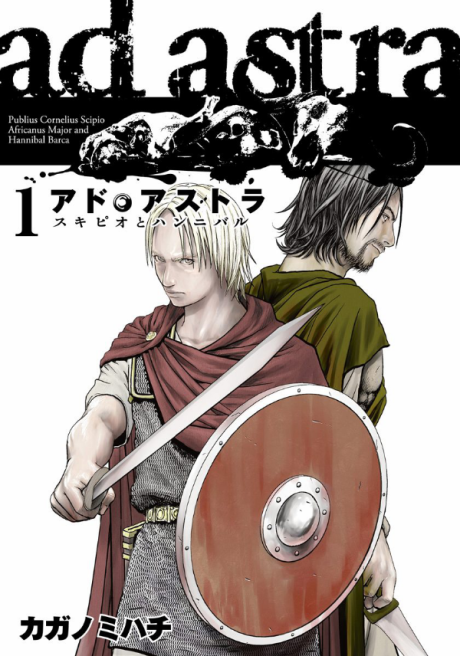
But this only responds to a case of excess of a certain type of stories being largely popular and consumed. But when we dive a little we find broader things. Ad Astra: Scipio to Hannibal is one of them.
Historical manga continues to be an underground genre, with notable exceptions such as Vinland Saga, Kingdom, Vagavond.
But few of the popular historical mangas are really appreciated for their historical aspect, as they are more appreciated for their "adaptation" to the anime-manga language.
Ad Astra: Scipio to Hannibal is one of those mangas, as is Cesare Hakai no Souzousha, that is there just for the history. And although that may sound restrictive, it is in fact a refreshing world with other paths little traveled.

Set in the Second Punic War, a war between the Roman Republic and Carthage, it faithfully follows the events of this war, revolving around the legendary Hannibal Barca and his crossing of the Alps with his army and Scipion, and his young Roman adversary. Everything that happens here, broadly speaking, happened. It is faithful to history and historical figures. And there it makes much of its brilliance. The history itself is exciting.
Of course, there are many things typical of what I call "anime language", that is, an ethical, aesthetic standard of how to act and react. What you would call "typical anime stuff." There are many moments where you listen to the mangaka instead of the historical figures and there are clearly moments where some things were messed around were changed for projection reasons, but without distorting what actually happened.
One of those changes that is most noticeable is how the author handled the whole drama of Sophonisba, Masinissa, Syphax.
In short, Sophonisba was a princess of Carthage who committed suicide with dignity with the help of her husband Masinissa so as not to be given to Rome as a trophy. In addition, she was a politically influential woman. But how was that shown in the magna? A clear case of Japanese projection, Sophonisba is presented as a submissive, hopeless woman who commits suicide not out of dignity, without spoiling, but for a pathetic reason and her husband Masinissa is not a noble man but your typical anime-manga teenager . Not even mentioning some very strange portraits like that of Syphax.
But what is most criticizable is the author's obvious position regarding the Second Punic War. A deeply pro-Roman position.

It is not difficult to notice that the author stands for the Romans. They are all presented as naturally inclined more toward nobility, while throughout the manga the Carthaginians are presented as vengeful savages.
Anyone who is even a little bit immersed in history and historiography knows that everyone has naturally always admired Carthage rather than Rome. A weakness for the underdog.
Hannibal Barca could be said to have been a proto anti imperialist but here he is portrayed as a villain.
Another strange thing about the manga is how the Roman plebs are presented, always ugly, wild, ignorant and stupid, while the patricians are presented as wiser, calmer, and good.
Again, Japanese projection.
But beyond the strangeness, this manga shows us that the historical genre is very rich and a sea to explore and experience.
There is more than meets the eye.
As final comments, it is a great manga to enter the world of the historical genre, it is a great manga to learn about the history of the Second Punic War and those involved in it.
I especially appreciate it for including Silenus Calatinus, but it would have been interesting to see Hannibal' wife Imilce, and his fierce elephant Surus.
In short, a manga that reminds us that there is much more to explore in this medium.

All forms of literature seek to express and be able to awaken feelings, emotions, or sensations, these being stated in the work, in form of verse, prose, poem, among others. In the case of manga, not being the exception, it take us to worlds and adventures, awaken feelings and emotions, ignite thoughts. And this is because this is its main goal. Manga, as an art form, another legitimate medium of literature, is versatile and broad, and while certain demographics and genres seem to be all-encompassing and compartmentalize what people often assume what "manga" is about, from time to time gentle breezes do us remember that manga is literature and can be considered as such.
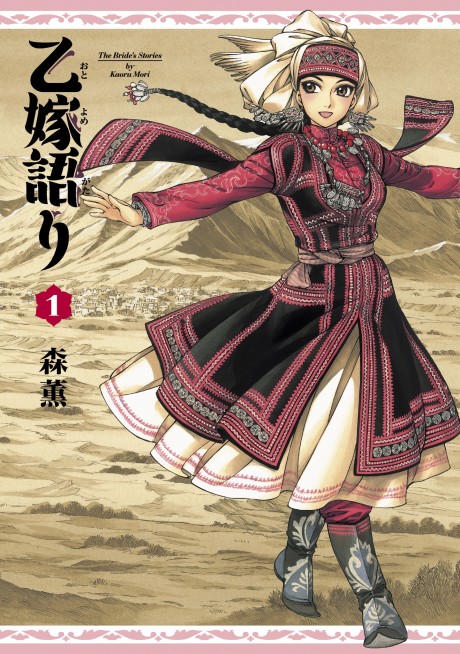
Otoyomegatari (A Bride's Story) is one of those gentle breezes.
Kaoru Mori, considered one of the eminences of the manga world today, is the one who brings us this masterpiece that reminds us that manga is more than what we consume every day, that it can be extremely artistic, educational, literary, flexible and superb. That's the word, superb.
Otoyomegatari brings us a very fresh and rare premise, a historical period drama, in a non-mainstream region, where the culture, traditions and customs of its characters are its main attraction. Because that's what Otoyomegatari goes for, and it does it prodigiously.
<center>The StoryThe story is located in Central Asia (mainly today Kazakhstan, Uzbekistan and Turkmenistan), which is already a different point from what we are used to, since this region of the world is little understood and a veil of mystery still weighs on it.
Aside from the location, the story takes place in the middle of the 19th century, and is about Amira, a twenty-year-old Kazakh girl who is married to a twelve-year-old Uzbek boy. The story will flit around this strange couple and how they will face their age difference, their cultural differences, and the times in which they live. All in a very wholesome way.
At the same time, we will see their customs, their traditions, their world, and we will meet more characters who will shape this story of time and space: the English anthropologist/linguist who is in love with the local culture, the neighbourhood, several brides and their respective misadventures, the nomadic tribes of the steppes and an omnipresent enemy, the Russian advance over Central Asia.
All this through a beyond all art.
Another highlight is that the author really did her homework and did some great research on the peoples she deals with in her story, this is evidenced in her wonderful art and aesthetics. This point is important because the reader comes to know that what we read is legitimate, not half-made-up speculations of the author that is not really interested in the culture of the characters.

Historical manga enjoys a good position among the various genres out there, and while it is not one of the most popular ones, well done it can be genuinely epic and transcendental. Examples like Vinland Saga, Vagabond, The Rose Of Versailles and Kingdom are some of the best known. However, and before getting into the review itself, I have noticed that many manga call themselves "historical" without really being so, confusing the genre, and making the search for those who are only interested in historical manga as such cumbersome. So, what defines and differentiates a historical manga from those that, despite the similarities, are not? You will find many manga being called "historical" that are not; it does not matter, for example, that Battle Tendency takes place in the 30's, that does not make it a historical manga, or that Monster covers and takes place in certain historical periods of the 20th century, getting involved in certain historical issues, we just all know that it is not a historical manga. There are many examples of this, but at the same time this helps us understand what is a historical manga and what is not:
A historical manga is one that, takes place in a certain historical period, whose story is directly affected by said period, the characters act and are entangled by said contexts, and the story itself seeks to encompass and exploit such historical time and place. It is not enough if a story is set in a time period when this does not seem to affect the story and the characters, and it is not really interested in history, it only seeks to use it to justify certain aspects of the work.
Having made this introduction, I will move on to the actual review:
After expressing the previous points, Cesare appears, which, before going into deep details, is the most "pure" historical manga that I have found. Any work about history will seek to balance the historical aspect with a bit of fiction so as not to overwhelm the reader. Cesare does not care much about that.
This manga covers the historical period of the last years of the 15th century and the beginning of the 16th century in Italy; you know, the end of the Middle Ages and the beginning of the Modern Era with the Renaissance. More specifically, the story follows the infamous and well-known Spanish Borgia family, especially the early years of the famous Cesare Borgia in his days at the University of Pisa.
But let's get to the point with the strongest aspect in this manga: the artwork. The art is superb, orgasmic I would say. It can easily enter the top 10 mangas with best art. You may not get hooked on the plot but you will stay for the terrific art; it is incredible how it captures the essence of Italy in the Renaissance.
I could even say that simply because of the art it could already be awarded a “Pass”, regardless of the story. But let's move on to that point, perhaps the most problematic: Not everyone will love the story and its pace. When I said that Cesare is not interested in balancing history and entertainment, I meant it. This manga is just a justification to talk about history, pure and simple. I'm telling you right now that at a certain moment there are three chapters in a row just about a conversation about history. And even if you are a hardcore history lover you will find some problematic points in the reading of the story, specifically regarding its protagonist: although Cesare Borgia is the de facto protagonist, Angelo, a new Florentine student at the University of Pisa is the "official" protagonist, the viewer by which we will observe the story. And here is one of the most negative points, at least at the beginning of the manga: Angelo is a weak character, uninteresting, and quite hypocritical: I don't blame him for being enamored with Cesare and with every Spanish character, they are the stars in this manga, but not to the point of betraying his own and feeling alien to his own countrymen. It just doesn't work.
Another trouble point may be the reader's expectation: a story about the Borgia family? The Game of Thrones of manga! Well, not exactly. The story does revolve around political intrigues, philosophy, religion, and war themes, as well as hinting at shady issues, such as the slight implication of incest - Cesare and his young sister Lucrecia - but it does so in a serious, academic way, not interested in making it "exciting" for modern audiences.
There are many moments when you wish many other things to happen on another level, but you will have to be painfully patient.
Still, there comes a time where you reconcile yourself to the story, its content and form and really immerse yourself in it, and there it becomes great.
There are many well-known faces, in addition, Christopher Columbus, Leonardo Da Vinci, Nicolás Machiavelli, and other historical figures have their moment.
TL;DR
In short, it is a manga for true history lovers, and if you are not, you may stay for the art, but to be honest, it will get dense and dull.
My score so far is an 8, since the manga is not finished and it seems that it will not in a while.
If you like history in its high expression, check out Cesare.
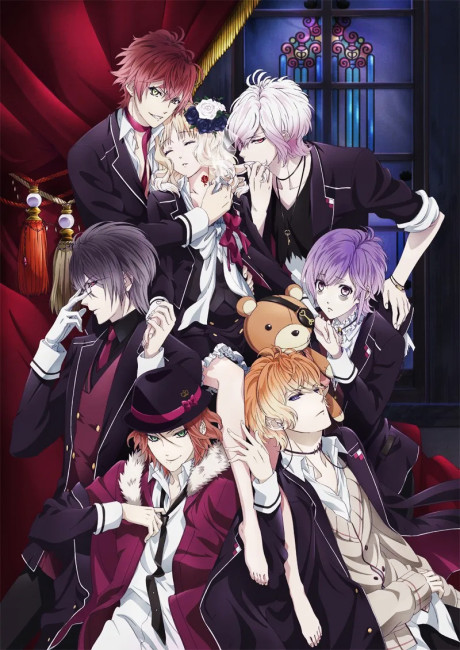
This anime has no plot. Literally. You would think that an anime whose premise is a girl surrounded by six vampires would be interesting and mysterious, well, no. There are literally not many spoilers to tell as there is not much to tell! If you are going to watch this, keep in mind that you will only see a girl being abused, and nothing else. There is no reflection, there are no moments where you look for empathizes with the protagonist because of her torment, but you arrive at the moment where you simply know that this anime aims to get girls horny by bringing "erotic" scenes of physical and psychological abuse of six sexy vampires to a girl with no personality. And here comes another point, the protagonist has no personality. And I'm not saying it to be rude on purpose, but the only words of the protagonists are No! and Stop! but deep down it gives the impression that she ends up enjoying it, which makes this even more horrible.
This anime is targeted to females, which makes it even sicker, as if we find enjoyment or something "cute and romantic" in such things. Therefore, it is a just misogynistic anime. There are scenes so cruel, without being bloody. that they are equivalent to group sexual abuse, where two vampires approach her to bite her, but it is not difficult to reinterpret the scene.
Another point is that this anime does not appeal to anyone. Do you like vampire stories? Well you won't see that here, just guys abusing a girl with the excuses of being "vampires". Do you like teen romance between girl x something? There is no here, they do not love her nor she does, there is only abuse. Do you like perverse shows? This is not even good at it, since it's super edgy.
There are times when you can't even be outraged because you no longer take what happens seriously, but the series tries to seem respectable even adding past to the characters so that in the end they do not develop, they do not arise, nor is there an characters arc, they are there only to justify the actions of the characters.
It is an insulting show in many ways, and not only to women, but also to the genre of vampires.
The worst thing is that the anime is not presented as an anime of abuse and eroticism, but a vampire story, which it is not. It is a story of six wicked boys abusing a hyper submissive girl wrapped in a vampire atmosphere with no plot background.
Only the soundtrack is slightly enjoyable in this anime, which could be one of the worst ever.
But let's face it, things like these wouldn't exist if there wasn't a demand. It is really sad that people consume this and like it, or try to justify the characters. Pathetic.
If I had to rate it I would give it 3/10. 3 because its soundtrack is decent, the opening serves its purpose, and the animation is sometimes a good thing.