— — — —— — —
×
— —— —

Akage no Anne is is the Japanese adaptation of the 1908 children's novel Anne of Green Gables by Canadian author Lucy Maud Montgomery which happens to be one of my favorite pieces of classic literature. The work is a lovely coming-of-age story about Anne, an orphan full of imagination, as she arrives at her new home and learns about the intricacies of life. The naturalistic characterization of the cast of characters and the use of dialogue in the most profound of ways creates an experience like no other. In essence, Anne of Green Gables is just a piece of narrative excellence which proves that even the simplest concepts can be assembled together in order to create something truly masterful.

[ Introduction to the World Masterpiece Theater ]
To understand this further, I will introduce the World Masterpiece Theater, a long-running series of anime adaptations of classic western literature largely produced by Nippon Animation. Each year the company took a classic novel and adapted it into a series of about 50 episodes. While the series in general is aimed at children and many of the originals that got adapted were children's books, its themes and plots can be surprisingly mature. The franchise used certain pieces of classic literature and adapts it into an anime, in this case being Anne of Green Gables.

[ Setting and character analysis ]
Anne of Green Gables begins its tale in the fictional town of Avonlea on Prince Edwards Island, Canada set during the dawn of the Second Industrial Revolution. Here we are introduced to Matthew and Marilla Cuthbert, who soon become the parental figures of Anne as they look to adopt a boy of around 10 to help them with the farm work. However, they are surprised when a young girl was instead given to them by the orphanage. The story is quite literally as the synopsis entails "The story covers Anne's growth from about eleven to seventeen years old as she makes friends, goes to school and studies. At a difficult point in her life, Anne will have to make a hard choice and perhaps find a new dream."
We start the discussion of the characters with our protagonist Anne Shirley who carries many imperfections. For instance, she carries an obdurate hatred of a character simply because he teased her once. However, she is an incredibly realistic and human character and her imperfections are only proof of that. Witnessing the heartfelt relationship between Anne, Matthew and Marilla as they grow together as a family and deal with the tribulations of life is only part of the journey. The build-up started back in the very moment when Anne made her way into Green Gables, culminating with substantial personal and interpersonal developments within the family. Fundamentally, the story revolves around Anne's process of maturation and how it all ties up together.

[ The magical transition from novel to adaptation ]
The adaptation of this anime is simply brilliant with every scene given detail and the scenery described within the novel is given life with an arresting view. Akage no Anne successfully maintains the charm of the original narrative through the stylistic devices it possesses as an anime, therefore delivering an accurate and heartfelt visual reinterpretation of Montgomery’s imaginative vision. The original novel Anne of Green Gables by Lucy Maud Montgomery has resonated with millions of people around the globe due to its realistic approach of depicting the magic of everyday life. I also give my utmost respect to the director of this adaptation, Isao Takahata, who has done an amazing job of exploring its full potential.


I cannot recommend this enough to everyone as I believe it is a story everyone can enjoy. Watching everything unfold is truly an experience like no other.
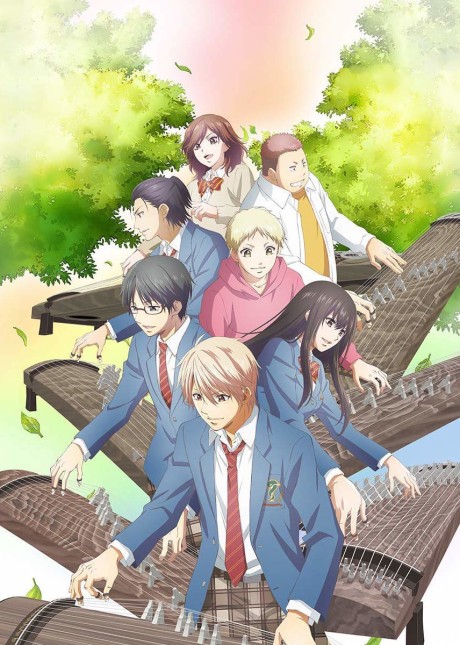
This is a spoiler-free review.
Kono Oto Tomare is an excellent shounen anime that incorporates many shoujo elements, bringing into life many of its feelings into the music its provides. This is a thematically brilliant story with heart-wrenching scenes that bring the viewer a great amount of enjoyment. Takezou, Chika, and Houzuki shine with their respective development as characters. While the first season of the series did an excellent job at establishing the foundations of both the club and the individual club members, the second season elevated it as the cast tries to overcome their issues as they aim for the national stage. Kono oto Tomare is everything you will look for in both a shounen and shoujo and more.

The masterful storytelling and the unique premise of the story is undoubtedly one of the strong points of this anime. The premise of reviving a struggling club and bringing them to glory was entertaining and was a canvas that held a beautiful painting and that painting is made up of the incredible main cast.
This anime is not principally about music or musicians but its music is the medium to which the story is told. Kono Oto Tomare is a wonderful piece of storytelling using flashbacks while using the music of koto to accentuate the given moments. Every performance is breathtaking and gives their own take on the world of koto. There are many complex themes in this anime and it likely shines a light on some of the negative aspects of contemporary Japanese society namely the crushing burden placed on the youth to live up to the expectations of their parents, teachers, and society. I also have to give a comment on the amazing art and colors this anime provides. The vibrant colors give justice to the message each scene wants to provide.

Lastly although it might be labelled as a romance anime, there is a great lack of it or at least in the parts that have been in the anime. Some moments may be found here and there but don't hope for much of it in this anime. Besides, romance is not really what makes this anime amazing but rather everything else. Overall, I find this anime to be a great adaptation of the manga and the music sold me on the fact that Koto is a wonderful instrument. I would generally recommend this to everyone and look past its demographic. I believe that this is an anime everyone can enjoy and it has earned a spot as one of my favorite anime from the past 5 years.
Overall: 8.5/10
Thank you for reading this review and have a great day!

Nana is a masterpiece that gives the reader/watcher a roller-coaster of emotions. Ai Yazawa creates a world with amazing character writing and portrays relationships and the dynamics between the characters in a way that make the characters feel connected with the reader, and by extension support along the way. The dynamic between the two main female leads despite their contrasting backgrounds and personalities is interesting. Nana prides itself in its character development and how the actions and motivations of the characters seem so real. Many plot points might not turn out the way you expect it and many its many plot twists will break its reader.
The show is much more that what the synopsis entails and contains many sophisticated and intricate plot lines. As the synopsis states, "The two girls with the same name but very different aspirations find themselves sitting together on their journey to the city, and, as fate would have it, eventually share the same apartment. A deep and unique bond is then forged, where they will support each other in this saga of love, music, friendship, and heartbreak." The character designs are unique and may not be for everyone but it is not a flaw by any means. The only flaw that this masterpiece will have is that its manga may never continue ever again.
Art: 6/10
This is not the manga's strong point, by far. There are many better in this aspect, however, someone could argue that some characters "look good." Nana Osaki's look is certainly unique among other female leads in the medium. There is a good variety in their designs but that is the most one could ever say about them.
Characters: 9.5/10
As stated earlier, the characters and their motivations are what made this manga amazing. Whether you like some of them or not, the dynamics their varying personalities create are amazing. Nothing more needs to be said, one of the best casts in manga or anime by extension. Nana Osaki is independent and strong willed while Hachi is your typical sweet and naive girl protagonist. The male characters do not pale in comparison as well with Nobuo and Ren being amazing characters in their own right.
Overall: 9/10
It was overall, an amazing read and I highly recommend it to fans of the genre as well to those who have only seen the anime adaptation of this manga. On the other hand, I would not recommend this to people who expect a light-hearted romance with a simple yet sweet storyline.
Personally, I prefer the manga over the anime counterpart. The anime is amazing in its own right but the manga portrayed the themes in a much better way in my eyes. Ai Yazawa proves herself as one of the best mangakas with Nana alongside another of her works - Paradise Kiss, which I also highly recommend to people who especially like Nana like myself.