— — — —— — —
×
— —— —


In a world where aliens come to Earth to spread happiness, Takopi's Original Sin shows us the darker side of childhood, guilt, and the attempt to fix what is already broken. Written by Taizan 5, this short two-volume manga invites us to face childhood suffering through a filter of disturbing and existential fiction. And this anime may deceive you at first glance with its cute visuals, soft colors, and a smiling alien as the protagonist. Just like me, who went to watch it without knowing anything about the original content, right in the first episode a warning caught me by surprise and I knew then that nothing good was coming.
It may seem like just another one of those children's stories about friendship and life lessons. But it's not. In just six episodes, this work destroys your expectations right from the start and delivers a cruel, brutal, and deeply human dive into childhood, pain, and the consequences of innocent acts, which makes you reflect several times on certain attitudes, on who is right or wrong, or if there really is right and wrong here among these children.
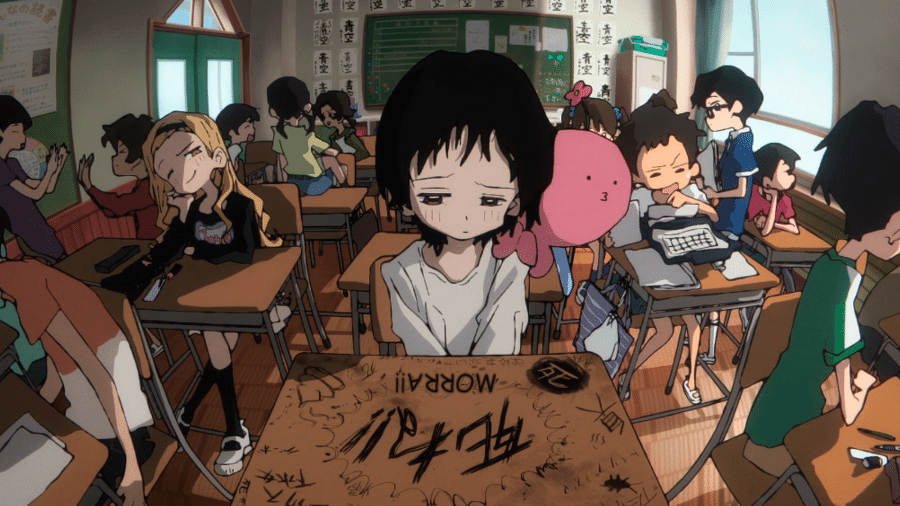
Takopi is an alien from the “Happyian” race, coming from another planet with a mission: to spread happiness across Earth. Upon arriving, he meets Shizuka, a seemingly lonely and withdrawn girl, and decides to help her smile. But as he tries to improve her life and the lives of those around her, Takopi finds himself embroiled in a reality far darker than he can comprehend.
With each new gesture of “help,” he discovers that human pain cannot be solved with magic tricks and, sometimes, has no solution, or perhaps it does, but not in the way everyone wanted.
The anime is short, with only six episodes, and unlike the first one, which is 36 minutes long, the rest follow the standard format. The anime wastes no time getting straight to the point in every episode, where there is a different twist. I was afraid to watch the next one because of what might be coming. Each chapter adds emotional layers to the story, deepening both the mystery and the weight of the relationships between the characters. It also works a lot on your psychology and makes you wonder if the characters are really innocent because they are so well developed, if there is anyone in this world who is not evil, and you feel bad about the events. Sometimes I wanted to be there to do something.
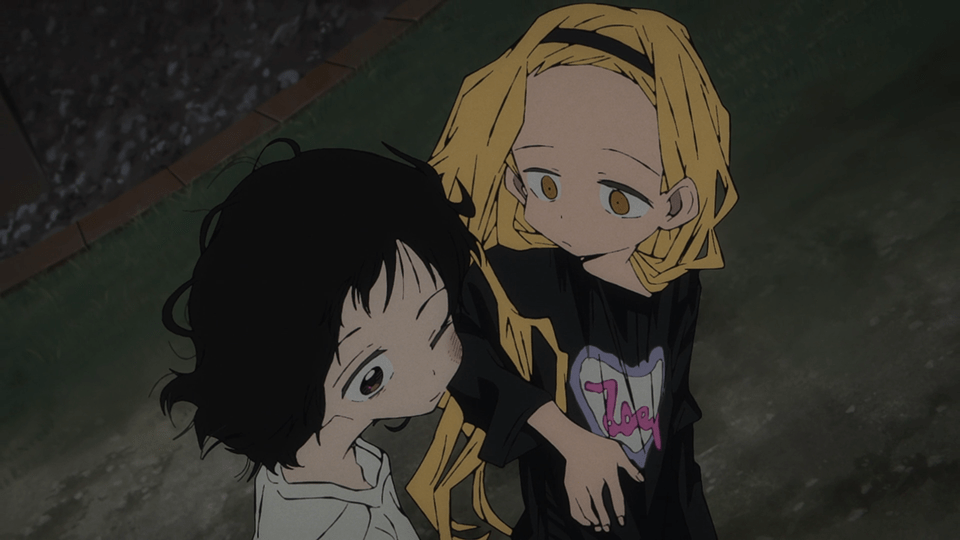
The characters in the show are the broken heart of the story, each one somehow has a problem, a wound, and they act accordingly, each in their own way, given the situation they are going through, and that is what makes the story so uncomfortable. Despite their young age, the children in the story experience silent traumas, which are expressed in different ways: coldness, manipulation, violence, submission, or even an apparent “strength” that actually hides despair.
Takopi: He is innocent. Too much so, which can be infuriating at times. His worldview is naive and optimistic, but this soon turns into something dangerous. He represents that idea of “doing good without understanding evil,” and the clash between his alien purity and real human pain is what drives the whole tragedy.
Shizuka: She is the soul of the story. With each episode, her depth grows. She carries scars, traumas, and secrets that defy any notion of a “happy childhood.” Her coldness is not gratuitous; it is protection.
Mônica e Azuma: complete the main cast, bringing even more moral layers. No one is entirely good. No one is entirely evil. They are all products of a toxic, neglectful, and emotionally unstable environment.
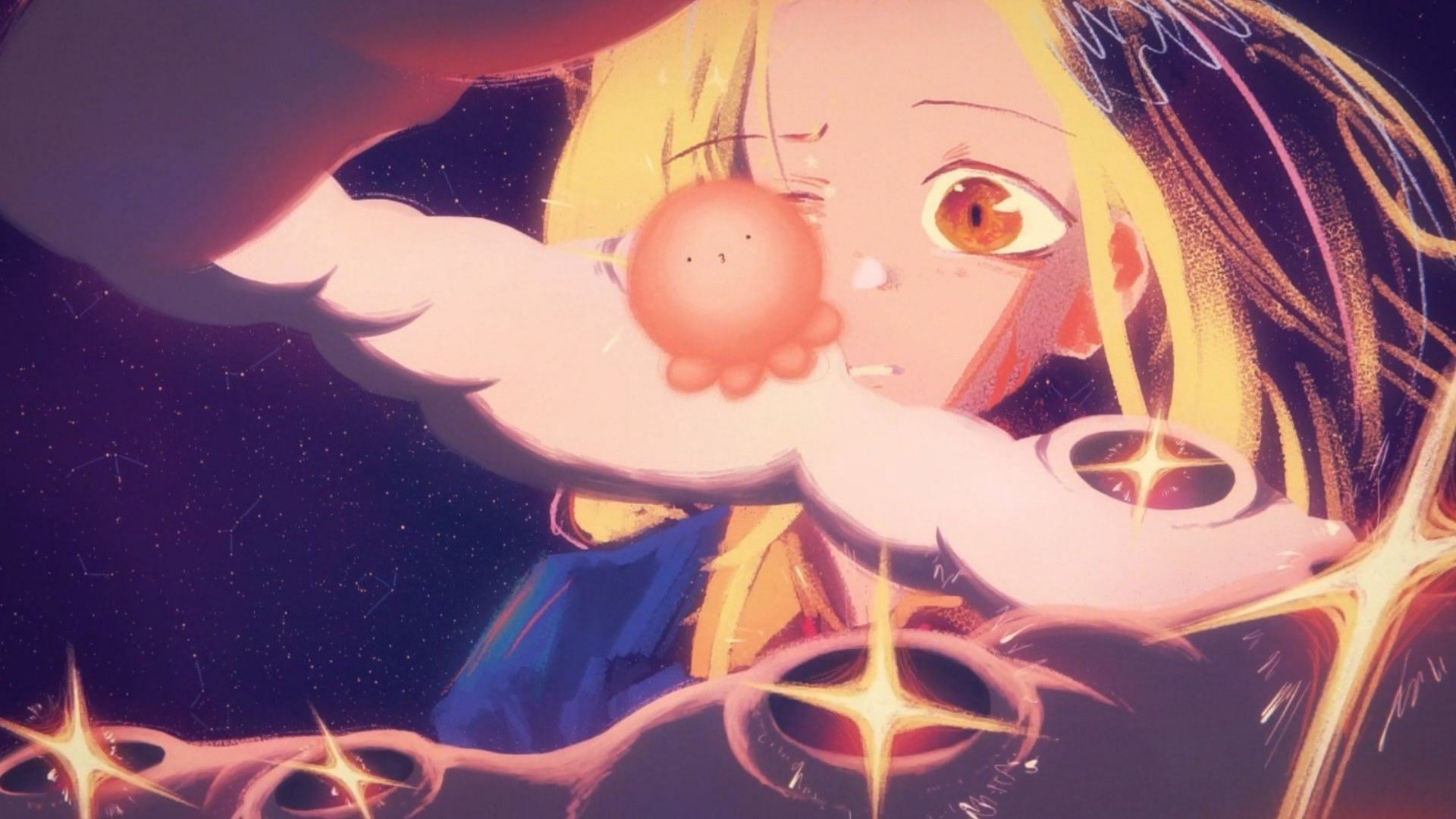
The style of this show is also very intriguing, with childlike features and minimalist aesthetics. Takopi's design is reminiscent of a children's anime mascot, and the other children also have lighter features, such as Monica Azuma, unlike Shizuka, who comes across as more depressed, while the humans have colder, more realistic features. This choice accentuates the contrast between the colorful world he came from and the harsh reality of Earth.
The soundtrack didn't really strike me personally, probably because it wasn't flashy, but it was effective. The moments I remember are when total silence screams louder in some scenes, emphasizing the feelings of that moment. The songs used are also soft, reinforcing the innocence.
In conclusion, Takopi's Original Sin is an anime that is not content with just showing you suffering, it forces you to look at it, it made me reflect a lot and caused me an abyss of feelings that I had never had before watching an anime, It causes an inexplicable pain, but a pain that is ultimately worthwhile, leaving you with many lessons, especially about what is right, what is wrong, whose fault it is, things like that.
It is a short story, but very well constructed, and it manages to convey its message very well. It addresses various themes in great depth, densely and emotionally devastatingly. The character development is also absurd, and the ending is simply wonderful.
It's a difficult experience and can be heavy for some because everything seems too real, the characters seem alive and really experiencing that whirlwind of feelings, even though they are children, and there's also a cute alien who deserves the world. If you're looking for something light, stay away, but it will make you think a lot and question yourself a lot. It will hurt, but it's worth it.
