— — — —— — —
×
— —— —

(Spoilers ahead)

Loss is an emotion that permeates deeply within the human psyche, making an otherwise rational person lose control of themselves. This can be made all the worse in a time of tragedy and decay, especially for those unequipped to deal with such tragedy. For the nation of Japan, it is sometimes stated that they are accustomed to times of peace punctuated by examples of extreme and disorienting violence (Kenji). In the year of 1995, on the heels of the evaporation of the Japanese Economic Miracle came one such act.
Mawaru Penguindrum is a television series directed by Kunihiko Ikuhara that deals specifically with the 1995 Tokyo Sarin Gas Attacks, one of the deadliest attacks in post-WWII Japanese history. The attacks stand out in a society not accustomed to large lists of victims, and even today, only the 2011 Earthquake stands out as a more deadly disaster for the country. But on a different level, the attacks demonstrate the endurance, and growth, of an unwanted reality of Japanese society. Under the layers of politeness and courtesy lay a depression and lack of connection among an increasing amount of the populace. However, this is not an issue Japan faces alone. Indeed, all the world over, much of humanity struggles to feel as if they have any safety net or outlets to reach towards, which only leads to malevolent conclusions, such as suicide or terrorist attacks.
Ikuhara attempts to bridge the gaps of modern society and put forward a message of hope. In Mawaru Penguindrum, he utilizes the 1995 Tokyo Sarin Gas Attacks as a means towards exploring comfort in increasing times of uncertainty, an especially prescient message both domestically and abroad.
The 1980s in Japan were a time characterized by rampant excess and vapid materialism. With the Japanese economy having exploded within the decade, the country was seen as a burgeoning superpower. But in the 1990s, everything fell apart. The ensuing period of economic stagnation is popularly referred to as to the Lost Decade, but since the stagnation has continued until today, perhaps it is fairer to refer to the period as the Lost 20 Years, in my opinion.
Such a fall from economic grace, attached to already existing worries about demographic decline, would prove to shake the psyche of the nation, and pushed many thoughts to be at the forefront of society to its fringes. One such example of said fringes is the group Aum Shinrikyo.
Made up mostly of disillusioned “university students and graduates, often from elite families,” the group attempted to give purpose to a purposeless base, pushing “end of the world” type scenarios, which only the members of the cult would be able to survive, of course (Fletcher). In Mawaru Penguindrum’s analog of Aum Shinrikyo, their leader waxes apocalyptic, talking of the necessity of “[cleansing cities through their] holy fire” (Ep. 20 09:32) and persistently motioning to saving humanity through a “Survival Strategy”. Much like Mawaru Penguindrum’s nascent terrorist group, Aum Shinrikyo chose to “cleanse” humanity through an extreme and bloody manner.

The 1995 Tokyo Sarin Gas Attacks seemed to come out of nowhere. In a day, over 6000 were victims of noxious fumes that the cult had planted on several subway lines. But curiously, despite the many serious side effects that they suffered, many victims whom author Haruki Murakami interviewed seemed more apathetic than angry at their plight. One woman said that she “[couldn’t] say [she felt] much anger or hatred,” for she “[couldn’t] seem to find those emotions in [her]” (Murakami 18). Another victim says that he “[doesn’t] feel especially angry towards the individual culprits” (86). This apathy extends even to the perpetrators of the attack.
Murakami writes extensively on one of the perpetrators of the attack, Hidetoshi Takahashi. What is striking about Takahashi is not only that he has bounced back from being a member of a cult, but also the utter lucidity with which he talks about what led him to join Aum Shinrikyo. Takahashi said this in his interview with Murakami:
The attacks proved to hit at a population that was beginning to grow detached from their reality and sense of purpose. And, in such a detached situation, it is hard to hold hope.
Mawaru Penguindrum starts with a monologue from one of the protagonists, Shouma. In it, he speaks frankly about the Attacks, and in doing so seems to capture the mantra of both the attackers and victims. He ends it by stating: “Ever since that day, none of us had a future. The only thing we knew was that we would never amount to anything” (Ep. 1, 00:44). Mawaru Penguindrum explores the inner psyches of the multiple broken generations who have felt unable to grieve, who felt that they were no longer living in the best times of Japan, and the Sarin Gas Attacks served as a bloody example of that.
Muen shakai literally translates to “no-relationship society”. It describes an emerging issue in modern Japan; those who throw off most human interactions beyond what is “required to work, shop, or attend to their needs,” or people that are barely able to hold human connections and therefore consciously choose instead to seal themselves away (Taylor). In a society where muen shakai exists, so too must there exist fewer extreme versions of societal separation. Mawaru Penguindrum, as it progresses, shows how no one in a culture of distress can escape with escape without any emotional baggage.

Ringo Oginome, the deuteragonist of the show, ostensibly lives a regular life as an average high school girl. However, underneath this thin veneer of normalcy lies an absurdist layer of self-hatred and a lack of identity. In the show, Ringo constantly seeks to emulate her beloved sister who died in the attacks by going after her sister’s former crush, Tabuki, who is significantly older than she is. Her efforts to woo Tabuki range from making a specialty curry to sleeping under his house to know when his fiancée is away. Ringo is forced to trying to have her life go both directions, to live a life of normalcy while fruitlessly chasing a perfection, which never existed.

Shouma, Kanba, and Himari, the children of the leaders of the show’s fictional cult, hide behind a constructed family—none of the three Takakuras are related by blood—and struggle to live a happy life. Kanba is a frequent womanizer who utilizes women as a distraction from what he feels is a fraudulent homelife. Shouma is afraid of having relationships, and crumbles when faced with the prospect of becoming better friends with Ringo. And Himari is a figure that can appear warm to an outside observer but shows cold indifference to her suffering—from an unknown disease that persists throughout the show—and the subsequent suffering that her pain brings others. The Takakura family is one that constantly pretends that they are happy and thriving, despite the torment of their parents’ actions, and fear that they cannot escape the legacy of their family.

It should be noted that even Tabuki, the teacher that Ringo so wants to woo, holds a profound amount of trauma within his heart. The same incident that destroyed the hearts of Ringo and the Takakura family so too gnaws at the core of Tabuki, who feels a deeply ingrained rage at the death of Ringo’s sister during the Tokyo Sarin Gas Attacks. But he hides it. He hides his anger in being an exemplary and friendly teacher, one who is in a healthy relationship with a budding actress. All of that, at least partially, is a lie. Tabuki, under his calm and collected exterior, wishes to bring destructive ruin to the Takakura family, who are both students of his and the relatives of those who partially ruined his life; the only time in which the façade falls is a violent time, where Tabuki attempts to kill the Takakura family in a bizarre scheme at a construction site.
Another important inspiration for Ikuhara when creating Mawaru Penguindrum was an unexpected one. On March 11th, 2010, Japan experienced one of the deadliest earthquakes within it is history. Indeed, the 2011 Tohoku Earthquake ravaged part of the country, with a subsequent tsunami and nuclear disaster only worsening conditions (Saito).
Ikuhara was in the process of directing Mawaru Penguindrum when the earthquake occurred and was quite candid in admitting that the natural disaster played a significant part in the message that he wanted to convey to audiences. He told Kana Ohtsuki in an interview that “the fact that the anime was released in 2011 greatly influenced it, where whilst the idea just started as a small thought, due to the situation of 3.11, this thought became more certain” and that “everyone felt that their lives were fragile and very much in danger” in the aftermath of the earthquakes (“Eulogy). Ikuhara had a mission, an important story to tell, and an important lesson to give that encompasses the two biggest recent tragedies that have gripped the island nation.

Within Japanese media, one of the most interesting and relevant forms of muen shakai comes in the form of a genre known as denpa, or electromagnetic waves. The name originated because of the prevalence within the genre of “oppressive radio towers and people’s consciousnesses being manipulated by electromagnetic signals” (Kenji). The genre mainly concerns with showing the many ways in which melancholy and apathy towards the rest of humanity can manifest itself, whether that be through the looping every day of Urusei Yatsura 2: Beautiful Dreamer or the surreal mystery whereby all of humanity disappears except for a small group of teenagers, within the game CROSS†CHANNEL (Kenji). The most well-known display of denpa is also one of the most well-known anime, Neon Genesis Evangelion, a show that looks at the hopelessness presented by muen shakai and seeks to bring forth clarity to a crisis bringing quandary. But while director Hideaki Anno finds that we can move past muen shakai through a widespread discovery of the self, Ikuhara chooses to go for an entirely separate theme.
While acknowledging the existence and prevalence of muen shakai, Ikuhara consciously attempts to move past it and make suggestions towards how to counter it, expressing it as an imperative in the current technological culture. He said this to Kana Ohtsuki:
In this quote, Ikuhara expresses a desire to bring the individual back towards the family. This is an especially prescient message given how the earthquake served to destroy so many lives in the Tohoku, literally ripping families apart over the death of loved ones and leaving only individuals who are “plagued by regret,” as “time [doesn’t] solve things” that no one wishes to solve (Saito). Indeed, in times of intense anger and personal upheaval, feelings of regret need to be pushed aside, as difficult as that may be.
However, when Ikuhara says family, he does not merely mean those who are connected to you by blood. When he discusses the importance of family, he is encompassing the relationships of those who are met on earth, whose relationships are greater than that of a blood relationship.

The Takakuras are not a family related by blood, and yet, until their love is brought into question, they are able to function as a tight unit. While all of them may pretend that they live in a situation of normalcy, it would also be lying to say that among all the lying, there was not at least some happiness.
Before rounding out this review, it should be noted that this is not a Japan only issue. While it may be significantly easier to throw aside legitimate criticism of one’s own society in favor of acting as if Japan is the only country that is extremely troubled within this current time and age, it is nonetheless wholly inappropriate.
Muen shakai is not a specifically Japanese issue. Rather, it is an issue that many countries are now being forced to reckon with as birthrates decline, job prospects increasingly are in doubt, and the climate presents an existential threat to humanity. We may act as if this is a problem that only Japan is expressing itself through, but we are lying by doing so. In current times, “we know much more of the rest of the world and how differently others live and think… we also know how much we don’t know about the world we live in, even things that bear directly on our lives” (Eckersley 1). We live in terrifying times, where in knowing so much more about everyone else, we feel that we know nothing.
In an age of constant change and constant misery, where every tragedy and every folly of humanity is broadcast for all to see, what hope do we have to survive? According to Ikuhara, the hope must rest in the solidarity of family, whether that be your natural family or your found family. After all, with the protective love of a family, anything, even death, can be weathered easily.
Works Cited
“Eulogy for the Fool – Ikuhara Kunihiko and Ohtsuki Kana Discussion.” Japanese Translation, japanesetranslationblog.wordpress.com/2018/03/06/ikuhara-kunihiko-and-ohtsuki-kana-discussion.
Eckersley, Richard. “Killer Cults and the Search for Meaning.” AQ: Australian Quarterly, vol. 72, no. 1, 2000, pp. 16–51. JSTOR, www.jstor.org/stable/20637876. Accessed 13 Apr. 2021.
Fletcher, Holly. “Aum Shinrikyo.” Council on Foreign Relations, 19 June 2012, www.cfr.org/backgrounder/aum-shinrikyo.
Kenji. “On Denpa: A Guest Article.” On the Ones, 29 June 2019, ontheones.wordpress.com/2019/06/29/on-denpa-a-guest-article-by-kenji-the-engi/.
Murakami, Haruki. Underground: The Tokyo Gas Attack and the Japanese Psyche. Kodansha, 1997.
Saito, Mari. “10 Years on, Grief Never Subsides for Some Survivors of Japan Tsunami.” Reuters, 10 Mar. 2021, www.reuters.com/investigates/special-report/japan-tsunami-survivors.
Taylor, Matthew. “Not with a Bang but a Whimper: Muen Shakai and Its Implications.” Anthropoetics, vol. XVIII, no. 1, 2012, anthropoetics.ucla.edu/ap1801/1801taylor.
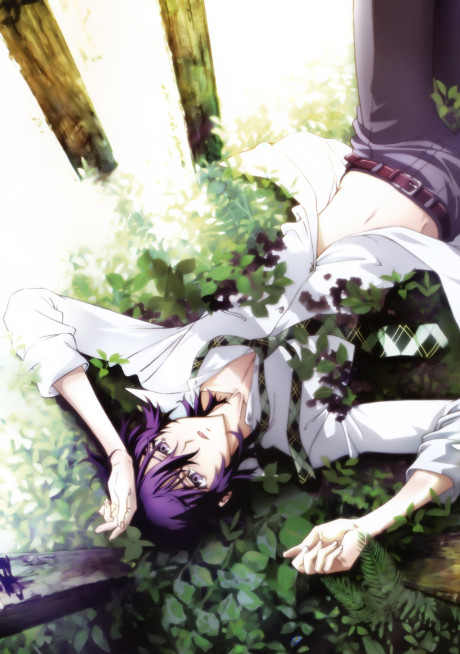
“When you became isolated from the world, you were excluded from God’s jurisdiction at the same time.”
Shiki is a show with many faces, wearing comedy, horror and drama on its sleeve simultaneously. After all, in what other show would you have a person speaking candidly about fears of their own demise while dressing like a member of a glam rock band? However, any and all of these facets are subsumed by its central message that it will stop at nothing for the viewer to internalize deeply: When one is refused even the paltriest recognition of agency by a society, what are they to do?
Shiki is one of the best psychological horrors that exist in the medium of anime. Tinged with an air of mystery that is punctuated by the activities of both Natsuno Yuuki and Toshio Ozaki, the lingering uneasiness that builds throughout every episode is unparalleled. Of course, a story about vampires is nothing new, but the methodical way with which Sotoba palpably begins to decline, further demonstrated in the excellent OVAs to the show, under the gradual weight of an increasing vampire population, really brings home the deprivation that the village folk are forced to contend with and ultimately demonstrate the source of the ensuing cruelty.
Despite being a limited production, Shiki is oozing with personality that is accentuated through the creativity of the team led by series director Tetsurou Amino. Sotoba is a sleepy town in rural Japan, and yet through the constant motioning to distinct areas throughout the village, as well as a story that does not hesitate in showcasing the lives of the various families that live throughout the rural area, the viewer feels an intrinsic connection to the people of the show, and thereby an attached sentiment of empathy for their plight, as well as horror for how they choose to resolve it. Also, the directing of the show makes up for any shortfalls in its productions, with incredibly expressive color design and shots with an uncomfortable or eerie focus that serve to unsettle the viewer.
One of the more remarkable aspects of this show is the lack of reticence in showcasing wanton violence and cruelty. Ultimately, when the people of Sotoba choose to fight back against the vampires, they do not hesitate in rapidly dehumanizing them to justify their actions. In a manner akin to a pogrom, the people of Sotoba transform into monsters, with their dragging screaming vampire women and children with ropes from their hiding places before silencing them with a stake, taunting them all the while. In bringing about a deep sense of familiarity of loss with the people of Sotoba, the utter devastation wrought by these people makes the viewer question whether their preconceived notions of justice are correct, or whether the vampires and humans, who ultimately are just trying to survive, could have been solved in a more amicable way.
More than anything else, what is most frightening and revelatory about Shiki is its ability to show the depravity of the human spirit. The events of Shiki are fundamentally predicated on a mistrust of any group that differs from the ingroup, and the resulting paranoia, refusal to engage, and subsequent commitment to violent action only serve to further sever any ties that could be made. In an era where vilification of any strange minority group can be transmitted instantaneously across machines the whole world over, it is prescient that we look back a decade at the caution that Shiki throws our way and learn to accept, rather than fear.

As the first major directorial job of the famed director Junichi Satou— of Ojamajo Doremi, Princess Tutu, and Aria fame—as well as being one of the most influential magical girl anime of all time, Sailor Moon has steep expectations to live up to. And while it might at some points stumble under the weight of its own production, I believe that it ultimately sticks the landing.
While the animation is nothing to write home about, its style is one of its hallmarks. The show is constantly aglow with color, bringing forward an innocent charm; a richly lit Tokyo Tower always features prominently in the beautifully drawn streets of the Juban District, where much of the show takes place. As the series goes on, the Juban District becomes a close and familiar place for viewers, with characters constantly interacting with their environment—whether at the arcade or discussing team plans at Hikawa Shrine—in a way that allows for the area to feel very lived in and serving to strongly increase the comfortability of the viewer.
 Bro, vaporwave??????
The music of the show remains a highlight. While the soundtrack of Sailor Moon is not utilized very expansively—the average episode will typically utilize at least 3-5 of the same songs—it is nevertheless a joy to listen to. With a mix of orchestral instruments as well as those typically utilized in rock and jazz, the show constantly has an energy lent to it by its sound, an energy that constantly lends to both the fast-paced comedy and touching romance that the show loves to juxtapose itself by.
On a different note, I must admit that the mainline story of Sailor Moon is not my favorite. That is not to say that it is “bad” or “inadequate,” but I firmly believe that this is not a show where the greatest strengths lie in its main story. Of course, this is not a universally agreed upon opinion; Sailor Moon Crystal exists if only to appease the parts of the fanbase who complained about how the 1992 show strayed so far from the original visions of mangaka Naoko Takeuchi. I am not one such fan. While the overarching romance between Usagi and Mamoru could be compelling, I found myself diverting my attention towards episodes—such as the episode where the gang goes to an anime studio or the episode about the boy who has a crush on Ami—that according to some are simply skippable filler. To put it in simpler terms, this is very much a show that I feel shines in its “filler” over the “essential” episodes.
Arguably my biggest complaint about Sailor Moon is rather asinine. The transformation sequences for the Sailor Senshi are incredible, and rightly praised as such, with concise and dramatic posing framed by beautiful fabric animation that make them a joy to watch on an episode-to-episode basis. However, they are utilized inconsistently throughout the show. By Episode 33, all five Sailor Senshi are introduced into the show, meaning that, at most, there are going to be five transformations within a given episode, with some episodes not featuring all five transforming at once. One would think that the show would accommodate this and set a standard order and timing for every order of transformations, as a modern magical girl such as Precure would do. Sailor Moon does not do this, which means that in some episodes, transformations will be sped up, cut up, and otherwise fragmented. This obviously does not make the show unwatchable, but, especially within the context of binging, it makes watching segments of every episode somewhat jarring.
The Tokyo of the 1990s is a land of fads. While not strictly an intentional component of Sailor Moon’s ethos, it is nevertheless worthwhile to examine how the anime functions as a representation of the waning years of Japan’s economic bubble. Much of the “filler” of Sailor Moon takes place in new buildings or experiences that crop up across Tokyo every other day, whether that means an aerobics studio, a love cruise, or even a princess training camp, places that offer no practical value and that are, at times, relatively absurd. This anime is able to capture the end of an era for Japan, the closing of a time where people had more money than they knew what to do with, who put it in all in unrealistic ventures that would mostly collapse.
 Pictured: Usagi dreading the incoming Japanese economic crisis
It is worth noting that the manner of action within Sailor Moon is fundamentally different from the modern magic girl anime (i.e., Precure). The Sailor Senshi do not spar off with their opponents in any sort of active way. For the most part, battles involve the girls running away from villains, getting attacked by villains, and then, after enough time has passed, utilizing their unique powers to take down the villain. This “reactive” manner of battle is very different from the modern, “proactive” angle of magical girl, which Precure animator Hisashi Kagawa described as “pretty young girls like in Sailor Moon [engaging] in ‘Dragon Ball’-like action,” wherein the girls will actively put their all into the fight and spar off against enemies on a level playing field. Obviously the two types of actions are of their respective eras, and are built on top of even older trends, but it is still fascinating to go back to an anime such as Sailor Moon and see how the genre looked before several drastic changes took place over time.
Bishoujo Senshi Sailor Moon is a lot of things. It is one of the most aesthetically pleasing shows I have ever watched. It is a show jampacked with charming characters and lovely music. It is a conceptual jumble that at times can be downright bewildering to view. But above all, it is an anime that delivers on a promise of showcasing the “Miracle of Romance,” and I truly do love it for that.
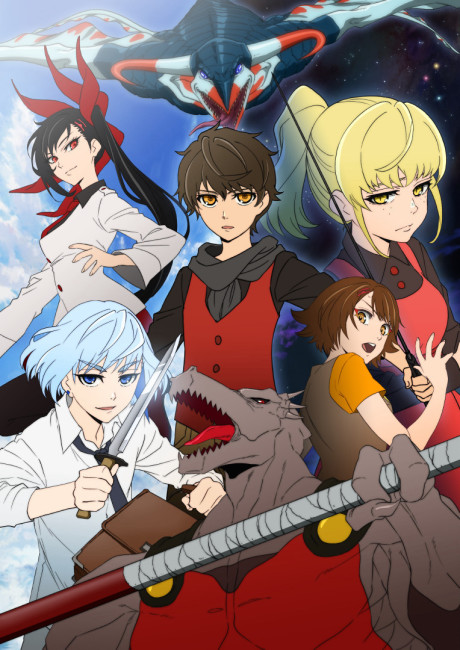
I really wanted to like Tower of God. The trailer was interesting (I thought the art was unique enough to pull me in), and I had heard mostly positive things about the manhwa. Perhaps it was because of this initial anticipation that made watching the show so painful.
If I were to say anything even substantively positive about this show, it would have to be the art. I liked it (the music was cool too). These are where my compliments end.
I didn't like Tower of God. In fact, at times, I even actively hated watching the show. Tower of God exists at the excruciating midpoint between a train wreck and a masterpiece. It's not glaringly atrocious, which would have made it fun to watch, if only to constantly rip apart the plot. And it certainly wasn't incredible, I can assure of that. Instead, it sits in the dustbin of mediocrity, content in it's utter inadequacy.
I suppose the plot is interesting enough. It sets up a unique world, I suppose. But the characters who occupy that world simply drag the show down, and for one simple reason. I don't really care about any of them, nor do I really care about their successes or failures. And if I had to point fingers at which character I cared about the least, it would easily be Bam.
I hate Bam. I think he's an utterly terrible character, who continually offers nothing throughout the entirety of the show. Maybe it's a shortcoming of mine, but I tend to dislike characters with little to no motivation for their actions, badly written dialogue, and for whom the rest of the cast fawns over. Bam is a blank slate. Through the entire show, from Episode 1, all Bam does is talk about how he wants to climb the tower with Rachel, and how great it would be to climb the tower with Rachel, and how he loves Rachel so much. Such a character is the protagonist for this show, and such a character, despite his own insistence, doesn't grow throughout the show's entirety.
I will not hesitate in saying that Bam seriously undermines the entirety of the show. Maybe if Bam wasn't there, I'd even nominally like the show and it's characters. After all, some of them, such as Khun or Shibisu, have their enjoyable moments. However, I cannot base my feelings of a show off of a hypothetical, and therefore, any possible attachment I could've had to a character is ripped apart by their continual relations with Bam, which ruin any of their potential for me, and cause me to not care about any of them.
Even the action of the show feels poorly executed. Throughout the runtime, it always feels like the animators are holding back, a feeling that I think is exemplified in the boring fight for the throne within the early part of the anime. At multiple points during this, it looks like there are going to be exciting connections with one's fist, or that a sword fight might turn dynamic. But these possibilities lead nowhere and ultimately rely on one's imagination to fill in the gaps if they want to derive enjoyment from the scenes.
Tower of God isn't good. The main character is awful, and the anime tries to keep your attention with cheap "gotcha" moments, the action is disappointing, and I left feeling very little desire to want to continue watching, when this inevitably gets a second season, or even in reading the manhwa. Perhaps the source material is good. I don't care. This show isn't, and I think that sure is a shame.