— — — —— — —
×
— —— —
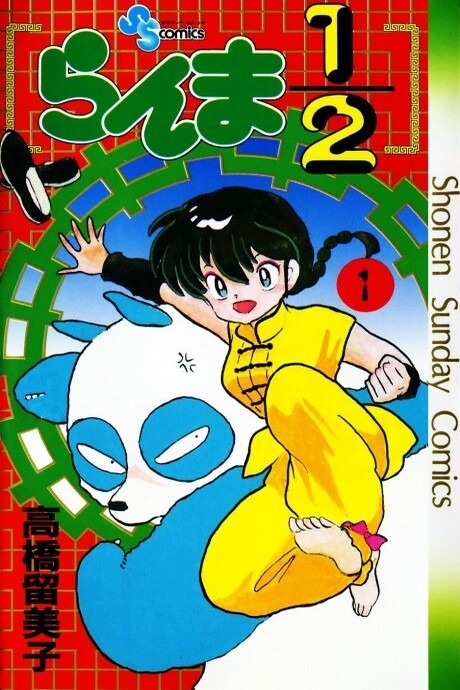
I was mildly disappointed by Maison Ikkoku as despite being hailed as a Rumiko Takahashi masterpiece, it was riddled with some really irritating use of typical romcom cliches which I just found to be handled in a way that just made me dislike a lot of the characters. Nonetheless, I still enjoyed Rumiko Takahashi’s style of manga story writing a lot so I decided to still give Ranma½ a try since I could always appreciate another episodic romcom. Boy (or girl in this case) did this really surprise me. It felt like every issue I had with her previous works was addressed here with the sheer variety and creativity of the characters and scenarios presented here. Even Takahashi’s art I feel like I can better appreciate with the heavier emphasis on martial arts really lets a reader see how effective her paneling can be in displaying some really cool and inventive action scenes and battles which are themselves engaging on their with how she combines a myriad of other elements into the martial arts aspect of the story.
So from the very beginning, Ranma½ makes it very apparent on what kind of comedy and tone it’ll set with how absurd the whole premise is with the whole Jusenkyo springs giving a curse to Ranma and his dad. Making it so just being hit with water changing their appearance is so flexible of a premise since there’s a lot of humorous scenarios imaginable just from that but there’s layers to this. With this being a martial arts manga as well, it creates even more opportunities with the action centric plot allowing for the premise to mesh well into battle situations that always compliments well with the established comedy of the manga. Add to all this an ever expanding cast of characters that always seem to work well in chemistry with the other characters and the manga rarely ever gets stale in its comedy.
These characters are indeed a great highlight of Ranma½. Ranma and Akane already have some great chemistry in a reluctant engagement where you get to see two tsunderes bicker and gradually develop feelings for each other. Every new introduced character from that point on expands on this from Ranma’s other fiance’s in which he was roped into a contract against his will, to guys just falling head over heels for Akane. Poetic that a story about the main character being both half man half woman would have a very balanced gender dynamic with how both leading characters have their own harem which makes the love polygon of a romcom all the more entertaining. But even outside the romance itself, the character dynamics work as some butt heads as rivals as an action manga but also undermine each other as it is also a comedy. Easily one of the best cast of characters I’ve read in a manga for a good while.
This is also really fun to read for a comic with how easily everything flows through from page to page. Rumiko Takahashi really knows how well to create the illusion of impact with how certain pages turn over to a punchline or a powerful attack which always keeps me engaged. It might not be accurate to any specific martial arts, but there’s a consistent moveset I see within how the characters pose that make the whole fight believable within its internal logic which I really appreciate. The jokes also always land visually as the characters make some great expressions for the context suited. Sure, it probably has that same-face syndrome issue but the designs of the overall character be it the clothes and hair are distinct enough that I don’t think I was ever particularly confused.
I think I might become a Rumiko Takahashi stan. Ranma½ has truly opened my eyes on what she really is capable of as a mangaka in how she weaves various genres and tropes into creating something that's unique and refreshing despite inspiring many and being from decades ago. I love the endearing characters and the antics they pull off, the narrative is always fun to read, be it serious or humorous besides a few parts, and the artwork completely delivers all this to create an experience I want to revisit again. Very confident the next Rumiko Takahashi work I choose to read will also be this much of a joy to read.
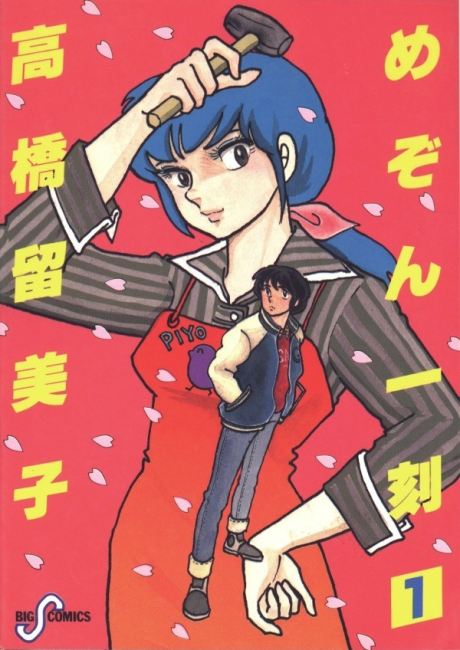
I’m going to be honest, the biggest reason I decided to give this manga a shot is simply because it was referenced in a Kaiji spin-off. It also helps that it's a Rumiko Takahashi manga that has significant reverence as one of the better romcoms out there. Considering that many circles I'm in have also greatly praised this manga, I thought it would actually come to be one of my favorites as well. Did it accomplish that? Maybe not, but it definitely accomplished writing its own unique story in its own terms.
One of the most surprising thing I can glean from this is that despite being hailed a classic, a lot of its tropes don’t seem to have been repeated and continued by romcoms in the present. Certain elements of character indecisiveness, multiple characters having multiple love interests rather than just being only one, all of this feels oddly mature in how it presents these characters as being deeply flawed. Granted it really does ride a fine line between endearing and obnoxious and at times completely trips itself up. Yet because of all this, it feels oddly refreshing that despite how old it is that its still quite the unique experience in reading this.
Another issue I have is that despite introducing some really interesting characters, the story sometimes doesn't do much with them after their introduction, even having them disappear for up to 30+ chapters even if they’re a resident of Maison Ikkoku. By the time you finally get to see them again, the manga is already wrapping itself up towards the conclusion. Because of this, some character arcs feel incredibly unfulfilled when they just show up suddenly in the story again after being gone for so long and all of a sudden they just have this huge turning point that feels unrewarding with how little we’ve seen them. I wish I could love the characters more, but this story really doesn't give me many opportunities to.
Nonetheless, this manga does indeed have charm. Rumiko Takahashi's trademark art style is very fitting in a comedic yet adult story about growing into a proper adult who can support oneself. Despite very closely inching to same face syndrome, each character is oddly distinct enough that I never really confuse them despite characters Like Godai, Nikaido, and Mitaka having very similar faces. The backgrounds with certain locations such as Maison ikkoku and the various townspots surrounding the boarding house are also depicted to be very vibrant and lively which adds more to the setting. Regardless of my opinions on Maison Ikkoku's story, I would definitely read more Rumiko Takahashi for her designs alone.
Ultimately, there’s an element of relatability and wistfulness in reading Maison Ikkoku with how Yusaku Godai develops throughout the story. Going from a Ronin to a college student and then trying to find a job is painfully easy to grasp especially if one had similar life experiences. His relationship with the main heroine, Kyoko Otonoashi, despite having hiccups that can amuse and annoy is still endearing with how it all works out in the end is very heartwarming to see the whole journey through. I like this manga, but it's not as up there as I wanted it to be.
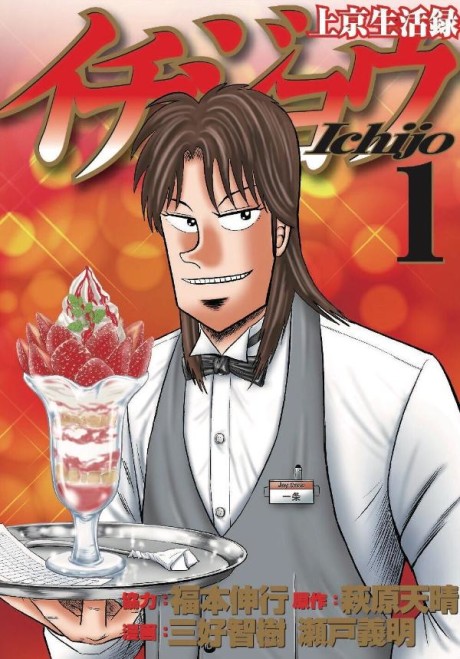
As someone who adores Kaiji and also enjoyed the Tonegawa spinoff, I was very optimistic going into this manga expecting the FKMT-esque presentation in some absurdist mundane setting. It turned out to be nothing like I actually described it but that is alright since it fulfills some level of expanding on the Kaiji mythos through exploring certain ideas dabbled in Kaiji but fully fleshed out here. If you wish we got to see Kaiji more in his daily life before he entered in and became the Ultimate Survivor, this manga serves well as a pseudo substitute to that desire.
Ichijou Seiya starts off as any other wide eyed Japanese highschool graduate moving to Tokyo to really experience the real world as he didn’t believe college was his calling. He’s actually fairly intelligent and competent but he shares a lot of traits with Kaiji in how they’re both stuck in a dead-end lifestyle while still trying to convince themselves that they will eventually mount towards something great. However, in comparison to Kaiji, Ichijou does indeed occasionally make slight productive improvements and gets quite critical of himself and others. Whereas Kaiji would be overtly naive and idealistic, Ichijou is very cynical and pragmatic which lends for a great parallel in the fact that this manga portrays how Ichijou is still living the life similar to Kaiji.
But the content of the manga itself doesn’t necessarily always link back to its origins of Kaiji. Sometimes it leans more heavily on a FKMT critique of modern society through the lens of zoomer culture with technology, memes, and its overt referencing of the trends the manga was made in, especially with the “sigma grindset” that's heavily championed by social influencers being incredibly apt for Ichijou’s personality. Other times, this story becomes a slice of life but with the subtext that Ichijou, a man born in his generation, is struggling within the confines of capitalism where ordinary mundanities are seen through the lens of a class critique.
Ultimately, despite being a FKMT spin-off it doesn’t always adhere to its origins tropes and is willing to do more light hearted stories that serve no thematic purpose of the overall message beyond its characters development. Sometimes not even related to Ichijou. I would honestly welcome some of this character drama in any other manga but it just doesn’t fit here. The FKMT artstyle just doesn’t work well with the narrative it's trying to sell sometimes and something like a romantic comedy just feels out of place in the Kaiji world.
I think if you like Kaiji and its spinoffs this is definitely worth a read, but temper your expectations as this is completely different from what I mentioned and that might be to its detriment. There’s still some great FKMT-isms in here that’ll make a reader experience the emotions you’d feel in his other works, but this is definitely trying to aim for something else with its element of relatability and cringe comedy humor. I like it though.
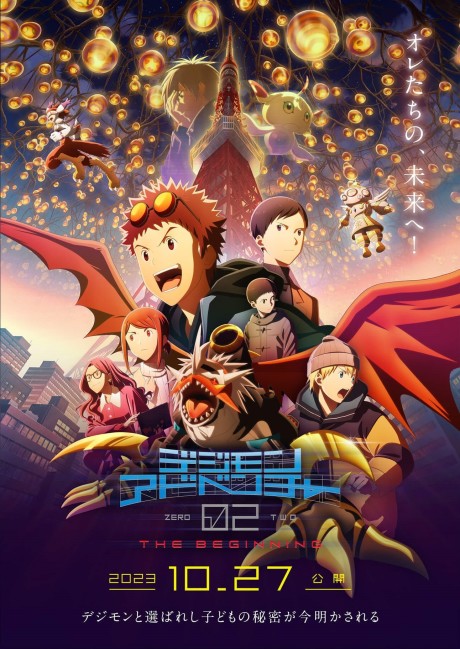
The Digimon Adventure canon is a truly one of a kind experience for me where I just happen to watch each entry around very similar ages to the characters. I first got into Digimon through Digimon Adventure being my first entry in 2009 as a 9 year old watching anime rips on youtube around the same age as the DigiDestined on-screen. 6 years later Tri came out where the characters were aged up into highschool students, which was fitting as 2015 happened to be the same year I entered highschool so it was just another perfect happenstance that the series I loved as a kid grew up at the same pace with me (regardless of the Tri movies’s actual quality). What really hit home was Last Evolution Kizuna featuring Taichi and Yamato at 20 years old being the exact same age as them when the movie came out, the movie’s message of growing up beyond your childhood felt so deeply personal to me that nothing could ever get me more emotional than Agumon and Gabumon leaving their respective partner's side. Essentially, the legacy of this franchise is very close to me and I came in watching Digimon Adventure 02: The Beginning expecting how it can build upon the themes that previous entries established. Honestly, I appreciate it, regardless of how messy it is.
This story is basically that of this new character named Owada Rui who looks like the Persona 3 protagonist voiced by Megumi Ogata (and acts like one of her characters) as he is the first digiDestined and is the reason why everyone else eventually became a digidestined. It's an interesting premise that explores on the nature of how genuine the connections are of the digidestined and their digimon partners, as its stated that the only reason Digimon and humans even came to meet each other is through a wish Ukkomon granted for Rui wanting to have friends “just like him”. What’s interesting is that the question of whether or not every digimon related conflict that has happened up to this point resulting in this wish is kind of left ambiguous as the ending suggests there is some level of influence that Ukkomon holds. However, although the vagueness is intentional, I can’t help but wonder as some elements really don’t have any thematic coherence such as in Rui’s backstory where I’m unsure what would ultimately have been the best course of action Ukkomon could’ve done that would be correct. The ending of the movie makes it evident that the biggest point it wants to convey is how communication is important in both a healthy friendship and growing up, yet it barely builds up to it more so wanting wallow in Rui’s angst which at some point came across as quite cringe-inducing when you take into account these are meant to be 20-year old characters.
Which brings to my next point with how the characters are handled in this movie. Owada Rui and his bond with Ukkomon is the sole focus of this movie as despite how much the Digimon Adventure 02 cast was marketed, they’re barely focused at all with the movie instead mostly giving screen time to Rui and his backstory. I wouldn’t mind this in all honesty as I never cared much for the Adventure 02 cast besides Ken, but as stated before Rui’s character is very messily handled. They go way over-dramatic with his backstory with the child abuse feeling outright comical to the point that how Ukkomon resolves things is just straight up brainwashing which absolutely devalues a core theme this movie is trying to portray about communication with others. Even in present-time, his whole character is that he’s being obtusely vague and when he finally tells the gang what the whole DigiEgg in the sky is about, it turns out to be very easily understandable and he was just being edgy as hell. Honestly the cast of Adventure 02 is so detached to the point of this story, it could’ve easily been the original cast and the story would’ve remained the same, down to Daisuke being a Taichi 2.0 in how brash and simple he was. The rest of the cast might as well not exist at all as they barely contribute anything worthwhile beyond their digimon helping in the final fight, there really is no reason for this particular cast to be used over the original other than maybe nostalgia for those who also like Adventure 02?
What’s interesting the most about this movie for me, is not its narrative but its production. Despite being a Toei production, known for always having at least a fight or some action every episode in its TV productions, there is only a single action sequence in the entire movie besides some cool flying scenes with Paildramon. Could this be a cost-saving measure on animation? Surprising considering Toei Animation has been on a roll recently with how Wano is currently being produced and how gorgeous Dragon Quest Adventure of Dai was. Granted, this is also one of the weaker Toei productions with how limited any moments of Sakuga there was and outright using the same digivolution sequence as the original tv series barring some updated visuals despite previous entries like Tri and Last Evolution having newer sequences. Moreover, the fact that it reuses mostly the same soundtrack as the original show is very disappointing considering that they gave remixes for previous entries of what are still also nostalgia bait. But at the same time, I really applaud a franchise like Digimon that’s really just a multimedia mix brand choosing to produce a movie to really tell its story without needing the fancy flares its ilk tend to need to grab the attention of kids. It shows that as a franchise it really is willing to grow with its audience, and that alone really resonates with me as someone who grew up with it.
To conclude, I like Digimon Adventure 02: The Beginning a lot, despite how messy it was in doing what I think it's trying to do. It's another decent entry building on Digimon’s themes of childhood, growth, and maturity while also providing another perspective of what Digimon is for longtime fans like me. Structurally, it really feels like a retroactive addition to the lore of Digimon Adventure, but it's a welcome one despite how clumsily it uses established aspects of the series. At this point they’re going to keep milking this franchise despite the word “last” in Last Evolution Kizuna and I’ll probably keep watching to see how well they can keep this shaking foundation of a series before it eventually topples down. 6.5/10, I did come close to tearing up a bit because its nostalgia bait still hits me.
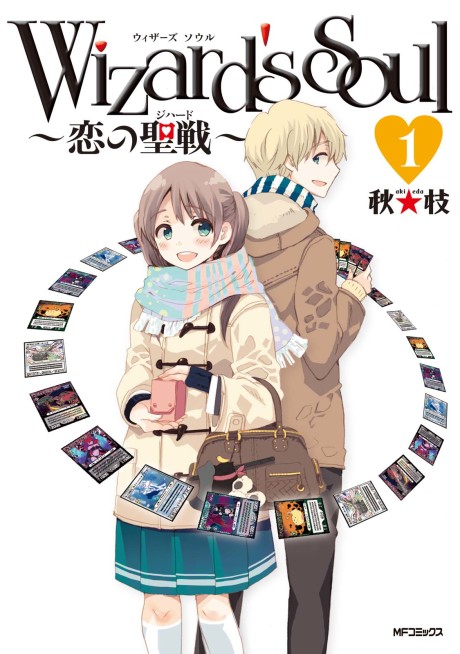
Knowing this is another card game manga, I was super excited to see how deep this particular manga would go with the card game aspect in terms of meta and experience in comparison to other manga titles like Destroy All Humankind and YuGiOh OCG Structures. I was certainly not disappointed.
Wizard’s Soul has a funny introduction as Ichinose Manaka’s reasons for playing the game and entering the tournament is to pay off the debt her dad accumulated from card game scams. This alone really sets up how the world revolves around the card game, where things like your school GPA and your social clique are dictated by your skill level of Wizard’s Soul. Although on a surface level it does seem incredibly ridiculous, the narrative actually executes a world revolving around a card game masterfully which is seen by many of the reasons the characters play and how serious the hobby is for them. A particular example of this I want to highlight is the character Kusama who originally dominated her countryside origin yet was completely disillusioned when she came to the city and realized how insignificant she was. Even after sacrificing so much of her social life for the game to get at a competent level within the city, she picks up a mean attitude and aimless outlook as a result of her background in regards to the hobby being what both her life and her world revolves around. It eloquently depicts how a world revolving around a particular hobby can completely warp the individuals who are simply invested in said hobby. This isn’t even mentioning the deeper character arcs this manga has with character relations with the card game such as Ichinose’s mom or Ichinose’s bullies (remembering Japanese names is hard, please forgive me). A story like this is perhaps the closest in portraying the TCG player’s experience in a grand narrative to my knowledge.
Another aspect I have to bring attention to and is probably the biggest appeal is the card game itself. Wizard’s Soul isn’t based on a real card game but more so just a made up one with heavy Magic The Gathering influence. Besides referencing real cards, this manga actually communicates well the basic gist of rules in following a particular matchup and getting invested in the very cards and decks a character plays. In comparison to Yu-Gi-Oh! Duel monsters, a reader who cares about the intricacy of a match would most likely have a deeper engagement as the tangible rules of the game in what you can and can’t do is very evident creating a believable story of a card game match actually happening. This goes beyond other contemporaries that already achieve this like Destroy All Humankind and YuGiOh OCG Structures as because the manga uses a made-up game, it doesn’t rely on pre-established rules from real world card games and instead has to communicate properly how and why certain cards work and the advantages it gives to a player. This results in perhaps the most hype I’ve felt while reading a card game match as my investment in certain matchups of specific deck types are reminiscent of real card game matches with me being able to understand the win conditions of the decks being used. I actually think this doesn’t really matter in the long run if you aren’t interested in card games as the presentation of the manga storytelling within matches are simple enough to understand such as the Stall Burn and Exodia strategies involved.
The most disappointing aspect of this manga and which I assume will be most forgiven is the romance. Although it builds off pretty strongly with Sakurai’s crush on Manaka and their falling out, the relationship never gets any proper development with the bare minimum on the dude’s side trying to get back closer, the romance feels like it's on the backburner most of the time except for the one matchup which I do appreciate. Honestly I really wish this manga could be longer than a single tournament arc since there’s so much to be explored but I’ll take what I can get especially since it handles everything it sets out to do pretty well for the most part.
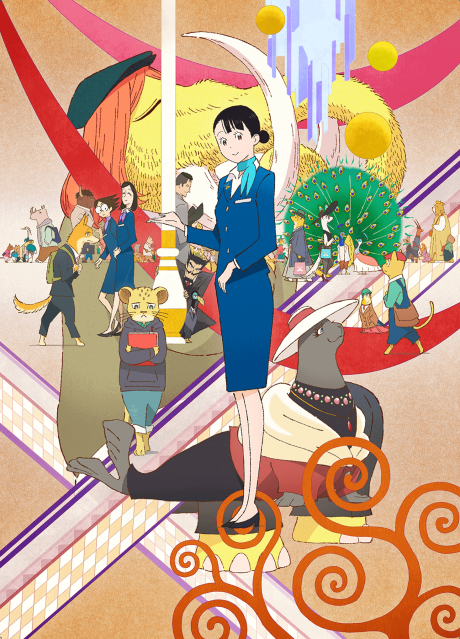
Watching this anime movie makes me believe in the better of people. It conveys the message of how everyone who works all around you, despite the cynical truth of just wanting the paycheck at the end of the day, still wants you to at the very least enjoy yourself. This works really well with the animals being part of the setting as a way to display the harmony of society despite certain animals being shaped differently and in size, even accounting that some are natural predators to others. The Concierge is essentially the story of Akino as she begins her job as a concierge in-training, and from this we get to see her slowly get better at her job in entertaining customers. Being able to see her overcome trials and tribulations is just incredibly uplifting and makes it so you really want to root for her in becoming a competent concierge.
What is most likely to hook someone in watching the movie has to be the Hokkyoku Department store itself though, with its colorful cast of animal customers each with their own quirky personalities and wants in arriving at the department store. The highlights of this movie has to be in learning what their problems are and seeing how Akino can help in resolving them, creating this believable environment of a location you want to visit yourself. There was also some grand message about the reason of the Hokkyoku Department Store existing and its ties to the extinction of many animals with a lot of plot points meaning to parallel to real life events but I’ll be honest, I’m no expert in all that but it's definitely interesting to follow especially if you’re knowledgeable on the topic.
Being a feature film, the movie boasts a presentation befitting of its scope. The department store is portrayed beautifully with its bright yet warm colors, and every sector of the building feels incredibly distinct especially the interior of the individual stores. The character designs for the animals make each one distinct from each other which made it easy to differentiate even with the same species, but were also very close to the actual depiction of the animal without resorting too far in anthropomorphizing them. The human characters were also great with their designs really highlighting each personality quirk a person had which can be best seen with how stern the floor manager was and how his figure depicted that. Sound design was also great with a fitting soundtrack exemplifying all of Akino's struggles and solutions in balancing to please her clientele.
Overall the movie was simply entertaining on the base level and is a very comfortable seventy minutes in getting lost in a fantastic imagining of a Department Store following Akino’s struggles. Since it ran for seventy minutes, it’s only natural it would be a 7/10.

Scott Pilgrim Vs The World is my favorite movie of all time. Yeah, I don’t watch that many movies but I was just simply in love with the cast of asshole irredeemable characters and the whole unshameful nerdy fan service that felt like the most tasteful way to do it. Needless to say, I was hyped that we were getting an anime so my thoughts on this show are unabashedly biased. The short gist of it is simply that, if you loved the Edgar Wright movie, you’ll more or less like this one as it references very heavily on that and is basically written in the same tone and style. Honestly this barely functions as a review, this is really just my loose collection of thoughts as I’ll be referencing the movie a lot to highlight what this show does (Sorry for comic book readers but I haven’t read them so I can’t make much comparisons with them).
There isn’t much I’m actually able to tell about the story without going into major spoilers, but by the end of episode 1, it already establishes how it differentiates itself from past media of the same name with a unique twist in how it adapts the story. Fans who expected a faithful reimagining of the beloved story in anime-form might be disappointed, but there’s much to appreciate in the bold new direction it went with how original events and backstories and recontextualised in a different narrative perspective, especially with how characters are further elevated in this interpretation. There are some issues towards the end where a certain conflict goes unexplained and also the epilogue feels like it tries a little too hard in giving everyone a happy ending, but it still felt like a solid conclusion nonetheless.
Without spoiling much, this series essentially takes its time in really fleshing out the characters that originally didn’t have all that much screen time in the movie. Scott’s friends and Ramona’s evil exes were very fun in the Edgar Wright movie, but it was a shame that not many of the characters really got that much screen time and development which I’m glad this show really addresses with how many of the characters get their well deserved focus. My favorite particular standouts were Wallace and Lucas with how much of a gay gigachad Wallace was and how fun the anime presented Lucas as this goofball badass himbo just doing whatever he wants. Wish there was more for the twins Ramona dated and Knives really got the short end of the stick with how little she was focused compared to the movie. How this particular anime fleshes out its characters really drives home the message of even if people are nasty assholes, everyone is still trying to be better and it is a fruitful endeavor to do so.
The presentation for this series is amazingly immaculate. These character designs are the perfect translation of the original comics and I assumed the simple designs really let the animators go real hard on the action be it fights, general movement and even stationary scenes. Ramona’s rollerblading, Lucas’s skateboarding, and all other manners of badass 2000s era traveling just looked amazing to look at paired with exemplary sound design that really sells how cool the overall vibe is. A personal highlight for me has to be Ramona vs Roxy fight where it was its most inventive in using different framings to portray the fight which also happened to be incredibly resonant with the narrative of their past history together. All of this coupled with Anamaguchi and Joseph Trapenese’s godlike soundtrack that feels very reminiscent to the movie’s soundtrack while also being unique in its own with adding a twist in being for animation. I am listening to the soundtrack right now on spotify as I write this.
Scott Pilgrim: Takes Off is essentially the Eva Rebuilds/Final Fantasy VII Remake of its previous iterations. It disguises itself as what would otherwise be an updated version of a beloved classic and flips the script in turning into something that further elevates and exemplifies what makes the previous one so great by expanding on established ideas that were already done really well in the medium of animation that delivers what it can do most effectively in this format. Not everyone will be fond of this iteration in interpreting the Scott Pilgrim comics, but I very much welcome it as an interesting take of what is my favorite movie (I have only seen 27 movies).