— — — —— — —
×
— —— —
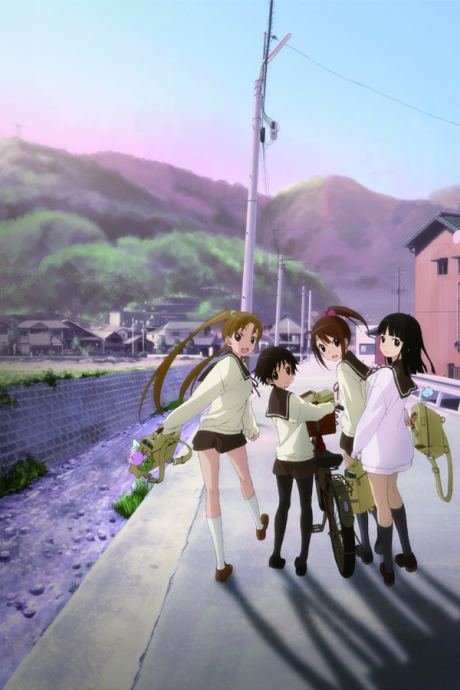
(May contain spoilers)
For her first year of high school, family circumstances force Fuu Sawatari to move to Takehara, a scenic old town near Hiroshima on the Inland Sea and live with her relatives. Her father, who has passed away, grew up in Takehara and always spoke fondly of his childhood while living there. Sawatari learns to love taking photographs with his old film camera, a Rollei 35S while making friends and learning about the town.

Tamayura is another one of those "Hidden Gem" anime or better saying a work in which it deserved a little more recognition, even more with the story having beautiful and exciting messages.
Tamayura is a great Slice of Life anime and with a very good narrative , and not to mention that the anime has Junichi Satou (Director of Aria) who manages to transmit incredible things to the viewer. Photography has always been something I admired and how I find it sensational in how photography itself can convey incredible things to those who are watching it and create a spiritual connection between people and this is what happens between Fuu and his father's photography together with several dandelions.

(The dandelion represents each phase of Fuu's father's life.)
The dandelion is also related to the idea of detachment and travel. The seeds of this plant seem to represent perfectly as phases, the life cycles that each one of us has to fulfill. Initially, the seeds attached to the delicate appendix, do not seem willing to stand out. But, slowly, they are blown away with “receiving” at first, but increasingly determined to embark on a new journey and experience new adventures. Having overcome their fear or initial reception, they let themselves be carried away by the flow of life, curious about new discoveries, and ready to create a new life.
This path is a perfect metaphor for the life of each of us: in order to fly and take advantage of all the opportunities in life, it is necessary to let go of one's own origin, face the new and the unknown.

Yet another meaning is the representation of the dandelion as a symbol of childhood and innocence. And it is especially the children, in fact, who delight in blowing and dispersing like seeds of the dried fruit of this plant. An image that represents childhood in its dream of a better future for everyone. Typical of childish joy, innocent and carefree, that we need to recover and rediscover in adulthood.

•This Review Contains Spoilers
Well, Oregairu is undoubtedly one of the best romantic comedies I've ever seen, the plot of the anime is a bit cliché, but the characters are the strongest point of the plot, Hachiman or Hikki is undoubtedly one of the best characters I have seen in any other anime .. The story and thoughts of the protagonist Hachiman are, for many people, as phrases of inspiration for the character's sarcasm .

The way he portrays life makes most people feel a connection and empathy for him, getting more and more involved in the story he tells; his own, and how he reads between the lines. His relationship with the other protagonists of the series made him mature and perceive the world in a different way, they learn from him and he learns from them. There is drama involved in this wonderful plot as well and in how each man deals with his problems according to his personality. Remembering that they are all different in relation to each other...
Yukino, even having a way of thinking even similar to Hikki's, she still bonds a lot and trying to overcome her sister, maintaining scattered and distant relationships. Yukino keeps a lot of what he feels hidden, for having a weak and submissive personality. And Iroha, even though she has a strong personality, she hides it all behind a fax for everyone to like her, leaving no space to get to know her real "me". Yui, being the character that makes the plot level comic, she has a happiness in being able to make new friends. In my opinion I think it would be interesting if the author made different endings, that is ... An end for each of the heroines, I think that not only me but many people think the same way. But, I would be happy anyway who would be the girl chosen by Hikki..
The good thing about this season was that they managed to keep the same studio and the animation was very good. Sometimes I see people complaining about the change of look that the characters had in relation to the first season.

Watching Yui cry was very painful and it was hard not to care about her true feelings, Yui deserves all the best!
Oregairu has great characters and a somewhat normal story and nothing much different from other animes of the same genre. However, it was an anime that marked me a lot there in 2013 and this continuation was something that a lot of people had been waiting for years, so I think that the anime closed with a golden key.
This third season, despite being a little cut in relation to the novel, I really liked it and I think the ending was satisfactory. Could Hachiman have chosen any other girl? Yes, but what prevails most in animes of romance is the first contact that the protagonist has with the first girl introduced..

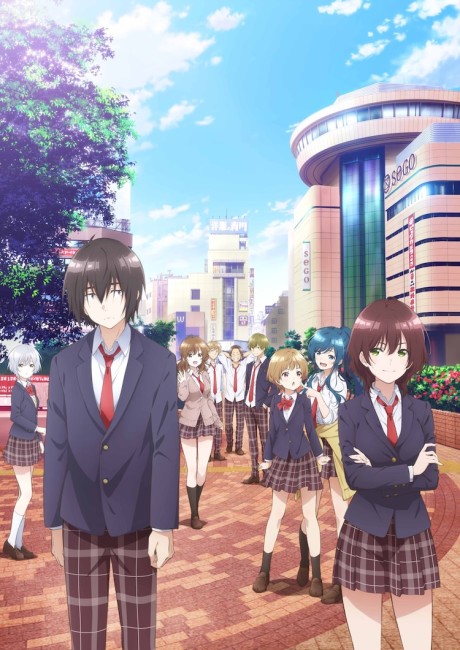

“Life is a god-tier game.” I know there’s that famous copypasta about it, but if you ask me, it’s a bunch of crap.
Only people who’ve never been in a genuinely shitty situation would think the world is actually balanced to let you clear each level by the skin of your teeth with a little skill and effort. You think every character you’ll meet has a deep backstory? That’s just a stale fantasy you’ll hear from people who have no idea how many shallow mobs are out there..

The story tells about Fumiya Tomozaki who is Japan's best player in the online game Attack Families, better known as "Tackfam". Despite having such a revered title, the lack of social skills and kindness makes him insufficient in his everyday school life. Because he has no friends, he blames the complicated mechanics and unfair rules of life, forcing him to give up and proclaim himself a low-level character in this "game". After a fateful encounter with another high-profile player Tackfam, Fumiya is shocked to discover the player's true identity - Aoi Hinami, a popular, intelligent and sociable classmate who is the complete opposite of himself. Aoi, surprised by how inept Fumiya is in everything but Tackfam, decides to help him succeed in what she calls the best game ever. Through the horrible trials of social interactions and relationships, Fumiya begins to advance levels in the glorious game of life.
By far it was the second best anime of this season that I most enjoyed watching, works in this school footprint are sometimes mediocre and boring. But Tomozaki has something that I think is the strongest point of the work, I'm not talking about the characters, but the dialogues that are simple and very well written. Now about the characters, so .. The first thing that came to my mind as soon as I saw the first episode, the anime seems to be just one of those with the same theme and with generic characters, in works of this size it is very difficult to develop all secondary characters, but I think that in this first part the anime presented something that left me very satisfied, I found the characters very good and I hope it will be good when I continue reading Novel.

A brief commentary on episode 4: This episode was quite hater on him and how much Tomozaki's words and attitude were cringing. I think this is the best episode of the anime and even though he doesn't have the ability to express himself so well, the character showed something that we should never let anyone look down on us, even for a silly thing, nowadays people don't know what "effort" means "or some know but they don’t have the courage to try to work on something or just complain about things ..
In episode 11 "Tomozaki is no longer a playable character" That's the only point I can really think about or maybe I'm wrong in my interpretation, but I think that's what the anime means. I still think it has a lot to do with the Atafami game itself, but with Aoi controlling the main character itself or would that be a rematch?

*Don't believe in her
I think that episode 12 was very good and gave us an idea of what will come in a possible second season and that in the near future Tomozaki will no longer be number one in Atafami. Despite having seen some illustrations of the novel I think the adaptation was successful in terms of char design was really very good.
I think it's a little early to favor some female character, but I think that in this first part I will choose Kikuchi since she is the one who makes my type of girl more lol

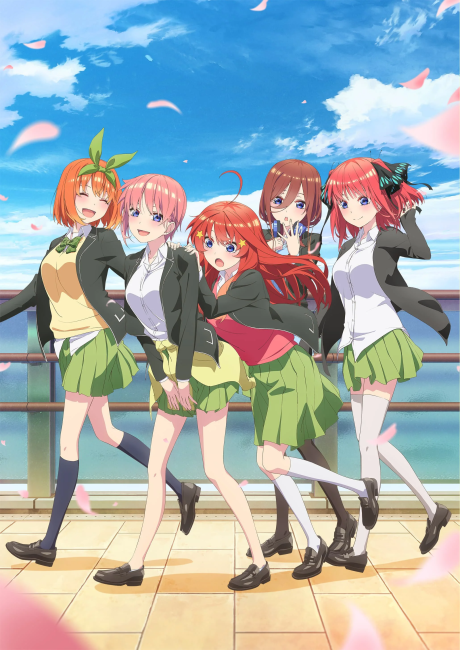
Contains some Spoilers*
Old manga reader here, Gotoubun is one of those anime / harem that is kind of hard to choose a favorite girl, but in my case I'm Nino Supremacy :)
Despite this season cutting some things in relation to the manga I think it left nothing to be desired, I like how the story of Gotoubun is simple and captivating to read. The characters are one of the strongest points of the work and this season was no different, the characters are charismatic and make the story proceed in a fun way.
Well, many animes end up switching studios in new seasons, but the animation of this second season of Gotoubun was incredible and managed to adapt to the magnificent scenes of the characters declaring themselves, the char design of the characters was really very good!
Ah, I like how the anime fancies the emotions of the characters and all what happened in the last episode;)

Nino: Well, Nino as a whole has always been my favorite character in the work and at the beginning she is quite arrogant in certain situations, but she is a sensitive character who does not know how to show her feelings for her sisters and her development in relation to this season and the manga pleased me a lot,
even though she was not the girl chosen by Fuutarou.

I literally love this woman ❤
Ichika / Itsuki: I remember that a lot of people were angry with Ichika about some things that happened in the manga at the time and I didn't see anyone talking about it this season, despite some attitudes she committed I think she is the one I like least about constructions. Along with Ichika, Itsuki is the character that is less than the work, she is not a bad character I think she and Ichika could have been a little more developed.
Miku: Miku is the most relaxed character in the work and that at the beginning I had difficulties to like her, but I think she had a very good evolution and not to mention that her statement was very good.
Yotsuba: Without a doubt with a cheerful and energetic personality, she has a strong tendency to help people. Yotsuba is an active and relaxed girl. She's the type of person who can't say no to people who need help. She is also very well physically and is capable of tasks that her sisters cannot do. She has excellent stamina and is great in sports. She is the only sister with excellent eyesight. She has a good sense of smell and a green thumb. Although she is great at physical activities, she has the lowest score of all her sisters. Yotsuba is the only sister who has accepted Fuutarou from the beginning and supports him wholeheartedly in everything.
Fuutarou: Well, I honestly quite like how he is a very charismatic character and is known for having a great ego and high confidence. He is direct, tactless and rude; but it is really capable of containing your emotions. Despite this, Fuutarou may momentarily lose his composure when agitated and faced with unfavorable circumstances. He also initially did not like to get involved with other people's problems, finding them problematic. Despite his lack of tact and rudeness, he is experienced enough to know what to say in specific situations when thrown at him; rarely giving up when trying to achieve a specific goal. I really like how hard the character is in relation to his studies.
While I was writing this review I saw that they announced a third season and I hope they adapt all the original material :)

Sinopsys:
Dr.Kaneda was developing experimental giant robot warriors to fight the allies during the Second World War, but before his creations could see action, Allied bombs destroyed the facility and killed him. A decade later criminals discovered two of the surviving prototypes, #26 and 27 in the series, and used the remote controlled robots to commit a number of crimes. Young Shotaro Haneda, the twelve year old son of Dr.Haneda, did some investigating and discovered that the mob were hunting for the twenty-eighth robot in the series, rumoured to be the most powerful of them all. Racing the villains, Shotaro discovers the robot first, along with Dr.Shikashima, a colleague of his father's who was also believed killed by the Allied bombing. Together the two prevent Tetusjin-28 (the robot's official designation) from falling into the hands of the bad guys, and decide to dedicate him to peace rather than war.
Shotaro fought crime for a long time, supported by Dr.Shikashima, who would repair Tetsujin-28 when he was damaged, and by police officer Otsuka.

When talking about "Remake" nowadays the first thing that comes to mind is whether it will be faithful to the original material, although I did not watch the 1963 one, I think this Remake can be as good as the same. Tetsujin is undoubtedly one of the best wicks I have ever seen and not to mention that he is the father of wicks.
In addition to the references about the WWll / Cold War, I find it quite interesting that the fact that they explored the topic "artificial intelligence" made the story even more interesting, which is a branch of computer science research that seeks, through computational symbols, to build mechanisms and / or devices that simulate the human being's ability to think, solve problems, that is, to be intelligent. The study and development of this branch of research began in the Second World War. The main creators were the following scientists: Hebert Simon, Allen Newell, John McCarthy and several others, who with common goals had the intention of creating a "being" that simulated the life of the human being.

The A.I. study began in the 1950s with scientists Hebert Simon, Allen Newell, these were the pioneers when they created the first artificial intelligence laboratory at Carnegie Mellon University.
The first part brings us very simple arcs, but the general work is directed to larger arcs that are explored in much more detail in the second half. As stated earlier, the series is very similar to the film noir - with Shotaro playing the role of the private detective character. The second half of the anime is sensational, the plots are very well written and the way in which they are clarified is very good. Tetsujin's most important point is undoubtedly the cast, which is very good, the characters are charismatic and make the viewer more captivated to carefully follow every detail that the anime proposes. The soundtrack composed by Akira Senju is sensational!

Animation: Well, I'm not that demanding when it comes to animation, but I think the most important thing about how the story is executed and Tetsujin's is perfect. Director Yasuhiro Imagawa's work is impeccable, even without watching the old series it is clear to see how he manages to keep all the essence of the 1963 series.
I literally recommend and I think all mecha lovers should take a look at this masterpiece called Tetsujin 28!
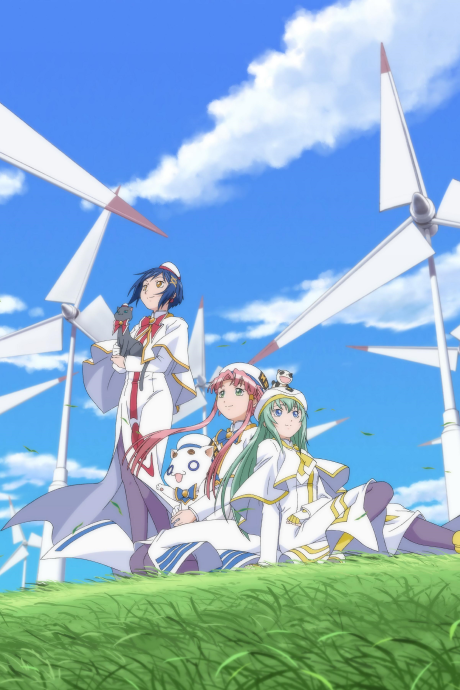
Aria - A brief review of my experience watching the anime.
Aria is undoubtedly one of the best or if not the best Slice of Life I have ever seen and one of the few that made me feel moved in some parts, that hasn't happened since Ef: Tale Of Melodies.
Well, the story is about a girl with the dream of becoming an Undine living a peaceful life while knowing more about the world she lives in and meeting people.
About Neo Venezia: As futuristic as it may seem, Neo Venezia is still full of rustic beauty; gondolas in wide channels and waterways are the main means of transport.
This is the workplace of Akari Mizunashi, a free-spirited teenager from Manhome who is now an Undine rookie (the title given to tour guides). Join Akari as she becomes intimately familiar with other Undine, tourists, residents of Neo Venezia and even the city itself, learning many valuable life lessons along the way, such as the wonderful truth that there are such things as miracles done for the man.
Despite having a monotonous and slow start, Aria improves with the passing of the episodes and consequently when the other characters are introduced and without a doubt the cast of Aria is one of the strongest points of the work.
Of course, if you want to see the journey of these three towards professionalization as being "the plot" I could perhaps understand the criticism that anime is slow. But such a claim would not really be within the spirit or intentions of the work itself, but rather a personal projection of the viewer of what a story should be, as opposed to what it wants to be or, indeed, it is. Aria is a series that strives for the atmosphere, for taking advantage of each episode as an episode, as an individual unit, while a plot driven work strives for taking advantage of each episode within the larger context of the series as a whole. In this second case, it is the set that gives meaning to each episode, while in Aria each episode has meaning in itself. This is the fundamental difference between more narrative stories, so to speak, and more episodic stories, and because of this difference, it is necessary to adjust one's expectations to the intentions of each format. This does not mean that the Aria set is a badly stitched patchwork, not even by far. As I will argue throughout the text, each season has a theme that connects and gives meaning to the set of episodes that compose it, but the fact remains that Aria should not be watched by its story.
Animation: So, I think the animation has improved a lot from Aria the Animation to Origination, even if the animation is simple it can be very good in some specific moments / scenes.
Soundtrack: Well, the soundtrack is one of the best things I've ever heard and it becomes quite striking right at the beginning of the series and it combined a lot with the Venice theme, there are times when it's almost impossible not to just listen and admire.
Characters: So, Aria has a wonderful and very well written cast, it's just incredible to see how well the anime works all the characters so well and not to mention the various parts in which they made me feel emotional.


This review contains spoilers
•Story
In the year 2059, the earth has been plagued by aliens for several years. In an effort to learn more about these aliens, Dr. Noguchi and his assistants Maki Agata and Takuto Kaneshiro try to revive the professor's experiment, a large Bio-Mechanical alien named Frank. During this process the alien comes to 'life' and the lab is subsequently destroyed leaving Takuto the only survivor and the alien disappearing into the wilderness. While Frank roams the wilderness he meets Hattie, an emotionally distressed young girl whose parents are killed in the first 'close encounter' war. Oddly enough she is able to communicate with Frank and soon after they are taken into custody by a secret agency known only as 'Funeral'. Meanwhile, Takuto wakes up in a hospital bed with his life in shambles, and his face disfigured. Motivated by vengeance and heart break, Takuto accepts an offer from the mysterious 'Mr. X' and receives a new identity as a ranking Funeral officer named Ryu Soma.

•Animation
I really liked the animation and the character design, I think the design of the Aliens could have been different from each other.
•Opening / Soundtrack
The OP is one of the great differentials of anime, it is quite melancholy and pleasant to hear, the soundtrack is reasonable and could have been a little better in the action scenes.
Argento Soma is not an anime for anyone, my experience with anime was quite satisfactory and I liked the outcome of the story. But if you like "mechas" and go to watch AS thinking that there will be several fights between robots, you may end up being disappointed.
The narrative is quite slow and the anime is mostly episodic, the first part is kind of one of the factors that "It's slow, but that's essential".
The second half of the anime is where things start to get interesting and the plots start to have a great prominence, the plots are one of the strongest points of the work and not to mention that they are simple but they are very well written and are not so difficult to understand yourself.
•Characters
At first, I didn't like the characters, especially the protagonist, in which he was quite indecisive on several occasions, but I think that after the second part the protagonist started to have a good development. Harriet at first appears to be just a "boring" character, but you realize that she has (PTSD) and is quite agonizing to see the character remembering the deaths of the Parents / Grandfather. The secondary characters could have been more developed and with a better background, but with the story that the anime proposed I think they were quite good.
I think not only me but sure that other people were also confident that Maki was still alive, the anime of the clues that she really was alive, but I think that made the story much more interesting and not to mention the plot that is sensational
•Enjoyment
I really liked the anime itself, but some things could have been better and more worked on. If you like stories with a narrative like Argento Soma, I think you should check out the anime.

• This review contains spoilers
What to talk about Steins;Gate .
It's kind of hard to find words and say how much this masterpiece is part of my life. Steins;Gate is one of the best things I've ever seen and that made me interested in the Science Adventure Series, if you don't know what I'm talking about it is better to research the visual novels that make up a series! For those who don't know, Steins;Gate is an adaptation of Visual Novel and it was the only one in the series that had a good adaptation and that gets to be better than the original.

The story tells of the self-proclaimed mad scientist Okabe Rintarou who lives in a small room in Akihabara, where he invents "devices of the future" with fellow laboratory members Shiina Mayuri, his childhood friend with an airhead, and Hashida Itaru, a hacker otaku. The three spend their time tinkering with their latest creation, a "Microwave Telephone" that can be controlled by text messages. Lab members soon face a series of mysterious incidents that lead to a revolutionary discovery: Phone Microwave can send emails to the past and thus change history. Adapted from the critically acclaimed visual novel by 5bps. and Nitroplus, Steins;Gate takes Okabe to the depths of scientific theory and human despair as he faces the dire consequences of changing the past.
The way the story is told is the highlight of Steins;Gate, the beginning can be a little slow and confusing, which drives many people away. But after you finish the anime, thank the beginning for being that way, because if they changed, the story would lose its essence.
The first part of the anime is an introduction, and things start to get interesting after episode 12, which I believe is one of Steins;Gate's biggest points. It is at that moment that we really realized that the anime only made you become more attached to the characters and then destroy you completely.
I can't get enough of saying that Steins;Gate has such a well-written story, and the management manages to capture the essence of each situation perfectly. Steins;Gate has a circular history, meaning the end connects with the beginning, and everything makes sense. No point in the anime, no scene, is there in vain. Everything has a purpose, so details are essential to understanding plots!
Another element is the SERN that appears so much in the work. In real life, CERN is a European Organization for Nuclear Research, being the largest particle physics laboratory in the world. And last and most importantly, John Titor, who was an Internet user in the 2000s and 2001s who claimed to be a time traveler in the year 2036. John's story is very intrinsic to Steins' story, that's why it is so important. Many events are based on what John Titor claimed at the time.
▪︎Soundtrack
Well, the soundtrack composed by Takeshi Abo is undoubtedly one of the great pillars of the series and of great importance in moments of tension. Gate of Steiner is one of the best things I have ever heard! Not to mention the exceptional work of Ito Kananko singing Hacking to the gate and Sky Clad no Kansokusha.
I'm just mentioning this plot cause is my favorite in the serie.
Suzuha's plot..

The episode 14 where it is revealed that Suzuha came from the year 2036 to save the world from SERN's domain, in my opinion is undoubtedly one of the best and most written things I have ever seen. When you think of John Titor it soon comes to mind that he would be a man in the anime, but it never crossed my mind that he would be Suzuha. Therefore, she used the name John Titor on the Internet forums for Okabe and the others to notice. It was she who made the time machine collide with Akihabara in 2010, just when the Microwave on the phone was being developed. This time machine, revealed to have been created by Daru, could only go back in time, but it could never go to the future. To find the IBN 5100, Suzuha decides to go back to 1975 and then bring it to Okabe to stop SERN. In deciding this, she would have to leave 2010 and could not return. Dedicated to her mission, she decides to go. A few hours after her departure, Okabe and the others receive a letter from her, written in 2000. She reveals that she was unable to recover her PC due to the malfunction of the time machine, causing her to lose her memory until the year. 2000.

The scene in Suzuha's letter is very painful and one of the saddest parts, seeing that all the good memories she made with the other members being erased is painful, but even more painful is to see how much Okabe gets more destroyed.
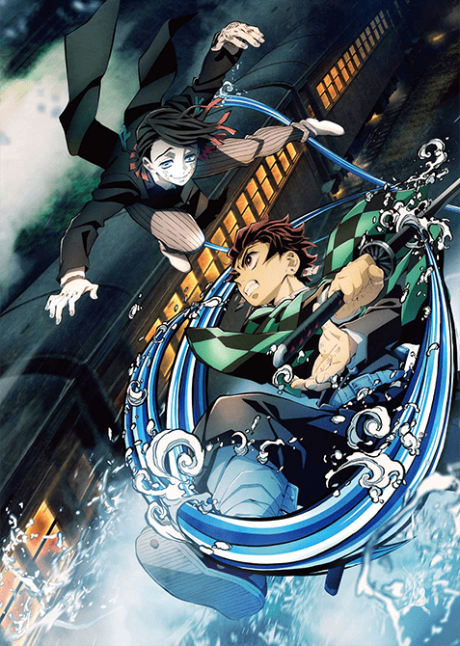
What to talk about this movie..
The beginning of the film is very boring and it extends to its final part where things get more interesting.

If the fandom is already unbearable because of the anime I don't even want to imagine when the movie comes out in the west
Well, KNY is undoubtedly one of the most overrated animes that I've ever seen, I don't know why people exalt the work so much, the story isn't even as good as many say. The point is that if it were adapted by another studio I highly doubt that the anime would be as exalted as it is, but since it was adapted by one of the best studios currently in the industry the anime became so famous.
I still don't like the characters in this series and not to mention that they are simply clichés.
This film will not be much different from the series, it will become something "more overrated" than the same. I know that a lot of people created a very high hype for this film, but in my opinion this film has several inconsistencies.
The soundtrack and the story remains the same in relation to the series with the 26 episodes, only now we have Rengoku as one of the "main" characters.

As I have said several times, animation / production is one of the best in the anime industry and that is undeniable.
I was curious and went to see if anything changed in this "arc" in relation to the manga, and interestingly it is horrible just like the manga. Rengoku's death is one of the most pathetic things I've ever seen and not to mention that there is no way the viewer can feel for the death of the character.

Regarding Rengoku, he was undoubtedly one of the characters who seemed to have more screen time and that his background would be well written, but his background is horrible and the author is even wrong to do that.
I honestly can't seem to like the KNY characters, when I try to like the "Rengoku", the author goes there and gives the character a horrible death..
My friends told me that the deaths of the other Hashiras will be in the same footprint as that of Rengoku. And not to mention that I see a lot of people saying that the end of the manga is horrible and I don't doubt that they can adapt some of these arcs in movie formats.
Btw, If you, like me, didn't like the main series and you don't want to waste your time watching the movie, I recommend that you go far and watch something that is less bad than this movie.

Eu curti bastante Haibane e a história num geral e os personagens me agradaram bastante, eu pensei que o drama do anime não seria interessante e isso me preocupou no começo, mas na sua reta final tudo melhorou bastante..
Vou logo dizendo que a Opening de Haibane é uma das coisas mais lindas e profunda que eu já ouvi, e foi incrível a sensação que eu senti ouvindo a OP pela primeira vez. E me fez ficar com um imenso vazio depois que terminei de assistir!
A animação é bem bonita pra um anime de 2002 e sem contar que é bem fiel ao material original..

Acho que a primeira parte do anime mesmo sendo lenta, faz parte de sua apresentação, mostrando restrição tonal para caracterizar a natureza submissa de seu cenário e imitando o que é uma solidão melancólica e cheia de melancolia, que é expressa de maneira diferente ao longo do anime.

A história de Rakka e Reki serve apenas para atualizar os temas, tom, atmosfera, ambiente, " o anime não conta situações", entrelaçados nos dispositivos literários narrativos, conotações temáticas e uma resolução interna supostamente catártica. Para empurrar o espectador a dar um significado maior ao que está sendo mostrado.
É a maneira do anime de projetar seus temas principais, como autoconsciência, auto-reconhecimento e auto-aceitação em nós. Os personagens não são os mais profundos já escritos, mas todos têm suas sensibilidades que os fazem se sentir humanos. Embora as implicações existencial e psicológica estejam intrinsecamente ligadas, é a psicológica que prevalece na mensagem / moral do anime.

O objetivo principal do anime é aprender a colocar sua autoconsciência acima de suas tendências autodestrutivas, encontrando seu próprio equilíbrio psicológico.
Trata-se de examinar as partes mais profundas da sua psique e usar concretamente essa nova epifania, alterando sua abordagem da realidade e finalmente poder viver no mundo exterior, qualquer que seja.

O suicídio se torna óbvio no final (e mesmo antes disso), mas a coisa toda "Day of Flight" tem mais a ver com como lidar com o aparentemente incognoscível do que qualquer outra coisa, e como o anime defende a "aceitação" em vários níveis, é apenas natural.

Well, after I finished watching Zeta Gundam I felt compelled to write a text about my experience watching the anime and describe the negative and positive aspects of the work.
Zeta Gundam is undoubtedly one of the most praised Gundams by the community, but that does not mean that he does not have any inconsistencies.

The year is Universal Century 0087. Seven years have passed since the end of the One Year War. In its zeal to eliminate any remaining opposition, the Earth Federation organized the Titans, an elite combat force. However, the Titans soon get out of control, committing atrocities on a par with the worst that the Principality of Zeon had to offer during the war. In response, dissatisfied citizens, former soldiers of Zeon and even members of the Federal Earth Forces form a resistance group known as the Anti-Earth Union Group, or AEUG. As the next war is brewing, a small AEUG group arrives at Side 7 to investigate the new Gundam Mk ll.
Animation: Well, it's clear that the animation has improved a lot compared to the Gundam of 79, both on the part of the character design and the part of the mecha. I really wanted Zeta to have a soundtrack to match the action / battle parts, and I think this is one of the points where Zeta sins the most.

Characters: Kamille, in my opinion he is one of the characters I dislike in theZeta, because he is quite impulsive and acts without thinking about the consequences of his actions and without considering his options and often, these actions end up, including, harming the people around you.

Char Aznable: He's my favorite character from Gundam and undoubtedly one of Zeta's strongest points, compared to Char 79, and I think he's had an incredible development over the years. Not to mention the sensational background he had in Origin. Ithink the interaction he has with Amuro in some parts is incredible and one of them is the iconic phrase "I came here to laugh at you" although they were rivals in 79 they changed a lot in the way of thinking and I was happy that both made up.

I think the "romance" between Kamille and Four is one of the things that bothered me the most about Zeta, I think that romance doesn't suit Gundam much. It's very cliché and it gets to be quite boring at almost every moment, and there are also other things I didn't like.

I think Qum and Shinta are the only kids I didn't like about Zeta, because there are some moments when it gets to be super boring and stressful.

I think that some female characters could stand out more, I think the only one that had a better development was Reccoa, despite, and because of Quattro's indifference to her feelings for him, she eventually deserted the Titans under the spell charismatic of Paptimus Scirocco, that is, since she doesn’t have a male that satisfies on the side of the good guys she preferred to join the enemy, she is the only one in whom I managed to see a small development, but I still hate her for her attitudes.
So, even with these inconsistencies, Zeta manages to be very good and presented me with several cool moments and I think it was worth taking a while to finish the anime.

•CONTÉM SPOILERS!

A primeira temporada nos trás histórias bastantes simples, mas o trabalho geral é direcionado para histórias maiores que são exploradas com muito mais detalhes na segunda temporada. Como dito anteriormente, a série é muito parecida com o filme noir dos anos 40 - com Roger desempenhando o papel do personagem tipo detetive particular e o misterioso anjo como a femme fetale. Outra comparação que pode ser observada é o Batman (exceto trocar o herói fantasiado por um robô gigante) - Paradigm City com uma aparência semelhante a Gotham City, Roger sendo auxiliado por seu fiel mordomo. O próprio Roger poderia ser considerado como uma espécie de híbrido Bruce Wayne / James Bond. Ele também tem alguns trapaceiros em sua galeria - de Beck - um trapaceiro que recuperou algumas memórias - Schwarzwald - um ex-repórter enfaixado empenhado em trazer à verdade sobre o cataclismo que aconteceu a 40 anos atrás em Paradigm, Alex Rosewater, o principal antagonista da série e filho do Gordon Rosewater.
Segunda temporada: o maior enigma de todos os tempos na Indústria de Anime, os episódios vão ficando cade vez mais darks e a atmosfera do anime da um charme a mais a trama , explorando o passado de Paradigm City e o que fez com que todos perdessem suas memórias. Embora a animação certamente tenha um orçamento maior (é simplesmente uma qualidade maravilhosa), o impulso para uma narrativa mais focada é na verdade a única queda real da série. A trama se torna incrivelmente difícil de entender e o resultado final é uma conclusão que faz Neon Genesis Evangelion parecer compreensível.
• Plots
Os plots de The Big O são incríveis e mindfuc**, mas se você prestar bastante atenção, você irá conseguir entender a história ou não rs . Eu fiquei louco de tanto plot que vinha em uma sequência curta de tempo.
(Abaixo alguns plots)
• Big Vênus
Big Venus aparece brevemente em " O show deve continuar" depois que Angel percebe seu papel na cidade de Paradigm e se transforma no megadeus. O design de Venus é quase idêntico ao Big O, com exceção de um rosto redesenhado, embora semelhante, com um sorriso rictus, e um par de asas que é mostrado em um flashback do evento. Quando aparece nos dias atuais, aparece com cores invertidas e suas asas são removidas. Big Venus tem o poder de alterar as memórias das pessoas e a própria realidade e é responsável por apagar as memórias de todos os cidadãos da Paradigm há 40 anos. Teria feito isso de novo, mas Roger enfrenta Big Venus dessa vez, que começa a apagar tudo simplesmente passando por ele até restarem apenas os 2 Bigs. Roger usa suas habilidades como negociador para convencer Angel a deixar as pessoas manterem suas memórias, quando Big Venus se aproxima lentamente. Big O e Big Venus então entram e passam um pelo outro, e Roger é capaz de enfrentar Angel como Diretor. Big Venus pode ser a versão de comando dos modelos Big, como é visto supervisionando a fúria dos megadeus do tipo Big em flashbacks do Evento.
O nome "Vênus" faz alusão à "estrela da manhã" e ao anjo caído da mitologia cristã, Lúcifer. "Vênus" também se refere ao nome romano de Afrodite, a mais feminina e bonita das deusas gregas antigas.
• União (Union)
A União é um grupo de forasteiros, que se acredita serem sobreviventes dos últimos remanescentes da civilização, fora da cidade de Paradigm, que foram destruídos pelo evento. Embora suas localizações exatas de origem sejam desconhecidas, muitas parecem ser da cultura européia; alguns parecem familiarizados com o idioma francês, que é um idioma morto para os moradores de Paradigm. Assim como os moradores da própria cidade, os membros da União aparentemente também perderam suas memórias após o Evento, sugerindo que a amnésia em massa pode ter sido um fenômeno mundial. Os membros da União freqüentemente se infiltram na cidade de Paradigm, posando como cidadãos regulares, em quase todas as classes sociais e carreiras. Em alguns casos, eles se tornam tão integrados que têm amigos e até formam famílias, todos desconhecendo suas verdadeiras identidades ou objetivos. Desta forma, a União criou várias células adormecidas secretas. Angel é de fato um membro da União, embora Roger consiga discernir bem cedo que ela não é realmente uma nativa da cidade de Paradigm.
A missão da União é buscar memórias perdidas que eles acreditam que possam residir na cidade de Paradigm. Eles também desejam se vingar da Paradigm Corporation e da própria cidade por acreditarem que foram responsáveis pelo Evento, 40 anos antes, que destruiu o mundo. Eles alcançam seus objetivos principalmente por meio de subterfúgios e sabotagem. Mais tarde, eles recorrem a atentados terroristas depois que Alex Rosewater ordena sua prisão.
Embora eles aparentemente tenham o controle de um contingente de Megadeus que encontraram nas terras áridas, além de uma impressionante força aérea; algo que a Paradigm carece severamente; eles estão numericamente e materialmente em grande desvantagem em comparação com a cidade.
No final da série, a verdadeira natureza da União e seu status como estrangeiros é questionada. São fornecidas indicações de que o grupo pode ter sido criado e manipulado pela Paradigm Corporation o tempo todo. Embora os próprios membros da União acreditem que são realmente de fora da cidade de Paradigm, é sugerido, mas não comprovado, que eles são realmente clones produzidos como um experimento fracassado dentro da cidade e depois expulsos, e para quem eles pensam que estão trabalhando não existir. Há também indicações de que as memórias dos agentes da União de terem crescido em uma terra estrangeira podem ser falsas e que toda a sua infância pode ter sido falsificada. É ainda sugerido, embora não comprovado, que eles são realmente clones criados para recuperar as memórias perdidas. Quando o experimento falhou, eles foram exilados.
(Angel, Vera Ronstadt e Gordon Rosewater)Angel é informada por sua "mãe", Vera Ronstadt, membro do alto escalão da União, que todos são "tomates", clones de Gordon dos senadores fundadores da cidade, que supostamente possuem suas memórias. Mais tarde, Gordon diz a Roger e Angel que eles não estão entre seus tomates, embora pareça que seu "filho", Alex Rosewater, esteja. Se essa interpretação for verdadeira, sugere que não há literalmente nada além dos terrenos baldios que cercam a cidade de Paradigm.
• O Final
Sobre o final.. Sim, A Angel era um robô / Megadeus, para começar. Quando seu operador morreu, ela se tornou humana (!), Essencialmente se tornando uma semelhança física de seu operador, mas sem nenhuma lembrança. Devido à sua capacidade de reorganizar grande parte de sua própria matéria, massa e tamanho, ela era a "chave" para alterar a realidade. Havia evidências, no entanto, de que o mundo em que o programa se passava não passava de um holograma com defeito - rodando em um ciclo interminável - muito tempo depois que a humanidade morreu na Terra. Roger Smith, o negociador, recusou-se a acreditar nisso e se fundiu com Angel na esperança de oferecer um modo de vida melhor - se não fosse a Paradigm City e o "mundo", pelo menos para si, Angel e R. Dorothy ... O final é subjetivo, deliberadamente. Do ponto de vista otimista, o mundo e a humanidade são salvos, assim como Roger, Dorothy e Angel, devido à capacidade de Angel de reorganizar a matéria. Dado o número de fragmentos de Angel (em sua forma Megadeus) que caíram na Terra e ainda estavam em órbita, bem como o Princípio de Conservação de Energia, um realista poderia argumentar que Roger era bem-intencionado, mas iludido. Se o "mundo" fosse realmente um holograma, Roger teria apenas reiniciado o programa principal; uma Cidade Paradigm "melhor" etc. apareceria, mas seria uma ilusão tanto quanto a anterior, apesar de Roger ou qualquer um dos outros ser capaz de expressar emoções "reais", como o amor.

O Paizão contratou um Roger de uma outra linha do tempo para tentar negociar com o ser que administrava esse "mundo" e essa pessoa seria a própria Angel.
• Extra

O robô Big O em si é excelente, e seu design tornou-se bastante icônico ao longo dos anos. Desde sua cabeça humanóide e choque de cinza escuro / preto e laranja brilhante até seu armamento em cadeia e braços volumosos, o megadeus se destaca completamente do resto dos robôs presentes no show (bem, além de Big Duo e Big Fau, o megadeus de O homólogos). Isso não quer dizer que os outros robôs oponentes sejam esquecíveis, porque estão cheios de charme retrô de ficção científica. As batalhas de Big O não se limitam apenas aos robôs, como também batalham contra uma boa quantidade de monstros. Os monstros e as peças de teatro, e até as próprias sequências, homenageiam outro gênero de filme - desta vez filmes japoneses de kaiju (monstros), como as séries Godzilla e Gamera '.
• Tema de Abertura/Opening
O tema de abertura (intitulado "Big O") será instantaneamente reconhecível para a maioria das pessoas, pois é uma homenagem direta (praticamente uma capa) de "Flash" de Queen, embora com letras diferentes. A partitura real da série também é uma variedade de estilos e homenagens musicais, que complementam muito bem os elementos filme noir e kaiju de The Big O.
• Trilha Sonora
Isso aqui é uma obra-prima, sem dúvidas umas das melhores coisas que já ouvi!
Para resumir, The Big O é uma excelente série que se baseia em uma variedade de estilos e gêneros diferentes para criar uma história única de ficção científica, mas fica muito envolvida em si mesma e fica um pouco aquém do obstáculo final. Até então, porém, é quase impecável: animação de alto nível, ótimos designs de personagens, narrativa e personagens envolventes e uma maravilhosa trilha sonora.
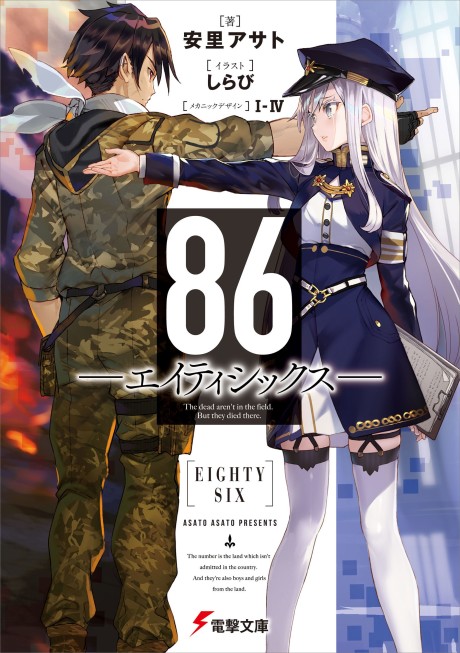
Some things that made me interested in the work, for example: Action, Mecha, Romance. The story covers some very interesting subjects, such as: Racism, Authoritarianism, fascism, discrimination and references about WWll.

Nine years ago. Year 358 of the Republic calendar, Year 2139 of the Anno Astrum. The northern part of the continent, the Gead Empire, which borders the eastern part of the Republic, declared war. The first wave of completely unmanned combat drones started the invasion. Faced with the overwhelming force of the military superpower Geade, the Orthodox Army of the Republic collapsed in just half a month.
At that time, the military gathered all their men, and presented with the tactic of demoralizing and delaying the enemy army, in the meantime the government of the Republic made two decisions. The first: Evacuate all citizens of the Republic to the eighty-five legislated areas. The other was to initiate presidential order 6609, the special wartime security law. This law meant that all Coloratas- (Jews or lower class) (those who were not Albanians) residing in the Republic considered as enemies allied to the Empire. So they lost their citizenship, and then they were sent to concentration camps outside the eighty-five areas where they are always monitored.
This was certainly a betrayal of the legislation and the very meaning of the five-core flag that the Republic is so proud of. Any and all Colorata born in the Empire, except the Albas, forming a being treated like animals and being imprisoned, that was a very blatant form of discrimination and prejudice.
Naturally, the Coloratas protested. However, the government silenced them using force. There were also some Albas who protested. However, most Albas supported this idea. They said that the Coloratas were not satisfied with the resources, land or positions they had.
The rumors that the Coloratas were spies were much easier to accept than the sad reality that the country was left behind in terms of military technology. And with enemy forces increasingly leaving the Republic with no way out, humans needed scapegoats to discount their anger and resentment. (Reference to what happened during Germany's defeat in the First World War).
And so then, racial supremacy instantly gained recognition and justification. The noble and humane first modern Republic in the world, ended up recognizing only the Albas as human, while all the Coloratas of the old-fashioned and inhuman Empire were considered inferior, were considered foolish and barbaric animals that only had the appearance similar to that of humans, but that failed to evolve to the human stage.
All the Coloratas were sent to concentration camps and, they were forced to serve the army, they who built the walls of the fortress. All the assets and properties of the Coloratas were confiscated and appropriated by the government of the Republic, while citizens praised the human government for letting them not go into the army, nor having to work or pay additional taxes even in times of war. Discrimination against the Coloratas and the Eighty Sixers (considered inferior) began to occur among the Albas two years after it started. The soldiers were all composed of Eighty Sixers members, and all of those soldiers who were active were sent to the battlefields inside drones.
In the case of Jews / lower races in Germany, the first moment of this whole extermination process was through hate speech. The rhetoric against them was strengthened in the post-First World War when Germany was embarrassed and made them the scapegoats for German defeat. All sorts of conspiracy theory came to be distilled against the Jews, and when the Nazis came to power, the speech became action. So the Jews were expelled from public service, then their stores were boycotted and attacked. Persecution in the streets increased considerably, and cases of physical violence began to happen. Afterwards they were forbidden to marry non-Jews, citizenship requests for foreign Jews were denied, and German Jews were stripped of their citizenship. Jews were deprived of their freedom and all rights as citizens. When the war started, the Nazis intensified the theft of their property and began to group it in ghettos.
A little bit about what concentration camps are:
Concentration camps are military constructions developed with the objective of imprisoning people, being these prisoners of war or political prisoners. Concentration camps were used in order to segregate certain political groups, social classes or foreigners from the rest of the population. The main objective of this text is to concentrate on the history of the concentration camps developed during Nazi Germany in the period between 1933 and 1945. Nazi concentration camps were characterized by a strong security system, by the mistreatment directed at the imprisoned Jews and by the infrastructure development for the mass execution of this ethnic-religious community.
Throughout human history, concentration camps have existed in other countries and at other historical moments. The Nazi concentration camps, however, are the most famous for the full scale of the massacre they carried out during the Holocaust. Over time, concentration camps have been built in places like: Cuba, during the colonial period; South Africa, during the Boer War; German Southwest Africa (former German colony and present-day Namibia), during the massacre promoted by the Germans against the Herero and Namaquas; Soviet Union, during the Stalinist period. There they were called gulags; Bosnia, during the Bosnian War. They were built by Serbs to imprison Bosnians (Bosnian Muslims).
The acts of the Republicans are very similar to those of authoritarian governments and today we can see that there are still those types of governments / countries in which they still have the same racist thinking and we see that humanity has not evolved at all, and that there are still people who idolize such ideas. 86 is a criticism of how governments like that are a mere idiocy of the human being and who suffers is the population of good who is at the mercy and without freedom to express themselves, not only the population but other races.

86 is undoubtedly one of the best or if not the best thing I have read during these years, and I always wanted to do something like that [write about]. Volume 1 is super well written with wonderful plots and not counting the main characters Shin / Lena, but it still ends up sinning even if it is a little in the secondary characters (although they are charismatic), I know they had a little development up to the volume current [V6]. But I still think that they were little explored until that time of the championship or it could be that in the next volumes [7,8 and 9] they may have an extra highlight.
