— — — —— — —
×
— —— —

The new short anime by none other than Sorachi himself introduces us to a new world where angels seek out souls that haven't passed on to the afterlife for one reason or another and decides to explore the complications/reasons that they decide to hold on before the inevitable. In this world angels chase down those souls and without any remorse send them to the afterlife except our 2 main leads that investigate, understand and eventually help those poor souls with their regrets or final requests. Once again Sorachi is at his favorite playing field he once again throws a genre cocktail at us, one that encompasses his many styles of comedy from meta/wall breaking, slapstick, absurdist satire or his well known parody skits with a mix of drama and emotional character arcs that will once again break you completely just like gintama managed to do every other arc when it got "serious". Coming of from Ginpachi-sensei i was waiting for a pure comedy fest but ended up getting invested in characters i sometimes met in that same episode or with minimal build up considering this short series is just 7 episodes long. In the first episode it covers the one shot manga that sorachi wrote and after that i believe its his own stories/world building he created solely for this anime that help build upon the first introduction to this new world. Before getting into spoilers i will give props to the comedy timing as well as the compelling characters that make this stand out from other comedy anime, once again sorachi seamlessly weaves in emotional backstories and relationships of characters with minimal screen time, making you not only care and empathize with them but even passing on messages about regret, time or righteousness in a world where human lives are treated like nothing but numbers by the exterminating angels trying to climb up the hierarchy ranks.
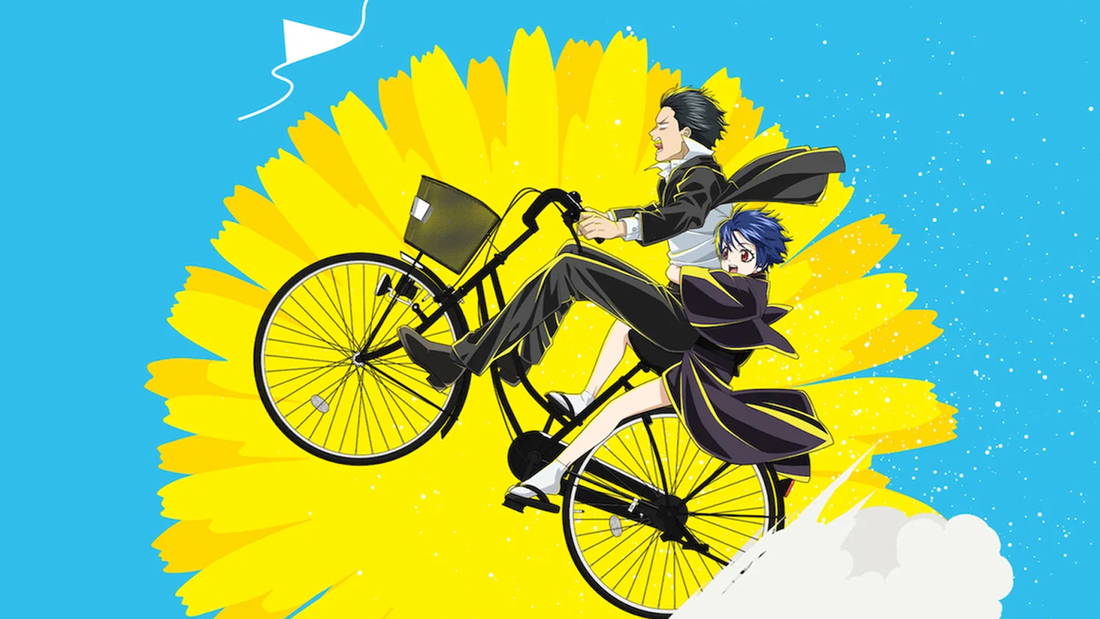
Starting off with the opening of the show i can't help but instantly vibe from the very first few seconds and even more so with the follow up of the wonderful dance moves from our main characters. Beautiful, upbeat and funny with each tiny movement and "camera" angle it serves as a great introduction to our anime as well as what is about to come in the upcoming episodes. Almost every episode follows an episodic adventure with a spirit that hasn't passed onto the afterlife and here come our main characters that not only decide to listen to those people's feelings but even help every spirit with a regret or request they might still have from their life fulfilling it and making them pass on peacefully. This brings a lot of emotional and hilarious moments where we get to discover a lot of different perspectives in life from characters of different age or status that never fails to disappoint or bore you in any way.
We also get to meet our 3 main characters acting as the blueprint of the relationship of Gintoki, Shinpachi and Kagura with mostly the same traits and comic skits as Sorachi's later work. In my opinion this doesn't make this show any less appealing cause you have already experienced it but its fascinating seeing an artist's work before its really finalized in their own head. So many scrambling ideas and little moments alongside easter eggs for Gintama and of course other shows with the parody skits we know and love is always a delight. The story itself when it tries to conclude isn't anything to write home about, its your typical cliche villain fight off where they want to destroy the world for one way or another and get redeemed as a good misunderstood person when the world is saved. If you are looking for an overarching plot with great twists or an amazing new world with its own rules and complexity then you will be disappointed because it never was the intention of a show like this. If you enjoy the comedy aspects that Gintama has or the interweaving of emotional dramatic backstories with action and comedy skits to bring back the laughs after said backstories are revealed then look no further. I will try and talk about the strongest suit of the anime which are the characters and justify it alongside the plot and writing decisions below.
Misaki in the beginning seems to be more of a comic relief character being the prototype of what kagura would become as a chibi destruction machine that moves at lighting fast speeds and obliterates everything when someone is in danger. I loved how much of a slacker she is alongside Tatsuo teasing him as the captain by name only as she doesn't want to deal with duties most of the time and would rather play her video games. I love episode 4 where we get to see her backstory and understand the character a little more with how she came to be the captain of dandelion squad as well as a glimpse into Tetsuo's decision making that make him a compelling character as well. The moment where she reunites with her mom trying to play it off without showing who she is brings a moment of tension and with just hearing Misaki's name the mother immediately remembers her daughter and everything that they had been through only to have her memories erased after the heartfelt confrontation and apology to her daughter.
Masaki is another interesting character with a memorable introduction that serves as the "bad" guy watching over our protagonists to make ends meet with their work only to get completely mesmerized by how they accomplish their work instead. He gets pressured by his father to meet quotas and improve efficiency, to throw his emotions away if they don't align with work completely disregarding his own beliefs and feelings in the process. From episode 5 were we meet with the evil scientist its the only time he ever takes matters into his own hands eventually trusting a criminal thinking he is doing the right thing and never learning the truth. This innocent lie from Tetsuo is what finally pushes Masaki forward to follow his own path just like his mother taught him and live his short life the way he always wanted. The robots that his father despised turn out to be one of the most efficient ways of getting people to move on with a heartfelt memory shown to them right before that. He changed from an emotionless robot because of the inspiration our 2 main heroes bring him in this dull unforgiving world where they were the only angels to get to know the wandering spirits and help them without questions just because its the right thing to do. Souls aren't objects they are the people's hearts and when their final moments are in fear of a robot apocalypse it turns out they cant just be reborn again. Masaki finally discards his manipulative father joining Tetsuo to defeat the evil spirits and bring order back into the human world teaming up with everyone they can find. I have to say i am not a huge fan of the ending villain being spirits that took over the father cause its the same cliche we have seen countless times but i digress since its overall a conclusion you have to give in a short series without too much explanation.

Tetsuo is by far my favorite character, the blueprint of what gintoki would become with all his goofy moments alongside the seriousness when the situation demands it. If there is anyone you can rely on to do the correct thing and always act unclouded with personal feelings its always this guy. He instantly makes the decision of leaving his status behind to help innocent Misaki, downgrading himself completely as a laughing stock cause its the right thing to do. No hesitation, no questions but always following his heart in anything he does you cant help but cheer for him not because he is the main character and the "good guy" but because his charm as well as how relatable he can sometimes be is enough to convince you to like him. Even when Masaki makes the mistake with the crazy scientist he lets the situation unfold ready to clean up someone else's mess cause its the only time Masaki trusts someone and believes in someone since his youth. In that moment Tetsuo decides to make him grow out and be more sympathetic for once even when he is gonna hit his head in the wall with that decision, he wants to help and understands that he can make the bad outcome disappear anyways. Tetsuo is the guy you can always rely on, a great friend and a role model not only for his world but ours, it is exactly why i love Gintoki so much as well, he teaches you life lessons, acts goofy when he wants to and always makes sure to do the right thing for the right people in his life without any hesitation whatsoever.
Overall the characters are interesting enough with their own little stories, from Masaki with his story of constantly trying to meet expectations of others and finally learning to chase his own path, Misaki's story with her mother and the redemption of learning to let go of your loved ones even if that deeply hurts as well as Tetsuo learning to live a life without regrets embracing the right in a world where most of it might be evil but you can always try to fit in with people that have a shining light of righteousness inside of them. If you are looking for a deep philosophical understanding of life and death or an expanding world building in the realms between life and death then this wont be for you. On the other hand if you are looking for surface level emotional stories and comedy throughout the show there is no way you are not gonna be left with a smile on your face or at least with the feeling that you didn't have a fun time. It might be experimental and the first ever one-shot manga Sorachi wrote testing the waters till he improved enough to make something like Gintama but its still fulfilling enough to deserve a watch in this jam-packed season of great new anime in Spring 2026. If you enjoyed this anime and its structure be sure to check out Hanada Shounen-shi which has a similar premise mixing comedy and emotional send offs.

Whatever you do don't end up in a place like this, trapped inside a world of what ifs but instead live a life of no regrets.~~~~

The grand finale of Beastars arrived after seven years, and unfortunately it failed to live up to expectations or at least to mine. From the first season, I loved the anime, which offers social and political commentary on modern society through the dynamics between carnivores and herbivores. It touches on the pressure placed on females to maintain the best possible external image while sacrificing social circles and even self-destructing, the stigmas attached to different kinds of people as well as the difference to the norms being constantly attacked and many other issues that on their own make the anime extremely interesting. Alongside that, the adaptation is incredibly polished on a technical level: beautiful melodies and a soundtrack that stands out from other works, as well as the stunning 3D animation we’ve come to expect from Studio Orange. Even the voice acting feels incredibly Human, often more than in other anime whose protagonists are actual humans. The direction also embraces the 3D medium, enriching it and fully utilizing it to create beautiful shots. I could glaze the technical aspects for quite a while, but unfortunately the problem lies in another part of the adaptation, specifically in the changes made to the plot and characters, as well as the decision to adapt about 70 chapters into a single season, while the previous three seasons adapted around 40 each.
I don’t know whether this was the decision of the mangaka or the studio, but if the manga was already criticized for having a rushed ending, here things became even worse. Multiple scenes were either altered due to lack of time or completely cut along with entire plotlines. The worldbuilding of Beastars, whether it was the chicken’s side hustle in the first season selling her eggs for pocket money, or even more important elements like the war between carnivores and herbivores that shaped the world we know today, is exactly what made the world and the anime so appealing to me. Yet the adaptation chose to skip so many things that made Beastars what it is.
If you liked the anime up until Season 2 and were disappointed afterwards, it’s better to stop reading here, because I’m going to mention what was missing from the manga with spoilers. Honestly, it’s worth reading the manga, because it never loses its direction and identity the way the anime does in its last two seasons.

The worst part isn’t just the changes themselves but the inclusion of many concurrently running plot threads with most of them never receiving a good enough resolution and character decisions that don't really match the personality we have experienced in the past seasons so eventually with time running out, they added scenes and plotlines that ultimately contributed nothing. For example, all the time spent showing the school play preparation, which we never even actually see was meant to demonstrate efforts to reunite animals and encourage them to set aside their differences. But in the manga we instead have an entire arc revealing the truth about the Black Market to the wider world and ultimately its destruction. Herbivores and carnivores unite to erase that dark institution once and for all and work together toward coexistence.
Even the plotline with the lion pulling the strings to blackmail Louis doesn’t amount to anything more than filler that could have been used for more important content. I assume they wanted to give Louis his own storyline and villain, but personally I found the synergy between Louis and Legoshi in defeating Melon far more cathartic than this alternative.
Maybe they wanted to show Louis’s ability to handle political games and prove himself as a worthy successor to his father. But in the manga his father dies much earlier, right when they are trying to reconnect. That moment motivates Louis to strive for something better, and in the end he’s the one who exposes the Black Market ultimately making his father proud and inheriting the company, which he expands even further by the end of the manga.
One of the worst changes, which honestly feels like an insult to viewers is the absence of Kyuu (it’s almost funny that she’s only namedropped and nothing else). The entire storyline where Legoshi trains with her is missing, even though it’s crucial not only for helping him fight Melon on equal footing but also for making him understand that he doesn’t fetishize rabbits, as he once believed. Instead, he realizes that he loves Haru for who she truly is.
The idea of fetishization actually comes from Louis, who ends up projecting his own feelings. He fetishizes carnivores and initially wants Juno because of the thrill he feels being so close to the possibility of being eaten. Legoshi completely dismantles that idea, and even Louis’s development makes sense in the end when he doesn’t end up with Juno. He stops chasing that thrill and instead wants stability, trying again with Azuki at the end, one step at a time.
Even side characters like Yahya have their own storylines. He realizes how lonely he has been since becoming the Beastar and begins to understand, and ultimately forgive Gosha for choosing the path of family instead. Even when Yahya stops being the Beastar, what truly fulfills him is acting as a vigilante, hunting down anyone who still breaks the law.
Where is Legoshi’s dinner with Haru’s family? Where is the extremist group that hunts hybrids and doesn't act like a mascot? Where is the exploration of society’s acceptance of same-species couples and its disgust toward interspecies relationships, a stigma that Legoshi and Haru overcome together? Where is the deeper exploration of Louis’s and Legoshi’s pasts that shaped how they think and defined them as characters?
I could honestly go on for a long time about all the changes and how most of them ultimately damage the viewer’s experience. But the worst one is definitely the removal of the land and sea beasts storyline, as well as the complete absence of any mention of the war between land animals and sea creatures, a conflict that shaped the world we see today.

Characters who lived through that war and experienced society in both its good and bad aspects, like the whale, eventually move from being observers of the world to actively trying to unite both sides. Society has matured enough that they want to coexist together, even helping solve the meat problem once and for all.
So much character development is lost from these interactions, and instead we end up with dull plotlines that add nothing. It’s honestly sad, because everything was already there in the source material. Yet for some reason it had to be changed only to leave a sour taste and a disappointing finale to an otherwise amazing series with deep sociopolitical commentary.
If i never read the manga after this i would probably give this season a 5.5 it was decent enough in a technical aspect that the flaws of the plot or characters felt just a little disappointing but knowing what we missed on and what this could have been i can't help but still feel that sour taste in my mouth, eventually dropping it to a 4/10.
The plot is speedrun through, most plot threads are either left unanswered or just showcased in a slideshow on a post-credits scene making the ending feel unsatisfactory or even a waste of time. If you like Beastars and felt that the anime rushed things and lost the magic of the earlier seasons, it’s better to read the manga starting from where Season 2 ends. It’s absolutely worth your time, even if the ending there also feels a bit rushed, but it still manages to cover almost everything it should, and you’d have to nitpick really hard not to enjoy it.

It is genuinely difficult to take a classic folktale, one that has been told countless times in many different forms/interpretations and turn it into something I never expected the moment I pressed play on this film. To elevate something so deeply rooted in history with such evident love, while simultaneously adding a distinct artistic voice not only in how the story concludes, but also in its genres, its worldbuilding, its themes, and the message it wants to convey, all without losing what made the original tale so timeless, is an impressive achievement.
With its modern transformation into a musical set within a fantastical VR world, Princess Kaguya does not merely discover our world, human emotions, and behavior. Instead, she embarks on an entirely new journey, one that enchants you from the very first moment. The film seamlessly creates an immersive experience that constantly captivates you, thanks to the charm radiating from every single frame.
The love and dedication behind the production are visible everywhere, especially in the outstanding performances of the voice actors, the music (which I fell in love with from Yachiyo’s very first song), the beautiful animation of the VR world, the video games and characters they play, the musical and dance sequences, the comedy, and the emotions conveyed throughout the entire runtime. All of this is brought together by a unique directorial vision that smartly thrives and mesmerizes, whether in the vast VR world or in Iroha’s small, run-down apartment (don’t worry queen, we’re all going through it).

There is a lot of polish in the production, and the characters themselves are incredibly compelling, especially Iroha, who remains consistently relatable and lovable within just a few scenes. As more of her past is unlocked, she truly begins to change over the course of the film, largely due to the influence of the endlessly charming Kaguya.
Kaguya, just like in the original folktale, enchants everyone around her and displays incredible talent in everything she does, though in this version, it has nothing to do with mastering aristocratic etiquette, and everything to do with becoming the number one streamer in the VR world. From the very beginning, she is a child who is endlessly fascinated by learning new things, and she conveys that purity and joy through every action she takes, instantly placing her at the very top of the list of characters that NEED to be protected at all cost.

At this point, I would strongly recommend watching the film if you haven’t already. For the first 100 minutes, the story closely follows the classic narrative with a beautifully modern touch. From there on, however, the script takes a different turn, one that I personally find extremely clever and perfectly fitting for everything we’ve experienced so far. (That’s your spoiler warning, shoo shoo.)
Just as the film seems ready to fulfill the inevitable fate dictated by the invisible “destiny” of the original folktale, that notion is dismantled in the final half hour. Kaguya does not simply disappear from the story but instead, we continuously witness her everlasting influence on Iroha. Through small glimpses of renewed enthusiasm for life, and by thinking of Kaguya, Iroha realizes that her story cannot end this way. She must chase her happy ending, exactly as Kaguya taught her, and change the fate she may have unknowingly locked herself into by settling for what she once called a “normal ending.”
She is finally able to move on with all her childhood trauma, reconnecting with her family and by finally taking her life into her own hands, she is now able to complete new songs without being held back by her past. She writes one filled with love and sings it until it reaches Kaguya’s own heart, reminding her of the time and beautiful moments they shared, moments that could never be erased by something as simple as a cloak, proving that destiny is not something to be accepted, but something that can be rewritten.
I also found Yachiyo’s reveal particularly beautiful. From the very beginning, you can sense that she has a special connection, especially since her debut song is performed only once, purposefully meant to ignite our heroine’s journey and ultimately reunite her with Kaguya. The reanimation of her avatar into a humanoid form allows her to once again experience what she loved on Earth in the first place: tasting food again, filling her life with joy instead of tedious obligations. Perhaps those initially bland pancakes finally held an invaluable flavor for both of them this time. (In case you missed it, there’s a lovely post-credits scene! ❤️)
I may be getting ahead of myself, but on just the 22nd day of the year, this film already feels like a strong contender for Anime of the Year. It delivers a complete audiovisual experience along with emotional beats that will undoubtedly leave a lasting effect on anyone who watches it. I can already feel that impact myself, as the film has led me to reassess certain things on a personal level and if any piece of media can do that, I truly believe it has achieved the highest possible accomplishment.
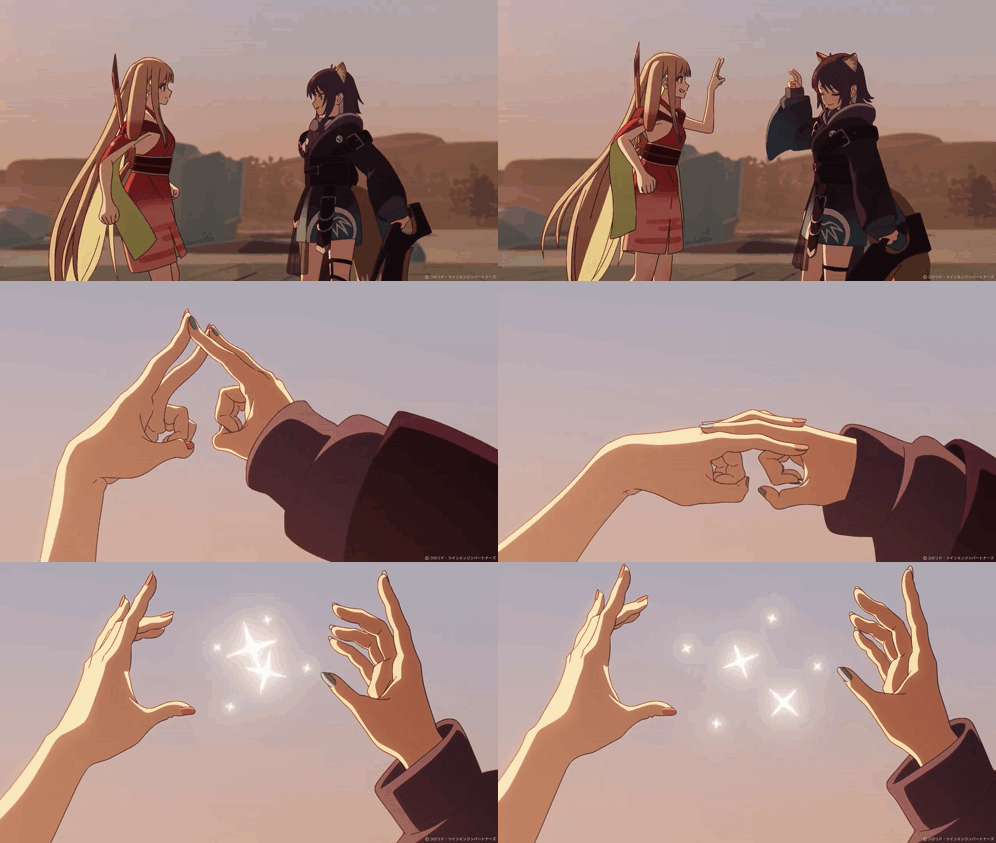

I believe this anime offers a compelling exploration of childhood psychology, showcasing how children’s actions can, in fact, be deeply damaging. Not everything is a game, and being a child doesn’t excuse one from causing serious harm. What stands out is the constant shift in perspective, how the anime presents the narrative through different lenses, gradually giving you more reasons to hate someone you once loved, or love someone you were convinced to despise. In this review, I want to unpack my thoughts on our three main protagonists, with particular attention to Naoki, who, in my opinion, hasn’t been discussed enough since the anime’s ending yet he remains an incredibly intriguing character.
Starting with Shizuka, our introduction of her is literally seeing her being relentlessly bullied by Marina, who hits her, verbally abuses her, belittles her daily, and even goes so far as to plot to take away the only thing she has left—the companionship of her loyal dog. Shizuka’s life is a never-ending torment, with her bond to Chappy being the sole ray of light. Once that too is taken from her, it becomes the final drop—her breaking point. At that moment, she gives up, convinced that her life will be nothing more than misery, abuse, and humiliation from that point on.
The anime, in just a few minutes, creates the sense that there is no escape from this hell. But Takopi eventually manages to break the cycle—despite multiple failed attempts to eliminate Marina. It’s here that we see Shizuka’s true emotions come to the surface for the first time. Her mask drops. All that rage and trauma she had internalized bursts out, and she finds herself wishing for Marina’s death—seeing it as the only possible resolution.
Of course, Marina’s actions up to this point are indefensible. But what’s equally unsettling is the joy Shizuka feels at her death, and how easily she begins to plan how to cover up the crime. Despite once being a broken girl pushed to the edge, once Marina is gone and her problem seemingly "solved," she feels at peace—even if it means sacrificing Naoki in the process.
Later, within the same timeline, we see just how deeply damaged she has become. Longing for Chappy once again, she goes as far as to kidnap two innocent girls as a response to the emotional pain inflicted by her father. Her behavior consistently reveals a pattern: acting out of selfish desperation to get what she wants, regardless of the cost or who gets hurt along the way.
The anime doesn’t try to paint anyone as a saint. It shows that under different circumstances, even the most seemingly innocent person could act selfishly when given power. It's a brutal but honest reflection of human nature: people often decry injustice until they’re in a position of privilege—at which point they may cause harm for their own benefit without a second thought.
You can't fairly judge Shizuka for anything prior to Takopi’s irreversible act, but it’s important that we got to see this darker side of her. It adds layers to her character, reinforcing the idea that things are never purely black or white. When one side dominates, even the kindest soul can commit inhumane acts.
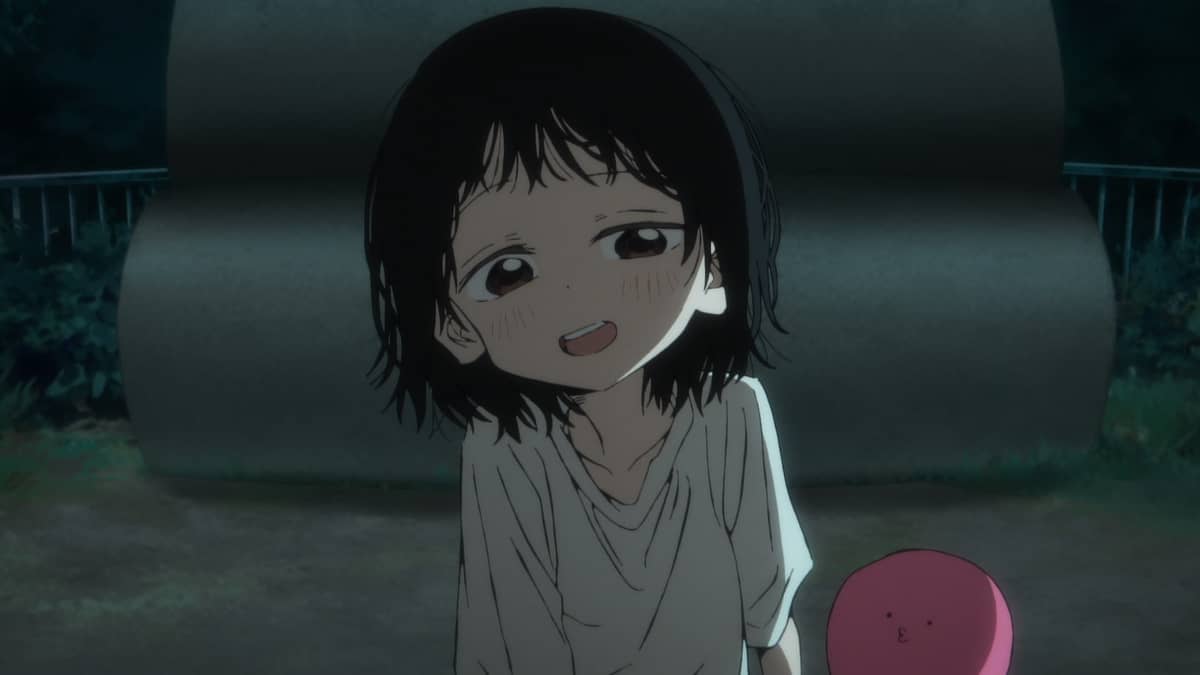
Marina is first introduced as the classic school bully—quick to abuse and humiliate Shizuka at every opportunity. At first glance, she fits the stereotype of the rich, popular girl who targets the weakest link to assert dominance and maintain her status. But that perception quickly falls apart.
We soon learn that Marina's behavior is not rooted in simple cruelty, but in a deeply personal vendetta. Shizuka’s mother, who works as an escort, was a factor in Marina's father abandoning their family. Her hatred is not born from jealousy or social superiority, but from emotional manipulation and trauma inflicted by her own mother.
Instead of holding her father accountable for leaving and wasting all the family’s money on alcohol and sex workers, Marina’s mother channels her rage into blaming women like Shizuka’s mother—and by extension, Shizuka herself. Marina, already a victim of both psychological and physical abuse, is further brainwashed into believing this twisted narrative. As a result, her cruelty towards Shizuka becomes a tragic form of misguided revenge.
In alternate timelines, Marina’s suffering continues, with her mother never ceasing her emotional warfare. She becomes a vessel for her mother’s unresolved anger—a child being punished for sins that were never hers.
One particularly poignant moment is when Marina’s mother breaks down, begging Takopi—disguised as Marina—to give her daughter back. Even though he looks exactly like her, she immediately senses the truth: it’s not her real child. (Admittedly, this isn’t a huge stretch of logic, but I respect what the anime was trying to convey.)
Even in the so-called "good ending" timeline, things don’t magically fix themselves. Marina still bears a scar on her face, a literal and symbolic reminder of her pain. However, she is no longer alone. Someone stands by her, supports her, and helps her move forward. Her mother, too, begins to step back and change—slowly.
Children mirror their parents, and often repeat what they learn. But Marina manages to break that cycle. She reclaims her identity without completely cutting her mother out of her life. We don’t know for sure, but it’s possible she even forgives her in the end—a decision she was never obligated to make, but one that shows how kind-hearted she may have been before the abuse warped her.

# Focusing on Naoki: A Neglected Yet Fascinating Protagonist
Beyond the two heroines, the story also centers on Naoki, who initially appears as a kind-hearted boy—someone who loves Shizuka and truly wants to help her. Beneath that exterior, however, he is battling deep psychological struggles that distort his perception of others’ emotions, as well as his interpretation of events around him. Unfortunately, many overlooked him—and that’s why I’d like to delve deeper: he deserves more attention, especially in my view.
At first, he seems shy but earnest—a good student eager to offer help. Yet we come to understand that he too carries wounds of his own. His greatest conflict stems from constantly living in the shadow of his older brother, striving—at least a little—to match him, in the hope of earning his mother’s love. This anime captures that destructive facet of ourselves, and I find Naoki to be a profoundly relatable character, particularly in terms of the burden of expectations.
Expectations—especially when they demand becoming someone you’re not—can compel a child to sacrifice their own self. From an early age, Naoki was told that he was the only one capable of achieving success—or worse, that he must surpass his limits to be seen as the heir to his mother’s medical clinic. Many have endured similar pressure from parents or those around them, where lofty expectations presented as the sole path to acceptance are often devastating—even when the parents had the best intentions in mind.
Before writing my own review, I watched several analyses and noted that many reviewers seem to have missed an essential aspect of Naoki’s character. A common frustration is that he ignores Shizuka at the end and chooses to be with other kids—finally those who see him as he is: a young person with his own worries who argued with his brother and aired his concerns—not a lifeless robot programmed to fulfill parental ambitions at the expense of his own identity.
At that point, he no longer believes he must fulfill someone else’s dreams at the expense of his own needs. For the first time, he expresses genuine interest in everyday joys—like playing on the PS4, something other kids admire and view as “cool.” Finally, Naoki finds his footing. He begins building friendships not founded on toxic ideals—unlike when he first bonded with Shizuka under desperate, self-destructive pretenses. Here’s what I mean:
In one of the latter episodes, Naoki is drawn to Shizuka simply because she resembles his mother emotionally and in gestures. He mistakes attention for affection—an acknowledgment he’s yearned for all his life: a sign that his struggles meant something to someone. That single sincere smile from Shizuka—when she stands by him by covering up Marina’s murder, or holds him to comfort him as they face surrender to the authorities—is what he’s been desperately seeking from his mother, or at least someone who felt like her.
I believe that’s why he doesn’t end up with Shizuka at the story’s conclusion. He’s found himself. He’s resolved the issues with his brother and opened up emotionally, allowing him to tackle the problems at the core of his suffering. He finally hears someone who genuinely cares say: “Follow what you love. Be yourself.” No longer chasing a shadow, he embraces his own identity—his interests and his personhood—and can now coexist with others and live the life that was once kept from him by the chains of third-party expectations.

At this section i want to point out the misses and overall criticisms i have about the show that hold it back from a higher score although i usually rate things pretty strict, (spoilers) a 75/100 is pretty high for me and i appreciate this show deeply for everything else... i am sure you can tell by the sheer volume of words i have to express towards this!
Here are a few elements that slightly detracted from my experience:
Plausibility of Children's Behavior
Some of the children’s actions feel exaggerated for their age—particularly Shizuka’s 180-degree shift when she gains power over others. While isolation can blur moral lines, the extremes she goes to—attacking Takopi repeatedly and nearly dismembering two little girls to reclaim Chippi—felt somewhat removed from my sense of realism. Although disturbing bullying exists in real life, seeing it portrayed so graphically in a young child occasionally pulled me out of the narrative.
Runtime & Pacing
At approximately 2 hours and 20 minutes, I feel the anime could have been trimmed to closer to 1 hour and 40 minutes—without sacrificing clarity. For instance, we already grasp Marina’s suffering before watching the timeline where she finds Takopi. Repeated exposure to the same pain made it feel overplayed.
In my opinion a Rushed Ending
The resolution, triggered by a simple glance in a notebook, feels a bit cheap—a Deus ex Machina with little forewarning. It jolts the emotional connection between Marina and Shizuka forward. A concept I would have loved instead: maybe more timelines where they swap places (via Takopi’s gadgets), living each other’s experiences. That could have helped them understand each other in a deeper, more emotionally grounded way. As is, the ending feels a tad forced—but not entirely unsatisfying.~~~~
Takopi isn’t just symbolic of happiness or its arrival; he embodies a type of innocence inexplicably absent from the other three children, eroded early on by their traumatic experiences. From the outset, he offers laughter and joy through his gadgets and gentle smile—only to learn by the end that life is never that simplistic. Across multiple timelines, he discovers that human beings are layered, complex, burdened by issues that escalate, and that healing only begins at the root.
On numerous occasions, Takopi finds himself unaware of the gravity of situations until he's thrust into someone else’s shoes—like when he impersonated Marina and experienced the abuse of her mother firsthand. Moments earlier, he believed the verbal violence was just playful connection between mother and daughter. Often, one must step into another’s suffering to truly understand the depth of pain they endure. It’s a powerful reminder: empathy requires immersion.
It's not magic or technology that solves everything—but shared existence. Only through shared human connection can these characters find unity, allowing Shizuka and Marina to stand together and face adulthood as allies, something none of the previous timelines offered.
In the end, Takopi may have vanished—but he leaves something deeply imprinted on the two heroines, a bond formed through shared suffering. Their trauma, once isolating, becomes the tie that opens them to each other. With someone to lean on, they can finally coexist.

(damn if you made it here reading all this, hope you found it worth it and thank you for following my somewhat incoherent rumble!)
The series leaves me profoundly optimistic: even in the midst of emotional and physical abuse—when you’re driven to inhumane acts or self-destruction—being met with someone’s steadfast presence can make life worth living. Not someone who rescues you from afar, but someone who stays—consistent, caring, sharing the burden with you—that kind of human connection matters.
And here's the anime’s most vital piece of advice: if you’re in situations like this, seek help. Just like our heroines—letting go is not the answer. You may not find a magical gadget-wielding friend like Takopi, but through empathetic relationships, joy becomes attainable.
There’s always light at the end of the tunnel and no matter how bad the situation gets dont forget that, you are never truly alone.


Junji Ito has solidified his legacy in the manga world for years as (one of,if not) the best horror mangaka that has ever lived publishing countless classics from Gyo to Tomie and his most notable work Uzumaki to name a few from his vast collection of pure horror masterclass. There is nobody like him that can depict grotesque worlds like Gyo that explore themes of the consequences that are brought upon humanity from the environmental collapse and misuse by the government showcasing the great horrors that come from a futile chase of biowarfare from scientists that ends up going horribly wrong dooming humanity forever. Even his exaggerated depiction of the beauty in Tomie that leads into unhealthy desires and obsessions from others, her control and inevitably her manipulation of said desires just to play with people for fun and to pass time in her never ending suffering in an immortally cursed body. Uzumaki tackles many themes like love/obsession in our main cast or from the secret power haunting the city but the most prevalent ones being the inevitability and repetition of actions in the human nature from mere habits and mistakes we constantly make in our daily lives to the never ending cycle of historical mistakes that are inevitable of reoccurring like a terrifying spiral. People wont learn about other people's mistakes by simply studying about a historical book or listening to their friends rambling about something they regret doing but rather have to experience those mistakes firsthand to truly understand their meaning and true faults.
Ito's stories are influential and they manage to convey their overarching themes in usually a small portion of just under 20 chapters. Still i don't think the stories are less enjoyable as pure horror fun because they work that way too. The masterclass of Junji's works in just conveying the uneasy, unnerving and horrifying situations the characters are in is in a league of its own, from the brilliant use of the page turn jumpscare in a terrifying reveal or twist, to the gradual build-up of mystery around the "culprit" of the horrors and to the expressive reactions from characters to their distorted (and sometimes) surreal situations are all techniques Junji Ito has mastered throughout the years to give you a truly horrifying experience that sticks with you every time you finish one of his works.
As a fan of his works for several years now it's painful to see most if not all of his adapted works turn out to be a lifeless disappointing mess every single time. This time around i wasn't completely hopeless for the Uzumaki anime but instead i got mesmerized by the atmosphere in the trailer, i loved the decision to keep it black and white with the eerie aesthetic of the original being untouched and finally the 5 year wait for just 4 episodes to be released meant that we were in for either another mess that got cut/pushed back or instead a refined masterpiece that would bring justice to all the other horrible adaptations prior to it. The release of the first episode was all we could ever ask for, the art style captured the tone of the original accompanied by pretty decent eerie tones as well as some pretty accurate voice acting to build up a story that hooked you in instantly, always having you ask and wonder what would pop out in the next scene, what exactly is the reason behind all of the chaos happening and slowly unfolding more and more with every little scene. You can clearly see the vibrant image coming to life and that's a feeling you get in even a simple opening scene like the one portrayed below with just a soft breeze swaying Kirie's hair as she enters Kurozu-cho.

The directing isn't one of its strongest points but at least it keeps the flow going without distracting you too much from the overall build-up and is used decently on reveals like the dad in the tub. The close-up from the mom's hand to wondering where the tub even came from and finally revealing the horror inside as she lifts the lid slowly includes some accurate "camera" work behind it and even though it doesn't revolutionize anything it is still fitting and by no means insulting to the original material.
As i am watching this episode i start to get invested again in the story, it has come to life in an amazing adaptation with every little detail that you had imagined while reading it being subverted and reaching even greater heights like the scene below:
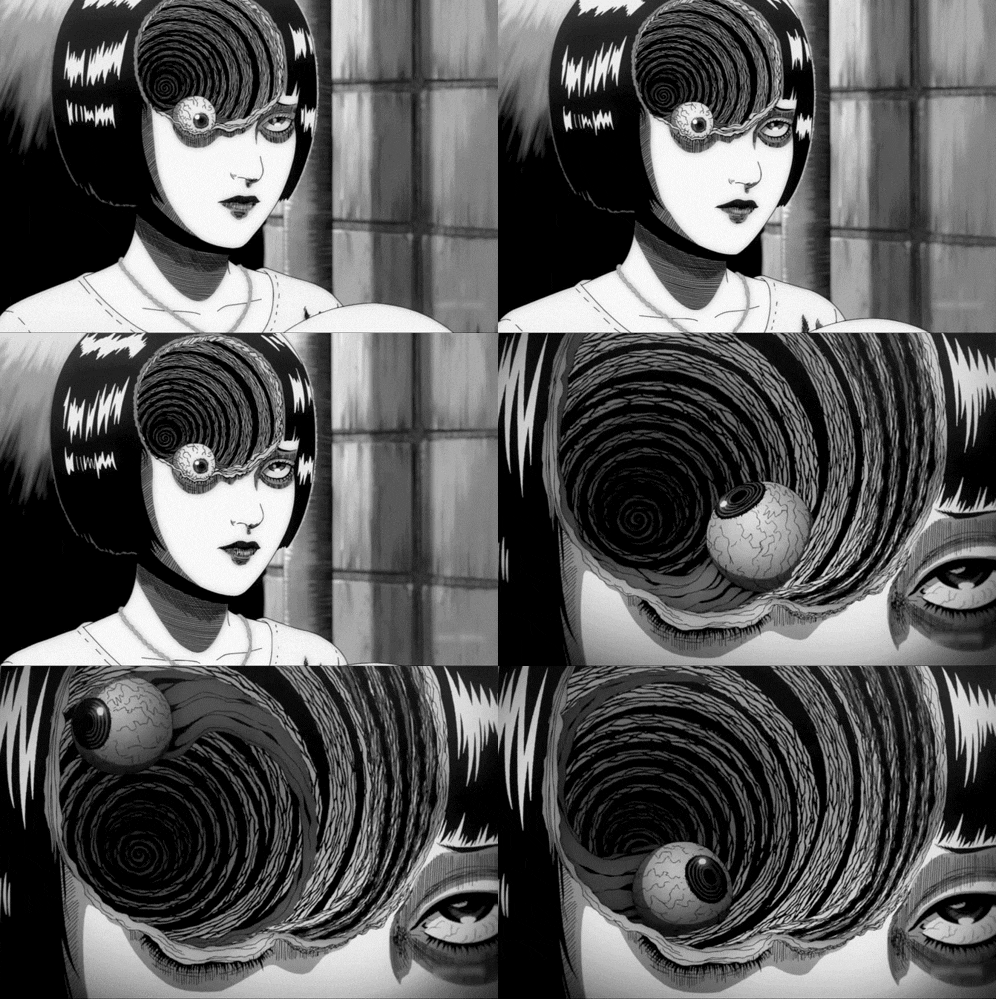
There isn't much to say here other than i was in shock and complete awe from the great work portrayed here and there are plenty more instances where i was pleasantly surprised by how well they brought everything to life. Finishing the episode left me with a feeling of hope, finally we would be getting an amazing adaptation that uses the animation,sound,music and voice acting that the manga lacks to its greatest potential elevating the work of Junji Ito even further. And then...the 2nd episode dropped.
Saying i was disappointed would be an understatement, i knew the great highs this could reach but from the start you could tell the movement seemed off. From the little animations to even longer sequences and the infamous "punch" i slowly watched it crumble down to another failure of an adaptation.
The sound effects had died down and instead of highlighting the atmosphere sometimes they outright sound like they were made for a gag tv series instead (ex. Spring Guy sound effect). The editing had some minor problems in the first one but this time the chaotic cuts one after the other never left any breathing room for reveals and the more compact tense moments didn't receive the much required time to sink in with the viewer.
What i gather from the following clip is something that feels like a rushed unfinished product and i don't even have to show you the worst this has to offer.
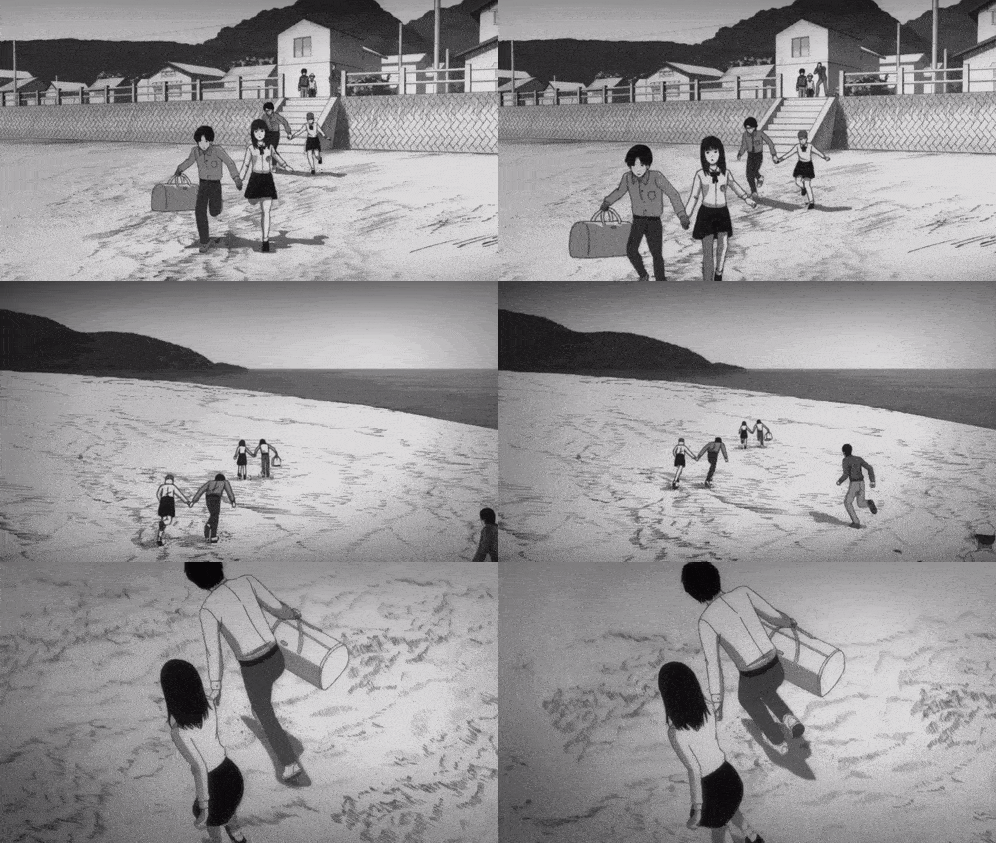
What we got was a cluster of scenes added one after the other with some charisma of the direction in the first episode missing so why is that? Well i tried to find an explanation of this downfall and it seems like the episode 1 director was different from episode 2 onwards.
A studio change from Fugaku to Akatsuki and a change in directors from Hiroshi Nagahama to Yuji Moriyama were probably the main reason this downfall in quality began in the first place. From what i gathered in forums without having any confirmation from the studio itself the 2nd studio changed a lot of the animators from episode 1 and alongside the change in direction without knowing any other possible problems like the precise time window and budget left in the production, its still a difficult task to continue someone else's vision with the same quality. Even so you don't always have to envision and replicate the same style that worked prior to you getting the job but perhaps you can sprinkle your own techniques and vision to make it rather interesting.
The time was originally there, 5 years in the making for 4 20-minute episodes is enough to polish an anime to perfection and even when the director (maybe studio) changes another time in the 4th episode we still get the most horrifying clip i witnessed in this anime or maybe the funniest one?
I will let you to decide for yourself:

A PNG of Shuichi falling down. In an artistic way symbolizing the fall off that started after episode 1.
This anime built a foundation worthy of a beautiful skyscraper resting above it, but it failed to lay any countermeasures against even the tiniest earthquake. As quickly as it was built, it crumbled down just as fast, and this time, it felt like a gut-wrenching punch to all the fans. The moment i finished watching this episode, i realized that it would be another failure added to the collection of awful adaptations that keep haunting Ito’s works.
Honestly the saddest thing is that the source material is so brilliant and terrifying, easily making it my favorite horror manga making the failure feel criminal. Instead of the unsettling atmosphere and twisted charm that made the manga unforgettable, we got a bizarre mess that barely resembles what made Uzumaki a horror classic.
The thing i despise the most in an anime adaptation is when it not only doesn't offer anything new or enhance the original, but also do a complete disservice of not even doing the bare minimum: faithfully adapting the original as a 1:1 which honestly, i would have been contempt with.
As much as I wanted to love it, I simply can’t bring myself to give this more than a 2.5/10.
It could very well be a curse from an unfinished manga he tried to publish years ago or an idea for a series that got axed, coming back to haunt him for the rest of his life. But whatever it may really be, I am sadly certain that we will never get an adaptation that does his original work any justice.
