— — — —— — —
×
— —— —
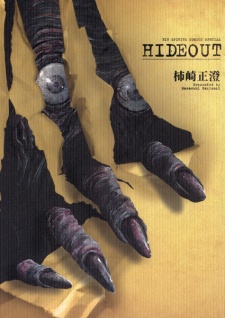
Hideout is a pretty short manga with only nine chapters, so you can finish it in about an hour. Even though it is short, it manages to leave an impression. I have read it now and honestly, while I did not find the so-called “monster” scary or creepy in the slightest, I still appreciated almost everything else about it. Once you already know that the monster is not all that terrifying, the focus shifts more toward the atmosphere, the raw emotions, and the visuals. The gritty over-the-top violence, the suffocating and depressing tone, and the way Kakizaki handles darkness really stood out to me this time around.
The story itself is straightforward yet unsettling. It does not waste time with unnecessary fluff, and because of that, every chapter feels heavy with tension. The pacing works in its favor because it builds up quickly and traps you in this desperate, claustrophobic situation. There are no real “good” characters to side with, and that moral emptiness makes the story darker. You are not rooting for a hero, you are just pulled into this spiral of madness and survival, which is pretty effective for a short horror read.
Character designs were solid but not particularly groundbreaking. Seiichi, the protagonist, felt very average in terms of appearance, though his desperation was captured well. Mikii’s design worked fine and she looked good, but nothing too memorable. The real highlight was the monster and his son. Their appearances were intentionally ugly, grotesque, and disturbing in a way that suited the story perfectly. They were drawn in such a way that just looking at them made you uncomfortable, which I think was the point. I do wish the manga spent more time fleshing out these characters. A deeper look into their personalities or even just a clearer backstory for the monster would have added more weight to the horror. The mystery works, but it leaves you feeling like something important was left unexplored.
Now, the art deserves its own praise. Hideout’s art is honestly stunning. Since much of the story takes place in natural settings, Kakizaki really leans into environmental detail. The beaches, the dense forest, and especially the cave interiors all looked hauntingly beautiful. The contrast of beauty and horror made the experience even more striking. The monster and his son’s faces were drawn with such precision that they almost gave me goosebumps. The use of shadows, the fine lines, and the way darkness swallowed entire panels was incredible. Kakizaki has a gift for visual storytelling, and even when the writing did not hit as hard as it could have, the art alone carried a lot of weight.
As for the horror element, I personally felt the monster was not really the scariest part of the story. The real horror came from human desperation, madness, and the idea of being trapped in a situation with no escape. In that sense, the “monster” sometimes felt more like a distraction than the main source of fear. I caught myself wishing the manga explored more psychological horror rather than leaning so heavily on a creature that, for me, did not live up to the buildup.
On a reread, I would say Hideout deserves a 6 out of 10. It is not bad, and it is definitely not forgettable either. It is just that the horror monster on the cover and in the premise seems like it is going to play a bigger role than it actually does, which can leave you slightly underwhelmed. Still, the tension, the grim atmosphere, and the violent visuals are more than enough to keep you engaged from start to finish.
Overall, this manga is just one volume with nine chapters, and it really deserves more attention than it gets. I do not see many people talking about it, and I think thriller and horror fans could find something worthwhile here. It may not be perfect, but it has a style and a mood that make it stand out. If you are looking for a quick read with striking art, depressing atmosphere, and a raw sense of hopelessness, then Hideout is worth picking up.
