— — — —— — —
×
— —— —
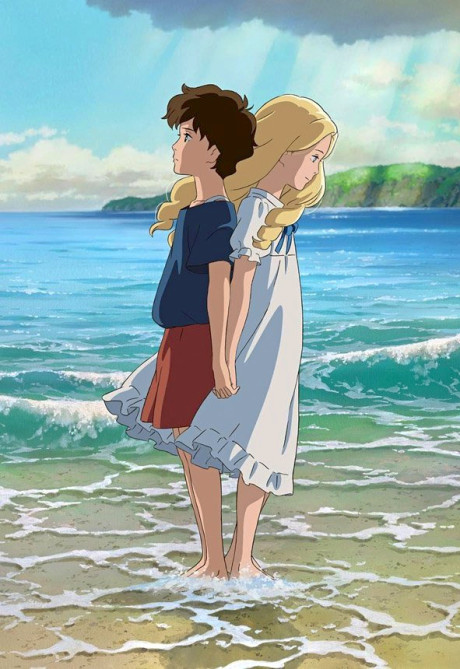
WARN SPOILERS!

Now history
For a long time, the last film of the legendary Ghibli studio, which is undergoing a complete transformation after the retirement of the founders, was also conceived as a partition project. As the first film in the history of the studio without any creative participation of Miyazaki or Takahata, it presents the entire project of younger filmmakers, including production (led by Yoshiaki Nishimura, who led the production of "Princess Kaguji"). Unfortunately, the final Ghibli production, which was not at the top of the annual attendance ranking, unfortunately became the final in many years - sales of 3.6 billion yen represent more than Takahat's "Princess Kaguja", but at least in recent years from classically animated ghibleries. This is not the first Ghibli studio title to be targeted at adolescents, so it is speculated that the reason was rather the widely publicized retirement of Miyazaki and the impression on the part of viewers that a quality guarantor is leaving the established brand.
But such fears dissipate immediately after the film is viewed. "When Marnie Was There" in terms of the quality of animation and screenplay fits exactly into the company's portfolio, although unlike the classics of Haja Miyazaki, it does not contain so many fantastic elements, but on the contrary focuses more directly on the psychology of the characters. This is where its uniqueness and uniqueness lies. After a shaky, albeit still delicious, "Arrietta" Hiromasa Jonebayashi demonstrated his own style and voice within the Ghibli brand. In this case, he made an enchantingly delicate film about growing up and searching for his own identity and the personal harmony associated with it. At the same time, he draws the audience into the inner world of his characters, while he transforms the classic questions of adolescence into a densely symbolist narrative, which, although unfolding in the peace of the summer holidays in the countryside, breathes great emotions.

Something about the movie
Thanks to the shadows of the present, we sometimes manage to enlighten the unknown past. Annoying asthma, a troubling little girl, is the reason why she is sent on a healing stay to her aunt and uncle in the countryside. A lonely, gloomy and not very communicative girl, she likes to draw scenes of the surrounding landscape somewhere in seclusion.
During one of the walks through the swampy seascape, he gets to know an abandoned large house. Unknown by what, he is very close to her. He soon meets his resident - a young blonde girl, about her age. He shows her the nooks and crannies of the house and surroundings, introduces her to a party organized by the parents of the little blonde. Both girls are friends. But as a mysterious water tower rises above the country, a shadow of mystery hovers over the newly discovered friend ... A psychologically reworked and at the same time very moving animated adventure of self-knowledge of one's own past through discovered diary records.
My statement
I would fully understand and perhaps even approve if the Academy gave a statuette to this warm, emotional and slow film about searching for oneself through the eyes of a twelve-year-old schoolgirl than a beautifully playful and imaginative but more story-oriented Pixar notch. that the Ghibli studio did not come up with something really fantastic and exceptional this time that can catch the eye at first glance.
The film definitely has its problems, the slowness sometimes turns into almost length, the dialogues here and there seem kind of undercooked and the story unfolds very mysteriously and mysteriously, while sometimes ignoring things that should play a bigger role due to unraveling, moreover for the eyes to the Czech viewer (or maybe just me, who knows) the fundamental problem in Anna's relationship with her aunt is, let's say, slightly ridiculous, although on the other hand, from the point of view of a sensitive child like Anna, it could certainly be crucial.
Otherwise, it's a really beautiful, moving film, strong in depicting friendship and trying to become "normal", in which it resonates especially, after all, in the fusion of fantasy with reality, depicting scenery of nature and settlements (Ghibli and his combination of two types of drawing, one for the characters and the other for the interiors and exteriors is simple and always beautiful) and a kind of overall atmosphere, which, however, takes full advantage of all the details and emotions only after revealing what was at stake (or when one can reveal it oneself). Nevertheless, I don't think I would like to see the film again in the future, there are too many more vivid and fantastic drawings in the studio's studio and overall Japanese production, which can still tell deep and emotional stories.
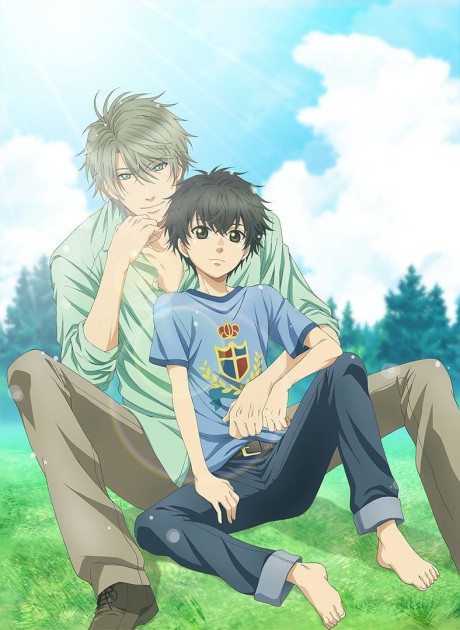
Super Lovers has become my imaginary gateway to gay animated Japanese-style novelists. The family ties were therefore a flight bordering on endurance - Mother as a son, emotionally completely undeveloped individuals who each in their selfishness massage their nerves and souls not only with each other, but especially with everyone else in the area. Unfortunately, another emotionally undeveloped individual catches the most - the youngest adopted brother. And wonder of the world, the eldest brother's protection complex begins to break out into a much deeper relationship.
And that begins the long journey to clarifying whether it is based on emotional or again purely selfish foundations. In my opinion, this was the most interesting right next to the progress of the story about the coexistence of 4 diametrically different brothers. The romance itself was strange given the circumstances, and a really little bit was missing to cross another limit. From extreme to extreme, but as a start with the anime subgenre shounen-ai OK ... ***
At first, this piece seems like a more or less functioning slice-of-life family drama about two half-brothers who have to learn to live together. Gradually, the romantic side of their relationship also begins to build, but it really, really doesn't work. All this touching hugging and kissing seems incredibly convulsive and doesn't sit there at all. Maybe if Ren didn't look at 8 ... Anyway, there are few shounen-ai series, so if you don't have a vacation in the Caribbean, you'll settle for Bulgaria.
This time, the Japanese perversion reached the limit of my tolerance. Not anymore, this is well across the line! A mother without a maternal instinct and a brother without a fraternal shame take care of wounded wolves by inflicting more and more blows on him.
In particular, a psychopathic and, after a head injury, apparently mentally ill brother, who has lost track of what is permissible and what is not, liquidates poor wild Reno mentally and, in fact, physically. He gets him into unsolvable traumas, because Ren, as younger, weaker, dependent and ignorant of basic social norms, lets himself be manipulated helplessly into the position of culprit. So instead of seeking help - his feeble attempts to escape will destroy the possessive brother in his infancy - he still feels guilty and like the one to apologize, repent and beg for forgiveness.
All this is happening under the watchful eye of other brothers, friends, teachers and family acquaintances. They make a sarcastic remark as much as possible, but they still let the predator continue to claw at its prey, which, moreover, looks like a maximum of twelve years. I have no word of forgiveness or a bit of understanding for this series. The little innocent boy still thanks the ruthless predator for how nicely he "takes care" of him and is grateful to him for that. Really disgusting! Stupid that no one cares much about Ren's early childhood, what happened to him, who hurt him, and why. The fact that there are side characters mostly only in number (obviously they cut the side motifs from the manga to an incomprehensible minimum) is proof of a badly done anime.
But the central motive: the "relationship" of the older brother to the youngest is a perverted, disgusting and evil way of thinking.
SUMMARY: It would be much better for you, Rene, to run with the wolves through the Canadian wilderness.

The days when animated films were intended primarily for children are irretrievably over. And while "Kimi no na wa" features teenage heroes, and while kids can certainly watch this movie and certainly like it, the design complexity isn't primarily for kids, and they're probably not able to fully absorb it. Today's animated films can more than boldly compete with adult movies and can be more than profusive competitors – "Kimi no na wa" is proof of that. Animation perfection is now more or less taken for granted, but in this case we cannot mention its impressiveness. One of the significant pros of the film is the transition between the different "planes of severity" of the film.
This escalating procedure gives the viewer the feeling that, until now, it was nothing serious compared to what is going on now; each additional plane brings a higher severity than the previous one. The film begins as a more or less relaxing story of two characters of the post-pubestic age – Mitsuha and Taki, who seem to be connected only by being dissatisfied with their current lives.
The first transition to a higher plane of severity begins when they both realize that their consciousness is transferred to each other's bodies on certain days. This is a powerful interference with the identity of both individuals, which they are trying to deal with in some way. The next move to a higher level of severity comes when Taki discovers that Mishuhy is one of many victims of the meteorite that hit the city of Itomori, killing most of its inhabitants. And the next stage is even more serious, because it is about saving Mishuba, but also all the inhabitants of the city. And finally, as if arcing, the film actually returns to the beginning to show the intertwining of dreams and life... All of this is put into images, taking place at different times, as well as with varying degrees of remembering one's own dream experiences, all with different places of consciousness in the bodies of Mitsuha and Taki.
I also see added value in the fact that the life situations of the two main characters are similar to those of their "non-Japanese" peers, but they differ to some extent from them, which is achieved by the non-violent instlipation of Japanese mentality, customs, feeling, culture or history, which can be an interesting enrichment for an ignorant European.
All of this together creates a very original composition that fully benefits from the advantage of animated film: Animation usually creates a kind of inner feeling of "fairytale" in the viewer, and subconsciously it is much more willing to accept fictions that would probably feel violent or absurd in the film. Finally, a personal note: "Kimi no na wa" is one of the films for which I would recommend double viewing before any review, so that one can fully capture his message and symbolism.
