— — — —— — —
×
— —— —
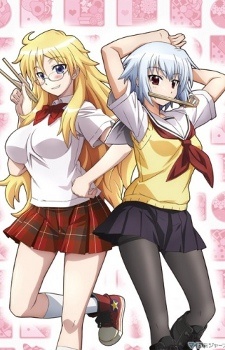
We have a tendency to take mundane things for granted. We all have a lot on our minds and basic things like commuting and preparing meals rarely take up much of our headspace on an average day. Typical families and individuals don’t put much effort into choosing what goes on the dinner plate. There are many days where it’s such an afterthought for us, that we don’t know what we’re doing until we get home, change into comfortable clothes and check the fridge, hoping that there’s something we can throw together. Many of us would order some delivery at this point, or perhaps get some fast food or heat up some leftovers from yesterday depending on the situation. While grabbing some ready-made sandwich or a slice of pizza is always an option for many in the west, Japan has raised this quick takeout style food to something of a cultural point with their prepared meals known as Bentou.
Bentou are wonderfully convenient and while they are typically made quickly, they are of a surprisingly high quality in most cases. Grabbing a bentou before heading off on a train, or getting a seasonal or locally made hand crafted or decorated bentou during holiday or special events can be a pretty nice experience. Because of the nature of the food, after a few hours, these ready-made hot meals need to be sold and the stores will generally begin marking them down in order to entice people to buy. It’s entirely possible to score a reasonably nutritious and tasty meal for a very decent price this way if you understand the scheduling of these lunches and the best times to show up. For those on a tight budget, or those looking to save some cash, it’s a great opportunity. In the anime Bentou, it’s also taken to a rather absurd conclusion of gang style wars for cheap eats. While the premise of this show is taking something seemingly mundane to comical levels, it takes the premise so seriously that it’s actually a compelling show to watch and a bit of a sleeper shounen title.
With regards to the basic technical aspects of the show, the audio and visuals of the show are good. The themes are pretty catchy and fit the theme of the show well. The fights and animation are of reasonable quality. The music and sound effects work well and add to the generally very serious atmosphere of the supermarkets during the fights and take things into lighter territory when the show takes a break and tries to do something more lighthearted or needs to change the tone. The voice actors are pretty decent and ham up the shounen style of this show when needed and don’t detract from the experience in general. In fact, they do such as good job with things that they essentially sell us on the premise of brawling for discount lunchboxes. This deserves some praise as it couldn’t have been easy to do this given the subject matter.
The basic plot synopsis of Bentou is that a high schooler stumbles his way into what is basically a fight club of sorts to grab these marked down meals. These knock down, dragged out fights for half-priced food are ridiculous when viewed objectively, but the participants take everything so seriously that we rarely find ourselves questioning why they’re expending so many calories just to win a cheap dinner. Because of the tone and the “discount bentou is serious business” vibe, it’s incredibly entertaining in spite of the somewhat silly premise. There’s even a lingo and etiquette system that was developed by the participants of these knock down brawls that they treat seriously, and as such, we do as well. The main characters who are successful even get their own aliases and are treated with a large measure of respect as well. The whole thing reminds me of how seriously children can take a game that they’ve made up or how a fandom itself ends up with its own system of customs and rules, even if what’s ultimately being followed or participated in doesn’t really deserve the same level of input.
Another thing that ties Bentou together into a coherent system is that it feels like a real neighborhood with recurring people, stores, staff (gods of discount), school club activities, etc. This is a world we can easily envision being real because of all the attention to detail and recurring characters put into it. While it’s a bit absurd to take bentous so seriously, we can believe that they are serious business in this particular town based on the great city building they’ve done.
Beyond the basic premise and execution, is there any great social commentary or deep message to all this? Any Evangelion tier philosophical wankery to be had? Not particularly I’d say. Anything can be serious business if we all believe that it’s serious business. I’ve seen people trample each other for cheap televisions on black Friday before. Is a 100-dollar television worth taking that seriously? Well, enough people believed it to injure each other. People aren’t always reasonable in their behavior. There may be some greater point about life at the edge where people struggle to make ends meet, but I don’t get much of that from this show honestly. The closest we get to any deeper message is a quick conversation about how people should be thankful for the food they’re able to eat. It’s a good message I’d say, but doesn’t become any kind of grand focus. The protagonist struggles with his budget, and these discount bentous really help him out, but not everyone seems to be motivated this way. Some major antagonists and participants are actually quite wealthy and appear to be doing this merely for kicks. Honestly, it’s best to just enjoy the fights and the world here I would say. A bentou is just a bentou here. Any social commentary or deeper meaning is likely incidental or self-interpreted here and I think we can safely move along.
So, what about the characters? Well, they’re a bit of a mixed bag, ranging from generally good to occasionally substandard. The main character goes on a bit of a journey from newbie to contender as the show progresses and we learn through him and his participation in these fights. There’s nothing much to praise or complain about personality wise with him; he’s the typical young male anime protagonist with dreams of bentou and an adolescent hormonal focus on his female classmates’ figures. He also likes games. He could be tossed into any suburban high school in Japan or the West and basically blend in. His club members are generally ok. The cool collected senpai leader of the club who happens to be a powerhouse, and seems to enjoy these fights purely for the joy and struggle of it. His other club member who is soft-spoken and has a strategy of avoiding confrontation and an adolescent fascination with boy’s love stories make up the school club that he belongs to (the half-price bentou club) more or less. The other main recurring character would be the protag’s blonde haired blue eyed genki half-Italian cousin who also likes games and playfully teasing the protag with her body to get what she wants. As the protag is an adolescent ball of hormones, this generally works for her. While they’re related, at least they’re not brother and sister as is par for the course these days. She’s interesting as she represents a different section of the city and technically should be antagonistic to the protag’s club but works as a go between of sorts. There is a little missed opportunity in the writing here with their relationship and different turfs, but it still ends up working out decently with how they took the story.
These characters I would say are pretty good, if cliched. The timid bentou club girl’s childhood friend who is on the school council is not a great character as she is violent towards people for silly reasons and has a habit of uncomfortably sexually harassing other females in ways that are frankly a bit difficult to watch in their overzealousness. She also does not participate in the bentou fighting in the anime, which makes her character rather superfluous. I’d rather not spoiler tag much of this, so it’s up to the viewer to decide how comfortable they are with all that. Because of the 12-episode nature of the show, there also isn’t much time to flesh out a lot of the minor characters and antagonists, so some of them aren’t as strong as they could be. This is especially noticeable as one set of antagonists takes up almost 4 episodes to the detriment of other potentially interesting storylines. These characters could be done better and are written a bit better in the light novel.
This is a show that doesn’t shy away from the fan service either. As it is apparently from the protag’s viewpoint a majority of the time, we see closeup shots of legs, bouncing bosoms, and such during fights. One recurring female side character becomes somewhat of a running joke as we hardly ever see her face until a meaningful scene later on where the protagonist levels himself up so to speak (we find out she’s cute), but we do see her assets bouncing around during the fights as she acrobatically kicks and punches everyone in her way. There’s the obligatory beach episode and onsen scene too, which has all the fan service cliches as well. Although, even though the beach episode follows the fan service formula, there’s still a rather interesting and comical fight for bentous as well, which adds a bit of balance to it, so it’s not just eye candy. One episode where the show takes itself a bit more light-heartedly makes sense, and high schoolers in clubs are going to do something fun on occasion like that anyhow. However, the fan service with the creepy student council member is generally unnecessary and uncomfortable as it’s hard to justify her acting the way that she does. As mentioned, she a pretty terrible character in the animated version. Sensitive types may take issue with some of the service here, but it’s not the point of the show and all the characters, male and female have their service moments and are shown to kick ass, command proper respect as fighters, and not just be around for decoration so there are worse offenders of modern western sensibilities out there.
Beyond those basics, my feeling is that the show is an entertaining romp through surburban Japanese discount bentou shopping done in a shounen style. That feels weird to type, and even stranger to say that I found it enjoyable. However, while watching, I always felt compelled to see what was going on in the next episode and found myself genuinely having a lot of fun with this. Not many shows do this for me, even some of the major shounen that I also like, so the formula struck the right chords here. I think that those who enjoy shounen style battle royale shows will find entertainment here. It’s also a novel enough spin on the genre to stand out a bit. If it was done a bit better at the time and had a bit more fleshing out, it would have made for a decent recurring show in my opinion, but while it was fun, it didn’t strike lightening like Food Wars did, and we have to enjoy what we got.
I think there could have been an interesting subtext done where life at the edge of poverty could have made for some interesting story telling here, but that likely is too great a reach in the modern industry and things were kept much simpler to sell books. That’s understandable if a bit of a missed world building opportunity. I hope that studios and writers continue to do interesting takes on well-run genres like this and maybe we can get something great. Making the same cookie cutter rom-com, or isekai, may be safer for studios, but it is tiresome even if you enjoy the genres. Getting out of the comfort zone once in a while is a good thing in my opinion. Still, I recommend this one for most fans of the shounen genre looking for a different spin on things as it’s a great way to fill an afternoon or evening. I also recommend the light novel if the premise of the show leaves you interested and you can read Japanese. Have fun and be sure to watch your back if you’re out there bentou shopping.
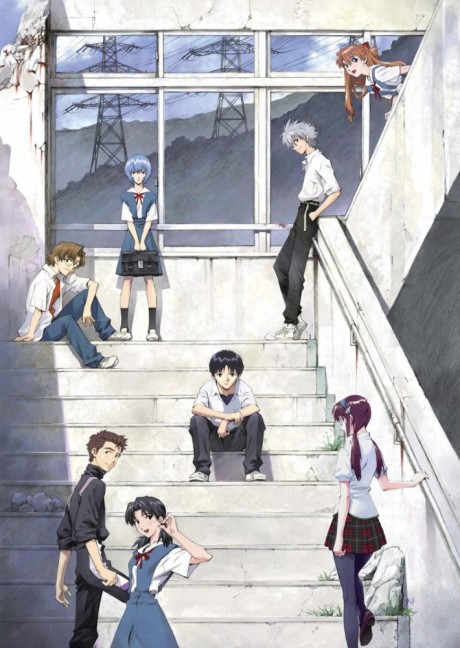
Edit: After seeing the final Rebuld 3.0+1.0 I had some additional thoughts and rewrote a little of my initial review to reflect what I now know. My personal thoughts are under spoiler and simply reflect my personal interpretation of the series. Feel free to ignore all that if you only want a general recommendation. My overall opinion is that Evangelion is a great series and there's nothing quite like it out there. The movie series really needs to be enjoyed as a whole and not as a stand-alone production. With that said, here is the review and my thoughts:
The Evangelion series is one of the most influential series in the anime medium. People have been discussing it since it came out in the 90s, and many people have taken different messages from it over the years. Everyone who has seen the original NGE seems to have a bit of their own take on it, ranging from empathy with the characters, to dissecting the quasi-religious symbolism, to more simply just enjoying giant mecha fighting interesting monsters and all variations in between. People write dissertations inspired by this anime. Many character archetypes were solidified by this anime, and for better or worse, the industry was forever changed after this show became popular.
My previous experience with NGE (the series) soured me on the anime. While I enjoyed the first half of the show, and its world, I was turned off by the second half of the show and the somewhat bizarre resolution and ending that felt out of place in its general tone. While the show had the tools to be a pretty great mecha show, it failed for me because it was ultimately secretly hiding a message in the spectacle, and then garishly shoving it into my face and forgetting to actually resolve it in a way that wasn’t preachy at best and pretentious at worst.
The movies make the message a bit clearer as they have stripped away a lot of the scenes from the show and by nature of only having about two hours to tell significant portions of the story, it is a lot more succinct than the televised anime was. Because of this, I enjoyed the movies far more than the original series once I accepted that the general theme of this anime was not to actually tell us a mecha story per se, but tell a message through a mecha story if that makes any sense.
With regards to the technical aspects of the show, they are very good. The world of Evangelion has been cleaned up and polished and it definitely looks and sounds quite a bit better than the original series from a visual standpoint. Things are far more fluid and the action feels more immediate. The voice acting and sounds have been cleaned up a bit as well. Technically this show feels very polished compared to the original. The additional care and budget over the original are shown well.
With regards to actually reviewing the anime itself, Evangelion is tough to dig into without waxing philosophical and throwing personal interpretation into what one sees. After watching the movies and the original show one more time, drinking quite a few beers, and collecting my thoughts I will offer my unnecessary interpretations. I suppose I’ll spoiler here as this is more of a personal interpretation that some may not care to read if they just want a final score and is it worth watching.
So…
I’ve generally found that over the years, people who have really enjoyed and gotten something out of Evangelion have been dealing with personal issues of some sort and especially depressive episodes. Many tell me that they enjoyed Eva as a show because of how deep and relatable the characters seemed. This is an interesting view point, and is worth looking into a bit as Eva is at it's heart a character study of sorts. I was a young man when NGE was released, and those who had watched it in the late 90s and 2000s had thought that it was great and groundbreaking. It showed the horrors of what actual mecha would be like in an apocalyptic scenario. Also, there was a lot of cultural malaise and a bit of a search for purpose for a lot of people in a popular culture embracing nihilism to a large degree. To be honest, I hated almost every character in this show and instead of finding them relatable, I found them tragic and a case study in how not to approach life in a healthy way. I was sympathetic towards them, as they do have difficult issues they're dealing with, but that doesn't excuse much of what they do, or their terrible personalities. What does Eva and it's creator Anno really have to say to us? Well, a bit of background setting might be helpful.
The late 90s before the terror attack in New York were a strange time culturally. NGE was an anime pretty well set for the age that we found ourselves. However, one must also remember, this is an Japanese production, and what we were experiencing in the west was different than the culture and zeitgeist in Japan at the time. Japan was smack in the middle of a major loss of confidence after the economic issues suffered in the 1980s and times were changing in Japan to the point where people started retreating inwards and feeling defeated. Japan is still in many ways not fully recovered from their economic crash. Because of this, it was an interesting commentary on Japanese culture at the time, and accidentally captured some sympathy from western folks as well, especially those willing to retreat inwards and rail at the world for not fitting their expectations for whatever reason.
I tended to think that NGE sort of had a bit more of a meta message to it, beyond the robots, the apocalypse, instrumentality, nightmarish revelations, the “waifus” and what have you. One doesn’t write a story like this without trying to make some kind of greater point. Also, as mentioned previously, this is a product of Japanese culture. This greater message has very very little to do with the religious symbolism in the story that people love to discuss. Having lived in Japan and studied the culture for many years, Japan has a similar level of fascination with Christian symbols that many new agers in the west have with practices such as Zen Buddhism or yoga.
Japanese in general do not have a deep understanding of what Christian symbols mean to westerners. Similarly, westerners do not generally have a deeper understanding of what Buddhism and other eastern practices mean to eastern culture either and tend to gloss over the historical context of these things because they're interested in the foreign aesthetic or differences from their own culture. Basically, Japan is interested in Christian symbols because they are foreign and cool. Many games and other shows love the aesthetic of demons and angels and don't really portray them in a way that's consistent with cursory biblical or Jewish scholarship. It's fun for many of them to look outside their own culture that many times they're tired of to find something "mysterious and interesting". However, as with all things brought into Japan, the Japanese put their own twist on things and modify it to their own aesthetic and cultural sensibility. This is the same thing for many of us watching anime as well. We like the foreign aesthetic and rarely learn deeply enough of the language or history of Japan to grok why something is funny or relevant to Japanese sensibilities. Those who understand why Zetsubou Sensei's jokes are funny tend to be fewer than those who enjoy the latest rom com harem show for cute girls, or the mecha show for it's giant robot battles.
Every interview that I've read that Anno has given has told us that the Christian/Jewish symbolism was chosen to stand out and be cool. Anno has also given interviews that show he only has a surface level understanding of some of the philosophy that people attribute to this show as well. This is well documented and can be easily found online for any who don't trust me at my word. Do your own research and make your own conclusion on this but Anno isn't a western religious scholar. Anno is not a deeply read western philosopher either. He appreciates these things like many in Japan do, but our western centric interpretations of this series are largely missing the point. My educated opinion on this is that the folks that write these long theories on what's happening with the symbolism are attributing western centric cultural understanding to an eastern interpretation of the symbols. They're also overestimating Anno's knowledge of these things that are second nature as part of western culture. Comparing apples to oranges essentially. This is why there are 100s of different interpretations of what's going on in the show. The overall message and reason for the rebuild movies doesn't have much to do with piloting robots, 3rd impact, angelic mysticism and all of those things. This is background. Were it central, there would not be such a strong focus on the personalities of the characters and their internal struggles. The rebuild movies do much to strip the focus from various symbols and the interesting scenes are fully on the characters and their personal issues and reactions to each other.
The biggest inspiration that I took away from NGE, was that at some point, people need to face reality and make changes in their lives in order to, if not be happy, at least move forward and be human. I was unsure of whether or not Anno had this undertone in his original series explicitly, but after watching the movies recently and drinking a lot of beer to get into a reflective mood, I’m pretty sure that this was the underlying message all along in the franchise, especially considering what Anno himself seems to feel about the fanbase and how they are interpreting his work. Anno always seemed to be incredibly frustrated at the fanbase. Many of the people that mention that Evangelion is not the same or ruined after the release of the movies may be missing the point a bit.
The second movie shows the characters of Evangelion in a far different way than the original NGE portrayals. In basic terms, all of the characters in the second movie are "idealized" versions of themselves. This is in comparison to the 1.0 Rebuild movie, which requires no real analysis as it is basically the first 6 episodes or so of NGE recreated in HD for the big screen with a few extra interesting scenes here or there. The tone and characters are more or less identical. However, in this movie, Asuka herself takes a new surname which even further emphasizes that things are quite different here. While we run through many similar scenes in the second movie to the original NGE, things are far more brighter and show us how things might have progressed with these characters had they adopted some more healthy outlooks and worked through their issues. My original view of NGE (as stated in my review of the show) was that it was very difficult to relate and root for the characters as they did nothing to advance themselves and overcome their obstacles. Well, in this movie, they appear to be working towards that. Shinji appears to grow a pair and take more decisive actions, Rei is moving out of her doll-like barely human ways and becoming warmer and nicer to everyone. Asuka acts like a rom-com tsundere, complete with fanservice misunderstandings and jealousy of Rei to the point of cooking food for Shinji. Even Shinji's father Gendo is apparently thinking that he should try to relate to people in healthier ways after a dinner with Rei. There is also a bizarre romance subarc going on where Rei and Asuka are seemingly vying for Shinji that was not in the original series, but fan fictioned quite heavily over the years.
The change in tone for the second movie compared to NGE was so jarring that I was almost laughing at how different things were. I kept saying to myself, these characters as they are in NGE would never do these things. This movie's tone is too bright and almost moving towards a more modern style mecha battle like Darling in the Franxx or maybe even Infinite Stratos, although that's a bit of a push. Even the addition of the Mari character, (who feels like a harem style addition to the show, singing tunes in her introduction and complaining about her chest not fitting into her plugsuit, crashing into Shinji bust first) shows up out of nowhere. Explanation of her origin? Completely glossed over. Relevance to anything in the story? Maybe she's a spy? Huh, every scene she's in is just her singing about how fighting is fun, or sabisu sabisu! Her crawling up to Shinji after smashing into him rack first (comical BOIN sound included) and sniffing him is just pure harem fantasy. What the heck is that doing in our serious psychological mecha show?
All these out of tone events and character interactions telegraph that something ain't right here. This is rom com nonsense in your serious, philosophical wankery show. What was the point of the tone change to lighter and brighter here?
All of this brighter tone stuff ultimately has a point once we transition to the third movie, where the tone shifts in the opposite direction and we are snapped back to how things really are so to speak. The second movie ends up being an indulgence for the fans more than anything. Something that a fan fiction author would write about how things "should have gone in NGE". Many of the fans were given what they wanted here, and the second movie was scored pretty highly by many fans because they enjoyed these new interpretations of the characters. It seems that Anno gave the fans what they wanted here and then took it all away in the third movie. The subtitle of the second movie being "you cannot advance" could be interpreted in a few ways. It seems that Anno may have been taking a jab at the fans with this subtitle, saying that they can't advance beyond their desires for what is shown in the second movie, missing his greater point of needing to accept things and advance in your life and avoid the escapism of Shinji's headphones. It's not a coincidence that after leaving his headphones behind and "manning up" so to speak during the course of this movie, that he ultimately gets them back at the end of the movie after making his difficult decision at the climax.
At any rate, people “can” advance in their lives and find purpose. However, as with Shinji in EVA, many people do not. Anime fandom itself has become an interesting study in escapism over the years, especially after NGE’s impact on subsequent shows. Japan is a place where many people have been dropping out of society altogether and there are more and more cases around the world of people leading unfulfilling existences and diving into escapist utopian fantasy (in entertainment and real life) because for various reasons, people are unable or unwilling to deal with the difficulties of the world and the expectations of society as a whole.
While there are many, many reasons for this, almost as many as there are crackpot solutions, politicians of all ideologies promising panaceas, and other means of trying to find some way of coping with life and society; what ultimately leads to fulfilment is not avoiding life itself (which is unintentionally leading to all sorts of mental problems during our current pandemic), but accepting that you have to advance yourself in some way and continue to move forward. Life will kick your ass if you let it. The answer is not to retreat and be alone with your headphones like Shinji. The answer is to accept that life is both painful and wonderful and to live it and struggle mightily and virtuously against it. Wallowing in self-pity and woe is me bullshit ultimately causes personal suffering, lacks virtue and isn’t productive. In the case of Evangelion, that kind of behavior helps bring about the end of the entire world.
As I mentioned in my original series NGE review, all of the characters in this story are flawed and have some variation of woe is me selfishness they are dealing with and never advance beyond. Essentially lacking in virtues that we typically admire. With the possible exception of Rei and the recently introduced Mari, everyone in this story is lonely, maladjusted, and trying to cope in various self-destructive ways. While they may be in various stages of depression, or even psychosis which could cause these behaviors, none of them are doing what any competent therapist would have them do and work towards integrating into reality in productive self-actualizing ways. With very rare exception, no one shows any empathy towards anyone in the original NGE. There are touches of this shown in the second rebuild, but again, because they are so different from our earlier experiences, they are jarring for how out of place they are.
Self-centered people rarely consider how others feel and only worry about their own feelings and how others make them feel. Shinji and Asuka are both toxic people in this way. Tragic in their backstory perhaps, but many people with worse tragedies are far more well adjusted and take a healthier approach to life. A difficult and in many cases abusive childhood is pretty damn common, it's not an excuse to act like a tool all the time. When my boss or my girlfriend is acting annoying or in a toxic way, their childhood troubles don't excuse the fact that they're being annoying. It doesn't change the fact that I don't want to be around or accept their antisocial behavior and it's not an excuse anyone should put up with. I can refer people to anyone from the Berserk series, Tengan Toppa Gurren Lagann, or any other examples of western or eastern media for sad tales of woe or for examples of shitty worlds with people that are far more functional than the teenagers in this movie.
The fact that they are "realistic" or at least said to be by many folks is a sad commentary on society more than a point of praise I'd say. If this is "reality" than we're all in a pretty bad place as I don't want to be around people like the characters in this story and I doubt anyone else would either. There's a lot of therapy they need to work through before saving the world here. Part of becoming a "hero" is moving away from self-centered narcissistic nonsense and accepting duty and responsibility to others. This is also a very Japanese cultural expectation that is somewhat misunderstood in the west, again due to cultural differences many people don't fully appreciate. Shinji's behavior is repulsive to us because in western culture, we expect him to step up and take action to save the day because courage is a respected virtue and Shinji's behavior looks like cowardice to western sensibilities. In Japan, he is also expected to step up, but not necessarily to become a courageous hero per se. Japanese culture expects everyone to do their duty and fulfill their role in life without complaint. Shinji spends a lot of time ducking his responsibility, which is frowned upon in a western culture with our "I'll do what I want" attitude, but extremely bad in Japanese culture. Ganbarimasu Shinji-kun!
Although I suppose the new character of Mari would fit the mold of someone who is actually approaching things a bit more favorably and seems to be far more well-adjusted, doesn’t she? Many people think she’s out of place in this story. I agree with this point of view. She’s someone that I would entrust with saving this world over the other characters in this story. Anno himself is on record as saying and I'm paraphrasing here "Mari is the only character in which there is no part of me". Again, look up the interview on this if you don't trust my interpretation. As I mentioned, all the other characters are suffering from various forms of depression or other mental issues, but Mari, for all her quirky upbeat sunniness, doesn't wallow in any of that, and has positive interactions with the world and the situations that she's in. I would hate to be around Asuka or Rei, but Mari seems like she would be a person that would make my day better just being around. She’s jarring for the very reason that she’s everything that the other characters in Eva are not. She more or less accepts the pain and suffering of the world, but continues to fight against it regardless. Courageously fighting mechs, or accepting her duties without complaint, satisfying the virtues of both eastern and western culture simultaneously.
This is the proper approach and what needs to be done in an apocalyptic situation. Misato, also gets things together to rally the defenses each time as well, as she can step away from the self-absorption a bit and see the grander picture as well. There are things that are bigger and more important than oneself, and Mari is the only one who seems to get it among our pilots, heaving bosom and cheery harem heroine attitude aside. I see this character as ultimately salvaging something of worth from the franchise, even if she's not all that much explained in the movies at all. However, the message represented by her archetype is important. Doing what needs to be done and accepting responsibility. She’d be more at home in Gurren Lagann (TTGL) honestly, and that very well may have been the ultimate point of her character.
The struggle to overcome difficulty is what makes you human and there is a nobility and dignity in this struggle that these characters are missing. It’s the difference between living a meaningful life and just merely existing. Human beings are ultimately going to break if all they do is simply exist. Doing only what makes you happy in the here and now isn’t the answer either. Happiness is nice, but it’s fleeting and ultimately a selfish way of figuring out what to do. It won’t fix your problems to seek easy happiness, and in many cases, it actually makes the situation worse.
Finding meaning in life is profoundly simple, yet not necessarily easy if one embraces the types of escapism symbolized in Eva. Life is meant to be lived. Life is not something that one should simply endure. That way leads to all manner of malaise and in the case of Evangelion, leads to the major disaster. Those who live and not merely exist, will find their way to purpose, which leads to everything else that all the characters in this show are missing.
“Get in the fucking robot Shinji”, beyond being a funny meme, is directly the type of advice our selfish protagonist needs. Not because of some narcissistic need to be a hero, but because it’s Shinji’s damn duty and responsibility. As Gandalf once said to Frodo in the movies in the early 2000s:
Frodo: I wish the Ring had never come to me. I wish none of this had happened.
Gandalf: So do all who live to see such times; but that is not for them to decide. All we have to decide is what to do with the time that is given to us. There are other forces at work in this world, Frodo, besides the will of evil. Bilbo was meant to find the Ring. In which case, you were also meant to have it. And that is an encouraging thought.
When the call to action comes, it isn’t always convenient, easy or fair, but it does require an answer when the stakes are world destruction. Get out of your headphones and into the cockpit, do your damn duty, the world needs you. Similar can be said of quite a lot of anime fandom as well, metaphorically. Such was likely Anno’s message here.
Ultimately, Kamina from TTGL needs to punch everyone in this show in the face and demand some teeth be grit. Then move to much of the rest of us in the audience. Sometimes we all need a reminder to shut the hell up and move forward in life. Evangelion is less a mecha show and more of a warning about what can happen to you if you fall into the comforting bosom of empty escapism and fantasy and crippling passivity as Shinji pathetically dives into again and again, ultimately rejecting the entire world for it to get those headphones back from Rei. While it’s fun to explore these strange idealized worlds (I enjoy fiction a lot more than I should at times too), it’s important to remember that you should only visit, not live there like Shinji seems to.
The themes are made even more explicit in the third rebuild movie, which I’ll probably write thoughts on at some point as well. Many people didn’t like the third movie, I suspect because the message Anno was giving to people was a bit clearer and didn’t sugar coat things in upbeat out of place school romcom tones that the second movie dipped into. It showed people that they should actually make progress, because the consequences are pretty dire if you don’t. I found that movie interesting and gained a bit more respect for the message after watching it, but I will save thoughts for a potential review on that.
I do not really like the characters of this show as they never quite get it (Mari being a weak exception as I like the character, but she's so jarring that it's awkward), but I think I understand what Anno was trying to do with them after seeing the movies. I think in the end, we’re not really supposed to like them, as they are warnings of a sort that tsundere characters, weak willed protagonists, and emotionless doll-like characters are actually pretty messed up if you take a step back. It’s a shame that anime and the fandom decided that they wanted much more of this than not.
Edit: At the time of this review, I had not seen the 4th Evangelion rebuild movie and am unsure if Anno will take things in a dark path or use characters like Mari to "redeem" things. Honestly, it could go either way, but if I'm correct in my interpretation of 2.0 and 3.0, I believe that Anno will end things on a positive note where the characters learn to move on and live life and the giant robots and religious symbolism ultimately didn't mean that much. I plan on catching the movie at the theater in Japan when it comes out with some colleagues, and am honestly curious how this saga ends more than I am about any real insights into the world or story.
Edit: After seeing the final Rebuild 3.0+1.0 movie and its "resolution" to the story. I stand by everything that I wrote here. Without spoiling detailed things from the recent movie (but skip this is you don't want any chance of a spoiler), the character interactions and the final scenes of the movie especially give us a resolution where the journey of the protagonist Shinji (who is basically a surrogate Anno or our self-insert in this story) comes to its conclusion and he learns to accept things and move forward in the real world. Ultimately one that goes beyond Evangelion. The final message of this seems to be that life is worth living, leave Evangelion and anime and empty escapism behind, get a cheerful busty girlfriend, and take your place in society. Do your duty in other words. While it was definitely made for a Japanese audience's sensibilities, I think it will be obvious to anyone that watches it what the message is.
As a final aside to this rambling, modern anime is quite a bit less inspiring these days because of shows that try to emulate the escapist fantasy of shows like Eva and consequently not show people to aspire to very often. People aspire to be like the heroes Kamiya, Simon, or Yoko in TTGL, even though the situation in TTGL is a very difficult and harsh one without much comfort. People may sympathize with heroes like Shinji, but no one wants to BE LIKE Shinji. People may want to get to pilot an EVA or live in Misato’s apartment like him, fantasizing about fan service with her and Asuka, but one can envy any number of mediocre interchangeable harem protags these days for their situation of willing nubile partners. NGE and Evangelion were a warning about where this path leads, which may be why Anno seems so frustrated all the time. Coming from this angle, it’s somewhat understandable, if perhaps a bit harsh.
Anyway, that’s my interpretation of the second movie specifically.
Beyond my unnecessary 3000 or so word interpretation, is this a good movie to watch? I would say that it is. I had a fun time with this show. It's more enjoyable than the main series from an entertainment perspective, although it's a bit less thought-provoking than the original series.
HOWEVER, it should be watched after going back and seeing the original series for context, because as a stand-alone work of fiction, this isn’t that great when viewed outside of the other works in the franchise. I would strongly recommend watching the first movie in the rebuild series as this movie would be difficult to follow without at least watching that. As I mentioned in my NGE review, different people are going to get different things out of these movies, and it is up to you to interpret Evangelion for yourself. It is also an important tool in your arsenal of understanding modern anime as well, it would easily be in a top 10 or even 5 most influential shows of all time.
Evangelion, for better or worse, is one of the must watch anime series out there for the sheer influence that it’s had on the industry and culture. Beyond the importance to the medium itself, this anime is generally entertaining or at the very least thought provoking enough that just about anyone can get something out of it. While the story has a few issues to it and at times goes a bit far in places, it’s enjoyable to watch if you enjoy mecha and a bit of psychological fiction and meta-commentary. At the time of this writing, the 4th and probably final movie in the series is scheduled to be released, so it’s also great to catch up to where things stand as well.
The movies and series get a strong recommendation.

There are a lot of questionable anime programs that have been released over the years. To some extent, anime tends to pander quite a bit to the fandom these days, and many programs out there are nothing more than advertisements for a light novel or manga that may be shoveled out. Many times, there is a whole lot of style and not much substance at the end of the day after reflecting on the more popular anime. With anime cycles seemingly growing shorter these days, and memes taking over much of the collected consciousness of the fandom, it can be difficult to find shows that stand above the crop and provide something special to the audience other than the latest flavor of the month or best girl argument fuel.
So, what does all this drunken rambling have to do with a show about samurais, ninjas, aliens, and over the top sight gags?
Gintama is an anime that is difficult to review. I’ve watched this show off and on for around 10 years now and continue to go back and forth on what my thoughts actually are on it. This show is unforgettable and it’s one of the anime that I have a deep appreciation for and have gotten countless hours of entertainment value out of.
With regards to the technicals of the show, Gintama is generally well drawn and animated. The update to HD helped immensely and the switch was a noticeable improvement. The show is colorful and the setting allows for some interesting alien concepts and technological wonders mixed in with traditional Japanese ryokans and yukatas. This show has its own brand of style and it grows on you quite well.
The soundtrack is amazing for this show. So many of the tunes and songs have a great impact and help to change the mood so well that you can actually feel yourself changing emotional states when the music kicks in. Each major character has a leitmotif that generally kicks in when they are introduced or are doing something as well. There are a wide variety of OP and Ending credit songs over the years, and many of them are great tracks as well. Special mention to Yoruzuya Blues, one of my favorites from the show and a great commentary on the main character as well. There are even in universe idol performances and rap tracks and other songs as well that range from amusing to hilarious as well. Music is a high point of this show and it’s hard to hear certain themes from the show without smiling a bit at the nostalgia and meanings. They stick with you.
Easy stuff out of the way, the actual difficulty in Gintama lies in its depth and breadth of what it’s trying to do, or what it flails around and actually does. As mentioned, I’ve watched the show for ten odd years or so and I struggle to succinctly sum up what the hell Gintama is actually about in a few words. It’s also impossible to figure out if you’re going to like Gintama after only watching a few episodes as things build on each other to such a degree that it can’t be really said to have “started” until 20+ episodes in, and even 50 episodes may be a better milestone. Many folks aren’t going to make that investment, and while I understand the sentiment, I’m glad that I stuck around to enjoy what the show became after being unsure what all the fuss was about after watching 15 or so episodes. So what exactly is it about?
At a broad stroke, Gintama is a story about an alternate history type of Edo Japan around the Meiji reformation era where instead of the samurai putting away their swords because of a change in domestic priorities (read your history folks), it happens instead because aliens invade Japan (Earth) and subjugate everyone with their advanced tech and what have you. The samurai are to give up their swords and live on, trying to scrape by in a post technological world mixed with 1800s Meiji aesthetics in Japan. On paper, this doesn’t sound like it makes a whole lot of sense. In practice, it really doesn’t either, except that it sets the stage for a wide variety of comedic and historical commentary on Japanese culture that one might not find in a more straight-laced historical show.
One of the former veteran samurai, Gintoki Sakata, runs a small odd-jobs business struggling to make ends meet in this new world with his “apprentices”. The quest for strawberry milk, scoring big at pachinko to pay off the ouya-san, and getting enough cash together for the latest issue of Shounen Jump and a few drinks turns into one heck of a wild ride. As the story expands and we are introduced to more and more of the post war Edo town, the whole thing sort of takes on a whole life of its own and becomes a running commentary on pop culture in Japan with crazy comedic arcs, unforgettable character interactions, pop idols, video games, celebrity gossip of a type, to the point where it’s almost impossible to keep up with the references unless you have a good guide or have lived in Japan for a while.
Beyond the comedy, oddly enough, are shounen style battle arcs between the political factions that would not be out of place in any of the major shows in the genre as well. When Gintama wants to get into a serious arc and put on the big boy pants, it can hang with some of the greats in this arena as well.
There are also arcs and story resolutions that impart some serious wisdom and can even make you shed tears during their resolutions as well. Gintama is a show that has a surprising amount of depth and can turn on a dime, having you laughing hysterically one moment, on the edge of your seat for a battle sequence the next, and then having you choke up a bit at the heartwarming resolution a few scenes later. It’s rare that a show can do this and I struggle to think of any other shows that quite match it in this regard.
Also, as a barometer of what’s going on in the general cultural mindset in Japan, Gintama is a great show for cultural jokes and pop culture. This is going to be the actual things going on in Japan that makes local news, famous celebrities, songs, trends, etc. While it doesn’t quite require the depth of knowledge about Japan that say, Sayonara Zetsubou Sensei requires, Gintama is a great look into what’s going on trend wise in Japan at times. Tongue is fully in cheek for this show and the fourth wall is shattered quite often, many times to hilarious effect.
Combine the great characters (who almost deserve a separate review), songs, comedy, battle arcs, pop culture references, and emotional moments, and the sum of all the parts add up to something that may be irreplaceable in the anime medium. While there are shows that do many of these things at a higher level than Gintama, Gintama is much greater than the sum of its parts.
Gintama is one of those rollercoaster rides that once it starts heading downhill is one heck of an adventure. Rightly deserves a place in the upper echelon of comedy shows and a show that deserves everyone’s time. It’s one of the few shows that showed me how great the anime medium can be for its sheer variety and creativity, as well as delivering action, emotional scenes, and great characters by the score.
Unqualified Recommendation.

K-On! is one of those shows that gets tossed around a lot as a great example of a slice of life comedy, being one of the more popular examples of one. It's also one of the most mentioned entry tier slice of life shows, pretty much one of those must watch shows due to sheer popularity factor and inertia on the internet. It was one of the first entries in the "cute girls doing cute things" genres that I sat down and watched, mostly on recommendations from folks and the sheer popularity of it. I was hoping to see what the slice of life genre was all about and this was obviously the place to start from what everyone was saying and my own limited experience in the genre.
The first time that I watched K-On!, I didn't quite know what to expect from these types slice of life shows. I grew up watching things like Hokuto no Ken and Cowboy Bebop. I admit to a bit of a bias as to what I expected animated entertainment to be. This wasn't going to be shounen action, mecha, or deep science fiction/fantasy, this was going to be about high school girls working to put together their band, and they were going to be adorable and drink tea while doing it.
With regards to the technical, the art fully commits to its style. Nothing spectacular, but familiar looking. Animation can feel a bit wonky at times. The sounds are done pretty well, the music that is performed does actually sound like J-pop, and the voice acting doesn’t give me any right to complain. The opening and closing credits are catchy, and the other songs that are performed work as well. I still occasionally find myself humming the tunes from the show when I think back on it. This is the high-water mark of the show in my opinion. K-On!’s major stumbles are story and character development.
I wanted to give the show a full season of viewing to make sure that I was seeing what everyone else was seeing. Going in with high expectations was a bit of a mistake in this case. I struggled to figure out what everyone was seeing in this show, even after a full viewing, even if on balance, I found myself enjoying the show.
I was hoping to see more about the struggles of putting together a musical performance and how a light music club would operate, but was a bit disappointed that each episode seemed to be more about tea and dessert time and screwing around than actual Light Music. This could be interesting if it was a couple episodes before the story got a bit more serious/urgent, but that was the story in just about every episode.
To be fair, the story does have somewhat of a progression of time in it, with various activities happening more or less due to the needs of a light music club. Instruments are acquired, the girls work on the theory of practicing or song writing for a few minutes, and then they are back to doing pretty much what they were doing earlier, which is having a tea party and reacting to their situation in a clichéd way based on their character tropes.
The characters in K-On! are not very deep or complex, and they pretty much have their one or two shticks that become a punchline repeatedly throughout the series. I watched the entire first season and past the first two or three episodes, I had figured out what the characters were going to do in most of the situations they were presented with.
The lazy characters were going to be lazy, the timid, serious one was going to freak out about something when she tried to get things back to serious, the refined one was going to make tea to calm everyone down, and the adult in the room was going to try to get the club into cosplay. That’s basically each episode in total, with perhaps a school festival, beach, or holiday setting to break things up once every couple episodes or vary the weather a little.
I understand that cute girls doing cute things is a part of anime these days, and in that, I suppose that the show delivers, as for the most part, they all play their cute reactions to the situations well, and things comfortably meander along, same as they ever were in each episode. This is what slice of life typically does, although the good slice of life does generally wander towards some character growth and resolution.
However, outside of the opening and closing credits, the Light Music Club seems to do precious little actual music composition and practice, which left me thoroughly confused, somewhat frustrated, and wondering if I was totally missing the point as people seem to love this show and recommend it as a must watch.
The big question that I’ve had a hard time answering after watching the first season is if the whole music club is really necessary to tell this high school story. I’m not sure it added much to be honest, and it could have been any club at all if we're being fair. One can sympathize with the poor kouhai of the show wondering why they're even in the club and despairing that no actual musical practice or anything is being done. One would think that there would be a bit more musical passion from the main cast if the show was going to be about a music club, and not just stumble towards the big concert or what have you. The music itself always seemed like a bit of a distraction from the next scene of the girls doing something that was exaggeratedly cute.
To take example of another slice of life show about a high school club from the same year or so, Saki, the mahjong oriented high school anime, actually felt like a more compelling show to watch, even if it was technically weaker in art, animations, sound, etc. It was also full of somewhat unnecessary fan service, somewhat exaggerated mahjong super powers, and trope heavy characters. However, they went hard on the mahjong angle, and the story arc worked as the characters worked together to play and get better and the slice of life and character development occurred through the act of enjoying their club activities. While I don't think Saki was a masterpiece, I look back on K-On! and wonder why they didn't take a similar approach towards making the music the focus instead of the cute stuff. I think it would have worked for the better.
All said, I didn’t get too much out of K-On!, as perhaps I was looking for something a little more substantial (I realize that may be misguided with a show like this). When a song is actually played by the group, it’s decent enough to watch. The problem is that this happens so rarely that it’s just not enough to really make up for the problem of it being the same thing over and over each episode.
There are shows with characters that are interesting enough to make you want to see them interact in various situations and the comedy or drama involved will make it entertain you. I watched Azumanga Daioh some time after K-On! and discovered what slice of life really should be when trying to show high school girls life where nothing of grand import happens. There was a charm to Azumanga that K-On! was trying to replicate, but didn't quite get there in my opinion.
In fairness to the show, I recently re-watched K-On!'s first season to see if I got anything else out of it after watching quite a few more slice of life shows. I would say that my opinion of K-On! has improved a bit from my initial reaction, but I still prefer other shows in the genre with a bit more character development and stronger personalities. I did find a reasonable amount of entertainment (or maybe relaxation is a better word) in the show after completely turning the mind off and just floating along with it, but this isn't something that I can do for more than a couple episodes at a time.
I highly recommend that you avoid my mistakes in the slice of life genre and start with something like Azumanga Daioh to see what slice of life and cute girl shows do well. Then watch K-On! afterward. It helps to have some perspective to compare this one to.
While this review probably comes across as a bit negative, I still enjoyed K-On! quite a bit. But, it's not as high on my list of favorite slice of comedies for the reasons mentioned. When the group of girls actually play music, it's done pretty well. I would have liked to have seen more of it, and consider the show a bit of a wasted opportunity.
It's still worth a watch, it's had a large enough impact on anime culture that it is worth your time. It's also worth noting that sometimes, "fun things are fun" and you shouldn't take anything too seriously anyway. That is worth something in my book.

Reflecting back on Azumanga Daioh (Azumanga) brings quite a bit of thoughts. As someone who grew up watching mostly American cartoons, and later dabbled with anime through such shows as Hokuto no Ken and Cowboy Bebop, with the occasional mecha thrown in for good measure, I've always had certain prejudices about what an animated program should be about and how it should proceed that I've had to fight over the years.
After getting further into anime over the years and trying to branch out the genres that I watched to try to figure out a bit more of the language and culture, I sought out some slice of life shows that were recommended. I tried a few of the popular shows that people had recommended, eventually hitting a few of the cute girls doing cute stuff shows, such as K-on and Lucky Star and I never quite understood what the hype was about. While I didn't actively dislike the shows (although Lucky Star really tried my patience), I couldn't wrap my head around what was going on and what the shows were really trying to be.
After discussion with a good friend who had walked the paths before, he recommended that I take a look at Azumanga in order to fill in the gaps about what was going on. While I can't say that Azumanga changed my life or made me think too deeply about things like certain other anime did over the years, I can say without reservation that I finally got the whole cute girls doing cute things genre after watching Azumanga and what it can be when done well.
Sometimes in order to understand where you are and where you're headed, the right course of action is to look to the past and see where it all began. Azumanga is the Ur example of these girls doing slice of life comedies that more or less swept through the 2000s and to some extent never really left the rotations as there still seem to be a lot of anime that borrow heavily from the popular shows in this genre to some extent. Sadly, even the more popular shows, even if they became household names to anime fans do not quite hold up to the original in a lot of ways, which I hope to collect a few thoughts on in this review, which may or may not stay coherent.
To give a review of the basic technical aspects of the anime and the staff, Azumanga's art style follows the actual manga (which is a great read) very closely. The huge eyes and rather simplistic art style play well for how the show presents itself. While the show is generally fairly realistic, there are occasional flirtations with the surreal, and the art style and simple animations hold up well. Nothing looks terribly out of place, the colors are generally bright and vibrant, the characters are expressive even if things occasionally go over the top. The art stays very grounded in the cute side of things. The show has a soothing feel to it most of the time.
The sound track is excellent and stays with you as you watch the show. The opening track is one of those great catchy tunes that sounds and pairs well with with the playful and lightheartedness of the show. The closing theme is surreal and dreamy, which the show also wades into on occasion.
The voice actors are great, and really lend life to the characters. Tomo, Chiyo and Sakaki's actresses stand out to me for sheer expressiveness and giving great life to these characters. Sakaki's character especially could not have been easy to voice precisely for her dearth of lines and personality, but the actress nailed it. I cannot comment on the English voice actors, but I would strongly recommend that this one be listened to in the original at least once as the actresses are great at expressing the personalities of the characters and their growth over the course of three years of high school.
I've also never quite seen characters in this genre done quite as well as in this show. The character of Osaka was amazing and it's worth watching the show just to see what's going to pop out of her head. Chiyo is innocently adorable in all the right ways. Tomo is that overly genki friend of ours who's always trying just a little too hard to mask some insecurity or other. Yomi may as well have been many of us with the cynical wonderment at what our idiot friends are up to while trying to keep things on track. The awkward, yet sensitive soul, Sakaki round out the major characters that we watch grow up through high school. Yes Kagura exists, but I never really felt she was as important as the other five in the anime.
The female teachers (Yukarin and Minyamo) also operate on an interesting yin and yang dynamic as they are both friends, rivals, drinking buddies, and a great subtle commentary on twenty something career teachers in Japan as well for those familiar with the realities of that lifestyle. The one male teacher put in as a creepy dude who is a bit too obsessed with the high school girls rounds out the staff and is a tongue in cheek riff on the type of creep who's getting the wrong thing out shows about high school girls. All excellent actresses (and actor I would suppose).
Technical analysis out of the way, what exactly is it that makes Azumanga a must watch anime?
Others have wrote what needs to be written on character analysis and given their thoughts on their favorite characters. I'm not here to say who's the best girl in the cast or to tell you why, that's something everyone's perfectly capable of figuring out themselves. Although it can be difficult to pick a favorite character as they're all great in their own ways.
Azumanga does what many slice of life shows actually forgot about over the years in that it actually showed the ups and downs of high school in a way that was realistic, showed character development, and remained wholesome and heartwarming all the way through. Most slice of life shows after Azumanga just can't quite get that formula down correctly for some reason. They all seem to lack something Azumanga had.
Azumanga also stays away from fanservice outside of the very occasional swimsuit shot, staying firmly into a level of innocence and wholesome high school antics that is strangely out of character for Japanese entertainment of this type. While it's not 100% pure at heart, it's about as close as it gets and the fact that it became one of the most interesting shows about nothing despite the temptation for cheap fan service says more than I could say about how they take a show that's literally about high school life and made it compelling to watch.
I don't have a whole lot of say about any kind of "deeper message" here. There's a general message that life moves fast and that time waits for no one. In many ways, you can't take it with you and life moves on after school as people take different directions in life. Azumanga never really gets deeper than this and that's fine. That's not the point of a show like this.
To sum up this mess of a review (which I'll probably clean up at some point), watch Azumanga to see what cute girl slice of life can be when done well. I can't really think of anything that came after it that does the cute girls doing cute things quite as well as Azumanga. It's not a masterpiece, but it's quality. It's one of those anime that should be watched as it was so influential.
I wish that I had seen this show before others in the genre. I can't think of many shows with all female protagonists that quite stand up.
Highly recommended, all audiences.

Tatami Galaxy is an interesting anime to watch and ideally rewatch a time or two. I've tried to think of another anime that matches it or something to compare it to that's equivalent and it's a bit tough to pin it down. In the modern age of anime with very established tropes and expectations, this alone makes Tatami Galaxy something that should at least be watched for the experience.
It's going to be really hard to offer a review of this show without going into spoiler territory, so if that bothers you, stop reading immediately and watch the anime instead of looking at my semi-drunken ramblings.
Some technical and story background for Tatami Galaxy:
First off, this is a very visually interesting anime. The blend of styles is pretty "artsy" and quite a bit surreal at times. It is also mixed in with live action scenes and sometimes monstrous imagery. It doesn't stray too far from reality, but there's enough weirdness that it gives things a dream like quality at times. Those looking for something super realistic are going to be disappointed, but the style works for the narrative and is impressive to look at. The sound and voice acting is done very well. The protagonist spins narrative at a pretty incredible rate, and it always sounds really good even though it has to be difficult to sustain the pacing. If you can't understand spoken Japanese and rely on reading the subtitles, you will probably have to pause a few times to catch what is said and what is going on visually. The OST is great. The opening and closing songs fit the moods very well. The prepare you for what you are watching and wrap up the plot quite nicely each episode. What is also pretty unique, or at least experimental is the plot and narrative itself, which complement the style pretty well.
At a broad stroke, this is an anime about a young man (never named) and his strange quest for a grand experience in university that has seemed to be a failure based on the opening scene's narrative at a Ramen Restaurant. The venue alone is interesting in itself. Most school anime focus on high school shenanigans, with university life ignored for the most part. This provides us an opportunity to avoid many tiring cliches of high school based anime and explore the harsher realities of life outside of the comfort of the parent's place, with a more mature look at relationships. Our intrepid protagonist believes that this is his time to shine and he is seeking to create for himself "the rose colored life surrounded by raven haired maidens". The kind he has no doubt enjoyed in popular light novel adaptations and harem anime. Somehow, he seems able to try again after his interesting failures (some spectacular in their disappointment or comedy) and take a new look at what might have been in another trial run of his first two years of university. He also runs into the same cast of characters repeatedly, although with slightly different perspectives. He always has that goal of the perfect life in mind, and all those raven haired beauties no matter what he's doing.
The following thoughts are my own and just one of a great many ways to interpret the relationships in Tatami Galaxy.
There are a couple interesting lines in Tatami Galaxy that keep popping up in analyses of the show. After hearing them (over and over in the show dialogue), you'll quickly understand what the basic message of the program is. If you have any modicum of insight, you'll also realize what the protagonist needs to do in order to be happy quite quickly as well.
I'm not going to repeat those lines from the show, but suffice it to say, this show initially seems to subscribe quite a bit to the very Japanese concept expressed in translation as "it cannot be helped". There is an almost oppressive level of doom in the protagonist's story and cycle of do overs. How one feels about the concept of fate vs. free will likely color quite a bit of your response to the protagonist and the overall message that the show seems to try to convey to us.
This is especially conveyed through the recurring "best friend" character of Ozu who's goal (at first) seems to be breaking up people's attempts at happiness. So much so that the main character sees Ozu as a type of demon in the early episodes. Although from an outside view, Ozu is working towards getting our thick-headed hero to do what will ultimately make him happy and break out of his bizarre quest for the perfect everything in life, which is a questionable goal. (I suspect this is why Ozu slowly becomes less demonic looking as the show goes along and the protagonist is slowly starting to understand what will make him happy).
I'm torn between two divergent ideas on the protagonists quest for that "rose colored university life". The message that the show seems to give us is that accepting your lot in life and being happy with what is in front of you does have merit. Many people have very unrealistic ideas about the way that life works, and life can kick your butt pretty hard if you let it.
However, I did have a lot of admiration for the protagonist trying out all the different possible "lives" for himself and seeing where he fit in. There is a lot to be said about not accepting your fate and struggling to see where life takes you with hard work. In fact, the protagonist tries many strategies in his do overs, none of which ultimately work for him and it seems like he cannot escape what's "in front of him all along". Hard work doesn't solve his problems, nor does hedonism, breaking the rules, revenge, trying multiple relationships, trying solitude, dropping out of society, fitting in to society, etc. Nothing seems to solve our protagonist's problems at all.
This is where it's easy to take the route of "it cannot be helped" and say that the protagonist's problems can all be solved if he goes with the flow and just bebops along like he is expected to and takes the obvious way forward, that is the only choice that will work. If the show focused more on what career or what club or major that the protagonist settled on, it'd be a cleaner message. There's something else at work though, as that really isn't the ultimate focus in this series.
The anime begs several questions. What exactly is the protagonist's problem that he finds himself stuck in this loop no matter what action he seems to try? What is the common issue across all his attempts at life across all the episodes? Why does he continue to be miserable?
Much like the movie Fight Club told us that most of this is really about a girl named Marla Singer, most of Tatami Galaxy really is about a girl named Akashi. Akashi is a conventionally pretty, yet very understated cool collected type. Our hero doesn't find satisfaction until ending up with Akashi, which sort of makes you wonder if he is kind of an asshole for spending almost two years doing all kinds of different things trying to find some perfect girl when he was already in love with Akashi. While this becomes clear later on, it comes to light that early in his interactions with Akashi, the protagonist became infatuated with her. So why was he continually trying to join new clubs and meet these raven haired beauties? Was he hoping for some kind of upgrade over the somewhat plain Akashi? Did he look at her and think, "man, she's so dull or average". What exactly was the issue if he realized it so early in the series of events that made him keep trying to find some other solution? Was Ozu really the demon, or was the protagonist?
Our "hero's" problem seems to be that he has a vastly distorted and idealized view on life and that he cannot seem to see the people around him as complex individuals that have flaws of their own. Life isn't a fairy tail as much as we wish that it were, and it seems that the protagonist believed that somehow, if he can only do things in certain ways, he'll find that idealized version of life that he fantasizes about. People around us don't work like the tropes that we see in media. People are a great mix of good and bad, beauty and ugliness, cleanliness and untidiness. Yes, even your horrible (or wonderful) boss or girlfriend, or that politician you're obsessed with who will either fix or destroy everything, and everyone in between. Expecting people to be perfect, or worthy of pedestals just isn't realistic.
Our hero interacts with a great many individuals and seems greatly disappointed in all of them in some way or other as they don't live up to these types of expectations. While seeking that "rose colored life" he seems dismayed and can't accept that there are shades of grey, blue, red, and all the other colors of the rainbow. Whether these are good or bad doesn't really matter, they are just a part of the world around him and the hero can't quite come to terms with this. Ultimately, this leads to his continuing lack of satisfaction with things and a wish for a do over in life that will surely get him to utopia. Eventually, he withdraws altogether for a couple episodes and finally has some introspection on things leading to the resolution.
Most frustrating for me, the protagonist seems to be staging all of his hopes on his idealized goal of feminine perfection to make himself happy as we very rarely see him working academically or towards a career. I wonder what in universe media he has consumed to think this perfect world exists. It's blatantly obvious that the protagonist should end up with Akashi and everything foreshadows it so hard as to basically bludgeon the viewer with it. Why is the protagonist dodging the issue for two year stretches? One can't help but feel that even though he says he is head over heels for her, Akashi just doesn't measure up to his ideal in some way.
Most of the message I got out of the story came out of the middle of the series. A major crux of the series are the three episodes where he is caught in a bizarre love situation with three different "women", or more importantly, his conceptualizations of these women in his life. One of them is actually inanimate, and oddly causes him issues because he can project his fantasy of this perfect girl onto her. Hilarity ensues as he pursues this girl in one time line. This is his constant pursuit of the love of perfection that just cannot be. One would think he would learn, but that's not the end of it.
A second girl, named Hanuki (far less inanimate), that he is interacting with is in his English speaking club (joined of course to become popular with all kinds of people and women even though he has no great skill with English) is actually a mutual friend of his who is interesting in her own way and actually providing him with female friendship and to some extent companionship. He repeatedly says that there is nothing about her to complain about, in mind and body, and it seems as though he's pursuing a romantic relationship with her in his own bizarre way. Yet, she still does not meet his standard of perfect femininity and is ultimately rejected (although not before some rather interesting comedic symbolism after a drinking date). Whereas the inanimate doll was perhaps too perfect, it seemed as though Hanuki was almost "too real", and too passionate for our protagonist. Hanuki, while perhaps not at that specific moment, seemed a good match for our hero in some ways to counteract his personality, yet our hero retreats.
A third candidate in a pen pal that the protagonist believes is the perfect beauty, set up as a prank by Ozu, rounds out a third possibility for our hero. The protagonist tries to woo her through increased exaggeration of his qualities in some sort of dream world fantasy version of himself to match his view of his pen pal's perfection. This is especially ironic when we figure out that it is Akashi who is writing to him, (whom the protagonist is supposedly head over heels for), first as going along with Ozu's prank, but implied that it is out of genuine interest. The right time for introspection could have been immediately when the protagonist figured out that he was trying to make himself "perfect" for Akashi, even though he was already in love with her, despite her falling short of his ideals of long raven haired sparkly beauty. The time to go to Neko Ramen with her was right then, and the story could have concluded, yet he wasn't quite ready for some reason. Poor Ozu was obviously shaking his head, and poor Akashi sits out for a few more episodes.
Anyhow, long story short, I think that there's more to this than a simple, be happy with your lot in life mantra. I'd argue that a more nuanced message exists here of stop chasing perfection and don't make perfect the enemy of the good is a better take away from this story. As our protagonist discovered when he withdrew to the Tatami Galaxy, he missed living and interacting with people regardless of whether or not things went well for him. Chasing perfection is unwise, as it doesn't exist. Hanuki has her flaws, but she would have made a good companion and grounding influence. Ditto Akashi for other reasons, and that's ultimately where it went after a lot of adventure and (admittedly enjoyable to watch) silliness. It's a good idea to realize that what's right in front of you can be pretty darn good if you're willing to give it a chance.
Time to wrap these thoughts up.
I recommend that you watch Tatami Galaxy and see if it opens your mind up to a new way of looking at things. This is one of those shows that can make you take a time out and ponder your approach to things.
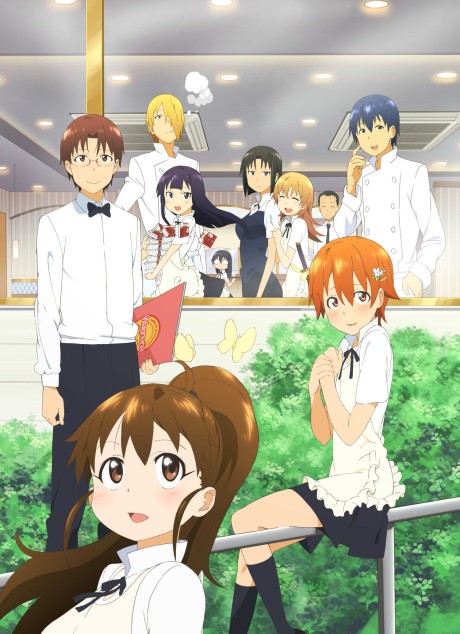
For reasons that I've never quite figured out, the slice of life genre in anime has become rather popular over the years. These animated situation comedies tend to be rather formulaic and unfortunately tend to suffer from trope ridden characters that never really undergo any development or exist only in relation to a protagonist with very little personality and development outside of their relationship to that person.
Over the years, I've watched quite a few shows that fall under this genre, mostly looking for something relatively laid back and easy to digest after a tough day of whatever I'm dealing with at the time. I generally know what I'm getting into when I pick something in this genre. I honestly don't expect much at all. Occasionally a show in this genre comes along and surprises me in a positive way like Working. I have to confess that I never quite got a lot of the "must watch" slice of life shows. I generally don't hate what I've watched or anything, but I took them for what they were and didn't get all the hype as honestly, they really didn't seem worth all the praise. I picked up Wagnaria or Working!! as a recommendation not expecting much. I ended up pleasantly surprised by it and think that it is one of the better shows in the genre.
Working is a well drawn anime and the voice acting is good. There are quite a few popular voice actors for this one as well surprisingly enough. The opening and closing themes are catchy and upbeat and set the tone for a show that is generally comedy oriented, kinetic and fun. Technically, the show is above average I would say. The fact that it got three full seasons says quite a bit, as these types of shows, with rare exception, tend to be light novel or manga advertisements at the best of times, cranked out quickly and cheaply to drum up some interest in the source material. While not a masterpiece, it looks and sounds good enough and has a pleasing style that doesn't jar you.
Why do I write a review on what is just a slice of life comedy anime about goofballs working in a restaurant? Well, this slice of life does what few of these shows ever end up doing. Having actual character development and resolutions to various problems throughout the seasons. As mentioned in the previous paragraph, many shows that fall into slice of life comedy have a bad habit of very trope heavy characters that never really go through any real conflict or development and are there to fill a role. At worst, many of these shows devolve directly to harem romance shows too. While there's nothing necessarily wrong with that if that's what you're looking for, it tends to make the show very shallow and predictable in its pacing and resolutions.
Working spares us from that and has most of its characters that undergo growth and change as the show progresses. There are enough men and women in the show so that it doesn't devolve into a harem romp that seems to doom many of these set ups. The characters themselves, for the most part, are interesting and funny enough to overcome the "show about nothing" problem that situation comedies always have to fight against. While this show doesn't really have any deep philosophical message to it, it is compelling and fun to watch because the characters and their issues become fun to watch. With slice of life, that's all that is really demanded of it, and Working will deliver.
That's not to say that this is a problem free show. There are some issues that bothered me while watching it. Without too much in the way of spoilers, one of the original main characters ends up getting shunted off to the side and is one of the few in the show that doesn't really undergo development, quickly becoming somewhat of a punchline character. This is somewhat strange considering how important they seemed at first, that they would devolve into the same joke every time they had any screen time. Some characters could also use more screen time away from the restaurant than they get as well to add some context. I generally feel that some of this was just laziness given the care that some of the characters got in their back story bits. Characters do progress and grow quite a bit, but the story is very episodic at times. There isn't any grand goal or story arc here, the work day ends, people go home, etc. Things can feel a little directionless at times outside of the character development. Those looking for major tension and plot progression outside of the character relationships will likely be more frustrated with the show than I was.
At the end of the day, despite the issues, this is a series in the slice of life genre that deserves your time if you like these types of shows. One of the great barometers for a good anime is whether or not it genuinely entertains you, regardless of the subject matter. Working is genuinely entertaining and a pleasure to watch. It's one of the best that I've seen in the purely situation comedy oriented shows. I did generally turn my brain off and just enjoy the ride for this one, but it definitely exceeded what I was expecting.
This has my full recommendation if one is looking for a light slice of life comedy to enjoy.
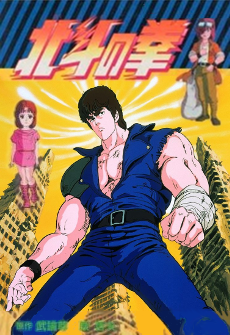
Fist of the North Star was one of the very few anime that I can say really changed the way that I approached life. The characters of Hokuto no Ken, especially Kenshiro inspire me even to this day, and when I'm unsure of the right course of action, I generally ask myself two very important questions:
1.) Is this something that Kenshiro would do.
2.) Is this something that would make Kenshiro go on a righteous rampage that would end with my head exploding and him telling me that "you're already dead".
One may be able to slide by if you can't answer question one in the affirmative, and one really doesn't want to fail question two, just in case Kenshiro finds out what you did.
I have on occasion looked at a heavy barbell that I'm about to deadlift, told the barbell that it was already dead, and proceeded to set a personal record.
I first watched this show many years ago, probably back in the early/mid nineties, long before the modern tropes and current memes of anime took hold. As I've rewatched it a couple times over the years, I can say that it is as fun and as good to watch as the first time, even though it's dated by today's standards.
With regards to the technicals, This is definitely an 80s anime in that it has the art style of the time and the familiar 80s style sound tracks. The voice acting is good for one of the early shows as well. I'm not exactly sure how Kamiya held those "AH-TA-TA-TA-TA-TA-TA"s as long as he did, but the man deserves serious credit. Other major characters, especially Rei and Raoh have great voice actors as well. The theme "YOU WA SHOCK" is pure 80s power rock and sets the stage for what is to come. The ending theme speaks to the loss and tragedy that the world suffers through and the journey Kenshiro is on. For what at first glance is a cheesy martial arts anime (and let's face it, this is definitely a cheesy martial arts anime), there is surprising depth in emotion and feeling watching this show.
The story is a bit of Mad Max combined with old school Martial Arts flicks. Kenshiro was obviously inspired visually by Bruce Lee. The story itself is one of survival in a world post apocalypse. Rule by the ruthless and the strong is the norm, and the weak are cast aside and exploited. Kenshiro is the main protagonist and the show follows him using his powerful martial arts "Hokuto no Ken" style to basically become a messianic figure of hope for the downtrodden. Kenshiro is also an interesting study in manliness, as he is able to shed tears freely when they are warranted, and while it isn't shown often, has a huge heart. He embodies the paladin in ways that many that carry the title can't quite live up to. Kenshiro runs solo by default, yet finds allies and antagonists along his journeys that are as memorable and amazing as he is. It's hard to discuss some of them without running into spoilers, but suffice it to say, the heroes and villains in this journey are memorable and iconic and have their own amazing stories.
The villains in the story that Kenshiro fights run from run of the mill Saturday morning cartoon villains to more complex men that have their own agendas that may be ruthless, but fall a bit more on the grey end of morality. For a few of the antagonists, a case could be made that given the state of the world, what they are doing, while not nice, would more or less be warranted. It is the nature of these early shounen shows that episodic simple villains or lesser lieutenants are sometimes overcome on the way towards somewhat longer battle arcs with a major antagonist.
While I realize that Fist of the North Star may not be for everyone, much like Bruce Lee advised us many years ago it should best be approached with a "don't think, feel" mindset. The show is distilled testosterone and manliness in its greatest form. It's the rise of and fall of powerful men who wish to impose their will on the world instead of just living in it. It's the manly tears that you feel when someone larger than life falls. It's the feeling of righteous justice that one feels when a horrible villain is given no quarter and, much to his inevitable shock and horror Kenshiro tells them that "Omae wa mou shindeiru" (you are already dead). There's something of the pure romanticism in this show behind the overpowered machismo that seems to be missing from modern action/adventure pieces in our postmodern age.
While this show is obviously dated nowadays and is going on 35 years old, and has a few issues due to its age and the general nature of shounen shows; It demands to be watched, if for no other reason than to get an understanding of how the shounen genre used to be and where it came from. Hokuto no Ken is a must watch for anime fans as it has had such a huge influence on the industry, to the point of bleeding into the pop culture of Japan.
This is also a great show to watch to cleanse the palate of all of the pretty boys and cute girls shows that saturate modern offerings and take yourself back to a time where protagonists were not someone that you could simply relate to in their slovenly, yet comforting mediocrity, where things are simply handed to him without anything being done to earn it. There was a time when the protagonist was someone that you could aspire and look up to, because they embody an ideal and a struggle against the odds. Then, after watching a few episodes, you use that manly energy to go build something, lift something, or conquer something.
This show gets an unqualified recommendation.

Everyone seems to have to watch Evangelion at some point, if for nothing else, so that they can wax philosophical about it.
I avoided Evangelion for a long time as I had heard that the director had a lot of mental issues he was dealing with at the time, as well as the anime running out of budget near the end and having a somewhat "interesting" resolution. I was concerned that it was going to end up as too much of a mess to end up making any sense, but after viewing TTGL and a few other Gainax studio mech shows, I figured I should take finally take another look after 10 odd years or so since last seeing it.
Well, I finally ended up getting around to watching the series again, and I have to say that I'm left at a bit of a loss as to how to properly evaluate in comparison to other shows, especially considering my personal reaction was to be turned off by just about everything about it, but also wanting to try to be fair towards what (I think) the show was trying to do.
With regards to the technicals of the anime:
The art is a bit dated, but is actually pretty good for the time. Many of the mechas and angels are unique and interesting to look at. There are issues as the series goes on with reusing things quite a bit, but for the most part, the art is fine.
The sound and voice acting are pretty good. For the material that they were working with, my opinion is that the voice actors did an admirable job. The theme is a classic, and most of the soundtrack choices are nice as well.
As the technicals are done fairly well, it's a shame what actually ended up being presented as a story through the characters just didn't work that well given the issues I mentioned earlier.
Mecha is a tough genre to evaluate at times as it has such a storied history from Gundam on forward. Liking one series doesn't even necessarily mean that you'll enjoy a different season or sequel either. Evangelion is interesting in that it is at its heart, a deconstruction of sorts of the mecha that came before it. A bit more of a surreal version of kids at war stories and what may psychologically be happening. Even shows such as original Gundam deal with this somewhat, but Evangelion takes this theme of apocalypse and the kids fighting against it to interesting places and ultimately has you wondering a bit about what exactly is happening here as the internal and external worlds seem to be falling apart as the story progresses.
There are occasions where art through adversity and stories told through depression make for some interesting looks into the darker side of character development. The problem is that as opposed to creating compelling story material, Evangelion relies heavily on shock factor, faux religious imagery (as the author himself has stated), and self indulgent trips into pointless downward spirals of self pity that become a tiresome pattern after a few episodes.
I think that different people are going to get different things out of Evangelion, but as someone who doesn't, and never has for that matter, had to cope with depressive episodes, I don't think that Evangelion was actually written for someone like me to relate to. I've seen terrible things in my life that I don't enjoy remembering. I've also dealt with emotionally abusive people in many different life situations and while it's sometimes difficult, have developed healthy ways of coping and moving forward. Everyone in the show seems to need an intervention before they get anywhere near their mechs and spiral into chaos.
The major characters Shinji, and Asuka have a host of personal issues and angst that is related to the story, and unfortunately they are surrounded by people and situations that do nothing but enable downward spirals of negative character development for the most part. I was left wondering where the psychiatrists and emotional counselors were hanging out, because it seems like everyone trying to save the world had no business doing so. There are no traditional heroes here save perhaps Misato.
Generally speaking, you need something in your heroes to root for, and while heroes are allowed to be flawed, at some point, you expect them to at least make an attempt to put aside their personal issues for the good of others. Generally speaking, outside of a few acts, this is a show where the heroes never get out of their own selfish, narcissistic, woe is me silliness and things continue to spiral because of it. Having the director going through mental issues during the production no doubt had a lot of influence in this, and it felt quite a bit like watching someone railing at the world at times more than a coherent narrative that actually had some sort of meaningful resolution.
My biggest problem with the main characters was that I kept waiting for the payoff, where the heroes would ultimately step up and become something to aspire to, or at least have someone mature drop the hammer on them, and I was left with a character study of what might happen if you were to throw psychologically damaged and unstable people together and tasked them with "saving the world". It's a pretty frustrating experience from that standpoint. Of course, this was quite likely besides the writer's ultimate point here.
There is a layer of tragedy to the interactions between these broken individuals that could potentially be related to. As I mentioned earlier, as someone who works beyond these issues in life, I found it really difficult to get through the series and relate to the characters. I honestly didn't like any of the characters in this show. I can understand and sympathize with their plights, but as much of it is self-inflicted and driven by choices they make, it's impossible to root for them and eventually they become quite tiresome to watch. Real people would also show some sort of empathy during these difficult situations too. Not once did Shinji ask anyone else how they were doing, he just worries about himself. To be fair, no one else in the story, save for Misato seems to have any basic empathy at all. The characters are so deep in their own issues that they are difficult to relate to as a human being. I kept hoping for some meaningful resolution and growth that never quite got there in the end.
It isn't fun nor is it cathartic (at least for me personally) to watch characters spiral into the depths of despair and self pity and not find some growth to overcome obstacles. It's best to avoid falling into these traps in real life and help people you know suffering like this get help, not wallow in the depths with them. A quasi-military group like NERV would have to understand that keeping their pilots mentally sound and healthy is a top priority to keep them effective, especially when their mental state directly impacts their combat effectiveness. Yet, they just seem to ignore it, or just be "disappointed" when Shinji doesn't want to get in the robot. When they're treated like tools and not people, and the people themselves show little care for others, it's really tough to like them or see them as inspiring at all. It almost seems to be a parody at times with how these people are responding to each other. If these characters are "realistic" than reality is in a lot of trouble.
These problems ended up making Evangelion a slog to get through. As the budget ran out and the story took the tone shift into these downward spirals of character development, I was relying on inertia to get me through the final few episodes. Much has been written on the ending to Evangelion, and my general feeling is that I was disappointed with it for the simple reason that it is obvious that you should "accept yourself and move forward". As I mentioned earlier, any competent therapist could have worked with all these people and got something like that into their minds earlier and saved us all the freshman tier philosophy and pseudo-Freudianism. Budget issues or not, rehashing the characters problems and trying to add some kind of deeper meaning to the narcissistic self-pity was taxing and in the end, it felt at best a cop out, and at worst a middle finger to everyone who hung around.
Much has also been written about the supposed religious symbolism that the show used as well, but I tend to side with the folks who believe that it really doesn't mean much unless you are trying to insert your own meaning as it's difficult to find a coherent pattern to the symbolism and haphazard usage of actual religious lore. I tend to view the religious symbolism in much the same way that I view the Galactic Empire in Legend of Galactic Heroes vaguely Nordic religiousness. It was tossed in there to add a bit of flavor, but not much else. There isn't anything wrong with inserting a personal meaning, as this show leaves you with a lot of questions if you look for them, but personal interpretations are just that, personal.
At the end of the day, I understand why the show is discussed as much as it is, but I'm also disappointed that it's discussed as much as it is as I can definitely see a path towards what happened to more modern anime because of this show. I wanted to enjoy the series, but it felt far too self-indulgent and pretentious and ultimately didn't end up moving me like I thought it might. I was pretty disappointed in that as the actual conflict with the mechas and the behind the scenes political intrigue gives this show the tools to be great, yet the overall themes I mentioned clumsily derail the train into a psychoanalytical mess of sorts. The later rebuild movies make this far more explicit, which is likely why they get mixed reviews from Eva fans as well.
For mecha, Tengan Toppa Gurren Lagann is a better (albeit cheesier in a great many ways) mecha story by the same studio. I have rewatched that show after Evangelion and have a deeper appreciation for TTGL reconstructing what Evangelion deconstructed. Simon from TTGL is a flawed character in terrible traumatic situations in a crappy world who finally ended up "getting it" and stepped up in meaningful self-actualizing ways. Shinji... well, I just don't know. I'm sympathetic with the poor kid, as it's an impossible situation and his colleagues certainly don't help, but I don't watch giant robot fiction to be disappointed with the protagonist's lack of development and triumph over adversity. At the end of the day, I believe that an anime ultimately stands on its entertainment value. Evangelion was a chore to sit through. I didn't hate it, I certainly didn't like it, but I was very happy when I finished it and could check it off the list of "must sees" as I really wasn't enjoying it all that much and was a bit frustrated by how it ended.
The rebuild movies add some meta context which I'll spoiler as the 4th rebuild movie has only been released in Japanese as of the time of this writing. I saw the movie recently and have a few additional thoughts on the series that I'll spoiler. I won't give away the broad details of the movie, and I offer a deeper overview in my review of the second rebuild movie to flesh out these thoughts a bit more.
After watching the full rebuild series, including 3.0+1.0 in Japanese, it becomes far clearer what Anno's intention with this story is. The arc through 1.0 simply being a remake without comment, showing us how things were. Not much needs to be commented on as it's mostly the same as the original six or so episodes of NGE. The second rebuild showing a more idealized look at Evangelion, complete with personality changes and an almost rom-com feel at points. Showing us that we're not advancing at all, and falling back into empty escapism with Shinji and his headphones. The unfortunate connection with more modern anime can easily be seen here, as Asuka and Rei become harem protagonists showing affection for Shinji and the addition of Mari, who is so out of place that's it's amusing. The third movie showing us the consequences of this escapism, where nothing changes in 14 years and we actually fear changes and moving forward. This is clearly seen in Shinji's interactions with Kaoru. Shinji refuses to move forward while the real world moves on without him. Finally, the 4th movie, which ultimately ends with Shinji accepting that things need to move forward and that it's best to leave Evangelion behind and live life and progress. This series is ultimately Anno's journey through depression and out again and realizing that the world is worth living in and him not so subtly telling the fans that's what we need to be doing too.
Really, if you came for the robots and political intrigue, or perhaps enjoyed trying to decipher what all the religious symbolism meant, Anno doesn't have all that much of a coherent answer for you. Show it to 5 different people and you'll get 6 different interpretations of scenery that was added essentially "to look cool and be different". Evangelion seems all along to be a big therapy session where Anno pours out his mental issues and ultimately tells us to go outside, get a cheerful big boob girlfriend, and move forward in life. Much like the man himself did. Good luck everyone! Sabisu Sabisu!
It's tough to recommend people avoid something like Evangelion, as it is discussed so much that just about everyone who gets into this medium is going to be exposed to it sooner or later. There is some merit is seeing it if for no other reason than to help connect the dots on how anime was affected by it, but I don't consider this to be a show that I can say I enjoyed. There are also works that offer different endings, such as End of Evangelion which can add a bit more context, but as a stand alone series, Neon Genesis Evangelion is a bit of a hot mess.
Best I can offer as a final thought is to go in without preconceptions and see what you get out of it. Hopefully it is more enjoyable for you than it was for me.

Legend of Galactic Heroes (LoGH) is one of my favorite shows in any genre. There can be a tendency for fans of certain anime to overly praise things that aren’t that great as some kind of “too deep for you to get it” masterpiece of writing, so I was a little wary heading in to this one. It turns out that in this instance, the brigades singing a show’s praises are (for the most part) absolutely right.
Shows like this are a balm for anyone tired of the endless parade of cute girls doing cute thing shows; or tired of watching shows where the protagonist ends up being a lazy, whiny, good for nothing who just has things in life handed to him or her for no discernable reason. This is a show about galactic history being made and unmade by great men and women and the difficult decisions that accompany all such struggles.
LoGH, when approached with the right mindset, is one of the best space operas that has been put on film. While it’s not perfect (what is?), it is one of the best animated fiction stories that I’ve had the pleasure of sitting through.
There are some problems and challenges with the show, and these may end up making the show tough for some to watch, so I figure I’ll get these listed and out of the way.
1.) The artwork and animation are dated. While I don’t think that this is a show that needs to rely on flashy visuals to tell its story, this is a 30-year-old anime and shows its age.
2.) This is a dialogue heavy anime. There are a great many scenes where major characters sit around drinking, philosophizing, scheming, and occasionally bullshitting around. LoGH tells its story to you through these conversations and doesn’t rely heavily on narrative recaps or other exposition. Exposition is there at points, but this is a show that you have to pay attention to in order to understand what characters are thinking and doing. With the dated visuals and animations, this isn’t going to be a flashy style over substance show.
3.) This show demands a lot from the viewer. While I think that anyone can enjoy the show if they enjoy a space opera, the more historically educated the viewer is, the more they will get out of the discussions. (Knowing a bit of Prussian history helps a LOT with understanding the Galactic Empire for example). You aren’t going to be pandered to with nonstop flashy action sequences (see problem 2) so it’s a little tough to turn your mind off if that’s what you want to do.
4.) At 110 episodes, this show is an investment of time. While there are a lot of shows out there that go longer than this, those looking for something quick and light to watch aren’t going to find that here. This series takes its time to build up the characters, factions, history, and battles. I feel that this show is worth the investment, but some people aren’t going to like the fact that it’s going to take quite a few sessions to get through this one.
That out of the way, regardless of one’s preconceptions, if you have any serious interest in history, political philosophy, space opera fiction, music and its role in narrative, or heroic character studies, then you owe it to yourself to watch this show. As I said, this show isn’t perfect, but it’s a tour de force that becomes greater than the sum of its parts the more you dive in and invest your time. There are other shows that can do certain of the themes I mentioned earlier in this paragraph better than the way that LoGH does, but it’s very rare to find a show so well rounded and constructed that it ends up doing all of these things at such a consistently high level.
Without spoiling anything major, at a broad stroke the series is about the political and military confrontation of an autocratic Galactic Empire and a democratic oriented Free Planetary Alliance group in the major arc. There are other minor political/economic interests that have their own loyalties and diplomatic ties, specifically a nominally neutral trading alliance based between the two major factions, as well as a religious cult that operates behind the scenes and has its own agenda and goals.
What makes the show as compelling to watch as it is has a lot to do with the fact that we’re watching case studies of great men who struggle against their factions decaying political institutions. It feels like you are observing great history in the making, being along for the ride if you will, following interesting characters who very much become heroes in the classic sense of forging their own destiny and trying to remake their world and their place in the universe. There’s a bit of Joseph Campbell in here, as well as Machiavelli and the other greats of politics to deal with as well, but it’s up to the viewer to discover the themes themselves.
I think that the beauty of LoGH is that it doesn’t come right out and tell you that one faction or way of doing things is “the correct way”. Much dialogue is spent debating the merits of democracy vs. autocracy and the major players in this historical drama each have their own opinions and are well versed enough to engage in the ramifications of each system and its strengths and weaknesses.
There is also a distinct level of respect and decorum towards the other faction that harkens back to earlier times in our own history where opponents were treated with dignity and honor. This ends up doing the viewer a great service by not reducing the different sides to an obvious paragon of all that is good and virtuous, and their cartoonish villainous counterpoint who manifests all that is wrong and evil and probably kicks puppies for fun.
LoGH doesn’t seek to spoon feed you the answers or give you an obvious team to “root” for. LoGH respects your intelligence and lets you watch and make your own decisions as there are good and bad folks on each side. It also does this in a way that one doesn’t need to be versed in multiple languages to read the original works of the great philosophers and political thinkers to have an understanding of what’s going on either. The show’s dialogue ends up being presented in a way that those who don’t care about reading up on history or politics can easily follow along perfectly well. It can also be appreciated on a different level if one does understand these things as well. Even having a good knowledge of classical music and how the pieces tie in to the mood and what’s going on screen, while unnecessary to enjoy the show, will open up another avenue of enjoyment that one could explore as well. The show layers this complexity in a way that never reaches the heights of pretentiousness that some other pieces end up wallowing in. There’s little that’s shown that doesn’t end up building the narrative or fleshing out characters in a reasonable manner.
With regards to the great characters of this show, they are almost too many to list. Yang Wen-li and Reinhard von Lohengramm are great faction leaders. These are great men by deed and accomplishment, but also have realistic and somewhat tragic weaknesses that make them human and, in many ways, relatable to us. They are also the two premier military minds of their respective factions and watching their strategies unfold is great. That’s not to say that these two steal the show all the time, however. There are other great characters that all have their own development and strengths and weaknesses to work through. You’ll have favorites and those who are memorable as the show goes along. The voice acting is great and emotional, and in a dialogue heavy show like this, that’s a blessing. There are a ton of great voice actors in this, and they do a great job of making their characters and their personalities come to life.
LoGH doesn’t pander by having characters act in ways that are outside of their character (at least not very often) for plot convenience. Characters who succeed one show by aggressively attacking may end up being hoisted by their own petard in a later episode by acting in a similar way. Most of the characters follow their principles whether or not it actually leads them to the correct choice or not. Watching the chess games between people trying to outguess each other’s strategies plays out well and you get the feel of watching a giant chess match between great military generals at times, even if on occasion, you do wonder about the success rate of certain characters. It actually ends up making you think even more about what is and is not the right course of action to take in certain circumstances. Some decisions that seem like admirable adherence to principles or really smart at the time actually come back to haunt later in the series as well, adding another layer of depth to the overarching philosophical questions that are constantly raised.
There are other minor things that make the show great as well, such as the pacing and world building, which may seem slow at first, but actually works out really well by showing how the major players interact and what’s going on behind the scenes. Occasional episodes will fill you in on the history and direction of both factions, so you eventually become your own expert, and you are never wondering about the background details of the story or how things got to where they are. You understand how you got here, and where things are going. Coming from some other shows that simply exist as manga or light novel advertisements, where background information is sparse, sometimes nonsensical, or requires you to read novels, manga or wikis outside of the program to understand what’s really going on this is refreshing and makes you feel like you’re watching something where the author actually understood how to tell a complete story.
The soundtrack of classical works always ends up complementing what’s going on screen and captures the mood quite well. You’ll hear soaring themes during battles and major moments, and you’ll hear great pastoral music when characters are off in the countryside. Having a bit of knowledge of the great works isn’t necessary to enjoy the music, but students of music will smile at how well each piece of music’s theme goes along with its scene. A full soundtrack for this show would be deep and broad, as there are generally 6-10 pieces over each of the 110 episodes.
It’s been said by many that LoGH is Star Wars done right and while I don’t think that LoGH is trying to do quite what George Lucas’s series was trying to do, the statement has merit. There have been some great space operas over the years, but few are quite as thought provoking and entertaining as LoGH. Once again, this series is a must watch for anyone looking for a space opera that will stick with them and give them things to think about for years to come.
There is no perfect animated series out there. However, Legend of Galactic Heroes rightly deserves a spot in the upper echelons as a champion that transcends the medium. I can’t recommend it enough.
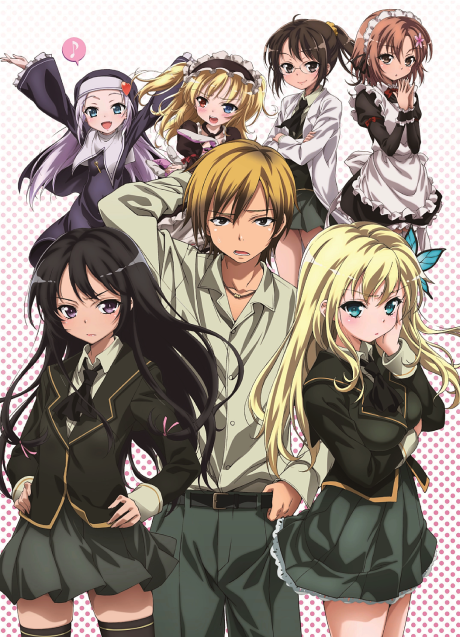
Boku wa Tomodachi ga Sukunai is a show in the slice of life school genre which is focused on a high school club of people that for whatever reason or another, have some trouble making friends. Hence the name of the show. It's also a rather thinly veiled excuse at a harem romance comedy as well.
With regards to the technical aspects of the show, they are for the most part rather good. This is a well drawn anime with good music and sound effects. The voice actors do a good job with the characters and have a decent range of emotions so that this feels like a pretty good production. The fact that it was a light novel adaptation and ended up with a second season says something about the show's success and relative quality, as many of those do not get reupped as they are pretty poor.
The show stands slightly above many others in the genre due to the strong personalities of the characters. Most of the main characters in the club have difficult personalities that make them hard to get along with. A lot of the fun of this show is watching the characters interact, overreact, and maliciously and jealously push each other's buttons repeatedly. Two seasons is also enough time for there to be some development of the personalities and back story for many of the main cast as well. As much as the main characters have trouble getting along, they do eventually end up becoming if not "friends" at least comrades and their opinions of each other evolve quite a bit. One could make the argument that most of the characters do lean quite a bit on certain character tropes, but as the series goes on, there is enough hints of development that it can be overlooked and you begin to enjoy the characters more.
The show doesn't quite make it into the greatness tier because it is held back by taking an interesting concept of a club of misfits and turning it into a harem fantasy comedy as the show goes along. While there isn't anything necessarily wrong about this, the show could have been even better had it stayed a bit more on the topic of terrible personalities trying to navigate social issues and making friends, with a few more dudes thrown in to balance things out.
At the risk of some spoilers (hint, spoiler alert) While many people discussing the show tend to have a strong opinion on who should win the MC bowl here, I sort of ended up wishing that the main character would ignore all of them indefinitely. Unfortunately, that becomes very hard for him to do.
Beyond my personal opinions of how the romance angle is handled, this show is one of the better entries in the slice of life genre. It is genuinely entertaining to watch and is silly enough to make for a nice guilty pleasure or easy to watch show. One of the major things that I look for with regards to whether or not I should rate a show well is whether or not I'm genuinely enjoying it and I can say that it was a fun show to watch.
The second season is also a bit stronger than the first season and I found myself really enjoying the show more by making the full investment, even if the ending was a bit abrupt as they didn't catch up to the light novel (which is typical for a show of this type).
Beyond that, there is some value in a show like this in understanding that even people who have trouble getting along with others still seek companionship and relationships, even if forming and maintaining them becomes hard. Many of the show's character's personalities make their friendless predicaments pretty easy to understand, but the fact that everyone in the show does want to belong to something and have friends that they can talk to is something that I think anyone can relate to. Being a bit of a misfit is not easy, certainly not so in the rigid culture of Japan, so there may be a bit of a cultural commentary going on here. However, It's hard to get too philosophical about a fanservicey school rom com through, so your mileage will definitely vary on this.
Personally, I think that if you're looking for a somewhat better show in the genre and like the misfit friends angle, Toradora is a somewhat stronger entry. However, Boku wa Tomodachi Sukunai can be very entertaining if you can look past its shortcomings. You could certainly do a lot worse, as there are a lot of boring mediocre entries in the genre.
In my humble opinion, it's worth a watch.