— — — —— — —
×
— —— —
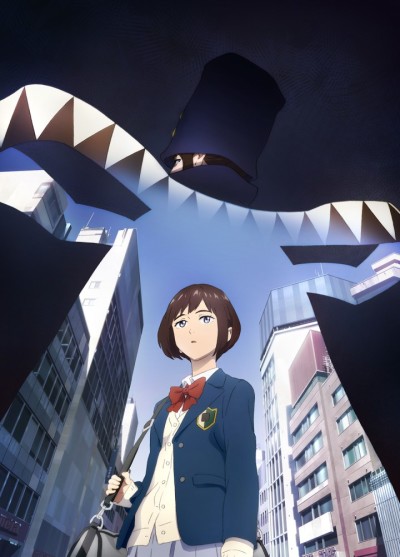
To give the reader a brief and concise rundown of this show and what to expect from it: it involves a series of 'cases' that span several episodes each, where a new 'threat' to humanity makes itself known—in the form of a new 'power' or 'ability' evolving in a person and being used—that threatens to disrupt the status quo of society. From there we see how these powers and the world, as well as the leading character Boogiepop—a product of these new divergent "powers" itself—interact with one another, with the abilities often being complex and powerful, and the people—and at times reality—often changing with them. Due to this natyre, more often than not these powers need to be 'overcome' by humanity, and with each case—other than Boogiepop and a select handful of recurring characters—introducing a new set of characters affected by the power, whose task is to overcome it. The presentation of each case is often non-linear, requiring at least some attention to make sense of, but with a fairly typical story structure despite that—with always a clear beginning, middle, and end, and very well defined story beats.
What makes Boogiepop as a story so special and great, is that in this world full of such mystical and grand characters, powers, and organizations, it always just comes down to the common people rising above to overcome the threats faced. Despite what it might look like initially, 'Boogiepop' the character, however powerful they may seem, is quite literally a phantom within the plot itself—without ever really having much of a defining impact on the world or result themselves. They are only ever there so much as an emphasis and guide for the ordinary, everyday human characters of the story to shine and do their part, and to highlight their greatness and potential. It always invariably ends up relying on them, and their actions and qualities.
Even with all its dark themes and world—and most of its themes are dark—at its heart ' Boogiepop and Others ' as a story is ultimately very optimistic. It's a celebration of humanity and our 'possibility'. On the surface, the author does depict humanity "evolving" with these fantastical new powers and abilities, but it is ultimately always in the mundane yet concerted, ordinary and human-achievable actions through which they are overcome, and through which we truly 'evolve' and move forward as a species. Those powers, much like Boogiepop, only serve to bring these out and shine a light on what is otherwise very grounded human feats.
I'd recommend ignoring the ratings and giving this show a try if this sounds interesting to you, or if you especially love amazing soundtracks (courtesy of Kensuke Ushio of Devilman Crybaby, A Silent Voice, and Ping Pong the Animation fame), heavy atmosphere, and thoughtful, moving thematic exploration. This show isn't designed to be loud, flashy, or mass-appealing—the beloved cult-classic Boogiepop novels aren't that kind of story—the heights and climaxes of the story are built slowly, often in a non-linear fashion, and are only really going to be rewarding if you're following the themes and can empathize with the characters and ideas they present. For me, it was and is a highly rewarding, unique, and emotive show, beautiful in the passion of its writing and execution—and extremely rewatchable with all its amazingly developed thematic peaks and moments.
It's that type of show you find yourself replaying tracks and moments of, weeks, months—even years after. Certain moments and stories from this I can't see myself ever forgetting to be honest. It's been over four years now since I first watched it, and I'm still passionate enough to write this review on another revisit.
-- slight spoiler talk follows from here, where I rant in torrential form, but minor detail, about one of my favourite arcs, leading to a conclusion --
Perhaps my favourite episodes and story in this, and that which I feel reflects the series' best, is that of episodes 10 to 13. The arc involves two 'synthetic humans'—'tools' of an organization used to carry out their dirty work, and search for and subsequently eliminate threats—reaching self-realization as they come to critical points in their lives, where the growing 'bugs' of guilt, doubt and questioning inside them overwhelm and threaten to blossom. It shows us the critical events in their history leading up to this, and the humans that changed them; the humans they killed, and were sent to kill, as well as, in the end—their defining moments—and the humans they save. It is a story that contrasts some of the best of us coming to be the worst, with the worst of us coming to be the best, in each of the characters' defining moments. It focuses on the messiness of us as beings—and the potential beauty that such things as guilt, regret, and otherwise minor interactions and interrelated events can come to lead to. The unpredictable causal chain of our lives that can lead us from the best to the worst, and from the worst to the best, giving the ever-present chance for us to aspire and grow, and to change directions as people—rising above circumstance history—and achieving a new definition in the story of our lives. How such a simple thing as Nagi Kirima's brief but sincere words of enthusiasm and support to Scarecrow, and his aspiration of becoming a crime-tackling hero, can further sprout an invisible but infinitely entangled and complex series of events that end up affecting every character's path in the story.

It's an incredibly heartfelt and emotive story, and what Scarecrow, and later Mo Murder both come to do in this arc, and the place they get to, represents the most beautiful thing in the world and of us humans to me. In but two such short, brief moments, all their development, history, and lives as synthetic humans come to a head, and they each achieve the most human of acts—they opt for danger and self-sacrifice for the sake and rescue of another. To do such an otherwise illogical and risky, but good thing for another; all in a situation where the other party will likely never even learn about or appreciate it—or they likely won't live through to see it blossom in any way. And to get to that result—and not regret it or the loss of everything in your final moments...
It reflects us rising above our urges, instincts and base desires. We as animals. To act in such a way against our very selves and self-preserving nature. No other being in the world can manage this, certainly for what's little more than a stranger—it is our gift alone. And we with all our intelligence and sentience so rarely manage to achieve anything close. But rarely, every so often, we do manage it.
It must be when we listen to that little 'bug' inside, no matter how small and crushed down it may have gotten over the years, that just wants to do and be something good for another like us. The chance doesn’t come around often, if at all for most of our lives, but when it does—and we manage it—it can only be when our hearts are at their most beautiful point. When we 'break through' and become something more than just the sum of our animal parts and our history—where our sentience, will and humanity are realized in but a moment. When we do something just for the intangible concept that is the principle.
“Would you be able to cast your regret aside and return again? Return to the moment when your heart was at its most beautiful?”

Sure, there are plenty of stories with characters and much greater 'heroes' in them that put others before themselves, as well as sacrifice themselves. Such a thing isn't very unique to this story. But here, it is made especially profound and emotive as with both characters' stories, you see every beat that leads them to their resolutions, where they start from—very low; flawed and morally troubled, chained to the orders of an organization—and where they end up. That 'bug' inside them growing and steering more and more their actions.
Nothing especially "big", different, or dramatic ever happens to the characters to change or set them on this course either. Just a long series of small events, thoughts, interactions, words... It isn't clean—their heroism—and certainly not very 'cool' to watch, it's quick and messy, and there's not really a happy ending to be found in the story either. There's even a struggle with regret and doubt after said heroic acts. And neither manages to 'absolve' themselves in the story or any of the things they did wrong and the crimes they committed... But it is in this messiness and harsh reality, and in seeing their journeys and inner turmoil play out that something extremely believable and compelling is found. Something that sticks out and stays.
It is often said that without fear there is no bravery, or—the more fear that exists, the chance for greater amounts of bravery—and I think that logic holds for acts of greatness and heroism as well. Great characters achieving and doing heroic things is... great, but to write terribly flawed and damaged characters achieving heroic things, and showing that journey believably, I think, is much more special a thing, and Boogiepop does it perfectly here.
“Humans do not possess a single, focused will. They just have countless bugs buzzing around in all directions inside their hearts. It's fine when all these bugs are headed toward the same meal as one, but when they split apart... People take actions that can only be described as incoherent.”

There are countless cases one could learn about, throughout all the great conflicts, depressions, and tragedies of history, where everyday people, assuredly flawed people, manage to break through our nature and achieve this, and undoubtedly countless more forever untold; locked away in the everyday noise, or the long and unseen history of the world. Ordinary people sheltering the persecuted and knowingly facing death and torture for it, people running into fires, and firefighters running up burning skyscrapers... Teachers shielding their students with their own bodies, and soldiers jumping over grenades just to save their comrades and friends... Starving brothers giving the last morsel to their starving sisters, and personnel going down with ship or reactor, just to save and protect as many as they can in the role that only they could fill...
If there is a God—or an audience of our experience out there—I am sure this is when they are their most proud, shocked, or affected. Like you or me, who watched the brief stories of 'Scarecrow' and 'Mo Murder'. It is where our souls and characters are truly seen and shining. A soul developed bit by bit over a lifetime, achieving definition in one tiny, beautiful moment, with the decision to do away with self-preservation, the fundamental law for all life, and to hurt or lose ourselves for another like us. These events are not fiction, flukes, or one-off anomalies, and such transcendent beauty is an irrefutable possibility within each of us. Even in the worst and most hopeless among us—as were the characters of Scarecrow and Mo Murder.

If we could control time, and observe with our own eyes our history - the lives of these people, and these events - it is where I would go. How many journeys would it take, I wonder—being confronted with and seeing first-hand those undeniable acts of purity—to hold unshakeable belief and love for life and humanity.
I think, just one...
The 'Boogiepop and Others' story, as mentioned previously, is about the greatness of humanity. And nowhere does it achieve this focus and message as perfectly as in this arc for me. If nothing else, I am sure the story of these characters and the themes of Boogiepop will stick with me for a long while still. Though I feel I could just as well rant about the other stories and themes of Boogiepop and Others. They are all explored in such a satisfying and rewarding way correlating to the amount of attention you give it, with the right amounts of subtlety and scope to never come across as heavy-handed or convoluted. The ideas presented and the messages contained always feel perfectly complete by the end of their respective arcs, with compelling presentation and, in my opinion, very profound and memorable conclusions. It is a great feat of the writing to be so compellingly positive in such an otherwise dark and murky story and world, with so few if any 'happy' endings or especially 'good' characters.

In a world now so chock-full of stories and shows of superpowers, heroes, and heroic feats, I think 'Boogiepop and Others' remains truly special. It contains the same exciting displays of power, intriguing mystery, and excitingly powerful and dangerous 'villains' and bad guys, but not very far into its heart does it do away with all of that, using them instead rather explicitly as storytelling vessels for what it really wants to develop and explore, telling of much more grounded stories and characters.
Thanks to this laser focus it takes much less time than other stories to achieve what it wants to, and it is much more special as a result—packing far more breadth and depth, with a lasting sense of mystery and intrigue to the world, and with a far more powerful, memorable, and motivating sense of positivity and hope than just about any other 'super' story out there.

From a mid-twenty-something suffering a quarter-life crisis, feeling depressed and meaningless in the post-education, office-life monotony of the world; to a naturally caring, vulnerable person being forced to change in the financial reality of their world and being stuck in a vicious MLM scheme; to someone suffering a clash between chasing their passionate but unlikely dreams and the responsibility they feel as the sole heir to their family's business... I love all the characters and stories this show explores. With every character's arc, I find myself developing so much sympathy. It's a huge credit to the show that they're always written in such a believable, hard-hitting way despite all the comedic elements and exaggerations of the story and characters.
This show is deceptively smart in the exploration of its themes, and its ability to create comedy from them—even of its darkest themes—without coming across as reducing their depth and weight. When it comes down to it the show at its core is really just 24 episodes of a guy learning to get up, out, and get a job—and it manages to remain captivating, relatable, and emotional throughout despite that. This is definitely in large part owing to its writing, but also to its wide range of interesting and unique character and story concepts that always serve perfectly as case studies for its thematic exploration. This show is also greatly served by a highly emotive and diverse soundtrack that is well utilised, being in balance with its quieter moments and never coming to feel overplayed. As the show develops certain tracks come to carry so much weight and emotion in them because of this. It's been several years now since I first watched this show - and I continue to regularly come back to many of them.
I first watched this show at a very dark period in my life, and I credit it a lot for what spurred me to get out of that pit I was in. It spoke to me in a way no media had before—it felt direct, personal, and understanding—and it shook me. It owes to the author's situation at the time of writing it, having actively been a 'hikikomori' (recluse) himself. It's a story that 'gets it'—the experience. The stupid yet routine mental traps and hang-ups you can't quite seem to defeat. The perpetual one-day vows you make to yourself. That feeling of waking up in the evening and enjoying the bittersweet quiet of the night at the loss of another day. The appeal of the all-absorbing distraction in degeneracy. The cyclical nature of depression and anxiety, and the underlying, always horribly self-aware selfishness and hypocrisy that forms in those swirling pits of self-hatred and self-pity...
It's dirty, dumb and over-the-top, and certainly quite crass at times, but it's never without strikingly real and emotional thematic exploration and moments that make it all worth it. The main character is undeniably a loser—seldom acting anything other than pathetic and lazy—but he is also someone shown to be genuinely struggling and wanting to be better. The disgust and frustration you feel toward him at times is always quickly replaced with sympathy as the show gets you to understand him better and makes you see yourself and the undeniable human in him, bit by bit, through his thought processes and his interactions with the characters that surround him—however exaggerated they both can be.
I love how the story is set in motion with just a smile and the tiniest bit of persistence—a tiny flicker of hope that spurred a little bit of bravery and one small step forward. And I love how it all regresses in just the next episode. I especially love how the show handles the female lead. You'd think she'd be a huge detriment to the messages of the show, but she's not. As she never proved to be the answer for Satou. The idea of her is not even 'real' in the show.
This series and its soundtrack always make me emotional now. I'll always be able to relate to it on a deeply personal level that so few things ever manage to reach, with it forever serving as a reminder of that phase of my life—and the pit I've gotten out of. At the same time as all this praise, though, I find I only ever recommend it to a person if they're at a point, or have been at a point, where they've felt genuinely lost, alone, and/or rejected in their culture, and experienced the same mental illnesses that might lead you to shut yourself away from society. It's not that enjoyment won't be found otherwise, but that this is a story which in many ways is specifically written for those people—for them to relate to. It's written by one and rather implicitly written to form a message to others like him.
Welcome to the N.H.K. is 'Life can kind of suck sometimes, can't it?' the anime. It's deeply relatable and often tragic, but at its core, it is about realising that moving forward and taking our own steps through our struggles is really the only option we will ever have to finding anything truly worthwhile and fulfilling. No 'Misaki' will come and 'rescue' us, and no other answer or special 'conspiracy-based' calling will ever actually appear for you either. And you'll almost certainly regret running away from it all in the last moments if you were to try. To pull a quote from the show, "A drama has a progressive plot, an emotional climax, and a resolution, but our lives aren't like that. All we get day after day are a bunch of vague anxieties that are never really resolved."
It's a narrative that ultimately reflects how people are all damaged to some degree, in their own different ways—all of us dealing with our own unique set of failures, shitty circumstances, and mental hang-ups—so often making us act hypocritical and selfish, but all just earnestly trying to chase the same basic stuff: acceptance, love, and fulfilment... No one is really that alone or unique in that reality, even if the situations and hang-ups we face are completely different from one another. It can be a horribly disappointing, but necessary first step to take, accepting the truth that - we're not special. Because if we're not special - we're also not alone. In our struggles or our feelings. And there's ultimately comfort to be found behind that realisation, no matter how hard it is to accept the cold, harsh reality that may come with it.
Welcome to the N.H.K. is a story about moving on. About learning to accept your own damage and reality for what they are - and picking up the pieces.