— — — —— — —
×
— —— —
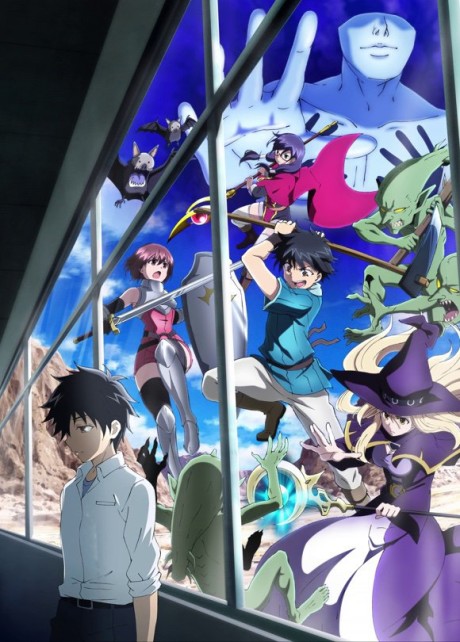
What first attracted me to this anime was the title. I'm Standing on a Million Lives. I just had to know, would this story have a plot as evocative as its title? After finishing the first season, my answer to this question is mostly yes.
I'm Standing on a Million Lives is an isekai in the vein of works such as Welcome to Japan, Miss Elf and Shunkan Lyle in that they travel back and forth between worlds. Wherein a prototypical isekai work the other world serves as an escapist backdrop for the hero to play around in and usually come out on top, with accolades and an arm-full of women I'm Standing on a Million Lives is different. The isekai world here functions a lot like a game, (Hitman in particular) but its purpose is not to give the heroes a playground where they can traipse around and feel good about themselves by winning at life. The heroes here fail. A lot. And the choices they are forced to make in the other world are sometimes deeply uncomfortable or traumatic. In direct contrast to works where the other world is the escape, here the other world forces them to directly confront aspects of their selves they'd rather turn away from.
One of the things I found fascinating about this work was that many of the aspects of the other world can be read as metaphors for what the heroes are going through in the real world. Yuusuke, Kusue and Iu are children on the cusp of adulthood being forced to choose a path for themselves for the rest of their lives. The other world is a place where they can explore their options and experience which path is right for them. Yuusuke who doesn't know what he wants to do in life can try out many different jobs to see what is right for him. Although it may look like there is only 1 clear way to clear a task there are actually infinite possibilities and as long as they look for a way together they can achieve it. I'm Standing on a Million Lives opposes the idea of a solitary hero. This isn't a game they can win by working alone. Although it may take them all taking their own solo journeys at certain times they are all working in concert to achieve a goal for the collective group. It asserts that working together is not only the best way to survive, it's the only way.
Notice that I've been saying "heroes" and not hero. That's because I'm Standing on a Million Lives has no one single hero. It's an ensemble cast and each of the 4 main party members established in the first season are fully realized characters. One gripe I often have with isekai properties is that the female characters often feel like props or simply static archetypes. That is absolutely not the case here. Although there are 3 female characters and 1 male in the ensemble it is NOT a harem. The girls don't hate Yuusuke but they certainly aren't tripping over themselves for him either. These girls have their own goals, desires, insecurities and flaws and the show gives them the screentime to have their own time in the spotlight. We, the audience can't count on any one character always saving the day because in their own ways, each party member is the main character of their own story. And this made for a much more engaging watch since you never actually know how things are going to play out. The 4th party member, Yuka was less developed than the others on account of showing up later in the run-time but I still found her nuanced and very likeable all the same.
All in all, the characters in I'm Standing on a Million Lives were standout and ultimately serve as vehicles to disseminate the main point of the story as a whole; what is the value of a human life? So the series asks this question but does not commit to fully answering it. I'm leaving room for this to be explored further in the second season but I personally felt that it could have been a stronger running thread throughout the entire work and been more effective overall if more of the plot threads revolved around this idea. A lot of the backstories and character motivations don't directly address this and it really only starts to become more relevant once the plot twist is unveiled. That being said when asking a question like "what is the value of a human life?" there is the potential for the story to get really bogged down and unbearably depressing like Bokurano did so I'm actually really grateful for the amount of brevity we got in I'm Standing on a Million Lives. Although there were some pretty bleak and depressing moments the showrunners somehow managed to keep the overall tone light and airy with some well timed gags and colourful character quirks. In this way the show manages to be thought-provoking without being preachy or hitting you over the head with its morals.
I have some qualms with the series like Yuusuke's character arc being kind of all over the place but the things I liked about it vastly outweigh my gripes. Quirks like being able to equip any equipment from previous jobs that have been mastered and not being able to pick up other people's weapons were so charming to me. It's not just a silly wish-fulfilment fantasy romp, there is real substance here and commentary to be made on society and humanity as a whole. Overall I found I'm Standing on a Million Lives to be utterly engrossing, thoughtful and hilarious at the same time. And hey the very fact that this is an isekai and I liked it should be considered extremely high praise. Can't wait for season 2!
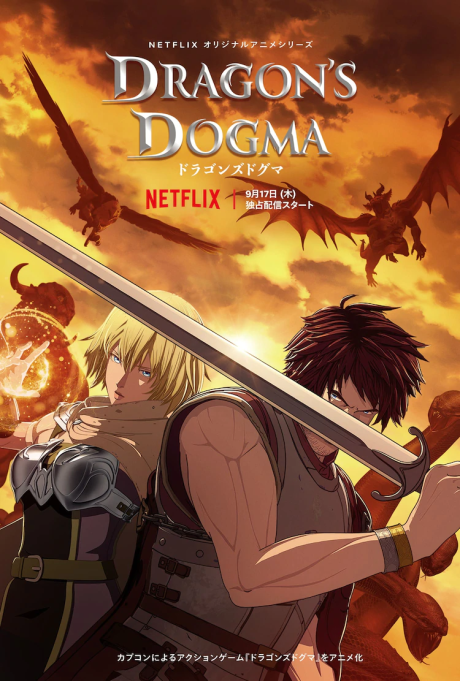
Let me preface this by saying I have never played the Dragon's Dogma games, so I cannot say whether this is a good adaptation or not. All I can say it that it was a bad anime. Not a spoiler free review.
What do you get when you simultaneously try to combine a gritty and dark fantasy world with Reading Rainbow style moral lessons at the same time? That's right! We get this shitty anime!
So in this anime they had the brilliant idea of having an episodic revenge tale with each episode representing one of the 7 deadly sins. I don't have a problem with this concept but the problem lies in how poorly it was executed. Each episode absolutely hammers you over the head with the moral lesson of the episode from, "greed to bad", to "lust is bad" all the way to "doing drugs is bad, kids!". I'm not kidding episode 4 is actually just randomly an anti-drug PSA. Meanwhile since it's episodic and there's only a very weak overarching plot the main characters actually receive very little in the way of character development.
So our main character Ethan is your prototypical angry guy protag out on a quest for revenge. However since he actually has about as much personality as a bag of bricks (as do most of the characters in the series) I don't actually give 2 shits about his quest or whether he succeeds or not. His travel companion Hannah was a little better but her personality was kind of the lack of a personality so that's not really saying much. Basically I can see that they were trying to have Ethan and Hannah go through parallel and opposite character arks where Hannah slowly gains humanity over the course of the series while Ethan loses his but it was handled so poorly that I don't think most viewers will even notice that (or care frankly).
To be honest, the random 1 off characters from episode 3 got more character development in 20 minutes than Ethan did over the entire course of the series. Moreover, I'm really upset that the ONLY 2 interesting characters in the show got killed off in the stupidest way all for the sake of pushing their stupid 7 deadly sins theme. If they didn't try to shoe-horn this theme into the writing of each episode I think the writers would have had more freedom to make more interesting 1-off stories. And speaking of the writing the dialogue in this show was a big problem for me. The lines of the characters were SO stilted and unnatural sounding that I honestly felt like they were just lifted straight out of the video game. I thought the dub was competent but the voice actor's really weren't given a lot to work with here. (Also I'm still really confused about why all the other characters had that stereotypical medieval-fantasy world accent but only Olivia didn't?)
Usually in a fully CG anime like Dragon's Dogma it'll at least be buoyed by something like strong character writing or impeccable directing but Dragon's Dogma really missed the mark there. Not only is the CGI here god ugly but it commits the sin of having 2 different cg styles that totally clash with each other. The models for the humans aren't the prettiest things to look at, and the lip sync looks super weird on them but you can get used to them pretty fast. The monster designs on the other hand look horrendous and the art style of them is totally different from the humans so it's incredibly jarring to see them interact together in the same space. The monsters truly look like they were lifted out of a bad PS1 game and this is really unforgivable to me. If you are going to have an anime called Dragon's Dogma at least have the dragon look good. But no they couldn't even make a decent looking dragon even though it's the big final boss they hyped up over the entire length of the show.
Speaking of which that final battle was a huge let-down. To me this series was really trying to be Castlevania but just could not be and this is never more evident than the final battle. See the battle against Dracula in Castlevania worked because Dracula's castle was an inherently cool setting, with interesting locations for set-piece battles. However, Dragon's castle in Dragon's Dogma could not be more generic and boring if you tried. Moreover, a large part of the appeal of Dracula's battle was the camaraderie that was forged between the cast over the course of the series, but Ethan and Hannah never really develop any sort of bond over the 7 episodes. Also while there were people with cool weapons and powers in Castlevania, Dragon's Dogma's Ethan is just....Some guy. Sure Hannah has magic but Ethan doesn't. There are other human characters that are shown to have cool magic weapons in the show but Ethan just has a normal sword. His only power if you can even call it that is just getting mad?
From start to finish I really consider watching this show to be an utter waste of time. The graphics are muddy and ugly, the characters are forgettable and/or unlikeable. The plot hits you over the head with moral lessons while trying to be grimdark at the same time and the ending was unfulfilling. The only thing I'm glad about the 7 deadly sins theme is that it was only 7 episodes long so I didn't have to waste any more of my time on this garbage.
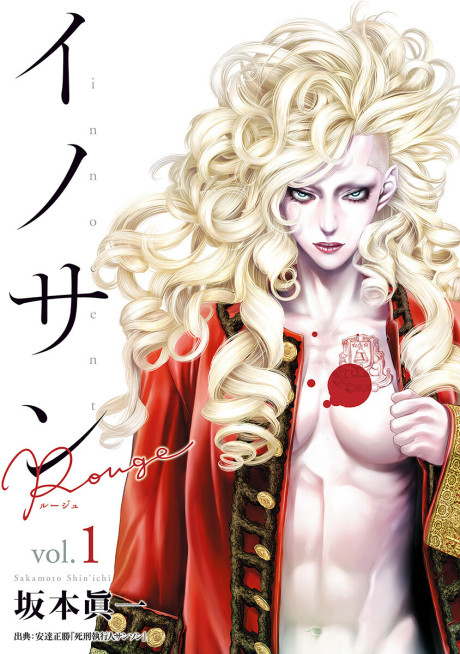
Enter the Sansons, the executioner family of France for it is through their eyes that the story of Innocent Rouge is framed.
Those familiar with the French Revolution may think they know what they're in for when reading this series but you would be wrong. Despite adhering to the historical events as they took place in actual fact, the mangaka Sakamoto puts his own spin on things utilizing some of the most creative and imaginative visual metaphors I have ever seen in the medium. By heightening the drama of these already dramatic historical events through the use of over-the-top characters and wildly creative non-linear storytelling sensibilities Sakamoto has created a real page turner as I never once knew what was coming next despite my knowledge of the French Revolution. Personalities and pre-existing character quirks from these historical figures are dialed up to 100 so you know you're in for a wild ride here. Moreover, while these characters are definitely larger than life that isn't to say they are lacking in depth. In fact with some of these characters, Marie-Josèph in particular, there is a remarkable degree of complexity.
The first thing one will notice about Innocent Rouge is without a doubt the art, which has been so meticulously rendered in loving detail. The sumptuous, gorgeous depictions of the aristocrats juxtapose so well against the abject poverty of the working class. The realistic art inspires both awe and horror as equal effort is put toward depicting the riches of the world of the royals as to the carnage and gore of the world of the executioners. Sakamoto makes use of multiple wildly varied art-styles throughout Innocent Rouge in order to make full use of the capabilities of the manga medium. For example, the main art style used in the series is a hyper-realistic one presumably making use of 3d models and/or photography to achieve, however Sakamoto also uses a moe-fied anime style on some occasions in order to drive home certain points. This clash of styles would likely lead to tonal whiplash in the hands of a less experienced author but in the case of Innocent Rouge the shifting art styles is used to great effect, whether it's seamlessly transitioning into a musical number in the middle of a sword fight or being transported to a Japanese high-school in the midst of a mental breakdown it all just works.
There's a lot of powerful themes on display in Innocent Rouge, freedom or the lack thereof, injustice, power imbalance, the gap between the rich and poor and also feminism. These themes are primarily told through the lens of the Sanson siblings but the narrative also shifts on occasion to the supporting cast which offers a fresh and often starkly different viewpoint. As mentioned before the art in this series is fantastic and the visual imagery on display does wonders to reinforce these themes that are explored in the series.
As a whole this manga was an absolute joy to read but if I had to make one critique of it it's that the characters do not appear to age. Charles-Henri looks the same in his 20's as he does in his 40's with not a single wrinkle on his face which detracts from other more realistic parts of the story (I get it, Sakamoto wants to make these characters look beautiful but come on at least give them a couple wrinkles). With gorgeous art and dynamic characters, Innocent Rouge is a feast for the eyes and the mind as it offers up some fascinating commentary on modern society that shine through despite the historical theme. I highly recommend this series for those with even a modicum of interest in the French Revolution or just someone who enjoys reading a serious story told in an unserious way.
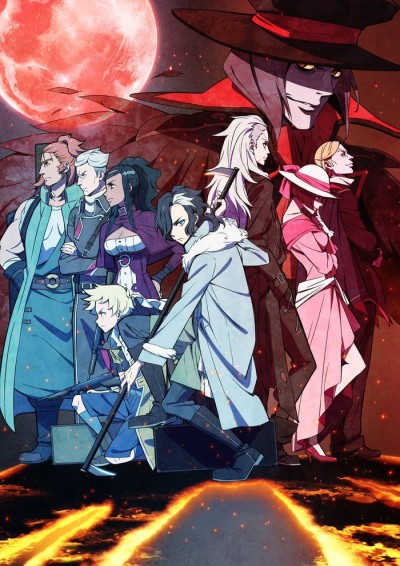
What really upsets me about how poorly this series ended is that it started out SO strong. The first 2 episodes of this series are an entirely different beast than how it ended up. With brilliant animation, fight choreography and an interesting setting it has all the makings of what could be a classic but it is just utterly bogged down by its writing. ***Not a spoiler free review
Sirius the Jaeger is not a flawless series by any stretch of the imagination. The character designs for the vamps are hilariously on the nose and so absurdly cartoonish compared to the other more grounded designs in the series. And this over the top sensibility extends beyond just the character designs and into the plot that makes up the very fabric of the series itself. For all the subtlety the animators poured into the minutia of its smallest movements and delicate shifts in facial expressions the plot itself is just so utterly lacking in any subtlety whatsoever. With a plot absolutely riddled with clichés upon clichés the writers couldn't even be bothered to at least make it interesting; the clichés are just so cut and dry, there are absolutely no interesting motivations for the opposing party at all. It was purely Good Guys vs Bad Guys.
There are glimmers of brilliance at times especially with the first few episodes and the first arc they had which really gave me FMA vibes (in a good way) but all of that was lost as the plot progressed and it lost anything it had they made it so captivating in the first place. As beautiful as the animation was it wasn't able to save it from the bog standard "OH we gotta find this mcguffin that contains all the knowledge of the universe so we can gain eternal youth/limitless power and take over the universe" shit they've got going on. I said it reminded me of FMA but it totally failed to capture that gray morality that made fma SO strong and in the end only resembled FMA superficially.
One of the most egregious sins the series commits is by ignoring its supporting cast. The other Jaegers look like such full and dynamic characters but ultimately they just felt like set pieces that Yuliy could work around rather than integral players in the plot. They were just props. Worst of all halfway through the series the main character just buggers off on a solo mission and leaves the rest of the Jaegers behind only to replace them with some other guy that we're supposed to care about for some reason. And then to top it all off the very end of the series comes totally out of left field with this random moral that was not alluded to AT ALL or built up over the course of the series. The writing doesn't give us a reason to agree with the conclusion that it puts forward even though it had so much time to convince us of it if it actually wanted to. It was more like they realized "aw shit we gotta end it somehow and we didn't think of a real way to end it so let's just make something up and call it a day".
TL;DR: Brilliant animation, watch it for the first 2 episodes alone. But if you don't want your entire experience with this series to be soured stop watching it halfway through.
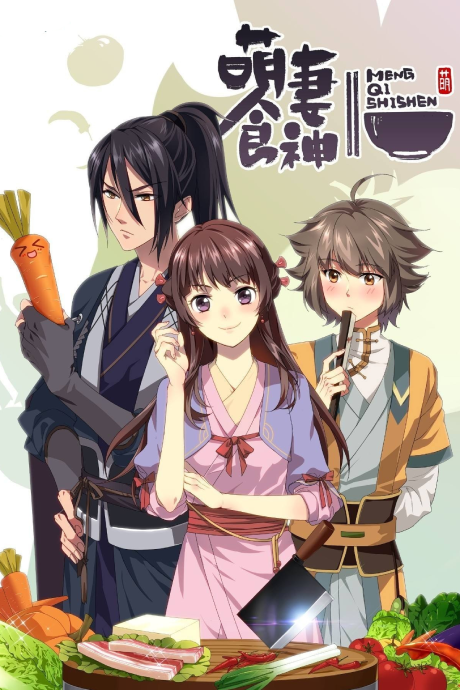
Meng Qi Shi Shen was a really genuine and fun series to watch from start to finish. Although the animation was inconsistent it made up for it with its strong character writing and sakuga moments.
Writing - One of Meng Qi Shi Shen's greatest strengths is that it never took itself too seriously. When the tension was too high it always managed to bring it down with a well timed joke or two and it made me laugh out loud numerous times throughout its run-time.
Characters - The heroine was also the star of this donghua, she was independent and talented and didn't take too much shit from the boys. I also thought the boys themselves were well-written as well. Both boys had good chemistry with the heroine and both were able to develop their relationships with her in a way that felt natural although I do wish we would have gotten the chance to actually see the boys interact with each other more and not just with the heroine. The good character writing extends to the supporting cast as well. Some one off characters that we only get to meet for an episode or two were still memorable and left a lasting impression despite their short amount of screen time and they really helped to flesh out the world and make it feel lived in and believable.
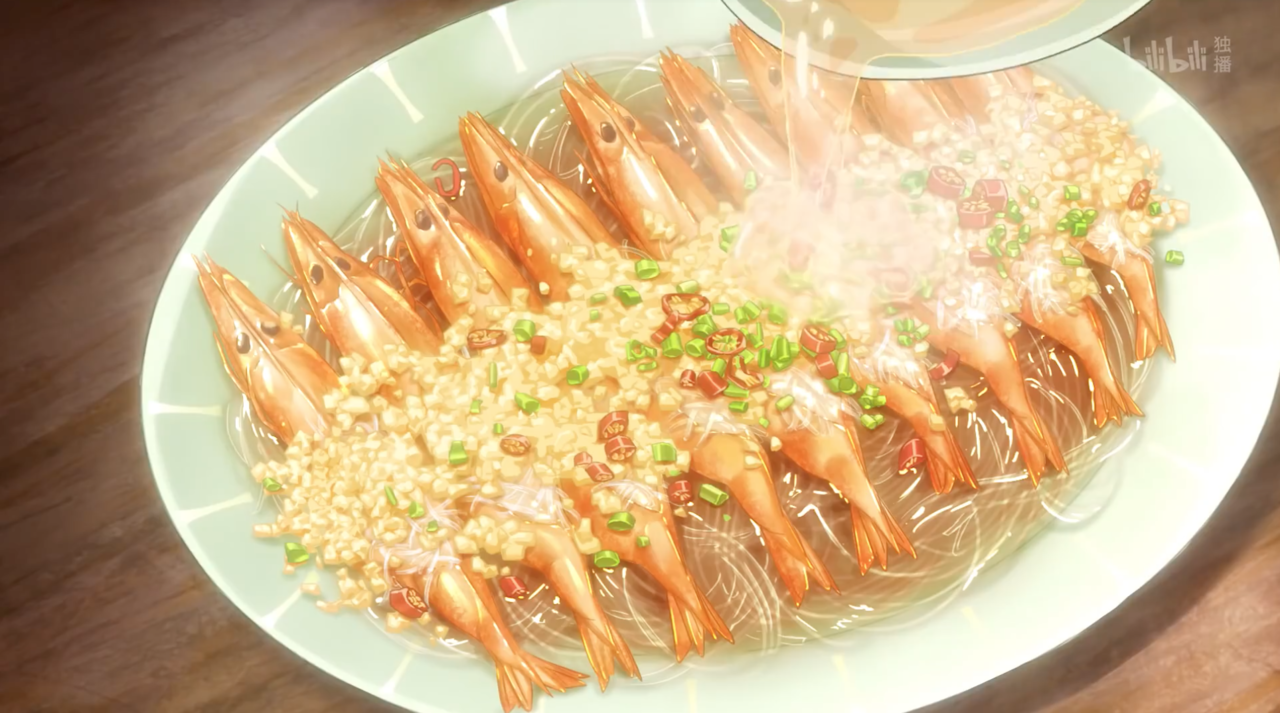
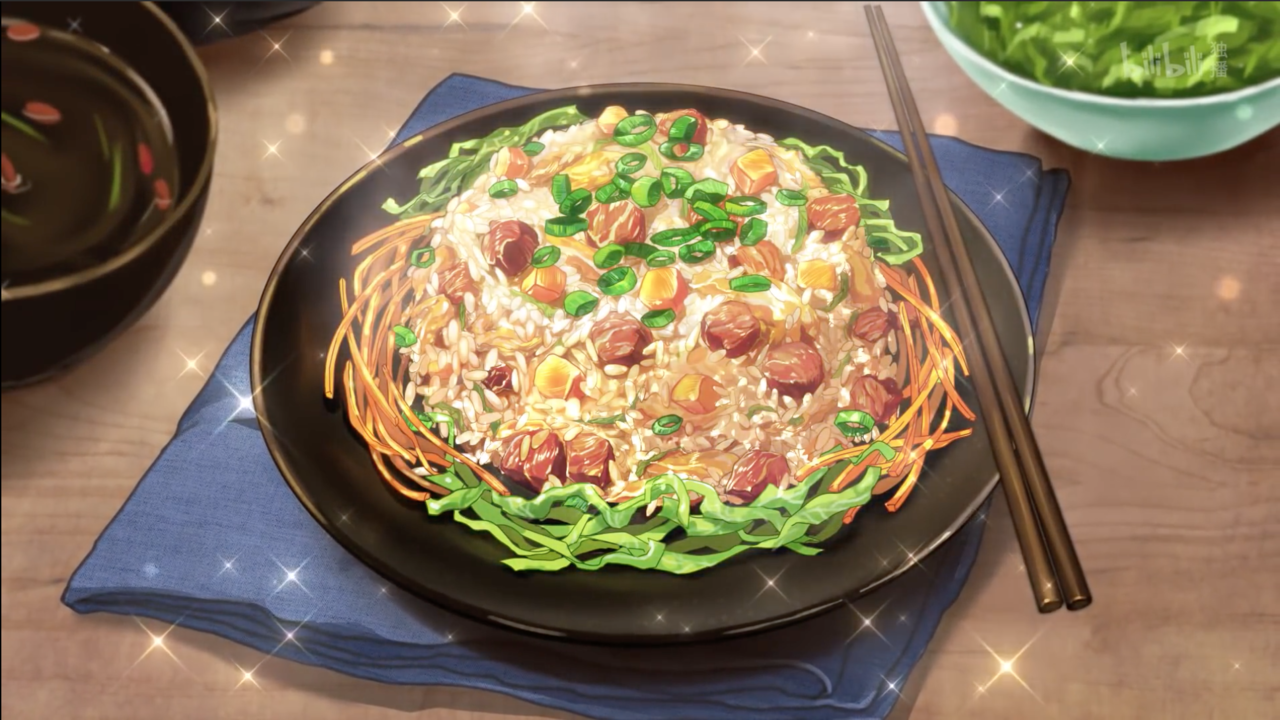
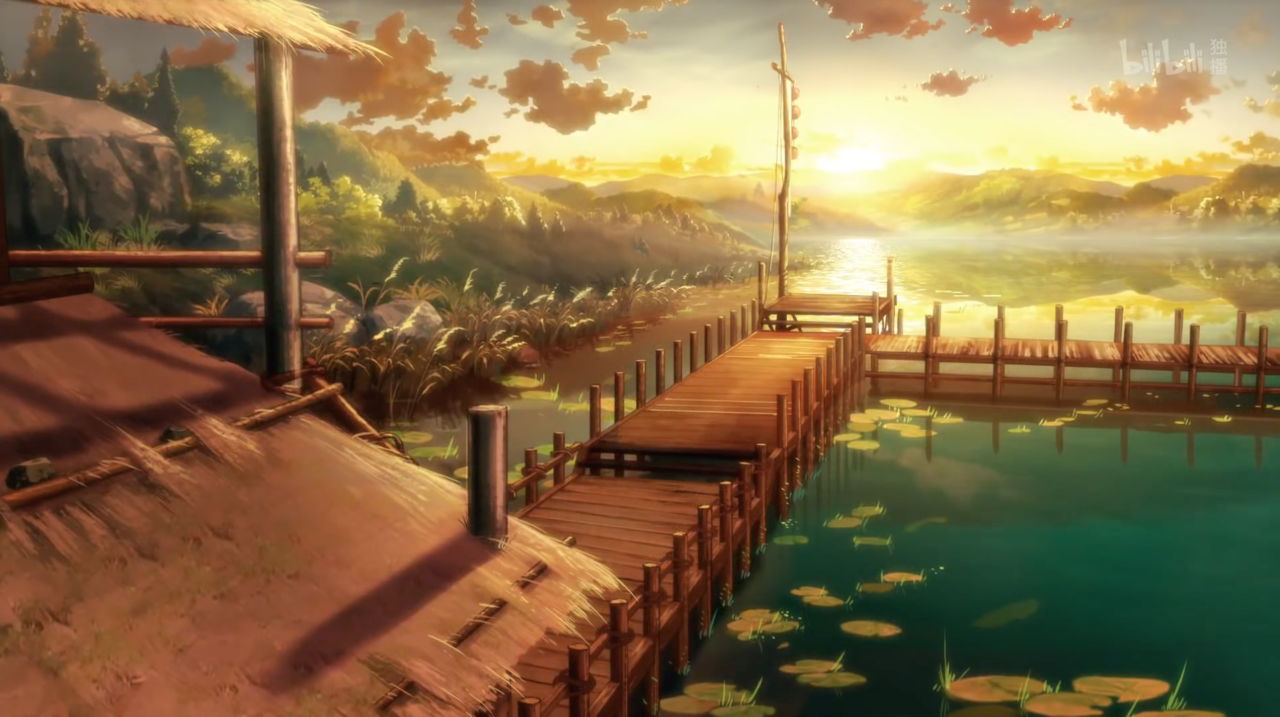
Animation - As I mentioned before the animation in this series is inconsistent. At one moment we'll have this beautifully and smoothly animated cooking scene immediately followed by some janky and jittery animation that could clearly use a few more frames. And this janky animation could sometimes really clash against the gorgeous backgrounds that the characters were put against.
Plot - One of the weakest aspects of this donghua is that the plot kind of bounces around a bit. It seems to lack a little cohesion as the beginning few episodes seemed very slice-of-lifey before meandering off in a different direction later.
Overall Meng Qi Shi Shen is a fun romp with excellent background art, food animation and soundtrack with some standout songs (especially the opening and ending themes!). If you're just looking for something you can turn your brain off to watch, why not this one?
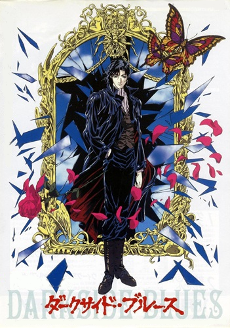
Yeah it is pretty bad. There were some scenes I thought were kinda pretty but they were all superseded by the overwhelmingly cheap looking doughy animation. The ugly and aesthetically dissonant designs really took away from my enjoyment of the film as I wanted to gag at every new jumbled hodgepodge of a character design that appeared. Even the titular Darkside who is clearly supposed to be this cool suave guy looks absolutely disgusting with his vampire-like cape and cowboy boots complete with spurs. Imagine if Dracula looked exactly the same but was wearing cowboy boots, that's what Darkside looks like. The aesthetics of the films were not clearly defined and in my opinion I felt that Angel's Egg did something similar but better.
I think the plot was supposed to be about a vigilante group that's fighting a dictatorship / corporate monopoly that owns 99% of the world but the film never actually explains a lot of crucial plot points. Moreover the entire time there's just this floating magical god guy that helps them out sometimes (Darkside)?? He just appears from a flying horse drawn carriage out of a hole in the ground and his motivations for being there are never ever explained. He's just there aiding the main characters at times but this doesn't seem to be his main objective? He "heals" the other characters somehow by reading their minds but again the reason for this is never explained either. There's some skinny brat who may or may not have magical powers that everyone respects for some reason. There were too many characters and all with no likeable or memorable defining characteristics to speak of. They also try to do this plot twist at the end but it made no sense. It was absolute mess from beginning to end and I regret wasting my time watching it. Bafflingly it felt like simultaneously way too much and not enough was accomplished over the course of the film and I felt completely apathetic towards what was going on.
I can't say much for the music and sound design it was all so forgettable.
Overall it was a poorly executed political allegory that tried to deal with the idea of "what do we sacrifice in the name of peace?" but it lacked focus. It was poor on all fronts and led to a very unsatisfying watch.