— — — —— — —
×
— —— —
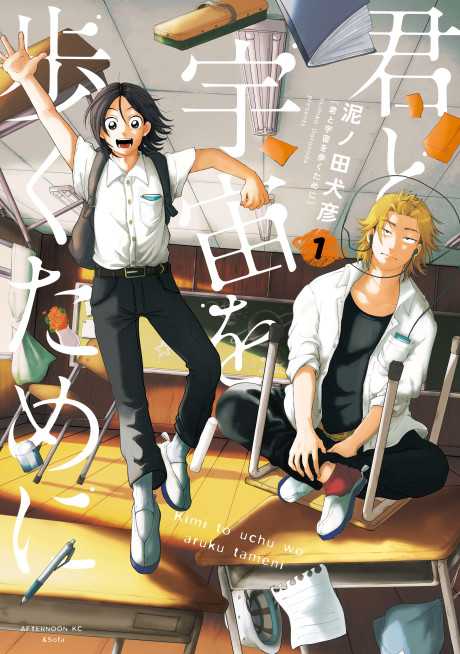
Before I jump straight into the manga, i want to talk about neurodiversity, and slowly introduce the story and its main characters.
You might be familiar with the terms autism, ADHD, dyslexia. All of these terms fall into one big umbrella term, which is called «neurodiversity». Within this spectrum, we can find «childhood development disorders», e.g. ASD, ADHD, Down Syndrome, Tourette Syndrome, FASDs, learning and language disorders, and more, where neuro-differences are recognised & appreciated as an integral part of the person. This term was first coined to fight stigma and now it's a movement that focuses on supporting neurodivergent people on flourishing their strengths.
Many people who are neurodivergent struggle in social situations, which can make it hard to find work or maintain one...
Some neurodivergent individuals struggle in noisy or stressful environments or situations...
Some get exhausted by social interactions very easily...
As you can see, neurodivergent people face a lot of adversities in society. They struggle with things that may be easy to accomplish for anyone else. They act differently than the rest. And from here, it's that they get their negative connotations, given by neurotypical folks, of course. While there has been an increase in the advocacy for the rights & the full-integration of neurodivergent people in this neurotypical society, we are yet to see the day were they are treated with the same kind of respect and with equity (vs equality). The reality is that we live in a neurotypical society, where we see anyone who thinks or acts outside the box as "anormal" or "retarded". This discriminating way of thinking is so assimilated in our minds that people, like Kobayashi, are afraid to be perceived as different.
And this is where meeting other neurodivergent people make the difference!
For people like Kobayashi, who have lived their entire life hiding their "faults" and shortcomings, faking to be "normal" like the rest, meeting someone who can understand them can be eye-opening. In the manga, we don't have mentions of any official terminology but I don't mind because the truth is that for the majority of people their condition goes undiagnosed for years until they reach adulthood, some never even getting a proper diagnosis. So I'm not expecting kids to know about these terms, especially if no adult has ever brought them to them.
Anyways, Kobayashi meeting his classmate Uno, who we can perceived as neurodivergent (although it's not - yet - explicitly said in the manga, I think he falls into the ASD) was a life changing moment for Kobayashi.
After talking with Uno about why he keeps a notebook with him at all times, he founds the motivation to keep trying at his new job, and he learns that some people just need to get creative to achieve their goals. Uno not only inspires Kobayashi to look within himself and accept his fears and negative emotions but also provides Kobayashi with the courage to keep walking forward, to talk that leap into space. But likewise, Kobayashi provides Uno with something he never got to experience: friendship.
Uno has learned to depend only on himself and has taught himself (with help of his older sister) to manage social settings by his own. But, now, here's Kobayashi offering his help.
After they become friends, they joined the astronomy club!
Uno loves space, planets, stars! Kobayashi joined for Uno, but now he is genuinely enjoying the club and learning more about things he never stopped to look closely at (the sky and such). Their friendship grows from here. Sharing interests between friends is something some of us regard as a given. But for Uno who never had anyone to talk about the things he likes (his hyperfixation), hearing from Kobayashi that he wants to join the club with him and learn more about it is something new.
They both think the other is amazing for doing things the other can't (e.g. Kobayashi thinks it's amazing how Uno can keep up with his studies when he can't concentrate or read well). They both admire and envy something of the other. But it's through these growing emotions that they become closer and help each other. They are patient with each other. They try to be understandable (ofc sometimes it's hard because they have their own way of thinking).
This is the story about them and their friendship blossoming in the middle of their youth.
The last manga I read with a neurodivergent protagonist was My Wonderful World (late diagnosed-dyslexic young adult man meets theater) more than a year ago, so you can guess how excited I was when I first found about this manga.
I was very happy with what I read, and I look forward to continuing reading this amazing story.
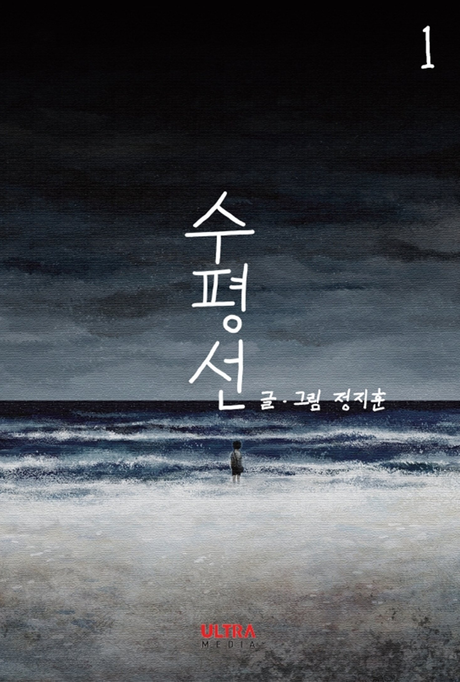
JH is an incredible storyteller and artist.
He can write it all, from fantasy (Mosquito Wars) to sports (The Boxer) to drama (The Horizon).
But here I will focus on The Horizon.
This manhwa focuses on the journey of The Boy in a apocalyptic world where an infectious illness and war have brought despair and tragedy to humanity. The instruments JH went for to tell this story about hope and survival mainly revolved on the art. JH use of monochrome and vivid colors was well executed. The art was mostly colored in monotone shades but the ocasional use of vibrant/brighter tones when needed definitely added more feelings to this already emotion-charged story.
Then, for the most part of the manhwa, JH decided to focus on showing the story rather than telling it. Compared to his other works, this one had the least use of bubble speeches. He refrained from the usage of dialogues and instead, told us the plot thru his art and some use of narration. The art spoke louder than words in this work, and personally, that was my favorite aspect of this manhwa. Nevertheless, the instances were we could see the characters talking, whether in a quick exchange of words between themselves or in internal monologues, they always left a strong impression to the reader.
Throughout the whole story, the characters bring to the readers questions about birth, life and death. Humans can experience the same situation at the same time and place and they will still react differently from one another. Why? Because we are built with different coping/defend mechanisms. Some struggle to keep an optimistic look at life, others keep walking forward. Some give up, others keep fighting. Some lose, others win.
But what do we struggle with, what do we give up, what do we fight for, what do we lose, and what do we win? Happiness? Suffering? Life? Death? Or perhaps, is it all?
If you are thinking about reading The Horizon, please be prepared to be bombarded with questions like these ones. This one is one hell of a rollercoaster that will make you reflect on your life whether you want it or not. There's no correct answer. There's just our truths and the characters' own truths. You might relate to one character or maybe multiple characters of the cast. But the thing is... That each one of them represents an aspect of human nature, as well as, playing the role of different point of views towards a tragic reality. One character serves to represent the kindness that lies within the human heart. Another one talks for those who fell victims to their own despair. Others represented the selfless nature of humankind, as well as, they were those who were the opposite.
Lastly, before you go and check this amazing story, please beware that theres a lot of suggestive and graphic art, there's mentions of suicide, murder, and more. But if you're able to take all the pain this work is bound to inflict in you, i encourage you to read it The Horizon.
