— — — —— — —
×
— —— —
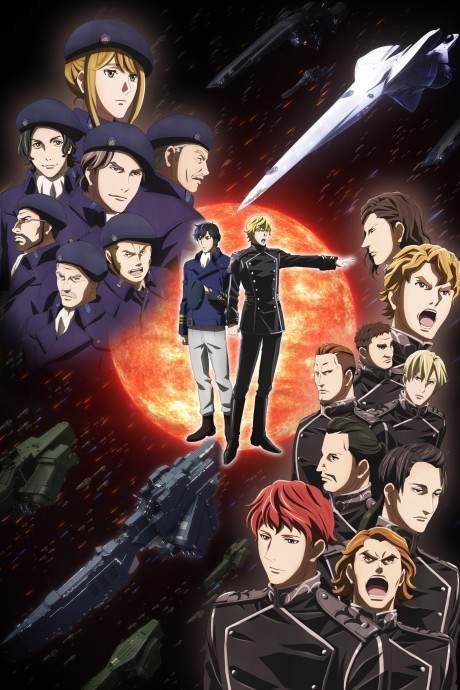
Also considered the second season to Die Neue These, Legend of the Galactic Heroes Seiran 1 is overall a much better paced follow up to the 2018 remake. It's almost as if everything began to slow down for the better. I began to take in the plot and characters just a little more than before. As much as I enjoyed the first season's huge space battles, it was often overshadowed by heavy exposition and a hard-to-follow political plotline. For a newcomer to the series who hasn't read the books or watched the OVA (like myself), it was a bit of a bumpy ride getting to this point. After covering so much ground before, it's as if the director wanted to slow down to actually build up the story and plot.
The first film, or second series, looks and feels much better in general. I'm getting a grasp for the world, and some of the characters involved with the politics. The narrator helps to put each scene into perspective by filling in the blanks when necessary. Die Neue These's double edge sword is that it feeds the viewer info for the sake of time. With every character card the shows up I try to recall their involvement with everything else. It can be really hard to keep track of everyone in the show outside Lohengramm or Oberstein; mostly based on appearances. I still have a hard time remembering key plot points or characters' names. A lot of the show boils down to reasons to care, and not reasons why I should care. I still am trying my best to find out why things are relevant. In most cases, the plot just holds my attention more than the characters. It's the cause-and-effect of the cast that's keeping me watching this show.
Of course, there are still small nitpicks that carry over from the first season that are still present. I still think that the soundtrack is a hit or miss, and it all depends on how it's used within the scene. The series is supposed to pride itself on being an epic space opera, and yet I rarely hear it. Ironic because it has a killer opening and ending song by the legend Hiroyuki Sawano himself. Why is that level of musical awe missing here? Often the genericness brings down the level of connection I might have to the scene. Moments can do its damnedest to look cool, yet I get this shaking feeling that everything is just a cheaper version of what should be. The art style also takes me out of the moment (at times), though that's more something from the first season than anything. It's just hard to gauge it's seriousness as a space opera when everyone looks like they belong in Kuroko's Basket instead of this. I will admit that everyone looks attractive, but that's the last thing I want to be thinking about in a show about a galactic struggle. That being said I can see the real Production IG shining through here in certain characters, mainly the background ones. It's just a shame our main cast wasn't presented with that level of detail or finesse.
Seiran 1 doesn't fall into anime trope territory all too much, even if the dialogue is a bit heavy-handed. Really it's the biggest fault is in its coherent presentation. I applaud an original and unique anime story, but the more I watch this show the more I think I could be watching the original OVA series instead. To enjoy this show fully, approach Die Neue These as an anime rather than high-brow entertainment. A majority of this movie is simply just planning and recovery. At this point I expect my new-found investment to have a much bigger payoff later on because I'm still salty about the first seasons dull "finale".
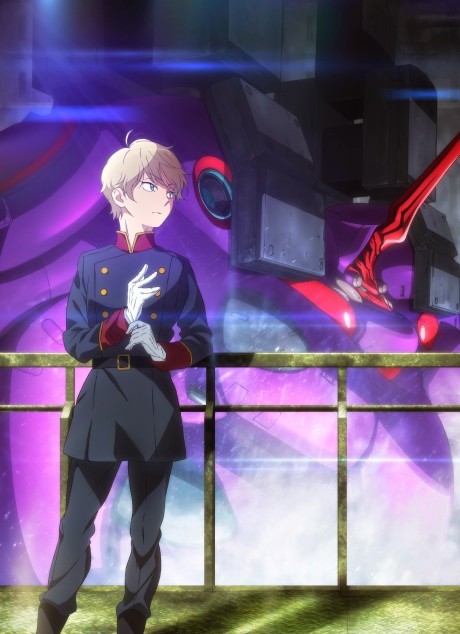
I wanted it to stop, but I stuck around longer than I should have, or maybe it was just a sunk-cost fallacy. It's a good mech show, or was, that still has a stellar soundtrack. Before Iron-Blooded Orphans, this was my go-to anime for a Mars vs. Earth conflict plot. The first season ended on a rather intriguing note which some may find good like me, or absolutely horrible. Season two introduces us to a wide variety of things. We get a new setting, the princess declaring war on Earth, and finding our heroes in space for some epic battles. The show moves away from its (literal) grounded roots and goes into the direction of full-on science fiction now akin to Gundam. So what makes this season better? What story improvements can we expect? None. Absolutley nothing in season 2 is the least bit better. The opening is the only redeeming part. The closer you analyze the show, the more you realize just how weak the writing is. The character progression gets a complete 180 from everything that was set up beforehand. Never have I had the displeasure of having something so unique be tarnished within the span of the first few episodes. Season two's debut infuriated me to no end.
For a duration of the first season, we constantly went back and forth playing "dead" with the princess's life. "No she's not dead", wait no "she's dead" to "wait no she's dead, but actually isn't...we're just being more elaborate with it". It got to the point where I knew Asselyum wasn't actually dead. The writers were so proud of themselves being hopelessly subversive that I wondered whether or not I should really take this show seriously anymore. If there's one thing for certain, the writers forgot how to do their job well. Regardless of this issue, I pushed through till the end. The final scene in the first season made me change my mind. For the finale, I could honestly feel like they could now start taking risks in the transition to the second season. Was this true? Not one bit. The final episode of the first season wasn't really substantial at all, so you just wasted watching season one. Why? Nothing happened, the characters who should've died are back. Everyone survived, by a stroke of pure, unadulterated deus ex machina luck. You could honestly skip the first season and treat the second as something else entirely because it resets everything from before. More importantly, I'm pointing out the biggest flaw of the show, plot progression, and an actual story arc. Doing a complete reset means that the season suffers severely because no one goes through any meaningful development. The characters are reduced to their season one counterparts, with only the story to move things along. Worst of all they choose to resurrect a character and use the same pristine model as if nothing had happened to him.
Maybe I'm expecting too much of this show, but episode five was my breaking point. I finished the episode in anger, frustration, and disarray. How could anyone in their right mind write this garbage? Watching the subbed version made it all worse too when you see the line presented right in front of you. Near the beginning of the episode, Inaho nonchalantly predicts the identity of the princess being just a decoy. Why? Because this new robotic eye can determine the percentage of how fake she is. What the actual fuck. I legitimately cringed at that moment. As if Inaho didn't piss me off enough with his bigger-than-life attitude. I mean look at this shit, I couldn't make it up if I tried.
Worthless Deus Ex Machina GarbageIf you think it's worth it to see what happens, then more power to you. A friend of mine had said the space battles get better, but I do not want to slog through a show that wants to violate my emotions. I could not stand another minute of this show, and I'd rather see it buried than continued. Alndoah Zero's hype left the station the moment it reintroduced an old character with an annoyingly dead personality. I'll never understand how people enjoyed the season the least bit. It was nothing more than trashy fanfiction for Inaho fans.
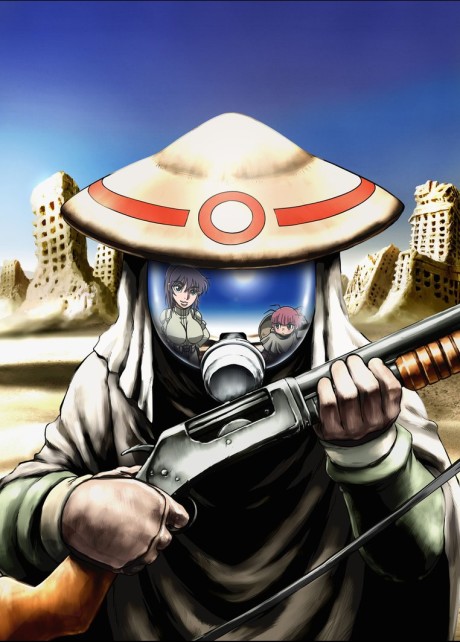
Desert Punk is a show I genuinely love for its unique charm and eccentricity. It stands out among anime for its quirky appeal and offbeat humor. Despite many dismissing it as bad, there's something undeniably captivating about it that makes it special to me.
Set in a post-apocalyptic Japan, the series unfolds in a desolate wasteland of sand and rock after a nuclear disaster. The protagonist, Kanta Mizuno, aka "Desert Punk," is a mercenary driven by money and, let’s just say, certain other motivations. While the show does include fanservice, it’s not overtly gratuitous. Instead, it’s used as a comedic element that enhances the humor rather than overwhelming the narrative. The mature themes are tempered with humor, making Kanta’s unpredictable antics a continuous source of amusement. The show’s sporadic comedy is well-executed, ensuring you’ll find yourself laughing out loud.
The first half of Desert Punk is an absolute joyride, filled with moments that will have you grinning from ear to ear. The episodic structure blends seamlessly with the comedy, making it hard to look away. However, the show takes a dramatic turn in the latter half. The fun opening theme transitions to a more subdued, melodramatic tone, catching you off guard. While the latter episodes remain enjoyable, the shift could have benefited from a few more episodes to fully explore its new direction. Despite some visual shortcomings, the exaggerated moments—whether in action scenes or Kanta’s antics with Junko—compensate for the lack of polish. The live-action opening is a delightful bonus that adds to the show’s appeal.
The character dynamics are a highlight, with no character truly grating on my nerves. Kanta feels like a sadistic, greedier take on the protagonist from Golden Boy, mixed with elements of Vash the Stampede from Trigun. Junko is reminiscent of Fujiko Mine from Lupin III, albeit with exaggerated features, and Kosuna serves as a lovable semi-moe sidekick. Even rivals like Rain Spider add depth to the mix. The tonal shift and character changes midway through might be jarring, but they don’t diminish the overall fun.
While Desert Punk may not be perfect, it remains genuinely entertaining. Some might find it tiresome over time, but I disagree. The show’s comedy, with its Westernized flair, is hard to resist. Where else will you see Desert Punk and Rain Spider waste all their ammo, only to settle their duel with elastic rubber bands? It’s moments like these that make the show a blast, even with its darker turns. If you’re looking for something fun and different, Desert Punk is definitely worth your time.

Deadman Wonderland is really something special, no I mean it really is something out of the ordinary, no sarcasm intended. There's an edgy flare that I just can't help but be entranced by. However perfect the premise, and opening might be, we get a show that just ends up going nowhere by the end.
Deadman Wonderland takes place in what is "the future", the main character Ganta is convicted with murder after being framed for killing all of his classmates. However, rather than go to prison he is sent to the place known as Deadman Wonderland in which the prisoners are sent through various games to entertain the masses. While not obviously apparent to the adoring crowds, people's lives are on the line as they struggle to survive a Battle Royale-like survival game for the sake of entertainment. Deadman Wonderland is a good idea that breathes tension into a world that's hopelessly against its cast. I would've liked to see more of the story developed over the course of the show. For some reason the creators decided to wrap up Deadman Wonderland fairly quickly, sweeping everything under the rug for an ending that feels rushed. There is so much more I'm curious about and I can't exactly say watch this without reading the manga, which will most likely be a requirement.
Deadman Wonderland has a very interesting selection of characters because most of them consist of convicted criminals or insane authority figures. Ganta is nothing really all that special, he is just there surviving and overcoming some obstacles. Shiro, the girl with the white hair, might be somewhat annoying but can be useful at some parts in progressing the story. This is my main problem, so much of the characters rely on the story and vice versa so it is very very hard to delve into analyzing both properly. Again the problem is that there just isn't enough room for you to see more about them, which weakens the overall plot and back story.
I had a good time watching Deadman Wonderland, it's a very different show from the usual. There was a point in the show where I wanted to watch more but was cut off by the last episode, and that's just it...the show just ends because they never bothered to animate more of the manga. My enjoyment could have been pushed a little further if I had at least seen a little more of both the world and of the characters. It could have been something more but as soon as it picks up it ends. There isn't much I can say because it's not the show's fault for ending it at that point, sure I'm gonna read the manga but it would've been nice to get some closure considering they're never going to make more of this ever.
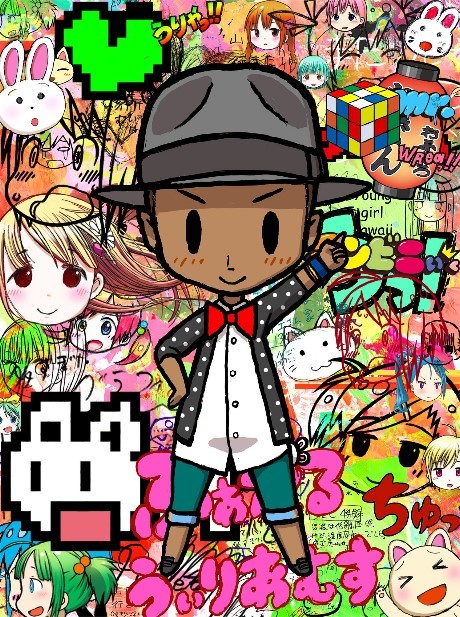
Pharell has come up with some annoyingly catchy songs that get stuck in your head, the first one being his own hit Happy and of course Daft Punk's Get Lucky, but this time he's back again at it and released a music video featuring...ahem young anime girls, let me rephrase that. ONE anime girl that he is trying to impress, and in this case it has to be the youngest looking, but let's not get into that. Basically what it boils down to is a journey of some-sort where everyone is celebrating summer the first moment, then the next they are riding a dolphin spaceship (don't ask). Anyway the whole premise combines a whole bunch of elements from video games and (of course) anime.
It girl is less about the rhythm, and it's more about how hypnotic and nostalgic it feels, to the point where you could just fall asleep to it. Your gonna be caught in a trance watching the video similar to what you'll experience by watching Hypno toad. Now there are no characters other than a couple stereotypical/generic anime girls that are featured in let's say dating sims, or visual novels (or whatever) so they really have no personality other than to be more or less fanservice to the "Western Audience". All-in-all the video was enjoyable, but that's not where it gets good, the comment section is probably the best part of the whole video.
Alright so let me say that I've never ever seen so much frustration on a video before, the comment section of this video makes Console Wars and PC Master race remarks look like compliments in comparison to what I looked through. Let me give you a few classic examples of what's been said in the video, some of them will be funny, others might be seriously frustrating (or entertaining),brace yourself...
Guys! This is obviously a Chinese cartoon.
People who enjoy watching anime are pure scum and perverted.
Dude, you're ruining anime for people. STOP. IT. I ALREADY AM NOT WATCHING AS MUCH ANIME AND YOU ARE NOT HELPING ME.
This is actually disgusting. And please STOP with the "how do you know it's an underage girl!!" Well she's the only one that's flatchested with fucking pigtails and super short which are basically trademarks for preteens. This is gross and I don't see how anyone can support it. Ewww.
Blatant satanic symbolism and pedophilia promotion, and this shit got 34K likes. Those are obviously young girls in the video.
Anime sucks and all you weebs need to get life lol
I can't believe my favorite artist became a weapons shit. Why must weaboos ruin everything?
Why does it reminds me of boku no pico
I have to admit, most of my enjoyment came out of just scrolling through people's frustrations and getting a nice glass of cold pop watching them become so shaken up by this video, it was pretty funny, but unfortunately is a grave reminder that not all people are stable...especially weaboos (hell anyone can be unstable, but that's not the point)
P.S. If you intend to enjoy the video like I did, get yourself comfy in your chair...get a nice bag of your favourite chips and a glass of something. Just take the time to scroll through the comments, better yet play a drinking game every time you see someone freak out at the video!
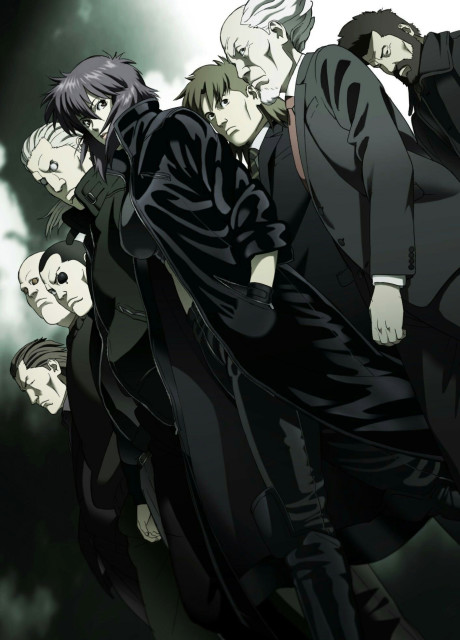
Ghost in the Shell is a show that I hold in the utmost highest regard. It is an anime series that is and was miles ahead of its time, it is a genre-defining series that has grown to be one of my favourites. This show deserves to be part of the anime we have yet to experience again, and I don't think anything could really succeed 2nd GIG's aspirations.
The original Stand Alone Complex was good in the sense that it focused on smaller little interesting stories from the universe. While I do recommend that you watch the first season, it is not necessary considering that it is contained to a certain extent. The context of the first season is mostly just small talk in 2nd GIG, however, you should watch it if you haven't.
The reason I hold the second season in such high regard is because of the overall plot focus. Taking place about two years after the first season, Section 9 faces new threats, political tension, and of course untrustworthy allies. Complex is a good word to use here because it weaves so many important elements into the story without sacrificing one thing over the other. 2nd GIG focuses a lot on the political and social aspects of the series; revealing a much darker side to the universe. There were points in which it is difficult to really label a certain person as good or bad, and it can even throw you into a loop at times. 2nd GIG plays off the "manipulation" of others, not just in the fact that the team consists of hacking cyborgs, but mostly because there is a genuinely intricate story.
Ghost in the Shell has a wide cast of characters, but one you'll mostly be seeing most often is Major Kusanagi who is probably one of the most badass females in the series (or in general). However it isn't just limited to her, the whole entire team of Section 9, and to some extent, the villains have their own quirks that you may like about them. Ghost in the Shell 2nd GIG explores a lot of the smaller stories but also gets the chance to show you the team's history before they ended up working where they are now.
Ghost in the Shell is something I have watched numerous times, there is always a certain satisfaction from both watching and completing the series. By the end, you'll just want more. It is definitely worth noting that the series has plenty of fun and interesting moments that retain a high re-watch value as you get can easily get invested in the plot right away. Over the years as an anime viewer, I have seen so many mediocre shows that get high praise. I have also seen a lot of other good anime set in the cyberpunk world, but nothing comes close to the fact that Ghost in the Shell Stand Alone Complex is a show of epic proportions. It is a must-watch for fans looking for something unique, but also those wishing for anime that goes toe-to-toe with mature television.
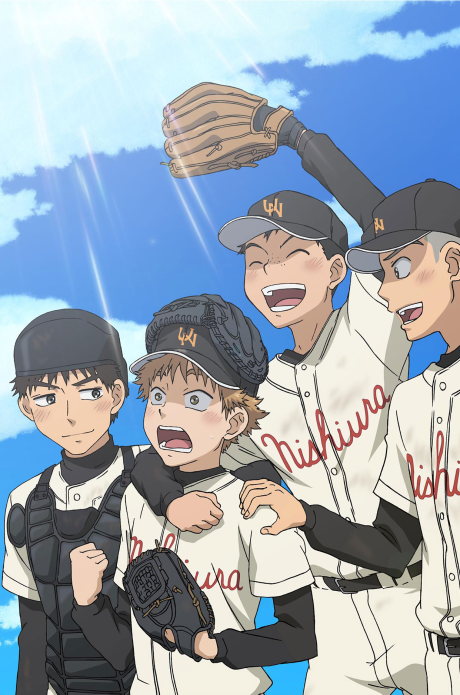
I'm not a huge fan of watching sports or even dealing with anything with sports in general, with a few exceptions, but there's something about Big Windup! that captivates me. An anime which combines a real-life sport, with characters that you learn to care about. Count me, slightly interested. Big Windup's story is practically a run through experiences and not so much overarching progress to something large. The characters exist in this world where they play baseball, progress, and win for their team. Nothing special, but it's the actual games and characters that make the show worthwhile.
There's no bad guys, no antagonist organizations, and no titanic rival. Big Windup! is focused on realism and character development; it's more on the present, here and now. The show does really well with presenting itself because you get engaged with what's going on screen without thinking too much about what's going to happen next. Think of it as a bunch of journal entries being written and presented rather than an intricate series of plot points leading up to something. Surprisingly the story is actually quite grounded, giving you a more realistic sports show without being super dependant on being real-life.
If your looking for award-winning storytelling, look elsewhere, because of Big Windup! is more about the thrill of the sport than the captivation of complex plot lines. For a sports anime, the animation does its job. There weren't really over-exaggerated Dragonball-like home runs or dempsey rolls as it really tries to stay grounded. I did, however, feel as if the animation could've required a slight bump in portraying hits and pitches better. Certain scenes are so static that it tends to drag on in establishing shots that need a bit more life.
The style is very apparent, and the characters are distinct. Before you get to actually know everyone though, I can guarantee you that the similar looks of everyone are going to confuse you. The biggest thing you'll notice is Mihashi's over-exaggerated face that goes for that really simple lolwut look, it can be off-putting at times, but it happens less frequently as you go on that it becomes less bothersome. A large portion of this show is centered on character development, Mihashi being the center focus. He's got low self-esteem and can be somewhat annoying. Big Windup! manages to show his development, as he joins and gets acquainted with his new team, he learns to be more confident with himself and his team. Now if you have watched the first couple of episodes you might think, wait...does this show have homosexual undertones? To some extent, it can be misinterpreted as such, but to completely honest it wasn't all that bothersome. I saw it more like a really good friendship than the fangirl guy-guy pairing, but that's just me, it can easily be mistaken that way though.
I'm gonna admit this to everyone, I went in this show the first time, watched the first couple of episodes and dropped watching it until I became interested in watching it again. A couple of years later I came back, re-watched the episodes, and instantly fell in love with the show. Something clicked for me, and it's hard to describe the feeling of just seeing the characters interact and play baseball. The bulk of the plot just wants you to sit back and relax as you go along for the team's baseball journey. It's not gonna make the anime top lists, and it's not even getting another season after its newest one either, which is unfortunate. But you know what? I have such a nostalgic soft spot what we're given in Big Windup that I appreciate what I got in this show. It's just a heartwarming anime about a bunch of friends having fun playing baseball, and what more could you want from that? It's a little show with a big heart.
Oh the days of Funimation trailers of strange and interesting anime, Glass Fleet was one of those shows that I stumbled upon before the age of streaming. It was pitched to me as this kind of French Revolution anime in space, in reality, it wasn't even close to what I got. Glass Fleet uses an array of confusing plot elements and hamfisted commentary about class differences that gets buried beneath boring characters and a pretentious plot.
Meet our main protagonist Michel. She is a woman, which I thought at first. Nope, he is a she. Wait no she is a he. Confused? It jumps around a lot to throw anyone off the trail. Glass Fleet's main problem is distinctly telling us what and why. I can't even recall why she needed to do that, and the only conclusion that I could come up with is that it was a requirement since people wouldn't take her seriously as a woman. In all honesty, they should have made it a female protagonist from the start, without all this "pretending to be" stuff - it would've made it less confusing and more importantly much of the story elements would've held up better. Why couldn't we just get a strong female lead instead of a girl pretending to be a guy? But I kind of get the angle they were going for, I guess because of the whole sexism thing in a futuristic 1700s setting, even if it failed to establish anything progressive. Now the actual story is quite interesting because Michel and her people's army are trying to overthrow Vetti's Empire; again harking back to a sort of French Revolution with a Legend of the Galactic Heroes vibe. Sounds cool, only we don't exactly get that. Instead, I got a rag-tag adventure with the background of a space revolution. The potential dissipated after the first episode, and the mediocrity begins to show itself in the remainder of the series.
There are so many things in the story that I have problems with. The focus on Vetti's weird incestual, borderline pedophilic romance was so awkward to watch, and it just didn't fit with the setting of the show. Like in medieval times maybe it would've worked like in Game of Thrones, but in a narrative like this, why? What was the point of it? Well besides establishing how screwed up of a human Vetti is, it screamed abusive shipping material. The story focused on the relationships and struggles of their personal lives, and not the struggles of overthrowing the Empire through revolution. The final battle is kind of cool, but it feels way to expected because you know they're going to win, and the casualties are minimal for our heroes. Michel is a white knight character, doing what has to be done, even if she has to constantly reiterate that she was of-noble blood fighting for the common folk. Which in this type of story, Michel should be a good set up to do some great things with. Except that Michel has to rely on Cleo (a man) to help her in the entire effort of, doing anything. It would've been nice if she could've done all of this on her own as an independent female, but no, not at all, thanks for nothing Japan.
Cleo's crew is strange, to say the least, there's a girl who dresses like a prostitute, there's a really nerdy guy, a Russian guy that loves heavy weapons, who for some reason gets together with Michel's maid at the end; which just felt like they needed to pair him up with someone, and a French-looking man with a mustache. I like crews with personality, but for this, it seems like way too much trope pandering in a show that desperately wants to be taken seriously. I didn't like the crew, and the only reason why I liked Cleo was because of his quick resolve to get shit done. Now Vetti, good GOD Vetti. Here's where the show shines as the most shoujo thing ever. They could've gone for the cool suave villain, like Izaya Orhihara from Durarara!! or Makishima from Psycho-Pass, who you hate to love or vice versa, but instead, he gives off the most homo-erotic vibes in the show. Seriously, I'm not kidding, his whole character reeks of yaoi writing. Ralph is his assistant who wants to ensure Vetti doesn't fail and goes out of his way to help him. But holy crap Vetti's relationship just set off so many red flags, and the same goes for his weird sexual relation with his mother. There's so much content for shipping grounds that it leaves no room for developing a good revolution story. For a show that was supposed to be focused on the revolution aspect, I seriously didn't know what the ACTUAL HELL the writer's intent was for including this. It somewhat makes sense, considering Vetti uses Ralph as his pet boy toy, but why? To this day I don't understand the inclusion of their dynamic in story, and it irks me every time because the scene is so awkwardly included in a show that wants to be classy. Ralph is also an annoyance as well, and thank god Vetti killed him. Trust me it's not that big deal that I spoiled that, you would've wanted him dead from the start anyway.
This is a very trashy first-timers anime, and I'd urge people to check out Legend of the Galactic Heroes instead, even the weaker remake is better than this. I will admit there are elements here that could allow for some good moments, though they never truly reach their full potential. The plot was overshadowed by the character's romance, and their unnecessary relationships as they journey towards self-discovery. This is F-tier Legend of the Galactic Heroes mixed in with some Code Geass, both of which are better options that do the exact same kinds of things this does.

Bleach was a show I had disregarded for the longest time, finding it boring. To my surprise, I unexpectedly found myself returning to it and actually enjoying it. It was one of the few shows that introduced me to anime during my early days. However, back in 2008/2009, there were only a limited number of dubbed episodes available, and streaming services weren't as accessible as they are today. Consequently, I put the show off entirely and didn't consider reading the manga either. When the anime concluded in 2012 with little fanfare, I didn't pay much attention. I had only made it so far as the Soul Society arc and had no idea what had happened since. Days turned into years until 2015 when I decided to give Bleach another chance.
As I revisited the show, I scoured the internet to watch the openings, hoping to rekindle that sense of nostalgia. It wasn't until I came across Ranbu no Melody (Opening 13) that my interest truly piqued. I felt compelled to return to the show, if only to experience that opening in its episode. But I didn't just want to watch Bleach; I was determined to dedicate my time and effort to fully immerse myself in it. Was it worth it? Well, to some extent. Bleach follows a standard Shonen plot, with Ichigo, an ordinary high school student, gaining supernatural powers and realizing his duty to protect everyone and everything around him. Along the way, he faces increasingly powerful foes, grows stronger, and confronts challenging adversaries. Bleach strikes a fine balance between comedy and action, often eliciting unexpected laughter from me.
Bleach is separated into larger arcs, that are followed up by smaller ones.
THE SOUL SOCIETY
-Human Realm
-Soul Society
ARRANCAR
-Human Real
-Hueco Mundo
-Fake Karakura Town
The first season, known as "The Substitute," is set in our world and follows Ichigo's journey into becoming a Soul Reaper. The arc concludes with Ichigo's mission to rescue his friend Rukia, from whom he received his powers illegitimately. This leads to the Soul Society arc, which revolves around the rescue mission for Rukia. While it's widely regarded as the pinnacle of the show by many, it's not necessarily the peak of Bleach for me. Despite the consistent quality of the show, the Soul Society arc stands out because it introduces us to new enemies and a fresh storyline. The arc benefits from its stable pacing and the novelty of exploring a new aspect of the universe. It's a captivating twist of events as Ichigo confronts a series of intriguing antagonists, particularly within the unique setting of the Soul Society.
The Soul Society arc shows us lots, but often explanations are so contrived. The writer Tite Kubo has a knack for his stylistic approach. What's often cool to the eye, is never fully translated well when it comes to dialogue. One moment you might understand a concept about the world, and then the next it's confusing you. The more glaring issue is the placement of the arc because it's as if this was written to be the finale of the entire series. In reality, this isn't the case. The Soul Society arc has it's a fair share of problems, partly because of the way it was adapted. The action fit perfectly in the manga, and it resonated with me. The anime adapted it but drew out scenes to an annoyingly boring degree, partly due to its syndicated run on television. The worst part of it all was the included recaps in the middle of fights. Regardless of how epic the fight was in the manga, the Bleach anime likes to dump exposition in order to fill time for their televised viewing. The transition to the Hueco Mundo arc in the manga was terrible as well, but it happened and this was not some easy fix. But where Bleach lacked in pacing, it made up for in strong sequences. The Hueco Mundo arc comes into play right after in the anime and is adapted so well in the beginning. The pacing happens so fast, and things carry on at a reasonably good pace. It was a breath of fresh air for me. Fights didn't take more than a few episodes to conclude, and it's a real shame the rest of Bleach didn't have that noticeably better pacing when it wasn't waiting on manga chapters. It closely followed the manga without losing anything in translation.
Now, let's delve into the issue of filler content. Skipping it can make the difference between experiencing "good" Bleach and settling for "okay" Bleach. Often, filler episodes don't significantly impact the main storyline; they're treated as separate entities. However, in the Bleach anime, this isn't always the case. Filler characters sometimes find their way into crucial plot points, detracting from the significance of certain scenes.
My main gripe arose when a particular character revealed themselves to be a Soul Reaper during a pivotal moment. The reaction of the filler characters present dampened the impact of the reveal. Having read the manga alongside watching the show, I was eagerly anticipating these moments. But seeing these filler characters shoehorned into the main plot was disappointing. While I could overlook it, it added to the list of issues I had with the Bleach anime. The decision to integrate them into one of the battles further exacerbated the problem. I would have preferred if they were entirely forgotten rather than wasting screen time on their inclusion, regardless of continuity.
Some may dismiss this as nitpicking, but for me, it was distracting and detracted from the immersion. Referencing an arc I hadn't seen prior only compounded the frustration, especially knowing these characters exist in the main story.
Moving on, the Hueco Mundo arc introduces visually striking antagonists like Ulquiorra and Grimmjow. While the setting is captivating, the arc overstays its welcome. The repetitive pattern of fights, exposition, and plot progression becomes tiresome to watch. I had hoped the anime would address the pacing issues from the manga, but unfortunately, it falls short in this regard. It's a missed opportunity, considering how evident these pacing problems were in the original material.
Conversely, the Fullbringer arc, though often labeled as the most filler-like, diverges significantly from the typical Bleach formula. Despite being canon, it offers a refreshing departure from the usual narrative structure. Exploring emotionally heavy themes, it provides insights into Ichigo's character, even as his ultimate goal remains unclear. While some may find fault with the development of Fullbringer characters and their relevance to Bleach's world, I found the arc enjoyable for its compelling moments and thematic depth.
Bleach truly shines in its characters and their distinct designs. The diverse cast of twenty-plus characters each leaves a memorable impression, except perhaps for Don Kanoji, who's a bit hit or miss. The fantastic character interactions and conflicts in the Bleach anime make it worth watching. Now that both the anime and manga have concluded, let's delve deeper into some aspects of Bleach.
Should You Skip the Fillers?
Yes, you should skip them. But there's one thing you should do: finish Bleach and catch up on the manga. If you want more, you can come back to the filler episodes and entertain yourself there without having it interfere with the main plot.
Should I Read the Manga Instead?
I'd say yes if you don't have the time. But if you come to love the Bleach manga, then watch the show. The anime has great openings, and the emotional segments are portrayed to a better degree since it has more cinematic flair. The manga is good, but it suffers from pacing issues, like in the Hueco Mundo arc, which consists mainly of fights for several volumes. I honestly couldn't imagine reading this arc during a chapter release in Shonen Jump. Good lord, there's a whole lot of nothing for entire volumes.
Then Does the Manga Surpass the Anime?
Only marginally, by 0.5 of a star, because of its more faithful execution of the main story, which is a given. The manga lacks filler, making it a breeze to get through the dry arcs. Hopefully, they can do some story fixes with the new adaptation of the Thousand-Year Blood War, but I won't hold my breath.
Is the Show Itself Worth Watching Then?
Bleach is a blast; it's fun, regardless of the smaller problems. It's one of the preferred former "Big Three" that I was so glad to be watching. The show helps to illustrate the awesome action sequences and some of the emotional moments.
What Are the Best Arcs of Bleach Then?
Thousand-Year Blood War, but I'm willing to debate that after the atrocious ending.
Soul Society is about as equal as the Hueco Mundo (for me at least).
Fullbringer, but again, I'm also willing to debate this one. It can be interchanged depending on how I feel.
I Can't Complete It, Isn't It Like 300+ Episodes?
As I said, you can skip the fillers, thus reducing the show's length and making it more digestible. Believe it or not, the actual show is comprised of 49% filler, so don't feel bad about skipping. But if you seriously don't have the time, yes, read the manga; it's good. But come back to the show to see the scenes animated. Seriously, the show does improve some of those parts because it has the music and visuals to really bring the scenes to life. So don't avoid the anime entirely. If there's one thing perfect about Bleach, it's the openings. There are no bad ones.
Closing Thoughts
Now that's over with, I can conclude with my thoughts. Bleach is a great show, but the problems lie in two places: the filler and the source material. A certain female gets stabbed, not once, but numerous times through the chest. Yet, she somehow survives every single time that happens. It wasn't two standard parts either; this happens at very dramatic parts in which you're supposed to feel emotionally invested. When characters are resurrected by Kubo, it's hard to feel like there are stakes. If you want an emotional buildup, just write the characters' deaths properly and be done with it. Don't cater to the fanbase's popularity; it never works, and this is a clear example of fan-pandering that's kept certain characters alive. Bleach has some horribly bad "ass-pull" moments that become more apparent the further along you go. The stakes seem to lower with every new arc, as every "good guy" seems to survive regardless of how they died. All too often, people who should die, just don't, and it's ironically more painful keeping them alive. There's always that sense that they'll just return in the next arc, which leads to some underwhelming tension. This is more the fault of Kubo, who just couldn't be bothered to make a story that shakes up the formula. The final manga arc more than makes up for this to a point, but it feels like petty wish-fulfillment than a genuine attempt to tell a good high-stakes story. There are still many moments in which I felt compelled to put Bleach down and never return again, and finishing it just broke me mentally. I had invested hours upon hours of reading, watching, and fanboying over Bleach only for Kubo to tarnish all my respect for the series within the span of one chapter.
The newest arc, despite feeling great at the beginning, fell back into the Bleach formula. Good guy faces off with a bad guy who shows up, bad guy gets killed but reveals his true power, and then we see the hero's new Bankai; it's the same tired story structure that stretches itself over an entire arc, AGAIN. I will say this, recalling previous characters from past arcs was nice, if a bit fanservicey. Using surviving antagonists was cool too; I just wish Kubo would've used them in an Avengers-style final battle. I could write a whole review of the manga, but I thought it would be more appropriate to put here in my anime review. Bleach is returning, so I'll probably be watching it to see what direction they take it, but I'm past the point of caring about how it's handled the characters. Bleach is worth watching as the character dynamics feel fully realized in an animated format. It's just a shame that Kubo can't seem to write meaningful story arcs because there are some great scenarios that get mishandled that keep it from being anything special.
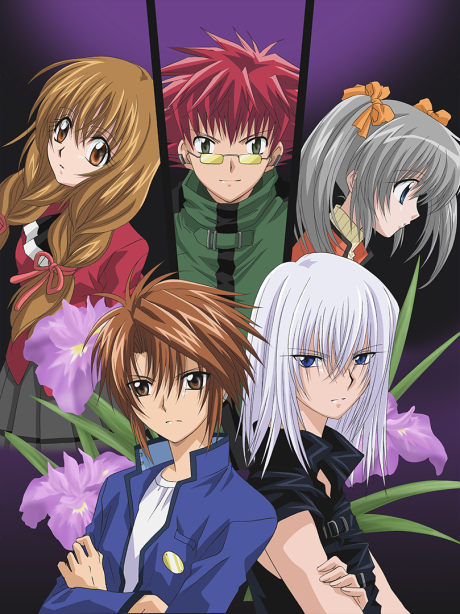
Spiral was an anime that I had found in the bargain bin of a now-defunct local department store chain, and this was in my early days of watching anime where I would "accept all anime as watchable". I can't say I hated this show at first because I genuinely wanted to finish it. I mean you have to finish an anime you started? Wow, I was stupid back then, I really regret my decision to do so.
Spiral is a slice-of-life, mystery show where the main protagonist Narumi must discover find his missing brother Kiyotaka. The only thing he is left with is a message talking about the mysterious Blade Children, who are they? Well, wouldn't that be nice to know, because the show barely gets a chance to explain anything of relevance? Instead, Spiral likes to prance around the mystery as if it's doing you a favour in hiding important details. I found that the anime liked to distract the viewer by setting up a bunch of episodic narratives. I couldn't believe how many times where I was like " this is a cool situation" only to be disappointed with how lackluster the overarching plot was. I didn't find any of the romance elements the least bit believable or well-executed, and the same goes for the story. I just wanted to know what the hell was going on by the end so I kept watching. So what's Spiral actually about? The main guy has to find his lost brother, he meets a girl who agrees to help him. There are two people who show up at school who say that they're Blade Children, doing everything in their power to stop Narumi. Narumi's sister gets caught up in conspiracy by the very end, and then Spiral just fizzles out of energy at the very end. The show does little to impress its audience. There are genuinely fun puzzles, but if the characters are so cardboard why even bother setting them up for something? Also one of the antagonists keeps referring to the main character as Little Narumi to the point it becomes so tirelessly overused and annoying that I just wanted to pull my hair out. That's just one of the many annoyances that the series has to offer though.The opening, good lord, the opening. I think I watched it once or twice, but after that, it was so dreadful I skipped it. It was like hearing the godawful screeches of Sirens. It's a smashing of sounds and voices, and it's another godawful part of the show. It's really that bad. Just have a listen, and make sure to have your volume maxed out.
The other thing that was misused was the background soundtrack because there were so many moments where the tune should pick up the pace, but it doesn't. Mystery anime like this should have an aha! moment, but Spiral's soundtrack lacks that proper punch in its rhythmic beats. There's nothing grabbing about the music nor the plot, that everything fades away into the background. The show is just so bland that I don't know how the manga ever got an anime in the first place. Nothing was really answered properly, and the mystery games boil down to mild entertainment. Spiral's tries so hard to be astoundingly intellectually that a majority of the show feels like its being a smart-ass to its viewer. It takes itself so seriously I had to suspend my disbelief when it was so obvious that people were the culprits, like no-shit sherlock. The people who claim this is good at all probably haven't seen many mystery shows or movies let alone mystery anime.This is the most low-standard thing I've ever seen people praise.
How can this show be considered great enough to garner such good ratings? I really don't understand the appeal. Is it the opening? It better not be, you must be tone-deaf if you think that. I'm sure that the only experience someone would get out of that is the extensive ear surgery to fix the bleeding I got. I only had satisfaction in finishing it, but this garbage was not worth my time. This is the kind of show you would see playing in some random store in a Chinatown shop because it's so noticeably wannabe anime. People claim this anime as being superbly good, thought-provoking even, but this show is none of that. Should you decide to watch this show it is a complete waste of 25 episodes that likes to meander most of the time. I didn't have fun watching Spiral, and it was just a drag to get to the supposed high-point that was the climax. If you were to choose any series to avoid this one would most certainly make the list. Maybe the manga is better? I mean, in some cases they are, but it doesn't save the fact that Spiral is such a sorry excuse for a detective mystery. If you want a legitimately good whodunnit mystery, just spend some time watching a few Detective Conan episodes. Spiral wasn't worth my time, and it won't be worth yours either.
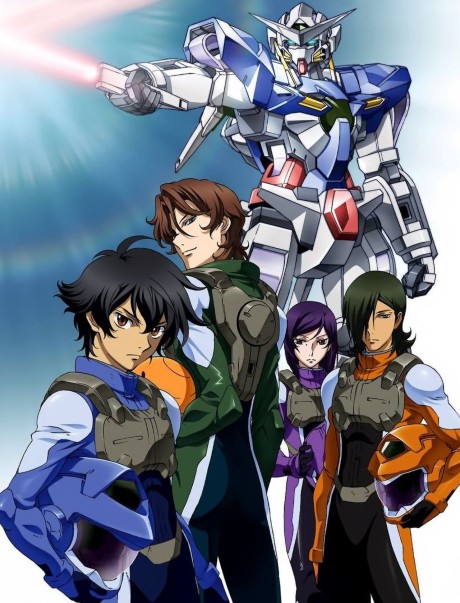
Gundam 00 stands out as one of my favorite Gundam series, not for its visual splendor or Kenji Kawai's soundtrack, but because it offers a low barrier to entry by grounding its story in real-world contexts. It's the layman's Gundam, providing a straightforward entry point for newcomers. Set in the year 2307 AD, Earth's reliance on solar energy has led to the formation of three major powers aimed at tackling global issues. The story kicks off with Celestial Being, an organization wielding powerful Gundams, declaring their intention to end all wars through armed intervention.
What makes Gundam 00 unique is its realistic approach to modern-day issues. Unlike other Gundam series, this one delves into post-9/11 themes, exploring topics like politics, terrorism, child soldiers, and biologically enhanced super soldiers. The series offers a diverse cast that brings various global perspectives, though its execution of these themes can be uneven. Setsuna, the protagonist, struggles with his religious beliefs, creating intriguing scenarios but occasionally coming across as preachy with lines like "There is no God in this world." His claim, "I am a Gundam," may seem overly meta, and there are subtler ways to portray these ideas.
The portrayal of the Middle East power struggle and Celestial Being's role in it is a highlight, but some plotlines feel underdeveloped or unexplored. While Gundam 00 excels in its political themes, its characters sometimes lack depth. Setsuna's tragic backstory overshadows other characters, who often rely on their "coolness" rather than meaningful development. The Gundam Meisters, while ambitious in their goal to "stop all wars," often fall short in personal substance. Their backgrounds—Setsuna's past as a child soldier, Allelujah's traumatic childhood, Lockon's troubled past—are presented more as set dressing than integral parts of their personal journeys.
The series' style is another strong point. Gundam 00 features impressive Mobile Suit designs, with a practical flair that distinguishes itself from the more fantastical elements of the genre. The Tieren's industrial look, for instance, retains the iconic Zaku eye. Although the CGI for space ships isn't groundbreaking, Sunrise deserves credit for their commitment to hand-drawn animation in a genre increasingly dominated by CGI. Additionally, Gundam 00 avoids the overuse of recycled footage, which is a notable improvement over previous series.
Gundam 00 is a series I can rewatch with enjoyment, despite occasional modern anime tropes and conveniences. It might not always achieve its lofty ambitions, but it offers a unique take on the Gundam formula. The show reflects the post-9/11 era with a grounded approach, and while it may not delve deeply into every faction or fully escape the shadow of Universal Century Gundams, it provides a fresh perspective. Critics who dismiss Gundam 00 as merely rehashing Gundam Wing miss the mark; it's a distinct and engaging series that introduces new fans to the franchise effectively. For those new to Gundam or seeking a mech show with a grounded narrative, Gundam 00 is a fantastic starting point that will pique interest in the expansive world of Gundam.
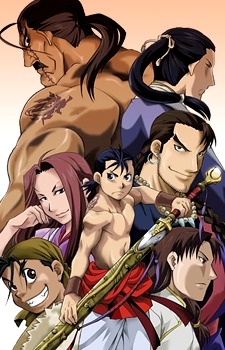
I never felt compelled to read the Hero Tales manga, as its premise seemed rather generic. This sentiment is reflective of the anime adaptation itself, which fails to distinguish itself in a crowded field of shonen titles. Despite being co-written by the creator of the acclaimed Fullmetal Alchemist, Hero Tales does not offer anything particularly standout.
The story unfolds in a fictionalized version of feudal China or Japan, centering on Taito, a boy who is the living embodiment of a star, granting him special powers he must learn to control. Alongside six other star-born warriors, Taito embarks on a quest to defeat a corrupt empire, led by the antagonistic Lord Kero. While this setup holds promise, the execution falls flat. The narrative is bogged down by a tedious fetch-quest and frequent distractions, rendering it a mundane experience that fails to rise above its formulaic roots.
Studio Flag, a relatively obscure animation studio, was responsible for the series’ animation. While there are moments of visual quality, such as well-executed character close-ups and decent intros, the overall aesthetic channels early Naruto vibes. Initially, I found the opening themes enjoyable, but subsequent viewings revealed their lack of inspiration, serving merely to signal the show’s existence without leaving a lasting impression. Similarly, the soundtrack and voice acting are unremarkable, contributing to the show's overall mediocrity.
Hero Tales relies heavily on standard shonen tropes, with characters following predictable archetypes. Taito, the protagonist, is a blend of Edward Elric and Naruto, embodying the typical strong and optimistic hero. The supporting cast is similarly unoriginal, falling into familiar anime stereotypes without offering much in terms of depth or uniqueness. The series lacks a distinct personality, making it difficult to engage with or remember. Its failure to build on the success of Fullmetal Alchemist is evident, as it neither introduces compelling characters nor explores its setting in a nuanced manner.
Although Hero Tales might offer a brief diversion for those seeking a shorter alternative to longer series like Naruto, it ultimately fails to deliver a memorable or exciting experience. For a more engaging and innovative anime, I recommend watching The Legend of Korra, which offers a richer narrative, a better-developed cast, fluid animation, and a more captivating story. In comparison, Hero Tales falls short, leaving viewers with a below-average experience that fails to live up to its potential.
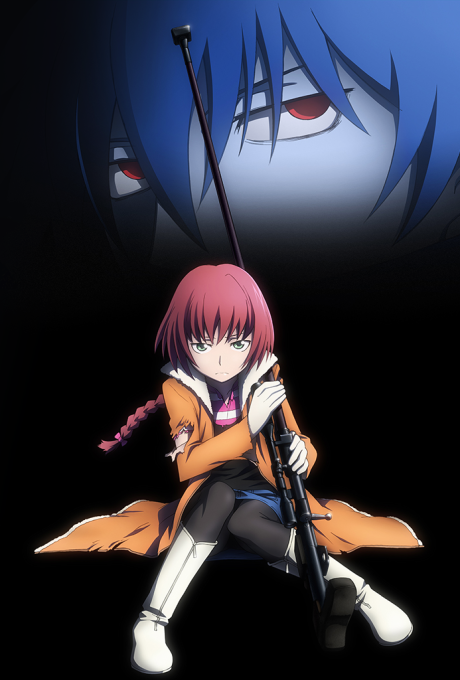
This was a horrible follow up to the astute Darker Than Black season one, but it doesn't mean it's bad right? Okay, put your pitchforks down and have a listen to what I have to say. I don't outright hate the second season, I even bought the special boxset because I was really excited to watch the show, regardless of what I thought beforehand. Honestly from the looks of the opening, I didn't know what kind of direction it was going to go for. But it's more Darker Than Black so it can only mean good things from here on in.
This time rather than focusing on Hei, the story revolves around a young Russian girl named Suou Pavlichenko. Suou somehow gets wrapped up in the contractor stuff and eventually runs into Hei who is now a fugitive. It's an interesting mix because Hei is put in a very different situation than the first season. Instead of being blanketed by the safety of Hei's fellow comrades and The Syndicate, he is left isolated with only a few tools to use at his disposal. Hei is struggling to collaborate with others for fear of losing everything he knows and loves once again. Now mind you Mao is still present, only this time in the form of a flying squirrel, but as far as his story goes there really isn't much progress done to the original cast. Suou, on the other hand, is someone new, through her eyes, the life of a young contractor is much different from that of Hei's. Rather than going all out to finish the mission, she actually has a conscience and acts very unreasonable, struggling to fully understand her power. While this may be thematic to her character, it comes across as annoying when she just doesn't take the same initiative of more experienced contractors.
Season one had at least twenty five plus episodes, including Gaiden, to flesh out all of its stories, but there were still some questions that needed to be answered. If you thought they we're going to be concluded here then you're wrong cause they're not going to be answered at all. The focus is mainly on this new protagonist and her development in being a contractor and while it may only be twelve episodes, it is enough Darker Than Black to serve its purpose in this case. The story takes it even further in including some of the characters of season one in season two, which is where I found my main issue. I kept getting this nagging feeling that "Hey wouldn't it be nice if we got a season 2 featuring those characters again? Like in the first season". I felt like Misaki's inclusion in season two was just a way to have some continuity tying it to the first season. While yes the story may be slightly more coherent, there is still the feeling that maybe this would've been one of the few cases where it could have been served as a "spin-off" rather than a full-on follow-up where I was expecting the same characters take on a new setting. There is a lot of Season two that have me slightly happy for more of Hei considering he begins to show signs of slight emotion in his overall state. Hei becomes a regressive house-hobo that barely even looks like the Hei we're familiar with from the first season, and I don't think many would find the treatment of his character particularly great. Gemini of the Meteor isn't really all that bad as I made it out to be rather it is a shell of its former self that is learning to move on much like the characters in the story. The main thing about the characters in the Darker Than Black universe is that many of them require more than one episode to get some extended backstories. Some get more development than others and that is great, but in this case, Hei gets little progression at all. As mentioned above, if this had have been labeled as a spin-off I might've forgiven the fact they left Hei out of the spotlight, but instead this is the follow up to the first season. Suou has all the time she needs to really grow as a character, and although she may not be interesting at times, it is forgiven considering that this is a coming-of-age story that develops her personality quite a bit.
Given that this season gets such a bad rep, I can't help but remembering that I was, in fact, enjoying season two as it's own separate entity. It certainly doesn't live up to the first season and Gaiden, but it's something to distract you from all the generic stuff that keeps appearing nowadays. I sometimes like to jump back and forth on the hate bandwagon for disliking this season so much, and with somewhat good reason as a fan of season one. This was a disappointing follow up to the first, however, it was a solid spin-off at the most. If you want to see what this season all about, go right into it, there are lots of entertaining moments to keep you invested. Keep in mind that all of you're questions carried over from the first season may not be answered and that the characters you grew to love may not get the screen time you might think they deserve. While it might take some time to adjust, Gemini of the Meteor is a decent series that shouldn't be missed. It might've let me down, but I appreciate it fully knowing this might be the last effort to make a Darker than Black relevant again.
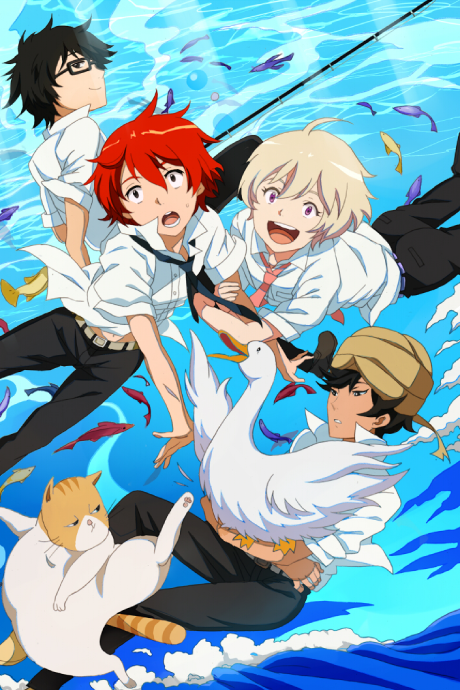
Tsuritama, what an odd quirky name for an oddly quirky show, truly fitting for an anime like this. How did I discover it? Well, that's a good question, it happened to be the off chance that I was browsing anime featuring Turbans and I came across a photo with Akira Agarkar doing the "yoga" pose. Yeah, it's as strange as it sounds. Don't ask.
I've never got into fishing, nor am I really fond of the concept. After watching Tsuritama it got me thinking, this is actually a genius idea for this kind of show. Mind you, a fishing anime sounds odd in concept, but it works here to build a sense of friendship and comradery. Yuki Sanada moves to a new town with his grandma and just can't seem to adjust to his school life. Yuki has no friends and finds it's difficult to open up to others without being extremely awkward. After an alien visits his house, claiming it as his own, things take a turn for the crazy. Yuki is tasked with capturing one of the rarest types of fish so that his alien friend can finally return to space. Along Yuki's fishing journey, he meets some people along the way who not only help him catch fish and friendship. Eventually, these small get-togethers soon develop into something more than a pastime, but an experience of a lifetime.
Tsuritama is one bright, happy show, full of life and colour. This is the way it should be. I wouldn't have this show any other way than it is already. It doesn't really require a lot of flashy animations in order to appeal to everyone. All the scenery is relaxing to look at, and I felt a wave of nostalgia with each passing episode. It's perfect because it's a standout art style that's not really typical of A1's portfolio. The characters make Tsuritama, and they should with good reason. I don't think there was a moment in the show where I was like "this shouldn't be like this, cause there was no hook in the story" or "I didn’t find the characters to be very funny or inspiring" ; taking a jab at thatanimesnob who critiqued these things, he's an asshat who needs to be sent to a mental institution. Before I get any more sidetracked, Tsuritama always had me smiling every moment. I let the show take me on this wonderful journey with these characters, namely Akira Agarkar who is one of my favourites.
Tsuritama is the definition of a good time. So many moments you feel warm on the inside because it's just such a joy to watch, including the opening and ending. It's the perfect summer show even though it takes place during the school year. Everything about Tsuritama just shows you that it's okay to have fun, even if it's not zany or off-the-walls. It might be silly, but it's in no way stupid. There's something peculiar about Tsuritama that will make you chuckle because the territory feels so familiar, yet you've never watched this kind of show before. It is a story about friendship, and it is a show that still lies somewhere as being the go-to show when I want to just sit back and reflect on something. Watch Tsuritama during a weekend, or when you're feeling down. Do it because I can guarantee this show will cheer you up when your not exactly feeling 100%. Maybe you might be lonely, angry, or depressed, but don't worry because Tsuritama is the kind of show to bring you back up. I can give you my word that Tsuritama will most certainly make you feel worth once you give it a watch through its sense of warm familiarity.
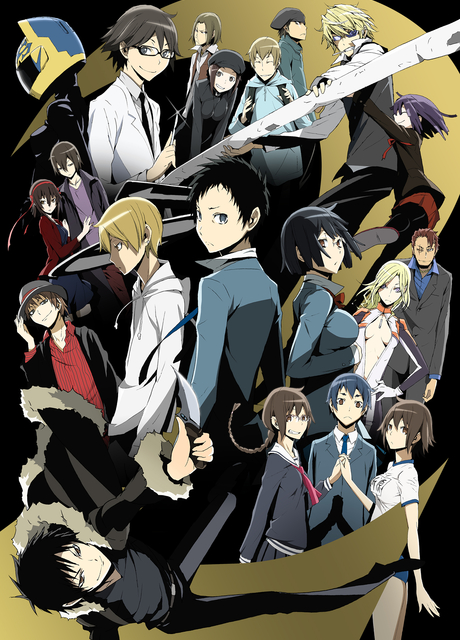
Durarara!! ended with a subtle, open-ended conclusion that left me craving more. The original series wrapped up in a way that hinted at further stories yet to be told, and my anticipation for a continuation was high when the second season was announced. However, I harbored some skepticism about whether it could maintain the same level of quality as its predecessor. From the moment I saw the opening sequence of Durarara!! x2 Shou, I knew this new chapter would be a satisfying return to the beloved show. Studio Shuka's transition from Brains Base was executed with finesse, making the shift almost imperceptible, though there were slight improvements in the animation quality. There were a few rough edges in some animation shots, but these were minor issues that did not significantly detract from the overall experience.
As a direct continuation of the first season, Durarara!! x2 Shou requires viewers to be familiar with the events of the prior season. It picks up right where the first season left off, making it essential to either have watched the first season or at least remember its ending. The storytelling in Durarara!! is known for its complexity and character-centric focus, which can make it challenging to dissect individual plotlines without seeing how they interconnect with the larger narrative. This season continues the trend of splitting the plot among various characters, making it difficult to fully grasp the importance of smaller stories until later episodes reveal their relevance. While this approach can make the season feel incomplete if viewed in isolation, it helps to break down the intricate narrative into more digestible segments.
The second season of Durarara!! introduces a broader range of characters and storylines, expanding the show's universe. Many of the new characters bring their own quirks and add an extra layer of enjoyment to the show. However, some new additions receive excessive focus and could have been better served with less screen time. Despite these minor missteps, the season excels at maintaining the show's hallmark themes of unraveling a complex web of plot and character interactions. The show remains engaging and fun, with a dynamic cast that keeps the narrative fresh and exciting.
In summary, Durarara!! x2 Shou is a welcome continuation of a series that not only needed a second season but truly deserved one. While it may not reach the dramatic heights of the first season, it offers plenty to explore and enjoy. The show continues to have fun with its characters and adeptly navigates its sprawling plot without losing sight of its core story. The second season reinforces the series' reputation for intricate storytelling and character depth, ensuring that fans of the original will find much to appreciate.
