— — — —— — —
×
— —— —

Note: When I originally wrote this review in 2014, I had friends at work who refused to watch Free because it came off as homoerotic. In my analysis, I spent an inordinate amount of time debunking this claim, and while my original intent was to reassure my friends that they could watch it without compromising their manhoods, it does unfortunately come off as accidentally homophobic. I'd like to think I've come a long way from this in the last twelve years... I've definitely found yaoi anime I liked and developed some more informed opinions on that kind of subject matter, so I've hesitated to post this, but here it is, unchanged, in it's original context.
Now the review will start.
About two weeks ago, I went into Gaia’s AMC forum to post a poll, asking the community what 2013 anime I should watch next. I expected Silver Spoon or Gatchaman Crowds to win, and they received 7 and 10 votes, respectively placing in second and third place. The winner, with 24 votes, was Free! Iwatobi Swimming Club, the notorious #SwimmingAnime that came into existence thanks to a viral animation sample, and an almost revolutionary ‘give us this show’ petition.
So, with almost half of that poll’s 60 voters daring me to dive head first into manservice oblivion, what was I supposed to do? Was I supposed to turn my head, and avoid making eye contact with that glistening banana-hammock of a show? Or was I supposed to test my mettle as a critic against one of the most manhood threatening shows to be aired last year? Well, let’s think about that. I love Princess Tutu and Ouran High School Host Club, and I was a motherf(yay)ing brony for two years. So bring it on, you rabid hords of Fujoshi! I watched your #Swimminganime, and now, I’m going to review the crap out of it!
The story of Free! begins with four ten year old boys. They consist of Haruka, a quiet boy who only feels at home in the water; Makoto, a laid back best friend character who’s afraid of the ocean; Nagisa, an excitable little moppet who should, by all conceivable logic, be voiced in English by Greg Ayres; And Rin, an outgoing boy whose connection to his friends can only be trumped by his much much larger ambitions. They were brought together by their love of swimming, although they quickly adopt an inside joke that ‘fate threw them together for having girly names.’ In any case, after their first big relay tournament triumph, Rin leaves the group to go to a middle school in Australia to train so he can become an olympic swimmer. Nagisa also winds up going to a different school, and the fellowship is disbanded.
That is, until the first year of high school, when Haruka, Makoto, and Nagisa are finally reunited, and Nagisa convinces them to start the long-defunct Iwatobi Swim club back up again! Because, as we all know, “High school club” has been it’s own ubiquitous genre ever since Haruhi Suzumiya started grabbing up all the money in the world. With Rin’s little sister as their manager, a shy teacher for their faculty adviser, and a brand new team mate in the meticulous beauty-obsessed Rei, and the sudden reappearance of Rin as their new rival from another school, their swim club has only just begun to tread water!
Before we go any further, I should probably address the pink elephant in the room... People refuse to watch this show because it looks gay. Now, I don’t feel like turning this review into a gay rights rant, nor do I want to make any statements about whether or not I consider homosexuality(or lack thereof) an indicator of quality. Maybe there are some good yaoi shows out there... I don’t know. The ones I’ve seen so far sucked. So instead, I’m only going to address whether or not Free is, in a literal sense, gay. Like Hakkenden was.
About a year ago, I was dared by a friend to rent and watch Magic Mike. At the end of it, I said the exact same thing that I said in regards to Free. “Wait a second... That wasn’t that gay at all.” Yes, both shows feature plenty of scantily clad men to thrill and chill the straight women and gay men of the audience, but both stories take place in a setting where wearing next to nothing makes perfect sense in context... Stripping in one, swimming in the other. I can understand some guys not wanting to watch a show about male strippers, but if the sight of guys taking their shirts off to swim makes you uncomfortable, then buddy, you’ve got issues.
And the show isn’t even a yaoi. There’s barely any romantic content in the first place, save for one side character’s crush on Kou, but when you really pay attention, Free! is nothing more than a gender swap of Kyoto Animation’s many female-centric slife-of-life shows. Yes, the guys use cutesy honorifics and nicknames, and they seem to have an uncommonly close relationship, but nobody throws around the word “Gay” while watching Lucky Star, K-ON! or Tamako Market... Well, maybe in the pejorative sense... But in any case, while there may be some shounen-ai elements floating around in this pool, they’re subtle, and too subtextual to really effect the story in any way.
And speaking of the story... Okay, a few paragraphs ago, I briefly compared this show to Magic Mike, but unfortunately, the comparison shall go no further. Magic Mike was an awesome movie, and Free! is just kind of... Okay. I hate to be mean to it, because the characters are likeable, and I was constantly clicking the next episode button, so it was able to hold my attention pretty well... Free! is Kyoto Animation’s first ever sports based anime, which automatically means it has more plot than half of the work they’ve put out thus far, but even with that to boast about, Free! is still just a little too passive for it’s own good. They go to a few swimming competitions, but the stakes of these events are never more than just “We wanna swim together and get a higher budget for our club.” The only time this story has any gravity to it is when our heroes are stuck in the ocean during a storm, and they never seen to desire anything other than “Let’s be friends and strengthen our bond.” That makes for a very pleasant tone, but it doesn’t make for a very engaging series.
The only thing in this story that really develops is the relationship between the five leading males. Their growth as individuals is negligible, aside from Rin, although I can’t really complain, because they’re all really likeable characters. Their occasional coach is only ever used when he’s convenient, and their faculty adviser makes little to no effort to distinguish herself as anything other than a recycled K-ON! trope. Kou, the group’s manager, is not used nearly enough, considering how much potential she has. If she actually had some character arc, even for a single episode, we could have learned something about her as a person... We could have learned why she cares so much about the swim club, and hey, we could have learned why she never swims a single stroke despite being an official member. Seriously, I get that she’s non-athletic and is too female to compete alongside her team mates, but they visit a beach for crying out loud! She brings a swimsuit, and then just hangs around with the teacher! Why?!
As I said before, it’s a decent, pleasant show, and while I didn’t find the plot particularly engaging, I still enjoyed watching it. The chemistry of the characters more than made up for their lack of depth. I’m monolingual, but the japanese dub sounded really good, and I had no problems at all with the actual dialogue. I didn’t find all of the humor effective, but it had enough good jokes to not be boring at any point. In a lot of ways, it’s a happy little distraction, just like K-ON!. Normally, I’d give this kind of show a 7/10, but there’s one more aspect of this show that I forgot to mention. And that aspect is...
The artwork and animation. Dear God in heaven, this is one of the top ten best looking animes I’ve ever seen. Kyoto Animation may not be known for having stellar stories... Haruhi, Clannad and Chuunbiyoh being the exceptions... but it always brings great animation to the table, and from that perspective alone, this is the best looking show they’ve ever released. The backgrounds and character designs are outstanding, the attention to detail is mind blowing, the characters are capable of a full range of graceful, fluid motion, and the water... Oh my God.
From what I understand, the animation demo that this show was originally based on was released so Kyoto Animation could boast about how well it could animate water. But in the words of Kid Rock, it ain’t bragging if you back it up. If you’re not taking a simplistic approach, water can be one of the most notoriously difficult things to animate. There are some CGI movies where they have to treat every drop of it like a blue grain of sand just to realistically portray the movement of a wave. While there are a few notable exceptions, like the stellar art design of The Little Mermaid, most examples of animated water range from ‘adequate animation that you’re not supposed to pay any attention to’ to ‘horribly awkward CGI texture that you can’t help paying attention to.’ I’m looking at you, Gantz.
But I have never seen animated water that looks as good as it does in Free. They used a seamless blend of 2D and 3D techniques to make the water look not only natural, but alive. Every reflection, every ripple, every bubble and every distortion is captured with the power of a force of nature, and yet with the subtlety of a facial expression. And that’s saying nothing about the water as a character. Yes, I just called the water a character, and maybe even my favorite one in the show. I find the relationship between Makoto and the water to be fascinating, and I actually want to see the show again somewhere down the road just to see if I understand it a little better!
All in all, Free! Iwatobi Swim club may not have very good writing behind it, but what it does have is a charismatic energy that will grab you right from episode one and not let you go until long after it’s finished. The amount of love and enthusiasm that went into this show is like night and day when compared to some of Kyoto Animation’s more phoned in projects, and if that’s not enough, it’s a visual feast for the eyes of both yaoi fans and normal people alike. It hasn’t been licensed for an English release just yet, but with free fansubs available in all the usual places, I can definitely recommend this for streaming. It’s a solid 8/10, and the water’s great, so leave all doubts in your locker and dive right in!
Reviewer’s Rating: 8

Kazuma Satou was your average hikikomori living in rural Japan. Unlike most of these elusive shut-ins, however, he wasn’t afraid to wander out into public, as long as there was a good reason for it. Well, on one fateful day, he travelled to the city to pick up a limited edition video game bundle, and on his walk home, he would be faced with a decision that changed everything. He recognized a girl he knew from school crossing the street, and in one split second of impulsive heroism, he ran out onto the road to push her out of the way of an oncoming vehicle! His decision may have cost him his life, but as a reward, he found himself seated before a Goddess named Aqua, who offered him a rare opportunity... To be transferred into an alternate fantasy world, to live out a brand new life as an adventurer! She offered to send him with any item he chooses, so he decided that he wants a goddess, like her, to stay by his side forever. Thus, with the Goddess Aqua by his side, Kazuma strikes out into the unknown, to make a name for himself, defeat the Demon king, and save the world!
Well, there’s a bit more to it than that, but you’ll have to discover that for yourself.
Konosuba, otherwise known as God’s Blessing on this Wonderful World, was produced by Studio Deen, a production company that has been around since 1984, and has been going strong pretty much ever since. Every year since their inception, they’ve been releasing a handful of anime TV series every year, along with a decent amount of OVAs and movies, including both huge commercial hits and lesser known indie darlings, with the unfortunate flop here and there. I’ve reviewed several of their titles before... Some of which I glazed pretty hard... And they’re probably most well known for their work on the long running shonen action anime Bleach... But unfortunately, since they’ve produced so many different anime over so many decades, and those titles run the gamut of visual quality, it’s hard to nail down any specific production trends or influences that may have gone into Konosuba.
It’s a lot easier, however, to talk about Konosuba’s director, a man named Takaomi Kanasaki. He’s directed a few series over the years, most of which I haven't seen, but I can point to a couple I definitely have... The second season of School Rumble, and the entire franchise of Is This a Zombie? and while I haven’t seen either one of those shows in a really long time, I do remember liking them quite a bit, and I can distinctly remember countless visual gags that I liked from both, which is definitely something that carried over into Konosuba. Despite my straightforward synopsis earlier, this is a comedy anime through and through, and Kanasaki does appear to have a gift for attention to detail, and having fun with whatever is going on in the background of a shot. Even when the action is front and center, he’s extremely creative with his brand of visual comedy, and especially in regard to comic timing. From shots of characters being gobbled up by giant frogs to the simplest change in a character’s expression, this director knows how to bust you at your seams.
As far as design work goes, there are two sides to this coin. For side one, the main characters all look awesome. I can’t entirely credit this to Kanasaki, as the designs were lifted straight from the source material, but he did know how to work with what he was given. All four members of the main cast, as well as several prominent supporting characters, were gifted with unique aesthetics that stand out against the rest of the world, while still looking more or less believable within it. These are characters that were made to be merchandised, with vibrant, easy-on-the-eyes color-coding and multiple intricate details. The other side of the coin is the fantasy world itself, which if I’m being honest is a little on the generic side, but that’s actually kind of a good thing... Konosuba dumps so many chips into character writing that any extra effort they put into world building would feel like kind of a betrayal. These characters only really need a stage to perform on, and it does an adequate job of that. Still, the world does feel immersive and full of life and history, so it’s not entirely bland.
The animation itself, on the other hand, is divisive, to say the least. There are people out there who will call this animation ugly, and trashy, and I can’t really argue with them... You know that broken framing technique that’s called Runny Eggs animation, where characters go distractingly off model whenever the animators want to present fluid animation without spending too much money? This show uses that shit a lot, and I know that it can get under peoples’ skin, hell, I’ve complained about it in other reviews... But honestly, I think it weirdly works in Konosuba. It’s used enough that it doesn’t feel too distracting when they ramp it up, and it does work with the comedy. The same goes for repeated animation cycles when a character starts desperately bawling over their circumstances, which happens often. I personally have no issues with it, at least for the most part. The only time it bothered me was during fanservicey scenes where characters are either nude or scantily clad, and I don’t think these animators were too familiar with how a human body moves. Still, that only really happens in one episode, so it’s not too big of a deal.
Your mileage will vary, but I thought it was a good looking anime.
The English dub was produced by Bang Zoom Studios at the behest of Crunchyroll, and they pulled together an interesting talent pool. I’m not too familiar with Arnie Pantoja, he hasn’t been in much that I’ve seen other than this show and the new Final Fantasy 7 games, but he plays a snarky and slightly sleazy parody of your basic isekai protagonist as well as anybody could expect. Cristina Valenzuela and Erica Mendez both portray their characters wit full and unwavering sincerity while also playing up their characters’ self destructive quirks... It is deliriously funny hearing the legendary Cristina Vee stammer and trip over her words while poorly concealing her own masochism... But the star of this dub is without a doubt Faye Mata, who is by far one of the funniest voice actors I’ve ever heard, period. Her portrayal of Aqua, in all of her useless glory, is probably a big reason why she’s my favorite character in this series. I said this before in my Shield Hero review, but Faye commits whole-heartedly to the bit when playing less dignified roles, be they sleazy like Princess Melty or whiny like Aqua. The original Japanese is of course exceptional as well, you can’t go wrong with either choice.
Konosuba, thankfully, is one of those anime that let you know right off the bat whether you’re going to like it or not. When I did my Top 100 Favorite Anime Moments a while back, Konosuba wasn’t fresh in my mind, so it didn’t show up as many times as it should have, but I had no problem adding the opening sequence of the first episode, because it provided the perfect summary of what would go on to become my favorite anime comedy ever. In this sequence, we’re introduced to Kazuma as a lazy, good-for-nothing shut-in who is at least socially competent enough to go buy his own video games, and self-aware enough to acknowledge the stereotypes of his lifestyle. This gives him some relatability, as sometimes we all get stuck in a rut that we know is unhealthy for us but we’re too comfortable to get out of. Hikikomori have a reputation for being selfish, but Kazuma immediately endears himself to the audience by not only sacrificing his life to save someone he barely knows, but by experiencing actual relief when he finds out that she’s okay... At least he died for a good cause.
You will not forget the fact that he did that, or at least I never did. I don’t know if it’s fair to assign anyone the label of “good person” or “bad person” over any individual deed, but he is, at least, a person who is capable of selfless and altruistic actions. He is also made immediately sympathetic when Aqua tells us the actual, pitiful truth of how he died, openly mocking and manipulating him over it, so that when he acts entirely out of spite by dragging her with him to the fantasy world, it’s hard to not be entirely on his side. Thus begins our journey... The journey of a shut-in loser with the chance to make something of himself with a clean slate, and a stuck-up, arrogant Goddess who is forced to live alongside mortals. These two characters have boatloads of chemistry, not only as comedic foils to one another, but as time goes by, as friends and allies, too. So, right off the bat, before you’re even halfway done with episode one, you know exactly who these two characters are, what kind of dynamic they’re going to have with one another, and especially, the specific kind of comedy that this series is aiming for, and while it might not work for everyone, it is a Goddess’s blessing on anyone who does enjoy it.
The plot is tenuous, but it moves pretty quickly, as Aqua and Kazuma start from the bottom and work their way up, scraping by on what little money they can earn, coping with their struggles in any way they can, but they do make progress, and their circumstances do improve. They even pick up two new members, a mage who is obsessed with one type of magic and will use nothing else, even though doing so would be more practical, and a crusader who is masochistic and loves humiliation and taking damage in battle. Now, a friend of mine at work did bring up an interesting observation when I got him into the series... If Kazuma's luck is so high, how come he only attracts the worst party members? I had to think about this one for a bit, but here’s what I came up with; Any genuine, competent fighters would probably not work well with him and Aqua. That party would split as soon as a better offer came along for them. Instead, he winds up forming a party of misfits, who have enormous potential, but with crippling flaws that nobody else is desperate enough to look past, and that ultimately draws them together as teammates, and even friends.
Kazuma’s luck didn’t find him the best people, it found him HIS people. All four members of the Konosuba party have noticeable strengths, but are also just the worst. But that raises another question: How do you write a series where the main cast are awful in so many ways, but still somehow likeable? Well, it’s been done before, and the best example I can think of is the American sitcom It’s Always Sunny In Philadelphia. If you haven’t seen it, Sunny is a show about five people who are lifelong friends, and while they are all some degree of crazy, narcissistic and/or sociopathic, they’re also incredibly easy to root for. Most of this is due to the fact that the conflicts surrounding their toxic behavior is always internal, as the biggest targets of their toxicity is almost always themselves and each other. It’s rare for an outsider to be affected by them, but when it does happen, it never feels inherently malicious... The Gang are just being themselves, which occasionally means using people without really thinking about it.
And for the record, while the dynamic is similar, the cast of Konosuba rarely if ever hurts anyone else without suffering some kind of consequences for it. Kazuma does have a pervy side, but indulging in it constantly damages his reputation and public image, whether he deserves it or not. Aqua is whiny and emotionally immature, but much like Kazuma, her image(this time as a deity) is the only thing that suffers. Megumin dedicates herself to a combat philosophy that she knows is a huge risk, but it’s primarily a risk to her own safety. This is a bit of a spoiler, so I’m going to keep this vague, but on the rare occasions where their bullshit is directed at someone else, that someone else winds up being a villain, and while you totally CAN feel bad for this villain... They offer multiple chances and opportunities for forgiveness... Like I said in my Black Butler review, you can get away with A LOT of cruelty in a story if the victim is a demon.
And, like I said before, this show is genuinely really funny. I know I’ve slammed some anime in the past for utilizing questionable, potentially problematic humor, but Kazuma isn’t that bad with it... I would argue there’s really only one scene(at least in this season) where he crosses any serious lines, and he literally thought he was dreaming in that scene. I know a lot of people find Aqua annoying, and I get why, but I love how wildly she swings between arrogant Goddess posturing and full-on, hysterical despair. I don’t know, it just always hits my funny bone the right way. I guess I don’t love Megumin and Darkness as much, but I still like them, I still find their antics funny. Honestly, I’m struggling to think of anything that I don’t like about this series, but I'm pretty sure my only complaint is some mild pacing/story structure issues towards the end and certain aspects of the animation being mid. That's it, though.
What I especially love about Konosuba... As if the rest just wasn’t enough... Is that it blows every other Isekai’s big ideas out of the water. When I came back to writing reviews in 2021, and I started with In Another World with my Smartphone, I set a standard that I’ve been keeping up for the five years that have followed; I love any anime that introduces a weird or unique idea, and then fucking runs with it, exploring all of the unique possibilities and implications. Smartphone Isekai had a cool idea, bringing a working smartphone to an isekai world, but they didn’t do jack shit with it. I brought up Konosuba specifically in that review for the sake of comparison, because Kazuma didn’t bring a smartphone to another world, he brought a whole-ass Goddess, a decision that is the cornerstone of this franchise’s identity, and a concept that the story never stops exploring and playing with. Part of this is due to the fact that the series has top tier attention to detail, and never neglects how useful or problematic a character could be in any given situation.
To make things even better, though, on Aqua's end, this is the story of an arrogant God being cast out of heaven and forced to live amongst men... She's basically Thor but with less dignity, and if that idea doesn't grab your attention, we can't be friends. These two stories are playing out side by side, in perfect harmony with one another. Beyond that, Konosuba doesn’t really have a unique concept or a weird idea. Functionally speaking, it is a show about protagonists who get transported to another world and have to figure out how to survive as adventurers. What sets it apart from other isekai anime isn’t just the inclusion of Aqua as a character, but its cast of characters in general. The strength of Konosuba is in its characters. The identity, the heart, and the overall entertainment value of Konosuba are all in its characters, who are all funny, and interesting, and lovable in all the worst ways, and they bring out the absolute best in each other.
Konosuba is available from Crunchyroll, along with two sequel seasons, one spin-off season focused on the backstory of Megumin, one movie, and a handful of OVA episodes. The original light novel series by Natsume Akatsuki is available from Yen On, and a manga adaptation is available from Yen Press.
Look, comedy is subjective. You can technically say that to some degree about every genre of entertainment, we’re always going to have our own unique opinions on everything related to anime, but comedy stands head and shoulders above the rest in terms of just how differently two people might take it. There are some comedy anime that I found painfully unfunny, but which other fans might hold close to their heart as the laugh-fest that got them through a difficult time in their life. On a similar note, I could laugh my balls off while watching an anime that left most of my peers feeling cold. The only opinion I am prepared to represent is my own, though, and Konosuba isn’t just my favorite isekai anime, it is also, in my opinion, one of the funniest anime I’ve ever seen. It’s not perfect, but I do feel as though it’s overall entertainment value overshadows any minor flaws I may find in it.
I give Konosuba a 9/10
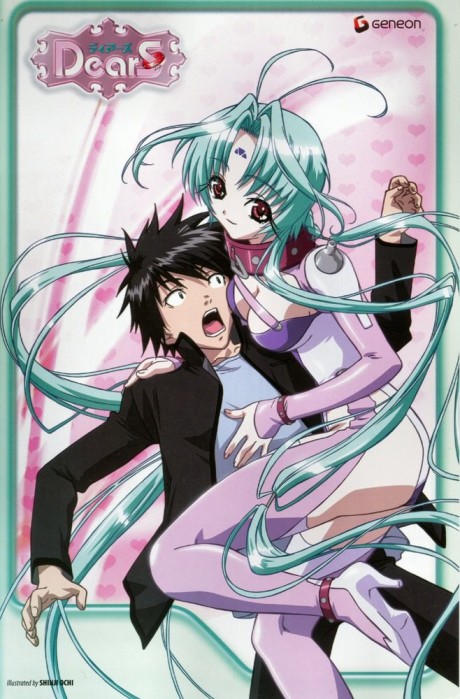
It’s been one year since the world as we know it was changed forever. Mankind has always wondered if we were alone in the universe, and if we would ever be graced with the presence of an extra terrestrial visitor from beyond the stars, and one year ago, they finally arrived. Sporting uniforms out of a 1970’s space porno with bright, technicolor hair pulled right out of a neon themed crayon box, They call themselves Dears, and they have dedicated themselves to learning our languages and culture in order to assimilate into the welcoming arms of human society! They do hold one dark secret, though... The Dears are, in fact, former slaves to another distant species. They didn’t even escape, they’re so easy to replace that they were just cast off for newer models! This secret threatens to become exposed when one defective Dear is lost, and finds herself in the possession of one average Japanese teenager, who she claims as her master from this day forward! Will this unit, now known as Ren, threaten the future of her own kind? Or is this in fact the one perfect accident that could save them all?
For DearS, we are returning for the first time in several years to a production company called Daume, who I have spoken about twice before. They didn’t produce very many anime titles during their brief existence from the late nineties to the early 2010’s, but I did review Le Portrait de Petit Cossette and Strawberry Marshmallow, and I do really like both of those anime, which I do recall being significantly good looking anime. I believe it was in my review of the latter where I made the observation that your average anime from Daume will not look like any other anime from them, and that they’re probably at least hands off enough to allow the directors they work with to employ their own talents and visual styles, and with DearS, I think my point has been proven.
The director of DearS was a man named Iku Suzuki who also has a very limited resume, albeit a much less impressive one. I’ve heard of a few of his primary directing projects from various negative reviews that Bennet the Sage did on them for Anime Abandon, and from what I saw, other than DearS, the only thing he’s directed that I’ve actually seen was Moonlight Mile. I haven’t seen Moonlight Mile in almost twenty years, and the only thing I really remember about it is that the main character likes to strip naked in front of his coworkers and do the helicopter dick, like if Toby Turner were to do a collaboration with The Lonely Island. Suzuki’s resume otherwise consists of obscure series, even more obscure OAVs, and allegedly terrible anime movies, all of which is one gigantic red flag, and his main job throughout the years seems to be as a storyboard artist, so yeah, maybe this time Daume should have gotten involved a little?
DearS looks really bad. I’m not saying that it has a ton of little flaws that accumulate over time to form a much bigger problem, I mean right from the first glance, this show looks really bad. If Daume gave Suzuki a decent amount of money to work with, he must have visited some loan sharks before actually hitting the studio, in my opinion. You have the basic problems of limited on-screen movement, talking heads, repetitive walking cycles and all of that classic cheapo fare, but you also have constant instance where the animator will focus on a close-up of some random object in the environment while entire conversations and physical interactions happen off screen, and while I guess that kind of thing could be a part of an auteur’s vision, it clearly was meant as a corner cutting technique here. There is occasionally an impressive sequence or two, maybe a little action at certain points in the story, but it’s rare, and you can tell where they cut the budget to compensate for it.
The character designs are... And this is not the last time you’re going to be hearing this sentiment... The absolute worst that early 2000s magical girlfriend anime had to offer. The actual DearS themselves look like a combination of the goddesses from Ah! My Goddess and the Space Princesses from UFO Ultramaiden Valkyrie, and while most of you will respond to that comparison by saying “WTF is UFO Ultramaiden Valkyrie,” the few of you who are familiar with both properties are probably saying that those two designs do not go together... And you’re right, these Dears look hideous. That’s not to say the human characters look any better, though... Takeya looks like every other generic harem lead ever, and he’d be bottom tier even in those rankings. His neighbor Neneko looks interesting, but she’s still the lesser version of a similar character in UFO Ultramaiden Valkyrie. The colors are dull and flat, the backgrounds kinda fade into each other, it’s just not a good looking show.
The English dub, on the other hand, is the exact opposite, it really feels like Geneon was trying their hardest to elevate this material. I don’t know Taliesin Jaffe super well outside of Critical Role, but he does manage to implant Takeya with some much needed personality. In fact, he might have done too good a job, because he really makes me want to feel sorry for Takeya having to put up with the bullshit of everyone around him. I wasn’t so high on Karen Strassman as Ren, she might have been poorly cast, she kinda makes her character’s naivety feel artificial... But no surprise, Michelle Ruff was amazing as Miu. Hell, they should have swapped her with Strassman, as she had way more chemistry with Taliesen. I didn’t like the teacher character, but I did enjoy hearing just how over the top Wendee Lee was able to go with her, that was fun. Same goes with Takeya’s little sister, and how much fun Stephanie Sheh was clearly having with making her sound abrasive and annoying. These ladies both understood the assignment and came out swinging. Good dub, if nothing else.
As a matter of fact, I’m willing to bet Geneon’s English dub crew were the person to touch DearS with anything close to resembling actual effort. I said earlier that this show was the absolute worst that the magical girlfriend anime genre had to offer, but what exactly is the magical girlfriend genre? Well, it was a trend in the late nineties and especially the early 2000s that was every bit as popular as eclectic school club anime were in the early 2010s, and maybe even close to as popular as isekai anime are now. This genre was defined as any anime with the following set-up; Your main character is an average, but somehow down on his luck teenage boy. He is living without his parents to attend school, and he’s either troubled, lonely, or he yearns for more like a Disney princess. He has the two most common friend characters in anime; At least one girl crazy male best friend, and a female childhood friend who is romantically obsessed with him. He lives out his days virtually in stasis, floating through life until he has a chance encounter.
Through some kind of wacky, ridiculous circumstances, completely by coincidence, he meets a fantastical, supernatural, domestic goddess of a waifu. The two of them are bound together by some kind of extraordinary circumstance, and while the waifu is dedicated to her love from the very first sight, the male lead has to deal with the unwelcome change to his routine, the wildly overblown jealousy of his male peers, and constant silly misunderstandings as he learns to fall in love with his fantasy waifu. These weren’t necessarily harem shows, but they had harem elements. If you were anything other than a horny immature male in the early two thousands, shows like this were the bane of your existence. They were almost exactly the same, they were loaded with sexist and misogynist elements, and the main romance almost never felt believable or engaging. There were a few diamonds in the rough, of course... Chobits was probably the best of all of them, although some of the gentler ones like Ah! My Goddess have their own dedicated fanbases... The ones who were really bold with their fanservice, like This Ugly Yet Beautiful World and To Love Ru, stood the test of time in other ways...
But yeah, most of these shows did wind up falling by the wayside, and it shouldn’t surprise all of you that DearS isn’t even in the conversation for which ones are worth revisiting. To start things off on a positive note, though, what do I like about it? I mean, I like the ending theme, it’s really fun and upbeat. I like the eyecatch animations, they’re really cute. I like the character of Neneko. I like the Principal who is always off in his own little world. I already said I like the dub. I like episode ten, which apparently was never aired on TV, presumably because it showed more bare butts and censored boobs than the rest of the series. It was just a full episode of PG-rated fanservice, and it was pretty creative about it. I didn’t like the over the top sexpot teacher, but I liked the way everyone reacted to her, like how even the horny teenagers in her class were all sick of her shit. Mostly, though, I like that this series is a really comfortable variety of bad. There are so many extreme and excessive kinds of shitty anime out there, from the disturbing, to the offensive, to the outright boring, and thankfully, DearS isn’t really any of these.
DearS is bad, primarily, because it was trying to be every other anime in the genre. It was made to chase the trends of the early two thousands, and just coast off of what most anime-watching people were into at the time, and I’m sure it was successful to some degree, but it was not made to last, and true to form, it did not last. This is a kind of bad that’s easy to comprehend, easy to quantify, and if I’m being honest, easy to watch. It’s perfectly digestible because you know immediately what’s wrong with it, and it never surprises you, for better or worse. Yeah, it made me laugh like half a dozen times, credit where it’s due, but for the most part, I’m just watching with a knowing smile like “Oh, I see what you were trying to do...” Specifically, it was trying to be Chobits, but with bits and pieces of other similar shows spliced into the story to make it look like they weren’t copying someone else’s homework.
And look, I’ve made it known that I have nothing against rip-offs before... A good rip-off can really impress me with how transformative, like with how well the finale season of Rozen Maiden ripped off Chobits. A bad rip-off just copies and pastes an element from another anime while adding nothing to it, nor while making any attempt to understand why those elements worked in their previous home. With DearS, Takeya discovers and claims a defective Dear who has no programming and has to learn how to function, so the two of them form a bond while a mystery develops around them, just like Chobits... But instead of examining mankind’s relationship with technology and what it means to be a person and feel love, DearS instead asks a different question: Can a girl who was built for slavery ever love you of her own free will? It’s pretty much the same moral conundrum surrounding Dobby from Harry Potter, but somehow even worse.
Okay, let’s rip the bandaid off now... This show is, in a way, about slavery. This is going to offend a LOT of people, and while I am in no way saying they’re wrong, I’ve seen the same subject matter handled worse. Hell, I’ve seen worse in anime that I actually like. In Rising of the Shield Hero, Naofumi never really gets called out on how his adventures have helped promote and expanded the slave trade. I love the first two entires in Jobless Reincarnation more than most people, but the commentary that Rudeus offered while buying a little slave girl was fucking ghoulish. For DearS, all Ren wants is to be useful to Takeya and serve him, which, I’m sorry, the only thing that makes her situation worse than like ninety other anime love interests is that she actually uses the terms Master and Slave. Also the idea that humans will reject them if we learn about their past as slaves is bullshit, the fact that they’re aliens would be way more of an obstacle.
I would say the bigger problem here is that the narrative doesn’t do a whole lot to develop Rem and Takeya’s relationship beyond these circumstances... For nearly the entire series, Ren misunderstands things and gets uncomfortably sexually aggressive, while Takeya crashes out and yells at her, all so the people around them can always, always, always take her side, brutally scolding or beating him whether he deserves it or not. It never feels like they have any genuine affection for one another that wasn’t forced into them via the circumstances of their union. Honestly, I was kinda rooting for Takeya to wind up with Miu, they grew closer over the series, and like I said before, their actors had more chemistry. I’m not gonna say how the series ends, but I AM going to pretend to clear my throat while saying “Cop out.” Also, there are like three or four exterior characters who are introduced to set up this conclusion, but they’re forgettable as all hell up until the final two episodes... As are most of the things that happen up until those episodes.
DearS is currently available from Discotek media. The original manga by Peach Pit is available from Tokyopop. A playstation 2 video game has never crossed the ocean.
I was told long before I decided to write this review that DearS was one of the worst anime ever made. This was told to me by a friend and beta reading partner of mine from Reddit, who claimed it was the worst anime he;d ever seen, and I get where he’s coming from to some extent, but personally, I don’t hate this. Don’t get me wrong, it’s bad, it’s really bad, but I have soldiered through anime that have tested every facet of my patience before, and DearS, well, I kinda liked it in some weird way. It’s just such an easy piece of shit to get through. I’d rather watch this than Green Green any day of the week. It is a shame that the OVA episode isn’t technically considered a part of the series, and should technically be reviewed on its own, because that episode would have brought up my score for the series by a few points, but as things stand?
I give DearS a 3/10
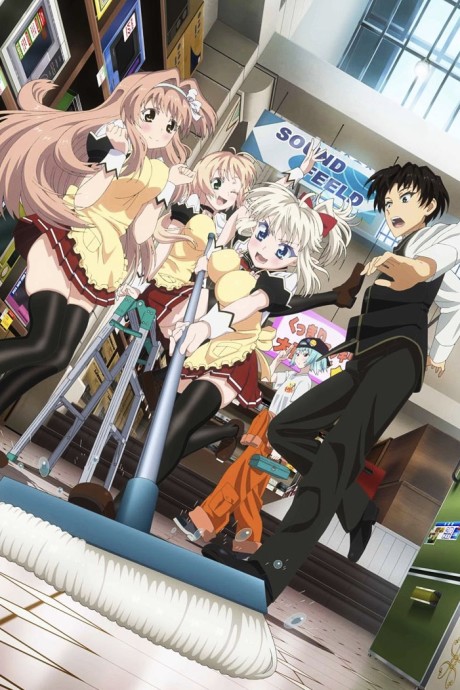
In a world that’s full of magic, powering our appliances and enhancing our daily lives, there are few callings for an ambitious young soul to pursue... But that’s okay, because there’s only one calling that matters, and that’s the call of heroism! Driven by a desire to make something of themselves and a compulsion to improve the world around them and protect the souls who depend on them, heroes train day and night to battle it out against the Demon King! But what happens when it’s over? Where is a prospective hero to go, what are they to do, how are they to live, once the Demon King’s been killed and the call for heroes has ended? Well, for a hero in training named Raul, there really isn’t anything left that puts a sparkle in his heart, so he gets a dead end no-skill retail job. He’s doing okay, but he's not challenging himself, he’s content to just tread water... Until Fino comes along. Will this former aspiring hero be able to put aside his differences and work alongside the princess of hell?
I Couldn’t Become a Hero, So I Reluctantly Decided to Get A Job is a very long title, so it’s good news that the Japanese gave it a mercifully short subtitle, Yuushibuu, which I’ll be using for the rest of this review. However, the production side of things for this anime is somewhat less merciful, as it’s just unfortunate news all around. Yuushibuu was produced by Asread, a company that got their start by producing Shuffle, but don’t worry, it gets worse. They also produced Future Diary and Corpse Party, two shows I really like that are not especially known for their dazzling visuals, as well as Arifureta, which I did not like, and I genuinely don’t remember how it looked. Aside from production assistance and in-between animation for countless anime over the years, none of their primary production output has ever looked great, and while I guess Ga Rei Zero may have been an exception to this, they didn’t produce that one alone.
Things get even worse when you look at the resume of the director, who is primarily known for titles like End of Summer, Legend of Lemnear, Plastic Little, the Queen’s Blade franchise, basically the kind of anime that I wouldn’t quite call soft core hentai, although they are mainly only sought out for the nudity contained within. Oh, and of course there’s a bunch of actual hentai on his resume, the tamest of which is probably two episodes of the four episode Kekko Kamen OVA. His most legit works are Arifureta, which might be the only anime in his resume that doesn’t contain any uncensored fanservice; Unbreakable Machine doll, which contained a little; And Yuushibuu, which is somewhere between the two. If I didn’t know all of this, and you told me Yuushibuu was directed by a guy who mostly worked on spank bank material with only brief tastes of mainstream success, I would believe you, honestly, because that is exactly the vibe I get from Yuushibuu.
Okay, most of the time, Yuushibuu is not a bad looking anime. There’s some action... I mean fighting action, at least for now... And it’s usually pretty cool looking, really fast paced and fun swords and sorcery type stuff. It relies a little on the same kind of broken frame runny egg animation that shows like Sword Art Online made famous, but not to as egregious a degree. CG effects are well handled and smoothly integrated, especially when it comes to magic effects and the occasional monster asset, but this is mostly a slice of life anime, and it’s very clear that the budget was not managed very well, because when the animation gets cheap, it’s noticeable as hell. There are extended conversations where characters who aren’t talking just stand there awkwardly in suspended animation, neither blinking nor breathing, until it’s their turn to speak. Weird looking physical interactions, cheap close-ups on walking cycles, just about every budget saving trick is here, all so the animators could splurge where they wanted to and neglect the rest.
The design work is okay, but a little on the generic side. There are multiple characters who look way too similar to each other, and I think the only character who really manages to stand out visually in any kind of memorable way is the mechanic character, Loa. The nudity looks good... It’s an improvement over Future Diary, at least... But with the exception of the OVA finale episode, at least sixty percent of the fanservice is censored in some way, and the remaining forty percent revolves entirely around only one character. The world the story takes place in isn’t worth writing home about either. It mostly just looks like modern day Japan, which I know was the intention, but just because it was on purpose doesn’t make it look any less boring or generic. The magical appliances still look like normal, basic appliances, and while I applaud the commitment to accuracy, there’s still nothing really exciting about it. Sure, the demon world looks really cool, but we don’t really spend all that much time there.
Speaking of the Demon World, before I go any further, there is one question I have to find an answer for; Is Yuushibuu an isekai? That’s complicated. An isekai is defined as a story where the main character gets transported to a new world, right? Well, the main character doesn’t get transported anywhere, except for some fighting in the demon world in the beginning. Fino is from that world, so I guess you could call it a reverse isekai, like Dragon Maid and The Devil is a Part Timer? But that also really isn’t the same thing, because Fino doesn’t get transported to OUR world, in fact, both of the worlds in this show are fantasy worlds... The magical world and the demon world, which are kind of implied to have been familiar with each other for an undisclosed amount of time. Is it an isekai if the real human world isn’t part of the occasion? Does Fino running away to the magic human world count? I don’t fucking know, so I’m just going to call it an isekai for the sake of familiarity. If you don’t like that, well, I apologize to the six people who get to read this before it gets bumped off of the front page.
All that aside, this is an isekai anime, and it’s a really interesting one, too. Is it interesting in a good way, or a bad way? Yes. It’s both, kind of. I already went over the core concept of this series in the plot synopsis, but basically, this world has all the comforts and conveniences of our world, except it all runs on magic instead of electricity. That’s a pretty out there concept, and since the main characters all work in a magical appliance store, that’s a pretty good sign that you’re going to get a front row seat to all of the wacky ideas the creators had for this concept, and they had... Some. They certainly had some ideas. I can’t fault them for that. When a product breaks, you don’t fix it by tinkering with it physically(although it does physically look like its real world counterpart), they fix it with magic spells and transmutation circles. When a product is defective, it basically just becomes a magical death trap that has to be manually deactivated to save the customer and whoever else is nearby.
As part of the warranty on some higher end products, employees of the store will regularly visit you to recharge the magic in your device, and I’ll be honest, when this concept is introduced, it leads to the two best episodes in the series, where Raul, Fino and Loa have to go out and perform customer service for a family that just cancelled a purchase, leading to such a fun, exciting and heartwarming series of events that, I’m not going to lie, even if this overall concept is presented in underwhelming fashion the rest of the time, it’s worth it for these two episodes. If it wasn’t for these two episodes, I would be sitting here saying that this show would have been better in the long run if they had just scrapped the magical appliances idea and just set the story in the real world, with electricity and stuff. That’s not to say that this was a bad idea, hell it wasn’t even an uninspired idea, but it was an idea with a very clear ceiling, and the writing never really manages to find a way to break through that ceiling. If it wasn’t for those two episodes, I would question whether or not it was worth it, and if just having Fino react to our real world would be better.
Going beyond that concept, and looking at the wider plot, I’m sorry, but this show is actually pretty dumb... You could probably already guess as much from the fact that nobody guesses Fino is a demon at first glance despite her long pointy ears, but believe it or not, it gets dumber than that. So what we’re supposed to believe is that the heroism industry relied entirely on the war with the Demon King to be a feasible career, and once the Demon King was defeated, that industry collapsed. There was no more need for heroes, so once the immediate fighting stopped, all the heroes had to go their separate ways and get jobs, and I’m sorry, what? What sense does that make? Think about it, even during peace times, most developed nations still have militaries. Are there no more conflicts that heroes can fix? Are there no wars brewing among the humans in their world? Especially now that there’s no war with the Demon King to unite them all?
There are clearly monsters in the human world, so why not have the heroes become guardians to protect people from them? Adventurers to explore their own world? The other half of the plot involves Fino refusing to take her father’s place as the new Demon King, which creates a conflict with some of the retired heroes, who want her to take over so they can be useful again... I’m sorry, who’s to say she can’t become king and then strike peace with the humans? Even then, maybe the Demon World would have use of heroes. Maybe Fino could hire heroes to battle other demons in the demon world who threaten the transition of power. Hell, what’s stopping another demon from becoming king? With Fino in the human world playing retail, wouldn’t that just create a power vacuum back home? Power vacuums do not remain empty for long. They tend to get filled by those who are ambitious and opportunistic enough to seize and consolidate power. But overall, I just find it bafflingly idiotic that the hero industry would dissolve overnight just because the Demon King was defeated, when a new Demon King and a new Demon Army could establish itself at any moment. What the fuck, you guys.
I try not to think about all of this and not take the implications of the plot too seriously, but it’s kind of hard when it plays such a major role in the story, and you’re constantly being forced to think about it. I like the series when it’s not dwelling on all of this. For one thing, I work retail myself, and I do feel a significant bias towards stories about retail workers in general... Shows where a cast of characters from all walks of life put aside their hopes and dreams to coexist together in a dead end 9 to 5(or 9 to 6, if you get regular hour-long lunch breaks, which you should) and this show does that really well. As fish out of water characters go, Fino is a really likeable and charming ball of chaos, who is somehow(surprisingly) never annoying. Raul is a fairly well balanced straight man acting as her foil/victim. I like Loa, she works well as the specialized veteran worker who knows exactly how to do what she does. The manager has a really fun way of affecting the plot, and her support manager is appropriately direct and responsible, but less threatening. Again, I work retail.
Then again, not all of it works. There’s some pretty mixed messaging about sexual assault and sexual harassment in the workplace. When it comes to grabbing the butts of female employees in revealing uniforms, it’s apparently okay for old men to do it as long as they get a light, semi-flirtacious scolding, but a drunk middle aged man must be told off for it. I’d like to think that all of this was coincidental, and the writer didn’t mean anything by it, because that would honestly be the best case scenario here. There’s a lot about the Demon World and monsters in general that is left frustratingly unexplored, and some related plot points get dropped and never resolved. The biggest problem, though, is that there really isn’t anything here that you couldn’t find better anywhere else. As an isekai, the concept is definitely interesting, but I’ve seen way more interesting ideas get explored and fleshed out to a much larger degree. As a show where a royal Demonic Figure escapes to the human world to work a normal job, you know where I’m going with this, The Devil is a Part Timer is basically the much better version of Yuushibuu.
That’s not to say you can’t watch both shows, but if you had to choose, yeah, I’d recommend a trip to MgRonalds.
I Couldn’t Become a Hero, So I Reluctantly Decided to Get a Job is available from Sentai Filmworks. A thirteenth OVA episode is included in all physical releases. The original light novel by Jun Sakyou and a pair of manga adaptation are not available stateside.
I like this show, I honestly do. It’s pretty funny, to the point that I laughed at least a couple of times while watching most of the episodes, and there are at least two episodes that I genuinely loved. There’s a lot of fanservice, which I get can turn some viewers off, but it’s at least somewhat self-aware, and it isn’t just constantly being thrown in your face without restraint. On the other hand, the plot doesn’t make a whole lot of sense, the unique concept it’s built upon falls short in a lot of areas, and the visual quality is inconsistent at best. The characters are mostly likeable, but the circumstances that brought them together are hard to swallow and kind of ring hollow. Overall, this show isn’t good enough or bad enough to really stand out or warrant much of a recommendation, leaving it with the unfortunate designation of just being kind of mid. Still, I’d say it’s far enough on the positive side of mid that I don’t regret watching it, even a second time.
I give I Couldn’t Become a Hero, so I Reluctantly Decided to Get a Job a 6/10
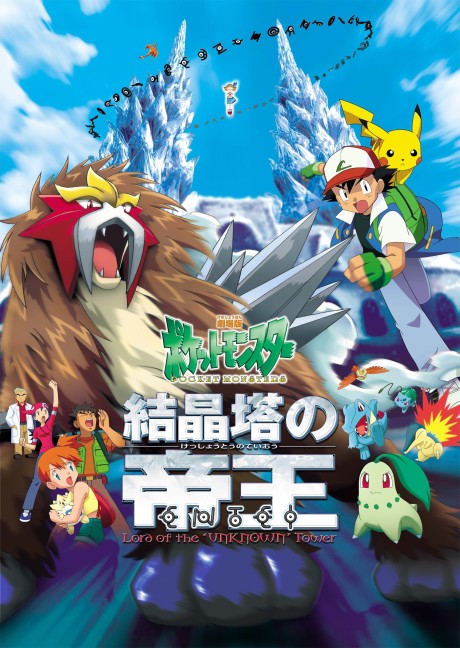
If there’s one thing the Pokemon world has in common with our world, it’s the fact that it’s always changing, and if you’ll excuse the pun, always evolving. What we understand to be true is never certain, and there will always be new mysteries awaiting us around every corner. For Spencer Hale, a researcher whose most recent obsession has alienated his wife into abandoning him and their five year old daughter, the most tantalizing mystery of all is The Unown, an elusive breed of Pokemon who take their forms from the western letter system, and who are rumored to haunt some of the most ancient ruins in existence. Spencer Hale searches for these pokemon, presumably because he wants to be able to add text to his photos really badly, and is spirited away as a result. Left all alone, his daughter Molly makes a desperate wish, and the Unown grant it, giving her an Entei to fill in for her father, abducting Delia Ketchum to play her mother, and freezing the once beautiful community of Greenfield under a blanket of crystals. Can Ash Ketchum and his companions undo this disaster before it’s too late?
This is usually the point in a review where I would talk about the people and history behind an anime’s production, but there really isn’t any new ground to cover, as I’m pretty sure every Pokemon movie was produced by the same company, and directed by the exact same man, Kunihiko Yuyama. No, none of this information has changed from my last few Pokemon reviews, but thankfully, one little detail has kind of changed... This is probably the best looking entry into the Pokemon franchise that I’ve ever seen. Now, just so we’re all on the same page, I don’t think the Pokemon franchise has ever looked bad, necessarily... I know there’s a new art style that they implemented more recently that’s really unpopular, but I haven't personally seen anything from that period in the show’s run... I’m way more familiar with the classic style, and as far as I can remember, it’s always looked good enough at the absolute worst.
Considering the fact that Pokemon is primarily a children’s show, and that it began airing in the mid nineties, I don’t think it’s as fair to look at it through a modern lens as it is to say that at the time, this was probably one of the best looking anime on the market, and one that largely retained it’s level of quality even as the anime industry transitioned from cell shading to digital painting. I do, for the record, think the classic seasons DO hold up way better than a lot of anime from the time, although it mostly only looked good enough to pass muster, but never as any kind of visual wonder. The movies, in particular, have always had this really bad reputation for how insistent they were on using CG imagery that stood out awkwardly and clashed horrendously with the 2D characters... The first movie did hold back and try to be subtle, but the second movie went way too overboard with it. This movie, though? They took the smart route.
You may notice right off the bat that the CG in this movie is uncanny and creepy looking, and fucking good, that’s the effect they were going for. The Unown are mostly rendered in CG, which helps them to stand out and feel every bit as otherworldly and alien as this story needs them to be. They look unsettling and wrong, which makes them feel like a genuine threat, and we’ll get to why that’s a good thing later. More importantly, the phenomenon in Greenfield looks as creepy and off-putting as all hell. I feel like it would have been really easy to design the expanding crystalline surface of the town as just a bunch of generic looking, angular blue rock, but this shit has some insane detail to it, I swear to God there were veins in there. You could set a horror video game in this anime, and it wouldn’t feel out of place. It feels so otherworldly that it hosts multiple diverse set pieces and none of them feel out of place. Now, is frightening imagery appropriate for a children’s movie? I mean, it’s probably nothing most kids couldn’t handle. I dunno, I think it looks cool as fuck.
Now that alone would be impressive, but the Pokemon company just had to go one step further with this movie, making the 2D animation look way smoother and richer this time around as well. You may notice this really early on during a battle that Ash has against a new side character named Lisa, and not only do the battles look jaw droppingly articulate, full of long shots and full combat animations, instead of trying to save money through close-ups and quick cuts, but the trainers themselves celebrate with a little showboating every time they score a win, with full-body dancing and everything. And yeah, we do get one battle early on with the theme song from the anime at that time playing over it, that’s pretty much standard, but we get other battles throughout the story... I’m told this is something none of the other movies did, I’ll just assume that’s correct... And they all retain the same level of quality. Obviously I wasn’t there during the production process, but I get the feeling this movie had a little more money to work with than the others, and it does not go unnoticed.
The English dub is more of the same, but that's still a good thing. You still get the classic dub cast, with Veronica Taylor playing both Ash and his Mother believably as two separate people with a tight, familial bond between them. The late and dearly missed Rachel Lillis plays both Misty and Jessie as equally distinct from one another. Eric Stuart is less annoying than usual as Brock and James, we’ll get to that, and Amy Birmbaum is a nice addition to the cast as the adorable and very believably child like Molly Hale. Lisa Ortiz pops in as Lisa, she has an easily recognizable voice thanks to her iconic performance from Slayers, and I love hearing her pop up in random places. Most importantly, though, we get two different characters... Entei and Spencer Hale... Played by the legendary Dan Green, best known for playing the lead role in Yugioh and Mewtwo in other Pokemon movies, and he plays such a cool Entei that they’ve called him back to reprise this role in other projects. It’s as solid as a dub from the early Pokemon days will always be.
So, over the last few years, a weird trend that I keep running into is that I’ll decide to review an anime I haven’t seen in a long time, thinking it’ll be like shooting fish in a barrel because of how bad I remember it being, only to wind up eating some serious Murkrow while writing the actual review because of how drastically my opinion had changed. It happened with A Channel, Ebiten, even School Days, but I was really not expecting it to happen with the third Pokemon movie. Of course I never thought I would be reviewing this movie... I even skipped it at one point and reviewed the Celebi movie instead... But then it got featured in a pretty cool short for AMV Hell 8, so it ultimately wormed its way back into my brain. Now why didn’t I like it the first time around? I don’t know, it was literally 25 years ago. I was much more pretentious and cynical as a teenager, and I remember being instantly turned off by anything in a piece of media that felt transparent, so maybe I didn’t like that it was a glorified vehicle for a couple of new pokemon, even though that’s just what Pokemon movies have always been?
Maybe it was out of loyalty to the previous film. Maybe it was because even back then, I knew that Unown was the worst pokemon ever. They can only use one move apiece, it takes a ton of time and effort to collect them for virtually no reward, several of the letters are questionably represented at best(seriously, why does Unown B look like a figure 8?) and when it comes to competitive play, it would struggle to be viable in fucking Little Cup. Hell, ever since Gen 2 came out, various pokemon will receive updates every generation... New evolutions, alternative evolutions, baby forms, type changes, regional variants, regional fakes... They have done none of this for Unown, and I have never heard a single person asking them to. There are hundreds of times more people demanding a Shuckle evolution than there are people asking Gamefreak or The Pokemon Company to make Unown relevant. Not even relevant again, just relevant. This makes it slightly infuriating that the Japanese title promoted Entei while the English one only promotes Unown.
In any case, I don’t know why I didn’t like this movie at the time, but now that I’m watching it as an adult... Holy shit, no Pokemon movie has ever had any right to be this good. First of all, the actual plot is actually kind of subversive. This is going to be a bit of a generalization, but I’m pretty sure I can boil the rest of the Pokemon movies I’ve seen down to a simple formula that is, at least, more or less accurate. Ash is travelling, a legendary pokemon is crashing out for some reason while he’s in the area, causing some world-threatening clusterfuck that he gets dragged into and has to solve because nobody else can. This movie doesn’t really do that. Yeah, a couple of legendary/mysterious Pokemon are causing problems, but it’s happening in a localized area, it’s happening to people Ash knows, and his own mother is trapped by it, making the stakes feel far more personal, even though they’re technically smaller. The story may feel less grand as a result, but as the trade off, it also feels more intimate and gives you more reason to care.
It’s also nice that Ash isn’t the only one trying to solve the problem. When the creepy ass crystals overtake the town, people outside of Ash’s friends and allies actually step up. Yeah, their efforts are in vain, but who cares? People actually take the initiative of trying to bulldoze their way through, that one scene adds so much life to the world around our characters. The plot is also, like, way ahead of its time. It’s really common now for cartoons(especially in the west) to use dark metaphorical story-telling to work through a character’s trauma, but I don’t think that was a thing back in the early 2000s. In particular, the plot surrounding Molly involves an interdimensional being creating an idealistic scenario for her while developing the town in a bizarre false reality in order to keep people on the outside from reaching her and bringing her back out of her fantasy... Doesn’t that kind of remind you of Weirdmageddon from Gravity Falls? Like I said, ahead of its time, nobody else was doing this shit back then.
The actual Pokemon representation is also really strong... This movie takes place during Johto Journeys, so of course there’s a healthy amount of Gen-2 pokemon put on display throughout. Every member of Ash’s team at that point in the series gets a chance to shine both in and out of battle, including in a few moments when he actually uses his Pokemon in clever, creative ways to get past all of the obstacles present in Molly’s crystal world. Speaking of battles, there are a few, and they’re really good battles. Obviously they carry the baggage of the anime not working the same way the games do, that's just a conceit that you have to accept if you’re going to watch the pokemon anime, so there are several moments that you could nitpick, but it is nice to see Pikachu’s electricity not work against a ground type for once. Also, the attention to detail is so good that when Molly is battling in her crystal world, I swear the Pokemon she uses are the ones she was shown having pictures and memorabilia of earlier.
Her fantasy pokemon are also portrayed as stronger than they should be, which Brock explains while THANKFULLY not getting creepy with Molly in her false adult form, no, he battles her while engaging in the entirely wholesome banter that you would use against a kid you’re babysitting while you’re gaslighting them into thinking you’re NOT letting them win. This kinda low-key explains why Entei is made to look like a badass, instead of the lower-tier version of Arcanine that he is in real life. And speaking of badass, I’m just going to go ahead and spoil this... Sorry, anyone who hasn’t seen this 25 year old movie yet... They bring back Charizard for the final fight, and while it comes out of nowhere and makes no sense, I’ll be damned if it isn’t some fun, blood-pumping fanservice. No surprise that the real antagonists of the story are the Unown, who feel more like a force of nature than actual villains, and you have to give some kudos to the only entry in the Pokemon franchise that makes them look good.
Now obviously, this movie isn’t perfect. It is a Pokemon movie, after all, and they’re always going to be fertile ground for nitpicks. There’s always going to be some stupid bullshit, and there are always going to be some little moments that make no sense, but they’re not that bad here. It’s not like they made the colossal mistake of including baby Nidoqueens a second time. My biggest complaint is, honestly, something that just happens in movies like these... Franchise films that are basically considered non-canon to their respective parent anime. It’s the fact that the Hale family never appeared or got referenced outside of this film. It’s the same grievance I had over the character of Domino not returning after Mewtwo returns, only it’s worse, because the Hales are allegedly supposed to be Ash’s family friends. These are my only real complaints, though, because... I can’t believe I’m saying this... This Pokemon movie is objectively superior to my Pokemon the movie 2000, my favorite Pokemon movie. The story is more sophisticated, the plot is more intricate, the writing has more depth, and it’s just more emotionally engaging overall. How I could have possibly hated this movie 25 years ago is Unown to me.
Don't get me wrong, this movie isn't replacing my favorite one... I personally believe it's important to keep your personal and professional taste separate... I just acknowledge that it's the better movie.
I give Pokemon 3: Spell of the Unown an 8/10
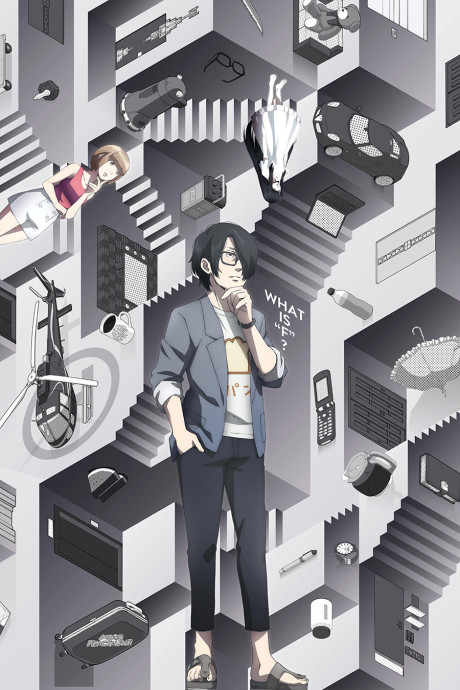
Sohei Saikawa is a promising young scientist, and a member of the Saikawa Research lab. One day, his kohai Moe Nishinosono gets involved with a mysterious genius named Shiki Magata, who infamously murdered her parents when she was 14, and has been locked up in her own secluded laboratory ever since. Moe drags Sohei to visit Dr. Magata on her island, only to find that the doctor has been murdered! While initially only coming along as a friend and spectator, Sohei has been presented with not only the seemingly impossible locked room murder of Dr. Magata, but another murder happening on the roof of her research building shortly afterwards. As pressure mounts, and news of the unsolved murder threatens to reach the public, can Sohei and Moe figure out how this tragedy occurred, and who is truly behind it, before they run out of time?
The Perfect Insider is based on a Japanese novel that came out in the mid-nineties, and while it has been adapted before, this is the first time it has taken the form of an anime, with production duties being placed in the very capable hands of A1 pictures, who pulled it off very well, at least for the most part. This is a very dialogue heavy show, meaning there is a lot of material that involves characters just talking to each other, and while the animators could have gotten away with being a lot more lazy about it, they did an admirable job of occasionally cutting to different angles in conversation, or keeping everything on frame looking interesting and eye catching, to keep any shot from looking too stale. Still, I do feel as though they could have done better at this, in fact, this might be one of those titles that could have used a touch of Akiyuki Shinbou, you know, the Monogatari guy? I’m normally not a fan of his work in general, but this is the kind of turd he’s made a career out of polishing, so his constant use of auteurist distractions could have gone a long way here.
Still, when there is animation in screen, it is solid. Character movements are articulate and graceful, and there are a lot of highly impressive 3D effects throughout, even if they’re primarily only relegated to a handful of scenes, like in Sohei’s mind when he’s figuring out details of the mystery, or in the weird dreamscape machine that shows up halfway through the series and primarily exists as a contrived excuse to put Moe in a bikini for a couple of episodes. I can’t say I’m a fan of the character designs themselves, though, because while they do look mostly anatomically correct, and the characters do look believably Japanese, which is a surprising rarity in the anime medium, they also look really boring... And like, that very much includes the main characters, who barely manage to stand out against a background of faces so forgettable that they almost seem to bleed into each other despite not actually looking anything like each other. It is a pretty spooky anime, though, so the usage of light and shadow does help sell the tone now and again.
The director of this project was Mamoru Kanbe, though, and despite how prolific and promising A1 pictures has been over the years... They are probably one of the most consistently good anime production companies on the market today, which is a good thing, because the fact that they named themselves A1 would be a huge joke otherwise... Mamoru Kanbe hasn’t come nearly as close to proving himself as they have, and while the visuals of Perfect Insider aren’t terrible by any means, they do come off as a bit on the bland side. My favorite thing about it, purely from a visual standpoint, is the video side of the opening theme, which features a rotoscope animation of three actors representing the three main characters... Sohei, Moe, and Dr. Magata... Interacting, running around and dancing with each other, presented in a very sketchy aesthetic, and while the artistry of it is nice, I get the vibe from their body language that all three actors they used were theater kids. It’s a pretty unskippable opening, if nothing else.
Before we get into the nitty gritty of this anime, we need to establish what this anime even is. There are a few labels that apply to Perfect Insider, and those labels are going to go a long way towards preparing you for the material. First off, it’s an anime based off of a written novel... Not a light novel, or a graphic novel, but an actual Japanese novel, and a pretty well-regarded one at that. I’ve never read it myself, but due to that element of its background, you can safely assume there’s going to be a LOT of talking, and the director is going to have to do a lot of busy adaptive work figuring out how to present a ton of exposition and inner monologue and transition it into a more visually engaging presentation... IE, taking a lot of Tell and transitioning it into Show. Again, I’ve personally never read the source material, but it would appear that they did a mostly good job with this? Dr. Magata’s backstory is fed to us occasionally through flashbacks, and while I don’t know if it was like that in the book, that feels like a solution most directors would have leaned on. There are, however, way too many repetitive conversations and soliloquies, I didn’t need to constantly hear Moe and Sohei talking to each other and themselves about how impossible the case was.
Another important detail about this anime is that it’s a mystery story, which of course comes with baggage of its own... You need a detective, a crime, and some outstanding circumstance that brings the two together. For this title, you technically have two detectives, and they’re playing basically the exact roles you think they would play... Sohei is playing the role of Sherlock Holmes, and Moe is playing his Watson, and unlike the BBC version, you’re actually SUPPOSED to ship them. Joking aside, Moe becomes entangled in Dr. Magata’s world, which brings the three parties together, and just like that, you’ve set up the foundation for a strong mystery story, with Dr. Magata’s shocking and unforgettably gruesome murder tempting Holmes and Watson, as well as all the viewers at home, to ask any number of questions that feel impossible to answer at first, but over time, the answers to which become more and more clear, setting up a potentially heart-stopping resolution that will change everything.
Of course, things don’t exactly play out that way. First off, Sohei is a poor excuse for Sherlock Holmes. Holmes is easily one of the most fascinating, intriguing and charismatic characters in the history of fiction. Countless stories have been told about him, especially after he entered the public domain, and at least from what I’ve seen, no mystery he ever had to solve has ever upstaged him as the star of the story. Sohei is fucking boring. Not only is his personality completely forgettable, but he doesn’t even take an interest in the mystery, even as it’s going on around him, until late in the game. He doesn’t drive the story, Moe does. He is actually the worst possible kind of character to play a Holmes role... He’s a self insert anime protagonist. He’s some cool, cold-demeanor hipster with thick pseudo-intellectual glasses who smokes a lot, and is also a whiz at any computer system he touches. He’s only a striped shirt and a beret away from being a stereotypical condescending frenchman.
What makes matters even worse is that Moe can’t be a good Watson, because in order to show the audience how cool and desirable Sohei is, she has to play the most ubiquitous friend character in anime history; The female childhood friend who’s romantically obsessed with the main character and would rather die alone in an apartment full of rescue cats than ever consider porking anyone other than her sempai. Because God forbid we go two fucking shows in a row without running into THAT character again. I mean it wouldn’t be totally fair to say being in love with Sohei is her only personality trait... She’s also a math whiz whose skills even Sohei bows to, so that is a nice detail... But at least ninety percent of her character revolves around her unrequited love for him, and since the writers don’t want to move away from that aspect of their dynamic, she’ll never outright confess, and he’ll never outright reject her, it’s just a neverending cycle of romantic tension that makes you want to jump off a fucking bridge. She didn’t even meet up with Dr. Magata for her own reasons, she did it because she knew Sohei really liked Dr. Magata.
That is one of the main issues with this series, though... A huge chunk of the writing is dedicated to sucking off the main character, who is a blatant self-insert for the original creator as well as any dude in the audience who over-inflates their own intelligence and intellectual value. I mean for fuck’s sake, even Rick Sanchez has some intentional character flaws written into him to balance out this kind of bullshit. Having said all of that, though, there is one very significant underlying theme to the writing, and it’s one that you’ve definitely seen explored before, from a variety of different angles. That theme is, put simply, you can’t be truly free if you allow yourself to be tied down, and you have to sever those ties to find your freedom. It’s enlightenment through detachment. As Janis Joplin put it, Freedom’s just another word for Nothing Left to Lose. Some prominent examples of this theme can be found in Office Space, American Beauty and Bojack Horseman, among plenty of others.
This is a very tricky subject to talk about, especially with the way The Perfect Insider explores it. One of the primary differences between Sohei and Dr. Magata is that while Sohei allows himself to be tied down to one place by his position and responsibilities, Dr. Magata literally attained freedom by murdering her family, which underlines the inherent selfishness of this mindset. More often than not, it’s used as a justification for the avoidance or total abandonment of responsibility. Take the song Freebird, which is just a long-ass excuse for dumping your girlfriend because “I’ve gotta be free!” I’m not going to say this philosophy is always bullshit, but it is often used in highly pretentious ways, and despite what I just said, it never feels like The Perfect Insider is ever intentionally criticizing it as such. It almost feels like it’s on the psychotic doctor’s side, as though she’s attained some elevated consciousness because she had the courage to do what Sohei wouldn’t.
What really bugs me about this is that Dr. Magata found freedom three times in this story. The first time, she murdered her controlling family. The second time, she was on trial for murdering her family, and because she was deemed too insane to stand trial, she was just released, which we’ll talk about later. The third time… Well, I guess now’s as good a time as any to talk about the ending of this series, and yes, I’m referring to the big resolution to the big mystery. Now, you can have a long, drawn out mystery story that might get a little tedious, sure, and it won’t matter, if you can just stick the fucking landing and deliver a haymaker of an answer. Give me a final reveal that gives me goosebumps, and I will give you every possible benefit of the doubt. That does not happen here. It’s bad. It’s really bad. That’s about as far as I can go without spoilers, so here’s an explicit description of what happens, hidden under a spoiler tag. Read at your own risk.
So, Dr. Magata technically went into isolation on her own, but she went in pregnant, gave birth to her daughter, and essentially raised her daughter to eventually kill and replace her, but since her conversation with Moe gave her doubts, Magata decided to murder her instead and pose as her own made up sister to escape and kill her uncle, who was the father of her baby that she had just killed. Now, if you think about this more than the fucking story did, you’d realize that a fourteen year old girl gave birth by herself, raised that baby in secrecy for fifteen years, all without being discovered. So not only was this all completely pulled off in silence so that nobody attending her from the outside would discover them, but this child never saw a doctor, a dentist, or a single vaccine for fifteen years, and yet she still grew up to be perfectly healthy, and coincidentally turned out identical to her mother.
Oh, also, that message I mentioned earlier is bullshit, because she wasn’t placed in isolation as a punishment, she literally chose to be there, and still sacrificed her daughter to escape, meaning killing family for her own benefit… Even just a petty benefit like assuming a new identity without the baggage of her notorious crime… Is not a hard decision for her. And to reiterate: When she was fourteen, she had a baby entirely by herself in isolation with no drugs or doctors, and none of her attendants or suppliers ever noticed. She was blessed with a baby who never cried, a toddler who never threw a tantrum, a child who never got sick or injured, a teenager whose only act of rebellion was “I don’t want to kill you anymore, kill me instead”, and in all this time, she never had to purchase a single diaper. I’m a guy, I’ve never had any kids, I’m not an expert on pregnancy, but you don’t have to be an experienced midwife to smell the bullshit on this one.
So for those of you who read that spoiler section, you may be thinking the same thing I am; “Okay, but seriously, it was aliens, right?” It’s bad enough that this show thinks that a girl who commits a double homicide and is found not guilty by way of insanity would just immediately be released back into the public... No, she would get sent to any number of mental care facilities that can sometimes be even worse than prison... But it genuinely doesn’t feel like any thought was put into the answer to the mystery outside of how shocking it would be, and how people might react when hearing it. Never mind the fact that, when you really think about it, there isn’t any clear motive behind any of it, aside from maybe crafting a mystery to try and stump some L-level detective who might coincidentally stumble upon it. A good mystery should be better on your second viewing, because you should be able to notice all of the small details you took for granted the first time around. Perfect Insider just feels dumber and more insulting the second time around, as you realize just how pointless most of the conversations really are, and how many idiotic red herrings the writer threw at you.
With the mystery falling flat on its face, the dialogue eliciting eye rolls and snores, and the entire supporting cast either existing to have brief interactions with the main trio or just existing for no reason at all, there’s really nothing here to justify a recommendation. No wonder Sentai didn’t bother investing in an English dub.
The Perfect Insider is out of print from Sentai Filmworks. The original novel by Mori Hiroshi is available in English from Kindle in audiobook form, but a TV drama and somehow a video game are not.
Sir Arthur Conan Doyle once said, “‘When you have eliminated all which is impossible, then whatever remains, however improbable, must be the truth.” This is likely because Sir Doyle never watched The Perfect Insider, whose ultimate answer is so abysmally improbable it makes you wish there were an impossible alternative that you could cling to. It is one of the most clear and obvious examples of a writer not being nearly as smart as he thinks he is that I have ever seen. There are occasional moments where the dialogue has some genuine charm to it, but for the most part, it’s boring, insufferable, and full of naive, sophomoric social commentary that it fails to consistently support. I like the production values, but this show was definitely trying to be the smartest anime in the room, but in the end, it only stands tall as a phenomenal act of hubris.
I give The Perfect Insider a 3/10

Takeo Goda was never meant to be a main character, not even in his own life story. Don’t get me wrong, he was well loved and popular, and an all around good person, but he was also freakishly huge and monstrously buff for his age. At only sixteen years old, Takeo stood easily higher than eight feet tall, with giant lips, a jar shaped head, and a physique that would give Vince McMahon the fatal heart attack he so desperately deserves. At best, he was born to be the main character’s best friend, so naturally he grew up to become the life long bestie of Makoto Sunakawa, a heart-stoppingly handsome heartthrob who seems to be heartless when it comes to the ladies. One day, while the two are riding the train, Takeo saves a young woman named Rinko Yamato from a groper, and Rinko goes gaga as a result... But it has to be for Sunakawa, right? There’s no way a girl as beautiful and charming and gosh darn sincere as her can possibly be in love with an ape like Takeo, right? Like a good friend, he’ll put aside his own feelings to help the two of them get together, but in doing so, he’s going to find there’s a lot more to Rinko than meets the eye.
With My Love Story, we are returning for the first time in a long time to Studio Madhouse, which is always a coin flip, if we’re being honest. Madhouse has a tendency to bless their anime productions with either all of the money or none of the money, with very few titles resting in the middle, and out of the cheaper titles they put out, only the ones who were left in the hands of extremely skilled directors ever manage to succeed in spite of Madhouse’s callous negligence. I bring this up so you can fully understand and appreciate just how lucky My Love Story was to receive both a lavish budget AND an extremely skilled director, because Madhouse gave this title to one of their most frequent collaborators, and my personal favorite anime director of all time, Morio Asaka.
Morio Asaka has directed a bunch of titles for Studio Madhouse, including CLAMP titles like Cardcaptor Sakura, Chobits and Clamp in Wonderland. He’s also directed some highly critically acclaimed anime like Nana and Chiyayafuru, and what I consider to be his masterpiece, Gunslinger Girl. I can’t say everything he’s touched has turned to gold, I will probably be reviewing Cardcaptor Sakura Clear Card later this year, but for the most part, he has left a very impressive resume in his wake over the last few decades. To be clear, he’s not the kind of director whose presence you immediately notice... He’s not some obnoxious auteur with a repetitive style or any of his own tropes or cliches. Rather, he’s a director who understands whatever project he’s given on a deep enough level that he knows how to bring out the hidden potential and commercial appeal of said project. It’s no big secret that you have to change things when adapting a manga to the screen, and Morio Asaka is one of the best directors you could possibly trust to decide those changes.
I’ve never read the original manga of My Love Story, but it just feels like one of those rare pieces of media where every decision that went into it was just the right one. You might not notice this at first glance, but if you’re as familiar with Asaka’s work as I am, then you can just feel how much fun he was having with this one, especially when it comes to the character designs. Obviously Takeo is the standout character, as a character like him would stand out in most settings, but he, Motoko and Rinko all have extremely exaggerated designs, with an exaggerated innocent bishoujo and the cold, sexy bishounen complementing him really well, and playing against the stereotypes of their designs just as boldly, and Asaka just could not let go of any opportunity to milk as much visual comedy out of these three characters as possible, and he does so without ever being mean-spirited about it. At the very worst, they’re in on his jokes. Takeo has a million different expressions and funny animations for a million funny situations, but Rinko’s sparkly, wide-eyed faces and Makoto’s dead-eyed deanpans that occasionally crack into an incredibly charming laugh are just as pleasing.
And of course, like I said, there was very clearly a massive budget for this series, and the animation across the board is damn near perfect. In comedic moments, the pacing and animation speeds up, so you can enjoy some good-hearted slapstick and Takeo’s goofy running cycles. In romantic moments, the pacing slows down, and Asaka adds these beautiful visual effects that accentuate the stars in Rinko’s eyes, and even make Takeo himself look romantic as hell. I don’t recall a single moment where any frame looked awkward, or when on-screen movement looked anything less than graceful, or where the sight of this massive hulk of a boy holding hands with a girl one fourth his size ever made me cringe, which you’d have to imagine should have been a major concern. I don’t even remember seeing any transparent budget saving tactics, which I’mpretty sure means Madhouse just gave Asaka free reign to make the romantic comedy of his dreams without any pushback or restraint whatsoever. This show is absolutely gorgeous.
The English dub, as it turns out, is also a really strong effort. Produced by Animax and licensed by Sentai Filmworks, there is a very large cast at play here, with some standouts including the legendary Marcy Bannor as Takeo’s mom, and Luci Christian playing his younger self in flash backs, but none of that really matters, because this is flat out a star making vehicle for the voices of its two main characters. Now, this is going to be a bit of a back handed compliment, but Andrew Love doesn’t have a lot of range... He plays dumb muscleheaded tough guys really well, but not much else. That’s the back-handed part, so here’s the compliment: He plays these roles fucking amazingly, and Takeo might just be his finest work, as most of his previous outings haven’t had this much depth of survived pain and kindness behind them. Tia Ballard is also outstanding as Rinko, who is easily able to match and even sometimes exceed him in pure unadulterated sincerity. They both poured their souls into their characters, and in doing so, they make this dub, to the point that it’s easy to underappreciate just how much subtle nuance Austin Tindle puts into Sunakawa to balance them out. I highly recommend this dub.
You know, I’m starting to think I just have a thing for romantic comedy anime with unconventional leading characters. I enjoyed Kiss Him Not Me more than most people, with its fujoshi otaku lead. I lauded Kotoura-san for the ingenious decision to cast the girl crazy lovesick loser as its romantic lead. Toradora is my second favorite anime ever. This in mind, along with my fanhood for Morio Asaka, there was no chance in hell I wasn’t going to love My Love Story. The story of this big dumb giant and a smaller starry-eyed beauty falling in love was practically made for me, and while it’s been about ten years since the first time I saw it, I’m happy to report that I love it just as much now as I did then. Granted, there’s not a ton that I can say about it in a long format review... It’s not all that deep, and it’s really hard to talk at length about good comedy without spoiling all of the jokes... There are a few things I can touch on that will hopefully express my feelings as accurately as possible with minimal spoilers.
The first and most obvious thing that’s working in this show’s favor is everything I mentioned earlier about the production values and Morio Asaka’s direction, and I don’t really want to retread any of that, but I do think it’s important to talk about how well these qualities served the tone of the series. To start, it’s really easy to describe this show as fluff. It’s a feel good, fun and wholesome comedy that takes the high road at every given opportunity, but unlike most fluff, it never really feels manipulative and it never gets boring. I think part of this is because at no point does Asaka try to sexualize anything or anyone to you. There is some fanservice, but it’s entirely situational, rather than in your face, and it’s left entirely up to you to decide how to react to it. This show may feature a beach episode full of bikinis, and several shots of Takeo shirtless, but it doesn’t have an ecchi bone in its body. If anything, it uses scenes like these to show why the characters themselves are attracted to each other, rather than trying to hook YOU onto them.
And yes, while the comedy might occasionally frame Takeo, Rinko or Sunakawa as the butt of a joke, it never feels like it’s doing so at their expense, as they’re either too dense to feel insulted or humiliated, or because they’re entirely in on the joke. The comedy is never mean spirited. The jokes revolving around Takeo’s absurd appearance aren’t poking fun at him as a person, they’re lampooning the effect he has on the world around him and how he exists in it, all the while he’s just living his life and being a good person. No, not just a good person, but an extremely likeable person. While we’re on that subject, I hear what some of you are saying, and at worst, I would go as far as to say that Takeo and Rinko are ALMOST Mary-Sues. Yes they are good people, with a ton of friends who love them, but they do have a few flaws each. Takeo is, to put it nicely, below average in intelligence, and he sucks at reading people. Rinko is a bit of an oddball, as her friends see her, with very strange sensibilities and taste in men.
She’s also low key kind of a stalker, which I don’t think was unintentional on the part of the writers... Don’t get me wrong, I said low key for a reason, and she’s not nearly as bad as another character who is introduced later, but the methods she uses to track down Takeo after their first encounter are a tad questionable. That aside, I love these two as a couple. They might just be one of my favorite anime couples of all time, right behind Ryuji and Taiga, and a huge part of it is that they are probably the best possible example of opposite attracting. These are two characters who look drastically different, come from radically different worlds, and would never have met if it wasn’t for that chance encounter on the train, and yet it still feels like they were made for each other, because they do have one very important thing in common... Their sincerity. They are both highly sensitive, highly emotional people who wear their hearts sewn directly onto their sleeves. It is adorable how they are almost always operating on the exact same wavelength.
This comparison won’t make sense unless you’re familiar with the fantasy books of Mercedes Lackey, but I am convinced that what they have must be what a lifebond looks like. One of the main reasons I love them as a couple, however, lies with the motivations of Rinko herself. At first glance, it would seem like she and Takeo were drawn together mainly by his heroism, and that she’s in love with him because she’s her savior, which would draw upon a story telling trope that’s as old as the art of story telling itself... The hero saves the princess, and lives happily ever after with her. He wins her affections through sheer virtue and positive action. I’m not going to completely condemn this trope, as it is a classic for a reason, and you can tell some very emotionally satisfying stories through it, but there is an underlying implication of entitlement to it... You save somebody, they owe their love to you for it.
This trope has been parodied and deconstructed to death over the years, including by anime. One of the most memorable examples is Charlotte, where the main character orchestrates a rescue scenario to manipulate a girl into dating him, and she dumps him when he moves away. Hilarious, actually, and proof that Charlotte was good before it lost its damn mind. With My Love Story, however, the deviation is a lot more subtle... Rinko isn’t in love with Takeo because he saved her, but because she legitimately finds him attractive, and I mean in an explicitly physical way. Takeo didn’t get a girlfriend because he saved a girl, he got a girlfriend because that girl just happened to have experienced her sexual awakening while watching King Kong. The fact that he’s a good person is just the icing on the beefcake. Thanks to this detail, you get to celebrate the fact that someone finally appreciates Takeo enough to love him, while also celebrating that the someone in question has agency of her own, and a well defined, interesting personality.
As for Takeo, I have referred to him as a good person at several points thus far, and yes, I know, that’s probably one of the most boring ways to describe anybody, fictional or otherwise, but hear me out. Before you judge him, it’s important to establish what kind of good person he is... He’s a nice guy, but he’s not a stereotypical Nice Guy. He doesn’t do nice things for personal gain. He’s not some fedora-clad simp who pulls chairs, holds doors and busts out the umbrella because he thinks it will get him one step closer to some action. That sort of person reeks of entitlement, like they think the affections of a woman are a prize to be won or earned. Takeo never thinks like that. He has low self esteem, and believes himself unworthy of female attention to the point that he refuses to believe Rinko loves him until he hears it for himself, and yet he never has a single thought along the lines of “I’m nice to girls, so why don’t they like me?”
Rather, the fact that his good deeds are never rewarded like that never deters him, because he never makes that connection. He is a true, pure altruistic person. He does kind things not for personal gain, but because he wants to do them. He wants to make the world around him a better place, and he genuinely doesn’t care if people appreciate his deeds or not. He doesn’t seek approval or gratitude. He doesn’t think of women as prizes, which is good, because Rinko is way more than just a prize, she is a fleshed out, interesting character, and he loves every detail and flaw she possesses. I could see a character like him being boring to some people, and that’s fine, but this review is based on my opinions, and if I’m being honest, this is my personal favorite kind of hero; The boy scout who just wants to help people, and makes no effort whatsoever to look cool or appealing while doing it. This is why Captain America is my favorite Avenger. Again, this might not work for you, but I’d still bet Takeo is at least a funny enough character to compensate for it.
Not gonna lie, though, seeing him fall off of a mile-high cliff and survive was stretching things a bit too far for even MY suspension of disbelief.
Now there is another point to their relationship that I feel should be touched on, and it’s going to be a bit of a spoiler, but I don’t think it’s one that’s going to ruin the experience for you. Earlier, I mentioned that Takeo doesn’t realize Rinko has feelings for him at first, so you may have inferred from that that like most romantic comedy anime, there’s going to be a long period of “will they won’t they” in this show, but no, no really. We only get about four episodes of that before Sunakawa breaks it up and helps them get together, which is kind of a double edged sword. On the plus side, it’s really refreshing to see a romcom anime go this very uncommon route, and I personally never got bored with seeing these two together. On the downside, this does rob the series of having any stakes or forward momentum, so I could also see this decision being really disappointing for some viewers, and I personally disagree, but I don’t blame them. It is a pretty steep trade off, objectively speaking.
And like most romcoms, not everything in it has aged well. Don’t get me wrong, it has aged better than most romcoms, but it still has its touchier elements. Probably the worst part is Sunakawa’s sister, who has a crush on the three years younger Takeo. Three years doesn’t matter when you’re adults, but a 19 year old lusting after a 16 year old isn’t great, and when you see their size difference in flashbacks, it’s even more uncomfortable. There’s also a scene where Takeo forces Sunakawa to let him practice kissing on him, which is totally played for laughs, but it’s still non-consensual kissing, so it’s still pretty hard to watch, especially for me, because I’m asexual, and Sunakawa is very likely asexual, so I definitely felt his lack of comfort through the screen. And finally, it is a little weird that Takeo’s part time job makes him wear skimpy, revealing outfits, but when I was in high school I was acquainted with multiple 16 year old Hooters girls, so I’m gonna let that one slide.
Aside from these few sticking points, this is a surprisingly tasteful show that artfully sidesteps most of the potentially problematic elements of both the romance and comedy genres while still never failing to be both funny and charming in equal measures. I said earlier that there really isn’t much depth to it, but there is a little bit... Early on, this anime references the old Japanese fable of the red oni and the blue oni, which is as well known in Japan as The tortoise and the Hare is to those of us in the west, and it is a genuinely complex and thoughtful parable, which is why you’ve seen it referenced in a lot of anime over the years. By placing Takeo in the role of the red oni, and Makoto in the role of the blue oni, this fable establishes not only the full nature of their dynamic, but the main theme of the series, to not judge people by their appearances... A cliche, to be sure, but this story never stops finding clever and entertaining ways to show peoples’ expectations being defied again and again.
My Love Story is available from Sentai Filmworks. The original manga by Kazune Kawahara is available from Viz Media.
I love this show. Yeah, you can call it pure fluff if you want to, but it separates itself from the rest of the fluff by never being boring or manipulative, and remaining consistently funny despite its abject refusal to ever resort to mean or lowbrow humor. That means no panty shots, no cringe moments where a guy gets beat up for walking in on a girl, nothing that needs to be censored, just a clever, heartfelt and wholesome comedy about a handful of extremely likeable characters and their relationships to each other. The pacing is so good that it makes 24 episodes feel like 13. I do wish we could have seen more of Rinko’s family life, especially after all of the time we spent with Takeo’s family, but all in all, I’m happy with the series as is.
I give My Love Story a 9/10
What does it mean to be human? Once upon a time, a magical blue fairy tasked a little wooden puppet with answering this question, so that he could pursue his dream of becoming a real boy. Now, it’s time for the fairies to answer this question, as four little bubbly bottle babies have been tasked with studying humanity, and learning what makes them human, in order to become human themselves! Kururu, the blue bottle fairy, represents Spring. She is energetic and imaginative. Chiriri, the yellow bottle fairy, represents Summer. She is friendly, but demure and polite. Sarara, the red bottle fairy, represents fall. She is quiet and tomboyish. Hororo is the green bottle fairy, representing winter, and she’s kind of the space cadet of the group, being shy and gluttonous. The man who watches over them, who is only known as Sensei, is kind and patient, and his five year old neighbor Tama-chan is always happy to play with the fairies and aid them in their misadventures. I hope you’ll join in on the fun too!
While I have reviewed multiple entries in the same franchise in a row before, this might be the first time I’ve ever accidentally reviewed two anime that were produced by the same studio and shared the same director back to back. Much like my previous review, Love Hina Spring Special, Bottle Fairy was produced by Studio Xebec and directed by Yoshiaki Iwasaki, and while Xebec is one of the least respected studios in the entire anime landscape, Bottle Fairy is probably one of their best looking titles, although I would like to attach a huge asterisk to that. I said last review that Yoshiaki Iwasaki did really great work when he had the right amount of money to work with, so I guess it should be no surprise that with Bottle Fairy, an anime that looks like it was produced on a budget that was thinner than an anorexic skeleton would wind up looking borderline perfect for what it actually is.
Bottle Fairy is a children’s show, and I don’t mean a cal arts early 2010’s kids show, I mean a Baby Looney Tunes level kids show, or a Muppet Babies level kids show. It’s about a small, never changing cast of characters using their imaginations and going on constant episode-length self-contained mini-adventures without ever leaving the same room, and the best part of all that is that you don’t need intricate visuals to do the job at hand. The aesthetic of Bottle Fairy is extremely simple, with very basic character designs interacting with one another against semi-detailed watercolor set pieces, and since there’s really no expectation of extra effort or budget management, the end product winds up looking basically perfect, and while I don’t personally find the series to be visually interesting, I do respect the approach the director took and all of the potential trouble he avoided by not biting off more than the studio could chew. The character designs are simple, but so were the ones from Alvin and the Chipmonks.
The English dub also does it’s job perfectly fine, despite sharing some of the same problems that most old Geneon anime suffered from; I spoke about this in my last review, but the old way of dubbing(Where you forced your actors to try and copy the Japanese performance, even when the cadence’s they used were so obscure that they came off sounding shrill and artificial. The fairies here don’t sound quite as bad as the ones in A Little Snow Fairy Sugar(Which is the only point I’ll give this show over that one) but it is still a few feet too far inside of the Uncanny Valley. The four main voice actors performed their roles well, and while I did like Sandy Fox and Karen Strassmen’s roles, the other two were still stronger by far. Stephanie Sheh was still somewhat new at this part in her career, but she plays Hororo like a slower, gentler version of Osaka from Azumanga Daioh, without the accent, of course. The late Philece Sampler played Sarara, and while portraying resting bitch face child characters can be a difficult tightrope to walk, I think she found a good balance between curiosity and cynicism.
It’s been a while since I’ve had to ask this question, so I hope you’ll indulge me in asking it one more time... How exactly does an adult review a piece of media that was clearly intended for children? On the one hand, I believe critics should always offer their sincere opinions, never holding back and never trying to spare anyone’s feelings. On the other hand, it feels kind of mean spirited for Siskel and Ebert to give Barney the Dinosaur two thumbs down. It’s like, I obviously respect your opinion, but dude, this show isn’t for you, so your opinion doesn’t really matter. Asking for an adult to rate or review a children’s show is like asking a vegan to review a steak. I’ve come across this dilemma in my reviews before, and to this day, the answer is still complicated. The approach that I’ve come up with is pretty much the same as the approach that I take when reviewing sexy ecchi anime as an asexual... I’ll try to understand it from the point of view of the intended audience, while also giving out my own opinion, in the best balance I can manage.
Here’s the problem though... Children will watch fucking anything. When you’re an adult judging the quality of kids' media, you want to uphold your own personal standards... Is it educational? Is it well written? Is it as sophisticated as the kids' content that I watched growing up? But let’s be fucking real, none of us knew what good writing was when we were kids, and when we wax nostalgic about how much better cartoons were when we were kids, we’re just putting the stuff we grew up with on a pedestal because we refuse to take off our rose colored glasses while looking at them. When I was a kid, I watched that shitty, shitty, shitty Christopher Colombus movie “The Magic Voyage” until the VHS was ruined. I didn’t care that it sucked. Even with shows I used to think were awesome, like Darkwing Duck and Garfield and Friends, when I tried watching them again as an adult, I wanted to slit my wrists with a plastic spoon.
Obviously, it’s easy to look at a kids show as an adult and pass judgement on it, but as a kid, whatever. Who cares if a show is just jangling keys in front of your face? Have you watched keys jangle? It’s not half bad. So yeah, on the one hand, it feels disingenuous for me to give my opinion on Bottle Fairy, a show I did not grow up with, that I have no nostalgia for, and that I have no previous relationship with, that duty should be left to someone younger and more qualified. On the other hand, I don’t see anyone else rushing to publish reviews of this series, so I guess I’m all you got, and if nothing else, I can at least promise to be fair. After all, it’s not like Bottle Fairy doesn’t have anything going for it. Like I said before, it’s well produced, and it’s cute looking, and it does kind of have a certain charm to it.
To judge Bottle Fairy, I’m going to look at it from a few different perspectives, and I’m going to have to use my imagination on both of them. I’m going to judge whether or not it would be entertaining to a child, and whether or not I, as the parent or guardian of said child, would approve of it. I’m using my imagination because I don’t have any kids, I have a cat, and he doesn’t care what’s on TV unless it’s one of those birdseed in the woods video streams on youtube. From a child’s perspective, I could see this going over well with little girls in particular. Don’t get me wrong, I don’t believe in gender roles or gender stereotypes, girls can play soldiers and boys can play with dolls and that’s perfectly fine, but let’s be real, demographics that have existed for generations have to have at least SOME truth to them. Bottle Fairy strikes me kind of like early My Little Pony, something slow, gentle and soft, with enough humor to entertain someone whose tastes haven’t evolved very far, with a slice of life tone and a focus on social dynamics over action or story-telling.
My first question as a parent would be, is it safe? Yeah, mostly. It goes without saying that Japanese children are used to slightly more mature fare than American kids, and there are little moments in this show that might raise a few eyebrows... For more conservative parents, two of the fairies wear bikinis on the beach, and there are a couple of moments of lesbian teasing. For more reasonable parents, there is at least one reference to Japanese samurai-style suicide, but it’s over really quickly, and would probably go over the heads of most children. With a little bit of necessary parental guidance, I’d say yeah, it’s safe enough. My second question would be, is it educational? I mean yeah, it touches a little on Japanese culture, but the problem is, it does so in a way that’s geared towards Japanese children who are already familiar with said culture. In context, it isn’t really saying anything about the cultural elements that it references, it just acknowledges them. Like, oh, sometimes when a kid is wearing a kimono, their parent will pull their sash to spin them like a top. To the Japanese, this is a fun little childhood tradition. To American children, this is probably confusing as hell.
My final question would be, if I was watching over a child for whatever reason, and they were watching this show, would I be able to survive watching it with them? Again, I don’t have any kids, but I’ve spoken to enough of them to know there’s a damn good reason they pray to God, every day, that their kid will pick Bluey instead of Peppa Pig. As for me, with Bottle Fairy... I think I’d survive? I don’t hate Bottle Fairy, it’s not like it’s annoying or anything, and it’s really easy for shows like this to be annoying. It’s boring, but at least it’s short, with only thirteen half-length episodes. I actually liked the ending, believe it or not. I'm not going to spoil it, but there’s a pretty funny and unexpected conclusion in episode twelve, and episode thirteen actually follows through on it in a pretty clever and satisfying fashion, so it’s not all bad. Having said that, for the episodes leading up to that ending, I would probably pull out my Nintendo Switch to play Pokemon Scarlet on mute so I could spam surprise trade while still paying most of my attention to the series. And once the kid notices, they’re going to lose all interest in Bottle Fairy and start begging me to hand over my Switch, because playing Pokemon is way more interesting than anything Bottle Fairy has to offer.
Bottle Fairy is long out of print from Geneon entertainment., but used copies are relatively easy and cheap to find secondhand.
I think it’s safe to say I gave Bottle Fairy a fair chance. I had some expectations for it, because a similarly saccharine looking show called A Little Snow Fairy Sugar had so much depth and complexity in its writing, characters and emotions, but I’m not going to hold that against it. When it comes to children’s media, you don’t always need all of that. Bottle Fairy isn’t particularly smart, or creative, or challenging, but for what it is, and what it’s trying to be, it’s fine. I didn’t like it very much myself, but for its target audience, it’s fine, and I don’t mean any disrespect to those of you who grew up with it and have fond memories of it. It’s not bad by any means, it’s just... Fine. It’s perfectly harmless, but the only things I personally liked about it were the ending and the handful of AMV Hell clips that it inspired.
I give Bottle Fairy a 5/10
In the heart of Japan stands a prestigious college called Tokyo University. It’s easily the equivalent of any Ivy League school in America, and it carries an odd superstition that if you manage to get accepted alongside the person you love most, the two of you will be together forever. When Keitaro Urashima was a child, he made friends with two little girls on the playground, and he promised one of them that when they grew up, he’d go to Tokyo U with her. Well, they got separated soon after, and Keitaro grew up into a hopeless lovesick loser with no romantic prospects and a dream he had no hope of fulfilling, and the only thing keeping him going was his goal of one day achieving his destiny, reuniting with his childhood love, and attending Tokyo U! Unfortunately his first attempt at enrolling ends in failure, so his parents force him to take over the family dorm(what westerners would call a boarding house) called Hinata Inn. There, he meets several wacky female residents, who all have their own bizarre personalities and backstories.
One of them is Naru Narusegawa, a girl slightly younger than him who is also trying to get into Tokyo U, and while the two do not get off on the right foot... He is constantly getting into misunderstandings and accidents that make him look like a pervert, and she constantly beats the shit out of him for it... They do soften towards each other over time, and it even starts to feel apparent that she might actually be the girl he made the promise to... Unless it was Mutsumi Otohime, another girl on a quest for Tokyo University for similar reasons. They all fail their entrance exams the following year... Keitaro for the second time, Mutsumi and Naru for the first time... And a year after that, when Keitaro fucks up and believes he may have failed his third attempt, he can’t bear the shame anymore, so he runs away to live on a desert island, which is crawling with ancient turtle ruins, and Keitaro is not turtley enough for the turtle club. Can Naru and the rest of Hinata Inn bring him back home before he throws away his future?
Like the rest of the Love Hina anime, the Love Hina Spring Special was animated by Xebec, which is popularly considered one of the worst production companies in the entire anime medium, and for good reason. I’m not going to say everything they’ve produced was terrible, but they put out a ton of duds while they were around, and nothing really impressive to balance the scales. Director Yoshiaki Iwasaki has a slightly more inspiring resume, as he animated a lot of silly, lighthearted children’s fare back in the day, along with dipping his toes into the isekai market more recently, he can do fine with the right budget... And I’m guessing this particular special had the right budget, because it’s probably the best looking entry into the Love Hina anime franchise. Well, okay, maybe that’s an exaggeration, because it certainly doesn’t look expensive, but the level of quality in the animation is more or less consistent, characters remain on model throughout, and there are never any jarring drops in quality at noticeable moments.
I’m guessing this is partially because in comparison to the rest of the franchise, this special offers the highest level of opportunity for a director to prove himself, without having to deal with the burden of a lengthy production. At only 45 minutes, it had to be a lot easier to allocate funds than in the much longer TV series or evenin the Love Hina Again OVA, and unlike the Christmas special, this story arc offered a ton of unique locations to visit, and the characters are constantly moving and doing things other than walking around and moping. Obviously this comes at the risk of the pacing of the story, as the cast are frantically jumping from set piece to set piece, but at least things remain visually interesting. The character designs are still mostly generic looking, as the jump from page to screen did not treat very many members of the cast very well, but they finally brought in Nyamo(who looks accurate enough) and we also finally get the famous leaf bikinis, take whatever small miracles you can get.
What hasn’t changed at all is the English dub, which is still one of the most infamously terrible in anime history. To be fair, this show isn’t alone in that problem... Love Hina came out in the early 2000s, when there was a major shift happening in anime dubbing. The way things used to be, companies like DIC and 4Kids would produce dubs for the mainstream television market, censoring the shit out of them in the process, while companies like Geneon and Pioneer would produce dubs for more mature, generalized titles for the home video market, and they would swing more towards accuracy, which unfortunately meant directing their actors to try and match the tone and vocal registers of the original Japanese seiyus. This resulted in a lot of male protagonists with nasally, shaky voices, and female characters with high-pitched, breathier performances that sound completely unnatural, resulting in a headache inducing shrillness that just never sounds right in any context.
Since this was the trend at the time, before studios like Funimation and ADV started to take over the market in the early-mid 2000s with more natural sounding acting, it’s hard to blame this on any of the actors that took part in this mess... Some of whom are still around and doing much better work... but holy crap does it sound dated. Derek Stephen Prince and Dorothy Fahn sound fine as Keitaro and Naru when they dial it back and they aren’t screaming at each other, but they are annoying otherwise. Barbara Goodson’s fake southern accent is just as awful as always, and as much as I love Wendee Lee and Michelle Ruff, their fake Indian accents are just insultingly bad. Bridget Hoffman sounds like an adult trying to soften her voice to imitate a child as Shinobu, which really should not be the goal, and I’m sorry, I know Mona Marshall is really highly respected as a voice actor, but I’ve just never been a fan of her work.
Also they all sing. There’s a song toward the end of the movie, and it got dubbed, so they all get to sing a line or two, and it’s horrendous.
At this point, I’ve reviewed plenty of Ken Akamatsu anime on this site, and my feelings towards them have largely remained the same. I don’t remember exactly what I've said previously, but I don’t want to retread everything again, so here’s just what I feel like saying off the top of my head; Ken Akamatsu is an auteur who tends to write these long, sprawling narratives where he spends a ton of time fleshing out his characters and comedy style before he actually gets to the point. His stories become a lot stronger and more complex over time, which is rewarding for anyone who managed to stick with them, and since those first few volumes might have felt tedious otherwise, he fills them with silly fanservice hijinks and PG level nudity to spice things up and keep your attention. This all makes his work borderline impossible to adapt, because it is not popular enough to get the episode count it needs, and his fanservice is just destined to be censored to hell and back for TV. Also a lot of it has not aged well if we’re being honest.
There’s a reason his debut work, AI Love You, never got an anime. Out of the adaptations that I’ve seen, the only one that really succeeded in telling a full, coherent story was the second Negima series, which managed to stay true to the spirit of his work while abandoning all of its baggage by telling a completely new story, and even that’s not well regarded by fans. Everything else, from Negima’s first anime, to UQ Holder, to Love Hina, was slashed and censored into a bastardized version of the source material, ended prematurely, and had to continue their stories through OVA sequels and spin-offs. I guess the Negima spin-offs turned out okay, but with Love Hina, they’re kind of train wrecks. They each take one or more story arcs from the manga, frankenstein them together into a mish-mash of barely coherent parts, and squeeze them into a bite size OVA run time, and The Spring Special is no exception.
Now, as I’ve said before, the Love Hina story is not fresh in my mind. It’s been over a decade since I’ve read the manga or watched the TV series, so while I am aware that this special is a certified butchering of the source material, I can’t really work up the passion to be mad at it for that. This isn’t going to be the case for everybody, especially for hardcore Love Hina manga fans, but let’s be honest, how many of those are still around? This has, strangely, granted me the opportunity to watch this special through a new lens... That of someone who is vaguely familiar to the franchise, but also separated enough from it to take the special on its own merits. Because of this, I’m hoping to approach the Spring special in a more positive light than I have with any previous Love Hina entry, because I live in the northeast, I just survived multiple heavy snow storms, and if I’m going to watch a spring-themed anime movie about a guy leaving a snow-covered suburban hellscape to escape to a tropical island, I am damn well going to like it.
When you approach the Spring Special from a neutral point of view, with no loyalty based bias towards the manga, but enough basic knowledge to explain what’s happening on a functional level, this special is mostly okay. The story is easy enough to follow, and the female-on-male violence is kept to enough of a minimum that you could easily write it off as just a quirk of the genre, rather than the infuriating cliche that it was in the series proper. If you don’t think about it too hard or ask too many questions, the story flows pretty smoothly. A guy and a girl who are into each other try to get into college together. The guy thinks he failed, so he runs away. The girl runs after him. They get lost, they’re in dire straits, so their friends chase after them. A bunch of silly science fiction nonsense and a constant theme of turtles move the story forward, there’s a little bit of fanservice, it’s your standard anime short. It’s a relatively simple story with a fast-paced plot that somehow makes both sense and no sense and a ton of over-the-top visuals that could only be achieved through animation.
This is the most stereotypical anime movie that you could possibly make. Honestly, if it weren’t attached to any existing franchise, I would recommend it just based on how bizarre and creative it might look to a newcomer. It’s not good, but there would be an admirable level of novelty to it, like Magical Play or Cat Soup. The problem, however, would be three-fold. First, it’s a poor representation of the side cast, with only Kaolla Su and Shinobu Maehara really standing out in any meaningful way. Kitsune, Motoko, Mutsumi, Sarah and a handful of anime exclusive characters(including the mangaka himself who has a pointless cameo) don’t really do anything important or memorable. The second problem is, Shinobu’s entire subplot about being asked out by a boy and working up the nerve to confess to Keitaro is pointless and goes absolutely nowhere. And the third is the ending. I’m not going to spoil anything directly, but the ending sequence is equal parts stupid and lazy, to a degree that wouldn’t be replicated until the 2015 movie Pixels.
What I will say is that the ending sequence kicks off with a completely pointless song, and I don’t just mean that it serves no purpose, oh no, I mean pointless in such a way that the lyrics are completely vapid and have nothing to do with anything that’s going on in the story. The characters are just taking turns singing about friendship and what they mean to each other, it comes out of nowhere and leaves you with your mouth hanging open by the time it wraps up. I’m convinced it was only included to forcibly meet a 45 minute runtime. Look, guys, I tried to be positive. I swear I did. And for at least two thirds of it, I was. I shut my brain off, and just sat there like a breathing asparagus, just enjoying the animation and appreciating that the story moved fast enough to distract me from asking too many logistical questions, like why would Naru and Nyamo have to change into leaf bikinis because their clothes were wet, but Keitaro stays in the same outfit throughout? Why bother having Keitaro fall overboard if he’s gonna wind up exactly where the ship is going anyway? And funny third thing, if they’re not going to try at the end, why should I.
Looking at this special from a new perspective has not dramatically increased my opinion of it, but I think I do have more of a soft spot for it than I used to have. Going back to the visuals, it looks better than the rest of the franchise, even if it’s not by all that much. The story is competent and easy enough to follow up until the third act, even if it doesn’t make a whole lot of sense. I’m not usually one to shut off my brain while watching anything, but by forcing myself to do so, I was able to make the experience a lot more pleasant than if I were just sitting here shooting fish in a barrel like my last few Love Hina reviews. Does that make it good? No, not even close, but it is tolerable enough, and I could understand it being someone’s guilty pleasure. It might not melt your heart, but it will provide you with some degree of warmth while you wait for all that fucking snow to melt.
I give Love Hina Spring Special a 4/10

The life of a race horse is ephemeral in nature. They run fast, they work hard, and while they’re treated like stars during their careers, things can take a drastic downward spiral once they’re out of commission. Whether it’s a broken leg, a loss of willpower or simply old age, a race horse who can’t race is often not long for this world... But what if they could have a second chance? What if they could be reincarnated as anime waifus? In the world of Uma Musume, this fever dream has become an equally feverish reality, where teenage girls with the ears and tails of an equine beast and the physical stamina to match have taken to the track for another shot at glory! For Special Week, a young up and comer with a sparkle in her eye and a dream in her heart, this is more than just a goal, it’s the lifelong dream of both her and both of her mutually exclusive mothers, and when she sees the decorated mare named Silent Suzuka in action, she knows that there’s no other option; She must become the fastest horse girl in all of Japan!
For Uma Musume, pretty Derby, we are once again visiting the anime production company named PA Works, which has no small number of beautiful titles in its stable. Most of their work involves lending a helping hand to other studios, primarily through in-between animation, but they are also very well known for producing high quality anime in their own right, at least from a visual perspective. I won’t lie to you and say that I’ve liked every anime I’ve seen from them, but I also can’t recall any of them looking anything less than decent, and thankfully, this debut entry in the Uma Musume franchise is no exception. I haven’t seen any of the other titles that series director Kei Oikawa has directed... With the exception of maybe one episode of Outbreak Company a long-ass time ago... But I definitely like the approach that he took here, skillfully executing the animation so as to not waste money where it’s not needed, using cost-cutting techniques where they will never be noticed unless you’re looking for them, and pouring the resulting surplus right where it belongs, in the actual racing scenes.
Speaking of the racing scenes, that might actually be my favorite thing about this show, because damn do they look cool. For those who don’t know, running and walking are one of the hardest things you can possibly animate, which is why a lot of anime like to resort to cheap tactics like bouncing character frames up and down in closeup to simulate movement, and when they actually do manage to put together a half-decent running/walking cycle, it gets recycled to the point of absurdity, where it looks like every character moves the same, or like there’s no gravity to them, and they’re just being clicked and dragged against the background. None of this happens in Uma Musume. I don’t know how realistic the running animation may be, but it’s fast, it’s cool, and they show it from an insane amount of unique angles. My only complaint is that every character runs with the exact same stance, making it look repetitive, but I can live with that.
I also really like the design work. For starters, these girls apparently do not have human ears, just animal ears placed atop their heads, and they are all specifically designed so that their hair(or headgear) conveniently covers the sides of their faces, so the viewer doesn’t get squicked out by the absence of human ears. On an individual note, every character has a unique aesthetic and their own over the top hairstyle, as well as their own unique version of the different outfits everyone has to wear. The way they look and dress may not be practical for their chosen sport, I mean how can anybody run that fast in a track suit without overheating? How aerodynamic are those hairstyles? But these issues are well within my suspension of disbelief, it’s an anime, if you can’t have crazy hairstyles here, where can you have them? And besides, it’s a good thing the characters look different, because it’s not as if the writing is strong enough for you to be able to tell them apart.
Okay, before I go into the nitty gritty, we need to set some shit straight. I am completely and utterly new to this franchise. I’ve never played the games myself, and outside of watching a few Vtubers react to the results of opening up their loot boxes to get the specific horse waifus they wanted, I know nothing about them, so just like Kancolle, I am reviewing this series on its own merits, without any nostalgic connection whatsoever to the rest of the franchise. I don’t play gacha games, and while I’ve been told there have been other adaptations of Uma Musume that were overall better than this one, that’s not how I roll. When I’m getting into a franchise, I like to start at the beginning, not chronologically, but in terms of release, and I like to judge that first (anime) entry alone, by its own merits. Some people don’t like that... I pissed somebody off once by reviewing Bakemonogatari without knowing every scrap of lore from all of its prequels, that was fun... But that’s who I am, and that’s how I operate.
Much like Kancolle, it’s entirely possible that if I had played the games first, I would have a more positive experience with this show like all of the preexisting fans did... Except no, I wouldn’t, because according to my research, this series actually predates the official release of the games, which means this isn’t an adaptation, so much as a proof of concept. I am actually in the same boat as the people who watched this series back when it was airing in 2018, which means I’m in the same boat I was already in when I saw the first season of Strike Witches back in the late 2000s. I am watching the first official release of an ambitious multimedia franchise based around a weird concept of themed waifus, which means UNLIKE anime based on pre-existing gacha games, I am in my fucking wheelhouse for that one! Instead of looking at every strange concept and saying “Yeah, but I bet it made sense in the game,” I get to analyze this bizarre concept on its own merits, with no guilt whatsoever, and you guys know I love bizarre concepts! So how well does this bizarre, out of the box idea hold up?
Well, first off, I guess we should start at the beginning. One of the main foundations of this concept is that like the themed waifus from Strike Witches, who were named and designed after famous fighter jets and their pilots, the horsegirls are designed after actual historical champion racehorses, and while that’s not a subject I’m personally familiar with, I’ve been told that they found a lot of clever ways to reference those origins in the story without creating too much of a distraction to people like me who won’t get the reference. The only one that didn’t work for me, and I had to have explained, was the main character’s very odd backstory. Apparently, the main character is based on a horse named Special Week, whose mother died in childbirth, and he had to be raised by another mare. For Special Week, this is described as “I have two moms... The one who died giving birth to me, and the one who she entrusted me to.”
This is shown in a flashback as her mother in a hospital bed, calmly passing her newborn baby off to another woman... Presumably to die afterward? Did she just know she was going to die? And does that work in practice? Even if a new mother does know she’s about to die, can she just hand off her baby to another person without the state getting involved? Someone suggested to me that the two moms were a lesbian couple, but this is never confirmed nor communicated to the audience, and gay marriage still isn’t legal in Japan. Yeah, same sex partnerships do have SOME rights, but immediate parental recognition in the case of death? I don’t fucking know, maybe that’s allowed, somebody’s gonna have to look that one up for me. What’s important is, this kind of sets a precedent for horse girl references that might seem cute or subtle in the moment, but only serve to raise awkward or uncomfortable questions if you think about them for too long.
Like, Horseshoes? Really? Putting aside the fact that even owned horses primarily only wear shoes for hard labor and traveling on rough surfaces(they are not required for racing or running in the grass), these girls are nailing horse shoes to the underside of their actual human shoes. So, stabbing their feet and making it impossible to run. There are some subtle visual gags that I liked... For example, landline telephones with really long receivers stretching from their mouths to their horse ears, and their propensity for kicking backwards... But for the most part, these references are DUMB. The most obvious example is that you see carrots fucking everywhere. Yeah, it might have been a little funny to see a girl running late have a carrot hanging out of her mouth instead of a piece of toast, but a big carrot plushie? A whole stack of books labelled Carrot Books? They eat carrots a lot, but it’s not consistent, because it seems like they can also just generally eat anything they want to, from pork barbecue to sushi and seafood to salisbury steak(which just sort of lazilly has a carrot sticking out of it).
Even aside from the references, there are plenty of ideas that just don’t work... Like, if a horsegirl wins a race, she has to perform as the lead in an idol concert immediately afterward, which makes no sense and adds nothing to the characters or the story. They don’t even warn Special Week about this for her first win, they just shove her on stage without any songs or practice. There’s also an episode where after Special Week is shown with a comically oversized stomach after celebrating something, it’s revealed that she gained weight and has to lose it to run... Not only is this same oversized gut visual gag used later on other characters without the same consequences, but I’m sorry, shouldn’t competitive runners be encouraged to eat a lot of food? With all the running they do, wouldn’t they be constantly imbibing calories and working them off by, you know, running? Again, this is a sport I’m unfamiliar with, so I want you to correct me if I’m wrong, but I don’t think I’m wrong with this one.
And I’d like to wrap up this part of my analysis by pointing out that, functionally speaking, there’s no reason for these characters to be horse girls. That gimmick adds nothing to the story when you really think about it. There's no reason this couldn’t just be an anime about human girls competing in track and field or something. Yeah, the animal ears were completely unnecessary in Strike Witches, but at least there was a very clear reason for the cast to be jet fighter waifus. I don’t know, I’d be more impressed if the cast of this anime were centaurs or something, but I guess that wouldn’t fit the aesthetic of the franchise as it was planned, would it? So yeah, I’m sorry, the concept kind of fails overall, at least in this iteration of the franchise, maybe what came later did it better. The better question is, is the writing any better? Does Uma Musume at least tell a good story?
To answer this question, I would like to compare Uma Musume to a weirdly similar series, Battle Athletes Victory. And when I say similar, I mean I’m seriously wondering if Oikawa was directly inspired by it, because there are several moments in this show that are noticeably reminiscent of that one. To keep things streamlined, though, here’s one plot point the two have in common. There are mild spoilers here. The main character is a newcomer to athletic competition, having joined to fulfill the wish of her dying mom, and she’s close friends with someone more accomplished than she is, and is always trying to motivate her. They seem destined to compete together for the long run, but then that friend breaks her leg, and when she runs before it can properly heal, it breaks again, testing their bond. Now, there really isn’t any extra context to how this plays out in Uma Musume, it’s pretty simple and basic in it’s execution, but lets take a moment to appreciate how Battle Athletes Victory does this plot point differently.
First off, while Special Week starts off as a promising prospect, Akari starts from the bottom, and has to overcome several obstacles, both internal and external, in order to improve. A broken leg isn’t just a thing that happens to her friend, it defines her personality. She’s completely gungho and preaches persistence, spirit and guts, because that’s how she overcame her handicap, and she doesn’t just break it again because she ran on it too hard... She saw how fast Akari was improving, and felt threatened at the idea that all of her hard work in the face of adversity was about to be invalidated by a former sloth who just started coming into her own as a prodigy, so she challenged Akari to a race, and in a moment of desperation, she broke her leg by trying to cheat. In a narrative sense, she broke her leg because like so many other characters in that show, she was confronted by a hard truth about herself, and faltered, creating lasting repercussions for the next several episodes and Akari’s overall character development. This entire story arc is literally my favorite moment in anime history, my heart is pumping just talking about it.
More importantly, it utilizes a few narrative elements that Uma Musume just doesn’t understand; Complex writing, intricate character development, emotional storytelling, etcetera. There aren’t really any stakes in Battle Athletes Victory, at least not until the final story arc, but you can’t help but become so emotionally invested in Akari that everything she tries to do just feels important. She has her endearing qualities, but she also has deep, complex flaws, some of which she deals with even while overcoming the other ones. I don’t feel any of that from Special Week. She wants to be the best, she wants to race with Suzuka, and she’s generally a nice and sincere person whose maybe a little naive... Who fucking cares? She’s likeable on a basic level, but I wouldn’t be sad seeing her lose a race. Hell, after seeing her scream and cry over coming in second, I kind of want her to lose. I want to see her get crushed and come in last. Wasn’t that the big lesson that Tamako from Bamboo Blade had to learn? You can’t truly succeed until you learn how to cope with failure.
The rest of the cast is no better. Aside from the group’s male trainer, who is memorable for all the wrong reasons, there is not one character in this show who really stands out in any meaningful way. It kind of has the same problem as Kancolle, where it has a massive cast that it has no idea how to manage, even though once again I will have to give it one point above Kancolle for the fact that it doesn’t feature any characters who look the same. They look good, they look distinct from one another, but I still don’t know or remember any of them. I think one of them kept getting hit in the eye with things, one of them with grass in her name beat Special Week while she was distracted... Then there’s Suzuka? Given Special Week’s intense fixation on her, you’d think Suzuka would have some big, charismatic personality, like Mio from Strike Witches or Ichino from Battle Athletes Victory, but nope. She’s quiet, passive, and Special Week’s idolization of her is the only interesting thing about her. Spoilers again, but she injures her leg twice in this show, and she’s back on the track less than two episodes later each time, who cares at that point?
Worst of all, this show is just so fucking boring. There is nothing here that’s worth getting invested in. There’s no stakes, either internal or external, there’s nobody worth rooting for because at no point is there any threat to the status quo, there’s no fear of consequence for anything the characters try to do, and while a better show might recognize these problems and try to hook you in emotionally, it doesn’t even do that. When I was about halfway through, I made a joke in the feed about this show being written by AI... That was just a joke, it’s not THAT bad, I was just being a dick... But it does feel like a series that was written by somebody who had seen a lot of sports anime, and recognized the technical framing of that kind of story, but had no idea how to actually achieve the powerful emotions those shows made him feel. More than anything else, Uma Musume reminds me of a coffee maker, or a pencil sharpener. A functional product that is capable of performing the task that it was designed for, but could never possibly provide you with a memorable experience.
Uma Musume Pretty Derby is available for streaming on Crunchyroll and Amazon Prime, but has never seen an official physical release. The same can probably be said for its multiple sequels and spinoffs. The original gacha game can be played on Ios, Android and Windows.
For decades now, it seems like we’ve been cursed to suffer a slew of terrible video game movies, and equally awful video game anime, and while there have certainly been a few exceptions to this rule, especially in recent years, I am disappointed to report that Uma Musume: Pretty Derby is not one of them. True, it doesn’t feel as mean spirited or cynical as anything from the Uwe Boll catalogue, I’m willing to believe at least some creativity and passion went into this, but it just doesn’t come together into a competent final project, and I’m sorry, but it’s just not very good. I guess it is possible that with such a huge franchise, out of the multiple follow-up seasons that this title received and a few highly praised spin-offs, there may be something in this franchise that I might actually like, but at this point, I’m not exactly racing to find out.
I give Uma Musume a 3/10
It’s the near future, and humanoid androids exist somehow. Where did they come from? How long have they existed? What are the social and cultural repercussions of their existence among human society? Hey, you, shut up. What actually matters is that the android production company SA Corp has revolutionized the android market by creating Giftias, the most advanced androids ever made! They’re more human-like and emotionally articulate than the older models, but this comes with an unfortunate cost. The technology that gives these advanced androids their advantages has a lifespan of less than ten years, and once that time is up, they degrade, and become Wanderers, making them both violent and unpredictable. Thus, SA Corp has created branches of retrievers, whose job is to go out and collect expiring Giftias so they can be put down humanely. Also they employ Giftias as part of this operation, and bland, generic MC number 581 has been paired with one of them! Will they fall in love?
For Plastic Memories, we’re returning to Doga Kobo, a production company that has been around in some form or another for around fifty years, but only really started to produce anime around 2007, and they’ve only become more prolific over time. They’ve gone from producing one anime per year to at least four or five, and some of their titles have been extremely well known and well received, especially recently with the success of Oshi no Ko. Having said that, their output over the years has been inconsistent in terms of quality, putting out several gorgeous masterpieces like Oshi no Ko, as well as some poorly funded shoestring budget nightmares like Majestic Prince. For context, this is the studio that produced the entire Koihime Musou franchise, and as much as I love that show... For the record, I adore Koihime Musou... It is not a good looking anime. I haven’t seen most of their titles, as is the case with almost all production companies in the anime medium, but they span the entire animation quality spectrum.
For Plastic Memories, it’s kind of a mixed bag, and in this case, I unfortunately do not mean mixed-to-positive. The first few episodes range at any point from solid to passable, but it really does seem like the budget might have dried up from the fourth episode onward, because things just get stiffer and stiffer as the series rolls on. The background artwork is really nice, and it can be highly immersive and intricately detailed, but the characters interacting on top of them, for most of the series, look like mannequins only moving a little at a time when it’s time for them to talk or react to something someone else says. I’d like to say that you’d have to be looking for how cheap the animation is in order to notice it, but that’s not true, it gets absurdly noticeable right out of nowhere. The scenes are usually well lit and well directed enough for it to never become too distracting, but you will notice it, and often, whether it distracts you or not.
The design work, for the most part, is more or less okay. Most of the cast looks fairly generic, from the main character who looks so indescribably identical to every romantic comedy main character in anime history, to his child-like waifu love interest whose design I’ve definitely seen before. They both look bland and generic, but they don’t look bad, so if they appeal to you, cool. The rest of the androids who are working for SA CORP look fine, with an appealing color palette, and a few gentle pastel hair colors that don’t stick out too much. One thing that really did bother me about the visuals is about when a Giftia becomes a wanderer... The way they move changes to something more primal and demonic, and I have to say, they look really silly when this happens. I was hoping for something more uncanny and disturbing like corrupted, distorted human movements, but no, they practically become wendigos. It also happens way too quickly, as they basically just snap and go all murder-hobo.
My journey with Plastic Memories began in a way that’s become pretty predictable for me over the last few years: It was a popular title that was being thrown around as a heartfelt masterpiece a long time ago, and I missed it, primarily because I don’t keep up with seasonal anime, but also because it was never dubbed and I never came across it for a good sale price. I then kind of randomly added it to my Re:Solution watch list, and voila, I finally watched the series. I do this a lot, it’s probably not the right way to watch anime, but it works for me. Anyway, I finally watched the show, and right off the bat, it wound up intriguing me on two levels, both of which might as well be considered tropes of mine, as much as these two levels have appeared throughout my 287 anime reviews. First level is, I have a bad track record with so-called tear-jerker anime, and I’ve wound up ripping no small amount of them to shreds over the years, so it’s pretty rare(but not impossible) for me to find one that affects me the same way it affects the majority.
The second level is, and I know I’m going to sound like a broken record here, but I love when an anime presents me with a unique idea, and then explores the fuck out of it. Sure enough, when I watched the first episode, I immediately felt like both of these itches were about to be scratched. The concept was intriguing; Artififically intelligent homunculi were being collected by the government to be decommissioned humanely before they broke down and went out of control. Not only is this an idea that is absolutely ripe for expansion and fleshing out, but there was more than enough evidence that the story was going to have a powerful emotional core tied into people having to say their tearful goodbyes to their expiring Giftias... No, their dying family members... And the second it was mentioned that Isla was a veteran who had retired from active duty, I knew this element of the story was going to become personal at some point. Themes of loss, coping, trauma, recovery, all of this was just sitting on the table. This first episode wasn’t just great, it was fucking transcendant, and it set my expectations high.
The second and third episodes weren’t quite as strong or striking, but I was still on board. I felt like they did a decent job fleshing out what the job of a Giftia Retriever was like, and I enjoyed the comedy, with Isla frustratingly trying to convince an old lady to let them collect her Giftia grandchild. There’s a scene where Isla tries to vault off of a balcony to catch a pair of runners, and she faceplants three stories into a dumpster, and I would KILL to have a gif of this moment, it was so funny. Then we got the fourth episode, which introduced an orphan with a Giftia big sister, and I’m not going to say he wasn’t believable, but holy shit this little brat was annoying. He was willing to part with her, but since the particular Retriever department that Tsukasa joined is concerned primarily with the emotional well-being of the people they’re dealing with, they still had to spend time unravelling his issues, which, okay, fine... I don’t like it, but I’ll take it. I was still on board, and it’s not like good shows can’t have a couple of bad episodes. Bento, Kotoura-san, and both FMA series all had a couple of stinkers.
Then they introduced black market retrievers, and that’s where my first red flag came in. I’m not mad that the little boy got tricked... I probably would have made the same mistake at his age... But why do black market retrievers exist? What’s their business model? They pose as retrievers to abduct retiring Giftias, for what purpose? Who could they possibly sell that too? If they’re trying to harvest organs, wouldn’t it be safer to abduct them a few years earlier? Why is degrading technology such a hot item? Who the hell is running this organization, the fucking underpants gnomes? None of this shit is ever explained, which clued me into the fact that maybe, just maybe, this idea hasn't been entirely thought through, and since we don’t get THAT much infirmation about this world or even the culture surrounding Giftias beyond this point, it opens up a lot of uncomfortable questions about the way they work and the people who live with them.
What do we learn about Giftias, just by observing the ones working for SA Corp? Well, they have minds of their own. They’re intelligent, and have both emotions and agency. They can express their own opinions. Their bodies are anatomically correct enough that they can eat, drink, use the bathroom and feel pain. They’re capable of romantic feelings. We also learn from a client later on that you can keep their bodies and just replace their AI cores, essentially putting a new soul into the same body. They also never age, and since one of the Giftias was sold as a bodyguard to the fucking yakuza, we know that they’re not just limited to family replacements, and there probably isn’t much of a background check required to own one. Giftias working for SA Corp do seem to have much more agency and personal freedom than any of the Giftias that they get sent out to decommission, but that doesn’t feel like an intentional detail, that just feels like the writer not thinking too hard about the consistency of this world.
So with all of this in mind, let me pose a scenario to you. What’s to stop a pedophile from buying a child Giftia, and then just keeping her as his eternally childlike waifu that will never grow up, just replacing her AI every nine or so years while he molests her every day for the rest of his life? What’s to stop people from buying Giftia, and then turning around to exploit them in other ways? Slave labor, prostitution, human trafficking? Do Giftias have rights? Are they protected? Are they considered people? They have a lot in common with Persocoms, and not only was Chi used in a peep show once, but the Chobits manga made several references to people fucking their persocoms, so where’s the line with Giftias? Can they get married? Own property? Can they pretend to be human? Can they protest, speak up for the rights of their brethren, advocate for new legislation? Or here’s another question I really want answered... We know from the old lady who kept replacing her little girl’s AI that she’s done this a few times, so Giftias have definitely existed for at least thirty years now.
Why hasn't technology improved in that time? Why haven’t they figured out a way to make Giftias last longer? Yeah, I know, technology doesn’t work that way... Pretty much everything you own is designed to fail at some point so the money you pour into repairs and replacements can keep the economy alive. You need a new smartphone every year, you need a new car about every ten to fifteen years, blah, blah blah. Here’s the problem, though... Giftias are sentient. They’re intelligent and self-aware. With as many of them as there are implied to be, you can not convince me that at no point has a single one of them ever gone the HAL-9000 route and rebelled against those who wished to shut them down, and I don’t mean just fruitlessly running away with their owners. Has any Giftia ever refused to accept their fate, on their own recognizance? Either embracing the fate of becoming a Wanderer, or becoming fucking scientists and trying to invent a way to stay alive, or find some technological improvement to the current product. Or hell, as long as Giftias have been around, what has their competition been up to? That’s the shit that I want to see.
Instead, most of this series is dedicated to being one of the most interminably boring, excruciatingly unfunny romantic comedy anime I’ve ever seen. There are hints at a possible harem, with a few female characters falling in love with the most vanilla protagonist to ever sport a punchable face, messy brown hair and a cowlick, but he eventually locks in on Isla... For some reason? I’ll admit that because I’m asexual, I have difficulty engaging with fictional romances that don’t make sense to me, and maybe I’m the odd one out here, but their romance felt completely arbitrary to me. They were partnered up, he made efforts to get her out of her shell, then he tried dating her, then out of nowhere that catapults them into being in love with each other, and the whole time I can’t help but wonder if the same thing would have happened with ANY Giftia they’d paired him up with, and it’s not like there’s anything interesting or unique about their dynamic. There’s a scene where he asks to have dinner with her, and she responds with “Will that make you happy?” And I felt like that SHOULD have been a commentary about how the subservient nature of Giftias affected their romance, but no, I could just tell it wasn’t anything that self aware, just the same old sexist bullshit from most anime romcoms.
Anyway, since their romance didn’t work for me, you can imagine how difficult the rest of the series was to get through, you can imagine how disappointing it was to see them almost completely abandon the original concept in favor of exploring a boring, tedious romance that was leading to a tragedy porn ending that was so obvious right from the beginning that you can’t even consider it a spoiler. Like, remember Your Lie In April? Spoiler warning for THAT series, but the main love interest dies in the end, and not only is that supposed to be a huge tragic twist, but her entire backstory and her reasoning for keeping her motivations and true feelings a secret were a part of the twist, and none of that shit worked for me, because I figured out every single detail of the twist before episode five. Why is that important here? Because by every metric, that twist was still executed better than the one in Plastic Memories. I mean sure, I respect how it ultimately ended, by sticking to its guns rather than relying on some bullshit last minute asspull, but respect doesn’t necessarily equal enjoyment.
I don’t know, maybe I should have thrown my thoughts about this show’s attempt at a tragic ending behind a spoiler tag, but come on, you can not tell me you didn’t predict that shit early. I do think it was a smart choice to reveal what the remainder of Isla’s lifespan when they did, as they really weren’t fooling anyone and they were better off owning it early than trying to treat the viewers like morons, but there were so many other bafflingly stupid decisions made throughout the series, and a lot of them revolve around that ending. There were multiple points where I wondered aloud why other characters weren’t asking what her lifespan was. For another huge example, literally the only moment in this series that surprised me at all was when it was revealed that the tsundere character(she has a name, but who cares) didn’t know Isla was dying. Fuck you. Given how long she’d been involved in some way with SA Corp, and knowing how long Giftias live, she HAD to know at least most of Isla’s life was used up, so the fact that her ignorance was motivating her to encourage Tsukasa’s romance with Isla is distressingly idiotic.
This show has no wit. It has no self awareness. It has just enough maturity to not humiliate itself at the last minute, but that is minimal praise at best. Not only does it completely neglect its own concept, and refuse to flesh out its own world, but it operates in such a way that you almost feel mean thinking about all of that on your own. Like, I’m just sitting here making connections in my head, pointing out all of these questions and implications, and Plastic Memories is just sitting in the corner sniffling to itself saying “Aw, come on, that’s unfair...” Like i’m committing an act of cruelty and betrayal by doing the writer’s fucking job for him. Probably worst of all is the fact that, when you really think about the lifespan of a Giftia, Tsukasa is technically dating a nine year old. Maybe I’m reading too much into things here, but he isn’t helping his case when he says that one of the things he loves about her is that she’s so short. For that reason alone, maybe it’s a good thing that their romance is completely sexless and sterile, and their one and only kiss happens just off-screen.
Plastic Memories is out of print from Aniplex, which means physical copies were wildly overpriced even when they were still in stock. You can still stream it on Crunchyroll, however. A manga adaptation and a video game are not available stateside.
I am legitimately pissed off at how much potential this series squandered. When I saw that first episode, I was floored by it, and even three episodes in, I was thinking that this series had some genuine 10/10 potential. From there, I haven’t seen an anime take a nosedive in quality this fast since Aldnoah Zero, but at least that series had the excuse of having an amazing director behind its first three episodes before peacing out and leaving the rest in someone else’s hands. For a show that seemed early on like it was going to wow me on two very important levels, it ultimately failed me on both. It underperforms both as a tearjerker, and as a high-concept science fiction story, and as cool a concept as it was, it deserved better than this.
I give Plastic Memories a 3/10

One of the more interesting periods of early nineteen hundreds America is prohibition. Taking place one hundred years prior to the time of this writing, America went through a period where the production and consumption of alcohol was illegal, and in its absence, underground production became the norm, giving rise to bootleggers, speakeasies, and a widespread mafia gangland culture. You definitely learned about this period in school, but there are three misconceptions you probably carry as a result. First, your teacher probably didn’t tell you this, but prohibition was actually really popular at first. Pre-prohibition America had a massive drinking problem. No matter how bad you might picture alcoholism back then, it was worse. Prohibition couldn’t have possibly happened if there hadn’t been a huge outcry for it. Of course, that attitude didn’t last long, because you know what they say, you don’t know what you’ve got until it’s gone.
Your second misconception would likely be that prohibition taught America that you can’t legislate morality... It doesn't take a history major to realize this is bullshit. And finally, you might be surprised to learn that at some point, the bootleggers producing alcohol came in contact with alchemists who had perfected an elixir for immortality, and this fateful crossing of wires changed the world forever, albeit behind closed doors, in the shadows, lurking in secret behind the ignorant eyes of society. There are people in the country who have been around for centuries, some dating back to the elixir’s invention itself, others dating back to the few gangs who were lucky enough to partake in this cursed elixir. No matter who you are, though, mortal or otherwise, anything can happen as the result of a chance encounter. Several chance encounters in one evening, though? Shit’s about to get crazy.
Baccano was produced by Brain’s Base, and while I have spoken about this company before, I don’t think my prior comments would really be relevant here. Both of the anime I reviewed from them, Amnesia and Brother’s Conflict, came out in 2013, which means it’s probably not fair of me to compare them to this anime series from seven years earlier, in 2007. That’s probably for the best, as I genuinely don’t remember anything I said about the visuals of either title, and they didn’t have the same director anyway. Director Takahiro Omori does have a pretty impressive resume, though, and looking at the projects I’ve actually seen that he was listed as primary director for, you’ve got shows like Durarara, Natsume’s Book of Friends, Hell Girl and Samurai Flamenco, shows that had a modern day, urban setting, but also incorporated supernatural elements that could get genuinely insane from time to time. I won’t say that sort of thing describes every project he’s helmed, but it does seem to be his bread and butter.
With Baccano in particular, I won’t say that it looks perfect, but it’s produced in such a way that the flaws it does have are more or less unobtrusive, and you’d likely only notice them if you’re paying attention to them specifically. Like, sometimes, artwork in the background can get a little bland(although it is intricately designed and immersive for the most part) but this only happens during scenes where your attention is supposed to be on whatever character is moving around in the center of the screen. The same thing happens with background characters... Extras, basically, anyone who isn’t immediately a part of the action... But the action is what you’re supposed to be focused on, so it’s not as big a deal as it sounds. There’s also the occasional runny eggs shot... You know the drill, broken frames to cheaply animate some fluent character movement... But this tends to happen during intensely crazy scenes where the effect only heightens your stress levels, or during incredibly dark scenes where it’s harder to notice.
Otherwise, this is a consistently well animated show, where the tone can range from silly, to suspenseful, to even gorram terrifying, and both the speed of the animation and the overall cinematography change as needed. The action is always fast and brutal, and the stiffer shots that the animators used to compensate for them are handled about as well as those kind of scenes can be. This show utilizes a borderline seamless blend of silly slapstick violence and brutal, gory ultraviolence, and that’s not an easy line to walk, but this one does it probably better than most other anime that have tried to. The best aspect of the series, however, is probably its design work. You have a very large cast of characters in this show, and while some of them have extremely unique and striking designs, even the more generic ones still stand out in some way, especially with the amount of gang members and psychotic criminal lackeys, most of whom do manage to stand out in some way or another.
There are at least two dozen characters in this show who I’d be able to identify at a moment’s notice, they’re all basically unforgettable, and the vintage Americana backgrounds have a ton of personality to them. Overall, it’s a pretty good looking show.
The english dub, however, is fan fucking tastic. It’s a little harder these days to throw around the term “best English dub ever” than it used to be, as the overall dubbing field is a lot more consistently on point than it used to be, so having a perfect english dub has become something that’s a lot easier to take for granted, so by my metrics, you would have to offer something extra to really climb the ranks and be considered one of the best. To this day, I consider Beck to have one of the best dubs ever because of how they handled the music of the series, and I still consider Baccano to rank right up there WITH Beck by consideration of just how many actors fucking nailed their accent work. Like I said before, this anime takes place in prohibition America, so there are plenty of different western accents being thrown around, as well as some eastern and some european, and it would be an understatement to say they were all perfect.
The two that strike me the hardest right off the bat, and that I frankly consider to be the most memorable, are Colleen Clinkenbeard as Nice Holystone, and Todd Haberkorn as Firo Prochainezo, both of whom sound so flawless in their delivery that it sounds like they hopped into a time machine to the exact times and places their characters were from and studied the locals for years. Of course, accents aren’t the only area where this dub shines, because the most beloved characters of all are easily the fan favorite performances, the goofy dynamic duo of Isaac and Miria. They were voiced by Funimation veterans J Michael Tatum and Caitlin Glass, two very close friends in real life who have claimed to be like siblings with each other, and their chemistry is electrifying as they play the most uninhibited, outgoing, sincere characters in the cast. Bryan Massey is also outstanding as the loud, proud psychopath known as Ladd Russo, he will pump you up like the best WWE wrestler themes.
This dub is generally just a massive who’s who of Funimation talent from the late 2000s, they’re all performing at their absolute best... Brina Palencia, Monica Rial, a pre-Brotherhood Maxey Whitehead, Jad Saxton, Joel McDonald, so many classic names, and not a single sore spot among them. I’ve heard the original Japanese version was also incredible, and this dub even blows THAT out of the water. I’ve also heard that there’s an Animax dub out there, but I’ve never heard it, nor do I plan to. I would recommend this dub 100 percent, and while I don’t usually talk about music in my reviews anymore, the soundtrack is also exceptional here. You can probably tell right from the swinging instrumental track they used as an opening, called Guns and Roses as an homage to my father’s favorite band of all time, most of Baccano’s soundtrack is that kind of old-timey jazz music that’s timeless as all hell and never goes out of style. The only part I don’t like is when they interrupt the opening to play some dialogue from the previous episodes, that gets pretty annoying.
So Baccano, if you didn’t know, is an Italian word that means a ruckus, a hubbub, or any other English word that means a confused combination of many sounds, especially voices. So a lot of people talking at once in a way that could be difficult to decipher, and that does kind of describe the show kind of perfectly. It also kind of describes the fans to an extent, but no matter how many of us are jabbering, it is at least easy to decipher that most of the talk is positive. And yeah, I’m one of them. That’s right, lower your torches and pitchforks, I’m not trying to get myself run out of town by shit-talking a popular or beloved anime again, at least not this time. Baccano is listed on my top 100 favorite anime, but more importantly, it was listed back when all I had was a top 50. I really like this show, and I have for a long time, but having said that, my score did slip a point during this latest rewatch. I’ll explain why later on, but for now, I think it’s important to explain what this weird little anime is and how it works.
Baccano is a light novel adaptation, and while I’ve personally never read the original books, I’m assuming the story they present is more straightforward and conventional, maybe not in content, but at least in structure. Adapting a light novel to a series almost always comes with a set of problems, because these book stories aren’t paced the same way anime serials are, so liberties have to be taken to not only make all of the expository dialogue more palatable, but to adapt three entire books into a twelve to fourteen episode run, which, again, can create a lot of pacing problems. From what it looks like, Baccano took a very ambitious approach to this issue, by chopping up three different stories and shuffling them together, completely out of order with no clear direction for the viewer on how to follow it. This is probably the closest thing that I would ever call a “Tarantino style anime,” even though it takes Tarantino’s penchant for non-linear narratives about sixty steps farther than Quentin ever did.
There are three stories at play here, and they’re all playing out at exactly the same time, at least from your perspective. The first is the backstory of the immortality elixir. The second is about a mafia turf war revolving around those elixirs, and the third is a chaotic story about multiple factions trying to hijack the same train at once, while immortals are present. The second and third stories do connect in some small ways, but aside from the insane duo of Isaac and Miria, their casts are completely different, outside of who is present right at the end. I’m not going to lie to you, this entire approach could be confusing if you’re not paying attention, or hell, maybe even if you are paying attention. I’m actually very curious if the light novels were also written that way, because if not, well, then this approach comes off as a gimmick, and a gimmick of this magnitude is mostly utilized as a crutch when you feel insecure about the strength of your story.
Put simply, when I imagine this narrative being told in chronological order, I almost immediately start snoozing. The framing device kind of alludes to this, what with a historian and his young protege trying to piece together all of these stories, and they can’t figure out where to start. They start with Firo because, in their words, he’s “Main character-ish,” which is kinda bullshit. They actually picked him because he’s one of the most likeable characters in the cast, and because if they had instead started with the origin of the elixirs, it would have taken the audience too long to get invested in the story. He is one of the few morally sound characters, too, which is why it’s such a shame that he ISN’T actually the main character, at least functionally. There is no main character, which can become kind of a problem when you consider just how morally gray and/or flat out villainous the rest of the cast is.
The second story does have some element of good vs. evil, which is why it stands as the heart and soul of the series, but the third story is pure action, for better or worse. I figure there are probably a lot of people who consider this to be the more fun half of the series, as it is a lot louder, a lot more glorious in its violence and excess, and just buckets and buckets more blood gets spilled. I kind of agree, but where the second story had some semblance of plot, the third story throws the entire idea of plot right out the window, as the entire story is just random happenstance and coincidence, and the character interactions that spawn from them. I’m not going to lie, the second story feels like the most chaotic trainwreck of a tabletop campaign I’ve ever seen, with the Rail Tracer as the BBEG, but the players just don’t give a shit and just go rogue, doing insane shit as they bounce off of each other, until the DM has to force the Chaser out of hiding in the final act. There’s no goal, no clear indication of who to root for, and the only existing stakes are in place because the characters are actively creating them.
So, does shuffling these stories improve the experience? Well, yes and no. It does, but not directly. Showing the events out of order might prevent the individual stories from becoming boring, but that alone wouldn’t be enough. What it does to truly elevate the series is create another, kind of different effect; See, I’m just going to come out and say it, Baccano lives and dies off of its characters. When people talk to each other about how awesome Baccano is, they’re not talking about the themes of mortality and morality. They’re not talking about the deeper lore of the immortality elixir. They’re talking about a small number of very specific characters who have quite frankly outlasted the show itself. They’re talking about Firo. They’re talking about Jacuzzi and Nice. They’re talking about Ladd Russo. They’re talking about Dallas and Chezlaw, Ennis and Clare. Most of all, though, they’re talking about Isaac and Miria. And yes, I know, some of the names are weird... Why do they have a woman named Ennis and a man named Clare? Whatever, it doesn’t matter. Yeah, Jacuzzi Splot is a weird name, but it’s not like they’re throwing around names like Backyard Bottomslash.
More importantly, I think it’s these ten characters that are the lifeblood of the story, and the problem with that is, when your story is being propped up by a fraction of your active cast, it’s really easy to lose the interest of viewers when their favorite character isn’t around. The reason that shuffling the story up and showing it completely out of order works so well is because by doing it that way, all ten of these characters are constantly on screen, so the viewer can constantly bask in the glory of whichever one of them means the most to you. Who needs a plot to get invested in when Isaac and Miria are constantly up to their silly hijinks? Who cares who they’re supposed to be rooting for, when one of the most lovable and charismatic violent psychopaths is screaming about how much he loves killing people? On the one hand this is a criticism, because if the overall narrative were strong enough to stand on it’s own, you wouldn’t need to do this. On the other hand, I can’t fully condemn any story-teller for figuring out what the strength of their work is and leaning into it, especially using a method so bizarre and inspired.
By all accounts, none of this should work as well as it does. They took a lot of risks in this show, and some of them worked, but others didn’t. I like how the writing doesn’t give one flaming shit about spoilers. You’re told right from episode one that Ladd Russo is ultimately taken in by cops with one of his hands torn down to the bones, but it doesn’t ruin the journey, and yeah, you could see that happening to him. I kinda like how the identity of The Rail Chaser comes completely out of nowhere as a dude you never noticed previously. I don’t like how some shots and events are shown two or three times. Another particular issue I’d like to bring up is that the historians from episode one... You know, the ones trying to piece together the story, and who select Firo as the main character... They never come back, not even in the final episode. Don’t get me wrong, the final scene they went with was brilliant, but you could have fit the old man and little girl in there somewhere... Come on, they were charming!
Baccano is out of print from Funimation, and has yet to be picked up and rescued by Crunchyroll. A three episode OVA is available on the DVDs. The original light novels and manga by Ryohgo Narita are available from Yen Press.
I’ve said it before, I’ll say it again, I love anime that combine batshit insane creativity with pure crackhead conviction. I love anime that present you with a bizarre concept that they then explore the fuck out of, but on the other side of the coin, I love stories that present you with something familiar, but with a vision and execution that belong in a padded room in a mental ward. I consider the Excel Saga manga and Akiba Maid Wars to be among the craziest masterpieces of all time, and I see a lot of what made them great IN Baccano, but not every work of insanity is a masterpiece. And yes, I know a lot of people consider Baccano to be a masterpiece, but personally, I don’t think it is. It has a lot of weak parts, and while the stronger parts do a lot of admirable heavy lifting to compensate for them, they are still exposed if you ever stop to think about what you’re watching. Still, I love this show, and I highly recommend it.
I give Baccano! an 8… “Out of how many?”
Merry Christmas, everyone! Happy Holidays, Happy Hanukkah, Joyous Kwanzaa, Merry Crimbus, I wish you joy in whatever you celebrate. At the time that I’m writing this, we’re only a few days out from the most popular holiday of the year, and while it’s not going to be happy or magical for everyone, there are countless ways to find joy in it as long as you put forth the effort to look. Personally, this coming Christmas might not be all that merry, since my family has scattered with the wind, I have to work the day before, and I’m basically going to be alone all day with my cat. Also there was a family tragedy back in November that has inevitably colored the season a little darker than usual, adult life can be a bitch sometimes.
Having said all of that, one thing that always picks me up around this time of year is looking up nostalgic Christmas themed media, and every year, I try to write at least one Christmas themed anime review, so I can share my joy with all of you. In my ongoing campaign to put off reviewing Itsudatte my Santa for as many years as possible, I got a little desperate this year, and just typed “Christmas” into the Anilist search bar to see what kind of titles popped up... And to my great surprise, one of the first things I found was The Stingiest Man in Town, a Rankin/Bass retelling of A Christmas Carol that came out about eight years before I was born.
Now, for those of you aren’t familiar with Rankin/Bass, yes you are, they made Rudolph. Unlike The Grinch, I don’t have to specify which Rudolph, because there are only two Rudolphs, and only one of them is actually remembered by literally anyone. Rankin/Bass were basically the Hanna-Barbera of stop motion animation for a few generations. A few of their productions have become holiday classics, most notably Rudolph and a few Santa Claus backstory movies, but they’ve made far more TV specials than you might realize, and some of their shit has been unbelievably weird.
Personally speaking, I have complicated thoughts about stop motion animation, especially when it’s aimed at children. It’s an incredibly expensive and time consuming form of animation, the craft of which is mind-boggling, and on far too many occasions, people tend to look past weaknesses in the writing and story because of this. This might be why so many of Rankin/Bass’s traditionally animated specials aren’t well remembered, because they didn’t have the magic of stop motion to prop them up.
As for The Stingiest Man in Town, it has a pretty interesting history. It wasn’t just created because Rankin/Bass wanted to try their hand at a Christmas Carol movie, they did it because they were hired to remake a production of the same name that had aired nearly thirty years prior as an episode of a variety show in the fifties called The Alcoa Hour. That production was considered lost media at the time, so this animated feature was created to preserve the writing, story and music of it. New actors were hired, and the screenplay was recycled to recreate the production for a new late seventies audience.
Now, does that make this the first ever animated version of A Christmas Carol? I don’t know, but it might be. It’s hard to tell, because there are so, so many versions of this story out there, and it’s not hard to see why. A Christmas Carol is easily one of the most appealing stories ever told. Everyone knows the tropes by heart, and you can adapt the structure of the story to basically any cast of characters, new or pre-existing. Fucking ERB did this story with celebrities. It’s in the public domain, meaning there are no copyright issues to deal with. It has literary legitimacy to back it up, belonging to one of the greatest authors of all time. It’s simple enough for kids, but deep enough for adults, so it’s a sure bet that families will tune in to see your version of it.
Why is this one an anime? I don’t fucking know. Some Japanese names are in the credits, and it aired in Japan, I guess. The same reason Cyber 6 is considered an anime. Are there any other Rankin/Bass anime out there? I don’t know that either, but if you find any, send them my way.
Before I get into this particular incarnation, there are a few caveats we need to go over. I am an adult. I didn't watch this as a kid, so I have no nostalgic attachment or bias towards it. I have also been spoiled by some of the best versions of this story to ever be told, like the universally beloved Muppet version, and my personal favorite, Mickey’s Christmas Carol, which aired the year I was born and brought Mickey Mouse out of a thirty year soft retirement. I can not help but compare this version to those, even though I can appreciate what it might have meant to people at the time.
Interestingly enough, while it uses the overall aesthetic of Rankin/Bass, which is fairly unique and easily recognizable, the animation was produced primarily by a company called Topcraft, a former anime production company that would later become a part of Studio Ghibli. Back in the day, they produced several classic anime titles to some degree, along with certain American cartoons like the animated Lord of the Rings movies, even though they’re somehow not listed here. In any case, with those two specific fingers in its pie, and this special coming out in the seventies, you can probably guess what it looks like.
It is archaic. It doesn’t look like straight up dogshit, don’t get me wrong, but it clearly was not made on a very big budget, and it was clearly limited by the technology of the time. I personally like the overall aesthetic... It’s a lot grittier looking and more detailed than, say, the Frosty cartoon, and Topcraft were at least trying with the animation. Character movement is limited, but it is put to good use, or at least just enough for the characters to feel an acceptable level of aliveness. For the time, it looks okay. It’s not going to impress you in any way, but it’s also not going to distract from the story.
How is that story? Honestly, it’s pretty bare bones. If it wasn’t for all the songs... There’s at least a dozen of them... This movie would drop from an hour long to fifteen minutes long. This is a very simple, beat by beat retelling of the Christmas Carol story, with no depth or complexity to it, and look, for 1978, that was probably perfectly fine. It’s a cautionary tale about greed and selfishness, which kids do need when they’re developing, so they can grow some kind of moral backbone before they grow up and enter our capitalist society that’s built on rewarding greed and selfishness.
There’s no real depth or complexity to it other than that, but honestly, a functional Christmas Carol story doesn’t need depth or complexity. Even today, if you sit a very small child down to watch it, they’d probably like it. The narrative mentions death a few times, but aside from that it’s safe and entertaining enough for children. That is, any child that hasn’t been spoiled by the Disney, Muppets or even Jim Carrey versions of the story, all of which are just objectively superior.
On its own merits, this special is fine. The problem is, there have been countless retellings of this story since then, and so many of them have done it so much better that I can’t think of a legitimate reason to show any child this version instead of one the other versions. Other versions take their time to humanize Scrooge, presenting him not just as a strawman to learn an obvious lesson, but a relatable human being who’s done terrible things and gone way too far down the wrong path. They develop the world, letting you care more about the villagers who suffer while Scrooge refuses to help them.
And the songs, I’m just gonna say it, they’re not Rankin/Bass’s best work. They sound nice, but most of them are just filler, and while I might have developed an emotional attachment to them if this special were part of my childhood, I barely remember any of them. The only one that really sticks out to me is one where B.A.H Humbug... Who is basically just a wholesale rip-off of Jiminy Cricket, which kinda foreshadows his role in the Mickey version... Actually brings the nativity into the story. He compares Scrooge’s hunger for gold with the gold that was brought to “The King,” being careful to not actually use the name Jesus, and then ties this into Tiny Tim because he’s the child who really needs that gold right now. It’s a clever idea, but with pretty clunky execution IMO.
I’ll give them credit that they didn’t pussy out about the darker moments of the story, but other versions have gone way darker, and the emotions just weren’t there. Scrooge reacting to Tiny Tim's upcoming death was given the time it deserved, but it didn’t hit as hard as it should have. Scrooge discovering his own death as shown to him by The Ghost of Future had a nice added touch with his grave turning into Satan, but the whole sequence barely lasts thirty seconds. I did think it was clever that he transitioned away from the Ghost of Christmas Past by snuffing out his candle though.
But over-all, this is not one of the better Christmas Carol adaptations. I don’t think it’s bad by any means, I think it was perfectly fine for the time, and could even be seen as perfectly serviceable today, but it just falls flat when compared to all of the more powerful and emotionally potent adaptations that we’ve been given since then. Scrooge himself should be a far more complex character than this, and he has been. The tragedy of Tiny Tim’s passing should hit like way more of a gut punch, and it has been. Scrooge’s redemption should be far more triumphant, should fill you with impossible joy, and give you hope for your own future, and guess what, it has been. Hell, Mickey’s Christmas Carol tells a far more memorable and powerful story despite being fifteen minutes shorter than this version!
Again, this is by no means a bad Christmas special, but there’s a reason nobody remembers it. If there’s any reason to seek it out, it would have to be Walther Mathau’s performance as Scrooge. I know Matthau primarily as Mr. Wilson from the live action Dennis the Menace, but he is easily one of the most underappreciated actors of all time, and his performance does a lot of heavy-lifting for Scrooge as a character where the writing may have let him down. Other than that, I wouldn’t outright condemn this version, but you can do better.
I give The Stingiest Man in Town a 5/10
If I were to pick out my favorite thing about the anime medium, and the main reason why I prefer it over western animation, it’s the sheer amount of possibilities. You can find basically anything in anime, and while I know some of you are thinking “Wait, doesn’t that describe animation in general?” I don’t think it does. Western animation in particular is hampered by ever-present restrictions, which is mainly due to the fact that western animation on average is far more expensive to produce than anime. Due to vastly higher frame rates, the budget of your average Spongebob or Family guy episode usually eclipses that of an entire 26 episode anime series. Because of this, the people running these cartoons have to be hyper-vigilant about making a profit so their production doesn’t turn into a financial flop. Thus, they need to appeal to kids, because kids make for far more loyal viewers, and they’re more likely to buy merchandise and watch commercials to support the budget. Even so-called Adult cartoons are mostly aimed at 14 year olds.
I know this isn’t 100% the case, there have been exceptions, and it is true that cartoons across the board have evolved in sophistication and content over the last decade and change, but restrictions are still there, and even the weirdest ideas we see are still presented in the framing of a small number of established genres... Action, sitcoms, fantasy adventures, science fiction, slice of life school comedies, franchise tie-ins, there’s not much else. Anime, on the other hand, is a lot cheaper to make, and since Japan never adopted that weird stereotype of cartoons only being meant for children, they can do so much more. You can see an anime about a teenage vampire girl who has explosive nosebleeds. You can see an action anime about a man who transforms into a chainsaw demon. You can see a suspenseful crime-drama anime about a serial killer. Hell, when's the last time you saw a western cartoon sports drama? Perhaps the weirdest of all, though? You can see anime about fighter plane waifus with magical powers and animal ears battling it out against CG alien beehives.
If the premise of Strike Witches doesn’t sound too out there by today’s standards, it’s because of the sheer amount of imitators that it has spawned, from Vividred Operation to Azur Lane, and while none of them have managed to reach the success of the Strike Witches franchise... At least in anime form, Kantai Collection did pretty well for itself as a gacha game... They have maybe normalized the concept to some degree. But where did that concept come from, exactly? Well, I went over this in my review of the first season, so won’t give you the full history lesson here, but this is the short version. The original concept was created by a career artist and character designer named Fumikane Shimada, who basically threw a ton of fetishes at the wall and used the ones that stuck. He created the witches as character designs and physical models before any sort of narrative or cast of characters existed. Just pervy anime statues dressed in school/military tops, bottomless other than their panties, with jet engines on their legs, animal ears and tails, and wielding giant fucking guns. You can’t say he wasn’t inspired.
This concept was eventually adapted into an anime, and they found some strange excuses for all those design quirks. The animal parts? A side effect of their magic, which is completely pointless and requires no further explanations, don’t worry about it. The panties? Oh, wearing pants would get in the way of their jet engines(although tights and leggings are somehow fine) and not only does nobody think to wear shorts, but society has evolved around this to the point that women and girls world-wide just don’t wear anything below the waist other than panties at all anymore. Why all of this, at all? They fight aliens, shut up. Why can’t actual fighter jets do it instead? I SAID SHUT UP! If you’re being nice, you could call this lazy, sloppy world-building. If you’re being a little more blunt, you’d call it fucking stupid. The panties thing is especially strange, because the few older women we see are allowed to wear kimonos, and apparently each witch only has one pair of panties, because war? War never changes. Season three would eventually retcon this rule, which, you know, good.
Having said all that, things change dramatically from here. The origin of the franchise, and what little brainstorming went into the transition from design to story, sounds like a recipe for disaster, but somehow, it’s at this point where a switch gets flipped, because all of that other bullshit aside, the actual writing and execution of the series is fucking peak. The writers and director took a pound of lemons and made some damn lemonade out of it. First off, the characters are fantastic. Yoshika herself is adorable and intensely likeable without ever creeping into Mary-Sue territory. The other ten main characters are all diverse in terms of physical appearance and personality, as well as in their interactions and relationships with each other, especially with Yoshika. The writers did this really clever trick where the cast outside of Yoshika was split off into pairs, so that when one character received their own featured episode, another character would act as their counterpart, so you could learn about both at the same time.
The English dub also helped quite a bit, with each individual casting choice being lightning in a bottle. Cherami Leigh plays Yoshika with nothing short of full sincerity, which is good, since she’s playing one of the most sincere protagonists I’ve ever seen. Stephanie Sheh doesn’t usually work for Funimation, but they brought her on to play Trudy Barkhorn, a hardass with a heart of gold, and while the character is a direct contradiction to the roles Sheh usually gets typecast as, she fucking nails it. So many of Funimation’s regulars from the 2000s are featured here, giving some of their best work ever, including Jamie Marchi, Caitlin Glass, Jad Saxton, and even Luci Christian, who manages to show off how much range she has while playing the laziest character in the cast. Jamie Marchi was in charge of the dub, and I don’t usually like her overly slangy “lame aunt trying to sound cool” style of rewrites, but this might be her best work, as she really does manage to add some charm to an otherwise slightly bland sub script.
The animation is good for the most part, but it is top tier during the action scenes. The absolute highlight of this franchise is the ongoing battle between the witches and their mortal enemy, The Neuroi, a scourge of mysterious alien invader(s?) who take an unpredictably vast array of forms and strategies in order to try and eradicate humanity and destroy our civilization. Not much is ever revealed about the Neuroi, we never find out where it came from or what it wants, but I kind of prefer that, because none of that information actually matters in the grand scheme of things. The Neuroi are just fucking cool. They’re a constant, ever evolving threat that genuinely feels threatening, and the battle sequences between them and the witches are electrifying. Fast paced shot after fast paced shot of the girls flying through the air, dodging laser beams and firing their weapons, figuring out how to defeat each enemy while struggling to survive... Don’t get me wrong, there’s definitely plot armor at play, but you never fully believe that the Neuroi CAN’T kill anyone. The battles are fun, creative and adrenaline-pumping, and up until about season three, they feature a seamless integration of 3D and 2D animation.
Now you may be asking, why am I describing the franchise in general, when this is a review of the movie? Well, everything I just said also applies to the movie. Despite a change in animation studios, going from Gonzo in season 1 to AIC in season 2 and beyond, the quality is more or less consistent throughout, even in the movie. The dub is still one of the best I’ve ever heard. The animation is still amazing. The pacing is still basically perfect. The origin and how it affects several details of the world is still highly questionable. If I were to describe only what is specific to this movie, it wouldn’t be a very long review. There are only really a few things that set this movie apart from the rest of the franchise. The first is that it takes place between seasons two and three, and it’s about the 501’st joint fighter wing reuniting after completing their mission and dissolving at the end of season 2.
The second significant detail is how it does this, because just hearing that synopsis, you would think that this movie wouldn’t work at all as a standalone feature, and anyone who’s unfamiliar with the previous material would just be lost. Honestly, though, other than the details that were already really weird and unexplained, it holds up pretty well. Yoshika is introduced in a way that lets you know that she is still just as likeable and sincere as she’s always been, and you’re very quickly either informed or reminded of what she’s all about... Helping people, with or without magic! We also meet a new character named Shizuka, a newer soldier who respects and admires Yoshika from the stories, but becomes disillusioned with how unconventional a soldier Yoshika actually is. This is ironic because a lot of the heroic exploits that Shizuka heard about were the direct result of Yoshika following her heart and disobeying orders, and this was not unintentional. This sets up not only their dynamic throughout the film, but Shizuka’s role in the third season as well.
At different points during the story, we’re also reintroduced to the rest of the cast, who are still paired up with their counterparts, and hey all get their time to shine, interacting with other, lesser known characters from the wider Strike Witches world, while dealing with a sudden influx of Neroi acting strangely and showing previously unobserved attack patterns and behaviors. They eventually do reunite at the film’s climax, and it’s every bit as triumphant a moment as it’s built up to be. I won’t spoil the specifics, but the whole story is executed well for what it’s trying to accomplish. Now, you may be asking, okay, so this movie may be accessible to newcomers, but why WOULD anyone watch the movie on its own? Well, that leads me to the third significant detail I alluded to earlier; There is no nudity in this movie, whatsoever.
Look, I painted this franchise as really weird earlier, but I don’t think that’s the most common reason that people avoid it. Strike Witches is well known as an anime that features a ton of fanservice, and it doesn’t just stop at the characters constantly being bottomless... There is detailed, uncensored nudity in the show, and that’s a deal breaker for some people. I’ll personally never understand the idea that fanservice somehow cheapens a story, but it is a matter of taste, and if that’s what’s been keeping you away from Strike Witches, well, the movie might be for you. There are no bath scenes, no hot spring scenes, and everyone remains fully clothed... Except for all the panty shots, which feel more incidental than sexual.
The most unfortunate thing about Strike Witches is that right from the moment of its conception, it was burdened with a poorly thought out identity, several details of which have weighed it down ever since. A type of original sin, you could call it. These details have formed a glass ceiling that prevents it from ever reaching its true potential. Even The Road to Berlin, which I would call the absolute peak of the franchise, could not fully escape from this. Even its biggest fans can’t justifiably recommend the show without including some huge asterisks. In spite of this, and in spite of its placement chronologically, I would actually recommend the movie as a good starting point for anyone who feels hesitant about venturing into the Strike Witches franchise. It features all the best aspects of the series, condensed into a smaller time slot and not nearly as explicit in content, and it honestly doesn’t spoil anything too badly. Check it out, and see if the franchise is for you.
I give Strike Witches the Movie an 8/10

The future of gaming is finally here! With the onset of fully immersive full-dive Virtual Reality technology, a brand new world of polished, Triple A games awaits you, with all of those inferior virtual reality games left behind in the past. Well, there are always going to be people who prefer to linger in the past, and 16 year old Rakuro Hizutome is one of them. His main passion is for the buggy, glitchy shovelware that most people have shunned, and he enjoys nothing more than battling it out against their broken mechanics and exploiting glitches to make the impossible possible. That is, until one day when a friend convinces him to at least try the most popular full-dive game on the market, Shangri-La Frontier! Despite his preferences, he actually enjoys his experience on the other side, but he’ll soon find out that this new game’s effect on him won’t be nearly as consequential as his bizarre playing style’s effect on the world of the game.
Shagri-La Frontier was produced by a studio named C2C, whom I have never actually discussed before, probably because they’ve barely produced more than a dozen anime series in the 13 years they’ve been around. In most of that time, they’ve only released a single anime a year, with few exceptions, and before watching this show, I’ve only seen two of their titles before... Those being Reincarnated as a Sword and Wandering Witch, both of which were good, but were also honestly kind of forgettable in the grand scheme of things. I don’t remember them as well as they might deserve, but I remember them looking good. Not amazing, but good. The same could honestly be said for Shangri-La Frontier, which also looks good, albeit for the most part nothing special. The fantasy land it takes place in looks generic, like every other isekai/video game world you’ve seen before, but it’s still attractive to look at, and the background colors stand out in a visually pleasing way.
The animation is also pretty solid, especially during fight scenes, which are pretty much the highlight of the series. The action is fast and comprehensive, and the villains our heroes have to stand against always look properly intimidating, even as they lose the advantage. If I had one nitpick about the action, it’s that there are way too many moments where it stops cold on a partially frozen key frame so that Rakuro(now going by Sunraku) can explain what just happened and why it was significant to a little bunny who sometimes serves as the audience surrogate for his exposition. Including the bunny at least makes the exposition feel more natural, but they don’t always use him, and even when they do, the reason he’s there is never anything less than transparent. Design-wise, everything looks fine, albeit generic. I don’t like Sunraku’s design, but I’m pretty sure that’s the point... I mean, considering the in-story explanation for it, it is very much literally cursed. The only part of the design I really liked were some of the bad guys, including the super-cool looking crystal scorpions, which were CG animation done right.
The English dub was produced by Crunchyroll, and Eric Vale is pretty awesome in the lead role. He’s always had a really fun main character voice, and he turns the effort up a notch for this particular character. He likes to put little bursts of effort into his line deliveries out of nowhere, going just slightly over the top in ways that immediately convey Sunraku’s upbeat attitude and unfailing passion to the audience, especially contrasted against the more subdued population of players surrounding him in the town. Brittney Karbowski is another highlight, as she plays a male gamer with a female avatar, and this works on a few different levels. First off, she has always bilt her voice acting career around playing both genders, and the voice she uses here has the same level of rasp that she would give someone like Blackstar from Soul Eater, while also adding a slight feminine lilt. I’d also like to spotlight the cool, scrappy little accent that Lindsay Seidel gave to Bilac. The script utilizes some modern gaming related slang, but not enough to make it sound annoying, just authentic. It’s a really good dub overall, I’d recommend it.
I had heard mixed reviews about this show before going in, and I was a little worried, but I thought it got off to a really strong start. I really liked Sunraku as a character, and I thought the idea he was presenting us with had a lot of promise. I’d certainly never heard of it before. You have a hardcore gamer who cut his teeth on broken, borderline unplayable garbage games, and now he’s suddenly thrust into a popular mainstream hit where he actually surprisingly likes it, and the skills he learned from his trash games helped him to approach the good game in a new way that in turn alters the status quo of that game’s world. On paper, that sounds awesome. There are so many possibilities, and it’s not like the story fails to find some good ones. I’m especially fond of the fact that Sunraku doesn’t go all pretentious hipster on us and start musing about how much better trash games are than this hoity toity mainstream BS. No, all kinds of games can offer all kinds of appeal, and I like that this fact is represented.
Now, as far as the cross-game logic is concerned, is that how it actually works? I have no idea, because I’m not that much of a gamer. I could most charitably be referred to as a filthy casual. I log into Fallout 76 every day to perform the daily/weekly challenges, and I might play some pokemon on the handheld portion of my switch, but I don’t actively play much. I kind of relate to Sunraku on the grounds that I play a to of buggy games(mostly from Bethesda) and I love finding ways to fuck with maps and boundary break(especially in RWBY Grimm Eclipse) but would these skill translate in any way to something more polished like The Last of Us or Sekishiro? I don’t know, but it doesn’t feel too hard to believe, at least not in this game’s own universe. I can stretch my suspension of disbelief at least that far. What’s far harder to believe is all of the unique circumstances that Sunraku is able to experience that an entire pre-existing player base hasn’t figured out yet. Even I know secret bosses and quests don’t stay secret for THAT long.
In addition to Sunraku making the rest of the players come off as lazy or incompetent by comparison, other problems do unfortunately make themselves known early and often, and it starts with the fact that once a couple of episodes have gone by, with the premise having established itself, and the status quo of the series becoming apparent, things kind of just start to plateau. The Achilles heel of this anime is that it’s an isekai-adjacent series about people being transferred into a video game, and they can leave whenever they want to. If you can’t discern what’s wrong with that concept, it’s the fact that there are no stakes whatsoever. Say whhat you want about Sword Art Online, but that reveal about being stuck in the game, and that dying there means dying for real, that was fucking genius. That made you care about a story and characters you probably wouldn’t have given one solitary shit about otherwise. And even in the second story arc, Asuna’s life and freedom were still at stake.
This concept is an extremely tricky one to write, because you HAVE to give the audience some reason to get invested. I haven’t seen Dot Hack, and I’ve seen very little of Digmon 02, but these are the kind of complaints I’ve heard about them... Why 02 had such a hard time retaining a steady audience, and why the only thing most people liked about Dot Hack was the music. There’s only one anime I’ve actually seen about gamers who had the ability to leave whenever they wanted that was actually good, and it was called Recovery of an MMO Junkie. That show actually prioritized the real lives of its cast, which were extremely interesting, and they received amazing character development. In Shangri-La Frontier, what do we even know about Rakuro? There’s a girl who is hopelessly in love with him and he doesn’t know it, but who fucking cares? That’s something almost every male main character has. He has a sister and mother, both of whom I do really like, but you barely see either of them after like one appearance.
Aside from that, I think Rakuro had a few scenes in school, but do you remember them? I don’t, other than obligatory crush girl being obligatory crush girl. There’s almost nothing interesting about his life outside of gaming, so why even give him a life outside of gaming, when all it really accomplishes is taking all of the suspense out of his fight scenes? Well, okay, I guess I like the scene where he returns to an old trash game for training, I think his interactions with a newbie were really fun and well written, but that’s kind of it. Other than that, this story very quickly settles into a formula where Sunraku is constantly getting himself into dangerous situations that are far outside of his level, he gets the shit kicked out of him, he hulks up by reminding himself that he lives for that shit, and he either wins or he loses and just revives at a save spot anyway. At one point he even tries powering through the same mission over and over again, dying and going right back as his strategy evolves. I’m not saying that’s not smart, it is clever writing to show your protagonist using the mechanics of the world around him to his advantage, what I’m saying is that it’s not fun.
Probably the worst example is his fight alongside two other characters against Wethermon the Tombguard, a unique monster who gives Sunraku his biggest challenge to date. Now, there’s this old rule in comedy that the only thing worse thn an unfunny joke is a long unfunny joke. This is why I hated One Punch Man season 2... It was the same joke as the first season, over and over again, with the punchline always being “Sitama shows up to resolve everything with one punch,” but it just kept taking longer and longer to happen, when we all knew what was going to happen. Well, ShangriLa Frontier has opened my yes to another rule; The only thing worse than a fight you don’t care about is a long fight you don’t care about. Death doesn’t matter in this world, you can try again infinitely if you lose, so why are we spending multiple episodes on this fight? Yeah, Dragonball would spend multiple episodes on fight scenes, but Dragonball could get away with it because Dragonball never failed to make you care.
I never rooted for Sunraku because I didn’t give a shit about Sunraku. He had no fucking motivation outside of just playing the game. The entire appeal of this series is just to watch a gamer play a game, and yeah, that might work with let’s players, because you’re watching real world personalities explore and experience a fully existing video game that you may or may not have already played yourself, and you get to enjoy their reactions and commentary. You don’t get that by watching a fictional character play a fictional video game. You are basically just watching an isekai at that point, but without any sense of danger to keep you on your toes, and without any driving force to keep you invested. And if I’m being honest, the world-building is nothing special either. Almost all of it revolves around Sunraku’s personal experiences, which are mostly unique to him anyway, so the game’s world barely has any sense of identity divorced from him. I don’t like all the bunnies either, so sue me.
There are hints throughout, and especially towards the end, that there’s more to this world than meets the eye, and I’m assuming they’re going to get more into that in the second season, but I kinda don't care anymore. 25 episodes is just way too much edging for me, especially for a story that didn’t really grab me in any other way, so if you haven’t gotten to the point yet, I’m just gonna log off right here.
Shagri-La Frontier is available from Crunchyroll. The original light novels y Katarina are not available stateside, but the manga adaptaion is available from Kodansha comics.
What bums me out the most about Shangri-La Frontier isn’t what it is, but what it could have been. Just looking at this show from the surface, almost everything about it should have worked for me. I loved the original premise, I liked the main character(design aside), I related to him on at least some level, and I did like the creative energy that the writing started out with. I would have fallen head over heels for this series, if it had just given me something to actually care about. Some kind of stakes, some kind of goal, anything. I’m not asking for much, you could keep the light-hearted, silly tone and still found a way to make this story engaging. That did not happen. As strong as it might have started, I found myself struggling to get through the story at multiple points, and not only did it never get better, more than a few people have told me that it will not get better, and I believe them. I’ll give credit to the stuff I did like, but overall, I didn’t like anywhere near as much as I expected to.
I give Shangri-La Frontier a 4/10