— — — —— — —
×
— —— —
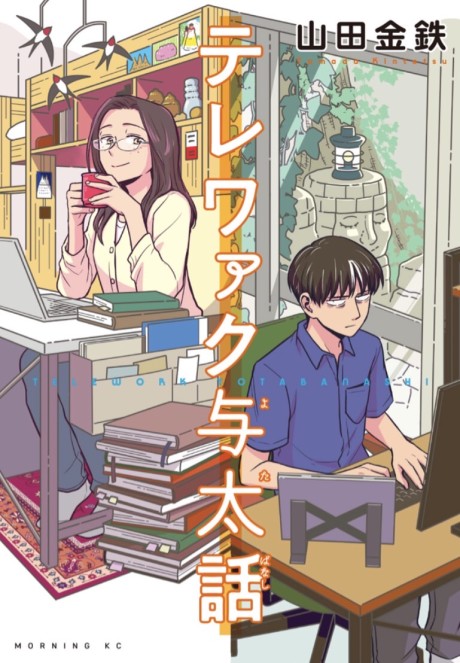

In the pages of romance mangas, protagonists and their love interests often meet in uniquely mundane circumstances. Yet from those ordinary interactions blossoms a journey—one they jump in and out of—until their paths finally align, allowing them to walk forward together. Sure, that journey may be filled with quips, halts, and doubts, but it mirrors what many people experience in real life as they navigate the complexities of love.
However, in reality, love isn’t always as turbulent as it’s made out to be. For many, it simply appears—no drawn-out “will they, won’t they,” no years of agonizing longing. Sometimes, love arrives quietly, in the least expected moment, without any dramatic buildup—just a coincidental, mundane interaction that connects two people and sets them on a shared path.
While I understand why writers often shy away from that kind of normalcy—it may lack an immediate hook—author Kintetsu Yamada proves that the quiet simplicity of romance can still be engaging with his short-run manga Home Office Romance, which showed that even the most unremarkable beginnings can blossom into something endearing and entertaining.
*
In Home Office Romance, we follow Nokoru Mitsuhashi, a corporate man stuck in the mundanities of his job. Due to the pandemic (which doesn’t play a major role in the story but serves more as a vessel to move the plot forward), he's forced to work from his apartment. It’s here that he encounters Natsu Izumi, a graduate student living next door.
From the start, we’re introduced to these characters in a way that makes their roles and personal situations instantly clear. The story hooks you with its seemingly mundane yet captivating approach—focusing on the slow-blossoming romance and meaningful connection that forms between Noroku and Natsu through the quiet rhythms of adulthood. Whether it’s conversations about futon brands, gardening, furniture building, venting about work, sharing passions, or something as simple as overseeing each other’s schedules, each moment feels endearing and sincere.
The manga also thoughtfully explores the different stages of romance, particularly through Noroku’s internal struggles—his worries about where their relationship stands, especially when things haven’t been made official. His inner monologues and careful consideration of Natsu’s feelings are heartwarming, and the story never drags these moments out to the point of repetition or annoyance. Natsu, on the other hand, contrasts Noroku with her warm presence and forward-spirited mindset. The blend of their energies makes this series overwhelmingly sweet, all within the intimacy of its compact setting.
Noroku and Natsu’s relationship is one of the most engaging romantic couples we've seen in fiction—not because of the earth-shattering events that lead them to where they are, or how tragic their backstories are that paid off once they're together, but rather, these are just normal people living through normal lives in this normal world. In the billions of people with different professions, circumstances, and passions, somehow, there will be someone out there that completes you in ways you've never foreseen. Noroku and Natsu’s relationship proves that love will always come to people—whether we ask for it or not, whether we think about it or not.
The down-to-earth, realistic setting of the manga makes you feel like romance is an essential part of what makes humans human, reading their interactions toward each other as if you're reading a biography of their earliest years together—seeing Natsu taking a couple of moves toward Noroku in the blink of our eyes, while Noroku flimsy figures out the signs—to a couple where they both satisfied their wants and needs, and their yearns in their lives. It's a romance that works because they feel like real people.
Though, to put it to note, the author has made a similar yet longer series titled Sweat and Soap. Both this and Sweat and Soap are among the most essential romance mangas to read—not because they portray romance as something we chase, nor as something cynical where there can only be one winner amidst losers, but because they offer a hopeful perspective on love. This is especially true for their target audience: adults who are simply getting by in life.
This series clearly reflects the wants and needs of 21st-century working-class individuals who will—one day—have their own sort of romance story to cherish. If there is a propaganda for romance, this is the poster child for it.


Home Office Romance feels like a warm hug when reading it—a hopeful display of romance that everyone can enjoy. With its stripped-down, less-stimulating, less-trope-y formula, it focuses only on the essential bits: endearing and sweet characters that truly tingle the heart. I highly recommend this to everyone, with the added bonus that you can easily finish it in under an hour—perfect for a quick commute read. ***


Come to think of it, everyone is living life in the loneliest way possible. You may be in a place filled with people, yet somehow feel more alone there than when you’re by yourself in your room. In that sense, we begin to crave solitude—a space where no one reminds us of that quiet loneliness.
But even then, human cognition isn’t built for isolation. We are meant to connect, to give love in its rawest form. Sure, we can sublimate our emotions—write them down in journals, pour them into art, or sit with them in silence—but somehow, it never feels like enough.
Life tends to take its own course. And no matter how much we try to deny it, we eventually find ourselves longing for genuine human connection.
This is the idea explored in Anime Journal with Witch—a raw, meditative, and at times humorous reflection on life. It presents how life can offer something unexpected—something you never anticipated, yet somehow becomes something you come to deeply cherish.
*
At its core, the anime explores “love”—or more specifically, how people experience it in their own ways, and how they cope when that love is challenged or betrayed.
We follow our main character, Makio Koudai, who prefers to live as a recluse. Her life changes drastically when she takes in her deceased sister’s daughter, Asa Takumi, who is still grappling with the loss of her parents. Makio keeps love at a distance, while Asa is in desperate need of it. Together, they share a small apartment, navigating life and their own ways of coping.
Adulthood, as the story shows, has no blueprint—and both Makio and Asa are going through this. Despite their age difference, they walk along the same uncertain path, often getting hurt as they move forward. Yet they also realize that standing still hurts even more.
Both characters are haunted in different ways. Makio struggles with a past she has tried to repress, while Asa finds herself in a phase of life Makio once went through at her age. The anime doesn’t hold back in portraying gut-punching, deeply human experiences in their rawest form. But it does not dwell in pessimism or devalue life—instead, it shows how people can overcome that feeling of stagnation while everything else continues to move around them.
Two people, living under the same roof, both longing to be loved—yet both instinctively pulling away out of fear of being hurt. They are burdened by lingering words and memories from the past, unable to fully let go. It’s undeniably human. And when these two share the same space, their struggles intertwine into something raw, messy, and deeply authentic—a shared attempt at coping through life simply by caring for one another.
As the story unfolds, we witness their rise and fall as they process the grief of life in their own ways. Though they often face their struggles alone, they find resolution together—through presence. Sometimes, that’s all it takes: someone staying with you through your journey.
Love, the anime suggests, doesn’t always arrive in grand gestures or profound declarations. It can be quiet, inconsistent, even confusing—enough to make us question and doubt. But sometimes, just knowing that someone cares, that someone took the time to understand—even when you don’t fully understand yourself—is more than enough.
Journal with Witch reminds us that love, in all its forms, is what keeps people moving forward. It can be painful to feel and difficult to express, especially in moments of frustration. But despite differences in personality, circumstance, and ways of coping, people stay.
Because they care.
And in the end, isn’t that what love is about?


Journal with Witch is one of the most underrated anime to come out this year. While there are other series that explore similar themes on a more grandiose scale, its unfiltered portrayal of people safeguarding themselves with love amid the challenges of life stands out.
It’s a story that is deeply thought-provoking, poignant, and profoundly human—one that lingers not because it tries to be larger than life, but because it understands life as it is. ***


In the landscape of romance anime, many series try to add “spice” to their concepts—whether through outlandish harem setups, bizarre circumstances that push two characters toward each other (often with relentless push and pull), or deceptively simple premises carried by one unforgettable quirk that becomes the identity of the entire show.
Whether you enjoy those kinds of stories isn’t really the point. Each has its own strengths and its own reasons why audiences fall in love with them—some even earning their place among the best in the genre.
But sometimes, you just want to detox from the extravagance. Sometimes, you crave a relaxing slice-of-life romance. And this one might just be your cup of tea.
*
You and I Are Polar Opposites is an anime built on a familiar premise: a highly energetic girl falls in love with a shy boy. There’s nothing inherently wrong with that setup—though it has certainly been overdone.
What makes this series stand out is that it completely skips the exhausting “will they, won’t they?” phase. By the very first episode, the two are already a couple. From that point on, the dynamic shifts.
The story no longer revolves around whether they will confess, but around what happens after they do. We see moments that aren’t necessarily original—awkward silences, misunderstandings, tender exchanges—but their context changes everything. These characters openly recognize each other as boyfriend and girlfriend, and that simple shift offers something surprisingly fresh.
It presents a profoundly cute and grounded perspective on romance: not the chase, but the quiet, blossoming life of a young couple learning how to love.
You can’t talk about romance without talking about its leads. Miyu Suzuki is a highly energetic girl whose presence fills every room she walks into, while Yuusuke Tani is soft-spoken and reserved. The series may frame them as opposites, but in truth, they are strikingly similar. They overthink how the other feels, they compliment one another with quiet sincerity, and they genuinely enjoy each other’s company.
On the surface, they might seem like an odd pairing—but beneath that surface, their hearts are tightly bound. The warmth between them radiates throughout the series without ever feeling overwhelming.
Yet the show isn’t afraid to take unexpected turns. One moment, it may be the most romantic story you’ve seen; the next, it confronts the harsher sides of adolescent love—wrapped in vibrant, appealing animation. It explores the interpersonal struggles of youth: questioning whether you’re good enough for the person you love, figuring out how to communicate jealousy, and navigating conflicts with former and current classmates.
As adults, we might dismiss these struggles as trivial. But at that age, they are everything. And because you grow to care deeply for these characters, you feel every moment alongside them
And of course, the anime doesn’t revolve solely around its two main leads. In fact, it introduces an entire roster of characters, each given the space to breathe and grow.
For viewers who prefer a tight focus on the central couple, this might initially feel overwhelming. But the supporting cast ultimately enriches the experience. They offer fresh perspectives on adolescent love—while still aligning with the series’ core exploration of youthful struggles. Each character brings their own lens, expanding the emotional landscape and creating a wider, more layered portrayal of young romance.
Their individual dynamics and romantic side stories don’t drag the narrative down; instead, they add texture and variety. Rather than diluting the premise, these additional relationships deepen it—making the series feel fuller, more wholesome, and far more rewarding to watch.


You and I Are Polar Opposites stands as one of this year’s strongest contenders in the romance genre—worthy of standing beside this decade’s romance juggernauts. It doesn’t rely on outrageous quirks or overly complicated premises to distinguish itself. Instead, it thrives by being grounded, sincere, and refreshingly direct in its portrayal of youthful love.
Vibrant, heartfelt, and comfortingly wholesome, it’s a romance that feels both familiar and renewed. A charming, easy recommendation—and a watch you shouldn’t miss. ***
Preface

When we talk about modern romance mangas, readers would always lean towards the “will she, won't she” and the “misunderstanding” trope—after all, it's what's plaguing the romance sphere with new titles biweekly with their own “unique” quirks, yet they are only adhering to the same old classic formula, and for most readers, that should be enough for them to keep coming back weekly. However, most of the mangas that use this trope tend to get old quite quickly, and that's evident in my case: I had dropped a couple of mangas with that said trope because I couldn't suck it up to read repetitious chapters, and that's the case for most readers as well. This is mostly due to the fact that these manga either didn't expand or flourish their trope or progression with the accompanying characters they'd set out, which may be due to the refusal of stepping forward from their premise. In other words, the characters are boring to read in the long run.
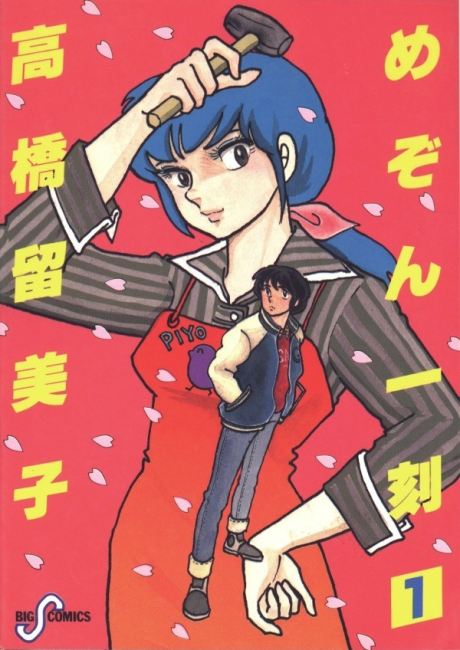
Giving credit where credit is due, there are rom-com mangas that stepped out of that shell; for instance, Kaguya-Sama—one of my most favorite mangas of all time—utilized its trope as a gag while providing warmth and depth to its characters. Walking back through time, popular and influential mangas pop up like Kimi ni Todoke and Hana Yori Dango. However, what I am most curious about is the manga that influenced the core trope. Through online searches through threads and community posts, it all landed at Maison Ikkoku.
*
Part 1:
The Rumic World & It's Characters
This is not my first exposure to Rumiko Takahashi's works, as I have watched the reboots of Urusei Yatsura (2022) and Ranma 1 1⁄2 (2024), which made me familiar with how she structures her world. Namely, in the span of her works that I have consumed, she'd structured her characters in the utmost trope-y way, right down to the minor details. You can see the similarities of its main characters, structure, and, most important of all, its romantic setup with its “will they, won't they” misunderstanding trope. Working through decades of these tropes, you would assume that readers would get bored with how straightforward and formulaic everything feels, yet this has not been the case. Each story might've followed an aggressive domino effect of misunderstandings, along with Takahashi’s signature style dialogues—a car crash you wouldn't want to miss.
We follow our main character, Godai—a typical Rumic male lead: goofy, misunderstood, and often caught in gullible situations. His main goal is to marry Kyoko, who also fits the mold of a Rumic female lead—timid, kind-hearted, and just as gullible. Despite their contrasting personalities, the two manage to overcome numerous interpersonal obstacles thanks to their shared determination to be together.
Of course, it wouldn't be a Rumiko Takahashi story without a colorful supporting cast who provide comedic relief, serve as the readers' voice of reason, or simply create roadblocks for the main couple. Characters like Coach Mitaka, Nanao, and Yagami act as the primary hurdles to Godai and Kyoko’s relationship. Meanwhile, the tenants of Maison Ikkoku add heart and chaos in equal measure: Yotsuya, arguably the funniest character in the series; Akemi, the ever-reliable vibe check; and Mrs. Ichinose, the emotional middle-woman mediating between Godai and Kyoko.
While the side characters mainly serve comedic roles, they infuse the story with so much warmth and spirit that the series wouldn’t feel nearly as alive or heartfelt without them.
However, in the Rumic universe, these character traits aren’t unique to Maison Ikkoku—they appear consistently throughout Rumiko Takahashi’s body of work. That said, how does Maison Ikkoku hold up against some of her other, much bigger titles?
While Urusei Yatsura dazzles with its otherworldly direction and Ranma ½ leans into chaotic action and comedy, Maison Ikkoku stands out by “vanilla-fying” its tropes to its advantage. Ironically, its grounded, down-to-earth approach allows for a more focused exploration of its central themes and a deeper dive into its characters—despite the many misunderstandings that arise along the way. Stripped of flashy shounen tropes, the series leans entirely on Takahashi’s narrative structure, making it one of the most engaging of the three. By replacing spectacle with sincere character development, Maison Ikkoku showcases just how powerful Takahashi’s writing can be.

Part 2:
The Perfect Rom-Com Formula

We’ve read it hundreds of times by now: guy likes girl, girl is unsure of her feelings, guy pursues girl, an obstacle gets in the way, a misunderstanding occurs, they reconcile—only to end up back at square one. It’s a familiar cycle in countless romcom manga, and Maison Ikkoku is no exception. After all, it's one of the earliest mangas that popularized this formula. With that said, how did this hold up after 4 decades of its release? Surprisingly well, I might say.
Though certain themes in Maison Ikkoku are undeniably a product of their time, the series contains many elements that still resonate in today’s manga landscape—and surprisingly, some of these elements remain underexplored in modern titles. In the early volumes, we see Godai struggle to properly express his love for Kyoko. While much of this is due to external interference, it's also a result of his own shortcomings. This dynamic quickly pushes the series into a deep rabbit hole of layered misunderstandings—one after another—that, while hilarious, create a gripping tension. It's the kind of storytelling that compels you to flip through page after page, eager to see how it all eventually unravels.
It’s a formula that many manga have since mastered—but none compare to Maison Ikkoku, which takes its downward spiral of a plot and cranks the chaos meter up to eleven. The series thrives on situations that make you laugh at how absurdly they unfold, only to leave you frustrated when they end on yet another unresolved note. As the volumes progress, the chaos only intensifies, digging the characters deeper into a hole built from earlier misunderstandings—so much so that some moments are recognizable purely by the miscommunications that sparked them.
However, constantly escalating the antics doesn’t always guarantee that readers will stay engaged. Many might put the series on hold until it ends, drop it entirely after predicting the next plot beat, or simply grow tired of the repetitive shenanigans. Romcom readers know how frustrating it can be when the same scenarios play out over and over again. But Maison Ikkoku understood this risk and cleverly turned that very flaw into one of its strengths.
*
Part 3:
Misunderstandings and it's Consequences
Maison Ikkoku is primarily a rom-com manga that centers around the classic "will they, won't they" trope, with characters designed to repeat the same antics over and over—a formula that, understandably, can become tiring for readers, even with a story that spans several years. However, what sets Maison Ikkoku apart from most rom-coms is how it acknowledges this fatigue and incorporates it into the narrative itself, starting with its characters.
The first hundred chapters largely follow typical slice-of-life elements. And while fans may enjoy the charm and humor, it's hard to ignore the creeping sense of repetition and emotional wear. Yet rather than ignoring this, the manga leans into it. The characters themselves begin to reflect the reader's frustration. Godai remains relatively optimistic early on, but Kyoko starts to show signs of emotional exhaustion. Over time, her patience wears thin, and we see the cracks forming as she struggles with Godai’s ongoing indecisiveness. Meanwhile, Godai grows increasingly frantic, overwhelmed by the realization that time is slipping away.
This evolution isn’t limited to the leads either. Side characters and even obstacle characters mirror this shift. Mitaka takes drastic measures. Ichinose begins asking deeper, more reflective questions. Akemi’s frustrations grow sharper—and more relatable to readers. The more repetitive the formula becomes, the more the characters themselves become frustrated by it. That self-awareness is what makes Maison Ikkoku smart—and surprisingly realistic. It doesn't deny the cyclical nature of romantic tension; it embraces it, shows its toll, and uses it as a narrative device to evolve the characters and deepen the story.
Rom-coms in this setting often struggle to present meaningful consequences for their characters. More often than not, they either rush the story—ruining both the climax and epilogue—or rely on unrelated factors that feel forced or made up. However, while familiar themes do appear in this series, they unfold naturally, grounded in the characters' personalities and the story’s progression. The consequences in later chapters stem directly from earlier events and character traits.
There are moments when it feels like certain characters were forgotten—take Nanao, for instance. She was a prominent figure in the early arcs, then seemingly vanished, only to reappear with significance in the final arc. Yet, her return and resolution feel earned, and her earlier absence makes sense in retrospect. Another example is Kyoko herself. Throughout the series, we witness her gradual descent into distrust and emotional exhaustion, driven by the endless misunderstandings. She reaches a point where she’s on the verge of giving up, and the frustration felt by the readers is perfectly mirrored in her journey.
What makes this series stand out is how the characters mature in tandem with the readers’ growing understanding of their flaws and quirks. Even if you already know how most rom-coms end, the real joy lies in the journey—and this one brings you along for every emotional high and low.

Part 4:
A Love that Stays Through Decades

Since its first serialization in 1980, Maison Ikkoku's premise felt novel for its time. However, in today's landscape, the abundance of rom-com titles can be overwhelming—so much so that just scrolling through the options can lead to fatigue. And yet, despite all the newer and more beloved series that have captured the attention of a younger fanbase, Maison Ikkoku still stands out. With all the praise I’ve given above, did it truly hold its own among modern titles? Oh, it most certainly did.
What’s often missing in modern rom-coms is the heart of it all. Sure, it can be fun to follow characters caught in a typical “will they, won’t they” scenario, but many of these stories lack that essential spark of humanity within their panels. It’s not about how quirky a character is, but how deeply they feel—how big their heart is—that keeps you turning the pages. You want to laugh with them, cry with them, get frustrated by their mistakes, and cheer for their growth.
Maison Ikkoku—cheesy as it may sound—makes you care about its characters. Rivals like Mitaka and the other romantic entanglements aren’t just thrown in as obstacles; they feel like real people, and you want them to find happiness too—just not at the expense of the main couple. The tenants may be chaotic and often annoying, but they inject life into the otherwise mundane days of Godai and Kyoko. Godai’s relentless determination to improve himself, and Kyoko’s emotional turmoil as she wrestles with her past, give the story its emotional weight.
Maison Ikkoku’s down-to-earth nature—where everything revolves around people simply trying to live their lives—is what makes it so resonant. It’s a story that feels like a warm breeze of nostalgia, a comforting hug, or even a sigh of frustration that somehow still feels familiar. And four decades later, that same warm, fuzzy feeling continues to reach readers who fall in love with the series all over again.
*
Conclusion
I never intended this review to denounce other rom-com mangas out there—Maison Ikkoku itself is far from perfect. It’s undeniably a product of its time, with certain themes and portrayals that haven’t aged well by today’s standards. And yes, many newer rom-coms have had a broader cultural impact or resonated more deeply with modern audiences.
But even so, Maison Ikkoku stands apart by offering a romantic journey rich with misunderstandings, near-misses, and adult themes that often hit uncomfortably close to home. It creates a small, intimate world filled with vibrant life, where its simplicity becomes its greatest strength. The series takes a straightforward premise and elevates it, crafting one of the most emotionally satisfying rom-coms of the last four decades.
At its core, it’s just a simple love story—about an ordinary couple living an ordinary life, caught in extraordinary situations—and yet, few have matched its emotional resonance and lasting impact.


How does one traverse through the river of life?
Or rather
Is there a correct way of navigating through life?

It's a question that ponders individuals—like ourselves—whether there is a predetermined blueprint that leads to our satisfaction. We often face the warnings and premonitions of our elders such as our parents, and similarly-aged individuals like siblings or friends to avoid a certain path we’d regret in the long run, yet we've never really understood that sentiment. In the early years of our adolescence, we’d have that specific belief deep within our hearts, and we’d follow that way of thought throughout the years—no matter how contradictory it seemed— because it gave us the feeling of fulfillment, or a sense of goal in mind per se. We were born in this world without any direction, until that one certain thing in our lives arrived, and in the blink of an eye, that is now our ultimate goal.
Exposing one of my personal—and regrettable—stories during my adolescence, I used to be obsessed with this game called “Mobile Legends: Bang Bang,” with my greatest desire to have all the skins in the game. I was 16 back then with no job, and the best way I could gather was to wait on discounts, vigorously budget my money, and even cut spending on my food just to buy the latest and expensive skins that cost more than my weekly allowances. I'm not even that good with the game, as I'm just an average player with average skills, but the satisfaction of other people approaching me with that praise of having rare skins gave me that toxic push of collecting as many skins as possible and having that grin of victory as I set goals with myself on beating skin counts from other players within my community. But alas, once I have hit the top—beating the statistics of the people who I deemed below me because of my skin count—I should feel happy with completing the set-out purpose that I have instilled in myself, and yet, sitting above everyone, I feel unfulfilled despite having everything.
What I had believed was the correct pathway for my life crumbled in front of me as it turned into sour bitterness as I saw the skins I bought in resentment—hoping that I could convert it back into cash that I had wasted upon it. What I thought was my purpose, my desire, and my dedication in living through life, was just a temporary impulse for the validation of others—and myself. Suddenly, the game became less popular, and my interests shifted away. I suddenly realised that the glory—and the reason—why I played the game in the first place is the team gameplays, and banter with players, and that adrenaline joy in winning. There's nothing more with that, and yet at the time, I had set myself with a goal I didn't foresee that it's just a temporary pleasure.
*
Despite everything that Musashi had done, there is still a pathway to redemption—altering the ways of your core thinking that you had followed throughout your life. Though my story above may not be filled with violence, we can all see ourselves within the story of Musashi Miyamoto in the conceptual sense. Musashi is a person who has lived his life with the sword and aimed for an accomplishment in the complete mastery—and the way—of the sword, and his way of accomplishing that fact is to defeat people who he deemed worthy of a match, and once he had defeated them, he'd crown himself as the more powerful of the two. His lust for power and the craving desire to be at the top have led him on a path where he'd struggle to get himself back from his starting point. For hundreds of chapters, we have seen the desired uprisings of a character who's being dragged down whenever he tries as hard as he can. At some point in the manga, Musashi felt the dissatisfaction of his accomplishments to a gravitating degree, something you can't just walk away from—at least how Musashi would believe it. After all, it's hard to accept that the years' worth of work and the nights of doubts that you've pondered turned out to be just the wrong way of traversing through life. His perception of the way of the sword is wrong.
But even if you’re on the wrong path this entire time, it doesn't mean that it is the end of your journey in life.
Despite everything that Musashi had done, there is still a pathway to redemption—altering the ways of your core thinking that you had followed throughout your life. Though I understand the difficulties in realizing that sentiment—particularly in Musashi’s case, where he had dedicated his entire life to the flawed guidance of the sword—life does not give halts in your lifespan when you're in your realization stage, but it crumbles the walls and gives you opportunities to rebuild it in a better and respectable manner. Musashi realized this by fully encapsulating the lives that he had lost and the signs that he had ignored—or blamed on something else—and instead accepting that life is always going to be like that. Make the most of what you have—in a stoic sense—and master it. The things that you have lost may or may not come back—that's up to life to decide—but rather than clinging to what is unreachable, you'd be given an opportunity to realize that maybe that thing that you're trying to reach for is not what your heart wants as you believed it to be, and that's okay. The mistakes of the past does not define Musashi, but it's his building blocks in providing a stern foundation for his life—recognizing the mistakes, and his lapses in judgement.
Perhaps true strength in the way of the sword lies in knowing when not to draw it.
Poorly transitioning back to my embarrassing story, I realized about a year later that spending money on skins does not give me the satisfaction—or that sense of fulfillment—of completing my greater place in the world. The resson why i feel like i was fulfilled is because i was praised for having rare skins, but the moments where I truly enjoyed was where w all of us had an amazing ranked game. That was the joy. But ever since then, everyone in my circle had moved on from the game, and for that, I did as well. Some nights, I get a huge dose of frustration upon myself for spending a huge amount of money, but I have no ounce of regret. It gave me a guide of what I should or should not invest my time and money in and taught me how to restrain myself from getting what I want and have a greater understanding of what I actually want for myself in my journey through life. It might not have given me a proper blueprint on how to live, but it did give me insights about myself and how I want to live my own life.
Life will always be filled with lessons, obsessions become trivial, and the pain we've felt throughout our journey gives us the resilience to grasp the fact that the journey of life has no predetermined blueprints of the correct flow—but it's a built-up path of the individual based on their personal growth. Whether there are big events that changed you or many small moments clumped into one, everyone has a fragment of Musashi’s journey within us.


Despite its unfinished status, that shouldn't hold you back from reading Vagabond. Its deep philosophical themes, convincing characters, and beyond-gorgeous artwork shape triangular points of perfection—transcending beyond what storytelling can bring in any form of medium. So much so that what I have shared above barely touches the themes of the series. There's still a bunch of philosophical and personal views I couldn't tackle, yet there are other perspectives from other reviews here on Anilist and beyond this website—including you. ***

Preface

Kaguya-sama was one of the few anime that made me fall in love with the medium. Its quippy, referential, oddly relatable, shōnen-fied mundanity, and oddball humor—mixed with a genuinely convincing love story between two awkward high school students—brought relatability to an extreme degree. It hooked me so deeply that it became the first long-running manga series I actually read weekly.
The world the story presents is among the most brilliant and addictingly rewatchable animes out there, to the point that few shows could surpass the sheer brilliance of its presentation.
Since the conclusion of the third season, the movie, and the manga years ago, anime fans have been eagerly waiting for the adaptation to inevitably reach its ending over the next couple of seasons. That was the expectation—until this surprise special changed everything.
*
Stairway to Adulthood
Let’s get this out of the way immediately: this special feels like the show never left. From its presentation to the writing, from its captivating story and the way the characters carry each scene, everything remains intact—only now with a bit more spice of its signature sprinkled in (especially with referential humor where diehard anime and manga fans would catch on immediately). There is also a sudden shift in its structure (that was set out from Season 3) where Kaguya, who takes on a more assertive romantic role in the relationship, while Miyuki grows noticeably more openly affectionate, making sweet romantic moments that will keep you blushing. It’s something we fully expected to see after the ending of the third season, but instead, we finally get it here—and not a single minute is wasted.
The special explores numerous themes and situations that any normal couple faces, all filtered through that unmistakable Kaguya-sama flair. It respectfully adapts several important manga moments—somehow making them even funnier in animated form. As a result, this special is an immediate hit for fans of the anime, offering a deeper look into Kaguya and Miyuki’s relationship.
However, for those who have read the manga, the very existence of this special—and the way it is framed—may spark sadness, as it subtly suggests that future seasons might not be possible.

The Implications of this Special (Spoiler)

This special basically confirms itself that Season 4 and beyond wouldn't be possible. Gone are the couple of major arcs built after season 3, especially with the blossoming relationship of Ishigami and Miko (which is my favorite overarching arc of the series) that we couldn't get to see animated. Though it will disappoint a lot of fans, as we wouldn't get a full adaptation to the entire series, there is a silver lining, namely having an original ending (despite the source material for an ending being already available). Though it's an odd choice at first, and you may react to it in a negative light, but on the other hand, I find this as an optimistic approach to the series.
While it is disappointing that couldn't get to see our favorite arcs and character moments from the manga, for us manga fans, it would be a treat for us (along with Anime-only fans of the series) to see and experience a brand new ending of this series at the same time anime fans would, which will garner a unique experience that we haven't got to see in a long while. Although, anime fans might have flashbacks from the formative years of anime with original endings, but knowing how this special presented itself, I couldn't really see that as a concern, since (in my perspective) the new original ending might take place beyond the ending of the manga, which solves the canon issues.
As for anime-only fans, they have definitely missed out a lot of major arcs of the series, but if you're only focusing on the journey of Kaguya and Miyuki, The Third season and the christmas movie is as climax as it can get, but you're definitely missing out a lot of devastating, or wholesome character moments for side characters, and it might be the time for you to read the manga. But if you only care for the journey of Kaguya and Miyuki, in an overall perspective, you're not missing out that much.
As for me, I wouldn't be worried. I trust the team that carried this series, and even this being a special, it's spiced up with a lot of love and flair (which hadn't lost its steam since the very beginning). Will it be the greatest ending we’ll see? probably not. It'll most likely be an after-story where we'll catch up how our favorite characters have been, but it is a wonderful treat to see regardless. ***

_"Nothing has a stronger influence psychologically on their environment and especially on their children than the unlived life of the parent.” —Carl Jung_
From an exterior, it can be easy to determine what makes a sustainable family from an objective perspective. Whether it'll be having a stable job, a home that's comfortable to live in, means that can be easily reached, and the presence of the parents within the life of the child when growing up. But there is a factor that comes within—a trait that's difficult to point out until you're faced by the very issue—and that is love. It may be easy to say, and people have different definitions of what love is, but to put it simply, it is an act to be presently caring, and yet, but it's also an act that's difficult to translate, as each person—including children—have different means of feeling what love is.
If by circumstances, what would happen if there’s a family who has the means to live comfortably, yet do not have the emotional capabilities of caring at the present? Then, you'd be raising your offspring as a half-filled husk, unsure of what's missing with them, unsure why they struggle to understand the world, and for worse of them all, carrying that empty feeling like it's hereditary.
It's a quietly screamed, dragging process of deteriorating the hearts of the victim, and would lead a trail of blood onto its tracks.
*
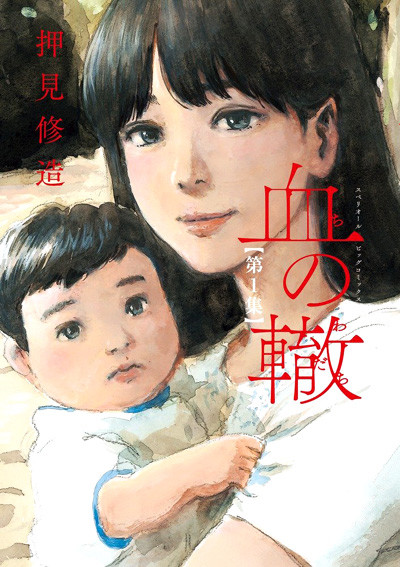
Blood on the Tracks is a series created by Shuuzou Oshimi whose known in other famous mangas such as Flowers of Evil, Inside Mari, and many more—tackling the anomalies of the human psyche and the extent it can damage a person, and in this series in particular, we follow Seiichi Osabe, a young boy who's under the submission of her mother Seiko Osabe, and his journey in navigating through the mixed signals, hidden abuses, and it's willful ignorance of the false-love that was given by her mother.
One thing’s for certain is that this series is insanely uncomfortable from the story it wants to tell. It doesn't rely on the physicality of the horror with ghouls or demons, but telling that the greater horror might just be from the person you believed your entire life that you've been taken care of, especially in the mind of a child whose mind was skewed from the beginning, facing selective truths and obscured lies for the convenience of the controller.


To first understand the sequences in the manga, we must understand the motivations of the characters in the series with the idea that these characters are in need of psychological intervention. Though I do not condone diagnosing individuals from the basis of limited information, but just for this one—alluded that these are fictional characters—we can assume.
In the case of Seiichi Osabe, he exhibits patterns of a person who is bound by trauma towards his mother. He looks forward to the assurances and love that her mother gives, but in order to get there, he has to suffer from the abuses Seiichi is blinded to see. This is followed by her mother Seiko Osabe who is exhibiting symptoms that correlates to a form of a personality disorder, according to the Diagnostic Statistical Manual of Mental Disorders (DSM), in which one of the closest is Borderline Personality Disorder (BPD), which exhibits unstable relationships, fear of abandonment, emotional instability, and inappropriate anger, all of which are present to Seiko.
Though what I have mentioned above is mainly through my speculation, it is important to understand character’s actions and reactions. As you keep reading the series, you might be annoyed with Seiichi and his decisions, but within the context of an underlying condition, it absolutely made sense. All throughout Seiichi’s life revolves around her mother, from the movements and the psyche. Letting go basically means your life will be over. Seiichi's bruises are caused by her mother, in which she also patches over. A cycle of doubt and assurance, where a false image of love takes the stage—even at the final chapters in the manga, where Seiichi falls the obligation of taking care of her mother, because deep within Seiichi, there's still a thin thread of trauma-influenced sympathy towards her mother.
Seiichi is not like this when he's born, but he was molded to be—by her mother. Seiko has an authoritative, yet caring nature. Aggressive, yet calm, Protective, yet dismissive. An unpredictable cycle of emotions that stiffens the reader of what she'll do next. Her presence alone scares Seiichi, yet finds love behind the iris. It's a cycle of love and hurt for Seiichi and Seiko, and will continue to do so until “that” breaking point in the manga.
Blood on the tracks challenges the notion that true horror will always be led by the mind as it screws your perception of reality, controlled by the puppeteer, and face the truth that real horror comes within the mind. No amount of thrillingly horrific music can change the mood of a scene compared to psychology-driven horror. A horror that masquerades as comfort.
Though there will be some audiences who will be reading this manga and question themselves “if im in this situation, i wouldn't do that” but that's not the point of the manga. It is a showcase of the horrors when one family is not intervened with their past traumas, and how they transfer their trauma in new forms towards their offspring. A gut-wrenching presentation of what’s already present in most families—though not as extreme—yet garners the same feeling. Even if you tell yourself that you’ve moved on from the trauma that was instilled to you, fragments continue to remain.
*
Blood on the Tracks is a triggering experience for the many, and an insightfully uncomfortable read for a few. An intriguing tale of a broken family if left unchecked, where traumas are left unnoticed, and actions continue to stab deeply. I highly recommend this manga for those who want to experience true horror in a form of instilled fear and disgust from the one who's supposedly giving us comfort.


Preface

Illegal substances have always been a problem within my small-large community where I live—or rather, it's always been the people's scapegoat, refusing to acknowledge mental health. To understand what I mean, let me take you back to a local news story within my community where an adolescent was caught because he gruesomely killed his father with multiple stab wounds and ripped his organs out. Assessment reports suggest that the kid might be schizophrenic, and there is an absence of illegal substances in his system, but the community does not buy that official claim—or rather, it wasn't satisfying for everyone.
In every narrative offered throughout social media about the situation, they concluded that it's always the drugs, neglecting many psychological factors on why the adolescent would have reacted that way. The truth was deliberately pushed down by gossipers in order to push their personal, social, and political agenda.
As I'm reading this, i was disgusted by the behavior showed by society, and further pushes my belief that the horrors in the world is not the monster underneath my bed, the wild animals that would kill me in any second, or the unknowns of space, but rather, it's us humans, using a weapon called Paranoia.
*
Part 1: The Horrors of Lil’ Slugger
Paranoia Agent is a 13-episode series—created by the late and great Satoshi Kon—where we follow various characters across many episodes in coping and dealing with the on-the-loose serial assailant named “Lil' Slugger.”. From the start of the series, you are placed in this world filled with anxiety, mudslinging, and bullying from both the victims and the general society caused by Lil’ Slugger. From the first few episodes, you are immediately hooked with the mystery that was presented, many overlapping details that confuse your detective brain, and navigating through many prejudices and gossips by society from the event.
The series does not give you a direct answer before the reveal but explores the lives of the victims of Lil’ Slugger until the moment where they're struck. From their narratives, it seemed unnecessary—especially in many moments—but this is a well-constructed character exploration shoved into a mystery show that does not let any information be just a throwaway (which will be later explained in Part 2). And once you have figured out the mystery behind Lil’ Slugger, the series presents you a new path that further desensitizes our preconceptions of Lil’ Slugger.
Once we're at our seemingly climactic end for the antagonist, the series immediately slapped you with one of the hard-hitting curveballs in the series (which was earlier hinted at but you didn't notice the details). As you check the timestamp, that typical mystery show you had preconceived turned into something more—and we're just halfway through an entire season.

Part 2: The Paranoia of Lil’ Slugger (Spoilers)

How do people escape suffering?
By creating their own fantasy and warping their suffering into a different form of suffering.
This has been the backbone for Paranoia Agent. Various characters in the series, such as an illustrator who was struggling with creating new characters piled with the stress from her creative block and the pressures around her, decided to viciously injure herself and create a fictional character as a real criminal. What seemed to be a mishap of one's selfishness to escape reality unplugged many unconscious desires of many people to escape reality, away from their responsibilities.
A boy who was perceived as the titular assaulter escaped reality by creating a fantasy where he was assaulted. A girl with multiple personality disorder decides to escape her suffering by embracing the rumors of an assaulter. A cop who struggled to solve the case because of a case that wasn't rooted within reality. A group of animation staff suddenly accepted their avoidable deaths by accepting a fantasy where they were attacked by the rumored assaulter. A group of blabbermouths gather together and gossip about the latest killings by an alleged assaulter. And finally, a society that lives in fear of an alleged assaulter, changing realities by their fantasies to escape the harsh truth. The victims of Lil’ Slugger became relieved when they were the ones who were hurt, and the ones who weren't were regressed into their fantasy worlds to avoid the circumstances of the predisposed beliefs spread by rumors—which remained untrue since the very beginning.
When the elements of reality become too much, our vision of logical answers, composure, and resilience—where the only option we seemingly see is the fantasy world to escape reality. That's just the nature of humans after all, and that's the terrifying truth. Though the incident of Lil’ Slugger has largely been partly affected locally by the people in this fictional world of Japan—since it's a fictional series after all—it does make me question the folklore and the information shared through the internet.
People cope with their immense stress by displacing it into a greater, more negative stressor that's further away from their grasp—especially through a screen where our digital profiles and mental resilience are the only things at stake. If one person snaps and creates a greater fantasy—whether political or social statements—that triggers many negative stressors across many individuals, it snowballs to more people along its path.
Today, we live in a culture where information can be easily spread, and the majority of the information shared has an intent to cause triggers for individuals who are in a position of greater disturbances of their perception of reality, which can cause an even greater harm to society. As I have mentioned earlier in the prelude, that case where an adolescent killed his father and was accused as a drug user in the comments later spawned many videos across the country of people who are schizophrenic but recontextualized as drug users caused by their own fallacies, causing a local-wide political chaos among my community, all because one user—who was either causing a stir or ignorant with mental health—caused an entire community to surface their own ignorance, agenda, and fears.
If a simple comment can cause a huge disruption in misinformation, then who knows what horrors and chaos one person with a twisted fantasy can bring to a current stress-filled, sensitive world?
*
Conclusion
Paranoia Agent presents its societal themes on a downward spiral of influence, topped with deep psychological exploration of individuals in the most intriguing, thought-provoking, and culturally relevant anime—and will remain that way for a very long while. I highly recommend people watch this anime both as a societal statement and a psychological horror.


Summer 2025 is packed with long-awaited sequels such as the second seasons of My Dress-Up Darling and DanDaDan, along with highly regarded new anime that have made a massive impression among audiences, including Gachiakuta, The Summer Hikaru Died, and Takopi’s Original Sin.
Amid this intense, content-rich season, one studio has chosen not to compete with the big sequels or challenge the bold originals, but instead to offer something familiar, lovable, and close to the hearts of its fans—a comedy series that’s a nostalgic nod to the past, while also serving as a spiritual legacy to Nichijou: My Ordinary Life. That series is CITY THE ANIMATION.
*
For many, it’s natural to compare CITY and Nichijou, and you wouldn’t be wrong in doing so. They share the same episode structure, the same signature humor—heck, they even have the same author. So yes, the comparison makes sense. But before diving too deep into that, it’s worth acknowledging how CITY THE ANIMATION stands out on its own, especially in terms of animation.
Compared to other anime of Summer 2025, it shines above the rest with its unique art style and its vibrant, lively use of colors. And while that art style might lead some to think it’s “kid-like,” that assumption is quickly shattered by its intensely hyper-animated sequences, down to every minute detail—sometimes even rivaling or surpassing other anime this year where animation quality was a major selling point. This is thanks to Kyoto Animation pouring all their passion into producing—if not overproducing—a series about the mundane lives of its characters.
Yes, CITY THE ANIMATION is literally just characters going about their daily lives within their own circumstances. That might be a turn-off for audiences who aren’t into slice-of-life, but it wins them back with countless sprinkles of absurd comedy, paired with its intense animation. It’s the kind of anime you can simply sit down with and enjoy, much like Nichijou.
However, one element separates it from Nichijou: its focus on character development. While Nichijou centered almost entirely on absurd comedy—just like this series—CITY takes it a step further, weaving in moments that develop its characters’ mundane lives into arcs that make you feel emotionally invested. It manages to balance absurd comedy with over-the-top animation while still giving depth to its characters, even with the limited screentime some receive.
That said, in terms of pure comedy, Nichijou still outshines CITY. In some cases, the overly animated sequences even work better in Nichijou than they do here. But since there aren’t many anime like CITY nowadays, I’m willing to give it a pass. Still, that scarcity is also one of the series’ weaknesses.
The structure of CITY THE ANIMATION mainly consists of short chapters mashed into a 27-minute episode—a format that was more popular in previous decades. Today, audience demand has shifted; many now prefer longer, more consistently connected episodes over episodic adventures. This isn’t the anime’s fault, as the source material mirrors the structure of Nichijou, which—aside from its humor—is very much a product of its time.
There’s still a solid minority of viewers who are fine with this kind of structure, but for newer audiences, the “yesteryear” format might make it harder to fully engage with the series.

CITY THE ANIMATION carries the spirit of Nichijou’s absurd comedy, blended with its overly animated sequences that deliver plenty of laughs and giggles—a true blast from the past in this kind of comedic format. While older anime audiences may feel right at home (or even nostalgic) watching it, newer viewers might need some time to adjust to experiencing an anime series presented this way. ***


Whenever we talk about romance anime, it’s always filled with romantic moments that give viewers that fuzzy feeling, with a sprinkle of uncoverable grins from the cute interactions between the romantic couple in the series—whether delivered in a dramatic sense or through comedic quips. We’ve seen this in our classic beloved romance series over the decades.
However, as of late, the anime community has settled for a lesser, more inferior type of storytelling that riles up the audience through trashy comedic moments, rather than focusing on what the series should be—a good romance-driven show. This has been proven with Rent-a-Girlfriend’s 4th season, along with many other sloppy romance shows sprinkled throughout the years, whose only concern is dragging out moments, as if they only had a good premise without ever considering how to resolve the story they started.
That said, there are still a few anime that shine as diamonds in the rough, such as The Dangers in My Heart and Kaguya-sama: Love is War, which managed to deliver that classic romance formula of elevating romantic tension without being weighed down by their comedic elements. But among them, another diamond has shined even brighter than the two I mentioned—Summer 2025’s new (and soon-to-be classic) romance series titled The Fragrant Flower Blooms With Dignity.
*
In the series, we follow Rintaro Tsumugi (Yoshinori Nakayama), a deeply pessimistic individual who lives in a pastry shop once owned by his parents. However, Rintaro isn’t purely pessimistic—his actions leave a deep impact on those around him. One of the people touched by Rintaro’s gentle emotional embrace is Kaoruko Waguri (Honoka Inoue), a girl he meets at the pastry shop. This is the story of Rintaro and Kaoruko’s blossoming romance, one that is absolutely cute and wholesome.
Unlike other series that insert romantic scenes merely for in-between giggles, The Fragrant Flower approaches romance with purpose and sincerity. It respects the idea of a blossoming relationship, applying it through these characters in a way that never overwhelms, but instead keeps audiences invested as Rintaro and Kaoruko navigate their slowly growing feelings for each other—each moment more heartfelt and impactful than the last. From how Kaoruko eases Rintaro’s clouded thoughts, to how calm and happy they feel whenever they’re together, or how Rintaro makes Kaoruko’s heart burst, you simply can’t look away from their blossoming romance.
The journey of falling in love is a gentle and fragile one, and the anime translates that beautifully by developing Rintaro and Kaoruko in such a human way—stripped of the overused tropes that dominate the current romance landscape. Instead, it offers a genuine portrayal of what it means to love and to fall in love with someone you admire, look up to, and want to spend your days with. It’s realistic, deeply romantic, and resonates on a level that tingles the hearts of all audiences—even those who wouldn’t normally be drawn to romance shows.


But more than that, the romance elements of the show aren’t the only thing that make this anime great—it’s also everything that surrounds this blossoming relationship. We have Rintaro’s friends, who are some of the most wholesome characters you’ll ever follow in an anime, because of how deeply they care for one another and how much they treasure their bond. This is highlighted in several scenes that truly give you a tingle in your heart and offer a meaningful perspective on friendship.
The same applies to Kaoruko’s friend, Subaru Hoshina (Aya Yamane), who plays a much bigger role than a typical “friend-type” character in the series. She is given respectable reasons for being the way she is and for acting the way she does, making her presence feel authentic and important.
These side characters—whether through the dynamics of friendship or through Rintaro’s relationship with his mother—no matter how little screen time they may have, are integral to the plot. They coincide with and complement Rintaro and Kaoruko’s relationship so naturally that you couldn’t imagine the series without them.
Romance doesn’t just affect the two people falling in love; it also touches everyone around them. Because a romance show isn’t always only about two people—it’s an entanglement of characters slowly growing closer, while those who support them become intertwined in their journey, sharing moments, and creating meaningful, canon-like memories that shape and reshape their friendships.

Even more than that, the show isn’t just about romance, or about how wonderful it is to have healthy friendships—it’s also an anime about emotional growth in adolescence. In the series, we follow Rintaro, his friends, Kaoruko, and Subaru as they each confront their insecurities. For Rintaro, it begins with his pessimistic nature, but as his blossoming romance with Kaoruko grows warmer, he gradually starts to see life through a more optimistic lens. Subaru’s insecurities about trust and letting go are also slowly addressed, and she receives a warm welcome and embrace from those around her. Meanwhile, Rintaro’s friends grow closer than ever, warming up to him as he lets them into his new direction in life.
*
The Fragrant Flower Blooms With Dignity isn’t just a perfect romance show—it’s also a moving drama that captures the beauty of blossoming love, the value of friendship, the struggle of overcoming insecurities, and the joys of adolescence. It’s engaging, wholesome, and downright addicting to watch. This is an anime that will tingle the hearts of viewers and resonate with everyone, making it an easy contender not just for one of the best of the year, but one of the best of the decade.


For as long as I’ve been an anime fan, The Rascal Does Not Dream series has always been at the top of my list as my personal favorite anime (plus the three films that followed it). It deeply resonated with me—not only because it was one of the first few anime I watched, giving it that “first-watch buff”—but also because of how it tackled the topic of adolescent insecurity while providing both a great drama series and an unapologetically engaging romance mangas between Sakuta Asusagawa (Kaito Ishikawa) and Mai Sakurajima (Asami Seto).
However, since the conclusion of the three films (Dreaming Girl, Sister Venturing Out, and Knapsack Kid), the series felt like it had wrapped up on its own terms. Despite that, we’ve now been blessed with a second season that seems to expand the lore of Bunny Girl Senpai. Whether that’s for better or worse remains to be seen, since the story already felt like it had a definitive ending with the films—but I remain cautiously optimistic.
*
Lost Singer
The second season started its debut episode quite respectfully: it reintroduces us to Sakuta and the world he lives in, along with the vibes and pace of the first season that are perfectly transferred into the second season—but with a couple of changes. We’re now at the stage where these characters have grown old enough to be in college—something we rarely get to see in the anime scene—along with updated statuses of our beloved characters from the first season and films, such as Mai, Futaba, and Kaede.
Although, as per usual with this series, it immediately hooks you in with its presenting drama—or should I say, a couple of them. From episode 1 alone, you’re introduced to a bunch of new characters right from the get-go, while being given multiple threads that will lead to resolutions in upcoming episodes. On top of that, there’s a bigger mystery tied to the second season, which is Touko Kirishima’s deal. It’s placed at the forefront, yet still lingers in the background more—unlike Shouko’s.
As for our first case of Puberty Syndrome for this season, we have Uzuki Hirokawa (Sora Amamiya), a character we briefly saw in the first season and films—but now she’s the core focus of the series. Uzuki, usually known as an airhead, is now clearly reading the room.
Uzuki’s “puberty syndrome” might not be as majestic as the ones we’ve seen throughout the series, but it is by far one of the most impactful in an adolescent mindset. That sudden feeling when your ears unlock and anxious thoughts vigorously flood your mind—changing your perspective and even your personality to the point where people grow deeply concerned about you—can be a scary, anxiety-driven experience for an adolescent.
An existential dread, and an anxious attempt at beating through time, are heavily focused on Uzuki in this arc. It’s something many viewers can relate to—being unsure of their direction in life, dreading dreams that, in retrospect, feel unreachable, and facing the moment of shifting course as life takes you ahead. But when that push comes to shove, it comes not as an explosive sense of spectacle, but as a wonderful realization, with a fulfilled heart that longed for an answer.
In the end, it's not really a puberty syndrome–focused arc (like Kaede’s “Sister Venturing Out” film), but a fulfilling one nonetheless—and a great opener for the second season, despite how much the first arc focused more on setup rather than Uzuki herself on its first half.

Nightingale

In the second arc, we immediately picked up right after the end of the first arc with the proper introduction of the Miniskirt Santa and her relevance in the series, which gave a huge lore drop that gives merit in actually watching the series with a goal in mind, and along with a lot of slice of life element but this aspect can be continued on a later arc as we'll focus on a different person entirely.
In this arc, we’re following Ikumi Akagi (Aya Yamane), one of the people who were given a form of Puberty Syndrome by Miniskirt Santa. On that note, Ikumi is out there combating the current—and recurring—phenomenon in the series known as #Dreaming, where people dream of something, and for some reason, it comes true. It’s up to Ikumi to seek out these #Dreaming posts online and track down places she deems dangerous.
Ikumi’s desire to save people stems from how Asuzagawa once did his best to defend his sister from Puberty Syndrome when no one else could, and the guilt she feels for not helping back then becomes her driving force in this series. This adds another earnest layer of lore expansion from the first season.
It also sparks an interesting dynamic between Sakuta and Ikumi. While she actively works to save people from the effects—or “victims”—of Puberty Syndrome, Sakuta has his own way of approaching it. Seeing them compare and contrast their morals in dealing with Puberty Syndrome brings a refreshing pace to the story and further expands on how different people confront it in their own ways.
Ikumi’s Puberty Syndrome is also one of the most intriguing so far, as it leans more into the supernatural aspect (excluding Miniskirt Santa’s constant appearances). This mirrors Sakuta’s own pain-driven symptoms, highlighting another angle of how the syndrome manifests. At the same time, the arc explores Ikumi’s backstory—her past traumas and guilt—and how these shaped the person she has become. Watching how she deals with her syndrome on her own terms, while still striving to help others overcome theirs, adds a captivating perspective to the narrative.
Overall, this is one of the longest character-focused arcs in the series, with a multitude of rabbit holes about Ikumi and her backstories, and multi-layered forms and effects of Puberty Syndrome that involve multiple aspects across the series. It also brings in characters from the past, a couple of visits to the past, and revelations after revelations, alongside parallel worlds—ultimately concluding in an intimately profound finale that’s absolutely satisfactory, closing the chapter on Sakuta’s past and Ikumi’s guilt.
*
His Student
While this arc focuses on a newly introduced character, we also take a step back to revisit the ones we’ve grown to love since the first season—especially Mai-san. As the face of the series from the very beginning, she’s often been sidelined throughout the arcs. But by the end of Nightingale, Mai’s importance is brought back into the light through certain revelations in the story (without spoilers, of course). Beyond that, it also reintroduces those romantic, cheeky slice-of-life moments between Mai and Sakuta that we adored in the first season—and seeing them grown up like this is utterly sweet.
Meanwhile, the mystery surrounding Touko Kirishima has only deepened. With the “gift box” of her story slowly opening, puberty syndrome feels like it’s becoming more than just a phenomenon tied to individual characters—it’s turning into a looming presence within the world itself, giving the illusion of higher stakes.
Returning to the core of the arc, we have Sara Himeji. From the start, her puberty syndrome is left unknown to the audience, though it’s clear it carries a powerful weight that could influence the future, much like Koga’s did. While this arc initially feels like a repeat of Koga’s “petite devil kouhai” story, it comes with a twist: we now follow a more mature Sakuta as he navigates the situation, all while strange #DREAMING incidents continue to surface throughout the episodes.
Despite Himeji’s emotional moments hitting hard—offering a fresh perspective on puberty syndrome both as an ability and as an emotional struggle—the arc is undeniably bloated. Not to mention that Mai’s moments had greatly overshadowed her (probably the most candid moment we've ever seen from Mai since her own arc). Still, I wouldn’t complain too much, as it is a great arc, and serves as a necessary transition into the final arc of the season.

Santa Claus

With the mysteries laid out around the identity of the Miniskirt Santa, this final arc immediately kicks off with tension—placing Mai in a vital role within a certain event that slowly, and carefully, builds toward the grand finale of the series. Since we’re now at the last arc, the focus naturally shifts to the main mystery: the Miniskirt Santa, otherwise known as Touko Kirishima.
While we’ve gotten a grasp of what her motivations might be, the series deliberately injects confusion. Even though we “know” her identity, there’s still a strong sense of uncertainty about who Touko truly is. Sakuta continues piecing together her truth, all while trying to prevent the significant events that Ikumi Akagi warned us about at the start of the series. This creates one of the most tightly gripping mysteries the show has ever crafted—where just as you think you’re getting closer to the answer, the more distant it feels.
Another layer to this arc is the sense of doubt it plants in both Sakuta and the viewer. As other characters find some measure of solace within their dreams, Sakuta faces the burden of protecting Mai from her predicaments while also trying to uncover Touko’s intentions. Yet, the questions remain unanswered.
Ultimately, the Santa Claus arc works more as a “part one”—a setup for something grander. It ends on a cliffhanger, leaving the final two books of the series for a potential movie adaptation. For now, all we can do is wait for its conclusion.
*
Overall
Despite how heavy of a lore dump this series is when it comes to new aspects and an expanded exploration of the concept of Puberty Syndrome, the series never really loses its footing. It remains a very witty show with sharp interactions among characters on screen, which are consistently entertaining in every scene. Its slice-of-life elements, where we follow these characters in their college lives, create a new perspective that feels closer to us while also retaining the familiar essence of the series we’ve always loved.
The role of Puberty Syndrome has expanded beyond its original formula, allowing us to see diverse characters who are either directly involved with it or unaware they even have it—showing how it affects them, and for some, how they choose to use it. This offers a unique and fresh perspective compared to what we had before. On top of that, with Puberty Syndrome’s scale being much larger this season, the story gains an added sense of intensity and scope, giving its supernatural nature more weight and respect.
As for Mai Sakurajima (and a lot of the original characters from the first season), they've largely been overshadowed by many of the bigger events happening throughout this season. Still, her interactions with Sakuta remain solid, and the more you see them interact in moments between the chaos, the more your heart remembers why you love this series in the first place: it’s about having someone by your side to help you whenever the time comes—plus, of course, the quippy romantic exchanges between Sakuta and everyone else (Especially Mai).

Conclusion

This new season of Bunny Girl Senpai didn’t achieve the highs of the first season—and that’s understandable. The first season alone had set such a high bar for itself that this series couldn’t simply replicate that success, especially since the story was more or less concluded by its third movie.
Instead, this new season feels more like a supplement—an additional, yet intriguing story to experience before the series officially wraps up with its final movie. But regardless, it isn’t devoid of its charms. While the story may drag at times, it still delivers with a stellar, endlessly entertaining cast you can’t get enough of, along with fresh settings and perspectives that remain intriguing. For fans, it’s another welcome dose of Bunny Girl Senpai to cheer them up.
It may be the weakest CloverWorks project this season, and certain arcs here that's the weakest all throughout the series, but it’s still one of the best shows of the season. ***


We associate summer as a time where we can loosen up. Though we may not like the hot weather it brings, it refreshes us through festivals, food, and moments shared among friends (or even shared with a potential “someone”). And yet, in the case of our character, Yoshiki Tsujinaka (Chiaki Kobayashi), he doesn’t feel great, as he’s been feeling down in the dumps—despite the presence of Hikaru Indou (Shuichirou Umeda).
What we don’t often realize is that summer is also associated with the presence of spirits—or in this case, the presence of a mimic. It might not click at first, but the rest of this rural village has been feeling it lately: a sudden, dense, heavy feeling, a presence they couldn’t grasp until it was too late.
Suddenly, Yoshiki’s mind clicks—and he finds a revelation.
Hikaru’s dead. And whoever’s on my side isn’t Hikaru.
Yoshiki should be frightened by this revelation, and yet, he clings. Where everyone else should be afraid, he stays. And that heavy energy, which should have crushed Yoshiki’s heart, ultimately warms him more.
*
To get straight to the highlights of this anime: this is by far one of the most well-directed horror anime we’ve had in such a long time—if not ever in the anime scene. Its quiet, eerie ambiance, paired with the sound of cicadas, invokes both a calm feeling and a sense of the unknown within the anime’s rural setting. This is enhanced by suspenseful music that heightens the tension of its highly aesthetic visuals, and avant-garde editing that creates one of the most uncomfortable visual-audio horror experiences in anime—essentially unrivaled by others (excluding gore-focused anime, which belong to a different category altogether).
But as a horror anime, it goes even further. While the series mainly follows the daily lives of these characters in a rural town, along with the outsiders trying to uncover the anomalies within it, the lore implied in the background is one of the most intriguing of the season—despite often playing subtly in the shadows. After all, this is a horror series, but it pushes beyond the genre. It introduces a theme rarely explored in horror anime:
What if that “special” person, so dear to your life, died?
Aside from being a horror show with horror-esque progression, it is also a captivating drama behind its attractively creepy visuals. The show explores these themes of grief and loss and complicates Yoshiki’s circumstances with the presence of Hikaru’s mimic—a person who feels like he's there, but isn’t. Yoshiki battles conflicting feelings, knowing that the Hikaru he’s been with his entire life is no longer there. Despite the mimic in front of him bearing a resemblance to Hikaru’s traits, it is empty of Hikaru’s heart.
On some days, Yoshiki feels relieved that—despite the lack of heart in this mimic—it helps alleviate his guilt over the loss, his longing, and his unresolved grief over the realization that Hikaru is gone. Yet that exact comfort is also the source of Yoshiki’s pain. The more present the mimic is, the more his heart aches.
It’s a conflicting feeling that should have an obvious resolution—but that’s not how real life works. Or rather, that’s not how the human heart works. This series explores that emotional complexity, intertwined with a captivating, traditional, summer-themed rural yokai horror story.


The Summer Hikaru Died stands out as a horror anime that’s genuinely terrifying at times—something rare in 2025. It crafts a beautifully haunting atmosphere while delivering a coming-of-age—or rather, a coming-of-grief—story that deeply resonates with its audience. It’s a highly recommended watch amid the crowded lineup of Summer 2025. ***


For me, an isekai’s job is to take us to another world, especially as our coping mechanism for escaping reality has gotten stale, with barely any heart left in its place. It's an obvious turn-off to someone who fell in love with anime for the sole reason of escaping the harshness of being an adult. The greatest crime for a series is being too predictable—knowing the exact tropes it wants to use, and proposing its world-building without even showing it.
As my time grows shorter and my internship looms in the background, the less I get to immerse myself in the world of anime and embrace the life of adulthood.
With that said, before I start my internship, there is an “isekai” anime I’ve been waiting to see—and it’s Bâan, an 18-minute short created by Garnt (a.k.a. Gigguk), a creator I’ve had my eyes and ears on for years now. Though I’ll admit my expectations for this anime were rather low—after all, how can you condense a story into 18 minutes with flair and spectacle?—yet it did something I didn’t expect: it hit me with the exact feeling I needed to hear.
*
Bâan starts off immediately as we follow Rinrada (Haruna Mikawa) and Daichi (Shouya Ishige) as they cross through worlds. Their reasons aren’t immediately told, but that gives room to fill in the gaps. The gaps I’ve filled are that they left their current world to escape an aching feeling they carried, choosing instead to experience life in a different world where they felt like they belonged.
Daichi’s desire to escape the monotonous, tech-driven world in favor of one where he can dictate the paths he wants to take is utterly relatable, hitting that unconscious desire we all share to escape normalcy. On the other hand, Rinrada traverses into the land of our familiarity—a world filled with rejection and aggression—and yet she finds a bit of solace in its gray-scale existence. This reflects our own reality, like leaving a rural town to venture into an urban life. Despite how uncomfortable and discouraging it may be, you take on the challenge to prove to yourself that you can make it on your own.
While Daichi and Rinrada’s journeys are told separately, as a viewer, it feels like their paths form one person’s conflicting journey through adulthood. Like Rinrada, stepping out of her shell to explore a world that’s unfamiliar and uncomfortable. And like Daichi, yearning to escape that very discomfort and carve out a path of his own. It’s an adult’s personal dilemma—navigating through life, torn between opposing desires. A fine line of adulthood, expressed through the theme of isekai, and respectfully captured within its 18-minute run.
For everything else, this was a blast. The music—while not always present—hits hard when it does. Its animation is respectable, and the world it builds is nuanced enough that you can fill in the gaps with your own imagination. Most importantly, it’s an isekai anime that doesn’t just provide a basic how-to-isekai storytelling, but instead makes a meaningful attempt at depicting the dilemmas of adulthood: on one hand, escaping into a world where you drown yourself in adventure and carve your own path; on the other, conforming to mundanity as a self-fulfilling goal of surviving through adulthood.
I just wish it could have been a full series, to truly give justice to the story it wanted to tell.


The first season of My Dress-Up Darling brought in a huge wave of fans for various (and valid) reasons, one of which is breaking the bounds of an ecchi series—which has traditionally been treated as male gaze with barely any relevance to its plot. The show managed to incorporate ecchi elements in an earnest fashion by making them one of the driving forces of the story, as Marin Kitagawa (Hina Suguta) aspires to cosplay her favorite characters with the help of Wakana Gojou (Shouya Ishige). This is paired with its insanely detailed and informative aspects of costume-making and the culture of cosplay in general, along with a couple of genuinely laughable moments in between.
Added with Marin and Wakana’s chemistry—and a generous sprinkle of romance—this series became one of the most engaging romance shows of the decade. The first season was a densely filled adventure that made the most of its 12-episode run. But will Season 2—arriving after three years of waiting—live up to the hype? Short answer: definitely.
*
For one thing, despite its three-year gap, the second season immediately feels like a natural continuation of Season 1. Episode 1 alone felt like Episode 13 of the first season, as it retained Season 1’s comedy-driven elements, its heart and soul over the subject matter of cosplaying, makeup, and such, its ecchi elements, its heartfelt moments, and, most of all, the magical spark between Marin and Wakana. It’s as if the three-year wait was just washed away.
But despite firmly retaining its original elements, there are also parts that have drastically improved—one being the animation and direction. While there was nothing wrong with Season 1, which was already considered a high-quality production by 2022 standards, Season 2 stepped it up by providing far more expressive animation for the characters, along with a lot more creative opportunities in conveying sequences or reactive elements, with some sequences that are cinema-coded that keeps you engaged with the series even if it's just a simple tracking shot of a character walking. This is further complemented by its editing, whether the scene focuses on the main characters or minor ones.
In my opinion, Season 2 incorporates sweeter elements into Marin and Wakana’s relationship—whether it’s Wakana standing up for Marin in dire situations or something as domestic as cooking a warm meal when Marin is sick, or the subtle advances Marin makes so that Wakana picks up on her feelings. It all feels more endearing.
Another notable improvement is the introduction of new side characters, who were presented in better taste compared to Season 1. The Inui Sisters in Season 1 were some people’s favorite characters, but their introduction was rather distasteful and heavily leaned toward the male gaze. In Season 2, the approach is far more respectable and impactful.
One instance is the character of Chitose Amano (Ayumu Murase), who was introduced as a cross-dresser. Instead of leaning toward the degenerate side, the portrayal leaned toward the more emotional side, expressing the difficulties of being a cross-dresser while also showing the huge fulfillment and satisfaction that comes from doing what you love. This is by far one of the most inspiring aspects to come out of the second season, and it captures the heart and soul of My Dress-Up Darling—celebrating people who are passionate about their hobbies. Having this aspect improved in Season 2 adds even more heart to the series.
As for everything else, it remained the same: its informative nature about cosplaying and its obstacles is still engaging, and the presentation of its ecchi elements is kept low—not as intrusive, unpurposeful, or downright annoying as its contemporaries, And most importantly of all, the second season retained its inclusiveness across genders and hobbies, while breaking stereotypes—making many of its audience members feel seen, encouraged, and included, just like in the first season. Overall, the vibes and experience of watching Season 2 just feel like the same as Season 1 with improved elements.


Season 2 of My Dress-Up Darling crossed the threshold and won the lottery against the “season 2 curse,” delivering a respectable sequel. Though it’s not groundbreaking, nor does it present moments that drastically change the course of the series, it also doesn’t provide an inferior product to the first season. Instead, this second season stays firm to its roots, offering a high-quality comfort series for its loyal viewers—nowhere near the point of feeling burned out. ***

Intro

It is undeniable that the appeal of DanDaDan lies in the absurdity of its scenarios. Sure, there are heartfelt moments that touch the heart and even bring tears to viewers—such as the infamous episode 7—but the majority of its highlights come from how bizarre this anime truly is. From the premise alone, you can already tell this will be a wild ride, and the anime trusts you to keep sticking with it as it spirals further into whacky surrealism. It delivers plenty of laughs, but also treats you to visuals that feel original and stand out from the rest. This is further elevated by the talented team at Science SARU, whose vibrantly loud and chaotic animation is complemented by hype-inducing music, all stitched together with meticulously tight direction.
Overall, Season 1 proved to be one of the best new shounen series out right now. And with a second season immediately following, the question is: can it keep the hype cogs running that Season 1 so brilliantly set in motion?
*
Season 2
Yes. Absolutely. Not even a hint of doubt about it. The second season of DanDaDan takes the surreal energy of the first season—the comedy, the diverse personalities, and most importantly, the absurdity of the situations these characters constantly find themselves in—and carries it through Season 2 with the same respect and even more flair. From the very first episode, we’re immediately dropped into the middle of an arc (set up in the first season) and it wastes no time picking up steam.
The opening arc is action-packed, with jaw-dropping moments piling one after another, each brimming with immense hype, balanced by comedic quips that land even in their subtlest form. What truly makes this season (and the series as a whole) shine, however, is how it delivers action sequences unlike anything seen before. While it boasts the style and spectacle you’d expect from other shounen juggernauts, DanDaDan goes a step further—especially in Season 2—by presenting action that keeps you hooked precisely because it feels so fresh and unpredictable.
One standout highlight is the exorcism episode featuring Jin (voiced by Makoto Koichi), as well as Episode 8, where characters battle famous musical prodigies using pianos and music as their weapons—a chaotic, overwhelming, and exhilarating sequence that feels impossible to imagine in any show other than DanDaDan.
This is all thanks to the consistent direction of the team at Science SARU, who manage to juggle sharp comedy, surreal action, and genuine human moments with finesse—no easy feat, yet executed to absolute satisfaction. Once again, Science SARU proves they are the perfect studio to handle DanDaDan’s surreal and refreshing take on the shounen formula.
As for the characters, they’ve remained just as entertaining—if not even funnier and more dynamically warm—than in the first season. Momo Ayase (Shion Wakayama) and Okarun (Natsuki Hanae) continue to be a joy to watch, and every scene that shows their romance gradually blooming remains undeniably sweet. Turbo Granny (Mayumi Tanaka), Seiko Ayase (Nana Mizuki), and Aira Shiratori (Ayane Sakura) are along for the ride as well, adding their own unique flair to the group dynamic.
When it comes to the new characters, I was initially worried about how they would handle Jin, given the already crowded cast. However, from the first arc onward, Jin was given a firm role within their dynamics, which keeps us invested in the ensemble. Though Jin didn’t get the same kind of standout spotlight that Aira had in Season 1, his emotional journey serves as the heart of the entire second season. And that, in itself, is more than enough to keep viewers emotionally engaged amidst the series’ chaotic energy.

Conclusion

The second season of DanDaDan carries over the strengths of the first season and continues to deliver sequences and moments unlike anything seen before in the shounen landscape. Its comedic quips keep you lighthearted, its surreal action sequences leave you in awe, and the adrenaline it provides keeps you energized episode after episode. Overall, this stands as my preferred season in DanDaDan’s catalogue of episodes. ***