— — — —— — —
×
— —— —


Let’s get straight to my rant immediately: I hate Rent-a-Girlfriend. Four seasons in, and this is still one of the worst mainstream anime series out there. The series is filled with car crash after car crash, with characters who stay absolutely stagnant and refuse to learn from the mistakes they constantly make.
We have Kazuya (Shun Horie), who’s a disgusting character—he literally jacked off in the first three minutes of the Season 4 pilot, and once his post-nut clarity hit, he said, “I need a girlfriend,” signaling that he desires one only for his sexual satisfaction, which was already obvious back in Season 1. Sure, he had his moments—especially in Season 3’s arc where he helped Chizuru achieve her dreams—but the weight of Kazuya’s disgusting mischief drastically outweighs any good traits he might have.
Most of the girls in the series are rather okay if you just look at them on paper, but they get tons of minus points simply for being associated with Kazuya. Chizuru (Sora Amamiya), for instance, is absolutely dense when it comes to Kazuya’s moves. But since we're stuck watching this series from Kazuya’s POV, we only get his unreliable narratives—and that frustratingly persists in Season 4. This is especially true in Episode 2, during Kazuya and Chizuru’s date, where any tension is constantly ruined whenever Kazuya thinks or speaks, making Chizuru look absolutely horrible. Even when Kazuya speaks “deep” words toward her, it doesn’t come off as sweet at all—because knowing Kazuya’s character, it’s all just fluff.
This goes for the other girls in the series as well. Yaemori (Yuu Serizawa) is basically just there to move the plot along faster, and yet fails miserably—she only creates even more unnecessary side plotlines that drag the series further down. Ruka (Nao Touyama) is basically just there to be another annoying nuisance obstacle. Sumi (Rie Takahashi) is now reduced to a Facebook emote. And Mami (Aoi Yuuki) is way too invested in Kazuya for reasons that are beyond comprehension.
Season 4 of Rent-a-Girlfriend is the worst the series has ever been—not only because the shenanigans have gotten worse, but because the unattractive, unromantic, and unfunny vibes of Seasons 1 and 2 have been carried over with diminishing returns.
From what I’ve ranted above, this series is just not a great time. Each episode fuels my anger button to the core, and yet, here I am—four seasons later—still watching this. I’m not paid to watch it, so there’s no point in me sticking around, and yet, I still find myself clicking that “next episode” button.
For four seasons’ worth of downward spirals, Rent-a-Girlfriend still manages to keep me at arm’s length. I asked myself, “What’s wrong with me?”—why am I still sticking through this garbage? And all of a sudden, I remembered the word: Schadenfreude.
*
Schadenfreude is a German word that refers to the act of finding pleasure in someone else's suffering. It might sound like a word reserved for psychopaths—which, honestly, isn't too far off—but in essence, it's about the satisfaction we get from watching others, especially fictional characters like Kazuya’s crash and burn. Kazuya, an undeniably flawed and almost irredeemable human being at this point in the series, constantly finds himself in degenerate thoughts, embarrassing mishaps, and ugly scenarios—and rightfully so. We get a kick out of it because it reassures us of our own superiority. It comforts us to displace our own pent-up frustration onto a hopeless fictional character.
This is the same formula that makes trash reality TV so addicting. And that’s right—four seasons in, we’re still watching Rent-a-Girlfriend because we have hater energy within us.
But now, in its fourth season, the cycle has gotten far too repetitive. The trashy chaos no longer hits the same. Even though there are still moments that ignite that familiar hate-fueled high, most of this season has become a repetitive borefest. Maybe Season 4 is where the trashy formula finally loses its charm. Maybe it’s time for me—and for all of us sane people—to finally tap out, and let the YouTube reels deliver the only parts worth watching.


Preface

In the three years since I became an avid anime fan, Bunny Girl Senpai has remained one of my all-time favorites. Its unassuming high school setting, paired with a seemingly generic male protagonist and a plot that sounds deceptively mundane, ended up touching my heart more deeply than many flashy, action-packed shounen series, bait-filled romantic shoujo dramas, or even the heavier, more philosophical seinen works I've encountered.
Despite having watched technically superior or emotionally richer anime over the years, I always find myself coming back to this series. It’s given me countless laughs, shattered my heart in devastating moments, and ended each episode with a small, hopeful spark that made life feel a bit lighter. The warm and cozy feeling of Bunny Girl Senpai—its witty dialogue and fast-paced storytelling—hit me in a way few other series ever have.
And now, with a brand new season currently airing (by the time I am writing this review) featuring new characters and a fresh setting, it feels like the perfect time to look back at what made this series resonate with me so deeply—and to see if it still does.
*
Bunny Girl Senpai
It’s not blatantly obvious at first, but the plot of Bunny Girl Senpai kicks in the moment the very first second plays. That’s right! it doesn’t even feel like a mystery-esque series at the start. We're introduced to Sakuta Azusagawa holding a diary that seems important, but before we understand its significance, the show jumps back in time to unravel the events leading up to that moment.
Right from the start, we meet Sakuta—a character we know nothing about at the start—but through his internal monologue, a classic light novel trope, we gradually learn who he is. This is further enriched by his interactions with characters like Kunimi and his girlfriend. Futaba stands out as well, with a sharp wit that contrasts Sakuta’s own dry humor. Still, nothing compares to the dynamic between Mai and Sakuta. Their witty banter is one of the biggest highlights of the series—charming, sharp, and undeniably entertaining.
Sakuta and Mai’s relationship in this arc represents two seemingly opposing ideologies—ones that, on paper, appear incompatible, but in practice, complement each other beautifully. Sakuta, who had already given up on fighting the rumors and silently hoped someone would step in for him, meets Mai, who desperately wanted to escape the spotlight while yearning for something better than what she had been dealt.
As the story unfolds, these interactions aren't just fun— they bring the characters closer together, setting the stage for one of the most progressive and emotionally resonant romantic journeys in anime. Mai’s arc, the first in the series, introduces us to the phenomenon of Puberty Syndrome. It’s not a slow burn; the pacing is surprisingly quick, maintaining momentum at every turn.
Within just three episodes, the arc builds toward a deeply emotional and satisfying climax—making it one of the most rewatchable and poignant romance arcs in recent anime. Their clashing ideologies don't just create tension; they drive growth, pushing both characters to evolve through every heartfelt conversation and confrontation. What begins as teasing and bickering gradually reveals an unshakable bond, a quiet yet powerful care they hold for each other—even when they struggle to show it. All of this crescendos into a finale that feels less like an ending and more like a transformation, shaping them into the characters we’ve grown to love.
A perfect pair, if I may say so. A romantic journey accomplished in just three episodes—yet far more convincing than many full-length romances in anime. It's a moment that all fans can agree felt like the perfect ending to a 12-episode series—satisfying, emotional, and complete. And the best part? That was just the beginning. There are still ten more episodes to go.

Petite Devil Kouhai

In the second arc of the series, the focus shifts slightly away from the usual dynamic between Mai and Sakuta, centering instead on Tomoe Koga—another girl affected by Puberty Syndrome. Tomoe’s “go with the flow” attitude adds a new flavor of entertainment to the series, but at the same time, she becomes a temporary obstacle for those of us—and Sakuta—who are eager to see more of his relationship with Mai. This tension forms the core of the arc.
At first, the presence of a third party between Sakuta and Mai might feel unsettling, and the series is self-aware enough to acknowledge that discomfort. Still, the arc progresses in a surprisingly clever and emotionally grounded way. While Tomoe and Sakuta’s connection feels mostly one-sided, their interactions are still highly enjoyable—thanks to Sakuta’s dry humor and Tomoe’s easily flustered personality.
This arc’s Puberty Syndrome differs from Mai’s. While Mai’s focused on invisibility and emotional isolation, Tomoe’s centers on a time loop: Sakuta must help her live a satisfying day or risk repeating it endlessly. This setup creates both narrative tension and emotional development, forcing Sakuta to better understand Tomoe and her insecurities. Though the series takes a more lighthearted approach, it still carries emotional depth and underlying tension.
As we spend more time with Tomoe, her perspective becomes more relatable. Despite her meddling tendencies, viewers can’t help but sympathize with her desire to conform to social expectations—a feeling many of us know all too well.
Although the arc doesn’t have major consequences in the end, it concludes on a satisfying note and ultimately strengthens the bond between Sakuta and Mai.
*
Logical Witch
This is one of my favorite arcs in the series, mainly because it centers around the trio friendship of Kunimi, Futaba, and Sakuta—with Futaba as the emotional core. Of the hundreds of romance anime I’ve seen, I haven’t encountered a story executed quite like this.
While the series consistently explores interpersonal identity struggles—being its central theme—what makes Futaba’s arc stand out to me is the nuanced portrayal of her emotional battles: her unrequited love for Kunimi, the distance she feels from her family, and her deep fear of being left behind. With Sakuta having Mai, and Kunimi in a relationship, Futaba is often left alone, doing her best to fight that loneliness—though at times, through extreme and heartbreaking means. This manifests into Puberty Syndrome, splitting her into two versions of herself.
Through Sakuta’s eyes, we witness the pain of Futaba’s one-sided love, her quiet suffering, and her struggle to maintain her place in the lives of those she cares about. All of it builds to a brief, powerful climax beneath the fireworks—bittersweet yet sincere.
The friendship shared between Sakuta, Kunimi, and Futaba is one that resonates deeply. Despite its short 2-episode run, this arc beautifully conveys the quiet strength of companionship and the fear of solitude in a grounded, emotionally raw way. It’s an arc I find myself rewatching often, not just for its storytelling, but for the message it leaves behind—how priceless it is to have someone who stays by your side. Truly, one of the most unassumingly heartfelt arcs of the series.

Siscon Idol

This is one of the weaker arcs for me in this season, primarily due to the sudden shift in the series’ structure. The focus leans more toward the idol aspect of the story, with Nodoka—Mai’s half-sister—at the center of the Puberty Syndrome. Her condition causes a body switch with Mai, stemming from her deep-rooted insecurities and feelings of inferiority toward her sister.
Nodoka’s introduction took some time to adjust to, as she was only briefly mentioned before and wasn’t someone we’d built a connection with. The change in setting and the short, two-episode format also made the arc feel more abrupt compared to the others.
That said, the series still stays true to its core identity. At its heart, it remains Bunny Girl Senpai, exploring the insecurities and emotional struggles of adolescence. Nodoka’s arc, while not my personal favorite, still delivers an emotionally satisfying resolution—particularly in how it addresses her desire for recognition and her strained relationship with Mai.
Not the most impactful arc for me, but one that still holds emotional weight in the broader narrative.
*
Sister Home Alone
Kaede is an interesting character. From the beginning of the series, we’re introduced to her as someone who suffered emotional abuse online, with her trauma manifesting in physical injuries. Yet throughout most of the season, Kaede plays the role of the lighthearted and cheerful presence—someone who balances the tension and drama of the other arcs with her innocence and charm.
However, in the final arc of the season, the spotlight finally shifts to her (alongside Shouko—but we’ll get to her another time). Kaede’s arc begins with a hopeful and heartwarming tone as she starts pushing herself to overcome her deepest fears. One of her bravest moments is when she finally gathers the courage to step outside their apartment—a moment that feels both triumphant and gut-wrenching. But just when it seems like Kaede is moving forward, the arc takes a shocking turn: we learn that the Kaede we’ve come to know is not the original Kaede.
This revelation—that the "old" Kaede and the "current" Kaede are drastically different people due to trauma-induced amnesia—completely reframes everything we thought we knew about her. Up to this point, we’ve only really spent time with the post-trauma Kaede. Now, the series introduces the emotionally charged concept of amnesia and explores it in a deeply human way—not just through the person experiencing it, but also through the lens of those around her, especially Sakuta. The emotional toll it takes on the caregiver is evident: the struggle of missing the "old" Kaede, the slow process of growing attached to the "new" Kaede, and the heartbreak of losing her again when the original Kaede resurfaces. It’s a painful, complicated journey that the show portrays with raw honesty and subtle emotion (Although, this story will be expanded more in the “Sister Venturing Out” film).
It’s worth noting that Kaede’s story isn’t the only thread unfolding in the finale. While her arc gets further expanded in the Sister Venturing Out film, the mystery surrounding Shouko Makinohara continues to linger. She’s been a constant background presence throughout the season—appearing through cryptic mentions and subtle clues—but even by the end of the final arc, we still don’t fully understand her role. Her story is left for Rascal Does Not Dream of a Dreaming Girl, which I’ll discuss next time.
Overall, the first season of Bunny Girl Senpai ends on a powerful and satisfying note. Despite the heavy emotional moments, it successfully ties together multiple arcs while setting the stage for the upcoming films that bring deeper closure—until the college arc begins.

Conclusion

Three years on, with over 500 anime titles behind me, I’ve seen the best the medium has to offer—whether it’s the masterfully choreographed shounen battles, the delightfully obscure and experimental works, the emotionally complex romantic dramas, or the vast adventures of other worlds. And yet, I always find myself returning to Bunny Girl Senpai.
This series presents adolescent insecurity in a grounded and sincere way that deeply resonated with me. Its storytelling is fast-paced, yet never rushed; the characters—especially Sakuta and Mai with their sharp banter, and Futaba with her quiet wit—are endearing and memorable. Everyone in the cast feels like a warm presence, someone you grow to care about deeply.
But beyond its technical merits, Bunny Girl Senpai reached me on a personal level. When I first watched it, I was grappling with insecurities of my own—feelings that the series seemed to articulate in ways I hadn’t been able to put into words. As time passed and I overcame many of those struggles, I began to revisit the show not only as someone it once helped, but now as someone who simply enjoys it for what it is: a poignant, clever, and emotionally resonant work.
It may not be the first anime to explore teenage insecurities, nor the flashiest or most technically perfect. But the way it blends its themes, characters, and storytelling into 13 unforgettable episodes makes it special. Bunny Girl Senpai will always hold a place in my heart as the anime that showed me just how deeply this medium can speak to the soul—more than any form of entertainment I’ve ever known. ***

Note:
This review includes speculative discussion on characters' mental health, not professional diagnoses. Interpret these insights not as a clinical assessment.
*
When you look back at older anime aimed primarily at children, a familiar pattern often appears: young protagonists accompanied by an otherworldly creature—typically cute, marketable, and designed to comfort or guide the child through everyday slice-of-life adventures. One of the earliest and most iconic examples of this formula is Doraemon. These shows are filled with light-hearted moments and a soft, optimistic outlook on life, often conveyed through the cheerful presence of these adorable companions.
But what happens when that formula is turned on its head? What if the optimism of these cute characters isn't uplifting, but instead enables a distorted or even harmful view of reality? What if the philosophy of "I'm doing my best to keep you happy" is, in fact, deeply flawed?


Don’t be fooled by Takopi’s Original Sin’s beautifully animated visuals, bubblegum-sounding opening, and Takopi’s (Kurumi Mamiya) bright optimism. Beneath its vibrant aesthetic lies a deeply unsettling narrative that explores the darker spectrum of life and emotional distress.
At the beginning of the series, we follow Takopi as he encounters Shizuka (Reina Ueda), a girl who seems devoid of joy and spirit. Takopi takes it upon himself to “fix” her, hoping to transform her into the happy-go-lucky person he envisions. But as he quickly discovers, healing someone’s pain isn’t that simple. Shizuka is clearly struggling with depression, shaped by her upbringing and how people inflicted her. Her behavior, even Takopi’s in response, becomes increasingly affected by the emotional weight she carries. As the story progresses, Shizuka’s actions begin to reflect antisocial traits, including a lack of remorse.
We also follow other characters with equally complex emotional landscapes. Marina (Konomi Kohara), who plays the antagonist to Shizuka, has a painful backstory of her own. Her aggression and displacement toward Shizuka emerge as coping mechanisms from her family trauma. Then there’s Naoki (Anna Nagase), an intensely anxious child with destructive obsessive thoughts induced, adding another layer to the tangled web of trauma.
This series doesn’t follow a straightforward arc where emotional wounds are healed by applying simple solutions. Instead, it reveals how complex—and sometimes dangerous—emotional interventions can be. Takopi’s attempts to help Shizuka, while well-intentioned, often result in unintended consequences. Trying to fix one part of her life only leads to new, often worse, complications.
Takopi’s Original Sin presents its world through a cynical lens, where every character seems to carry the scars of a damaged upbringing—often inflicted by the very people meant to protect them. If there's something you wish to fix, the story suggests it's a near-impossible task, requiring not just individual change but the healing of an entire community or family tree. And even then, that healing is anything but simple. The show is emotional, painful, and difficult to watch, especially as it follows children—some not even in adolescence—enduring both physical and mental abuse, leaving them with psychological wounds that feel beyond repair.
The series paints a heartbreaking picture of broken children in a broken world—an unfortunate reality for many children globally who are denied the luxury of a carefree childhood and instead bear the emotional weight of trauma. From its very first episode, the story plunges viewers into an agonizing journey. However, despite the series’ powerful start, the ending didn’t quite land for me. While it’s by no means bad—in fact, it’s quite respectable (especially Naoki’s resolution)—it lacked the same emotional impact and narrative force that made the beginning so gripping.
*
Takopi’s Original Sin is an anime that deconstructs a familiar trope, revealing a much darker and more cynical outlook on life. Emotions run high throughout the series, and its heavy themes hit with such intensity that it becomes difficult to watch at times. Truly one of the most unique anime that had come out this year. Would I watch it again? probably not, and yet, even if you're not a fan of this material, you'd still find a fascination over its deconstructive formula and a captivating hook in it's story.

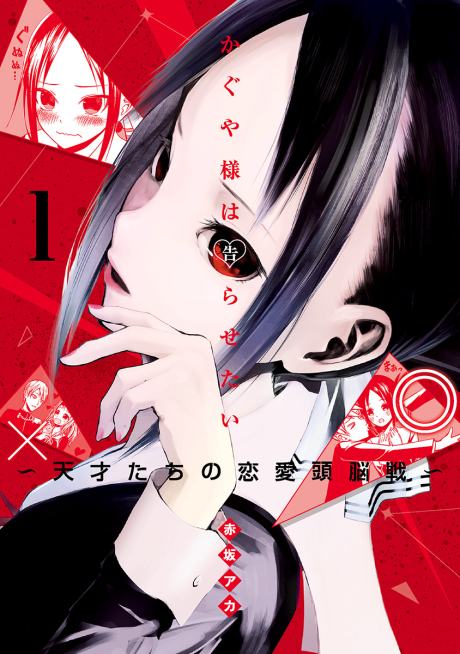

Seinen or Shounen Romance Mangas have a lot more presence than what we had before, but unfortunately most of them have the same problems throughout, and that is the abundance of mangas that have the same shtick of premise throughout like Komi can't communicate, Teasing Master Takagi-San, When will Ayumu make his move? Don't toy with me, Miss Nagatoro, Kubo Won't let me be invisible, etc.
With all of these mangas mentioned, it can have different plot progressions, different personalities from characters, different art styles, different themes, different messages, and more. For example, Komi Can't Communicate deals with Komi and her communication disorder, and each chapter shows her disorder throughout every chapter with no sense of genuine progress at all, and it's close to the same for most of the mangas I've mentioned.
And Kaguya-sama: Love is War is no stranger to these types of tropes; just from the first volume alone, it checked out the elements that can lead the series into great disaster, with its "Who Will Confess First?" hook being one of the more mundane premises, and in theory, it gets tiresome super fast, but despite the odds, Kaguya-Sama: Love is War and mangaka Akasaka Aka delivered one of the best romance manga, and here are some of the reasons why:
*
PART 1
MAIN CHARACTERS
Kaguya-sama: Love is War stands out among the other romance mangas because it uses each of its characters-whether they are the main character or one of the supporting cast in a way that gives them depth and complexity. When you look at it to a good degree, especially when you look at their introduction, they don't seem as significant or well-rounded as we know them to be now. However, as the series progresses and more storylines are shown and passed by, and we get to spend a lot of time with these characters, we gradually get to see that they have more characteristics and that bit of information-however mundane-that molds them as a well-rounded character that charms and hooks its audience.
A prime example of this is Chika Fujiwara, who initially appeared as a comic relief cutesy character to relieve the tension between our main characters, Miyuki Shirogane and Kaguya Shinomiya, as they plotted their absurdly simple schemes to start dating each other. However, Chika unwittingly butted in and ruined the entire plan. But as we get to know her better, she reveals more than the reader might expect. She can lend a hand if someone needs it, as she did when Miyuki needed assistance with a variety of issues, which is beautifully highlighted in the Fujiwara Training Arcs. She also makes an appearance in the Ramen Kings chapters and occasionally mentions that she enjoys eating and is much more encouraging and supportive, particularly when it comes to matters of the heart.
But she has flaws, chief among which is that she is a hypocrite; she asserts and says the most absurd things that somehow make sense and offers sincere advice while doing the exact opposite of what she advises. She also gets overly proud and brags about it, which occasionally gets out of hand and makes her appear genuinely stupid. She also frequently takes advantage of others through her schemes and primarily cheats, particularly through the games they play, and generally speaks without thinking about or worrying about how others might feel about what she spits out.
I can ramble more about why Chika is either a great or terrible person, but at this point, you now start to understand why even characters such as Chika, whose presence in the series is mostly shrugged on to the side, are still given enough importance and have little details added to their characters that make them a fully rounded character that feels believable enough that you can feel their existence even if they're not exactly present. Out of the five main characters in the show, Chika is the least-used character in the series when it comes to major arcs, but that doesn't make her inferior to the other main characters in the series.
Mangaka Akasaka Aka delivered one of the most well-rounded characters, Chika Fujiwara, who has an unpredictable yet cutesy personality with tons of qualities that make or break her for the audience while retaining that same impression we got of her in the first few chapters.
It's not just Chika who has received this treatment; it's all of the characters from Love is War, whether they're our main characters like Miyuki Shirogane, Kaguya Shinomiya, Yuu Ishigami, Miko Iino, or Ai Hayasaka, who have their quirks and little details that make them well-rounded characters whom you can easily point out and write about that will turn this portion longer than 5 pages, and yet this manga takes things ten steps further by adding these traits to characters who played minor roles.

PART 2
MINOR CHARACTERS

Kaguya-Sama: Love is War may have given its main characters high-quality treatments in terms of their personality, character traits, and little quirks and actions that make them well-rounded fully realized individuals, but Mangaka Akasaka Aka takes it ten steps further and gives minor characters the same treatments as what the main cast was given, and while they're a little inferior to what the main cast had to go through from certain arcs whether major or minor, it nonetheless gave the characters leverage to being well rounded as they could have been that had great effect and impact throughout the series despite only appearing in few chapters with their presence being selectable.
The trio of Nagisa Kashiwagi, her boyfriend Tsubasa Tanuma, and hopeless romantic Maki Shijo is an example of this. Nagisa and Tsubasa have only served as meek jokes for our main characters, Miyuki Shirogane and Kaguya Shinomiya, onto whom they can project and share their romantic interests since their debut. They have also served as metaphorical representations of their successful selves if they would put their pride aside, but they are primarily used as jokes in the series. Maki Shijo, the third party in the relationship, enters the picture late, claiming to like Tsubasa while anxiously anticipating his breakup with Nagisa.
This gives Maki, who serves as a reflection of our main character, various circumstances, such as what would happen if Miyuki didn't exert himself to the fullest in order to catch Kaguya. And various segments with Maki, Miyuki, and Yuu when they're talking about Maki's failed relationship, as well as having these conversations with Miyuki and Yuu, give off a breath of fresh air for most romance manga plots, as well as providing insights for our main characters, giving them advice, and providing audiences with great comedic moments. It makes these characters more alive when they're constantly interacting with the main characters, giving them time to goof.
Rei Onodera is another character worth mentioning and my personal favorite. Rei has mostly been in the manga's background for some of the chapters, but she is constantly observing how other people act and react to everything. For example, she keeps an eye on Miko and Yuu by remaining to the side. Rei did have a history of causing harm to others by spreading false rumors about them, and she has felt regret ever since. She tried to mend herself and learn her lesson to stop spreading rumors, and all of these character traits and developments are mostly happening in the background for most panels and a few manga chapters. Rei's existence in the series proved that even a character that acts in the background can have layers of character traits just like the main characters, and that's all thanks to Akasaka Aka's brilliant writing skills.
*
PART 3
A NATURAL PROGRESSION
Kaguya-sama: Love is War's biggest strength is how its characters are used and how Akasaka Aka naturally moves the plot along with them depending on their character development. The majority of the time, especially in the anime romance genre, this is not a key element for the majority of manga out there, despite what you might initially assume. Kazuya from Rent-a-Girlfriend didn't receive adequate closure for his deeds; instead, it was only shock value from chapter to chapter with no hint of repercussions. There are 200 or more chapters in Komi Can't Communicate, yet other than the fact that she now has friends when she ought to be able to communicate effectively at this time, Komi made no changes to any aspect of her personality.
The main stories of many romance mangas lack organic character development, and some of them, especially those in the romance subgenre, concludes with the characters still where they were at the beginning of the story. Kaguya-Sama succeeds in this area; at first sight, it doesn't seem to be a manga with a strong emphasis on character development, but as the plot develops and the tale moves forward, it eventually turns out to be one. Mangaka Akasaka Aka carefully sets out these scenarios that stay true to these characters and push them into risky waters, then pulled back and expect they'll become great characters after being given a certain revelation, and it always delivers.
An example of this is Kaguya Shinomiya; she is generally framed as a terrible person, and she does acknowledge herself as being cold or straightforward and unlovable, and this trait greatly affects her upbringing as a person. The arcs before the Dual Confessions arc and Our Personas arc panels perfectly illustrated how Kaguya's early character arcs are surrounded by loneliness and jealousy because of her self-centered and manipulative personality. She never gets the things she wants because she holds back to let go, but once she does, she receives the desires she has wanted her entire life. Moreover, since Kaguya started opening up more, the situations in which her character has changed.
Another example is Yuu Ishigami. When he was first introduced, he was portrayed as a depressed loner with a troubled past that made him unmotivated. However, as soon as people began to recognize him and support him through his difficult obstacles, such as Kaguya helping Ishigami with his academics and the assurance Miyuki gave to Ishigami, this kept him moving forward. Finally, Ishigami received the most encouragement after the School Sports Festival arc from the members of the student council to the cheerleading club. Because of this, his good side starts to show, and the people around her start to notice; he's more vocal and active in the council; he can interact with other people better now; and most importantly, he makes other people around him like him, especially girls who might see her or spark an old memory of him that makes him worth it to be a potential partner (Ishigami's Harem Arc).

PART 4
COMEDY

There are two typical ways to implement comedy, one of which is situational comedy, which plays along and executes its comedic parts from where the character is hanging, or problem-solving, sometimes in an exaggerated manner. Nichijou: My Ordinary Life is a good illustration of this. The other type of comedy is dialogue-driven comedy, where characters in the show drop lines of funny dialogue. These lines may be exaggerated, strange analogies, misinterpreted, or just dark humor. Another example is the Rascal Does Not Dream Light Novel Series. On the other side, Kaguya-sama blends both of these widely used approaches to comedy and amps up the intensity of the situation, helped by exaggerated emotes and effects from the characters and the artstyle, all despite the whole situation being mundane.
Even in the most uninteresting plotlines,nKaguya-Sama: Love is War manages to make the situation humorous. The premise in Chapter 21 is rather straightforward: Kaguya and Miyuki are trying to outsmart one another by revealing to the other person that they are carrying an umbrella. It's a fairly straightforward yet uninteresting situation, but the manga goes 10 steps further and plays out a proper scenario in which the characters try to outsmart one another. This leads to perplexing revelations, shocking twists, and hilarious situations that are addictive to read. This is also substantially improved by the art style's contribution to the situation's intense exaggeration, which gives it even more flair than it already has.
Not only that, but not every manga character uses the same style of humor, even if the series employs the same two techniques to execute its humor. Each character's personality affects how the comedy is delivered, carried through, and what kind of humor is displayed. Chika's arrogance and erratic personality make for unpredictable comedy; Miko's rule-following nature makes for a fish out of water comedy; Ishigami's pessimism makes for dark and depressing comedy; Ai's wit makes for quick-witted comedy; Miyuki's under-overconfidence makes for awkward comedy; and even the series' narrator makes for comedic delivery of his own. Kaguya-sama: The comedy in Love is War is inventive, unique, and exaggerated. It frequently repeats and calls itself out, but it never gets boring.
*
PART 5
ARTSTYLE
The art style of Kaguya-sama: Love is War stands out more than most romance mangas, and especially forbthe overall manga space. Its character design stands out from their simplistic cutesy artstyle, and each character gets one unique trait that stands them out than the rest of the characters, whether it's part of their personality, like Ishigami's long hair. While it is a unique design for him in the series, it actually subtly indicates that he's not been taking care of himself after a certain incident he experienced in hisblife. And there's a different kind of way of having unique traits: something that completely stands them out on their own, for example, you can easily identify Chika over the distance with her signature bowtie clip on her head, which serves no purpose practically but does help easily identify his character.
Another aspect of art style to point out is the exaggerated reactions of characters to the situations they're in, whether they'll be met with various emotions such as anger or disgust or extreme happiness and shock. This technique enhances every moment, from the serious to the comedic to the dramatic, as well as character reactions mixed with their surrounding environment. When it comes to adrenaline-powered moments, the art style changes like a loud-shaking feeling, with lines dominating the paper and other elements, depending on the joke, popping out in an exaggerated way. When it comes to romantic moments, the art style changes from an exaggerated shoujo-like style. And when it comes to Kaguya's internal personality dilemma, the whole manga chapter changes into a courthouse style. These kinds of directorial cues for the style of the series greatly enhanced the experience when reading it.

PART 6
SIMPLE & RELATABLE

When it comes to romance manga, the plot is typically what draws readers in because of how extravagant and overly theatrical it is. from Nisekoi's insanely structured chaotic narrative and reverse Romeo and Juliet storytelling to Relife's original storyline and the scenario developer of More Than a Married Couple But Not Lovers, which generates a ton of interesting character moments all through. Kaguya-sama: Love is Warappeared to be a psychological battle and has that vibe and tone of Death Note, where characters outsmart one another from the given scenarios, but Kaguya-sama uses this outwitting element on real and relatable scenarios, primarily romance and what it's like to have feelings for someone and how to respond to it, which makes the entire manga series relatable and enjoyable for most readers.
Kaguya-sama: Love is War presented a grandiose, overblown plotline about tricking someone into making a confession that was portrayed in everyday circumstances. In a series that has started off fairly grounded, a plotline like this one might sound like it could go south with scenarios that are beyond impossible to understand, but it managed to keep most of its shenanigans and moments as realistic as it possibly could be, even as mundane as massaging someone's hand and feeling various extreme levels of suffering (Chapter 71). As a result, the events in the series become familiar to the readers, who can then relate to each scenario and insert themselves into the story, deepening their connection and giving them the feeling that they are at home while reading.
This relatability aspect of the series does not stay with the scenarios, but with everything else in the series. It's already a norm for most mangas, especially in the romance genre, where everything is set in a school, and Kaguya-sama: Love is War is no different from that. The only thing that stands out on this aspect is that it spends more time on certain areas and activities in the school, such as the intimate focus on the student council and certain school festivals, and jumps from different characters and character interactions, including one chapter (chapter 225) where it briefly explores the teacher-student relationships in the school, whichcan be viewed as a throwaway since it doesn't have a significant impact on the manga's narrative, but these kinds of minor give the school aspects of the series more life than the series needed.
The characters in the series are another aspect that helps the audience relate to the story. In addition to the fact that their cute, expressive art style increased the likeability and attracted more readers, if readers keep reading, they will start to identify with the characters they are reading about and correlate it to themselves or the people they know. Surface-level traits of our main character include Kaguya Shinomiya, one of the most attractive students, but her stern coldness affects the relationships people have with her, which readers can easily relate to someone they know, and Maki Shijo's awkward stasis of wanting to pursue Tsubasa but finding him involved with her best friend Nagisa. This leads to humorous situations that most viewers can relate to, which contributes to her popularity among fans. There are many other characters in the series who possess traits like these in their own unique ways.
*
PART 7
A WELL-TOLD STORY
A significant factor in the success of Kaguya-sama:Love is War is manga creator Akasaka Aka's writing. A well-told story is produced by combining relatable characters, a straightforward yet passionate plot set in a setting that readers would be familiar with, humorous parts, and dramatic moments.
The series created distinct arcs for each character by balancing all of the factors that I mentioned earlier in the chapter. For instance, our main characters Kaguya Shinomiya and Miyuki Shirogane's journey together from individuals who were using psychological mind tricks and expert tactician skills to extract confessions from each other, whether it's fun or sad and unique spices from each chapter, connects the readers and hooks them to see the endgame of these characters, and with Akasaka's amazing storytelling, it managed to tell a story more than what the initial story intended.
In addition to our main romantic leads, we have other main characters such as Yuu Ishigami, who deals with his depressive nature and tries to improve himself through his physical, mental, and romantic selves; Miko Iino, who has trouble connecting with people and plans to open herself up especially to Ishigami; Chika, who is living her life to the fullest with the adventures she faces every day; and Ai Hayasaka, who is just trying to get by. After all of that, even minor characters receive a taste of these experiences, including Rei Onodera's self-improvement, Nagisa Kashiwagi's friendship with Kaguya, and Maki Shijo's relationship issues, which are handled in great detail despite the fact that all three of them are minor characters.
Every single character in the series, regardless of how significant they are, plays a part in their own journey, whether it be connected to or separate from our main protagonists. Akasaka Aka was able to build multiple storylines within a single university that felt authentic and lived in, a well-told story.

CONCLUSION

Since the first chapter was published in 2015, Kaguya-Sama: Love is War has gained a lot of followers from both the romance genre and Young Jump's other fantastic works. The characters in the series are relatable for many readers and easy to connect with; the story is crazy but riveting and down to earth; the comedy is formulaic but manages to offer something fresh each time; and the series' slice-of-life setting helped it become one of the best in both the romance and slice-of-life categories. Since the release of the A-1 Pictures-produced anime, which gave the original a distinctive twist while remaining faithful to it, it has even grown and reached out to new fans.
As an enthusiast of the romance genre, Kaguya-Sama: Love is War to Me provided an astounding experience while reading the series. At first, I anticipated it to be just another generic romance story where it didn't have a fitting conclusion, the character designs were ugly, and the whole concept itself didn't make sense, but as I kept reading (and watching the series), I started to understand why this one stood out above the rest despite retaining the same qualities as the others. Kaguya-Sama: Love is War seldom veers from its primary objectives and manages to keep its audience engaged for years to come. It meticulously lays out plans and future stories for these characters that organically flow into them. Kaguya-Sama: Love is War is a truly fantastic romance series that won't soon be forgotten.
*
NOTE
This review was originally written in December 2022, during the infancy days of my growing enthusiasm for anime and manga, as well as my initial steps into long-form writing. It remained unpublished on Anilist until July 2025, when I finally uploaded it in its unabridged form.

Shinichirō Watanabe is deemed one of the most respected anime directors currently. Once he’s on the director’s chair—or in other projects that he’s attached to—it automatically becomes one of the most pristine, unique anime, due to his unique direction that went against the waves of norms. He creates a world that blends the familiarity from other genres, while injecting his personal flair—particularly how he structures characters and his prowess in music production. We’ve seen this through his other famous works such as Cowboy Bebop, Terror in Resonance, and Samurai Champloo (My personal favorite). It is due to these qualities that audiences love Watanabe’s work, and a certain quality that has stood against time.
Hence, when Adult Swim and MAPPA declared that they’ll release a brand new anime with Watanabe on the seat—along with various western talents such as Chad Stahelski (Director of the John Wick Franchise)—it has become one of the most anticipated anime of the year. Unfortunately, it had fumbled.
*
Lazarus is an anime that follows various mercenaries looking for Dr. Skinner—a renowned scientist that went missing. In a world building sense, it is absolutely intriguing. The bleak display of the world (especially in the context of the certain “substance” in which the series revolves its lore into) is displayed in an interesting manner, creating an interesting critique and philosophy of a modern dystopian world, in addition to its mystery goose chase. Another highlight—and the show’s main attraction—is its unique action sequences in the anime field, with fluid, dynamic hand-to-hand combat, along with parkour sequences giving it one of the most adrenaline-filled, well-choreographed action sequences in anime in recent times. But alas, that's the extent of praise I can give to this anime.


To put things more bluntly, this anime felt passion-less, and there are many reasons for it. For instance, it does not have that distinctly captivating world building Watanabe is known for. Everything felt familiar with moments inspired from other Watanabe’s works, and famous films in recent history, but in these sequences, nothing new was added that made it distinct from the rest. Even the world that it tries to build and its message it preaches to us felt disingenuous, and the urgency the series presents does not show on screen, but rather was only brought in monotonous exposition dialogues. Not only that, it provides a lazy direction with how it reveals its revelations, either through cheap expositions, or viewing the events from afar, or a mix of both. As if the characters didn't really need to be there since the events can progress point-on-point without them anyways like they're just filler nuisance.
And speaking of characters in the series, they are barely interesting to follow. They have their own quirks that can give a bit of personality with them, but they felt like they’re written just to fulfill a stereotypical role in ensemble cast type of action series like these. We barely get to interact at an interpersonal level, or a proper heart-to-heart motivation between these characters in doing their cause, but instead, they're having their own solo realizations and dramatic moments, whist the rest are just bystanders,—barely any memorable cohesion with these characters (other than the ones that were delivered in an uninspiring dialogue), and if the series does attempt to be, it gets overshadowed by another sequence that's happening simultaneously, or the delivery is half-baked.
There are moments in Lazarus, but the journey to get those moments is a tedious slow-burn with a reward that doesn't fully satisfy the viewer, as if it feels like the series was supposed to be a 24 episode series that had to be condensed down in order to fit the needs of a corporate entity. For such talent behind this anime, and the huge potential this series proposes, watching it feels like the names behind this project is just a facade of a marketing ploy. Lazarus feels like it's directed by a committee, asking to copy the best elements of previous Watanabe works, create an interesting idea, and mish-mash them all together without wovening the threads—creating a jumbled mess of an anime.
*
Conclusion
For all the divisive opinions this anime got, it is safe to say that the anime does have an captivating plot that tingles the thoughts of viewers, but you are only left with your imagination to expand the world and deepen its lore. Lazarus only gave you the framework of a potentially amazing series that’s crushed by a premise and philosophy that I wished was given more time to explore.


Black Butler is one of the most intriguing anime series out there. It doesn't have the wide mass appeal of its juggernaut shounen counterparts, but its loyal fanbase has kept the series alive and vibrant. I've never gotten on the Black Butler train since back when the first season aired (I wasn't into anime back then + I was not at the age where I was interested in watching anime), and I didn't really have that sense of hype when binging all of the episodes all at once, instead of watching it weekly alongside the community; hence, my attachment to this series is not as strong as other people's.
Although it wasn't devoid of hollow, as I immensely enjoyed my journey in bringing the show, the Book of Murder and Public School Arcs have been some of my most enjoyed arcs of the series. However, like what I have written in my (deleted) review of Public School Arc stating that it was a fun ride, yet there's no sense of urgency in watching it, mainly due to the stories it's telling had mostly been present in most animes during the time of it's release. The tides have changed, however, when this new season arrived.
*
Emerald Witch Arc
The opening of this season has by far one of the most captivating mysteries in recent anime. It almost reminded me of the opening of that Sherlock Holmes story in The House of Baskerville—in the basic sense at least. That reference in its story hasn't caught on in the greater anime space—particularly this season. In the sea of familiarity in the anime space—along with its incestuous use of plotlines and tropes—the plot of Emerald Witch Arc has so far one of the most refreshing and intriguing aspects—giving a sense of urgency in watching the series overall. Those first three episodes alone have one of the most captivating pieces of media this year—hooking you into the mystery while itching for more by exploring the extended world-building in its mythology and taking risks in the direction of its story and twists that will leave you in curious awe.
As if we haven't seen these characters much, both Sebastian (Daisuke Ono) and Ciel (Maaya Sakamoto) have taken a step above in their character development. Though we mostly see these characters in specific formulas in their character dynamics, this season has shattered that by giving these characters a sprinkle of divergence, leaving them in an unusual state. Ciel, for example, had taken a more interpersonal role—battling through his own trauma, causing him to take a forced backseat half of the time in the series. Sebastian, however, has a more curious dissonant role in this one. Though we had seen him taking a more proactive role with a confidently cool presence, we'd seen him here in a more subtle—yet vaguely fragile-stern manner, something that we haven't seen much from Sebastian.
Aside from our Main characters, brand new characters had taken a shine as well. Starting from Sieglinde Sullivan (Rie Kugimiya) who shines in every scene she's in, and does not shy away from developing her character in a three-dimensional light in its calm and devastating moments in the series, despite the straightforward role she's playing. This also applies with Wolfram Gelzer (Chikahiro Kobayashi) who's mainly playing a side character alongside Sieglinde, but he has his own moments to shine. Previous supporting characters are back as well with their usual uplifting personalities and sick action moments, yet they had moments where they had to step up for themselves which was captivating.
Aside from the brand new elements this new season provided, this had not deviated from the usual Black Butler formulas, which is a guaranteed assurance in the entertainment value of this season—in fact, far more entertaining combined with the positive aspects mentioned above. However, it also has problems that have plagued previous Black Butler entries—which is a problem in the anime space in general. For instance, there are moments where the tone shifts from serious to comedic, for the sake of a quick chuckle, but it does not work most of the time.

Conclusion

This new season of Black Butler brought the entertainment factor from the previous season (Public School Arc), and cranking up the intrigue with its storytelling and mystery elements. If you're already a Black Butler fan, you'd already be watching this series already, but for brand new audiences, this has a better urgency in watching the series, with its original story (compared to other animes this season) brings a sense of refreshment. ***


In the sea of romance animes that are littered in high school settings, and the same-old shenanigans adolescence has brought up a thousand times in same-y romance shows. Not to say that there's something wrong with it, but some audiences crave for something new and a brand new perspective—particularly dominated in the certain age group of the adult scene, and it is refreshing to have a series that tackles the adult perspective of romance. We've seen them in previous works along the years, and In the previous season (Winter 2025), we've seen the anime “I Have Crush at Work” which tackles the adult romance in a more cute-sy vibe. But in this one, Kowloon Generic Romance takes a step further in incorporating a unique setting in its storytelling—behind the walls of Kowloon Walled City.
*
Kowloon Walled City is one of the most fascinating used-to-be standing locations in history. Enclosed with tight-knit walls with narrow hallways, everything and anything that can happen with so-called fictions can be possible within the city that's invisible from the eyes of the people outside. We follow our main character Reiko Kujirai (Haruka Shiraishi) who's the anchor of anomalies this city had presented to us, particularly with her certain characteristic (in which the show revolves its overall plot), along with Hajime Kudou (Tomokazu Sugita) whose odd yet sweet romantic moments with Reiko gave us something to root for. Their romance deviated away from its typical “will they, won't they?” scheme, by giving us fragments of their past memories, whilst also building brand new moments that traverses their (re) building relationship inside the anomalies of the walled city.
If that's what the series is entirely about, i would have already been on board with its mystery-esque, nonlinear structure, yet the anime does not shy away from the potentials in plotlines in the world it's set in, hence, introducing many characters with multiple character journeys such as Miyuki Hebinuma (Ryoutarou Okiayu) who has an unpredictable way of conveying his thoughts and plans, and many more characters—adding dense stories inside a dense city. On paper, this should have been a captivatingly dense series, but it doesn't work for me for most of the time.
The start of the series alone is captivating in of itself as we only focus on our two lead characters and their circumstances, but once you start introducing other characters in the story with their own motivations, it becomes way too convoluted with threads that are poorly woven—some none at all. It's like watching two animes inside a season simultaneously, with each plotline feeling drastically different from each other—only connected by a thin thread that is set inside the city and its anomalies. Its interesting setting and plot is greatly overshadowed by having too many ideas presented, yet barely executing the potentials of their setups, resulting in a half-baked execution. Even the description of the series (Provided by Yen-Press) feels awfully vague, or rather, the series itself couldn't identify what it wants to be, and thus shoving in too many ideas, yet leaving everything tied up halfway. Nothing demonstrates as well as this series had in the confusion of what it tries to tell—as if it's having an identity crisis in of itself.
Although, this can only apply for viewers (like me) who agonise in connecting the dots in every scene it's in, but that's not how the series presents itself anyways—along with the people who watched the series. Sometimes you just want to watch a show, and just sit through with it, and absorb the vibe and tone it emits. Although I couldn't shake off the feeling of its wasted potential of its rich premise.


If you’re looking for an anime to play in the background or binge quickly, Kowloon Generic Romance is a passable choice. It offers slice-of-life elements in an unusual setting with an intriguing premise. However, don’t expect much beyond that—it ultimately feels confused about what it wants to be, leaving the viewer underwhelmed and puzzled by its lack of clear direction, and confused of what story it tries to convey. ***


In Summer 2024, the first season of Shoshimin was released, landing its spot as one of the most underrated animes to come out of that season amidst other shows that were stronger in its popularity, such as the second season of Oshi no Ko and Alya. Nonetheless, the first season stood out for its slow and sober direction—giving a unique vibe from a lineup that's cluttered with bold and loud counterparts. Another factor is its grounded nature with how it handles its mystery, whether it's one-off mundane mysteries or multiple-episode mysteries, combined with its direction, ultimately giving this anime its own unique pedestal amidst the others—uniquely different that I often find myself guilty of saying that this show is a “Hyouka clone", like what I've given in my review of the first season.
It was until the latter half of the first season that the story progressed—including its stakes. However, we've never really eaten half of the fruit with its progression since the first season ended abruptly. It was only 9 months later that we got to see that other side of the fruit. With that said, has it held up with the quality the first season had left it behind? More importantly, has the series progressed enough to distinguish itself from being just a “Hyouka clone”?
*
Season 2 of Shoshimin returns in full swing, diving into a mystery that unfolds across multiple episodes. However, the series remains true to its core—not by making the mystery itself the main focus, but by emphasizing how the characters react to it. Following the events of Season 1, we see the main characters, Jougorou Kobato (Shuichirou Umeda) and Yuki Osanai (Hina Youmiya), take separate paths, but at the same time, grow closer together as characters as the episodes go by. In the second arc of the series, these characters would feel closer than ever despite its arc that's mainly focused on past events. Season 2 continues to explore these diverging journeys while introducing new characters, such as Takahiko Urino (Teppei Uenishi), who has been in this facade forefront the series had put him in.
Aside from that, this season is mainly divided between its mystery aspects and its dramatic aspects, mainly with the ramifications of the end of season 1 and how it affected characters moving forward. Jougorou and Kengo (Makoto Furukawa) are mostly playing more in the sidelines, but they had been more firm as characters—especially with the stakes of the mystery—and the later decisions of Yuki, who is mostly playing the same as she did in Season 1, but knowing a brand new context from her, has played more of a heavy presence than she already did, especially when she's on screen. There's also Tokiko Nakamaru (Yume Miyamoto), who is a new character that's mostly playing as a minor character, but her presence lets us understand more about Jougorou’s current standing in season 2.
And Characters aside, Season 2’s first long mystery arc “The Autumn-Exclusive Kuri Kinton Case” is one of the most captivating mysteries the series had shown. Its nuanced nature of the mystery, multiple red-herrings, and coupled with the viewer following three paths of the same mystery, is a rather interesting and uniquely-captivating direction—a structure that vaguely reminds me of the film “Zodiac” by David Fincher. The second mystery arc “The Winter-Exclusive Chocolate Bonbons Case” however, is by far my favorite arc of the entire series. Its mystery is multilayered with a structure that's genius while playing with concurrent and past separate timelines whilst wovening into one. In my personal opinion, it makes the anime “Erased” more embarrassing than it should've been.
Its captivating characters and an intriguing plot wouldn't be as captivating as they should have been without its animation and direction. Though it's not as flashy or stretching its technical bounds, a clever use of cutting and stitching scenes—reminiscent of early studio shaft works—coupled with beautifully captivating cinematography and mixed with its calm yet heavy use of its whisper-like sound design combine to make one of the most underratedly enthralling animes to have come out recently. Season 1 already had these kinds of qualities as well, but season 2 took that foundation and polished its poking areas—producing a flawless production.
However, not every area in the series can be captivating for many. For instance, the subtlety of the given hits by its mystery and the hidden resolutions of certain characters of the series—a trait that came from the original creator Honobu Yonezawa and a trait that can be seen in Hyouka as well—can be a treat for mystery fans, as the gaps the series left are big enough that they can just interpret the scenarios but small enough that it doesn't ruin the built-up mystery and progression of the story. However, if you're not a mystery fanatic, these moments can easily pass over your head, and at moments you'll be annoyed that there are characters with seemingly rushed resolutions. Nonetheless, it's merely a subjective matter.

Conclusion

Despite the series title claims to be “ordinary”, it has definitely deviated away from it (for the better) as its groundedly captivating mysteries took over and fed our cravings for mystery stories. The second season of Shoshimin had lived up beyond the expectations, and has broken away from the bold of being a “Hyouka clone” to a series that firmly stands with itself with the mysteries it provides, the quirks of the characters, the mundanely captivating atmosphere, and the uniquely directed scenes that's purposefully subtle yet boldly captivating. Truly one of the most impressive, and underrated animes that have come out in Spring 2025. ***

How do you define “being human” in the modern century?

From what we're told from the people around us, being “human” is being free from your thoughts, free from the judgment of others, and most importantly—being free from the chains that hold us back physically and having the capacity to do whatever we want. But that single line of thought brings us from two different perspectives of life. One that keeps climbing up the stars, capturing the highs of capitalistic life with a green sweat-smelling paper that shows people's hidden desires—but walking through that road requires you to be a robotic individual. Prejudice. Narrow-minded. Self-Centered. But then, once you defy that life, you'll be greeted with the miserable lane. Scraping every bit of organ in you to get by. A dreamer that never reaches the top.
With these in mind, I guess it's difficult to define what it means to be human based on labeled status. Maybe we have to look inward to see the reason to be "human," whether it be a passion or a hidden desire that we want to pursue. With this optimistic mindset, it blinds the dream that'll never be reached—thus being led in a question-filled limbo of human and nonhuman with the judgement-filled comments around humans. A person who once had everything will always fall down and crumble on the very floor they swear they'll never be on. If that's the case, then being “human” is someone who breaks off that cycle—getting out of that drowning feeling.
From what was said might be true, then the solution to being “human” for everyone is to free the desire from the tight-locked flesh. I guess so. But it's not that easy.
*
Imagine a character like Susumu Nakoshi: egocentric yet penniless, a misogynist who objectifies women, and a homeless man who stubbornly denies his own circumstances. He engages in self-destructive behaviors, including a grotesque fixation on his semen. Most disturbingly, he possesses a warped sense of self-righteousness, driven by an obsessive need to "save" others—but only through his own distorted methods. Now, imagine this man gaining the power to see the "true" forms of individuals—those who are trapped within their own flesh, silently wrestling to uncover their authentic selves.
How will this person save these people when he himself is twisted in the head? How will it even be determined if one is in need of saving? And most importantly, how will he interpret and decide the method of saving a person without any biases from his own perspective? Sure, it might have unlocked a new pathway for these individuals that he "saved," but was it really the right way to do it? If you read the manga's first few arcs, you will think that it's fine, but that awful bias comes back and ruins a person more than what you think—unless it's part of a delusional smile unreliably projected by the said “self-righteous” character.
So… that's it then? In order for people to be "human," they have to be saved by a non-bias righteous person. It sounds like a cop-out—because it is. If not everyone needs or wants saving—as most people are already content with their lives. Are they more human than the flawed? Is simply living is the answer? Is the person who is in between the labels the utmost human?
What defines a human?
After all, being free doesn't lead anywhere, as it can be the freedom that becomes a weapon. Every angle of asking the question becomes a double-edged sword. A limbo of a question that never shows itself out to the light—but never leaves you behind. It might be, or unless that idea is another perspective concurred by your own biases.
Or put it in another perspective, maybe it's a struggle to define what is human based on our protagonist’s worldview, because the main character might not be.


Homunculus is a manga series where it seems like a straightforward drama-horror series. But once you keep on reading, it doesn't hold back on giving you gut-tightening punches of the idea of being human, being part of a capitalistic society, and the lengths a person would go given by the imagined power in their hands. it constantly—yet subtly asks about your moral implications on each sequence in a horrifyingly realistic way.
This manga may take a while to resonate with people with its themes—especially with certain sequences that do not fly by in today's society—but it's still an important read that really questions your perspective on what being “human” really is. ***


Romance anime are in a different landscape nowadays, filled with safe tropes that aim to tug the heartstrings of viewers—and it did work in many moments—but it has gotten so stale and homogenized that it would be difficult to find an identity in each romance show. Not to say that romance series now wouldn't dare to take risks—since there are a couple that do and made a step above on breaking the medium—but it's difficult to find a romance show where it is littered with heavy drama between its characters. However, it used to be a norm back in the 2000s.
Romance animes in the 2000s and early 2010s, such as Toradora and Maid-Sama, are filled with characters that often banter with each other, creating this tension between characters and having that satisfying moment where they put their differences from each other aside and create this slowly growing bond, warming up to each other until they have fallen in love. Not to say that this is the objectively best approach for romance anime, but the abundance of these kinds of tropes captured many individuals in the romance genre. Fast forward to today, the strong contenders for these banter-style romance shows have been Kaguya-Sama: Love is War and the recently released Alya, but these animes alone are a few rarities with what romance shows have become today.
There are reasons why these tropes have slowly disappeared, namely that they don't really work in this day and age. People's preferences have changed, and the greater population has started to prefer a more dominantly calmer and wholesome approach in romance—and there is nothing wrong with that. However, at some point you might have a craving for rewatching those old tropes flourish once again. And this is where this anime enters in.
*
“I'm Getting Married to a Girl I Hate in my Class” is basically what the title is. It's a straightforward romance anime with a flair of the good and bad tropes of romance shows in the 2000s. It is littered with your expected spicy tropes that you've expected, ranging from characters bantering with each other—which is the main attraction that has carried this series all throughout—and side characters that are obviously ripped from yesteryear, namely the sister-role characters and a love triangle character—something that is rare too nowadays, apart from harem shows.
With that said, this is not a show where you will find meaning or profundity with its output. The characters in the show are playing their stereotypical roles to the point of having no unique personality that separates them from other characters from different shows, plotlines that you can expect from a mile away, and it can get tedious as you keep on watching with its repetitiveness.


This show is not the best romance show out there as it pretends to be, but it is mainly banking on its 2000s anime tropes, hitting that wave of nostalgia for the people who grew up with anime with these kinds of tropes. If you miss these kinds of tropes, you will be better off rewatching old romance series that might've offered better characters, plotlines, storytelling, animation, and direction. But if you're seeking a romance anime that tackles old tropes with a modern flair, this can just serve at its bare minimum. ***

Lately, there is an abundance of romance anime with their own unique tropes—sometimes taking their premise to an extreme in order to keep the audience captivated by their crazy shenanigans in a comedic light. While there is an audience for these kinds of romance anime, it can get tiresome as the story goes forward—sometimes losing its spark from what viewers were initially hooked on.
With that in mind, what does Blue Box—a new romance anime—have to offer amidst the abundance of romance anime? Simple. It's Simplicity.
*
Blue Box follows our main character, Taiki Inomata (Shouya Chiba), a badminton player who aspires to be in the Nationals. Not only that, he also admires the basketball player Chinatsu Kano (Reina Ueda), whom Taiki also has a crush on. Taiki’s admiration towards Chinatsu may seem distant at first, but with specific circumstances, Chinatsu lives in the Kank household, which brings both Taiki and Chinatsu together and strengthens their relationship with each other—including their feelings.
There is a bit of spice within its premise alone—but that spice factor makes a lot of sense within its story. Anything beyond the spices (that's carefully sprinkled all throughout the series), this has been a grounded take on romance—something that leans more on the everyday normal aspect of falling in love—which makes it even more engaging despite its natural slowburn take. You see our main characters Taiki and Chinatsu making cute gestures and interactions towards each other, taking care of each other when the person is in need, seeing mainly Taiki's inner battles as simple as having a conversation or plans with Chinatsu, and witnessing their ambitious goals for their passion and wholesomely supporting each other's backs. All of these elements gently sprinkled all throughout the series make you constantly blush, episode by episode.
Aside from Taiki and Chinatsu, we also follow other characters such as Hina Chouno (Akari Kitou) and Kyou Kasahara (Chiaki Kobayashi), who are Taiki’s friends. While side characters in romance series like these usually fall into the typical archetype—most notably these two characters—the execution is grounded to the point where you actually feel the pain and joy of these characters. Having all of the characters in the series abandon exaggerated gimmicky reactions in favor of realistic action and reactions in every moment makes them feel relatable—who we can feel like these experiences can feel at home in our own high school experiences. Through that grounded relatableness, it's easier to connect with these characters and follow through their journey through high school and romance.
Aside from the romance, There is a sports aspect in this series— which is what mainly brings the plot— alongside the slice-of-life elements. Sports is the front and center of this series, with characters' motivations relying on achieving the highest through their passion and talent for their specific sport. But do not forget that this is not a sports-forward anime but uses sports as an allegory of the current emotional state of these characters. For instance, a character losing the game is directly connected to the character’s unsureness of itself. The synergy of sports and romance is one of the most unique and original takes this series can provide in the overall romance anime space.


Blue Box may not have the flashiest plotline or the most overshine characters, but it's stripped-down, back to basics in romance storytelling makes for an intriguing and captivating watch, tugging the heartstrings of viewers on relatably mundanely special moments that linger in your heart longer than you think. I highly recommend this anime for romance junkies looking for a simple romance or viewers who are trying to get into the romance genre. ***

Recent action anime have been leaning more into the fantastical aspect. With recent shounen juggernauts such as Jujutsu Kaisen and My Hero Academia leaning more into their grandiose action sequences, complemented with beams of color for their representation of power,. But as you keep seeing these types of action sequences—with each year upping its stakes and quality from the last—it also becomes more stale as it's the only thing that's predominantly mainstream with the lack of variety. This year, however, has a lot of promises in the action anime realm that shake up the medium, one of which is this anime.
*
In the action department, Sakamoto Days has been one of the most interesting so far, not because how grandiose the series is compared to the last, but how creative and practical its action sequences are. For comparison, Jujutsu Kaisen Season 2’s Sukuna and Jogo battle sequence is undeniably impressive, but it lost its grounded tangibility with many elements flying around on screen, finding it hard to make sense of the durability and practicality of each item during its action sequences. Part of an action sequence is using items around the characters as obstacles or tools to achieve their desired way of defeating an enemy in an entertaining and creative fashion—in which Sakamoto Days delivers it well.
From the first episode alone, you can see its grounded take on action sequences down to its street-level style, by using tangible materials such as convenience store shelves as part of its safe defense or a strategic attack. Each crash packs a heavier punch, and the creative uses of familiar spaces and choreography make it one of the most interesting action-oriented animes around.
Apart from its action sequences, this anime has a lot more heart to it than you might expect. We follow with a character named Shin Asakura (Nobunaga Shimazaki), who's with many misadventures, meeting many individuals who dared to assassinate Tarou Sakamoto (Tomokazu Sugita), a notoriously feared assassin who retired for a humble life—and out of shape. From that premise alone, there isn't much of a legroom to fully explore many themes as it follows a more traditional, obstacle-oriented adventure, but it manages to sneak in some drama into it from the heart-to-heart interactions, well-realized motivations, and fun chemistry between many major and minor characters.
Aside from its well-crafted and unique action sequences and a lovable, heartwarming cast of characters, this series does not really offer anything that's inventive that redefines its medium. At the end of the day, it is still your standard shounen series with standard shounen formulas present from many successful shounen anime—and it continues to have that element in this series. It can be a great thing for many viewers since there is that familiarity with the formula, which you can find an easy connection with the series. On the other hand, those who were seeking something profound or formula-breaking can be left disappointed—but still leaving the series with a smile.


Sakamoto Days is your usual shounen series with its proven and tested formulas that continuously work, along with a standout quirk of having street-level action sequences that bring a refreshing light. An easy recommendation for shounen fans and action fans alike. ***

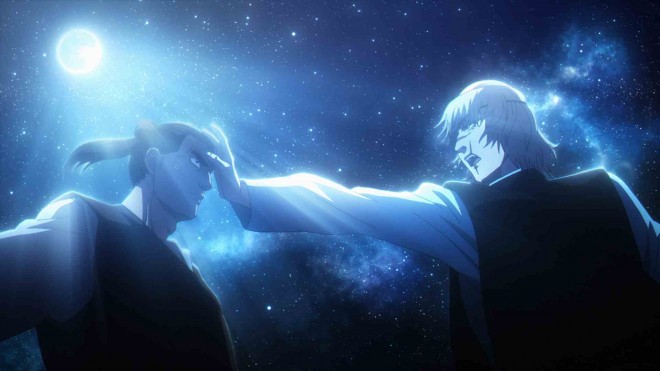
History surrounding knowledge is often complicated to discuss. Accounts of individuals claiming that one perspective is real, whereas the other argues against contradicting evidence, constantly hitting each other's intellectual minds until one embraces the other's intellectual discoveries and seems correct at the time—provided that it agrees with the views of the highest order. In a pre-modern world, fact is shaped with beliefs of the higher-ups, and contradiction otherwise shall be punished and labelled as an enemy. Learning is encouraged, but only ask the questions they want you to ask to further push a false-believed agenda.
In this unprogressive mindset imposed by the arrogant, innovators are suppressed, and the awaiting knowledge of truth in our world will inevitably be lost.

As you keep on reading in history books, you will realize that these conventions littered in texts would soon fade, as the arrogance is defeated by the far more arrogant individuals who seek the truth of nature rather than the biases of the perceived truth imposed by the higher-ups. From our real history, we've seen this with Darwin’s Evolutionary Theory and Freudian Psychology, and most notably—with where the anime has loosely adapted upon—is Copernicus’s Heliocentrism—or the idea that the sun is the center of the system, and earth merely revolves around it.
Heliocentrism at the time was a way to represent the accurate measurements and observations with the motion of planets in the more accurate form based on observable evidence. It also argues against geocentrism, or the idea that the Earth is the center of the universe, and the sun and planets revolve around the Earth. At the time, geocentrism was the widely accepted model, as it coincided with the beliefs of the church centered with Christian beliefs—and believing against that would mean defying God’s role for humans, thus the Christian belief collapses. Ultimately, the journey of seeking the knowledge of truth has a huge obstacle to safeguarding the religious beliefs of many individuals.
While the anime may not have adapted a direct manner of events, it does capture the essence and the current state of individuals facing that predicament. Some individuals may have come to a realization on the flaws of their beliefs and would help upon in seeking new and potentially life-changing discoveries, while many people would often turn a blind eye and find all sorts of excuses— twisting their beliefs system in order to fit their current narrative, from prejudistic actions, supression, to torture.
*
Orb: On the Movements of the Earth is one of the most unique and original animes out there, with a premise that highlights the issues of suppression, conservative beliefs, and the struggles of seeking the truth in a world where settlement of what was said to have been true is dominant with punishable actions when defying the status quo. Its unfiltered portrayal of the harshness of the past brings a horrifying insight into a fictionalized yet inspired by history of power in an entertaining yet saddened fashion with plotlines that will keep you engaged.
Aside from its historical relevance, the show offers an equally gripping story that makes you care for these characters, as well as tense-filled sequences that keep you hooked episode by episode with their well-directed, thrilling, and teeth-screeching moments with no wiggle room for any merit of safety for the characters on screen. This show is perfect for both history and non-history buffs alike, and I highly recommend that people watch this anime for its novelty and as a change of pace for people to watch in this crowded medium.
“Love is a decision, it is a judgement, it is a promise...”
-Erich Fromm

Love is the ultimate goal for most people. Whether it's the love of our job, the love of our passion, or the love for the people around us, but like most of us, people seek that special love that's shared between two individuals who came from different backgrounds, suddenly having their paths crossed and connecting them, holding along each other in the passage of long life living together. From your efforts of looking for someone who deemed fit based on what you seemed right when it comes to romantic relationships and the commitment of both partners maintaining and sticking together through thick and thin while building and pleasuring themselves and leading through the life that's beyond their wildest dreams. A dream like that is everyone's dream, but not everyone can reach it.
Not everyone is lucky in the journey of love, though you would always expect a handful of difficulties along the way, especially when reaching, adjusting, and maintaining a relationship. Some people are stuck with the first step of reaching through, which can lead to the unsure desire of the wants in a relationship. Some may seek what they think their heart wants, some may settle once the reaching part finishes but never adjusts and maintains that grasp, and some couldn't get past the reaching. Romantic love may be a vital part of our existence, but not everyone is rewarded equally.
*
With romance mangas, we have always explored the reaching for that love, adjusting and maintaining that love, but there is another aspect of love which not a lot of stories in the media explores in a serious manner is where our character is unsure of her wants or discovered that their wants are not what they have grasp in current.
Run Away with Me, Girl is a romance manga that explores that dark realism of the undertold aspects of romance. We follow Momo Makimura who was a girl who is unmistakably in love with Midori Oonishi, but Midori broke up with Momo because she thinks dating girl with girl is foolery. This creates a dissonance of Momo as she is still in love with Midori a decade later, but forces herself to move on from the pure love that she gave that was unrequited. Meanwhile, Midori is in denial of her feelings and strays to the path of the fictional wants which her heart does not scream for, resulting in major consequences alongside her and relationship problems that would also remain unrequited. This decision does not only affect them, but the relationship-or the lack of genuine relationships they've developed over the years, and the effects of the people around them from the consequences.
The manga does not shy away from exploring the trail of damage caused by the disconnect between someone still seeking genuine love while already in a relationship, and the struggles of letting go. This uncertain and unsatisfying journey that the characters navigate brings about significant challenges and consequences, forcing them to confront the repercussions of their choices throughout their lives.
Even with the dire and inescapable circumstances one of the characters faces in the manga, the story doesn’t shy away from offering hope. No matter how deep the despair seems or how trapped you feel, there’s always a way out. Everyone is deserving of love, and love will eventually find its way to everyone. It might take years, as it did for the main characters, but it will come in time through realizations, efforts of changing, and willingness to accept what comes further.


The morality of this may be contested, scrutinized, and polarized by many people who will be reading the manga, and I see it as a beautiful thing. Not only is this story fictional, but it's happening with many people right now who are lost in the search of love. One may brush this off as an extreme way of conveying love’s selfishness, but it may be a gateway for some who are in need to get out of their false beliefs and lean towards the true wants that they have repressed within them. As for the curious like me, this is an absolutely captivating and heart-gripping read that lingers with you more as time goes by. ***

Lately, we have seen the rise of fantasy mangas—aside from the isekai subgenre—that have their own unique flair of creatively standing out through strengths that's uniquely for them, ranging from Freiren’s captivating storytelling to Delicious in Dungeon’s appetizing flair of culinary visuals. Another one to add to it's roster is a manga that's been running for almost 8 years now (as of January 2024), has slowly been catching off steam in the manga community, and will be getting an anime adaptation later on in the year, and that is Witch Hat Atelier.
*
Witch Hat Atelier follows Coco, a young girl who has a dream of becoming a witch—which she does through various circumstances—while also battling through challenges, insecurities, morality, and the overall responsibility and what it means to be a witch—while also having storytelling spices alongside. Most fantasy animes are often overblown or overwhelming to certain readers—especially when it's a quest-related fantasy adventure with beyond-the-earth characters. Not with Witch Hat Atelier.
Coco is just as down to earth as the next person, with moments where you can relate to her and understand her thought process and feelings towards situations—especially when moments where she degrades herself, which feels human in some aspect. This trend follows through other characters that surround Coco, namely Argott, Richeh, and Tetia, who you may have labeled as archetypal characters at the start, but they start to deviate away from that and become well-rounded and well-minded characters where you sometimes sympathize and root for their own personal beliefs. That goes with Qifrey—Coco's Teacher and a Witch—who may seem distant and fantastical at first but later becomes a far more grounded character than readers would expect.
While the series has its lighter and wholesome moments sprinkled throughout, it doesn't also shy away from providing dramatic moments as its main push of its story. We'll get to see that from the first few chapters, where we'll be hit with a significant moment for our main character, Coco. The series, however, does not play all of its cards to have an immediate tearjerker moment just to push it aside right after the next chapter, but it is a background slowburner that lingers within the characters—and even stacks with many worries and insecurities, making the blowout page far more impactful.
This lingering element also applies with the mystery of the series, where they don't show the objectives and goals immediately but subtly give you hints across many chapters—putting clues specifically to the reader and making them puzzle the entire intent of said conflict—until the confrontation.
The manga’s story and characters are perfectly synergized by the fantastical world-building this series provides. The concept of witches in this world is in the sea of familiarity among many fantasy-related animes, but there are subtleties hidden behind curtains—or should I say “between the lines” of dialogues among characters that widens the door of many possibilities this series opens itself—and they mostly deliver at its own pace. Another aspect is the power system, which is by far one of the most unique systems in modern manga. It doesn't have that Shounen action flair where visual proceeds it's mechanics, but it still provides that awesome factor by having a mechanic on casting spells by drawing—something we have seen similarly on Episode 1 of Mushishi—but further expanding on that concept and conquering a more interesting and captivating visuals of its power systems.
This manga wouldn't be as popular as it is now without its main attraction: its art style. The art is filled with unique, finely-detailed backdrops among jaw-dropping moments where you can really feel the grand scale of this lived-in world. Added with many areas where one feature stands out the most—and perfectly synergizes with what arc is coinciding throughout. Magic spells that felt more grandiose with it's captivating liquidly—yet aggressive form. Even down to it's characters, where you can feel the finer details of their clothes. It's one of the most unique and eye-catching artworks you will see in many fantasy mangas.


Witch Hat Atelier is one of the most intriguing modern fantasy mangas. Along with its relatable down-to-earth characters, captivating mysteries, grandiose yet carefully constructed world building, and jaw-droppingly detailed art style, this makes it an easy recommendation for people who are seeking a new manga—for instance, a fantasy manga—to read. ***