— — — —— — —
×
— —— —

To say that Oshi no Ko was the anime to watch for Spring 2023 would have been an understatement. The first episode, which was feature-length at 82 minutes, was quite possibly one of the best first episodes of an anime I’ve ever seen. Of course, with around four times the time to air–Oshi no Ko had to justify its length. If it was just average, then what was the point of the grand entry? Thankfully, Oshi no Ko more than justifies the dramatic entrance.
At the time, the sky-high average rating (90/100), while a good omen, seemed like a bit much considering the show had only just started. I know most people aren’t as pricks about rating anime as I am, but I was a bit skeptical. I’ve seen anime start strong only for opinion on it to change up after time has passed. After completing Oshi no Ko, I can comfortably say that it deserves the high marks it got then, and now.
The long run time of the first episode was only part of why Oshi no Ko was so well received initially. The stylistic choices (a part brought over by the manga) set it apart from the onset. It really captures the vibe of what an ‘idol’ idealistically is. Considering that Hoshino Ai is shown as the ideal idol, it’s a perfect match. While style can carry an anime (and manga) far, eventually even the biggest sucker will notice the lack of substance–fortunately for us, Oshi no Ko has both in plentiful amounts. The story contained within the first episode is a whirlwind. It’s astounding that Oshi no Ko can contain so many various themes and time skips and still maintain to be gripping. It’s not easy for a show to be compelling while essentially being Rugrats at the same time. While the story does slow down a bit starting with episode two, it still keeps up the quality while not betraying what drew people in the first place.
The synopsis for Oshi no Ko did it no favors–I had no idea what the show was going to be about from reading it. Maybe I’m just a moron, but tell me if you can dissect whatever the hell this means:
At first, I had no idea what I was getting myself into. Thinking back, that was a good thing. I knew what was going to happen, while not knowing how it would happen. A good tell if a story is great is if it still is emotionally compelling even if you know what’s going to happen.
While she is only a side character when it comes to air-time, Ai Hoshino is without a doubt the star of Oshi no Ko. Her origins are mysterious–we know nothing about her mother and father, or any of her family for that matter. At first, she may seem like your bog-standard idol that sings and dances for you, but Ai has something that almost no other idol has. That something is the power to enthrall viewers with her eyes. Well, not actually, but her star-shaped pupils represent her commitment to the bit. While she’s on a mission to give love to her fans, she hasn’t ever felt anything close to that in her life. That’s perhaps how she was lured into a relationship and got impregnated. Not wanting to ruin her reputation, she goes into hiatus during that time and afterward resumes as if nothing happened. Little does she know that she gave birth to two people that have already lived a life–a life admiring their now mother.
Aquamarine and Ruby Hoshino, who are both reborn as Ai’s child, were admirers of Ai in their past lives. Aquamarine (he goes by Aqua) was a doctor in his past life, who became a fan of Ai via one of his patients. That patient, Sarina Tendouji, happens to be the person reborn as his twin sister, Ruby. Ruby had a condition that kept her bedridden and in need of constant care. I do wonder how they’ve made it this far without realizing that they’ve already known each other in a past life–it would make sense considering they both had the ability to walk and talk, among other things, as soon as they were born. I have a birds-eye view of their story, which makes it unfair to assume they would know that. Anyways, being reincarnated as Ai’s children gives them both the ability to live with their favorite idol–something only that would happen in their wildest dreams previously…that is, until the ‘unthinkable disaster strikes’. I won’t spoil what the ‘unthinkable disaster’ is, but if you’ve interacted with anyone that’s watched or read Oshi no Ko, you probably know what it is. That ‘unthinkable disaster’ gives them both motivation to shine in showbiz. For Aqua, that means becoming a teen heartthrob actor for the purpose of finding and getting revenge on those who caused the ‘unthinkable disaster’. He also works behind the scenes as a protege of director Taishi Gotanda, so he can establish further connections. For Ruby, it means becoming an idol that shines as bright as her mother. Their connections and the fact that they kept their intelligence and memories of their past life gives them a huge advantage in achieving their goals. Aqua, who was a doctor that was pushing thirty before being killed in his past life, is intelligent and mature to the degree that he can communicate with adults without any sense of childish insecurity. This is because internally, Aqua IS an adult. Around 45 if my math is correct. Ruby on the other hand, still has that childlike immaturity since she passed away as a teen in her life. She does have immense knowledge of idol culture, and of B-Komachi (the group Ai was in), which makes her a repository of most things idol-related.
Kana Arima is listed as the third main character, but I would classify her more as a ‘super-supporting character’. A former child actor that is in her own words ‘past her prime’, she becomes acquainted with Aqua as toddlers when they both star in a movie. Known as the ‘genius child actor who can cry in 10 seconds’ and the ‘Bell Pepper Girl’, she has trouble finding industry gigs now due to her behavior as a child. Becoming acquainted with both Aqua and Ruby, she finds herself working with them often, even joining the same production company they’re in. Her mission in Oshi no Ko is to regain her footing within the entertainment industry. Being a 17-year-old ‘has been’ is a lot for someone to handle. All she wants is to be adored by fans again and to regain her confidence. Kana’s story, while nowhere near as important as the main story, also runs parallel to Aqua and Ruby’s.
Akane Kurokawa, the actress that is extremely thorough when it comes to researching her roles, and MEM-cho, a YouTuber that stars alongside Aqua in a dating show, also deserve an honorable mention. Akane plays a crucial role in Oshi no Ko–one that I can’t get into without spoiling more than I want to. MEM-cho is the closest thing we have to a gag character. She serves as a casual observer of what’s going on around her.
Oshi no Ko is from the same mangaka that wrote Kaguya-sama: Love is War. While Oshi no Ko had me drawn in within the first twenty minutes, I was really never into Kaguya-sama. Does that mean that Oshi no Ko is better than Kaguya-sama? Well, I wouldn’t go that far, but it's certainly true that I enjoyed it more. If you’re a fan of one, you’re likely to be a fan of the other. ‘Non-Battle Battle Anime’ is generally something that’s better as an idea than in practice. Death Note has its moments, but overall is mediocre. Shokugeki no Souma (Food Wars) started out alright, but devolved into some of the worst anime I’ve ever watched by the fourth season (Third season part two? I don’t know. Doesn’t matter). The first volume of Classroom of the Elite (which got an anime adaptation with multiple sequels) only made me think of WHY would I, along with anyone else at the academy, would want to be part of the ‘elite’ of a country that’s been on the decline for thirty years straight? Most ‘Non-Battle Battle Anime’ is nothing more than making a mountain out of a molehill, or pseudo-intellectual garbage in Classroom of the Elite’s case. What makes Oshi no Ko better than anything else listed here is the ability to not get too involved in trying to make events seem important, and instead lets them play out. Not everything is the most important thing ever. Especially with series like Oshi no Ko where multiple side-plots are going parallel with the main plot. The exaggerated cynicism that often plagues other ‘Non-Battle Battle Anime’ isn’t a problem in Oshi no Ko as well. Sure, being an idol isn’t all sunshine and roses. Anyone who has half a brain knows that. Oshi no Ko doesn’t pretend like it’s a grand revelation that the idol industry is seedy and contains people of questionable morals. It doesn’t treat you like a dunce that needs to be spoon-fed everything. However, it does often tell you things that you actually didn’t know–like how the reason many YouTubers show off every new gadget they buy is for it to be a tax write-off. Maybe that’s just me not putting two and two together, but it makes sense considering that there’s no other reason why an idol or a podcast host would want to show off their new Hoover vacuum cleaner.
Speaking of the manga–I find the anime the more enjoyable version of Oshi no Ko. This is partly because I tend to prefer anime over manga in the first place, but also I feel like a series that’s centered around idols needs a voice for it to show its ‘true form’. The manga is good, don’t get me wrong, but there’s only so much you can do with only drawings. It’s like the difference between reading about a fight that goes on and being able to view it in visual form. There’s a reason why Dragon Ball doesn’t have any light novels (that I know of). Both the manga and anime are great. The user ratings for both will back that up. Your preference will depend on what you prefer in the first place most likely. The anime is the more appropriate medium for a series like Oshi no Ko in my opinion. That being said, it takes a manga to fully relay your idea for a story–one of idolization and revenge. Can’t have the cart without the horse.
A burning question you may have about Oshi no Ko is “What does it have to say about the idol industry?” Is it a ‘deconstruction’? Does it paint a positive view? Well, you know the latter isn’t true if you’ve made it this far. However, Oshi no Ko isn’t hyper-critical of the idol industry as it may seem. Sure, it would be easy to paint a cynical picture of the idol industry since it can be really nasty at times. Obsessive fans, very questionable use of underage girls, and the fact that idols are more than often forced to be ‘married’ to the fanbase. Having to forgo any relationship sans a business one with men and having to hide them if they do have one. Idol series like Love Live! forgo any mention of relationships with the other sex. Other than Miki Hoshii’s attachment to Producer-san, The Idolm@ster doesn’t show anything of the like either. Of course, that doesn’t stop either series from having yuri-fanatics ship characters together, or from doujin artists from drawing them getting railed, but in official media, these things are persona non grata. That’s because those series show an idealistic view of idols. They aren’t real people, so they can dance and sing all they want without worrying about reality. Reality often does shine its ugly light in those series, but it never defines it. The other end of this spectrum would be the film Perfect Blue. Perfect Blue is about a former idol, which technically isn’t the same as a ‘current idol’, but it still shows how one obsessive fan can give an otherwise normal woman chronic paranoia. Perfect Blue isn’t by any means over-cynical. It’s a great psychological thriller that still holds up to this day. Not exactly a shining endorsement of the idol industry, but that wasn’t the point. At least I think.
The point is that it’s easy to be hyper-cynical about everything idol related. However, that wouldn’t be a real representation of the idol industry either. While it may come off as ‘smart’, after a while it would just be lazy. Many people conflate pessimism with intelligence and optimism and dullness. Anime isn’t immune to that tendency. Too much cynicism only reveals that you have no idea what you’re talking about and are either too inept or apathetic to give an actual realistic view of what you’re trying to portray. Oshi no Ko thankfully doesn’t fall into this trap. I mean, for every obsessive fan there is, there are more fans like Ruby, who becomes an idol because she ‘idolizes’ them. The power of idols to brighten someone’s day is the reason why they still exist, even if you recognize that they’re ‘lies’ at the end of the day. Ruby isn’t the only one that decides to become an idol due to inspiration from former idols–many idols of today harbor fond memories of idols of yesterday. Like how many racers are inspired by the greats like Ayrton Senna and Dale Earnhardt, those that are taken from us too soon tend to be extra special to our hearts. Oshi no Ko is quick to point out that being an idol isn’t all fun and games–but that’s because being an entertainer, in general, isn’t as fun as it seems. Again, anyone with a brain knows that.
Aqua, who fully commits to being an actor so he can exact his revenge against those who caused the ‘unthinkable disaster’, has to work hard to keep climbing up the ranks. Having connections will only get you so far. He has the smarts that almost no 16-year-old boy has–mostly because he was book-smart enough to become an obstetrician in his past life. Thankfully for him, Aqua also has common sense, which makes it easier for him to use social manipulation in order to get closer to finding out the truth behind the ‘unthinkable disaster’. Being a handsome young man probably helps with that as well. The point is that to get his revenge, he needs to curry favor with industry higher-ups. Do a favor for them in exchange for information that’ll lead him closer to the answer. His journey, like Ruby’s, also shows the good, the bad, and the ugly about the entertainment industry. One of the arcs in the anime was inspired by real-life events from a dating show that’s similar to the one that Aqua participates in, so it isn’t like this isn’t made up out of whole cloth.
To answer the question, Oshi no Ko has a lot to say. Not only about the idol industry, but the entertainment industry as a whole. While it’s only a small part of the story, managing to strike a balance between blind idealism and realism enhances Oshi no Ko’s overall plot by a lot. It would be less powerful if it had Love Live’s interpretation of the entertainment industry or went the other way and everyone was a back-stabbing two-timing son-of-a-bitch ready to end your career to elevate theirs. The reality is that while there are a lot of social climbers, there are also earnest people. Aqua and Ruby meet people from both categories–and perhaps Aqua may be considered the former once you understand his true motives.
There isn’t much to rag about when it comes to Oshi no Ko. My main question as far as I know has gone unanswered is “What year is it?”. From the time that Aqua and Ruby are reborn to the current time, it seems that technology and society have not evolved whatsoever. One could say that the ‘current day’ is around now, which means they were reincarnated in the early 2000s, but that wouldn’t make sense because Ruby was already doom-scrolling and responding to hate directed towards her mother on an iPhone as a baby. That lead me to believe that the Oshi no Ko timeline was somewhere in the late 2030s, with technology not progressing any from the 2020s. Oshi no Ko doesn’t show Aqua or Ruby living in a techno-futurist utopia or dystopia. Society around them is ‘stuck’ in a sense. In order to find an answer to my question, I went to the Oshi no Ko subreddit. According to them, the answer is ‘whatever the mangaka (Akasaka) wants’. The evidence, however, suggests that Oshi no Ko takes place around the late-2010s, with Aqua and Ruby being born in 2004. This relies on the notion that Oshi no Ko and Kaguya-sama take place in the same universe. A Kaguya-sama character does make a cameo, so it’s not false to suggest that they are in the same universe. This wouldn’t explain how Aqua and Ruby were able to go viral on Twitter as babies when Twitter didn’t exist until a few years later. Ultimately, the conclusion is that it doesn’t matter, since it doesn’t interfere with the main plot at hand. It’s trivial to wonder why Twitter looks the same 15 years later, or why the technology in Oshi no Ko hasn’t progressed since Aqua and Ruby were born. It’s an afterthought that only pedants like me care about. It’s not the first series that had a fluid timeline, and it wouldn’t be the last.
As you can probably tell, there’s not much fault I can find with Oshi no Ko. Sure, I could be more nit-picky about certain details, but that has little to do with the story at hand. It checks off all of the boxes that make a great anime. The animation quality is superb. I don’t care for anime openings and endings, but most other watchers love the music–especially the opening theme. Aqua and Ruby both have separate missions in the entertainment industry, but both do it for their mother Ai–both storylines have a lot to offer. Neither storyline outshines the other, something that most anime that attempt the same fail to deliver. The supporting characters (super-supporting character in Kana’s case) also have compelling stories that feed into the main plot. It has the right balance between idealism and realism. Some more skeptical watchers may accuse Oshi no Ko of handing the dark side of ‘the industry’ with kid gloves. I disagree with that view since the industry isn’t as bad as some may like to think it is. The reason why stories like this are so compelling is because of how rare it is. If idols were getting jumped by obsessive fans every day, this wouldn’t be a story worth telling. No one would give a shit. If you dive too deep into the cynicism, you’ll end up looking as stupid as those who trick themselves into thinking that idols are for them, and them only.
With a second season coming ‘soon’, there’s no risk of diving into Oshi no Ko only to be left at a cliffhanger. This season ends at the beginning of the arc that I think does get too “Non-Battle Battle” with it. The anime adaptation of it should flow better–it’s hard to read multiple chapters that are just monologues. Way easier to shove that into one or two episodes. Then again, I’m more than likely in the minority when it comes to being bearish on the 2.5 Stage Play arc. I hate to admit it, but it kinda got too much for me at a point. Luckily, that’s the only arc where that happens. Either way, I’ll be watching it, and I recommend that you do too.
Is Oshi no Ko the anime of the year? Well, I wouldn’t go that far since we still have two seasons' worth of anime yet to be aired. I wouldn’t be surprised if it was voted AOTY at whatever award show Crunchyroll hosts. I wouldn’t complain either. It’s genuinely a very good show that deserves the praise it gets.

Despite losing its relevancy a while ago, The Melancholy of Haruhi Suzumiya maintains to be an iconic anime series to this day. It was a staple of the anime fandom in the late 00s–a time when anime was way harder to obtain, the most common way of consuming it being through watching Cartoon Network, watching episodes on a dodgy streaming site, or watching episodes in ten-minute slices on YouTube. Well, in America anyway. Despite all of that, the fact that it was released out-of-order, and some episodes having no context at all at the time, Haruhi was still a hit worldwide. Goes to show you that ‘vibes’ is a huge contributing factor to whether or not an anime is a hit.
In order to fill in gaps (and piss off many viewers), Kyoto Animation made a successor to The Melancholy of Haruhi Suzumiya (2006), named…The Melancholy of Haruhi Suzumiya (2009). Only slightly confusing.
The Melancholy of Haruhi Suzumiya (2009) is nearly identical to its predecessor, The Melancholy of Haruhi Suzumiya (2006). The second season of Haruhi shares the same name as the first season, which is understandable when you find out that all of the 2006 edition of Haruhi is contained within the 2009 edition. The fact of the matter is that this isn’t a ‘second season’ and more of a ‘remake’. The confusing part is that KyoAni includes episodes from the original series un-edited. Hell, the first ‘new’ episode doesn’t come to episode eight–the only reason I could tell that it was from the new season is because it had a different opening and ending. It makes it a nightmare to log on sites such as AniList or MyAnimeList. Like, how am I supposed to categorize an episode that I’ve watched if it gets counted twice? Do I just count it twice? Or only when it’s actually an episode from the 2006 edition? Clearly, KyoAni didn’t have pedants like me in mind when it came to the Haruhi series. For shame.
With the 2009 edition containing all of the 2006 edition, it renders watching the first iteration pointless. Not that you’re missing out on much, since the broadcast order in season one was swapped around to make little sense chronologically. The first episode in the season one broadcast order is the twenty-fifth episode chronologically–yes, it’s so far in the future that it requires context from the 2009 edition to make sense. Of course, there are, presumingly, traditionalists that prefer the broadcast order over the chronological order. I personally see no reason to watch The Melancholy of Haruhi Suzumiya in the broadcast order since there’s no payoff. The only reason why the first season was broadcasted in that order was to end on a high note. It serves no purpose beyond that as far as I know. If you want to have the plot make sense, watch in chronological order.

The plot of The Melancholy of Haruhi Suzumiya is pretty simple: Kyon is selected by Haruhi Suzumiya, an energetic, annoying, and eccentric classmate, to be the second member of the SOS Brigade. Haruhi forms this club to research and investigate for proof of the supernatural. In her ideal world, aliens, espers, and time travelers exist. Thankfully for her, they do! It turns out that Haruhi has god-like abilities, and can will all three into existence. Too bad for her that they’re hiding in plain sight, purposely never letting her discover their existence.
All three other three members of the SOS Brigade are important in their own right, since they all were gifted powers by Haruhi. The third member, Yuki Nagato, who’s the sole member of the Literature Club, has her clubroom annexed by Haruhi. That’s fine though, since Nagato is actually an alien sent to keep watch of Haruhi. Nagato is essentially silent, only speaking when spoken to or when she really wants to. This makes dealing with her challenging at times, but she is also more useful and less of a headache to deal with than others. She’s by far the most powerful person within the SOS Brigade, besides Haruhi of course. The fourth member, Mikuru Asahina, is ‘forced’ to join the Brigade like Kyon. Asahina, being the prototypical ‘alluring, cute girl’, is a time traveler from the future that’s ALSO here to observe Haruhi. Her inclusion makes coming to the SOS Brigade Clubroom worthwhile for Kyon, and Haruhi often uses her physique to obtain things she wants. Her fragile demeanor lends to her being frightened easily, something Kyon doesn’t mind if it involves her clinging to him. She’s rarely useful beyond following Haruhi’s outlandish demands. The fifth, and last, member is Itsuki Koizumi, who fits the bill of being a ‘mysterious transfer student’. That alone is good enough for him to be invited to join the Brigade. He accepts, because he’s an esper that’s here to, you guessed it, watch over Haruhi. Unlike Nagato and Asahina, Koizumi acts as a yes-man for Haruhi, which gets really on Kyon’s nerves. His insistence on always going along with Haruhi stems from him wanting to keep her happy, since his job as an esper is easier if she’s in a good mood. It doesn’t help that Koizumi is also a type-A ‘gentleman’, making it hard to find fault with him.
Kyon is the only ‘normal’ person in the SOS Brigade. Unlike Nagato, Asahina, and Koizumi, he doesn’t have any special powers anointed to him by Haruhi. And unlike Haruhi, he doesn’t have god-like powers. Kyon’s inclusion is mere happenstance–only because he was the one to suggest that Haruhi form her own club instead of trying to find the one perfect for her. For whatever reason, she has picked him to be part of the brigade–and since she has the power to rewrite the world to her will, he has to be included, whether he likes it or not.
Haruhi, unaware of her god-like powers, uses them for the silliest of reasons, such as changing the color of pigeons in one area or having specific cherry blossoms bloom out of season. The reason why her power is used for silly reasons is because…well we don’t exactly know why. The theory behind why she has these powers is disputed by the members of the SOS Brigade. Whether she was born with these powers, anointed by god, or given them after performing a ritual is unknown. All we know is that she has them, and that her finding out would only mean bad things.
Part of what makes Haruhi, or at least this iteration of Haruhi, so infamous is the inclusion of the ‘Endless Eight’ arc. For those who don’t know, Endless Eight is an arc where Kyon and friends find themselves stuck in a time loop. This time loop, like most other things that happen in this series, is caused by Haruhi unconsciously. She can stop it at any time, but since she’s unaware of a time loop happening in the first place, she doesn’t. The only reason why Kyon and the rest of the SOS Brigade know about the time loop existing is because of how it interferes with other characters' abilities.
What makes the Endless Eight arc interesting is that it isn’t just eight of the ‘same episode’, as some would want to imply. Yes, each episode goes roughly the same plot-wise, but to say they’re ‘the same’ is being dishonest. None of the episodes reuse animation from the other, making each one of them different, even if they’re the ‘same’.
It goes without saying that Endless Eight is not made to be binged. It was only bearable because I watched only around two episodes a day. Even though the episodes are animated differently, they follow the same pattern. They do gel into one episode after a while. The fact that Nagato has the memory of all of the past time loops is crazy, but not tragic when you consider that the two weeks that repeat are filled with fun activities. It’s not like Nagato is spending those two weeks at school learning the same thing or in solitary confinement. It does get a bit dull–a point which is driven by the fact that we have to sit through this eight times. We get to feel what she felt, because watching the same episode eight times might as well be the same thing as going through the same two-week period fifteen thousand times. For all intents and purposes, Nagato doesn’t seem to mind. You have to keep in mind that this is the same girl that idled in her apartment until it was time to go to school and meet Haruhi. 600 years is nothing compared to having the entire knowledge of the universe, something that would make a mere mortal like you or I freak out and kill ourselves. I don’t think she really cares either way. If she did, she would do something about it.
Endless Eight is the defining Haruhi arc, if not for all the right reasons. It is true that it does start to get old to watch after the fifth or sixth episode. It’s at this point where the episodes start to feel the same, even if they’re technically different due to having new animation and lines. For it to be enjoyable to watch would be defeating the point, but really anything past the third episode until the last episode due to these episodes having no new plot developments past a certain point. I enjoy weird stunts like these, but I can perfectly understand why someone would consider this pointless, if not pretentious. I was very glad to be at the end of the Endless Eight arc, but at the same time, that was the point it was driving home. It's things like this that set Haruhi apart from other anime series. The light novel version of ‘Endless Eight’ is only a short story. It only covers the last instance of the two-week loop. In a way, the story is better that way, since it’s way easier to consume. Not as much when it’s the ninth time you’ve seen it in the last week, but I digress. The difference between animation and light novels though is that it’s easier to justify having eight of the same episode, rather than eight of the same chapters. Both would be controversial, but reading the same thing eight times would actually be torture. KyoAni saw a shot to go crazy with it and took it. Would I have taken it? Probably not, but I respect their decision to. It’s the only time (I know of) an anime doing something like this. That alone makes it interesting. It also makes you miss the other parts of the show–my favorite songs from the OST were missing from Endless Eight, making the arc all the more boring. One could say that was the point, but I heavily doubt that was intended.
The reason why I talked so much about Endless Eight is that, as I said in the paragraph above, it’s the defining Haruhi arc. It’s such a long arc that it’s impossible to ignore. Realistically, you could only watch the last episode if you want to keep it similar to the light novel, but let’s be honest: not many people have read the Haruhi light novel, so how would they know that? The only reason it worked is because of how the 2009 edition of Haruhi was adapted; with them being the second through the ninth new episode, but episodes twelve through nineteen in the chronological/airing order. You could skip episodes three through seven of Endless Eight if you wanted. It’s your call.

Outside of Endless Eight, The Melancholy of Haruhi Suzumiya is slice-of-life at its best. There is a multitude of reasons that make this so: The fact that Haruhi herself isn’t presented as anything other than what she is, an extremely baffling and uncontrollable girl, is satisfying. One thing that always slightly grinds my gears about slice-of-life anime is the insistence on having the ‘most beautiful girl’ in the cast–while Asahina was selected for that role by Haruhi, her skittish behavior makes you feel more sorry for her than anything else. Haruhi also hogs so much of the screen time that it makes whatever effect she wanted Asahina to have rendered moot. This alone makes Haruhi more interesting than your standard slice-of-life, which often takes the easy route out with which tropes it assigns its characters.
The storylines in Haruhi are often banal from the surface. From going on vacation to a villa on a private island to filming a movie for a school festival, Haruhi herself is the one that livens these arcs with her latent ability to ‘create data’. This manifests in ways such as nasty weather suddenly popping up to less subtle ways such as a cat speaking in Japanese minutes after Haruhi states her wish for it to. It’s unknown how she’s able to manipulate the world–the only known is that the rate of manipulation increases whenever she has mood swings. When she’s in a bad mood, ‘negative space’ forms. When she’s in a jubilant mood, she can get carried away with what she changes. The main job of the other three members of the SOS Brigade is to make sure that she doesn’t find out about her powers, which is where most of the comedy comes from.
Due to all three other SOS Brigade members having different powers, they all belong to different factions. They only get along because all three of them share a mutual interest in keeping Haruhi happy. To Asahina, that means being Haruhi’s plaything. To Koizumi, that means going along with Haruhi no matter what. To Nagato, that means protecting Kyon whenever someone tries to kill him. Kyon is the one person to experience all the different types of supernatural phenomena that Haruhi has spawned into the world. His annoyance at being chosen by Haruhi never gets old.
The Haruhi series avoids issues many other shows with time travel as a concept by never taking itself seriously. The fact that there’s more than one way to time travel is a perfect example. If the Haruhi world sounds like it was hastily made up in someone’s head, it’s because it was! Her supernatural creations contradict each other, a product of one girl’s imagination running wild.
Above all else, The Melancholy of Haruhi Suzumiya is fun to watch because Haruhi’s goal every day is to have fun. It’s why a dull trip to a remote island can be interesting. Or how watching a really crappy homemade movie can be fun to watch, knowing that you watched five episodes of the SOS Brigade making said movie. Endless Eight is just a part of it–a part that can be shortened if you’d like. If you wanted to be a weird ‘light-novel purist’ (something that I don’t think exists), you could watch only the last episode. Or you could do what I did and watch them all because it isn’t all that bad if you don't try to binge them in one night…okay maybe it does get a little bit old by episode six. But isn’t that the point? We already had this discussion, but I’d like to add that it’s disappointing that Endless Eight’s inclusion sunk its rating. I mean, it has a lower rating than the 2006 Haruhi adaptation, which is definitely an inferior product. What makes this adaption of Haruhi so good is how it fills in the gaps that the 2006 edition had. And it does it without ret-conning anything and having episodes from 2006 flow with episodes from 2009 without it feeling janky. It speaks to KyoAni’s animation skills. Haruhi is one of the most lively slice-of-life anime out there. And it isn’t an accident knowing how on point KyoAni was at the time.
If you’re going to watch The Melancholy of Haruhi Suzumiya, then don’t bother with the 2006 edition. The 2009 edition has much more to offer. Endless Eight does take away from the enjoyment, but there’s nothing stating that you have to watch every episode. I’ll look down upon you, but you can still do it. Haruhi would be required viewing if you had an Anime 101 class. KyoAni did everything well, even the parts that made the show suck on purpose. Funnily enough, finally doing all of Endless Eight gave me a greater appreciation for Haruhi. I enjoyed it way more than the first time I watched it, when I only watched the first and last episodes of Endless Eight. Needless to say, it’s a must-watch. Its sequel, The Disappearance of Haruhi Suzumiya, is also a must-watch.
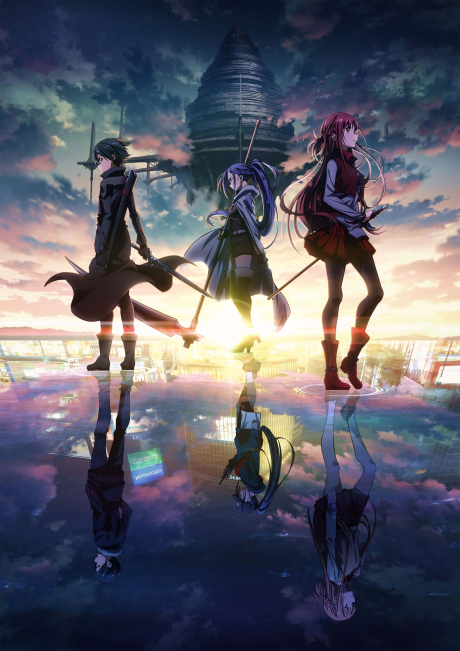
When most authors are done with a story, they move on–whether that means that the characters from that story move on to a new journey, or if those characters are left behind as well is up to the author (and sometimes publishing companies). There may be side stories and spin-offs, but rarely does an author willingly take on the challenge of rewriting a finished work. Especially when the work is what the author is known for–such as how Reki Kawahara is known for Sword Art Online. The story has appeared in many forms; first being written as an entry for a light novel contest, then released as a web novel after he scrapped plans to submit it. After another work of his, Accel World, won another light novel contest years later, he was able to have SAO published along with his first-prize light novel entry. SAO, for all of the success it had, was an unfinished product. The light novel and the anime adaptation were mediocre as a result. For a series that blew up in popularity, the plotline really wasn’t that good. Kawahara would be the first to admit so, attempting to rectify this with the Sword Art Online Progressive series, where he vastly expands on the Aincrad Arc–the first, and most famous, SAO arc. Sword Art Online Progressive: Aria of a Starless Night is an adaptation of part of the first volume of the Progressive series–with even some further revisions to Kawahara’s original story.
Aria of a Starless Night stars Asuna as the sole narrator. Unlike the light novel version, only Asuna’s point-of-view is shown. Your enjoyment of this movie depends if you like her as a character. If you think she is bland and boring, then you’ll think this movie sucks. If you like her or don’t care, you’ll probably find her version of events at least a bit more interesting than Kirito’s. Along with showing Asuna’s strict and suffocating upbringing, we get to see the original events that led Sword Art Online to change from a virtual-reality game to ‘real life’ from her point of view. Asuna, whose never played an MMORPG before, or any RPG for that matter, has to learn the ropes of SAO_ quickly. Thankfully for her, a friend from high school, Mizumi, is also stuck in SAO. Mizumi (otherwise known as ‘Mito’ in-game) promises to protect her from dying and get her out of the hell she’s found herself in. While Asuna is clueless about online gaming, Mito was an SAO beta tester and is more than happy to teach Asuna the ropes of SAO.
As this movie takes place during the beginning of the Aincrad Arc, the setting is mainly the 1st floor. Asuna’s luxurious real-life home and prestigious school are also shown, as we get to see what events caused Asuna to want to put on her brother’s Nerve Gear and escape into Sword Art Online. Most of this content is original to the movie, with Kirito not making a significant appearance until about halfway through the movie. The scene where Kirito and Asuna ‘officially’ meet, which was at the beginning of the Progressive light novel, doesn’t happen until fifty minutes into the movie. This movie is essentially a redo of the first two episodes of the anime–with a lot of extra added content and context added. It’s not exactly a one-for-one copy, but it’s the same plotline essentially.
This movie introduces a whole load of new content that wasn’t in the Progressive story (or the original Sword Art Online story for that matter), with Mito being an original character. Mito’s inclusion marks the beginning of a divergence from the mainline Progressive light novels. She completely changes the context of the story for Asuna, who in the original Aria of a Starless Night story didn’t have anyone to teach her how to play SAO until she met Kirito. At least that was implied.
Overall, Aria of a Starless Night is the best entry into the Sword Art Online anime series I’ve watched yet. I know that’s not saying much, considering the series, but I genuinely believe that this movie is solid. Is it great? I wouldn’t go that far, but Aria of a Starless Night blows the original anime out of the water. It goes without saying that an SAO anime that stars Asuna is way more interesting than one that stars Kirito. No offense to him…it’s just that he’s so overpowered that it removes a lot of the suspense a ‘death game’ should have. Asuna, while also eventually becoming very skilled at SAO, isn’t a ‘gamer’ at all. This is Asuna’s second video game that she’s ever played (the first being Tekken 7 on her phone with Mito, which Asuna sucks at). Unlike pretty much everyone else stuck inside Aincrad, she has no idea what the game is about, or even how MMOs work–leading to humorous situations, like where in the town square she asks an NPC where Mito is, referring to her by her actual name and unintentionally ‘doxxing’ her. The flip side to this is that Asuna, who until this point lived a pretty scripted life and only strived to please her family, is suddenly stuck in a world that she knows nothing about. Being forced to put that on hold and having to live on her own terms in a ‘game’ that could possibly go on forever is quite traumatizing for her. This movie shows her coming to terms with that.
The main complaint that I have about this movie is that at the liberties it takes with the source material. Of course, with such a major character like Mito being introduced, many things would have to be retconned from the original Sword Art Online and Progressive light novels, but some details that are changed do nothing but differentiate it from the light novel. One example of this that stuck out to me is Kibaou’s antagonism towards Kirito–it’s not that he doesn’t antagonize him in the movie–it’s that the points where he does are needlessly changed around. It doesn’t matter that much, but to me, it’s strange to change details like that around when keeping them the same wouldn’t tangentially change much, if anything, plot-wise. It’s unnecessary, but ultimately it doesn’t really matter that much. The resolution to Asuna’s main internal dilemma in the movie is ‘solved’ in an underwhelming way as well, with her seeming to just come to terms with what happened to her. I can understand why she would forgive in that certain circumstance, but it feels a bit unsatisfactory.
Sword Art Online Progressive: Aria of a Starless Night is by far the best-animated portrayal of the Aincrad arc yet. Most of that credit goes to the fact that it’s adapted from the Progressive series, which is meant solely to flesh out the Aincrad arc that was blitzed through in the original light novel. Depending on how much you care about Asuna of a character will affect how you view this movie. If you think Asuna is a boring character, you probably won’t enjoy this movie, even if it’s structurally more well-put-together than the anime. Some of the retcons from this movie now mean that Kawahara has retconned his story twice, which is extremely funny in my opinion. To be honest though, the retcons are a net good. The thing that separates SAO (or at least its Aincrad arc) from most other stories is that it’s full of untapped potential. It’s a choice to just follow Kirito’s adventures–I know he’s the closest thing the place has to a Christ-like figure, but it does get boring watching someone be the best all the time and have multiple women fawn over him. Of course, Kirito still does show off in this movie, but the movie isn’t about him. Aria of a Starless Night is a solid entry into the SAO franchise–for a franchise that has had many duds in its history, it might be on the come-up now. Maybe.

As it stands, Shirobako (stylized SHIROBAKO) was, and still is, my favorite anime that aired in 2014. P.A. Works, which has produced other good anime like Charlotte and Nagi no Asukara (and has produced some real stinkers like The Day I Became a God and the infamous Glasslip), has not had anything as good as Shirobako since it aired. They know it as well, since they not-so-subtly tried to copy that formula for Sakura Quest, a 2017 anime that isn’t bad per se, but at the best is a Shirobako derivative, and is quite average. What makes Shirobako so enjoyable is a multitude of things. For one, it’s an anime that ‘normal people’ could watch and enjoy. You won’t have to shy away and stealthily change the screen to your GMail inbox when your roommate, partner, parent, etc. walks in your room. While it doesn’t go in on being ‘moe’, it also doesn’t go the route of being so rigid and tedious that it resembles a documentary. Characters are relatable and can be enjoyed for the real-life qualities that they have—not for being waifu-bait. An anime about an anime studio producing an anime is also an interesting concept (and funny for meta purposes). Whatever it is, Shirobako does it well.

Shirobako starts with a cut to five girls (Aoi Miyamori, Ema Yasuhara, Shizuka Sakaki, Misa Toudo, and Midori Imai) that are members of the Animation Club at their high school. The first five minutes show them making a short anime for their high school’s cultural festival. All five girls have aspirations to work in the anime industry. Ema and Misa want to work as animators, Shizuka wants to be a seiyuu, and Midori wants to be a scriptwriter. Only Aoi has no idea what specific field of anime production she wants to pursue (which lands her the scorn of a potential employer when she says that she’ll ‘do anything’ for the anime production company she’s applying for).
Fast forward around two years later, Aoi has landed a job in the industry at Musashino Animation as a Production Assistant. Her only friend that works with her is Midori, being a Key Animator. Musashino Animation, often shortened to MusAni, is a fledgling anime studio that only recently has gotten a chance to redeem itself by getting the chance to produce ‘Exodus!’. The only other girl with a job in the animation industry is Misa, who works at a company doing 3D Animation. Shizuka works part-time at a restaurant, still trying to break into the industry, and Midori is at university. Ninety-five percent of the anime is focused on Aoi (as she’s the main character), but her high school friends do come in handy for her at times.

Along with her friends, Aoi works with many people at MusAni. So many that if I listed them all out, it would fill a whole page. I could spend ten thousand words describing all of them if I wanted to, but that would be boring. The ones that are important are: the fan favorites, who are Rinko Ogasawara, an Animation Supervisor who always dresses in gothic lolita style; Andou Tsubaki, a beginner that works in Production Support that gets brought on in the second half of the anime; and Erika Yano, a fellow Production Assistant who often gives Aoi useful advice when she’s in a pickle. There’s also Tarou Takanashi, a fellow Production Assistant who’s annoying yet lovable moron; Seiichi Kinoshita, Director whose past mistakes directing anime make him an infamous director in the industry; Shigeru Sugie, Senior Key Animator (keyword Senior), who has decades worth of experience in animation that he occasionally doles out to younger animators (he’s also the only person at MusAni who has a schedule that sort of resembles a 9-5). These are only a few of the people that Aoi works with, but they’re all worth getting to know.
At the beginning of the series, we’re dropped in the middle of the production of the anime ‘Exodus!’. Aoi and MusAni staff are behind on production due to last-minute changes. Producing an anime is always a race against the clock, a ticking time bomb where one thing going wrong could force the anime studio to have to release a recap episode or a half-finished episode. Aoi’s job as a Production Assistant is keen on not only making sure that her schedule is on time, but other’s (Directors, Key Animators, Subcontractors, etc.) are as well. Shirobako displays the difficulties of producing an anime; the first cour dealing with internal conflicts, and the second dealing with external conflicts.

Along with the overarching conflicts that are part of everyday anime production, there are secondary plot points that run across all of the anime. From learning how to draw animation cuts faster, dealing with companies that are subcontracted with your company, 2D animation versus 3D animation, and the granddaddy of them all: TIME CRUNCH. One thing that’s universal for the anime industry, no matter what your position is, is that you’ll experience the dreaded time crunch trying to wrap up a project. Sometimes it’s self-inflicted, caused by months of procrastination and inclusion (and brain fog, which isn’t necessarily self-inflicted). Other times, it’s because of mismanagement by others or quickly changing situations that change up the whole timeline. Aoi, being a newbie to the industry and a striver, works long hours most days. She’s at work by 9 AM almost every day for the morning meeting, and works until well after the sunsets.
For most anime, having an ensemble cast works against it, but in Shirobako’s case, it’s quite the opposite. Having a small cast would cheapen the feel, and erase the immersive value that Shirobako has. Shirobako manages to be realistic (mostly, I’ll get to that later) while still being fun to watch. It isn’t as focused on the characters themselves, such as anime in the same ballpark as New Game!, which is an alright anime, but has as realistic of a take on creating games as the movie Grandma’s Boy (just replace moe girls with 00s stoner culture). At the same time, it isn’t so keyed-in on the actual process of making an anime that it resembles a boring documentary on YouTube that ninety percent of the people watching do for ASMR purposes. While it’s a love letter to the industry, it doesn’t in any way resemble propaganda or make the idea of working in the anime industry desirable.
You may ask, why does Aoi put herself through all of this? Having little to no work-life balance, working nearly every day up to 12-hours or more, having the stress of being responsible for delivering and receiving materials related to the anime, sourcing out potential people that could be contracted, and so forth. The simple answer is that she loves doing it. Creating anime is what her life’s goal has been for who knows how long. Being a Production Assistant, like many jobs at an animation studio, is a ‘bad job’, but it’s a different type of bad job than your typical bad job. The difference between the bad jobs that you’ve had (for the younger readers, the bad jobs you’ll likely have in the future) and the one Aoi has is that she’s fully invested in the finished product. Unlike a bad job at a retail store or whatever, where the ‘finished product’ is your bosses getting a bonus (and you getting a twenty-cent raise if you’re lucky), everyone at MusAni is emotionally (and some financially) invested in producing anime. And also like most bad jobs, MusAni is a ‘family’, but in this case, it’s actually somewhat true. Everyone has the same goal of making good anime. They knew going in that the anime industry isn’t a lucrative industry for many. The lion’s share of salary goes to those in the top echelon of an anime studio, like Chief Animators or Directors. Seiyuu make the most, since they’re often the face of an anime production-wise, their voice bringing in dedicated fan bases that might otherwise not be interested in said anime.

For Production Assistants like Aoi, the average they make is roughly $19,500 a year (2014 numbers, not accounting for inflation or rising pay rates), which would be $9.34 an hour if she worked forty-hour weeks, which we already know she doesn’t. It’s even worse for her friend Ema. Animators make on average $9,400 a year (again, 2014 numbers, etc.), which are starvation wages. Luckily for Ema, her parents support her financially. The only thing that makes Aoi’s salary not look as bad is the fact that the price of living in Tokyo is cheaper than most major American cities. Aoi has a small 1-bedroom apartment that’s somewhere outside of central Tokyo, which I assume is somewhere around $600 a month if the small amount of research I did is correct. Compare that to American cities like New York or San Francisco, where rent for a similar place would be around $2,000, or maybe more. While Aoi should be paid more, her living conditions aren’t as bad as they look. She still works too much though.
What makes Shirobako such an enjoyable watch is the amount of detail they put into showing the process of an anime being produced. As I stated before, it has the perfect split on time spent working on the anime and time focused on office relations, the lives of those at MusAni, Aoi’s increasingly non-existent social life, and so forth. The writing is also excellent, with MusAni staff bouncing ideas off one another, bickering, and sometimes even fighting. None of this dialogue seems stiff or shoehorned in, and can be quite hilarious at times. Of course, this anime is about making anime, so directors and scriptwriters will have more of a reference point than your average anime. They do manage to find the fun in the many banal meetings that MusAni holds (seemingly every episode), and get the viewer to embrace the absurdity that is producing a seasonal anime.

Another thing that makes Shirobako fun is that it doesn’t take itself too seriously. It doesn’t do this as a reflex in the middle of a serious scene, but to add a sort of flair. The first scene in the anime (past the high school part) shows Aoi racing another Production Assistant from a rival animation studio, both driving like they’re characters from Initial D. There’s also Aoi’s two plush toys, who often come to life (in a metaphysical scene) to either talk to each other or to talk to Aoi when she’s in a rut. Along with visions that seemingly whole groups can see, someone working at quite literally a lightning pace, and other goofs, Shirobako has many scenes that aren’t meant to be taken literally. They’re meant to symbolize something.
A reason that I like Shirobako that may be weird is that it shows that while Aoi is a go-getter that will ‘do her best’, it takes a team to complete a project. Much lazier anime would give Aoi a deus ex machina-like power, but as you already can assume, Shirobako isn’t a lazy anime. Many of the issues in the anime aren’t solved by her—they’re solved by others with little help from Aoi. Other times, while she isn’t the one that solves the problem per se, she gets huge hints from unexpected people, and does in a sense save the day. The important thing is that Aoi is still a regular person. The only things remarkable about her are her driving skills and her drive to make anime. She’s someone, for better or worse, who still has the dream of producing the same anime she made with her friends in high school, but in a professional setting. While she can be worn thin, she hasn’t become jaded by the anime industry, which is notorious for overworking staff (Animators usually get the brunt of this, but Aoi also has to work long days. For recent examples of staff overwork, look up examples related to Madhouse Production and Wonder Egg Priority) and not having much room for moving up the hierarchy. She’s relatable.
It’s hard to find any flaws with Shirobako. While it isn’t a perfect anime, it’s the best anime to come out in 2014, and the best workplace slice-of-life anime I’ve seen. A sequel, Shirobako: The Movie, was released last year in Japan, and was recently released in theaters in America. While I personally thought it was nowhere as good as the anime, most others enjoyed it. If you’re a fan of slice-of-lives, and you haven’t seen Shirobako yet, then you’ve been missing out. Shirobako is both a fun and serious look into the anime industry, with all of its quirks and goofs, eccentrics and weirdos, and highs and lows.
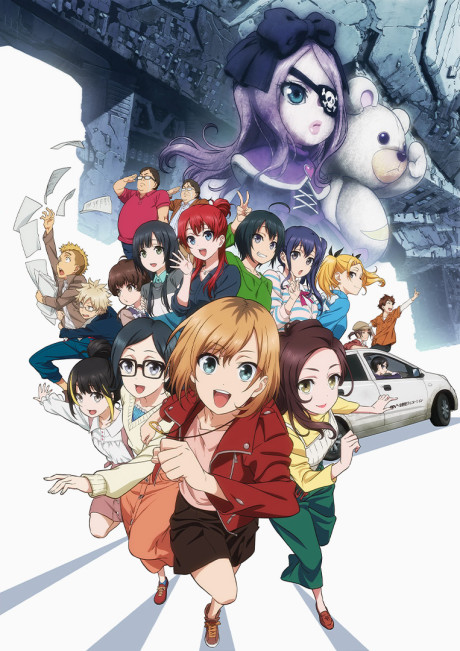
Before I start this review, if you haven't watched the anime yet, then watch that first. You can technically watch the movie without watching the anime series, but many scenes won't make sense without any context.
The Shirobako Movie (stylized SHIROBAKO Movie, or SHIROBAKO The Movie, etc.) is a direct sequel to the Shirobako anime that originally aired in 2014-2015. Announced in 2018, aired in Japanese theaters in February 2020 and at theaters all across America on August 10th, 2021. I and five strangers paid fourteen dollars (plus tax) at the Regal Hollywood & RPX in Greenville, South Carolina to sit and watch the highly anticipated sequel to what was one of the best anime to air in 2014. While most viewers came out of the theater exuberant, happy to see Aoi, her friends, and the Musashino Animation gang team up one more time, I left the theater disappointed and slightly upset.

The movie starts off four years after the anime ended. Those four years have not been kind to Musashino Animation, who has fallen from grace due to the ‘Time Hippopotamus Incident’. With most employees leaving MusAni after the debacle, and MusAni‘s reputation being heavily tarnished, the anime studio is now only a skeleton team that gets subcontracted by bigger production companies for anime. Aoi, still at MusAni, is offered to produce an anime movie ‘Air Amphibious Assault Ship SIVA’, after the previous company contracted to produce it, GPU, balks at it. Aoi, now a Producer, and MusAni accept the contract, knowing well that they only have less than a year to complete it and also need to find staff who are up for the task.
The first part of the movie after MusAni accepts the contract is Aoi ‘getting the gang back together’. Everyone (except Yutaka Honda, who is still working at a pastry shop, and Masato Murakawa, who stepped down from the President position at MusAni after the ‘Time Hippopotamus Incident’) slowly comes back to MusAni to work on the movie. It was around this part where I started to realize that this movie wasn’t going to be anywhere as good as the anime was. The problem was that it took way too long to reintroduce all of the characters. This wasn’t ever a problem in the anime because most of them were already working for the company, thus not needing to be convinced to work on a project. It also helps that the anime had a longer running time (the movie is two hours long, which is approximately six TV anime episodes). That being said, EVERY character is reintroduced, even if they only have a few lines after their reintroduction scene. I can see from a sentimental standpoint why this is important, but in relation to the actual plot, it takes valuable time away from showing actual production on the movie they’re making. The large character cast that melded so well together in the anime was spread too thin in the movie. The dialogue between the characters is still great though, I just believe that the character cast for Shirobako might be too large for a movie (or at least a movie with this pacing).

The rest of the movie consists of the team producing the movie. These parts left me with a sour taste in my mouth, wishing they weren’t so spaced-out and fast-paced. Unlike in the series, there is no real conflict involving the time crunch the MusAni team is under. Most of the conflicts revolve around the reluctance of some of the former staff being reluctant to come back, and that’s of course solved if they’re working on the movie. The climax of the movie, which is only relevant for a total of fifteen minutes, give or take, tries to emulate the climax of the TV anime, only to pale in comparison. The antagonist of this movie, while a greedy and overall bad person, is nowhere as good as an antagonist as the ones in the second cour of the anime. I found the climax to be underwhelming, mostly due to how fast it came and went, and also due to knowing that the movie was going to be made no matter what.
One part of the movie that really messed with my head was when they previewed the movie they made. While many comments were made about how it was great, there were some critiques about how the movie started good, but got too fast-paced as it went on, and about how the climax was underwhelming. These critiques are the same I have about the Shirobako Movie itself. It’s one thing to have an anime movie about an anime studio that produces an anime movie; it’s a completely different thing to have an anime movie about an anime studio that produces an anime movie whose drawbacks closely mirror the ones of the movie (in my opinion at least). In real life, I know that P.A. Works wasn’t under a time crunch like the MusAni folks were. The movie was worked on for at least two years and was released on time. Thankfully it was completed before COVID could complicate the schedule. It does make me wonder if the comments made about the movie that MusAni made were to mirror complaints one may have about the Shirobako Movie itself. I assume that I’m not the only one with these particular complaints. I don’t believe that this would be the case though—it would be an earth-shattering amount of meta to do this, something that would remind me of the movie Freddy Got Fingered and the story behind how the movie was made. To put it bluntly, this is a case of me over-thinking, and probably with me coping with the fact that my high expectations were not met.

For all of the bitching I have done, I’d still give this movie a 6/10. All of the characters that we know and love make their appearances, and their lines aren’t worse than in the movie. Only spread thin. None of them have their personalities ret-conned. The soundtrack is nice. The musical number Aoi does near the beginning of the movie was the best part of the movie in my opinion. And I’m not that big of a fan of musicals. While the character animation was better than in the anime (bigger budget equals better animation, duh), there was a problem with the backgrounds. It seemed like they were only standard definition and were scaled up to high definition without any anti-aliasing or upscaling. I don’t know how this happened, and I don’t know if this was a problem in Japanese theaters too, or only in American ones. I know the theater I went to wasn’t the only one that had this issue, and I wasn’t the only one that noticed it. Maybe it’s something to do with projecting the movie on such a big screen, or with the copies that Eleven Arts (the company that distributed the Shirobako Movie to American theaters) were given. Either way, I hope this issue is confined to the silver screen. The low-quality backgrounds are only a mild distraction, but it’s enough for anyone that’s paying attention to notice.
I believe that this movie could’ve been way better if the pacing wasn’t so weird. Along with the reintroduction arc that takes way too long, the movie that they made gets shown, in a five-minute scene, which should’ve been used to show the MusAni crew putting the final touches on the movie instead. The movie lacks any real tension, unlike the anime, which had multiple points that gave me anxiety like I was watching a thriller film. I’d say the main reason for this is due to the movie portraying making an anime as something way easier than it was portrayed in the TV anime. There was never a doubt that the movie was going to be made.

I know most viewers will be satisfied with seeing Aoi and the cast together one more time, but I’m sad that this might be the last time we get to see them. If they decide to make a second season (or would it be the third season in this case?), I hope they come at it with the same energy they had while making the first season. The movie made good money (over ten million dollars at the box office I believe), but the way it ended, it seemed like this might be it for the Shirobako series. Maybe it’ll come back and Aoi will be the President of MusAni or something along those lines. Who knows. Overall, the movie is okay, but well worse than the series. I think I’m in the minority on this. Perhaps I had too high expectations. I know I didn’t come to watch the movie just to bag on it. It upsets me that I have to write a negative review on it. Anyways, the Shirobako Movie is a disappointingly average movie sequel to a fantastic anime series.

When Ijiranaide, Nagatoro-san (translated to Don’t Toy With Me, Miss Nagatoro) first aired, it got a huge reaction. Being current on the manga, I anticipated this happening. Nagatoro got, by my estimation, the biggest reaction out of the anime base (due to an individual girl) ever since the first episode of DanMachi and Hestia back in 2015. Thankfully, the hype in conjunction with its beginning didn't last long. Sure, it still was one of the most popular shows of the Spring season, and will probably be one of the most popular shows of the year, but it was more well-received than I thought it would be.

The setup to Nagatoro is simple—one day, while Senpai (he has a name, but it’s not important to know) is doing his homework in the library, pages from a manga he’s drawing fall with his bag, being picked up by Sakura (one of Nagatoro’s friends). While Sakura, Gamo, and Yoshi make their snarky remarks about it and then leave afterward, Nagatoro stays behind and psychologically tortures him until he cries. In the second part of the first episode, she invades his sanctuary, the Art Clubroom, and makes him cry again after tricking him into puckering up for a 'kiss'. After all of that, plus being pushed into an aqueduct, he still tells Nagatoro that he enjoys her company and doesn’t mind talking to her. Life, as we know it for Senpai, becomes a lot weirder in the following days.
Nagatoro has a small cast of characters. Senpai and Nagatoro are the two main characters, and the only other four characters of note are Nagatoro’s three friends (Gamo, who is the most assertive of the three; Yoshi, who is by default the nicest, but also the most dimwitted of the three; and Sakura, who pretends to be friendly to men to get things from them), and the president of the Art Club, who only becomes relevant in the back half of the anime. The small cast lends itself to us seeing every character, even side characters, a lot, which is great since all of them are lovable, even when they’re being mischievous on purpose.

Going off of the first episode, you might be wondering ‘Why the hell would anyone ever watch this?’, and I get your point. If all twelve episodes of the anime and all of the manga were as intense as the first episode, then yeah, I would probably have dropped it quickly and not be current on the manga. Luckily for Senpai, Nagatoro becomes less malicious with her actions towards him as time goes on. She treats his sanctuary, the Art Clubroom, as her hangout after school and regularly messes with him. For better or worse, Senpai now has someone who wants to hang out with him after school.
Of course, some people watched Nagatoro because they want a girl to treat them like how Nagatoro treats Senpai. It reminds me of the people who wanted a yandere girlfriend after watching Mirai Nikki. Nagatoro and Yuno are similar in the way that they're both a manifestation of an ‘ideal woman’ that would pay attention to a down-on-his-luck teenage boy. Of course in real life, having a psychotic partner would be a nightmare to deal with, but it doesn’t stop people from having fantasies about having one. With that being said, Nagatoro is way more lovely than Yuno, and Nagatoro is a way better series than Mirai Nikki. If you fall under the category of “I want a slightly younger girl to bully me into I cry”, then you’ve probably already watched Nagatoro, so this review is useless to you. For normal people, the reasons why I would recommend you to watch Nagatoro would be because: it’s funny and because it has a special charm that is hard to find in anime of this nature.

Going back to the first episode, while Nagatoro’s psychological warfare turned off some viewers (and probably turned on as many), I found it quite hilarious. Perhaps it was due to the absurdity of it all, or because I’m a fan of slapstick humor, but I found it funny. I might be in the minority when it comes to what I thought of the first episode. It doesn’t matter in the long run anyway because Nagatoro tones down how mean she is to Senpai and becomes more creative with how she messes with him as time goes on. This is a good thing, because keeping the same energy as the first episode for the whole run would change the show from being mischievous to being cruel. If you’re a fan of slapstick humor, then Nagatoro is up your alley.
When I first got into Nagatoro, I wasn’t expecting it to be good in the way it is. It is weirdly wholesome in its own little way, something that I don’t see often. The reason why Nagatoro bugs the hell out of Senpai, and only Senpai, is because she cares deeply about him. If she didn’t, she wouldn’t go out of her way to be a menace to society in the Art Clubroom after school. And of course, Senpai doesn’t mind it either because she’s a spark in his otherwise dull school life, and because he finds her cute. The two have a chemistry that shouldn’t be as strong as it is, but is nonetheless. It being what it is, most of the romance revolves around Senpai being teased, but it still maintains its own charm.

Nagatoro does good by keeping in its niche romantic-comedy lane and not devolving into harem-shit or trying to be smarter than it is. There’s mild fanservice, which I’m not a fan of, but it comes with the territory of this time of series. Beggars can’t be choosers. One thing that stood out to me was the voice acting for Senpai, especially in the first episode. He sounded exactly like what a loser teenage boy would sound like if a girl randomly started berating you.
One thing about Nagatoro is that it’s drawn and written by what most people would call a ‘freak’. Along with the doujins that nanashi (the mangaka) has drawn, the prequels (or pilots, if you will) of Nagatoro are even more strange and sadistic than even the first few chapters of the manga. Sadistic to the point where it isn’t even funny—it’s just off-putting. Definitely put nanashi into the category of ‘people who want a younger woman to berate them’. But hey, many great authors were freaks.

Going back to the beginning, the whole hype around it came and went. There was never any ‘discourse’ about the anime like there was for Uzaki-chan, which is good. Hell, at this point, if there was any ‘discourse’, it would be probably coming from racists upset that the Nagatoro series has such a huge fanbase in Central and South America, or at someone making a joke about Nagatoro being Mexican. As with most 'discourse' related to the anime industry, none of this matters at the end of the day. Nagatoro is a very decent romantic comedy that manages to be hilarious and wholesome at the same time. If you’re into either of those genres, or are a glutton for punishment, I’d give it a spin.
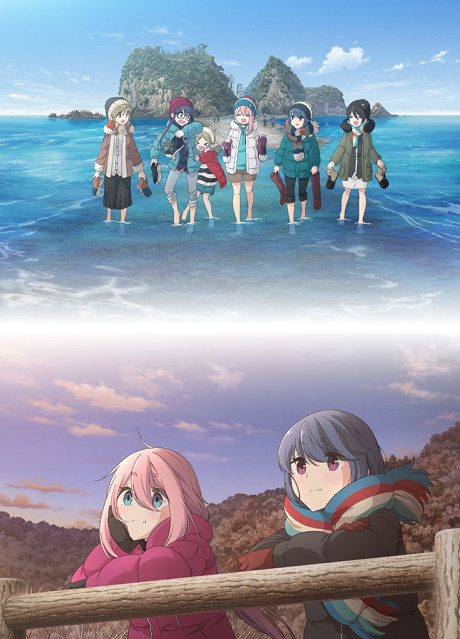
The art of creating a ‘comforting’ anime is one that seems easy. Just have ‘cute girls’ doing ‘cute things’, and voila, you have an anime. Seems easy, doesn’t it? It might seem easy compared to other anime, but the art of making a Cute Girls Doing Cute Things (CGDCT) anime that has staying power is much more difficult. Even if YOU liked it, how many CGDCT anime that you’ve seen been forgotten to time. That CGDCT anime that you liked when it aired eight years ago is now only known for a blackface scene. Another one you watched five years ago hasn’t been mentioned on your timeline in three years. You get my point. In a niche genre that’s easy to emulate, average CGDCT anime are a dime-a-dozen. It’s rare though that you get one that’s good enough to be remembered for not just being a ‘good CGDCT anime’, but a ‘good anime’ in general. This season of Yuru Camp, like its predecessor, manages to achieve this.

This season changes little from season one, which is good since there’s no need to overcomplicate an anime like Yuru Camp. We do get to meet new characters, like Ayano, who’s Nadeshiko’s childhood friend, and we get to see more of reoccurring characters, like Rin’s cool grandfather. Other than the episodes purely focused on camping trips, we get to see a flashback to Rin’s first-time solo-camping, the girls working at their part-time jobs throughout winter, and them all planning future trips. This season shows them at school less, and them on camping trips more (one camping trip in particular takes up four episodes). While the first season focused on them camping in the Yamanashi prefecture, this season has them exploring the coast, and other ‘geosites’ of the Shizuoka prefecture. These prefectures are near the middle of Japan, and aren’t usually featured in anime. Various people (usually on image-boards) have tongue-in-cheek criticized Yuru Camp for being ‘propaganda by the Japanese tourism industry’. All I can say is that it’s pretty damn good propaganda then. While nature shots can end up looking the same (by nature of it being nature), Yuru Camp does a great job of differentiating every spot and giving it a reason for being shown. These spots are the same in real life, which leads to having the anime tell why THIS place, in particular, is so important that the girls have to visit it. Along with them visiting geosites, the girls also go to various restaurants, onsens, campsites, and even a capybara sanctuary. As I said earlier, Yuru Camp is a pretty good advertisement for this part of Japan, which is rarely seen in anime.

Is there anything better about this season? Not in particular. We do get to see some exciting arcs, such as Nadeshiko planning out and going on a solo-camp, and some of the other girls camping in sub-freezing weather. This season adds little new to the table, but at the same time detracts little as well. My biggest complaint is about how jarring some of the scenes of Rin riding her moped are. I forget if they did this in the first season as well, but her moped contrasts heavily with the beautiful landscapes, and are laughable to see. I get why they decided to go with 3D animation instead of drawing each frame, but still, it doesn’t look good. That’s the most of my complaints—about all of the other complaints I’ve seen have been on image-boards. Complaints about the decline in the quality of the animation and whatever. Although a Google Maps watermark being left in a landscape shot is hilarious, it doesn’t detract that much from the anime. I have a feeling that nine out of ten of the complainers from said image-boards are just trying to rile up Yuru Camp fans. Needless to say, there’s no fatal flaw to Yuru Camp. I don’t care, and I’m guessing most watchers don’t care, if the studio uses techniques to turn Google Maps photospheres into anime landscapes. It’s funny to see a watermark that was accidentally left in, but it isn’t episode-ruining.

If you’re someone who watched and enjoyed the first season of Yuru Camp, and haven’t watched this season yet, you should watch it as soon as possible. If you haven’t watched the first season yet, watch it before watching this. C-Station (the studio) knows what they’re doing. Yuru Camp is a ‘healing anime’, or an anime that is relaxing to watch. While not all scenarios this season are relaxing to see, Yuru Camp still maintains to be a ‘brain massager’, as one of my friends calls the show. To put it simply, Yuru Camp just ‘gets it’. There’s no need to force unnecessary drama between the characters. There’s no need to show fanservice of the girls for the sake of sales. There’s no need to make what’s ultimately a simple anime complex for the sake of complexity. The only reason why anyone would become upset watching an episode is that it might cost thousands of dollars for them to camp at the same places the girls do. Yuru Camp might not be the most thought-provoking anime, but it still has the opportunity to change your life. There’re probably thousands of people who watched Yuru Camp that decided to camp at least once due to the anime. Yuru Camp hasn’t convinced me to go camping, but it has inspired me to do a day trip to state parks with friends. Other than the beautiful waterfalls, the delicious ice cream at a gift shop near the state park, and the exhausting walk down and up the trail, I learned several things about Tallulah Gorge State Park—like how several scenes from the classic movie Deliverance (often considered one of the best thriller movies ever, and could be considered the antithetical to Yuru Camp) were filmed there. If you’re American, there’s more than likely at least one state or national park close to you that you haven’t ever been to. Visiting it with friends, family, or by yourself, can be a great way to spend a day when you don’t have anything to do. If you aren’t American, I hope you have a thing similar to the National Park Service, so you can also enjoy your countries natural beauty, preserved and protected from those whose only goal is to extract resources. Beyond the veneer of ‘cute girls doing cute things’, Yuru Camp reminds us that fun can still be had outdoors. The tranquility and serenity of ‘the great outdoors’ is something that even the biggest basement dweller needs to experience once in a while.
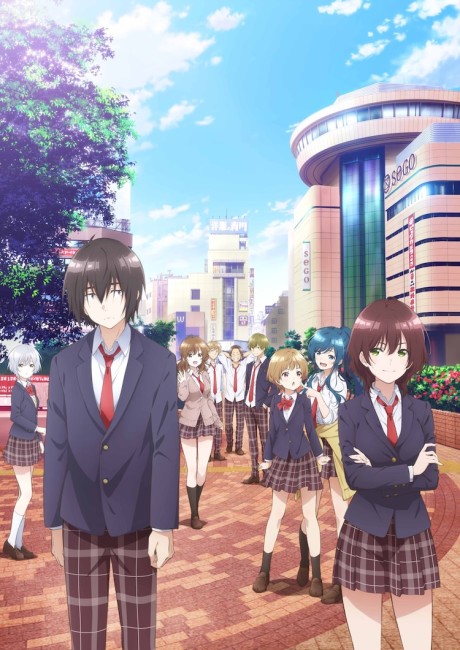
Tomozaki has been compared and contrasted with many anime of its same nature. I’ve seen it be compared to Oregairu, solely for the fact that they’re both coming-of-age stories about a high schooler that slowly breaks out his shell and learns how to make friends. There’s also anime like Gamers!, Bunny Girl Senpai, and Oresuki, where there’s not that much in common except they both are slice-of-life rom-com. While Tomozaki might seem like a rehash of the ‘loser becomes popular, girls start to like him’-type of anime, it isn’t a derivative of any of the aforementioned anime. Back when I was reviewing the first few volumes of the light novel, I compared Tomozaki to an infamous and controversial book from the mid-00s, called ‘The Game’.
In The Game, Niel Strauss, the author, first learns, and then dives deep into the PUA (Pickup Artist) community, eventually meeting up with some of them. Strauss, throughout the book, learns how to ‘pickup women’ effectively, which ranges from learning how to ‘talk to women’, to learning how to emotionally manipulate them into having sex with you. What does Tomozaki have in common with this? The whole premise of the series revolves around Tomozaki taking advice from someone who has treated life like ‘a game’, and promises to show him how life can be fun after you ‘gamify’ it.

The person who promises to show Fumiya Tomozaki the fun in highschool life is Aoi Hinami. At the beginning of the anime, Hinami is shown to be your prototypical popular high-school girl—that is, until they accidentally meet up with each other not knowing who’s who. Tomozaki (nanashi), who’s on top of the ‘Attack Families’ game (a Smash clone) leaderboard, gets invited to meet up with the number two player, Hinami (NO NAME), after playing a few online games and discovering that they live close to each other. Tomozaki’s GameStop fit and terrible posture triggers Hinami into calling Tomozaki “a loser who’s going nowhere in life” and “[...] garbage without the slightest spark of ambition”. While being harsh, Hinami does have a point. Tomozaki has never attempted to break out of his shell, and as a result, has no friends in school and derives all of his enjoyment from playing games. Tomozaki’s understanding of how ‘real life’ works is that people like Hinami have ‘high base stats’ while people like himself are ‘bottom-tier characters’. Of course, this is true to an extent, but this is more decided by your socio-economic position rather than by your parents messing up your stats while giving birth to you. With unknown motives, Hinami decides to show Tomozaki how she looks without makeup, showing him how you can ‘improve stats’ and how his fatalist outlook on life is self-defeating. Hinami, knowing that Tomozaki grinded his way to being the top of the Atafami leaderboard, knows he is capable of working towards goals and offers to teach him “[...] the rules of this game one by one.” Tomozaki, being enticed by Hinami treating life ‘as a game’, takes up her offer.
Most of Hinami’s ‘tips’ to Tomzaki are common sense, such as buying new clothes that look good on you, having better posture, attempting to reach out to classmates to talk to them, and getting a haircut that makes him look like he takes a shower more than once a week. She also has ‘tips’ for him that range from strange, like wearing a mask and pretending to have a cold in order to ‘practice his smile’ under the mask, to straight-up weird, like practicing ‘conversation starters’ on index cards like how someone would study vocabulary for an upcoming test. They meet up before and after school in order for Hinami to give Tomozaki ‘goals’, some short-term like ‘talk to the girl that sits beside you in class’, to medium-term like ‘finding a girlfriend’. Shaping these goals like RPG quests, while still being daunting to a loser like Tomozaki, further pushes Hinami’s narrative of treating life as a game and gives him something to work towards, making him feel like he’s making progress. Yes, this is a strange way to attempt to push yourself out of being a loser, but it does help Tomozaki, so it’s good for one thing at least.
While I’ve been mean to Tomozaki for most of this review so far, I’ll give him credit for one thing—once he puts his mind to something, he can find unique and useful ways to succeed. Whether it is Atafami, ‘de-geeking’ himself, or various other things, such as becoming the ‘brain’ of an election campaign. While Tomozaki is easy to understand, Hinami is a very mysterious person. Little is known about her and her backstory; all we know about her is that she’s the best at everything she puts her mind to (except for Atafami, which Tomozaki is better at). Unlike other girls that are ‘the best at everything’, it’s clearly stated that Hinami wasn’t born into being who she is, and has worked around the clock to become who she is. Her motive behind her tireless drive of being on top isn’t known in the anime, but it’s clear that she views life as something to be the best at, not something you should enjoy. The only reason she even cares about Tomozaki is because he always bests her in Atafami, no matter how much she practices. There is an idea of Aoi Hinami. Some kind of abstraction. But there is no real her. (While Hinami is nowhere near as psychotic as Patrick Bateman, it is funny to see the two compared.)

Along with Tomozaki and Hinami is a supporting cast that is sometimes hard to keep up with, due to how many are introduced in a small amount of time. Thankfully, the supporting cast sticks around and aren’t tossed away once they’re not important for the plot anymore. Going from female to male order, our first side character is Yuzu Izumi. Izumi is the girl that Tomozaki has to ‘talk to three times’ to attempt to acquaint himself with her. They form a friendship after she requests that he teach her how to play Atafami, since her crush plays it. Minami Nanami (known as ‘Mimimi’) is from what I can tell the most popular side character. She is an energetic and cheerful girl that is persistent (although not as much as Hinami) at track and field (and formally basketball). What separates Mimimi from Hinami is that Mimimi is a lot more sincere and less cynical than Hinami. She’s a hard worker, but is a lot more emotionally driven and vulnerable. She’s very friendly to everyone, even to outcasts like Tomozaki and her best friend Hanabi Natsubayashi (known as ‘Tama-chan’). Unlike Mimimi, Tama is quite abrasive, to the point where it gets her in trouble sometimes. She’s similar to Tomozaki in the way that they were unsociable (Tama’s only friend was Mimimi while Tomozaki had no one at the beginning of the anime). Her small stature and irritable nature make her an easy target of Mimimi’s hug attacks on her. Last, but not least, for the girls is Fuuka Kikuchi. While Kikuchi is also in the same class as Tomozaki, they often talk in the library while during lunch breaks. She’s a ‘fairy-like’ reserved bookworm that loves the books of ‘Michael Andi’, which I thought was originally a pseudonym for Stephen King, but now think is just a made-up name. She’s an aspiring novelist who becomes friends with Tomozaki over Michael Andi books. Kikuchi isn’t that connected with any friend group involving other characters, but is on good terms with everyone. Moving on to the fellas; Shuuji Nakamura is the first character to be introduced in the anime. He challenges Tomozaki to a set of Atafami, which turns into multiple after he refuses to believe that he’s not as good as Tomozaki. He’s overly competitive and shown to be quite temperamental, especially when it comes to Atafami. He is the one that Izumi has a crush on, being unaware of it while at the same time having a crush on her. Takahiro Mizusawa, whose good friends with Nakamura, is as level-headed as Nakamura is overly-aggressive. He is an aspiring beautician whose smooth-talking and good looks making him attractive to girls. He’s the closest thing to a ‘role model’ that Tomozaki has, seeing how popular he is. Mizusawa is a perceptive person, being the first person to notice (other than Tomozaki’s sister) that Tomozaki was intentionally trying to make himself more popular (“You read a de-geekification book!”) Other side characters that play small roles are the ring-leader Erika Konno and the goofball Takei.

When I started the light novel last year, I thought Tomozaki was just going to be generic wish-fulfillment garbage that was somehow more popular than other generic wish-fulfillment garbage. I admit it now that I had the wrong assumption about the series. The closest it gets to being ‘wish-fulfillment’ is the fact that someone as ‘perfect’ as Hinami would go out of her way to help Tomozaki in the first place. Once I realized what motives Hinami might have, then it became clear that she isn’t doing this to satisfy the reader—rather, she’s doing this out of self-interest. I gave the first volume a two out of five stars, mostly due to how cringe-worthy Tomozaki can be. In light novels, you get to see more of Tomozaki’s inner monologue, which is a double-edged sword. Tomozaki’s inner thoughts are agonizing to read since he’s a young man that’s analyzing social situations like he’s playing a video game. Is that normal? No, it isn’t. Usually when a loser like Tomozaki starts analyzing life as ‘a game’, it means that they’re up to no good. Tomozaki though is a very genuine person. He sees this as an opportunity to integrate into the real world. Sure, getting a girlfriend would be nice, but he doesn’t want to become a two-timing player. That would be antithetical to his character.
A theme that takes a while to come up, but is important to the series, is the question ‘Do I really want to do this?’. Does Tomozaki really want to ‘master the game of life’, or does he want to just stay being the best at Atafami online. In Tomozaki’s case, getting out of his comfort zone and learning that there’s a whole world outside of video games is invaluable. He doesn’t have the same drive to be on top of the social ladder as Hinami though, which sometimes puts them at odds. While they both love games, and love treating life as one, Tomozaki and Hinami have drastically different opinions on how one should live life. While Hinami may be feeding him bad info on what the purpose of ‘mastering the game of life’ is, at least she was kind enough to show Tomozaki how to do so in the first place. From what we know, Tomozaki didn’t have anything going for him except for his skill in Atafami before meeting Hinami. Without his chance encounter with Hinami, he would probably waste his time in high school, playing games and being socially withdrawn, and would spend his time at university the same way. If he wasn’t given this opportunity, there’s no telling if he would ever get out of his bubble. Even if Hinami’s outlook on life is overly-cynical, she’s given Tomozaki a way to enjoy life outside of video games, which is invaluable.

What saves Tomozaki from becoming a monster is his moral compass. If he was a guy that wanted to become a ‘lady-killer’, he could use Hinami’s teachings to manipulate girls into liking him, causing this series to be a harem instead of a slice-of-life show with rom-com elements. I’m sure Hinami would help him with that if he was interested. But Tomozaki doesn’t see the point of asking out a girl that he doesn’t like, so he could never do that. Bringing back up the book ‘The Game’ I mentioned in the beginning. While it shows the glamorous lifestyles that ‘professional’ PUAs live, it also shows how vapid their lifestyle really is. Once you make having sex with as many women as you like your most important goal in life, you lose your soul and the ability to see women as anything else but playthings. Throughout the book, the readers can sense how this ‘PUA training’ requires you to see women as lesser beings that are meant to be conquered. Other than the whole emotionally manipulating women thing, it’s the biggest tragedy in the book. The problem with books like The Game is that it leaves readers (mostly young men who are unsatisfied with their life) wanting to live the same life Strauss lives in the book, even knowing what it does to a person’s brain. Of course, there’s nothing wrong with wanting to learn how to be more confident and outgoing. What books like The Game end up doing however is ‘either unintentionally or intentionally’ promoting a lifestyle that is morally bankrupt and transactional. I would also apply this to Mark Manson, or any other ‘self-help’ author, books, but I haven’t bothered to read any of them. The only reason I bothered to read The Game was because back in the day, men on image-boards would tell others to read it every day—it was to see what the hell they were trying to inflict on my teenage brain. All of this relates to Tomozaki because this series has inspired some young men to get out of their rut and try to stop being a ‘loser’. While it isn’t completely against anything PUA-related, it’s more of a ‘young man learns how to reintegrate into society’ series rather than a ‘young man learns how to bang several women’ series.

What I like about Tomozaki is that it’s shown that above all, what got Tomozaki to ‘de-geek’ his life is gain some self-confidence. Even if he still puts himself down, the fact that he isn’t moping around all the time is a definite step up. Of course, Hinami’s help was essential in this. Getting a haircut, buying and wearing ‘trendy’ clothes, and other tips helped ‘normify’ himself, but nothing fundamentally about his character has changed. To state it like I think how Tomozaki would; while his ‘character’ has the same skill set, everything got buffed. He doesn’t need to invent a whole new persona to be able to relate with others—all he needs to do is make an attempt to connect with his classmates. I believe that this lesson is important to young men who may have a misunderstanding that you need to completely rework your personality when it comes to relating to others. Of course, being a spineless twerp is undesirable, but behaving like someone you aren’t to try to impress others is just as unnatural and off-putting. It’s hack to say this, but ‘being yourself’ is the best course to go (unless if you’re a detestable person). Perhaps I’m only one of the few people that came away from the Tomozaki series with this interpretation, but I hope others can see this as well.

If you’ve gotten this far into the review, you’re probably wondering “Does this guy think there’s anything bad about Tomozaki?”. The answer is yes, I do have some complaints. My first one has to do with Tomozaki being ‘the best’ at Atafami. The fact that he’s never reaped the benefits of being the best, like going to tournaments and winning prizes, or even being sponsored, is quite odd. I can excuse Hinami from not doing this, since while she would probably love to go to a competition to stomp everyone she faces, being known as a top-rated Atafami player isn’t one of her top goals. The only logical reason I can think of is that he’s an ‘onliner’, or someone who’s only good when playing online, and nowhere near as good when playing on the same console. I’m not that much of an ‘Atafami’ player, but from what little I know, being the best online isn’t anywhere near the same as being good at LANs (you could say this about any online competitive game though). Maybe the potential fame and chance to be embarrassed scares him away. Or he’s afraid that he’d look like a weirdo there. To his defense, ‘Atafami’ players (Western ones at least) are quite known for being unhygienic, so he wouldn’t look too out of place there. The premise of Tomozaki and Hinami being first and second on the Atafami leaderboards in Japan, respectively, is still a bit absurd, but I can forgive it on the basis that Yuuki Yaku, the author of the original light novel, had to have a basis for Tomozaki and Hinami to meet. Perhaps I would’ve gone with ‘best at his school’, or ‘best in his prefecture’, but it doesn’t matter that much. The animation is middling as well, but not bad enough to put me off.
Another thing that makes the show hard to watch at times is Tomozaki’s inner monologue. I know the only thing he can relate social climbing to is ‘leveling up’ in video games, but it does get grating to hear him continuously make references to ‘leveling up’ and ‘gaining EXP’ in relation to real-life situations. Other than it being painful to watch, it portrays gaining friends and becoming more popular as an overly transactional thing. To Tomozaki’s defense, this is the only way he can portray this to himself, and Hinami, the queen of social climbing, pushes him to think this way. As I stated earlier, he uses his new-found ‘skills’ to become less lonely and gain friends, which I can’t blame him for. He’s a good guy that unfortunately became a ‘loner’ due to misconceptions that manifested in his mind. By the way, these inner monologues are more cringeworthy in the light novel, so be prepared if you decide to read the light novel.

At the end of the day, the Tomozaki series has an increasingly important message to its fanbase of young men (and women too). Young adults today, in America at least, are increasingly more disconnected from the outside world and have no life outside of the internet and work/school. This has been exasperated by the pandemic, which made it impossible for many young people to safely go to social outings (go to bars, attend parties, go on vacation with friends, etc.) There’re many reasons for this, ranging from the rise of indoor entertainment, the lack of belief in the future of our planet, or, most likely, just not ever learning to make friends. These are reasons in America, but they could as easily be the same for Japan. What I respect the most about Tomozaki is that the message it sends. That your standing as a ‘bottom-tier character’ isn’t something that’s set in stone. That with some self-improvement, such as ‘cleaning up’ and attempting to talk to others around you, you can increase your self-confidence, and in return be able to ‘rehabilitate’ yourself in society. While this is way easier to do as a teenager than as an adult, it’s still possible. The message in Tomozaki is also way less cynical than the message in any PUA or self-help book. Tomozaki doesn’t trick anyone into being his friend—they enjoy the little dweeb for how passionate he is about Atafami and other things he sets his mind towards. Hinami on the other hand IS a deeply cynical character, but she and Tomozaki serve as good foils to each other, showing that there’s more than one way to skin a cat. I’m perhaps one of the only people that got this message out of it. Without it, I think that I would consider Tomozaki an average show. Even without the message, Tomozaki is a fun show to watch. If you’re into slice-of-life rom-coms, then you’ll like Tomozaki. It isn’t that much like Oregairu or anything else that I've seen people compare it to, but it’s still an enjoyable watch. And if you enjoy the anime, be sure to read the light novels, since the anime only adapts the first three volumes, and (as of me writing this) six volumes have been officially translated and released.

By any stretch of the imagination, K-On! is the most well-known ‘Cute Girls Doing Cute Things’ anime. It’s the first anime most people who know anime think of when they think of ‘moe’ or ‘slice of life’. I was originally going to call it the GOAT CGDCT anime, but the GOAT status is so subjective that it would be unfair to other great CGDCT anime. However, K-On! is the face of the moe/CGDGT/etc. anime, and is by most measures the most favored and well-known of all of anime of the like. Of course, K-On! isn’t the best anime out there, and does have haters, although most of that stems from the hatred of the genre it's the face of (thankfully, that hate, and those type of anime watchers, seem to be a dying breed and antiquated now). What separates K-On! from other anime of its type, and makes it memorable to this day, is how much effort Kyoto Animation put into it. From the well-developed characters, to the lively animation, and the great BGM/insert songs, K-On! is a one of a kind anime, and is the product of something that was made from love and hard work, not from the sole pursuit of the almighty yen (although KyoAni did make a lot of money due to how much of a smash hit K-On! was.)

While she isn’t the sole focal point of the series, K-On! focuses on Yui Hirasawa’s goofs and gaffs, which she tends to have a lot of. One of them being that she thought that the ‘Keionbu’ (‘Light Music Club’) played easy instruments like the castanets. The Light Music Club, having zero members at the start of the anime, is re-established by Ritsu Tainaka and Mio Akiyama, who play drums and bass guitar, respectively. Sawako Yamanaka, a music teacher at their school, tells them that they need to find two more members in order to save the club from being disbanded. They find Tsumugi Kotobuki (‘Mugi’ for short) by chance after she walks into the music room looking for the Chorus Club. After some begging by Ritsu and arguing between her and Mio, Mugi decides that the Light Music Club sounds like fun and that she wants to join. Mugi is able to play the keyboards—all they need to find now is a fourth member, who is hopefully a guitarist. Despite the drawing of a guitar and the “Looking for a guitarist” caption on the recruitment poster (drawn by Mugi), Yui still mistakes the Light Music Club for the ‘Easy Music Club’. After Yui’s childhood friend, Nodoka Manabe, explains to her what the Light Music Club actually is, Yui becomes intimidated by the idea of joining. She doesn’t know anything about playing guitar, and she’s afraid that the members will kill her for attempting to get out of joining. Thankfully for Yui, the three members of the club don’t attempt to kill her—instead, they convince her to join after performing for her. On the promise to learn the instrument, Yui becomes the fourth member, and the lead guitarist, for the Light Music Club, securing the club’s existence for the next three years.

Azusa Nanako, introduced in episode eight, is the other character that is focused on in this season. She is the junior of everyone else in the Light Music Club, and also plays guitar. While she says that she’s a ‘novice’, she’s miles ahead of Yui when it comes to playing guitar. She plays the rhythm guitar due to Yui’s insistence that she be the lead guitarist. Azusa is a great foil to Yui, from how serious she takes the club to how they spend their time while in the clubroom. While Yui is fine with spending every day in the clubroom sipping tea and eating sweets, Azusa wants to spend the time after school practicing. This issue in particular causes a great divide within the club, with Azusa and Mio being on the ‘Let’s Practice’ side, while Ritsu and Yui are ‘Team Let’s Eat Cake’, and Mugi being there just to have fun. While Yui does practice, the times she does tend to be inconvenient (during the middle of the night or when she should be studying instead). Azusa’s knowledge of guitars is unparalleled compared to Yui. Azusa has to teach Yui what a ‘mute’ and ‘vibrato’ is, show her what a tuner is and what it does (Yui is somehow able to tune her guitar by feel), and has to explain to her that she should perform maintenance on her guitar often and take care of it. It’s only expected that Azusa knows more since she’s been playing since the fourth grade, while Yui only started playing last year, but it is still surprising how little Yui seems to know about guitars. While the laid-back nature of the club can sometimes piss off Azusa, she sticks around because the Light Music Club offers something that most bands that she could join can’t offer—genuine friendship.

To not leave them out, I’ll tell you a little bit about the three other girls as well. Mio, the bassist (due to not wanting to be the center of attention), is reserved, intelligent, and is the songwriter for the songs the Light Music Club performs. She is the most popular member of the club, popular to the point where she has to her own fan club. She’s easily frightened, a trait about her that Ritsu, her childhood friend, loves to exploit. Ritsu is the most ‘genki’ member of the group. While she tends to be on the lazy side, she is good at playing drums, although she tends to play a little fast. Her pranks on Mio often leave her getting hit by her—leaving Ritsu with a temporary bump on her head almost every episode. Mugi is the most mysterious girl in the group. She is from an extortionately wealthy family, which allows her to be able to provide the other girls with sweets and tea every day and be able to provide vacation homes for summer camps. While she is considered the most gentle girl, she sometimes likes to be ‘rebellious’, possibly due to her wanting to defy the roles that wealthy young women often have to fill. She also tends to get enthralled by things the others consider mundane, and is heavily hinted to be a little gay in the manga.

What separates K-On! from almost every other anime of its kind is the fact that it was made by people that actually wanted to make it—made from love in other words. While anime is a highly commercialized (and cynical) industry, K-On! is special since it has the feeling that it was made by people who weren’t worried if it would be a success or not. Of course, K-On! was a huge commercial success—it still has merchandise being released, almost ten years after its last release.
What made K-On! such a success? Other than the reason I stated above, it was also made by one of the best anime studios in Kyoto Animation. K-On! is such a success because it treats its characters with respect. The problem with most anime adaptations that are similar to K-On! is that they treat their characters like products to be sold. They might be forced to do this due to the economics of being an anime studio since the studio relies on Blu-Rays being sold for the production to be a success. This ends up with anime being paint-by-colors with the same trite fanservice scenes, among other things. Unfortunately, that’s the path of least resistance if a studio wants to make a profit on an anime. While K-On! isn’t the first anime to not use fanservice as a way to guarantee sales, it’s the prime example of how not reducing your characters to objects can also be successful. The most ‘fanservicey’ scene in the anime is when Mio trips and accidentally shows her panties—with the panties not actually being shown. Ritsu often brings that memory back up to tease the easily-embarrassed Mio, but does it in a way that is fully comedic and not objectifying Mio. There’s also a beach scene where Ritsu gets upset that Mio has bigger breasts than her and headshots Mio with a beach ball, but again, it’s brought up for the purpose of making you laugh (although breast jokes are dime-a-dozen and are generally not funny). As I stated earlier, it’s not like there isn’t any merchandise for K-On!—in fact, it’s probably one of the most commercialized anime out there. It has a ton of merch for a reason though. So many people, including myself, like the series enough to buy it to this day. For example, I own three Mio figures, one Mugi figure, a Nendoroid of Mio and Mugi, multiple singles, a large Mio tapestry, the entire manga, and all of the anime series on Blu-Ray. The reason why I own so much merch is because the series resonates with me on a deeper level than probably 97% of other anime. The K-On! girls are so popular because their story resonates so much with people. They weren’t created to be marketed as products. While I wasn’t an anime watcher when it first aired in 2009, K-On!’s influence on the western anime community was tremendous. KyoAni wasn’t inventing the moe wheel when it made K-On!, it made the best version of it, something that anime studios have been trying to reproduce for more than a decade now without success.

Another reason why K-On! was such a success was because of the depth that KyoAni had to add to it. While K-On! is originally a manga, the anime is what it is known for. Once you take the time to read the manga, you’ll understand why. While it isn’t bad per se, the manga is at average at best. The first problem with it is that it’s very spotty. The first volume covers the first year, and the second volume covers the second year, which leaves out a lot of potential plot. This is one of the reasons why this anime advances so fast (this season at least). Hindsight is twenty-twenty, but K-On! deserves way more than seven episodes per school year (counting the OVA released along with the first season). The second season makes up more than enough, with the third year being set over twenty-seven episodes and a full-length movie. The point is that the anime took the plot of the manga and made it 110% better. The manga felt like it was a storyboard for the anime, instead of it being what the anime was adapted from. There are many other factors contributing to this, like the fact that the musical aspect of K-On! wasn’t fully utilized until the anime was produced. It’s way harder to make and produce songs for something met for a magazine than it is for something met to be watched on television. There’s also the issue that 4-komas aren’t relatively deep in the first place (not that K-On! needs to be deep), or that the manga is way lewder than the anime. The manga is a short read (it took me less than two hours to read the adapted parts of this season), but you’re not missing out on much if you decide to skip out on it.
K-On! is not without its faults, however. I’ve already talked about how this season is paced too fast. It’s not fair to criticize KyoAni for that, since the manga kind of forced them into that position. The parts about the anime production that I didn’t like were the points of tension around the end of the season. I know that the anime can’t be all ‘fuwa-fuwa’, but the way that the conflicts are brought up and resolved seems a bit hamfisted to me. The good thing about the conflicts being resolved quickly however is that it doesn’t waste too much screen time. I’m not the biggest fan of Sawako-sensei either. I find her character annoying, and her bits generally not that funny. I don’t think her character adds that much to the series, but I understand why she has to be there.

At the end of the day, what makes K-On! resonate so much with fans can’t be explained with one reason. Its plot is simple, yet moving. The animation quality is some of the best, as expected from the talented folks at KyoAni. The music in the anime is some of the best from any anime that I’ve seen. The benefit of K-On! being about girls in a Light Music Club is that the music doesn’t have to be the bog-standard formulaic J-pop that tends to infect almost every anime. Seriously, the only genre of music that’s more formulaic than music made for anime is any country song that’s bad enough to get on the radio. While some of the songs can trend towards the formula, K-On! does have some bangers—most of which are now on Spotify. While K-On! isn’t conflict-free, the calm and grounded nature of the anime is comforting to most viewers. The girls do have a shared dream of one day playing at the Budokan, that dream is more tongue-in-cheek than an actual goal. It’s like when your friends ask you when ‘you’re joining FaZe’ after you make a good play in an FPS game, or a band with young people in America joking about playing at the Hollywood Bowl or at Madison Square Garden after they finish a session. The Light Music Club is as much about hanging out with your best friends as it is about playing music. This doesn’t mean that the girls slack off all the time in club—it means that they want to enjoy their time in high school while they can. The Light Music Club is more of a hangout than a club. The groundedness of K-On! gives it an appeal that similar anime don’t have. It’s not about being the best, it’s about enjoying yourself and having a good time with your friends, a message that resonates with more people than one that would come from an anime where the girls actually became famous enough to play at the Budokan.
The funny thing about K-On! is that its insistence on being a light-hearted and easygoing show is the main reason why it became so popular in the first place. That, combined with the geniuses at KyoAni that had the secret formula when producing this, made K-On! be the first anime that most anime watchers think of when they hear ‘moe’, ‘cute girls doing cute things’, and ‘slice of life’. Is it the best one of those anime out there? The metric for rating a ‘moe’ show is light-years more subjective than metrics for any other type of anime. With that being said, K-On! is one of my favorite ‘moe’ anime, and would be the first one I would recommend to someone who wanted to watch one. It’s still popular a decade after airing for a reason.

What’s the ‘gayest thing’ you’ve ever seen? Something gayer than ‘gay porn’, which might seem gay at first, but is actually quite straight when it comes to the spectrum of gayness (in my theory anyway). In the realm of anime, one might say yuri anime like Citrus, Sakura Trick, and Bloom Into You. These answers are getting very warm, and are very gay indeed, but are still wrong. I’m prepared to state that Yuyushiki, an anime that isn’t a shoujo-ai anime like the three listed above, is the gayest thing I’ve ever seen. It isn’t what makes Yuyushiki a good anime (in my opinion), but its ‘gayness’ along with its comedic routines have made it a favorite for several ‘gay friends’ of mine. Yuyushiki is a hilarious and grossly underrated anime.
Yuyushiki revolves around the lives of the three main characters: Yuzuko, Yui, and Yukari. Unlike 99% of anime, the main characters have been friends for several years at the starting point, with the only change being that they’re now in high school, which allows us to skip the ‘becoming friends’ phase (with that being said, there are some flashback scenes with how they met and became friends later on). They decide to join the Data Processing Club, a club dedicated to the ‘researching and collecting of information from the internet’. Basically, they decide on a theme, Google (or “HooYa” in this case) it, and then write a summary of what they’ve learned on the whiteboard inside their small club room. That is, if they don’t decide to riff and do bits with each other instead. Their advisor, referred to as ‘Okaa-san’, is lenient on them, which allows them to get away with not taking the Data Processing Club that seriously. Other characters include Aikawa, Kei, and Fumi, who are a fellow friend group within the same class that occasionally interact with the main three (Aikawa mainly).
Yui is the closest thing we have to a ‘main character’, mainly due to her being the tsukkomi to Yuzuko and Yukari’s boke. She’s often the target of Yuzuko and Yukari due to her straightforwardness. Yuzuko is what I like to call ‘The Genius Dumbass’. She often is the instigator of whatever they’re talking about, and is quick to make situations weird for her (and Yukari’s) enjoyment. While Yuzuko is ‘The Genius Dumbass’ due to her making great grades, Yukari is just ‘The Dumbass’ due to her absentmindedness. While she also jumps in on teasing Yui most of the time, she’s the most wholesome one of the three by a mile.
What makes Yuyushiki so enjoyable to watch is that it’s genuinely a funny show. Yui, Yuzuko, and Yukari all have great chemistry. It’s not my wheelhouse to explain how or why they do, so just trust me when I say they do. They remind me of back when I was in high school, talking to my friends in class and such, albeit our conversations were a lot cruder and probably less funny. Out of all the ‘cute girls doing cute things’ shows I’ve watched, Yuyushiki is the most ‘These girls should have a podcast’ type out of all of them.
Trying to write a review for an anime like Yuyushiki is difficult to do, mostly because there isn’t much to critique. There is no plot to Yuyushiki, the progression of time only has an effect on whether they go to the beach or hang out on New Years Day, and no new characters are introduced after Aikawa and her friend group are early in the anime. While a year and a quarter does pass in the anime, there isn’t a ‘K-On! Dilemma’ going on, with them having to backload the majority of episodes during their third year so they don’t run out the clock so quickly. Technically, the show could never end, due to its plotless nature. It could work like Yuru Yuri, where the school year never changes. I haven’t had the pleasure to read the Yuyushiki 4koma, but I can’t imagine the girls graduating being a huge issue until it becomes time to end the series.
Watching this anime made me think about ways of categorizing ‘cute girls doing cute things’ anime. While this is a CGDCT (not typing out the whole thing each time) anime, it isn’t a ‘healing anime’ by any means. Yuyushiki is way too chaotic to be one. CGDCT anime like Yuru Camp and Non Non Biyori occupy that spot. An example of a CGDCT anime that would be even more chaotic would be something like Asobi Asobase. If ‘Healing’ and ‘Chaotic’ are the left-right axis on the CGDCT anime chart, then ‘Gay’ and ‘“Just Friends”’ are the top-down axis. As I said earlier, Yuyushiki is a very 'gay' anime, so of course it would be included on the ‘Gay’ side. The top-down axis would be a little more disputed, since there are people who classify any CGDCT anime as ‘gay’, due to external reasons. I don’t care about whether an anime is ‘gay’ or not, but it would be dishonest to assume that every CGDCT anime is ‘gay’. A ‘“Just Friends”’ example would be Chuuibyou or Oreshura, both of which are horrendously straight. This way of categorizing CGDCT anime is still only theoretical, since this is the first time I’ve written or even expanded the idea. I’ll have to get back to anyone who cares later about this at a later date.
At the end of the day, Yuyushiki is a simple yet hilarious anime about the various hijinks and goofs that the three main girls (mainly Yuzuko) get into. As you can expect, it’s hard to write a review on an anime on this since the way you would rate this is different from anything else. The only thing a CGDCT anime has to do is to leave you feeling better about yourself. In that aspect, Yuyushiki knocks it out of the park, due to its fast-paced humor and refreshingly loveable characters. Even the jokes that revolve around breasts get a laugh (compared to a sigh and/or groan when poorly executed (and mostly for eye candy) in other anime). Even if you’re homophobic, you would most likely enjoy this anime. Yuyushiki is criminally underappreciated in the wider CGDCT market. I can only guess this is due to the relatively dull art style that Yuyushiki has, the fact that there are so many other CGDCT anime out there, and the fact that CGDCT anime are only a small and niche sector of the wider anime industry (K-On!, the most popular CGDCT anime, is only the 102nd most popular anime on AniList, believe it or not). The Yuyushiki 4koma is still running, and the series has a small, but dedicated, fanbase. By all means, watch Yuyushiki. It’s a hoot and a holler, as they say.

Coming from the anime, I already had an idea of what I was getting into. My blurb for the review I gave for the anime on Anilist was “While being one of the most average anime that I’ve ever watched, it still was enjoyable”. On that front, the manga held up. While it did take me almost a month to get to where the anime adaptation ended, I still read about one chapter a night, not fully immersing into the story, but at the same time not disinterested enough to drop it. I could have skipped to where the anime ended to save myself the slog of reliving the adapted parts of the manga, but I felt like I would be cheating myself by doing that. Once I arrived in Paris (in the manga), my reading pace picked up. This was uncharted territory, and as such was entertaining to read, even if the quality of the story was the same.
If you’re a fish out of water and haven’t watched the anime before deciding to read the manga, I’ll briefly summarize the plot for you: Masamune Makabe, our main character, after eight years of rigorous training deep in rural Japan, has returned as the ‘perfect young man’ (handsome, good grades, athletic, etc.) While Makabe wants to give off the air of ‘The Dreamy Transfer Student’, no one else knows that this is all the culmination of his eight-year-long training. Why did he train? It’s because of Aki Adagaki, the ‘Most Popular Girl At School’, and Masamune’s one-time childhood friend. Masamune ran away to his grandfather’s home to start his training after being rejected and being called ‘Pig’s Foot’ by a then-young Aki. Along with that, Makabe was constantly tormented for being a fat rich child. If he was in America, he would have definitely been nicknamed ‘Porky Pig’. That aside, those events, especially Aki rejecting him, was traumatizing to the point of Makabe spending half of his life in a remote part of Japan. His plan now is to get ‘revenge’ on her by swooning her into going out with him, and then humiliating her by dumping her. I’m writing this review from the point of view of someone who’s attempting to compare and contrast the manga from the anime, so if you haven’t watched the anime left, or have no interest in it and only want to know if the manga is worth reading, then this review might not be the best for you.
One great quality, probably the best quality of them all, about Masamune-kun is that the manga has great pacing. I’m not exactly the most experienced manga reader, but my experience in reading other rom-com manga has been damaged by pacing issues. Whether it is due to the manga seemingly ending all in a sudden, like The Quintessential Quintuplets, or are perpetually stuck in motion, like Rent-A-Girlfriend at the time of writing this. The mangaka makes a comment on ‘love comedy manga’ in Chapter 32, having Makabe say “A love comedy, you see, is 80% finished, once the love becomes mutual”. To their credit, the mangaka does stick to what Makabe said. A romantic comedy has to teeter the fine line of ‘teasing’ without it becoming pedantic, but must not also have its conclusion come too soon, since then it might become boring, which in some cases can be worse than being bad. Of course, this rule isn’t etched in stone, or is even necessary in some cases, but it works well with Masamune-kun. If I wanted to be negative here, I could further push my narrative that this reinforces that Masamune-kun is one of the most average anime/manga series that I’ve ever read, but that would be unfair. The general pacing of Masamune-kun keeps it interesting enough to not make it a slog to read. Its relative shortness (with the caveat of longer chapters) makes it easier to digest. It’s also a finished product, so you know you’re not getting into something that might waste your time for the next few years and have you wondering why you started reading it in the first place.
With that being said, the real question here is: Is the story better than in the anime? Like I said in the review of the anime, the story was one of the most average that I’ve ever witnessed--does the manga manage to become better? Well, on a technical level, yes, it does. The anime ended with “See you in Paris!”, alluding to the next arc. The anime cuts off here, and the god-awful OVA is pure fanservice for the diehards, leaving “See you in Paris!” to mean “Read the damn manga if you want to know what happens next!” The anime adapts the first 60% of the manga, and the manga has been officially translated in its entirety, so there’s no reason why you SHOULDN’T be able to read it (if you live in America at least). So, does the story reaching its conclusion change it from being ‘average’ to ‘good’ or ‘great’? Unfortunately for Masamune-kun, I can’t go that far.
It’s really tragic--Masamune-kun does everything correctly on a technical level: it keeps tension going throughout the series (to keep readers interested); it has its climax at the ‘right’ part, not too soon or too late; it doesn’t overstay its welcome, when it’s done telling its story it curtsies and leaves your home; and it doesn’t become so wild that it loses focus of the story at hand (the Masamune-kun wiki oversold how ‘wild’ the manga would get). It manages to get all of that ‘correct’, but fails to have a compelling story. One that will have you thinking about it for years to come. Masamune-kun doesn’t have this ‘staying factor’ that other, more memorable anime/manga series, have. While it’s not boring in any sense, Masamune-kun seems to be too focused on doing it ‘the right way’ and forgets that the series that are most remembered and highly rated are often the ones that break ‘the rules’ and forge their own. In playing it safe, Masamune-kun has avoided being ‘bad’ or becoming ‘boring’, but has become ‘forgettable’. I would also say that it has fallen into ‘anime purgatory’, but it being within the Top 200 Most Popular Anime on AniList (the manga being very close to being within the Top 100 Most Popular), that would be a lie. I don’t see anyone talk about Masamune-kun on social media, but that’s only anecdotal evidence and due to who I follow on Twitter.
The ending really reinforces the ‘paint-by-numbers’ nature of the series. It almost broke free and became something that would be worth remembering, but at the last moment reverted back to the default and called it a day. It’s fatalistic, which would be nothing new from a Japanese rom-com series, but still is disappointing to read. While it isn’t bad, I have to say that the ending is quite weak, and I would imagine have left more devoted readers on a sour note (depending on if they had a ‘favorite girl’, and who it was). One could call it an ‘ass-pull’, depending on how you took it. The ending is also very sudden, not like a cliffhanger, but you would expect that there would be a chapter or two after that. Technically, there is a whole volume after it, but it’s called a ‘sequel’, which focuses on wrapping up the loose-ends of seven of the characters. The flip-side of the ‘paint-by-numbers’ ending is that it isn’t rushed or prolonged. Even if it ends suddenly, it doesn’t end too soon.
A huge part of my review of the anime was focused on complaints--mostly trivial ones about the lack of research into ‘working out’ in relation to Makabe’s character. I’m glad to say that the series got better with this as time went on. Even to the point where Makabe talks about protein supplements! While the knowledge of ‘working out’ by the mangaka still seems pedestrian, it’s much better than the ‘Buy Low, Sell High’-tier of knowledge that was in the anime. For a series that was careful with how its plot was laid out, it still had some weird plot points that in hindsight never needed to be in there in the first place. The one that comes to mind is Makabe’s rashes that he occasionally got--while diving into why he got them in the first place would be too big of a spoiler, it’s disappointing that it got dropped as soon as it came in. There're also some characters that disappear completely as soon as their arc is over. I know that they were really never meant to be important characters, with the purpose of them being to force a progression of the story, but it still is odd how they disappear and never make a return.
Is Masamune-kun worth reading? If you’re here from the anime and want to see if the manga is worth reading, I’d say go ahead, give it a shot. The manga is relatively short and could be no-lifed within a day. It would give you closure, even if you hate the ending. If you haven’t watched the anime, then I would suggest that you watch it first, but either way is up to you. The manga, like the anime, is painfully average, only saved by the fact that it never goes off the rails or gets boring. There are better romance manga that you could read, but Masamune-kun is at least worth a shot. You should also read the ‘after stories’ after finishing the manga, since it will give you better closure and leave you more satisfied with the ending.
Masamune-kun no Revenge might be a rare example of me holding a higher opinion on an anime than the average person on Anilist and MyAnimeList does. It’s not that I’m a harsh critic - it’s more that most people that rate anime like to give generous ratings. I know everyone has their different metrics when it comes to rating something, people who rate anime mostly rating it on the ‘Enjoyment Factor’, which at times has nothing to do if the anime is actually good or not. It can sometimes give someone a false read on an anime. With that being said, I’m surprised that Masamune-kun only has a 65% rating on AniList (6.8 on MyAnimeList) - it’s definitely nowhere near the best romantic comedy anime out there. Hell, it’s probably not the best romantic comedy from the season it aired (Winter 2017). At the same time, I’ve seen much worse anime have higher ratings on the same site (I’ll not name any names to avoid having people telling me to die again). It makes me beg the question; what gives? Is it that Masamune-kun doesn’t have enough fanservice? Is it that Masamune himself is a rejection of the typical pitiful rom-com protagonist? Is it that Adagaki is too little of a tsundere? Is it that she’s too much of a tsundere? I don’t think I could come up with a conclusive answer if I tried, but it doesn’t matter anyway.
The ‘revenge’ in Masamune-kun no Revenge is this: Makabe Masamune, our main character, wants Aki Adagaki, the ‘main girl’, to fall in love with him for the sake of dumping and humiliating her. Why, you may ask? Because eight years ago, Makabe, then a short and fat kid, was bullied by her, along with every other kid that made fun of him for being a ‘fat rich kid’, but especially by her. Her nickname for him, ‘Pig’s Foot’, sticks to him to this day. Despite all of this, Makabe confesses his love to Aki, being rejected to no one’s shock. While I can’t garner much sympathy for Makabe, I have respect for the way he ‘trains’ to get back at her. In between the eight years from that rejection to the beginning of the anime, Makabe has transformed himself physically and mentally. His workout regime as far as we know is simple - A shit-ton of pushups, cardio, and from him having a home gym set up in his room, a lot of other things. His training hasn’t exactly made him look like DK Metcalf or young Arnold Schwarzenegger, but I don’t know many 16-year-olds that look like either of them. It seems to me that the mangaka of the manga this anime is based on doesn’t know all that much about weight training, working out, and the diets of bodybuilders/guys who work out every day. In his room, there’s no squat rack to do squats, and no bench to do any bench presses, the two exercises being the most commonly known and done weight lifting exercises. He doesn’t even have a Smith Machine, which would let him do both without having to have a spotter in case he’s trying to max out. Being rich, he could definitely obtain one if he wanted it. And it’s not just that - while Makabe is averse to foods with ‘high calories’ and ‘fat’, it’s common for athletes to eat a lot of food when they’re training, the most famous example being Michael Phelps’s ‘12,000 calorie a day diet’, which included three-slices of french toast, three chocolate chip pancakes, an entire pizza, and enough energy drinks to kill a horse. Of course, Makabe doesn’t train as hard as someone who’s won 23 Olympic gold medals, but it’s hard for me to believe that Makabe has been cutting for eight years. Even if Makabe was cutting the whole time, there’s no scene with him eating or talking about grilled chicken, which is the staple for bodybuilders who want to eat something with high protein and low fat. His lack of knowledge about supplements is exposed when questioned about his vitamin intake by Neko Fujinomiya. While I don’t expect Makabe to be cycling, especially considering his slim stature, I would expect him to know about whey, creatine, and some of the million other weightlifting supplements out there. Ultimately, I could chalk this all up to Makabe being dumb, but I think a lack of info about working out and ‘workout culture’ from the mangaka and/or the anime studio is the main culprit in this situation. Socially, he has ‘trained’ to ‘talk to girls’ by reading a copious amount of shoujo manga. Often taking lines from series that he’s read and using them on Aki, his strategy of being a shoujo manga main character is so-so. It’s painfully obvious that Makabe has little experience with talking to women, or having friends in general - three scenes in particular being; when he freezes up when trying to add his class’s rep to his contact list, showing that he has zero people added on the app that’s supposed to represent LINE; every time a woman calls him, with him taking a good minute to answer every time due to nerves; and his lack of experience at karaoke. He doesn’t act like a total loser, but it’s clear that good looks will only get him so far. As silly as using shoujo manga as your basis as to how you’re going to swoon girls, it’s better than, say, reading books by pick-up artists or anything as contemptible. It makes me wonder - what else did Makabe do while he was gone for eight years? In the anime, that part of his life wasn’t shown, but I’m guessing it was eventually shown more in the manga (update: It was in the second chapter).
Moving on, Makabe’s ‘victim’, Aki Adagaki, is what I’d call your bog-standard rich tsundere main girl. In the first scene in the anime, she is confessed by a ‘super hot’ guy in a Romeo and Juliet type fashion (with her being on the school roof while he’s outside at the entrance of the school), and cuts him down, revealing that he bought a volume of a gender-swap manga last week, his internet power fantasy novel which has the main character sharing his name, and the fact that he has a hairy mole on his chest. She gives him the nickname ‘Moley’, having her maid, Yoshino Koiwai, unwrap a twenty-five feet long banner with ‘Moley’ on it. I know this scene was an exaggeration to introduce her character, but it makes me wonder; why do men line up to confess to her even after seeing how brutally she cuts down other clueless men? Who knows. No one else is humiliated to the degree that guy was, so it might have been a one-time thing. Aki has a huge secret though. It’s enough of a secret that no one except Yoshino knows about it. The secret? It’s that she has an unstoppable appetite. Makabe should be eating like her if we’re being honest. Her typical lunch is Five ‘Explosive’ Croquette Buns, four Cutlet Sandwiches, and god knows how many bentos. While having a huge appetite isn’t exactly a third rail in contemporary girl culture, I can see why Aki would want to hide the fact that she could close a buffet down for the night if she wanted to. It doesn’t seem to hurt her weight-wise, which I can only guess is due to her having great metabolism as well. Other than that, the only thing that separates her from other ‘rich tsundere girls’ is that she’s more flippant than average. Aki’s assistant, Yoshino, is more interesting. Hiding under the veneer of a slow and clumsy girl, Yoshino is actually ruthless and machiavellian. She decides to help Makabe on his quest to ‘get revenge’, believing that Aki has to ‘reexamine herself a bit’ and that getting dumped by Makabe could help her behave a little more like someone who isn’t on her high horse all the time. While Makabe’s revenge would be Aki’s just deserts, whether or not it would actually make her think about how she treats others is questionable. To paraphrase Slavoj Žižek, “There’s nothing liberating in suffering”. There’s as much chance that Aki would double down on her misandrist behavior as the chance that it would help her ‘reflect on her actions in the past’. Being bullied doesn’t ‘teach a lesson’ to the bullied that ‘bullying is bad’. In fact, it does the opposite. The same for kids who have abusive parents and/or guardians. Nevertheless, Yoshino’s intervention into Makabe’s plans is a lifesaver for him. Without her, he would’ve gotten nowhere. The level of control she has over Aki, who is as socially maladroit as Makabe, sometimes leads to funny situations. The one that sticks out the most is when Aki shows up to a date with Makabe, she shows up wearing a magical girl cosplay, being tricked by Yoshino into believing that this is ‘proper dress etiquette’ for first dates. I know that description doesn’t sound that funny, but if you get to episode three, you’ll hopefully understand why I think it’s funny. Other characters of note include; Kojuurou Shuri, your typical ‘girlish looking boy’ that every anime rom-com series has to have for some reason; Neko Fujinomiya, a mysterious girl that plays a huge role in the second arc of this anime, and thankfully doesn’t become fodder after that; and Kanetsugu Gasou, another mysterious guy who looks like how Makabe would look if he never did a sit-up - this man would be the ‘Fat Bastard’ to young Makabe’s ‘Porky’.
There isn’t really one thing I can point to emphasize why I don’t think that it’s a bad show. The morals, from what I can pick up from it, are solid. Looking handsome can help you out in life, but you won’t get everything handed to you on a silver platter because of it. No one would notice or care if Makabe was 17% body fat instead of 7%. The only scenes where it matters are those over-dramatic scenes where girls are like “who’s that guy?” and whatever. I could do without those, but I’m not the main audience here. In the grand scheme of things, the fact that Makabe went through what I presume a rigorous self-improvement regime for years up to this point means little to the plot at hand. Just because you are ‘hot’ doesn’t mean that girls will line up to date you. Women are harder to get than that (well, most of them anyway). Working out just so girls will like you is quite possibly the worst reason why you could start working out. It’s a good way to become either the biggest narcissist ever or an MGTOW loser. Makabe IS a narcissist, but in a ‘former fat-kid turned ‘hottie’’ way and not a ‘4chan told me this is how I get women’ way. The point is that if you decide to start working out, do it because you either want to be healthier or because you want to lift more weight - not because of a girl. Another, albeit a more ‘no shit’ point, is that is it worth Makabe to go through all of this just to ‘get revenge’? This shallow quest to capture Aki’s heart just to crush it...is it worth it? For the point of this series, it is, but it begs the question; is Makabe being truthful to himself? For those who’ve ever watched a romance anime before, you probably already know the kayfabe that’s going on here. It’s up to Makabe to realize it for himself, and not others.
One thing that is unique about Masamune-kun is how average it is. As in, there are no great moments, but at the same time, there are no moments that wanted me to turn it off and drop it. Even if the anime committed the great sin of trying to have a humorous part in a heavy scene, I didn’t mind that much since the ‘humor’ was only in passing and didn’t derail the whole scene, unlike in other anime of the same genre. What makes me give this anime a higher rating than ‘average’ is that I left it having a positive experience. With an anime like this, your experience with it can depend heavily on if you like a character a lot, and if they ‘win’ or not. I didn’t have any strong affection for any character, so I was watching this from a neutral perspective. The lack of a conclusive ending could have turned people off too. The ending hints at ‘something new’ that never happens in the anime universe since the only thing released after this was a bad OVA. It’s to be expected though, since this anime was an adaptation of a manga that was at the time still ongoing. While it’s annoying now, it makes sense that they used the ending to promote the manga - if it worked, I don’t know. I know that I’m going to at least attempt to read the manga, due to it not being terribly long. The manga has been officially translated into English, so being able to read it won’t be that hard either. From what I’ve seen, the unadapted parts of the manga are more wild and give more context to some parts of the anime. Unfortunately, I already spoiled myself when writing this review, so the reveals won’t be shocking. It also helps that this anime doesn’t pretend to be anything more high-brow than it actually is, while at the same time not seeping into being irredeemable gutter shit (compared to other anime of the same genre). It knows what it is, and doesn’t pretend to be anything other than it.
The $64,000 question here is: Is this anime worth watching? I’d say definitely if you’re into this type of anime. It’s not the best rom-com anime out there, but it’s good enough. Most of the complaints I have about the anime have to do something that has little to do with the actual plot. While yes, the mangaka and anime studio might have a pedestrian understanding of working out, most people watching this don’t give a shit about that, or won’t even notice it. It was more humorous to me since I have a little more understanding of the insane world of ‘being fit’. The overall story and characters are average, but don’t leave a bad taste in my mouth. While the humor is on par with the average anime, some parts are genuinely hilarious. I still haven’t found the reason why people that watched this show gave it such a mediocre rating. Maybe it’s because for this show, and this show only, they graded it solely based on objective measures. Who knows - I probably don’t want to know, since the reasons will be esoteric in nature and have something to do with what THAT person likes in a show. I’m not trying to defend Masamune-kun. It can be considered uninspiring, bland, and cookie-cutter, but to me, it was still enjoyable to watch.
This is quite possibly the worst thing that I’ve ever watched. I’m serious. I don’t think I’ve ever had a more difficult time watching an anime. You might ask me “Why did you force yourself to watch this if you hate it so much?” The answer is “I don’t know.” Maybe to write this? Maybe so I could complete it again, originally watching it in 2013. Back then, I rated it a 4/10, which was VERY low, considering how low of a standard I had back then. Having an anime that you already watched stuck in ‘Currently Watching’ is annoying as well. Rewatching it, I can see why I gave it such a bad score back then.
Mayo Chiki is a 2011 anime about Sakamachi Kinjiro, nicknamed Jiro, a young man who has developed gynophobia (a ‘fear of women’) as a reaction to his mother, a pro wrestler, and his little sister practicing wrestling moves on him. He doesn’t ‘fear’ women in the way that I can only assume gynophobia normally works, but his body has a violent reaction every time a woman touches him - his nose starts to bleed. The amount his nose bleeds depends on the length and intensity of the touch from a woman. He crosses paths with Konoe Subaru, who is Suzutsuki Kanade’s butler, after opening a restroom stall she was in accidentally and discovering her actual sex. In the anime, Konoe has to pretend to be a man at school, so she can be Suzutsuki’s butler, due to a tradition of a male of the Subaru family serving Kanade’s family. If she’s able to make the entire three years at high school without her gender (sex) being revealed, then she can be Suzutsuki’s butler forever. As much as Konoe hiding her sex is part of the plot, there is very little to do with actual ‘gender politics’ or anything of the sort. I don’t really care about that, but the weird thing is that Konoe has been able to hide her sex for more than a year now, despite her being popular enough around school that she not only has one fan club devoted to her, but TWO of them. One is dedicated to ‘watching’ her with a warmful eye (stalking), and the other are her ultras, who want to physically assault Jiro for getting close to her. Both of these clubs have a good amount of members, but none of them have made the observation that Konoe is actually a girl. In fact, Konoe is oblivious to the fact of these clubs even existing until almost halfway through the anime. I know this is a silly anime, but this is just straight bizarre. After they have a physical confrontation over him finding out her real sex (her wanting to knock him out and give him CTE, him doing the harem protagonist thing of accidentally stripping her), Suzutsuki proposes a deal - Jiro keeps quiet about Konoe’s real sex in exchange for them helping to ‘cure’ Jiro’s gynophobia. There’s no real reason why this deal had to be made in the first place, since Jiro couldn’t give a shit less about Konoe’s sex - the only reason why he accepts is that he’s forced is due to Suzutsuki’s sadistic nature. Other characters include: Kureha Sakamachi, who’s Jiro’s sister that develops a crush on Konoe; Masamune Usami, who’s a member of ‘Shooting Star Subaru-sama’, one of the two clubs dedicated to Subaru; and Narumi Nakuru, who serves no other point than to be a comic relief character.
How is Mayo Chiki one of the worst anime that I’ve ever watched? There’re many examples that I can list off, but I’ll put two down just for simplicity’s sake. In the middle of episode 8, there’s a ‘Battle Royale’ at the summer festival the main characters are at, the winner getting the right to kiss ‘Takanashi Puniru’, who is actually Konoe who is ‘cross-dressing’, who won the ‘Yukata Beauty Pagent’. This sentence out-of-context doesn’t sound bad. A festival episode is bog-standard for an anime, and a main character being the center of a contest isn’t necessarily terrible either. Once you see the build-up to this, you’ll start to understand how awful in execution this anime is. Right before the ‘Battle Royale’ scene, Konoe runs away from the festival for reasons I won’t say due to spoilers. Jiro then walks what seems like two miles uphill to find her, and they have a heartfelt scene, which ends with Jiro passing out after his gynophobia flares up due to a hug. Jiro wakes up an undisclosed time later, in the infirmary of the festival, to his sister telling him that the Battle Royale is about to start. In the time he was KOed, Konoe walked back to the festival, presumingly sweating her ass off carrying Jiro back on a warm summer night, was coerced to join the Yukata Beauty Pageant by Suzutsuki (I assume), won somehow, and is now being shown off at the Battle Royale, which is a free-for-all paintball contest. The confusing part about this is how all of this could’ve happened in what I can only assume in a three to four-hour time span. Going past this - is this scene even necessary? After the heavy scene we just watched, do we REALLY have to have this scene? It’s literally just the main and side characters fighting over the right to kiss Konoe, since the pretense of anyone other than them being in the paintball contest is erased fifteen seconds in. It’s also unsaid how Jiro found a ‘paintball gun’ (the gun is actually a super soaker with paint inside of where water would go), but I’ll let this one slide since I’ll assume he grabbed one in between the time the contest officially started and when he points his super soaker at his sister. The real cherry on top is when Nakuru appears, now ‘drunk’ off of soda. Yes, this bitch gets drunk off of carbonation. Not sugar. Carbonation. And she gains a special power when drunk off of the fizz where she’s able to strip people of their clothes in a flash. This is all happening in the middle of the paintball field, where everyone else is already out of contention by some magical force. Suzutsuki ends up being the person winning. What makes it worse is that Mayo Chiki repeats the whole ‘drunk off of something that won’t get you drunk’, a plot gimmick that’s already used way too much, again. In episode eleven, Konoe, after having a single drop of white wine, undresses and licks Jiro’s neck for an uncomfortable twenty-two seconds. Having the ‘girl gets drunk off of a small amount of alcohol’ gimmick once usually means that your anime is uninspired, but having it TWICE, within four episodes of each other, is a brand-new type of horrible.
The obvious answer to avoiding seeing issues like this would be to do the ever classic saying when recommending anime - to ‘turn your brain off while watching this’ - as you can tell, I definitely did not follow that advice watching Mayo Chiki. The problem is that it’s so blatantly obvious that it’s just phoning it in, throwing out fanservice willy-nilly in order to satisfy the crowd that just wants to see an anime girl’s skin, which I’m guessing is most of the people who’re watching this. It’s the only reason I can reason to myself why the average rating for this show would be 70% on here. To be fair, in the reviewing world, a 7/10 pretty much means ‘average’, but that still means that the average viewer thinks that this is a mediocre anime at worst. Other than being a fanservice goon, the only other reasons why I would assume that anyone would give a good rating to Mayo Chiki is because either Konoe, Suzutsuki, or any of the other girls are ‘their type’. I really don’t get it. Perhaps I’m the weirdo here. Wouldn’t be the first time.
The only good thing I can say about Mayo Chiki is that it’s the first one in and the last one out when it comes to fanservice and ecchi. Even in the middle of what should be a dramatic scene, Jiro can’t help but squeeze one of the girl’s boobs a few times. The only reason you should watch this show is if you’re into fanservice.
I thought that one of the reasons why this anime was so bad was due to the amount of content from the source light novel that it had to cover, but it turns out that it ended at a part in volume five, which would tell me otherwise. This either means that the source light novel is just as bad as the anime, or that feel. (the studio that made the Mayo Chiki anime) were god awful at pacing this show. I felt like Mayo Chiki covered a lot of content since the climax of the show lasted around an episode and a half - which felt half-baked to watch due to how rushed it felt and how anti-climatic the ending was. Compare this to the episode before the climax, where it spends the whole episode showing Kureha enjoying her birthday, and the episode after the climax, which is about Nakuru overcoming her ‘complex’ about her breast size. These two episodes, while probably in the light novel, feel like filler and serve no purpose other than to take time away from the main plotline, which in turn looks barebones and feels pedestrian in execution. Maybe it was just this rushed in the light novel, but I’ll probably never know since it wasn’t ever translated into English. However, the manga was translated and has a slightly higher rating than the anime (at around a 75%). That being said, I’m assuming that those who read the manga came from the anime, which would possibly inflate the rating due to the grand majority of people reading it being those who first enjoyed the anime.
What stops this from being the ‘Worst Anime Ever’? For me, it’s due to Mayo Chiki’s sincereness. At no point does the anime ever try to pretend to be something that it’s not. It’s not ashamed of being a trashy ecchi anime. It embraces it. While I hated watching this show, I can enjoy the fact that there’s no hint of Mayo Chiki saying ‘actually, I’m just pretending to be a terrible anime’ - it does it with a smile. It doesn’t pretend to be smart or a ‘deconstruction of the ecchi anime industry’. This is what saves it from having that title, even though I’m giving it the lowest rating I’ve ever given an anime. It might be the worst anime I’ve ever completed, but it isn’t the anime that I hated the most.
Should you watch Mayo Chiki? If you’re into fan service, then this is your show - there’s no shortage of Jiro slipping and accidentally stripping a girl, shower scenes, girls getting drunk off of one sip of carbonation or white wine, squeezing a girl's breast when you’re trying to find a grip while in the passenger’s seat of a bike, and other examples that I’ve forgotten by now. Otherwise, I can’t recommend you to watch this anime, even in an ironic way. It took me a good month to muster myself through this show, due to the dread that starting up each episode gave me. There’s anime that’re ‘so bad it’s good’, but Mayo Chiki is so appalling that it can’t even be that.

First getting into Rent-A-Girlfriend from reading the manga, I was excited for this anime when I found out that it was being adapted. My anticipation for this anime in January when I finished binging the manga was off-the-charts, to say the least. Over time, as my opinion of the manga started to drop and the manga itself started to dawdle and show cracks, my eagerness for this anime to air sunk like a rock. Luckily, it was one of the anime that I watched from the Summer season that wasn’t delayed due to COVID, so I didn’t have to wait longer than usual to watch it. While my opinion of the manga has been free-falling for a few months now, this anime covers the part where I still thought it was good and wasn’t wasting my time chapter by chapter.

Rent-A-Girlfriend is about Kazuya Kintoshita, a twenty-year-old college student that makes the mistake of ‘renting a girlfriend’ in the heat of the moment while reminiscing about his ex-girlfriend who dumped and blocked him on all social media. To his surprise, his date with his rental girlfriend Chizuru Mizuhara goes exceptionally well. When he goes to leave his five-star review for her, he becomes infuriated instead when he reads positive reviews from lonely men like him that rented her, and gives her a one-star review instead out of spite and jealousy. On top of that, he decides to rent her again to give her a ‘piece of his mind’. After Kazuya gets a phone call telling him that his grandmother collapsed and is at the hospital, he abandons his ‘date’ with Chizuru and dashes to the hospital. Little does he know that Chizuru, obligated to stay with her date for the entire allotted time like a good rental girlfriend, tails him to the hospital, which unfortunately gets them into the situation of being thought of as actual boyfriend and girlfriend by Kazuya’s grandmother, which is conscious and mentally fine in her hospital room. To add on to that, Chizuru’s grandmother, who is also at the hospital, ends up also under the impression that they’re dating. Instead of Kazuya looking like Japan’s biggest loser and admitting to his grandmother that he ‘rented a girlfriend’ for the sole purpose of chastising her for doing her job, they decide to go along with the charade, at least for the time being.

As much as this series relies on the girls to generate interest in the series and establish a ‘waifu war’, much of the reason why Rent-A-Girlfriend is interesting in the first place is because of Kazuya. He isn’t an alpha ladykiller or a self-insert MC--he is, in layman’s terms, a ‘simpleton’ often shortened to ‘simp’ by many on the world wide web. One has to be in a dire state of affairs emotionally to ‘rent a girlfriend’ in an attempt to get over your ex. There are many individual scenes I can point to show how much of a loser he is, the one that sticks out in my head is when Kazuya spends no less than two minutes in anime-time beating off to a picture of his ex in a swimsuit while also thinking about how selfless Chizuru has been, culminating in him realizing who he’s really in love with. Perhaps it’s unfair to call Kazuya a loser. He’s way more emotionally vulnerable than pretty much any other main character of an anime that I’ve watched. His paranoid thoughts and foolish behavior is honestly a better representation of the target audience that would watch this anime, rather than a personality-less yet somehow cool main character. All things aside, Kazuya ~is~ a simp, there’s no way of getting around it.
Now on to the girls, which is probably the main reason why you want to watch this anime. I’ve already mentioned Chizuru, who is a hard-working, meticulous, and sometimes ornery girl. The anime doesn’t wait to tell you that her (or most other girls in the show) are beautiful and are too good for Kazuya. The reason why she’s the ‘main girl’ is due to her commitment to the bit of being Kazuya’s girlfriend in front of their family and friends. Things like that play well to Kazuya and to most watching the show. The other girl I’ve mentioned so far, the ‘ex’, DOES have a name. It’s Mami Nanami. She is easily the most controversial character on this show for reasons easy to see why. She dumps Kazuya for vapid reasons that are hard to understand and seems to only reappear to meddle with his life. Her reasons for acting this way aren’t clear to the viewer, or her for that matter, but it should be examined with more nuance rather than calling her a ‘bitch’ for acting weird. That would probably be asking too much though. Ruka Sarashina, the second most popular girl, is introduced halfway through the anime. She is introduced as another ‘rental girlfriend’, and becomes attached to Kazuya since he’s the only man that has made her heart beat over 90 beats per minute. While Ruka causes as much, if not more, trouble as Mami, viewers generally see her as less of a ‘bitch’ and more ‘childish’. She is of ambiguous age and seems to know where Kazuya is at most times. What she lacks in smarts she makes up in ambition. The final girl that is featured in this anime is Sumi Sakurasawa. It’s hilarious that they have her up in most promotional images with the other girls and in the OP and ED because she doesn’t appear until episode eleven. Let me remind you that Rent-A-Girlfriend is a twelve-episode anime. I’m being a bit facetious here since there IS going to be a second season, and Sumi being in only two episodes is due to the way the anime adapted the manga. Don’t worry Sumi stans, she will make more appearances in the second season. On to the character of Sumi herself; she is a friend of Chizuru and a fellow girlfriend-for-rent. Her main charm points are that she sucks at smiling and that she’s a mute. Not to be brief about her, but due to her only making a short appearance, I can’t make a serious assertation about her. If you want to know about her, go watch the anime.
On to the plot--I enjoy that the anime relishes in the fact that Kazuya is a moron at most times. Rather than having him be in the right at all times, Rent-A-Girlfriend isn’t afraid to paint him as an unreasonable imbecile. At allows for the prospect of future character growth, which admittedly has not happened yet. Him being a foil to the driven and always-moving Chizuru is a huge slap in the face for him. There’s something about her that lights a fire in him and makes him not want to be a useless bozo. What gets in the way of me enjoying this anime more is the convoluted nature of it. Not that I hate it when shows are convoluted, but the way that Rent-A-Girlfriend executes it is atrocious at times. The part that stands out, in particular, is when Kazuya and Chizuru have a chance meeting at the beach, when both of their friend groups plan out trips to the same location. Making an anime convoluted is a huge risk, with it being hamfisted severely dragging the entertainment value of it down. It’s one of those things that you’ll have to watch to understand what I’m talking about, since talking about it would spoil most of the story. The anime also doesn’t explore the concept of a ‘rental girlfriend’ so much from the girlfriend-for-rent’s point of view. While I can’t say that this would be necessary, since it is Kazuya’s story after all, but it would be nice to show what it’s truly like for someone like Chizuru to do a rental date. I can’t imagine that most people that would go on a rental date are stand-up people. Maybe that’s my bias. The anime does whitewash the rental girlfriend business though, which I found out IS a real thing in Japan after a Japanese friend showed me websites for it (google ‘レンカノ’ to see for yourself). While being a rental girlfriend doesn’t seem to have the same dangers as being a sex worker, there is still potentially some major risk involved in being one. Again, this is Kazuya’s show, so this complaint might seem a little unnecessary. The point is that I can’t imagine being a rental girlfriend being a desirable job, and the presentation of it in Rent-A-Girlfriend is naive at best.

Should you watch Rent-A-Girlfriend? It depends. My friend James had to drop the anime after a few episodes because Kazuya was too cringe-worthy for his liking. If you hate ‘cringe’ MCs, then do not for the sake of your sanity watch Rent-A-Girlfriend. If you’re looking for a semi-realistic story of a failson trying to not break his grandmother’s heart while also trying to enter the life of someone who’s seemingly out of reach, then this might be your show. If you want to brainlessly root for your favorite girl against the other girls, then this is a show for you, unfortunately. It's a fun show to watch, which is the most important thing at the end of the day. It’s depressing to say, but this show will only get worse (and less fun) from here on if it follows the trajectory of the manga. I’ll still review the damn thing though when it airs.
Going into watching this, I wasn’t expecting all that much. I was dragged into watching it because I have a friend that liked the manga. While the first few episodes were rough, I thought that Uzaki-chan got good around episode three. A lot of people were probably turned off from watching this anime since it got turned into an online culture war issue for some reason. I don’t blame them, if I didn’t have any friends that I knew liked this series, I wouldn’t touch this show with a ten-foot pole. Past the cliche jokes about Uzaki’s chest size, this show is very hilarious and worth watching if you’re into comedies.

There isn’t much plot to Uzaki-chan. It’s a ‘teasing girl’ show--if you don’t like those types of shows, I would pass on this anime. While my favorite ‘teasing girl’ series is Nagatoro, Uzaki has its own qualities that make it better in some ways. The main character in this series, Sakurai, is my favorite guy from any ‘teasing girl’ series. He is my favorite character in this show. His Squidward-esque conversations with Uzaki are the funniest part of the show. The fact that he isn’t a coward or a loser makes it all the more better when Uzaki attempts to tease him for the most minute reasons.

The supporting cast for Uzaki-chan is small, but they play a huge role in ‘creating’ situations for Uzaki to tease Sakurai and him to flip out at her. At the cafe where Sakurai works at, the cafe owner (who looks like John Bolton) and his daughter (who goes to the same school as Uzaki and Sakurai) take note of how hilarious the two are after seeing them interact once. They go to the point of hiring Uzaki to work at the same restaurant in order to have these interactions happen more often. They’re unique characters since they aren’t breaking the fourth wall, but at the same time are purposely getting the two to be together more often, for their entertainment and ours. Sakurai’s friend, Sakaki, while being a much more minor role, also openly tries to get the main two together. These three are stand-ins for the viewer, and are as ‘in’ on the joke as anyone watching Uzaki-chan.
Going into watching this anime without reading the manga, I didn’t expect much. The art style of this show doesn’t help itself at all. Uzaki looks like a bowling ball with bug eyes, has a pair of jumbo yumyums, and was dressed like a Mennonite the first time I saw her. The show surprisingly doesn’t make the enormous size of her milkers the butt of every joke, which makes it watchable. Maybe I’m just a prude, but the skits that were centered around her boobs were the least funny ones. If Uzaki-chan used her boobs as a crutch every episode in order to try to get a cheap laugh, I would’ve probably dropped it. Good thing it was funny enough to find better ways to tell a joke. The fact that this show isn’t that horny as it looks and is more focused on making you laugh would not be that noticeable if you only went by what was shown on social media sites. It doesn’t help that the anime is popular in some controversial circles on the internet, which generates unwarranted animosity for it.
I don’t know what about it (other than Uzaki’s G-cups) makes this show a point of contention among different factions of anime watchers, but throughout the airing of this anime, I was several times exposed to it on social media. I haven’t actually dived deep into this phenomenon since I value what little sanity I have left, but Uzaki-chan has become another battlefield for the never-ending online culture war. From what I know, most ‘SJWs’ (only using this outdated term since I can’t think of a better one) don’t like this anime because ‘anti-SJWs’ (again, only using this outdated term since I can’t think of a better one) like it. I can’t think of any other reason why, since the actual nature of this anime is quite tame, compared to other anime you could get pissed off about. Uzaki-chan doesn’t even have the ‘feminine boy’ character that far-right anime fans seem to love (or pretend to do as an inside joke). This anime doesn’t have anything openly political to say either. The most political it gets is when Uzaki rants about people who say that mint chocolate ice cream tastes like toothpaste (the Uzaki-chan anime twitter account does make a joke about this, asking viewers if they’re part of the ‘Chocomin Party’ or the ‘Anti-chocomin Party’). Either way, Uzaki-chan doesn’t deserve to be a focal point of the online culture war--there are far worse anime that should take that spot.
Uzaki-chan was a pleasant surprise for me. While the anime starts out with some stinkers of episodes, it eventually finds its footing and makes for a good comedy anime. I know it might be hard to convince people to watch this show due to the discourse around it, but if you’re a fan of comedy anime, you might like Uzaki-chan. Just don’t pay attention to anyone who talks about it on Twitter.