— — — —— — —
×
— —— —

The third season of Oregairu is something that I have been anticipating ever since the second season ended in 2015. My interest in the series waned for most of the time in-between seasons, but ramped right back up after I did a rewatch of the series a few weeks before this season was supposed to air. Unfortunately, a virus got in the way, and this season was delayed for three months, among other things. In the meantime, I dived deeper into the series by reading the light novel to completion. As you can expect, I had sky-high expectations for this season. Season two of Oregairu is my favorite season of any anime that I have ever watched--topping that would be hard, but I had faith that feel. could pull it off.

Before I get this review in full motion, I have to air some of my grievances at the Oregairu fanbase. The Reddit fanbase in particular (although there are some wackjobs semi-independent from the website). After finishing the light novels, I decided to try to start associating with the Oregairu subreddit fanbase. Maybe it’s because I don’t use Reddit all that much, but I’ve never seen a fanbase for a show seemingly hate it so much. I understand having favorites, as I love Yui to death. But what I don’t understand is treating the series as some sort of stage for a ‘waifu war’. To devolve such a moving and layered series such as Oregairu into such is an insult. It misses the point so far off that I don’t even have a figure of speech for it. I don’t know if this is the intention of the people that I mentioned, but the result is that the series looks like it has rabid fans that want to gate-keep it from otherwise unsuspecting anime fans. I would understand if the rhetoric commonly found in the comment section of r/oregairu was on the 4chan anime board, since I don’t expect much from there--but not from somewhere where you’re only semi-anonymous. I get it that the series has a special effect on those (the “Ace Combat Effect” as a friend called it) that can make them go into a manic-like state for hours or days. It happened to me! Some people get that effect and turn it into vitriol for the series (this for example). It really sucks that such a fanbase can give a series as brilliant as Oregairu, a bad name. Guess that’s Reddit for you. (That being said, the subreddits for Yui and Iroha are filled with good people.)

Back to the series--this season starts right after the ending scene of season two. Yui and Hachiman agree to listen to Yukino’s request; that of becoming independent and not relying so much on others. With her request stated, we all know what each of the three want. Hachiman wants “something genuine”, while Yui “wants it all”. While I could go into what each of those mean, I’m going to assume that most of you reading this at least vaguely already know what they mean. While the first two seasons were more focused on Hachiman and the rest of the Service Club trying to solve other people’s problems, this season is more focused on solving their own. The one request that was made for them this season is from Iroha, who wants to throw a prom. Yukino rejects the idea that the Service Club help Iroha, but tells Iroha that she herself will help her. Yukino believes that if she can pull this off, she can prove to others that she isn’t completely reliant on others (usually Hachiman’s) help and can act on her own accord.
This season covers the last three light novels of the series--typically that would be a piece of cake for a season of anime, but it becomes a bit of a struggle when the light novels are as dense as the volume twelve, thirteen, and fourteen of Oregairu. Some of the issues with the differences between the anime and light novel are due to parts in the light novel being cut in the anime in past seasons. The two members of the Gaming Club that help Hachiman and Yui with the ‘dummy prom’ plan were introduced in volume three of the light novel. But since that part of the novel was never in the first season, it would be weird if Hachiman and Yui acted like they already knew the two Gaming Club members. The differences between the anime and the light novel aren’t that big. Most viewers wouldn’t even know about how the Gaming Club members being cut from the first season unless if they read about it online or read the light novel. What was cut out this season didn’t negatively affect the anime. Mostly just some parts left out due to being unimportant and others being switched around to make more sense for the anime. The only times I remember that I was disappointed about a part being cut out was when some lines from Yui’s monologue from the ending of episode four were cut, and a part in the light novel where Yui fixed up Hachiman’s hair for the promotional video in episode three.

Some will complain that this season is too ‘Yui focused’, but that’s the way the light novel was as well. She’s willing to do anything to help him. Some of those complaints are coming from the same Reddit people that absolutely hate her. They should know better because they also act high and mighty for having read the light novel. If there’s one thing I would complain about plot-wise, it would be that the anime didn’t show Hachiman being miserable while coming up with the ‘dummy prom’ plan as well as the light novel did. Season two did it better with showing his struggle, culminating in the ‘genuine’ sense. Casual viewers may not be able to pick up why he’s doing all of what he’s doing or what mood he’s in. That being said, he isn’t as visibly miserable as he is the second season, and him doing all he does just to make a point should drive the point home.
Another complaint I’ve seen is with the animation quality this season. While I do believe that the quality is down from the second season, it really isn’t as bad as people say. Some people say that Yukino is animated weirdly this season, but I didn’t notice that. I don’t think she looks worse than the others. If I was a Yukino-ultra then I could probably tell if she was or wasn’t. Complaining about animation has always been a part of this series. In season one, it was because the style of animation was exceptionally cartoonish, looking barebones at times. In season two, it was due to personal preferences between what style you liked more. This season, it’s because the animation quality is slightly down from last season. The style differences between season one and two fit the greater tone shifts in the series, but there isn’t any excuse I can say for the animation being ever so slightly worse than season two.

To answer the question; no, I don’t think this season is better than the second season. At the same time, I think it would be nigh impossible to even do so, considering what a masterpiece it was. It’s unfair to this season, but that was the card it was handled. Season two gets a hand over this season due to its animation and the mood it created. The fluid scenes from season two are missing from this season (until the tail-end of it anyways). There isn’t a scene like the Splash Mountian scene this season. This also ties into how season two created a mood of the forlornness that Hachiman had for most of the episodes. While he has an idea of what he wants now, he still has trouble grasping it. To be fair, there are only so many monologues from Hachiman that the studio can adapt before it starts cutting into the other parts of the anime. And he isn’t the only one who’s struggling too. From Yui’s helplessness, Iroha’s frustration, and Yukino’s misguidedness, Hachiman isn’t the only person whose thoughts we get to hear this season. The point is that it would be impossible to fully adapt how Hachiman feels this season. And even if it was possible, Oregairu is such an abstract series that it might ruin it if it spelled it right out there for you. This season is also handicapped somewhat since the best part of the series is commonly considered to be between volume six and eleven, most of which was adapted in the second season.

What this season (and series) nails so perfectly is ‘the mood’. Even in season one, when the series was more of your stereotypical rom-com series, it still got the feeling of loneliness and youthful cynicism down perfectly. While season two still technically did it better, the feeling that Oregairu creates is something that I’ve never really experienced while watching another anime. Maybe that’s just something to do with me, since I view this series differently than how most others do. Even though I knew what was going to happen (since I read the light novels), I still was thrown for a loop watching each episode. I think one of the best ways a series can prove that it’s good is if it still affects you even when you know what’s going to happen. In Oregairu’s case, I was more affected seeing it happen a second time, something that I’ve never experienced. Maybe that’s just the power of the visual form.
It’s sad to see this series finally come to an end. Oregairu was one of the first anime that I watched when I got into watching anime years ago. Perhaps it finally coming to an end affects me more because it’s a relic from when I was still an ‘anime newbie’. The fact that a third season even aired was pure circumstance. I’m glad it did, because the cliff-hanger that the second season ended on would have let down many that wanted to see an ending but were too lazy to read the light novels. Some say that the way this season, and the series, ended was disappointing. While I see where they are coming from, they have to remember the vague nature of Oregairu to begin with. The ending being as straightforward as it is a little surprising. While certain characters don’t have their ‘conclusion’ yet, the ending is still is satisfactory for them. One of the main points of the series was that you shouldn’t let others try to manipulate you into doing something that you don’t want to do just because it’s ‘logical’. In this sense, while some characters didn’t get what they want, they still have the ones they love close to them. Also, a spinoff series could always happen and ‘resolve’ any loose ends as well.

Oregairu is my favorite anime series of all time. It speaks to me like nothing else ever has. Maybe that’s a character defect on my part, but it is what it is. I honestly wish that more people treated the series as a character drama about a young man discovering the value of his youth instead of a battlefield for them to conduct another bird-brained waifu war, but I can’t do much about that. While this season isn’t the masterpiece the second season was, it still upholds the Oregairu name and doesn’t make a mockery of it. The emotions it invokes is something I’ll never get from a form of media again (unless if I start playing every popular visual novel out there). Oregairu is the one anime that I would recommend everyone to watch. Maybe they won’t get what I got out of it, but I think most people will like it. I’m sad that this series is over, but I’m glad I got to experience it with others.
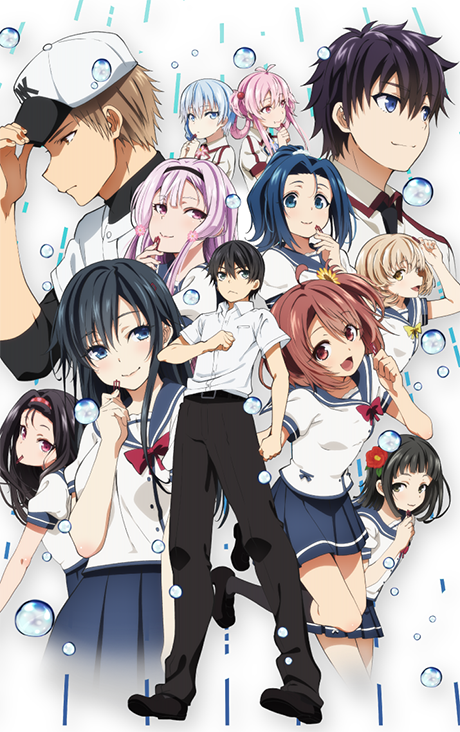
To be honest, I almost completely forgot that this OVA was going to come out in the first place. The only reason why I watched it was because someone asked me if I saw it. When I wrote my review for the OVA’s predecessor, I made a point of watching this when it was released, hoping that it could erase some of the sour taste that its predecessor left. Unfortunately, this OVA only left me feeling even more disgusted.
This 70-minute long OVA finishes the arc that the season ended in the middle of. Joro is challenged to a ‘popularity contest’ by Hose, the ‘protagonist’ of a rival school. The contest is over Pansy; whoever collects the most barrettes gains the right to continue associating with her, the loser has to cut all ties. With Himawari, Cosmos, and Asunaro have already given Hose their barrettes, Joro is in a 0-3 hole. If Hose gains one more barrette, he automatically wins--how will Joro get himself out of this predicament?
A lot of my complaints about this OVA will be a mirror of my complaints about the prequel. The thing that pisses me off the most about this show is that it has flashes of brilliancy. On its own, the parts of the show that are a parody of the rom-com/harem genre are excellent. I sill believe that the first arc of the anime was great. The problem is that it tries to be that AND a sincere rom-com/harem anime. There are ways you could still maintain the parody aspect of the show, now that there are no less than five girls in love with this wretched little cretin called Joro, but Oresuki decides to try to be both at the same time. The result is that the shows ends up neither being a good parody of the rom-com/harem genre OR a good rom-com/harem anime.
This OVA was supposed to build up the sense of anxiety that Joro could very well lose this contest and his relationship with Pansy, but I never felt any sense of anxiousness while watching this. The problem is that with a series like this that ‘the show must go on’, that being that the end goal of this series will not be railroaded in the process by something like this. While it would be potentially genius, but I can’t really see a series like Oresuki having the guts to pull it off. What you’re left with is a long and drawn out OVA begging for you to be nervous about what’s about to happen. I can’t find myself caring that much what happens when I already can tell how it’s going to end up.
Speaking of knowing how things are going to end up, the ending of this OVA was a huge stinker. As I said, ‘the show must go on’, but this ending really stunk it up. It’s almost like the author wrote the worst ending to this arc that they could think of as a part of a cruel joke. Maybe I’m just a moron that doesn’t get it. I do get that Oresuki does often explore the meta aspects of the rom-com/harem genre, but it isn’t smart enough to not fall into the same traps itself.
I would have given this OVA (and its predecessor) a lower rating, but I can’t since does have its good parts. If only Oresuki could execute and stick to the set-pieces it sets up, it could be a good anime. Until then, it will be stuck being a mediocre to bad anime that pretends that it’s better than what it’s parodying.
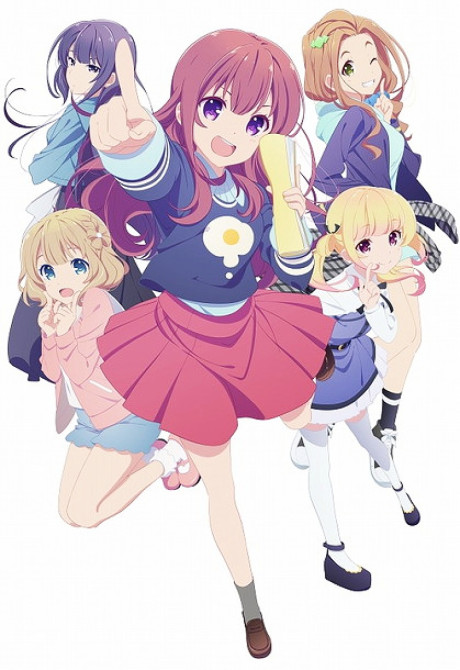
Girlish Number is a strange anime. Not in the "WoW, jApAn Is So KoOkY!” type of way, but in the way that it was conceived. Its creator, Wataru Watari, is also the creator of my favorite anime series, Oregairu, started this series right after its second season ended, and when the (at the time) penultimate volume of the light novel was released. One can say that Girlish Number was a temporary escape from the grind of the Oregairu series--one where he wrote 14 volumes and oversaw two seasons within five years. Others might say that Watari only wrote Girlish Number to try to prove to himself that he can have more than one popular series. Either way, Girlish Number did not live up to the hype in the end. Does this mean that Girlish Number sucks? Definitely not, but it’s no Oregairu.

Girlish Number stars Chitose Karasuma, a college-aged newbie seiyuu, through her journey of having a leading role in an anime. The only problem is that Chitose has a giant ego and terrible work-ethic. On top of that, the anime she’s leading in is horribly managed, with awful animation and unreliable people residing over the project. While her fellow seiyuu seem to be getting more work, Chitose is stuck with her one main role in a bad anime series and mob roles for other projects.
As expected from Watari Wataru, Girlish Number is a more cynical take on the production of an anime than an anime of similar nature like Shirobako. Since Watari had experience from anime production with Oregairu having two seasons at that point, some points of this series could be considered personal from him. Like Oregairu, the characters in Girlish Number are more interesting than characters from a typical anime series. They aren’t fleshed out enough compared to his other work though, which drags away from having any personal connection to them. Chitose isn’t as relatable as Hachiman is either--maybe I would think differently is I was a woman though.

Girlish Number also explores the lives of seiyuu that Chitose works with, especially Koto Katakura and Momoka Sono, who are already established voice actresses, with issues dealing with their families and work. This anime bounces around a lot with plot points, most of them unfortunately being left unresolved at the end. The main problem with this anime is that it is directionless when it’s not dealing with Chitose’s attitude problems and narcissistic delusions. I think part of this is due to only two volumes of the light novel being out during the airing of the anime (the second one being released during the anime’s airing.) With not that much source material out yet, it would be unwise for the anime to go that far ahead of the light novels. Not that it would have mattered that much in the first case, since the light novel ended prematurely the year after the anime.

I don’t know what the sales numbers were for the light novel, but the Girlish Number anime was a flop. The first volume of the anime only sold 1,008 blu-ray copies, well below the (arbitrary) breaking even point of 2,899 sold copies. While that doesn’t tell us anything about how popular the light novel is, the fact that it was stopped, along with all other Girlish Number related projects, in July 2017 probably means it wasn’t as popular as they wanted it to be. The fact that Wataru Watari already had a hit series in Oregairu that he was ignoring while writing Girlish Number was probably the reason that it was dropped eventually. There’s no need to write another series that performs well below expectations, especially when your other series is one of the most well-liked light novel series of the decade. Was Girlish Number as good as Oregairu? Definitely not. But it really never got the chance to prove itself. We might never know the full intention behind this series. Did Watari start this series because he was sick of Oregairu at this point? Did he do it to try to prove it to himself that he wasn’t a one-hit-wonder? Was he running away from having to write a conclusion to Oregairu? Since I don’t know Japanese well enough to dive deep into the history of the Girlish Number series, speculation will have to do for now.
Girlish Number is a fascinating anime for reasons that have little to do with the actual anime itself. It’s sad to say that this series was canceled before it had a chance to prove itself. Maybe it was for the better good, since Oregairu wasn’t going to write its own ending. But it's also sad to see a series like this one to get abandoned. At least it got a full anime season for what it's worth. While it definitely is an unfinished product, Girlish Number still is a decent anime that is fun to watch. You could also read the three light novel volumes if you become fluent in Japanese. We’ll have to wait to see if Watari ever comes back to this series, or if he thinks he would be better off starting a new series.

I’ve been beating around the bush for a bit when it comes to writing this review. To be honest, it took me longer than it should have to watch this anime. Some of it is due to watching other anime that’s currently airing, but most of it is due to laziness. I didn’t have much motivation to finish this anime. Not that it’s bad or anything, it’s just kind of boring to me. I’m not the target audience for Kimi ni Todoke. With that being said, I’m still going to review the show.

Kimi ni Todoke follows Sawako, a girl who is cursed to look like Sadako from The Ring. At the beginning of the anime, she is friendless. That changes when Kazehaya, her classmate and most popular guy in her grade, goes out of his way to talk and become friends with her. She also befriends ‘delinquents’ Yano and Chizuru, along with the absent-minded Ryu. As with any shoujo series (or anything in the general direction of romance), the plot of the anime advances by misunderstandings forming and being resolved.

Watching Kimi ni Todoke felt like I was watching someone else’s dream. While the anime doesn’t have any metaphysical properties, it imitates it with how slow Sawako speaks and thinks. It makes it seem like we’re in a world of her creation, while in fact, we’re just seeing her interpretation of the world around her. Her naivety turns a world that has been very harsh to her into one where she’s constantly misunderstood. While Kazehaya and the girls becoming friends with her helps to turn around the rumors about her, they also start up other ones.

Kimi ni Todoke suffers from the same problem that most other romance anime does--it’s stuck in neutral most of the anime. While I know why it’s like this, it still annoys me that I have to watch two people fumble around with their feelings for 25 episodes. Good thing is that Kimi ni Todoke is not just about Sawako’s romantic mishaps. The anime also explores Yano’s and Chizuru’s romantic life, which honestly is more interesting than Sawako’s. There’s some good comedy in there also, especially any scene with Sawako trying to talk to someone who doesn’t know her. I should be fair though, the misunderstandings that make Sawako’s love life go nowhere aren’t THAT frustrating, it’s just annoying from time to time.

I think the worst thing about Kimi ni Todoke was that it was boring to watch. I took my time finishing this anime since I didn’t have any drive to watch more than one episode a day on most days. While watching several airing anime can take some time I would have to watch this away, it still was at the bottom of my list to watch. Like I said at the beginning, maybe this anime isn’t meant for someone like me. Kimi ni Todoke isn’t bad--it can be quite funny and the characters are charming. It just isn’t something that pulls me in and gets me to watch episode after episode. I would only recommend it if you’re into shoujo anime, otherwise, you might find it a drag to watch.
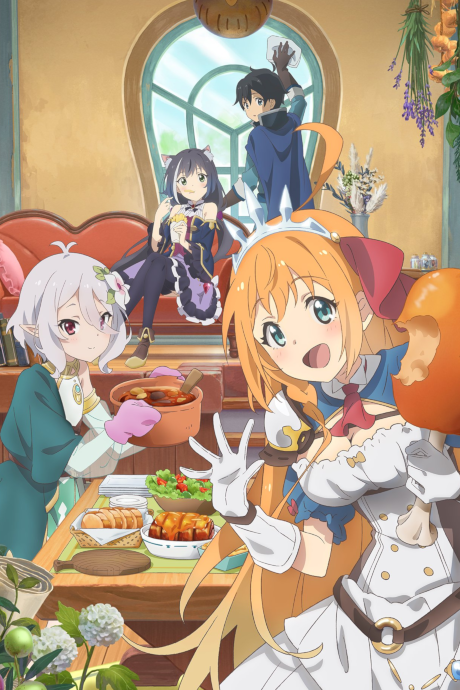
Princess Connect was an anime that never crossed my mind when looking for anime to watch this season. From the promo images to the fact that it’s an anime based off of a phone game, it looks very cookie cutter. And to a point, it is. That being said, I was put on to it by several friends who said that it was funny. While I haven’t watched nearly enough anime to come up with this statement myself, I believe Princess Connect is the surprise anime of the Spring 2020 season. For an anime that’s essentially an advertisement for a phone game, Princess Connect is surprisingly funny and charming.

Princess Connect follows Yuuki, a young man whose memory has been wiped for unknown reasons. It seems that he has severe brain damage as well, not being able to do common tasks or complete a sentence. Kokkoro is a young girl that was apparently summoned to look after Yuuki. Without her, Yuuki would have probably drowned in a puddle by now. Pecorine is a powerful swordswoman who could eat a horse. Her seemingly endless energy is fueled by her eating binges. Kyaru (or Carl) is a catgirl that is a spook sent in to watch over Yuuki and Pecorine by a nefarious organization. She is an ever classic tsundere. These four form the ‘Gourmet Guild’, a guild whose purpose is to “study all of the delicious food in the world”.
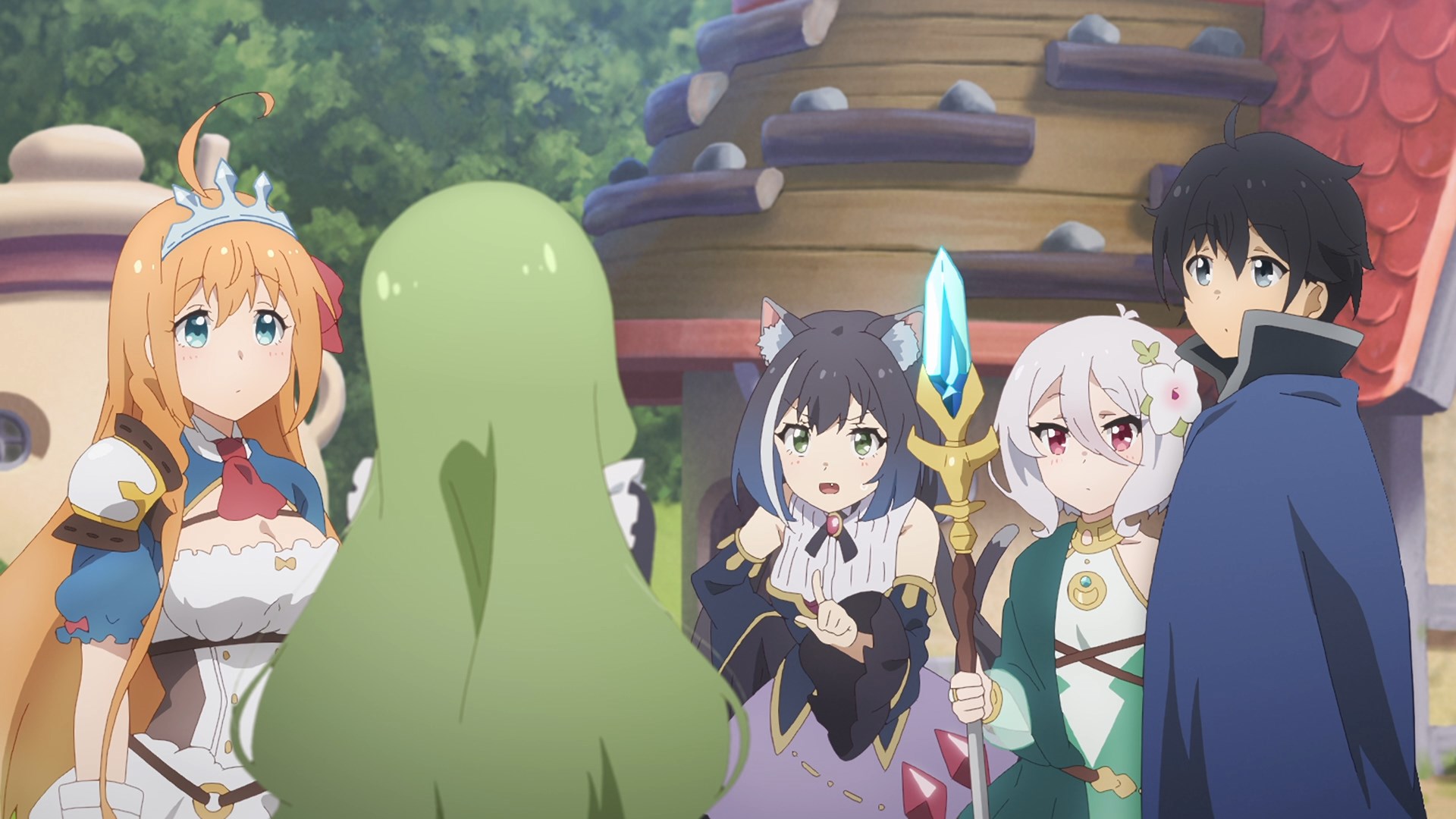
Princess Connect is mostly an episodic anime, with two plot points hinted throughout the season colliding together at the end. Since this anime is based on a phone game, I’m guessing that the episodic nature is based on quests in the game itself. Most of the episodes are light-hearted and have no real implications outside of the episode itself, which suits the anime’s theme fine. When the anime tries to be serious is when it falls off. The ‘serious’ part is cramped into one episode, which throws you off from its normal flow. Don’t watch this show if you’re expecting something emotionally gripping.

What Princess Connect is good at is getting a laugh out of you. I probably laughed at least once every episode, which is pretty good since I’m not usually someone who laughs at anime. The combination of a ‘main character’ that lacks common sense and cognitive skills and him trying to pretty much anything is very entertaining. A friend told me that the less he speaks, the better the episode is likely to be. I agree with him. With that being said, being funny can only take a show so far--it takes Princess Connect from ‘bad’ to ‘slightly above average’.

Although I’ve been a little mean to it, Princess Connect is a very charming show. It’s a very good anime to watch for the entertainment value it brings. It’s at its weakest when it’s trying to be serious, which gladly it holds off until the end. Yuuki is a good main character, mainly because he’s an anti-self insert main character. Although I don’t care for her too much, many people like Kyaru a lot too. The entire Gourmet Guild has good chemistry. I hope that this anime has caused interest in the phone game to go up, which in return should give us a second season. Especially since the main conflicts in the anime were never resolved. I know I said that the serious parts of Princess Connect were the worst, but I would like to at least see a resolution to Pecorine’s or Kyaru’s issues, or at least know why Yuuki has amnesia. Maybe we’ll get to see it after a vaccine comes out.

Re:Zero was one of the most popular anime in 2016--being the second most popular only next to Boku no Hero Academia. When the term ‘isekai’ is brought up, Re:Zero is the first anime that comes to mind to many. It is also known for one of the most infamous intra-anime ‘waifu wars’ known to mankind. Grown men have fought over the honor of Emilia and Rem for over four years now, with no end in sight. At the center of Re:Zero though is the struggle of one young man, Subaru, to fight for what he thinks is right.

In Re:Zero, Subaru Natsuki is summoned (‘isekaied’) to the Kingdom of Lugncia, with nothing more than his tracksuit, a bag of chips, and his flip phone. It is unknown why or how he was summoned to this world--all Subaru knows is that he has the power to ‘Return by Death’. Anytime he is killed, he is returned to a checkpoint in time, seemingly arbitrarily set. Other than that, he has no other spectacular powers and isn’t overpowered in any way.
He makes up his reason for being in this new world when he meets Emilia (or ‘Satella’ when he first meets her). Something about her charm and her goodwill makes him, as the kids say, become a ‘simp’ for her. Most everything he does in this series is for her sake in one way or another. His affection for her borders on unhealthy, but for all intents and purposes, he really is the only one that can ‘save’ her. Her appearance resembling the most feared and hated figure in this universe, along with her being an elf, a marginalized group in this universe, only furthers his savior complex for her. She has never asked for any of his help, but accepts it anyway as long as it doesn’t interfere with her plans.
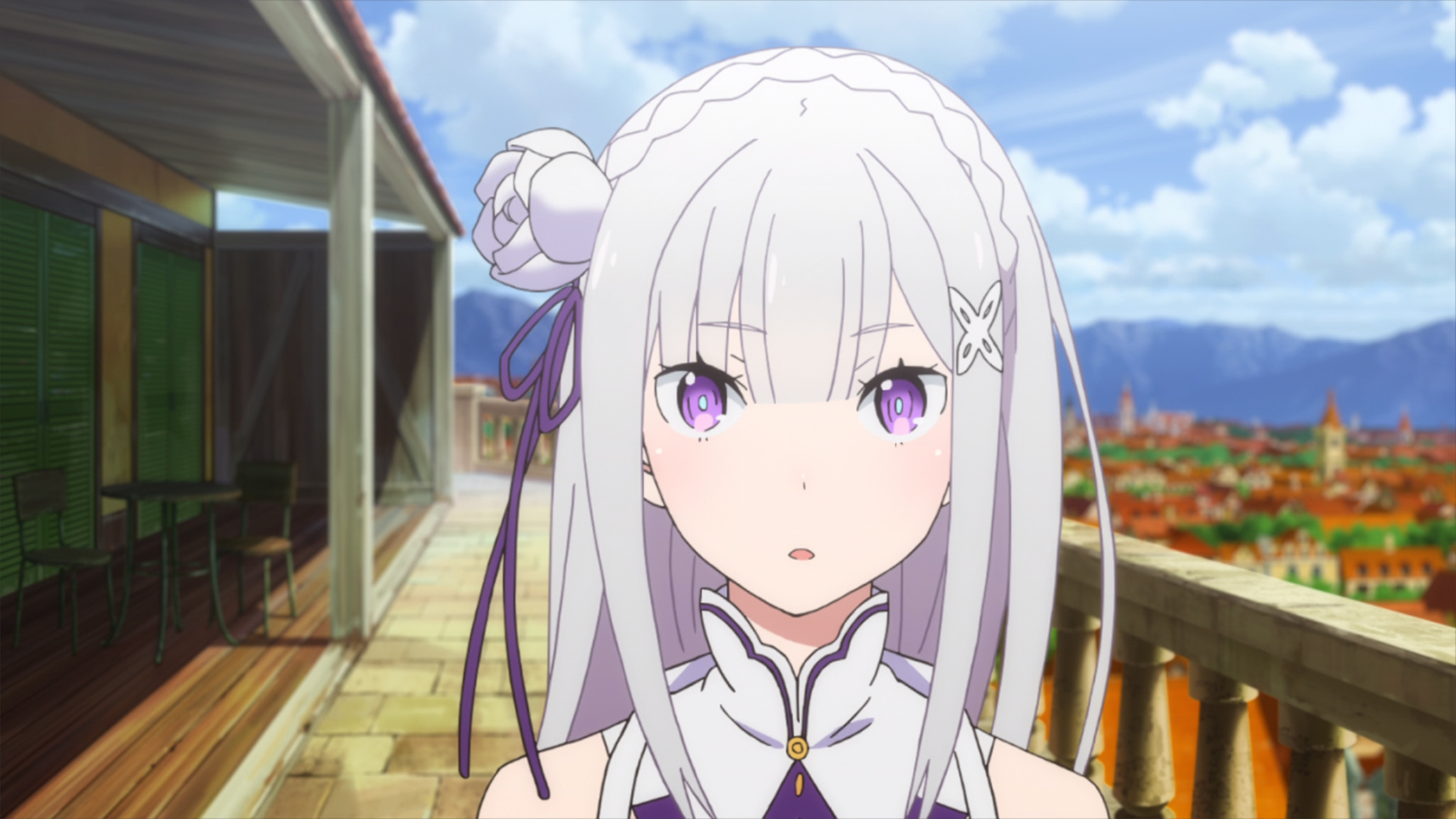
While we’re here, I have to talk about Subaru’s personality. While he probably thinks he has a ‘big personality’, in reality, it’s more like a fly that won’t get out of your face. His over-familiarity pisses me off especially. I can’t dislike him though. Maybe his whole act is him knowing that he’s in a fantasy setting. I can’t see him acting like that back in the real world. Either way, he’s more than likely to rub you the wrong way at least once.

Onwards to the story--for an anime fantasy setting, Re:Zero’s story is pretty decent. The anime is divided into three arcs, each one being longer than the other. Due to Subaru’s ‘Return by Death’ ability, each arc is longer than you would expect. I haven’t done the math, but around half, if not more, of the anime is nullified due to it being in a universe where Subaru ended up dying. This gets pedantic at a point since the arcs are so long (especially the third one which lasts the second half of the anime). I believe this is because Subaru goes back in time several times every arc. It’s like if Marty McFly died several times trying to fix his parents’ future and was sent back to the moment he arrived in 1955 every time he did. While it is exhausting to have to see Subaru have to redo things multiple times, Re:Zero does create a mood of dread and uneasiness around him being potentially killed and having to do it all over again. The pedantism isn’t there for no reason, although a 25-minute-long dialogue scene is pretty excessive.

The scale of Re:Zero is so grand that with a full two-cour season, you still feel like the story has barely begun. Some of this is due to the whole ‘Return by Death’ thing repeating story-lines, but most of it is due to how everything seems to happen at once. While it would seem that the selection of a new ruler of the kingdom would take up most of the plot, it is overshadowed by a terrorist cult plotting to kidnap one of the main characters. Some characters still feel relatively unknown, even after a full season of seeing them. The scale of this series too big for what it is, but I’ll have to watch the second season to confirm that.
The worst thing about Re:Zero isn’t even at the fault of the anime. Sure, Subaru’s outbursts of madness are unhinged and infuriating, but that’s nothing in relation to the aforementioned ‘waifu war’ I talked about in the beginning. You really can’t go anywhere Re:Zero related without seeing an Emilia versus Rem spat. I don’t even think that most of the people that get involved in those arguments constantly like the series. It’s just another way for them to yell at people. The main difference between the two of them is that Rem is more loyal while Emilia strives Subaru to be better. That is my own impression anyway. You’ll have to watch the anime to come up with your own conclusion.

Re:Zero is an anime that is really good at giving you dread. While Subaru is a dumbass, I can’t help but care about him. His motives, while naive and decided haphazardly, are commendable in my book. Of course, with any story with time manipulation, there are going to be plot-holes and other stuff that comes with bending time. I can’t really be bothered with that, since that’s like complaining that staring at the sun made your vision worse. For an isekai, Re:Zero is pretty good. The show has broad appeal, while not main-stream. While not fully fleshed out yet, the characters are charming. The story is long and drawn-out, but it isn’t a total slog to get through. The point is that you should give Re:Zero a try if you haven’t already, especially with the Director's Cut of the first season fully out now.

There are anime that people say that you have to ‘turn off your brain’ to watch. While I’m not a fan of the term, Mirai Nikki is the ultimate example of the ‘turn off your brain’ anime. The anime is edgy, not at all coherent, and most of all, fun and exciting to watch. If you tune in expecting to watch a gripping thriller, or just something good, Mirai Nikki isn’t for you. But if you’re watching because you want something silly to watch, Mirai Nikki is right up your alley.
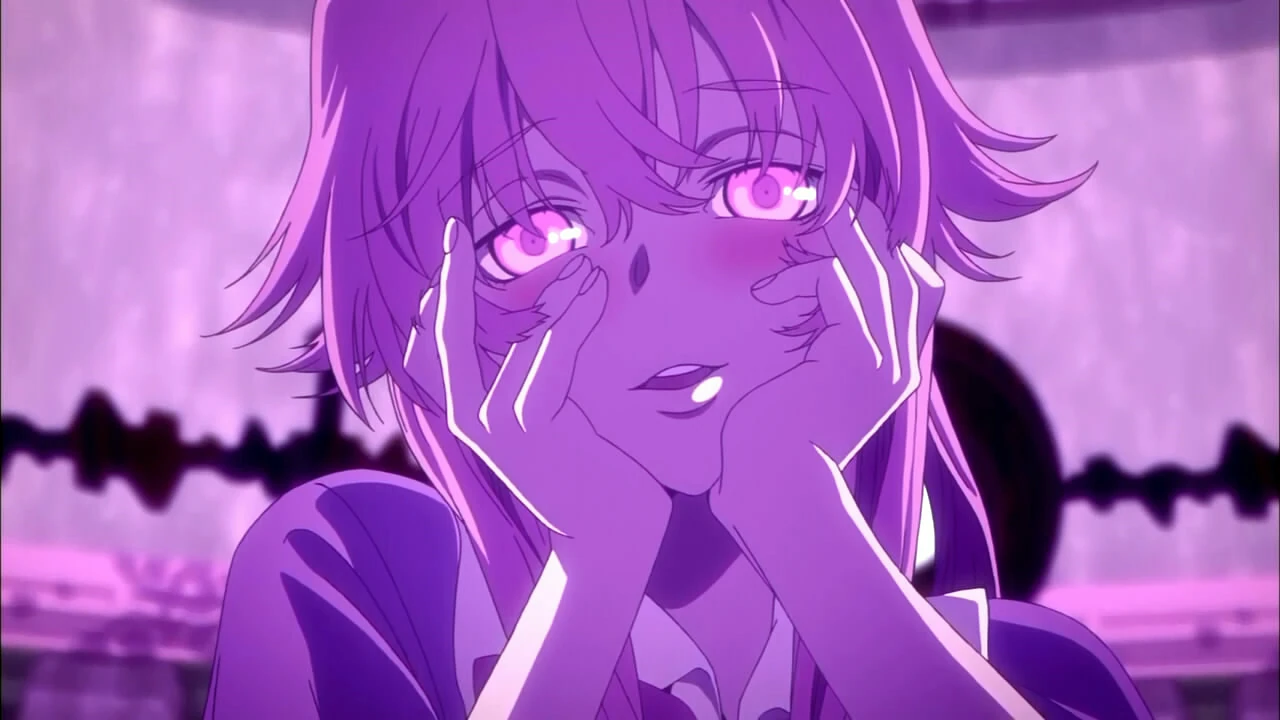
Mirai Nikki is a battle royale anime themed around ‘future diaries'. Each contestant in the battle-royale has a diary that can tell certain parts of the future. The main character, Yukiteru Amano, has a ‘Random Diary’, which tells him random events in the future. Yuno Gasai, his stalker and ‘protector’, has a diary that tells the future of Yukiteru. As with any battle royale game, the winner is the last person alive, the prize of winning being becoming a god.
I have many complaints about Mirai Nikki. With any anime that has time-manipulation as a plot point, plot holes are abundant. Mirai Nikki has more of them than the eye can see. It also has an ending that seems to be going on forever. Seriously, it’s so long. I can’t help but think the ending was inspired by Evangelion. It wouldn’t be the only thing that makes it similar to Evangelion. Yukiteiru is very similar personality-wise to Shinji. Akise Aru, a side character, is similar personality-wise to Kaworu. He even looks like him as well! If they wanted to have this anime viewed similarly as Evangelion, then they failed completely. Mirai Nikki is a popular anime, with it being the 25th most popular anime on Anilist, but there’s nothing worth remembering about it except for Yuno herself. She’s the most popular ‘yandere’ character that I can think of, so at least they did something, even if that’s not what they were going for.

Speaking of Yuno, the most disgusting thing about this anime is the fact that it often conforms to the belief that she is the ‘only one there’ for Yukiteiru. While I know this is the modus operandi for most controlling people, the fact that the anime seems to go along with this is genuinely disturbing. While it’s not always this way, it happens enough to be to have to write this. The second most disgusting thing is that the characters never change their outfit.
With all of that being said, the one reason for watching Mirai Nikki is because it’s fun. The sheer insanity of it is worth the watch itself. You’ll probably find it bad, but it isn’t the type of bad that will piss you off or detract you from finishing it (most likely). It’s the same type of ‘bad’ that you get from action movies with little plot. Mirai Nikki is a perfect anime to have a watch party with, it’ll surely entertain everyone watching. And honestly, isn’t entertainment what you want from an anime? Well, the entertainment that Mirai Nikki may provide you is more of the ‘laughing at’ type of entertainment, but the point some-what stands. Mirai Nikki may be a lot of things, but boring isn’t one of them.

Mirai Nikki is probably one of the dumbest anime that I’ve ever watched. That’s saying something considered all of the dumb anime out there. What Mirai Nikki has that others don’t is entertainment value. You’re bound to be entertained with all of the crazy and stupid twists and turn this anime has out there to offer. Is it good? No. Does it have a million plot holes? Yes. Is it fun to watch? Also yes.

Often, isekai series fall into the same trap: they’re all too similar. They can be summed up with “Dopey looking guy gets magically thrown into another world, becomes way cooler with the chance of having multiple girls liking him”. Hataraku Maou-sama! is a welcome variation to the isekai genre. It’s a ‘reverse-isekai’, with the main character being the ‘coolest’ (and most evil) guy in the world he was originally from becoming an average joe on Earth, the world that he warped through after strategically fleeing from battle. While it isn’t what you first think of when you think ‘isekai’, the concept of Hataraku Maou-sama! is a welcome one.

The plot of Hataraku Maou-sama! is relatively simple. Maou, who was the ‘Demon King’ on Ente Isla, the world he was originally from, strategically flees from it after being cornered by those who he declared war on. He and Alciel, his right-hand man, are transported to modern Tokyo, where they have to restart since they lost all of their powers. While Alciel spends his days at the library researching ways for them to regain powers, Maou works at a ‘MgRonald’s’ in order to make sure both of them can eat and have a roof over their head. At work, he befriends Chiho Sasaki, a girl who is hopelessly in love with him due to how seriously he takes his job and how kind he is to her, among other reasons. She’s the only normal main character in this series. At the end of the first episode, he is confronted by Emilia, who also transported to Japan to kill him. Emilia was the ‘hero’ that defeated Maou in Ente Isla, but she too has lost most of her magic powers, leaving her powerless. She works as an office lady and often stalks Maou in order to ‘keep an eye on him’. Later in the series, Lucifer, one of Maou’s generals in Ente Isla, and Suzuno Kamazuki, a mysterious girl that moves into the apartment next to Maou, also become main characters.

The whole concept of Hataraku Maou-sama! is the best thing about it. It’s funny to imagine Satan being relegated to being a part-time employee at a fast-food chain. The anime works best when it’s being silly. While it isn’t the funniest anime around, it’s enjoyable to watch. The problem is that the anime tries to also take itself seriously at times, which just doesn’t work. To be fair, these parts only happen in the climax of an arc, but even then it drags down the anime as a whole. It’s very hard to mix ‘serious’ and ‘silly’ into the same show, and Hataraku Maou-sama! does it mediocrely at best.
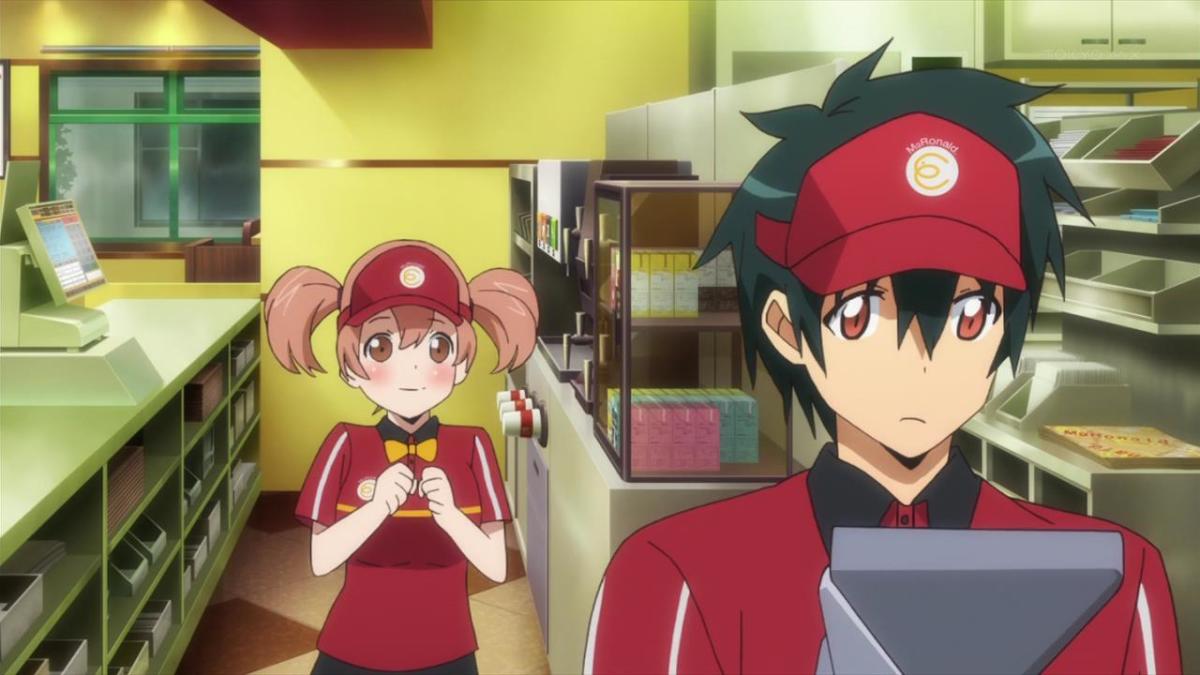
Another issue I have with the anime is how its character dynamics work. It’s hard for me to believe that a character would interact in any way with another character that took part in ruining their homeland, killing their family, etc. with anything else than pure hatred. Not that the ‘good’ characters and the ‘bad’ characters are chummy in any way, but how they interact on Earth begs the question: Did anything that happen in their past life matter now? Is this anime analyzing how being portrayed in one world compared to another change how a person acts? Does obtaining a title by birthright warp one’s actions and perception of the world? Is someone like Maou acting like his ‘true self’ now that he doesn’t have the title and power of ‘Dark Lord Satan’? Is being a fundamentally good person absolving Maou of what he did in Ente Isla? One could try to answer these questions, but ultimately I think that would be looking too deep into this anime. It’s just not the type of anime to be looked into this deep, in my opinion at least.
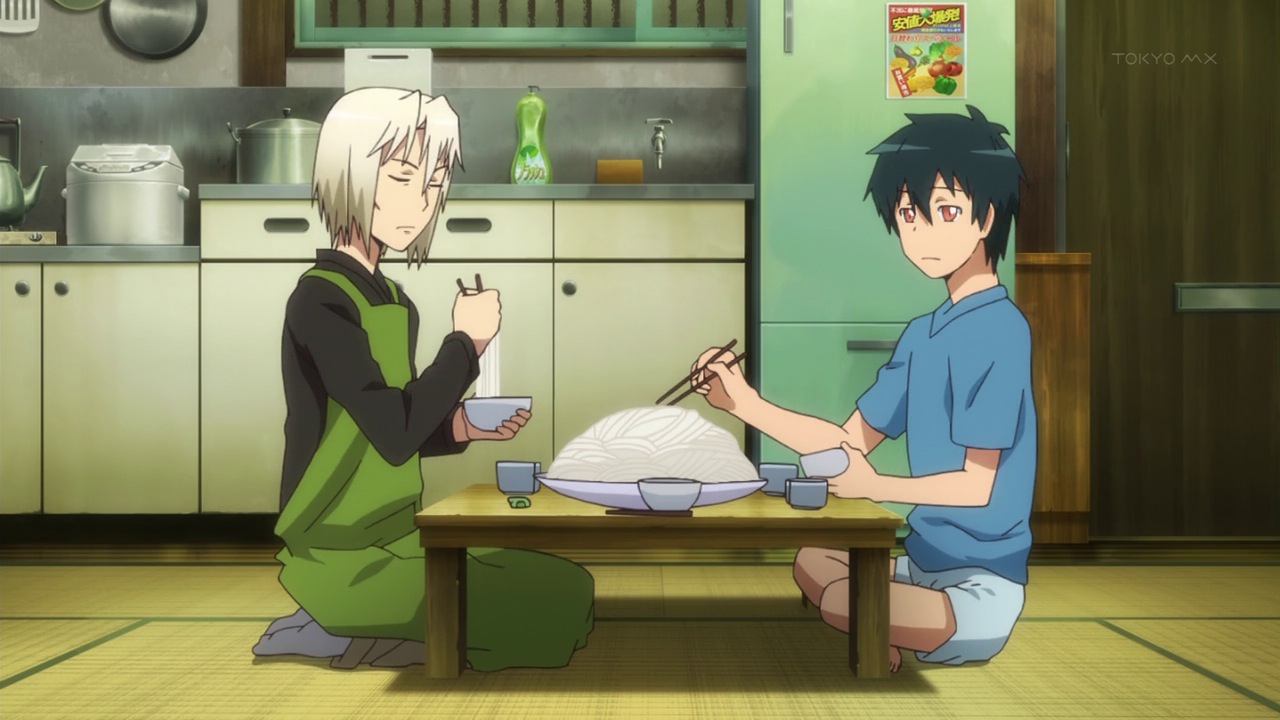
Hataraku Maou-sama! is one of those anime that you have to ‘turn your brain off’ to fully enjoy. The more seriously you try to take it, the more you’ll find to dislike. If you want a silly anime to watch, Hataraku Maou-sama! might be up your alley. It’s enjoyable to watch at most times, but tries to be serious and not-serious at the same time in some parts, which doesn’t work. Other than that, it’s a fun anime to watch.
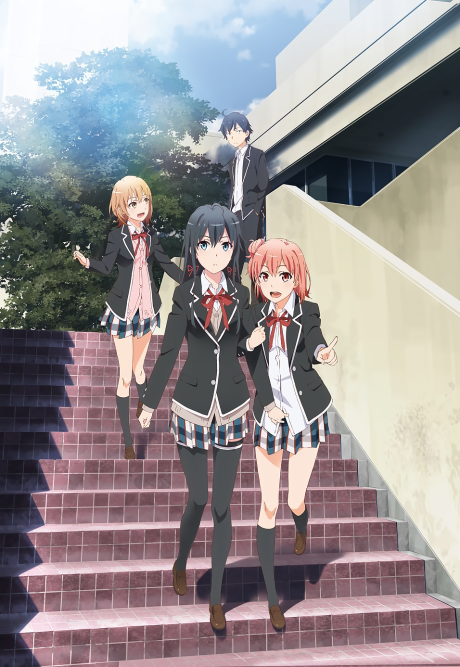
Coming from season one, I did not think that it was possible for season two of Oregairu to be better than its predecessor. I was proven wrong.

While the first season was more focused on Hachiman fitting in with the Service Club and becoming friends with Yukino and Yui, season two is more focused on him trying to maintain those relationships. He realizes that he has something that he wants to keep in the first few episodes after talking to Hayato. Hayato wants to keep his friend group intact--so much so that he is willing to try to block one of the guys his the friend group from asking out one of the girls in it. Hachiman begins to realize what the consequences of his self-sacrificial methods. He has the Service Club he wants to keep, and his methods could end up blowing that up if he calculates wrong.
Adding to the equation this season is Iroha Isshiki. She becomes important in the second half of this season. She originally comes to the Service Club asking how to end her Student Council Presidental campaign. After that request, she starts coming to the club more often with more requests, she seems to also love to annoy Hachiman.
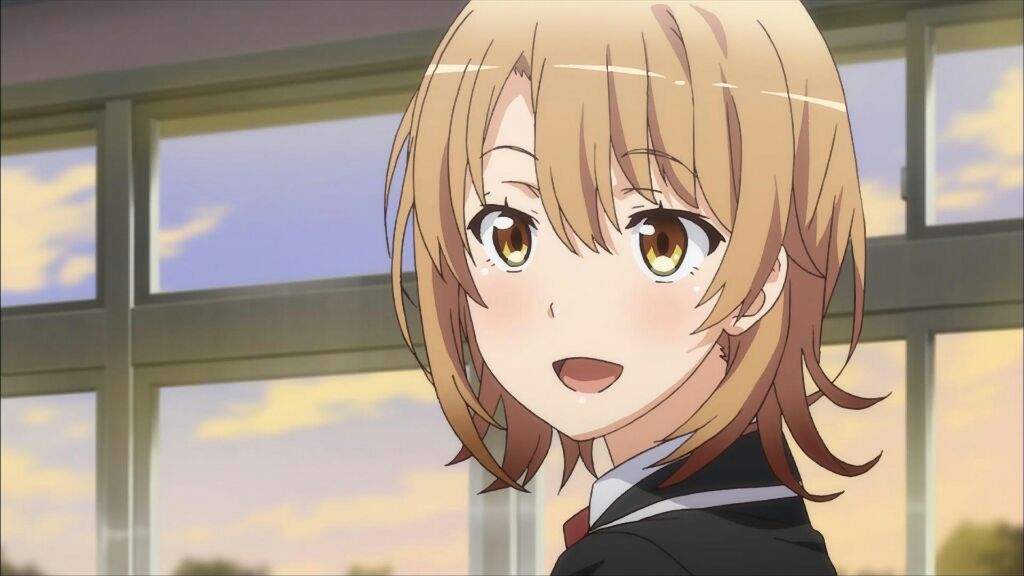
This season is much for satisfying to watch than the last for many reasons. The main reason being that Hachiman is finally growing as a young man. In the last season, Hachiman did whatever he wanted without any thought about how everyone would react. This season, he finally starts to rethink doing the reckless things he did in season one. While he still acts like it, he is no longer the loner in class. He is no longer friendless. He is not unimportant and is cared about by people other than his family. The Hachiman of this season is different from the one of the first season; now Hachiman considers others while thinking of methods of solving problems assigned to the Service Club.

Yukino also finally changes, opening up her ‘shell’ and letting Yui and Hachiman in. In the first season, we saw glimpses of this, but Yukino starts to finally let her guard down (sometimes) around her two friends. Yui also has found a group of friends that she can fully be herself in. While she already is part of Hayato’s friend group, the social dynamics of it often lead her to being a side character and a follower. In the Service Club, everyone is equal, including Yui (even if she defaults to letting Hachiman and/or Yukino leading). To put it in her words, she is “in love” with the club. Neither Yui, Yukino, or Hachiman want the Service Club to go since it might jeopardize their time together.
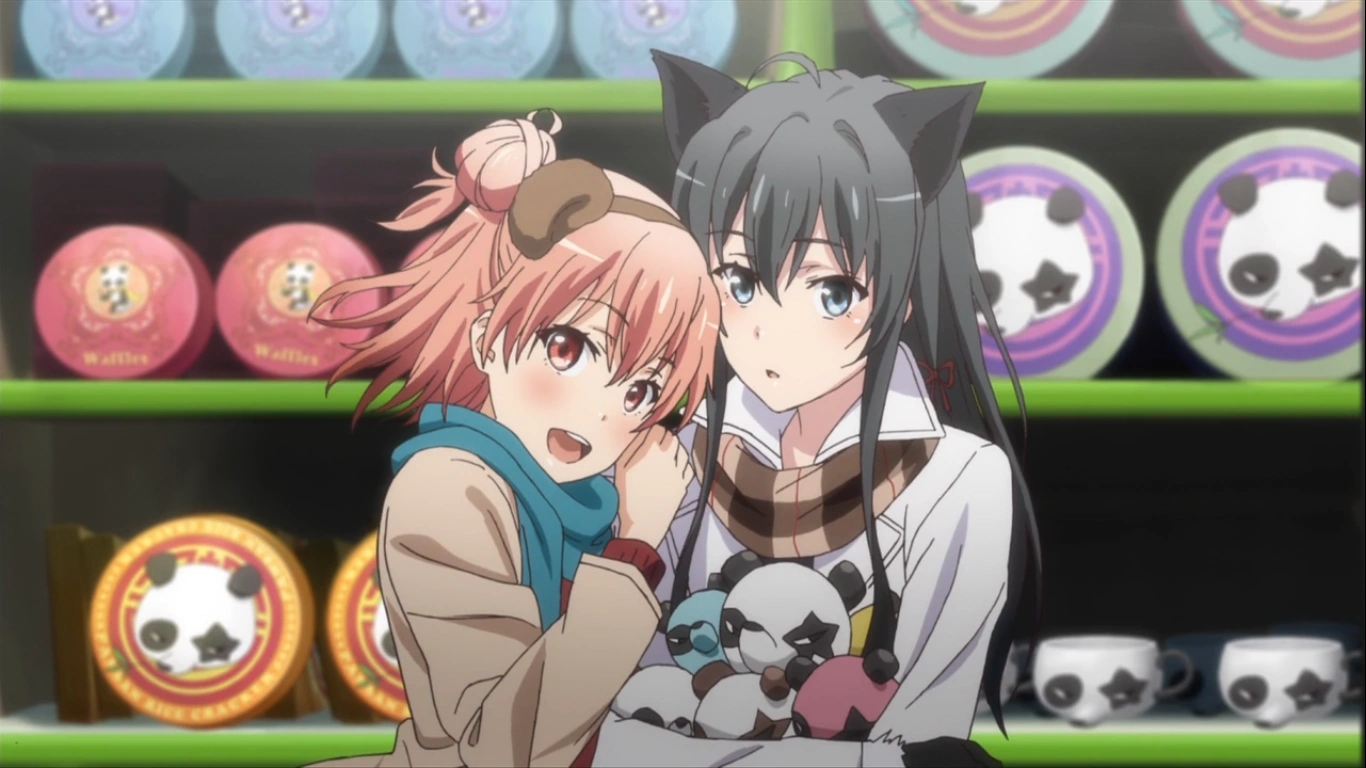
The main question for Hachiman throughout this season is ‘How long can this last?’. He has never had anything like this in the past, and he does not want to give it up now. Yukino and Yui also share the same concerns. They also have to make sure to not live in the past, since they still have their future ahead of them. Hachiman finds himself in the same position Hayato is, but is doing more to find out what to do next. Hachiman knows that the present is not everything--he is a pessimistic realist after all. What he decides to do from here on out could affect the rest of his life.

The main concern from last season--the animation quality--has been more than fixed for this season. I am not much of an ‘animation’ guy, but the animation quality this season is stunning. It might be just because I am comparing it to how cartoonish it looked in the first season, but I really like how it looks. I guess feel. (the studio this season) is making up for how it looked in the first season (when Brains Base was the studio). The animation in this season matches the overall feeling this season has. The most notable parts are the ones where movements are very fluid, along with scenes that feel cinematic. I am glad feel. is the studio for the upcoming season.
Like I said with my review of season one, this season of Oregairu is a must-watch. If you are reading this and have not watched season one yet, please watch that first before watching this. The second season of Oregairu is one of the best anime I have ever watched.

There are hundreds of high-school rom-com anime out there. Most of them are trash which was rightfully forgotten about after they aired. However, there are some that can break out of the mold and have legacies that far outlive its air time. It might be because it has interesting characters, a compelling story, or it connects and engages the viewer. Oregairu does all three of these.
The anime begins with the main character, Hachiman Hikigaya, being forced to join the ‘Service Club’ by his advisor, Shizuka Hiratsuka. He is sent there to become a ‘better person’. He is not a troublemaker or a bad student, he just has a bad personality. He is spiteful, overly negative, and willingly isolates himself from having any social life. He believes that the concept of ‘youth’ is evil, acts like he is above it. By being forced to join the Service Club, Hachiman will hopefully learn how to help others with their problems, which in turn will help him become a better and more sociable person that will enjoy his youth while he still can.
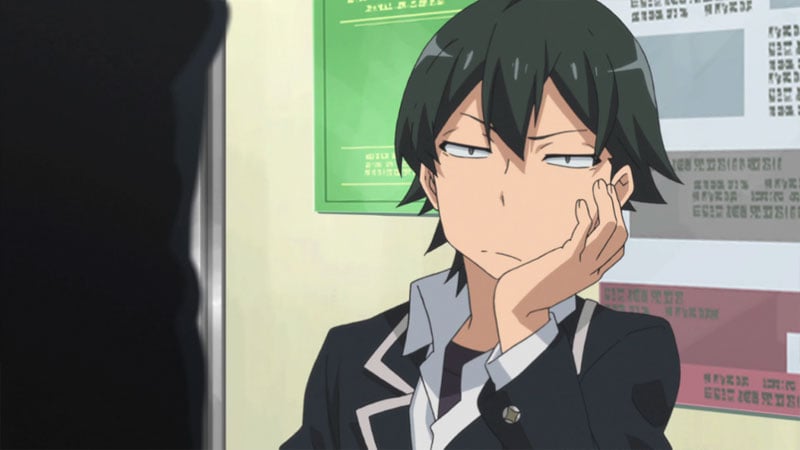
The only other person in the Service Club when he joins is Yukino Yukinoshita--a girl who on the outside seems to have it all, but in reality is similar to Hachiman. She has a superiority complex and elitist attitude that causes her to be isolated from others, just like Hachiman. The difference between them is that Yukino is of elite standing due to her family, while Hachiman is a nobody. Their first visitor, and ultimately the third member of the club, is Yui Yuigahama. Unlike Hachiman and Yukino, Yui has many friends and is easy to talk to. She joins the Service Club because she admires both Yukino’s and Hachiman’s way of being true to themselves. While they are everything that Yui is not, she (in her own way) tries to be more like them by not being as easily influenced by others.
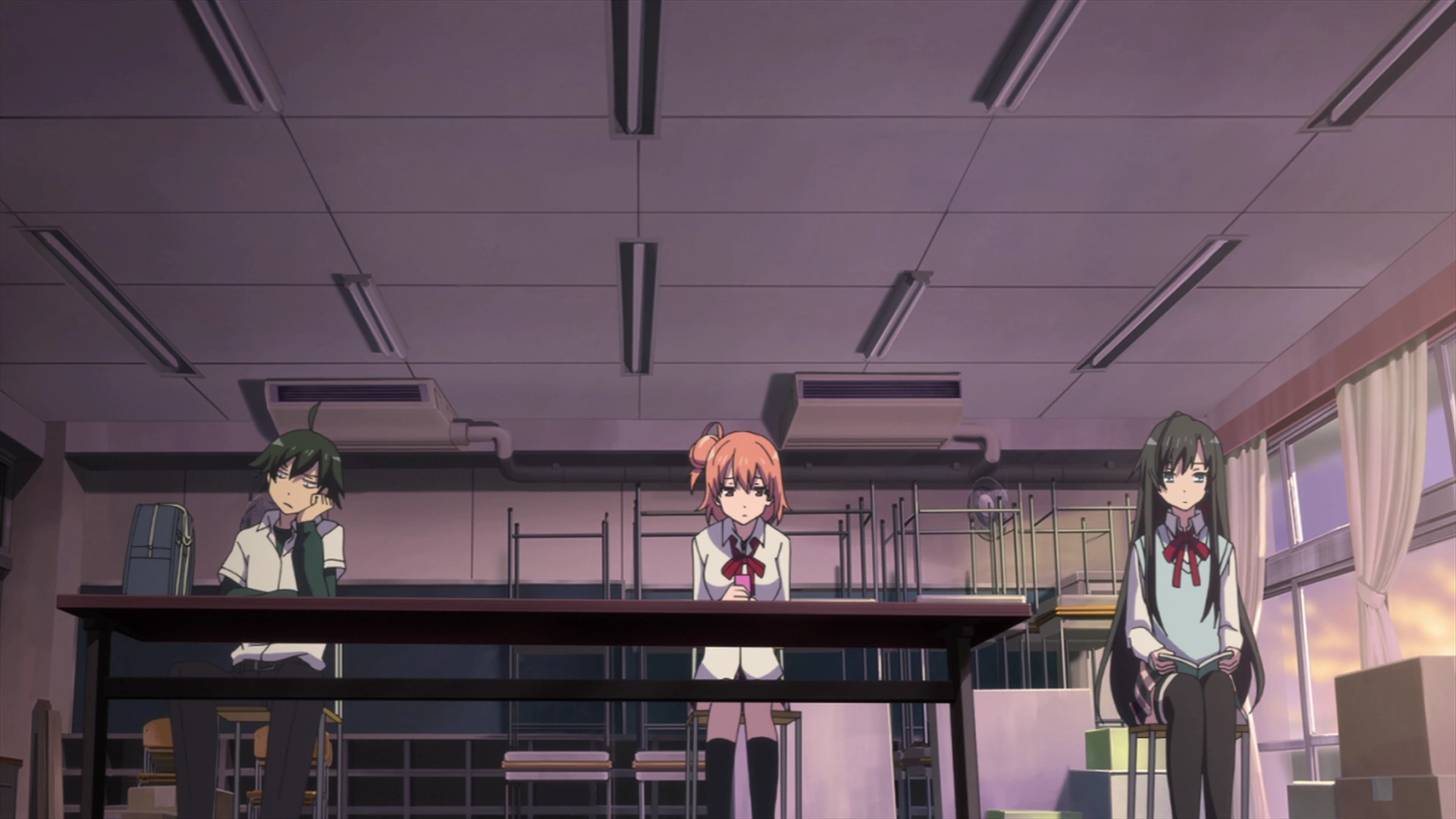
Oregairu’s story consists of Hachiman, Yukino, and Yui helping out students and faculty, as is it the point of their club. While the Service Club does not ‘grant wishes’, it helps those out that seek it and steers them in the right way. More of a ‘teaching someone how to fish rather than giving them a fish’ type thing. What makes the anime’s story good is how the three find solutions to the assignments they take. While Hachiman and Yukino both calculate their solutions thoroughly, Hachiman’s are more notable due to how self-destructive they can be. While he claims to not care about what others think about it, it obviously affects him. Hachiman’s philosophy and general way of doing things takes a hit when he actually has friends and can not live as a fly on a wall anymore.
While this setup is not uncommon, what leaves Oregairu standing out from the rest of its kind is in its execution. For one, every main character is written with the intent to be cared about. Hikigaya is written to be a loner/loser/etc., but the anime does not beat him down too much or build him up. He is kept in his own realist reality of being a ‘pragmatic loner’ and often overcalculates things. Even with all of this, he begins to really help people out (even if it is in his own special, sometimes overly self-sacrificing way). Other anime would more than likely glorify Hachiman’s behavior, making him always right. In Oregairu, Hachiman is often wrong--and even when he turns out to be right, it is for the wrong reasons.

Yukino and Yui are also brilliantly written characters. As I said earlier, Yukino is a girl that is smart and beautiful, but is alone due to barriers that she herself puts up. Up until Hachiman and Yui joined the Service Club, Yukino did not have any real friends at school and did not let anyone penetrate her armor of cold demeanor. Behind that is a soft and fragile young woman, who is chasing something that is not yet able to be seen yet. She is brilliant at everything she does, but she does not realize (or want to realize) that she has to rely on others if she wants to get anywhere in life. Yui could be seen as a foil to both Hachiman or Yukino, due to being the only one who is outwardly cheerful and positive. While she is not a moron, she is definitely the most emotional of the group and is more of a follower than a leader (and can also be an airhead at times). Yui’s main contribution is making sure that all three of them stick and come together as ‘friends’ rather than as ‘classmates’ or ‘acquaintances’. Yui does not need any help when it comes to socializing, but she does need some when it comes to thinking for herself (which is one of the reasons why she admires both Hachiman and Yukino).

Oregairu also has an excellent list of supporting characters, such as Hayato Hayama, whose positive radiation, good looks, and his natural talent as a leader puts him at odds with Hachiman, or Haruno Yukinoshita, who is Yukino’s sister and is the polar opposite outwardly. There are too many others to name here, but the supporting cast also contributes immensely to Oregairu and are used to challenge the main characters, rather than being used in ways to boost them up.
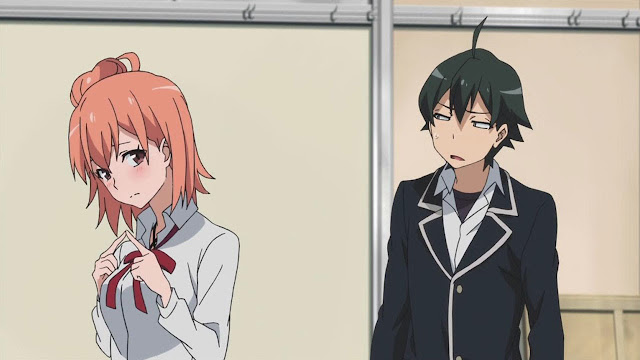
The only real concern about ~this~ season of Oregairu is that the animation is quite shoddy at times. It does not really impact the watching experience, I just have to point it out due to how better animated the later seasons are.

Oregairu is one of those anime series that will always leave an imprint in my brain. Not for the wrong reasons like a series like Oreimo, but due to how unique it is, even if its plot is not that original. Oregairu’s characters are all written to be cared about. I think a lot of this series being popular has to do with how likable Hachiman is. It is rare in anime series of this kind for a male character to be the most popular one, but Hachiman seems to be the exception. His abrasiveness and willingness to what it takes to accomplish what he wants is admirable, even if it is ultimately the wrong choice. In the end, he is not some overpowered character with plot armor, he is just a high school boy that acts more grown-up than he actually is. While Hachiman is to be admired, no one should be like him. Of course, Yukino and Yui, and pretty much every other side character are likable as well. Oregairu is a must-watch for anyone into anime in my opinion.
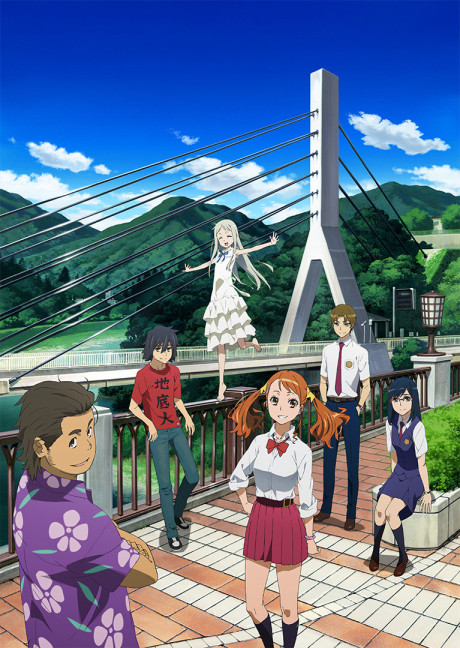
Ano Hana is a compelling anime. It is one about loss and traumatic events--and about coping and recovering from them.

The story is centered around Meiko Honma (Menma), a ‘summer beast’ that has started appearing in Jinta Yadomi’s vision. Menma was a girl that was part of his friend group ten years ago that died tragically by falling into a river. Back then, Jinta was the energetic de-facto leader of the friend group (the ‘Super Peace Busters’), but now today he is a reclusive NEET. While he originally believes that Menma is just a manifestation of his mind, Menma proves that she is ‘real’ by being able to do daily tasks like cooking. Menma tells Jinta that he needs to fulfill her ‘wish’, although they both do not know what that ‘wish’ is. When that wish is granted, Menma believes that she will finally be able to go to heaven.

In trying to grant Menma’s wish, Jinta re-connects with everyone that was part of the Super Peace Busters. He first runs into Tetsudo Hisakawa (Poppo), who lives in the shack that the friend group used to hang out in. Poppo now goes on trips around the world and has not attended school in years. The second friend Jinta reconnects with is Naruko Anjou (Anaru). She goes to the same school that Jinta is enrolled in and is the ‘closest’ to him before Jinta starts reconnecting. He also contacts Atsumu Matsuyuki (Yukihatsu) and Chiriko Tsurumi (Tsuruko), who go to a more prestigious school as Jinta and Anaru. Both are friends with each other and have a pompous air around them (especially Yukihatsu towards Jinta). While the conditions of their rebudding friendships are tenuous, they come together due to Menma.
While they do not show it at the start, the tragic passing of Menma still greatly affects their lives. Vivid memories of that day has stunted their emotional and mental development as young adults. While none of them except Jinta can communicate with ghost Menma, they all want to fulfill her wish. They still feel guilty about what happened that day ten years ago and are still dealing with the consequences of it--having her go to heaven will finally give them some closure and help them push forward.

As for the story itself, it definitely does enough to pull you in. For an anime like Ano Hana, it is worthless to watch if you do not care about the characters. Even if I do not like some of the characters, I still care for them. Ano Hana delicately creates an ecosphere where all of the main characters rely on each other, with Menma being the glue that holds it all together.
That being said, Ano Hana definitely has its issues. The main one is on the part of how long it takes for everyone else to actually understand that Menma is a real ghost, and not something that Jinta made up. While this might seem trivial reading this, it really annoyed me while watching how Menma was being talked about like an illusion and not as a real phenomenon, and how long it took for Jinta and her to prove them wrong.

Is Ano Hana worth watching? Definitely. If you are a fan of tear-jerkers and coming-of-age anime, then Ano Hana is right up your alley. Even if you are not a fan, I would still recommend it. Ano Hana is not great per se, but it is moving and captivating. It is an anime that might be best consumed in one night (although that might mess you up emotionally the next day if it hits you hard).
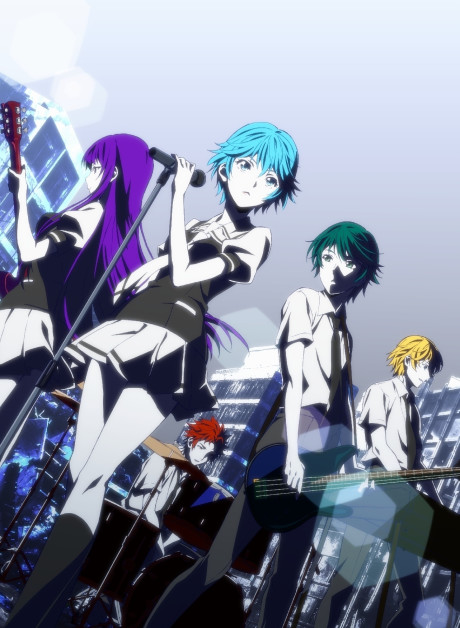

To be honest, I regret rewatching Fuuka. There is this bitter feeling in my mouth I get from watching it. Rewatching it, I hated it more than it probably deserves to be. I almost dropped it, but I did not because I wanted to write a review for it on here. While you probably get the direction this review is going by what I have written so far, but I hope you stay for the rest, so I can explain why I feel the way I do about Fuuka.
There are a good deal of anime out there that rely on melodrama to advance their story. One example of that is an anime that I reviewed in the past, Gamers!. In that anime, it over-dramatizes many ~misunderstandings~ that annoyed many viewers at the time. That being said, the over-dramatization was often used for comedic effect, which is something I can not say about Fuuka. Fuuka takes itself very seriously--too seriously in my opinion. While Fuuka is not all bad, the part that will resonate the most with most people (at least most people like me anyway) is the worst and the cruelest part of the anime.

The central focus of Fuuka is on Yuu Haruna and the band he joins, The Fallen Moon. The Fallen Moon is formed after Fuuka Akitsuki, the girl the anime is named after, gets Yuu, Makoto Mikasa, Kazuya Nachi, and Sara Iwami to join. Yuu Haruna also reconnects with his childhood friend, Koyuki Hinashi, who has turned into a chart-topping idol in the time since they last met.
There are two cores to this anime: The Fallen Moon being one, and the other one being Yuu’s love triangle of Fuuka and Koyuki. The parts of the plot that revolve around the band are not that bad. They are not good either, feeling rushed at parts, but what can I say--at least it did not piss me off. I can not say the same about the plot that revolves around Yuu’s love triangle.
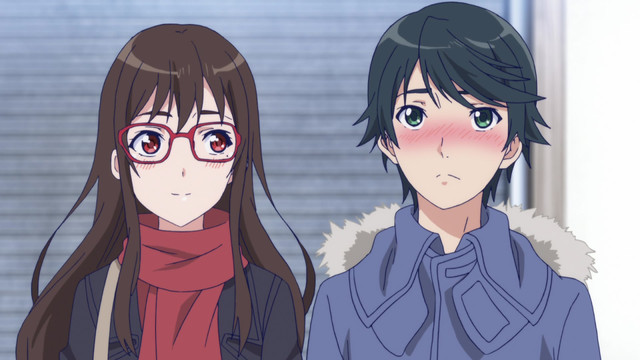
The problem with Yuu’s love triangle, and with Fuuka as a whole, is that you know who is going to ‘win’ it just by seeing whose name is in the title. I mean, I know that the girl who will ‘win’ is often obvious, but it is just cruel to Koyuki that she has to be in the show when it is obvious that she is going to be left heartbroken. In any just world, she and Yuu would live happily ever after-- but this is not a just world, this is Fuuka. Koyuki’s emotions are thrown around and tossed in the trash in favor of Fuuka. Again, I know that Fuuka is literally this anime’s title, but it is not fair to Kyouki to be used like this. As much as I like Koyuki, Fuuka would be better off if she (Koyuki) was not in it in the first place. The anime would still not be great, but it would not leave such a bitter taste in many viewers’ mouths. Having her be an important part of it causes unnecessary drama and subtracts from the other parts of Fuuka. A love triangle, at least in this form, is not needed.

With all of that aside, there are still other problems with Fuuka. The scenes that were supposed to be emotionally gripping were often hamfisted and end up whiffing. Fuuka also for some reason has everyone bend to her will no matter what. I know she is an enigma and forceful, but it seems that the only reason why anyone listens to her is that she is the one who has her name in the title. The whole ‘love triangle’ debacle is so bad that it seeps into other parts of Fuuka, making you more critical of everything else.
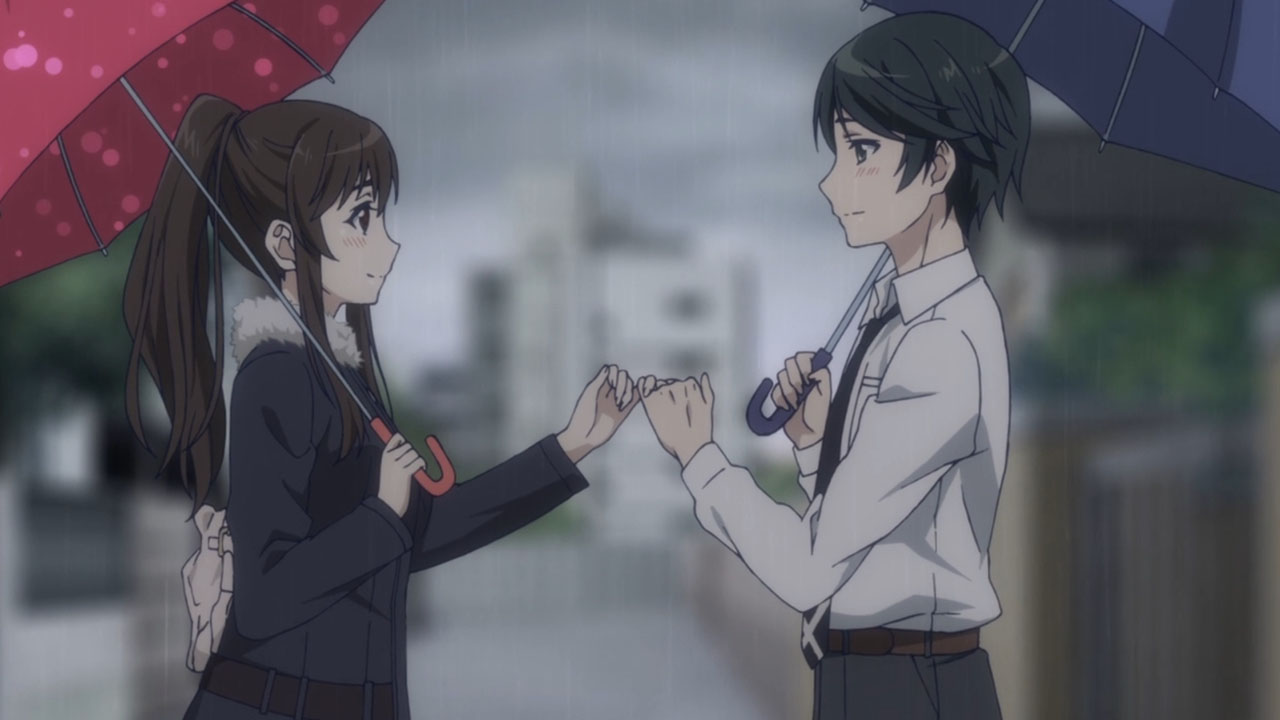
Sorry if this sounded like a rant more than a review, it is just that there are little anime that leave me feeling sour like this. Good anime often leave you with a hole in your heart, wanting more--Fuuka will leave you wondering why you finished it in the first place (if you did not drop it that is). I would not recommend anyone watch this. I feel like a part of my body was sucked away. I feel like I was rejected, not Koyuki. If you want an anime with a similar plot and does a love triangle better, I would recommend White Album.

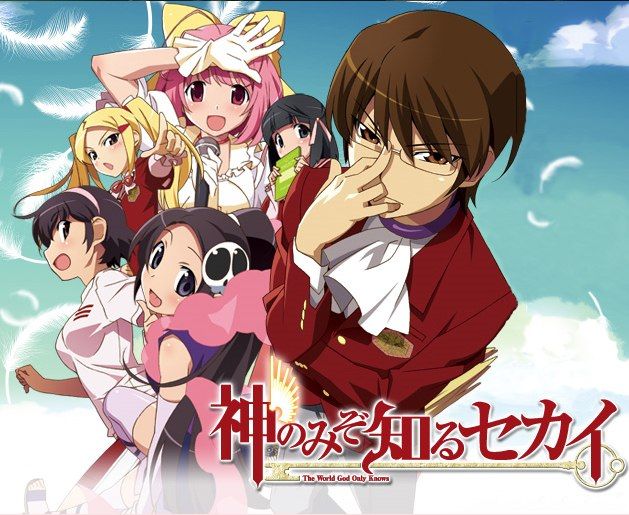
The World God Only Knows (I will be calling it TWGOK for the rest of the review for simplicity reasons) is a very simple anime. Its MC, Keima Katsuragi, is a ‘dating sim pro’. With over ten thousand virtual heroine’s hearts ‘captured’, Keima is known as ‘The Capturing God’ on the internet. One day, while answering an email about a challenge to ‘capture a girl’s heart’, he unwillingly signs a contract that came from Hell when he replies to it. A demon from Hell, Elucia de Lute Ima (Elsie for short), is assigned to help him capture evil spirits. The evil spirits that he has to catch are hidden within the girl’s hearts. The only way that they will come out and be ‘captured’ is if Keima is able to ‘capture’ their heart by being kissed by them. If he fails his contact, the collar that he suddenly has on his neck will cause his head to fall off.

As compared to other anime of the rom-com kind, the main character, Keima, is the one who makes TWGOK special. While Keima only has one hobby (gaming), he still maintains having an actual personality by being a genuinely interesting person. His analytical way of carrying out his ‘captures’, not only in-game but in real life, contrasts the typical ‘dense MC’ archetype of being clueless. Due to his circumstances, he goes out of his way to get girls to form crushes on him, not get them simply due to being the MC. At the beginning of the anime, he has no interest in ‘real’ girls--not because of past rejection or a nihilist viewpoint--but simply because to him, they could never compare to girls in games. Keima has a flawed worldview, is socially stupid, and does not have any plans for the future besides play visual novels, but these points only make him more likable as an MC, compared to an MC with no personality that is considered ‘safe’. His partner, Elsie, is the perfect foil for him. While she is airheaded, she is very reliable when it matters the most. She deeply cares for him and genuinely wants the best for him, although he does not appreciate her back.
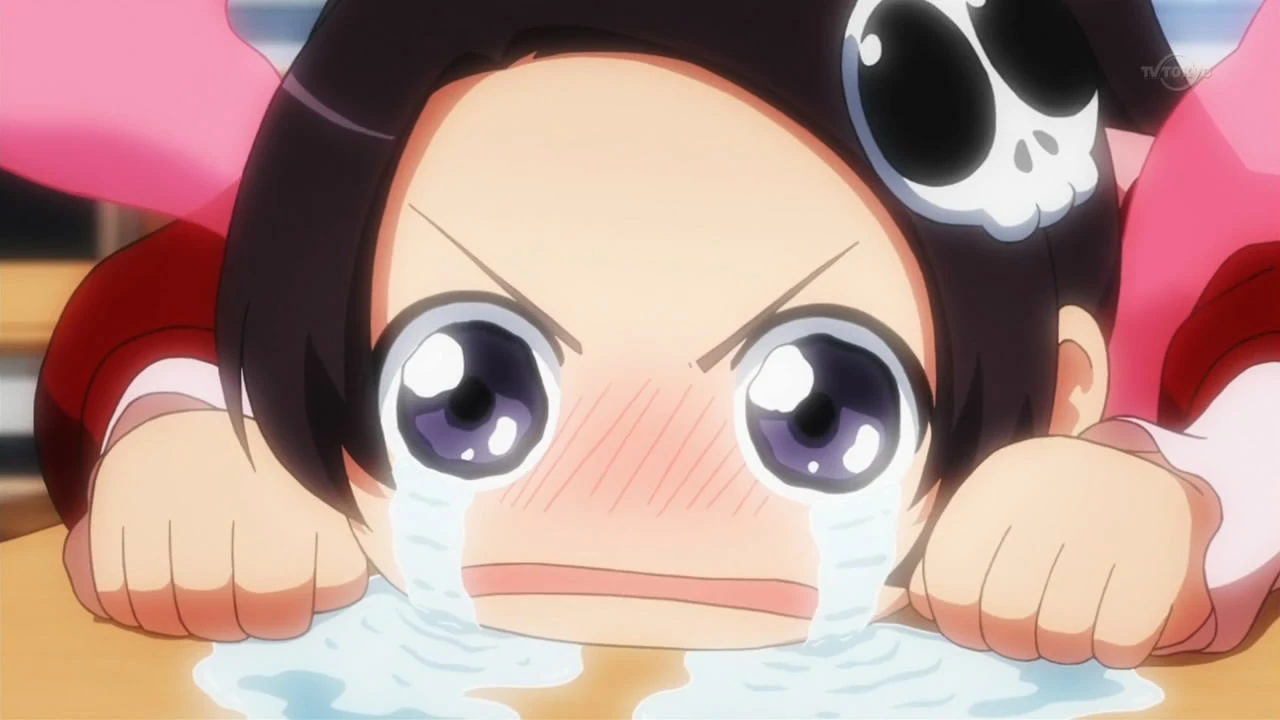
The general flow of TWGOK goes like this: Elsie finds a girl that has a spirit hiding inside their heart. Keima then has to find a way for the girl to open their heart to him. Once they like him enough to kiss him, the spirit is pushed out from the void inside the girl’s heart and is captured by Elsie. Although Keima has no real-world experience with girls, he has years of experience in wooing girls in games. Keima uses the knowledge that he has learned from playing hundreds upon hundreds of visual novels to get close and make a girl like him. Keima essentially uses his game knowledge to act like a pick-up artist (although his goals are much more honorable and his methods are way more kosher). When the girl’s heart is rid of the evil spirit, they also lose any memory of interacting with Keima and falling in love with him. This is convenient in many ways; It allows the girls to become a support role afterward, so they do have to be dragged around as a part of his harem later. In my opinion, it is great that girls do not stay attached to Keima after their arc is over, since it would severally drag the anime down and take away what makes it fun to watch. Also, Keima does not want a real-life harem to begin with--he could not care less about reality when he has his games.
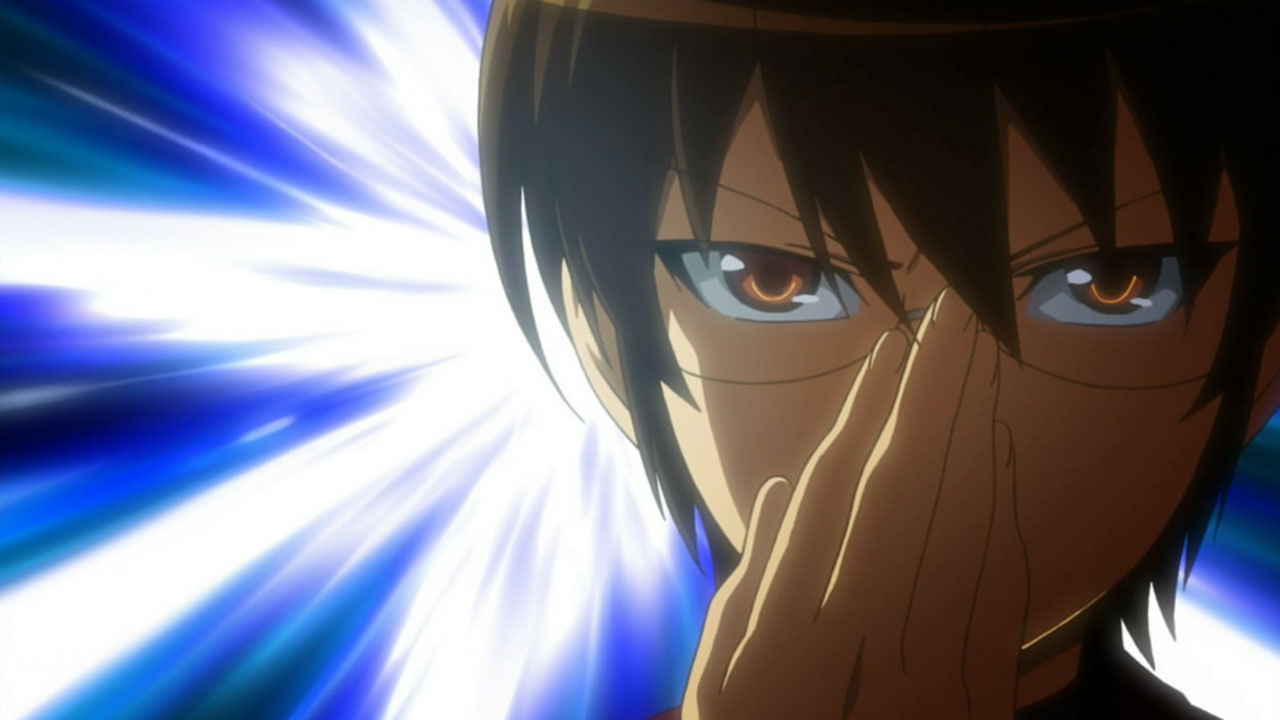
Perhaps the best thing about TWGOK is that it does not take itself too seriously. While there are some significant moments in every arc, TWGOK maintains a ‘cartoony’ (for a lack of a better word) feel. It is in its own world, very similar to ours, but not quite exactly the same. It parodies various visual novel games and tropes that are often in them, but as a tribute rather than belittling them. Instead of trying to be ‘good’, TWGOK instead tries to be ‘enjoyable’. It accomplishes both in the quest of achieving the later.

TWGOK at its core is a simple anime. It is very easy to follow and is a great anime to watch if you want to binge one. While it is not the most rememberable anime, TWGOK is a very enjoyable and fun one. The manga is also worth checking out if you enjoy this anime as much as I did.

Mahou Shoujo Madoka Magica is one of the most popular anime to the released in the last ten years, and is by far the most popular mahou shoujo (magical girl) anime to be released this millennium. With a spin-off anime, Magia Record, currently airing (as of Winter 2020), I feel like a rewatch and review of the work that it is based on should be in order. Before I get started, I should state that the consensus of this anime by the anime community is that Madoka is either good or VERY good. It IS one of the most popular anime in the last decade for a reason. With that out of the way, let’s get into it.
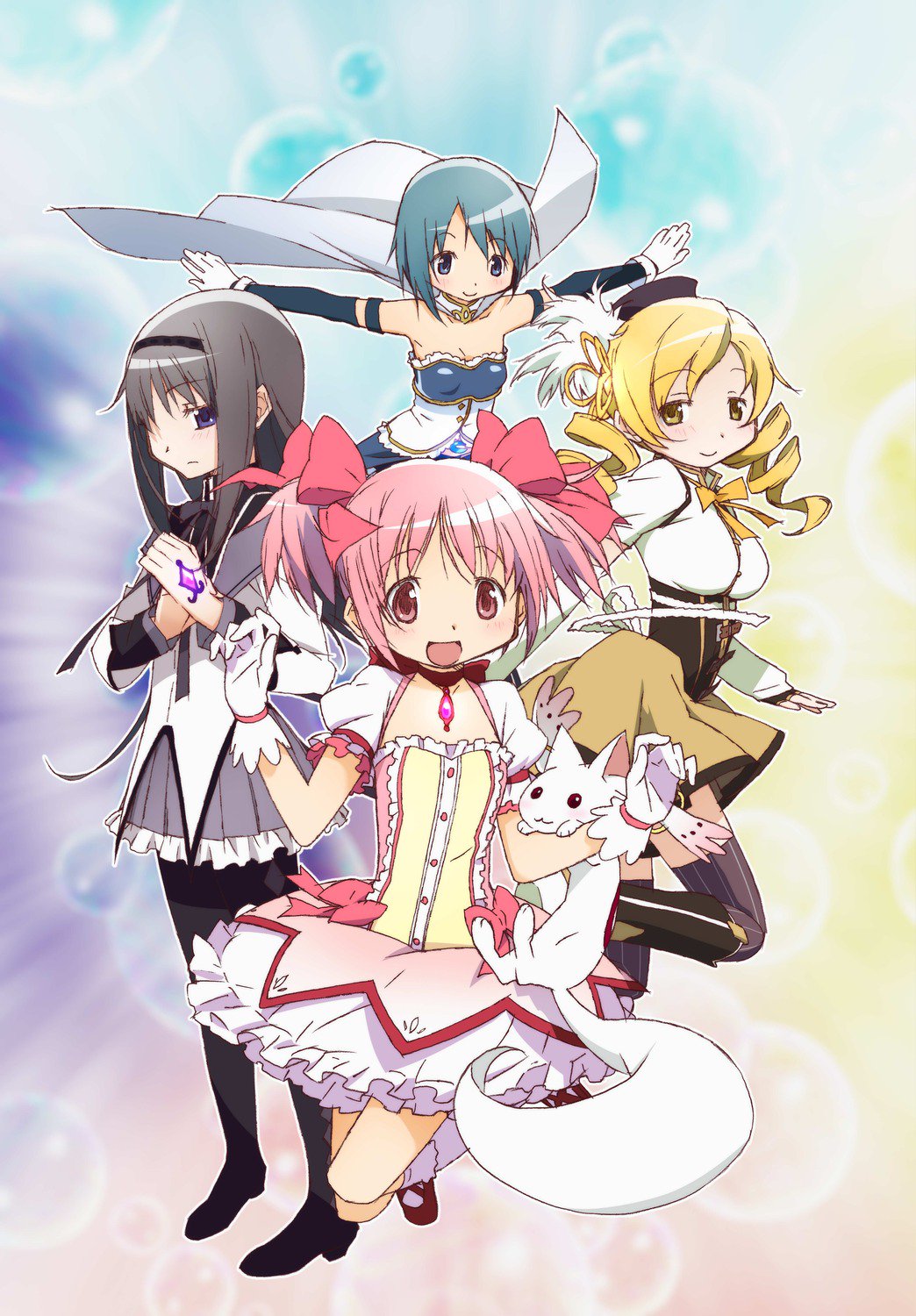
If you could become a magical girl, would you? You get a wish granted for becoming one, so, what wish you want to be granted? A billion dollars? A cool and rich boyfriend? For your friend to overcome an illness? You can wish for anything in the world, all you have to do is become a magical girl in return. Now, being a magical girl is not easy. You have to fight witches that can kill you if you are not careful. You have to kill them too because the ‘grief seeds’ they drop purify your ‘soul gem’, a container that contains your powers as a magical girl. You have to collect these grief seeds, or you will die. You will not have time to hang out with your friends or date after school since you will be spending most of the time patrolling danger areas and fighting witches. If you could become a magical girl, would you?
In Mahou Shoujo Madoka Magica, Madoka Kaname has to answer that question. The first scene of the anime is a dream, where Madoka watches a mysterious black-haired girl fighting a monster that looks impossible to beat. A mysterious cat-like creature watches with Madoka from afar, telling her that the only way she can stop this is by becoming a magical girl. When Madoka goes to school that day, she is stunned that the girl in her dream, named Homura Akemi, turns out to be a new transfer student in her class. Even more stunning, after school, while hanging out with her friend, Sayaka Miki, Madoka hears a voice calling her for help. Madoka goes to an abandoned part of the shopping mall where she is, where she finds the cat-like creature from her dream, named Kyuubey, is wounded due to Homura trying to kill it. After Kyuubey is saved by a magical girl named Mami Tamoe, it is discovered that Homura is also a magical girl. With that in mind, Kyuubey asks Madoka, and Sayaka who is also there, if they want to become magical girls.

You have probably heard this a million times before, but Madoka is considered a deconstruction of the ‘magical girl’ anime. While I am not an expert in magical girl anime, I can see where this take comes from. In Madoka, being a magical girl is not glamorous or cool like in other magical girl anime. Instead, it is more like a combination of the worst aspects of the mafia and the gig economy: In exchange for a granted wish, you have to start fighting witches regularly. Once you become a magical girl, your life will never be the same.
Moving on to the characters--the main five girls in Madoka are perfect for their role. They are not all likable, but that does not matter. They all have simple, yet moving, personalities which will keep you engaged while watching. You will remember all of the five girls’ names years after you watch Madoka, due to how rememberable it is. In a medium with so many forgettable anime and characters, Madoka will have a lasting impact on you.

Madoka Kaname, the girl the anime is named after, is the main girl. She is a selfless girl that wants to be a magical girl, but does not know what her wish would be. She does not have any particular talents or skills and believes in everyone.

Sayaka Miki, Madoka’s best friend, is a passionate girl that sometimes says/does before she thinks. She is protective of who she cares about and has a hero complex.
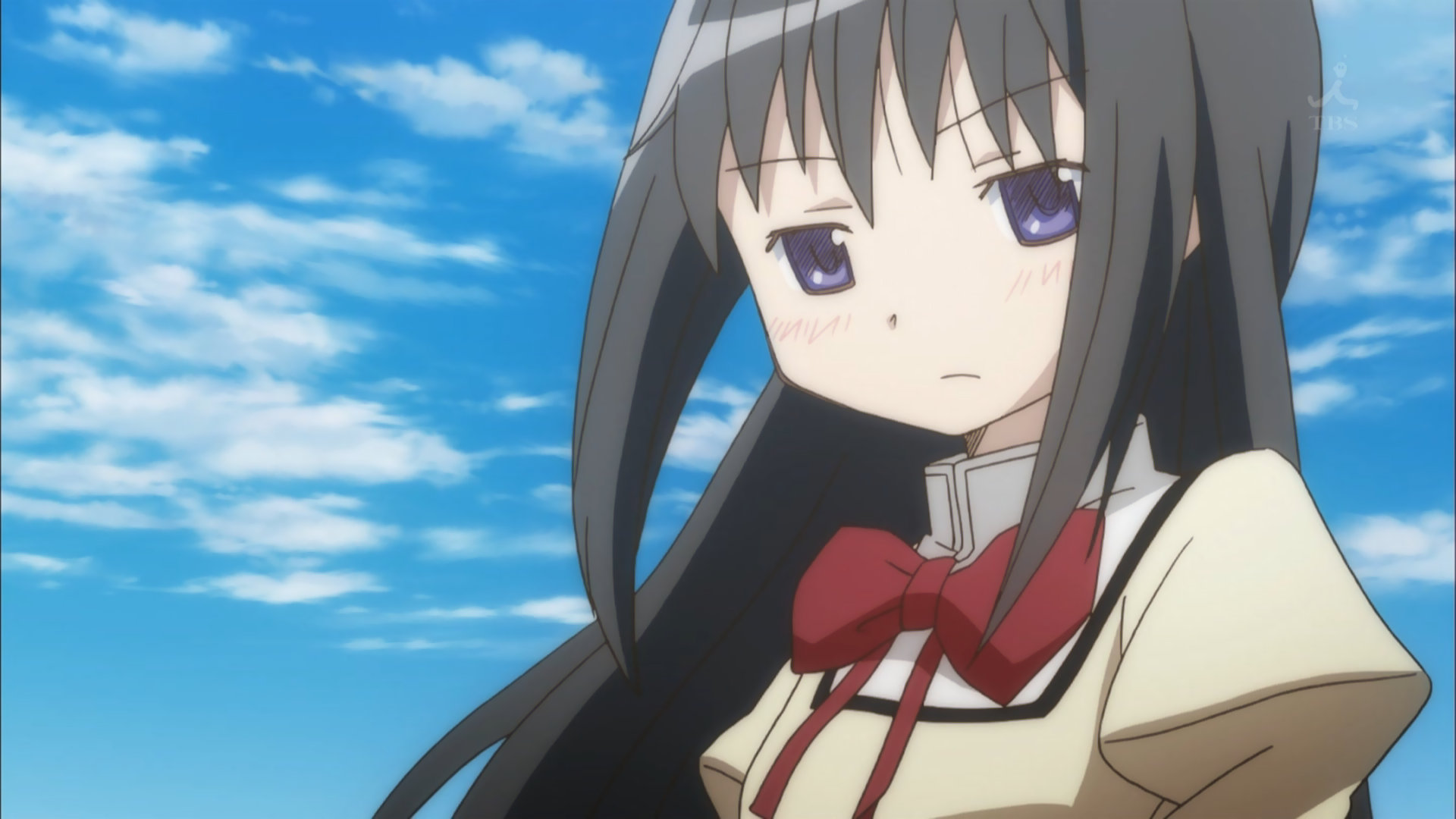
Homura Akemi is mysterious. She also seems to know everything, being able to predict if and when Madoka will be in trouble. She wants to prevent Madoka from becoming a magical girl at all costs for reasons unknown.

Mami Tamoe is Madoka and Sayaka’s senior. She has all of the qualities of an upperclassman, taking both of them under her wing while she does her magical girl duties. She is the model magical girl.
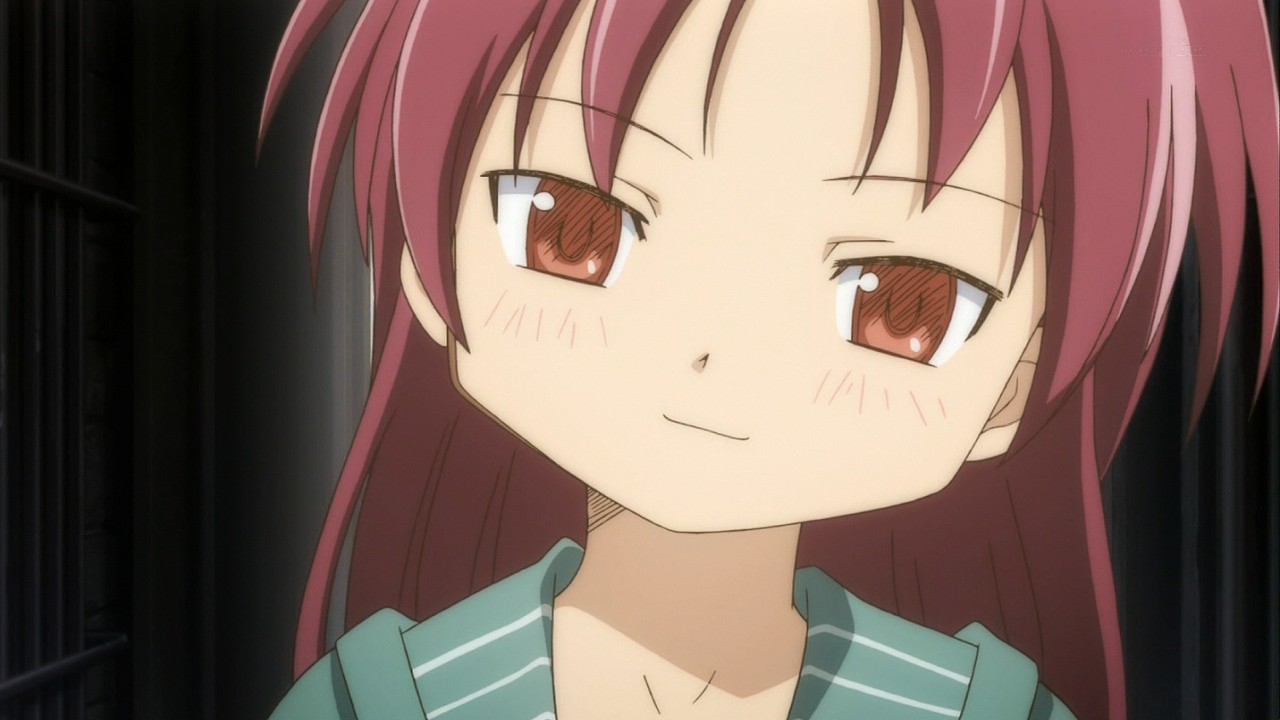
Kyouko Sakura is a newcomer to town. Being a realist, she operates as a magical girl in a way that benefits her, rather than Mami’s idealist way of benefiting all of those around her. Often eating something.
Being a near-decade on ever since Madoka aired, the shock value that the anime had when it first aired has died down a bit, since most anime fans have seen it at this point. With that being said, Madoka is still an absolute must-watch. Anime that are truly excellent will still move you, even if you know what you are watching is not what it seems (or if you are spoiled). Rewatching Madoka , it still moved me like few anime (or movies and games for that matter) have. It perhaps moved me more than watching it the first time, since I have matured since then.

While Madoka is deep, it is not so deep that it comes around as pretentious. Debates about individualism, selflessness, and the emotions that every person carries plays a huge role in Madoka . While it is not difficult to follow, Madoka is still very thought-provoking and relatable.
Madoka is many things that I can not explain to you without spoiling it. What I can say is that it is one of the best anime that I have ever watched. With cute art to lure the suckers in, and a well-written story that will grip you emotionally. Stories with Madoka’s nature tend to suffer from narrative issues like plot-holes, among other things, but Madoka avoids having any glaring flaws. The only hole that may appear is the one in your soul after finishing Madoka (okay, sorry, that was a bit corny.) Thankfully, there are three theatrical movies (first two that are recaps, and a third one which is an original story), and a spin-off anime (Magia Record) to fill that gap. Madoka has had staying power in the anime fandom ever since it aired for a reason. You are missing out on one of the best anime in the last decade if you have not watched it yet.

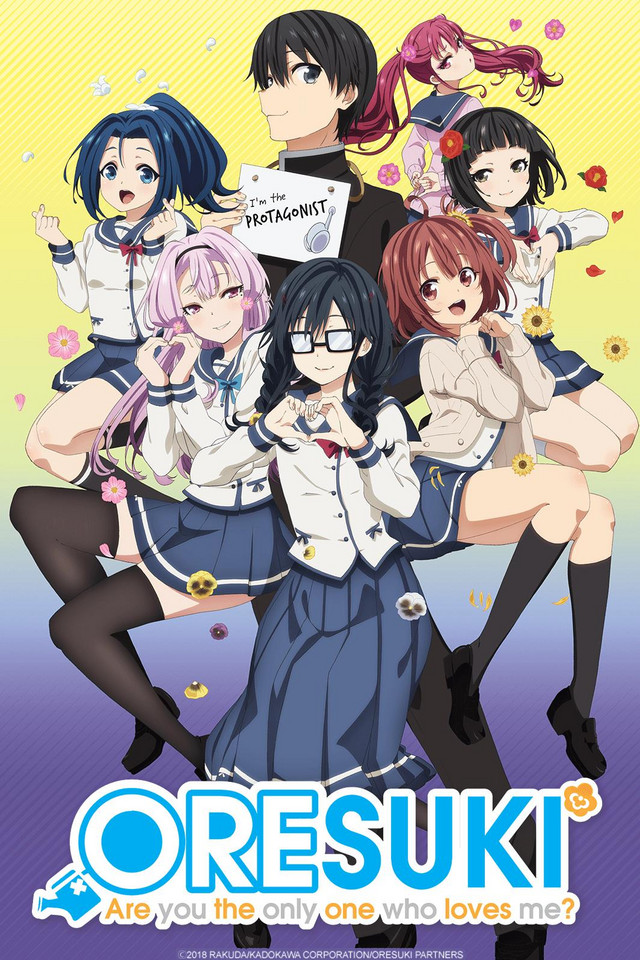
For about ten minutes, I was watching Oresuki and thinking “This is the most cliched anime that I have ever watched”. The main character, Joro, gets asked out by his childhood friend, Himawari, and the student council president, Cosmos, out on dates for the upcoming weekend on the same day. Joro’s aloofness, the way he is soft-spoken, and the trademark main character denseness just took the icing on the cake for how bad this anime was looking. But then Oresuki did a hard 180 and showed me something different.
On both of the dates, the girls confess to Joro that they like his best friend, Sun-chan, and that they want him to set them up to go out with him. Upon watching this, I was shown the true nature of this anime. For one, the gag of the ‘confession bench; is one of the funniest gags I have seen in an anime in a while. Also, it showed Joro’s true nature--a boy that has been trying to curate his own personal harem with girls of all tropes. His put on as a stereotypical MC was just an act, and he thought that his hard work and diligence were going to finally pay off when his childhood friend and the student council president confessed to him. When his fantasies are shattered, we are shown a petty and antagonistic main character. Joro is a very interesting main character, especially for an anime genre where the main characters are often uninteresting on purpose. His unfriendly manner and abrasiveness are somewhat more inviting and make him more likable than a washboard MC that everyone can self-insert into.

This is the gist of the show for the first few episodes. Oresuki parodies the rom-com/harem genre very well in the beginning. While Himawari and Cosmos do not like Joro, he has Pansy, a (and possibly the only) volunteer librarian for the school library (and his stalker), who loves him. She confesses to him (on a similar-looking bench that is in the library for some reason), telling him that she first grew a crush on him at the final game of the regional baseball tournament the year before (the baseball tournament is also a running gag). While the love is not requited, he still comes to the library daily due to her having potentially damaging information about him. What comes after that is a complicated love polygon and double-crossing on every side. This part of the anime is the best by far--Oresuki pulls of parodying rom-com and harem anime perfectly. Unfortunately, after that, it starts falling into the trap of being what it is parodying.

There are too many characters in this anime to give each their own individual paragraph, so I will try to briefly summarize them in this one-- Joro, which I have already gone over, is the main character of this anime. While he is unique in the way that he actively tries to acquire a harem instead of passively acquiring one and that he acts like a villain at times. He still is MC-like in the way that he goes out of his way to help others, and in the way that he has no distinguishing hobbies. Himawari is his childhood friend, who is also very bland. Cosmos is the president of the student council. She meticulously plans out everything she wants to do and talks like a general from the Tokugawa period when she is nervous. Pansy is Joro’s stalker, and is a librarian for the school. Sun-chan is Joro’s best friend and the ace pitcher for the school’s baseball team. Asunaro is a reporter for the school’s newspaper, and engages in a bit of yellow-journalism from time to time. Tsubaki is a transfer student that runs a skewer stand with her family. Sasanqua is Oresuki’s only tsundere--she is always failing to ask Joro on a date. Tanpopo is the school baseball team’s manager and an aspiring idol. Hose is a student from another school that comes to help Joro in times of need.

Can you see the problem that this anime may have? In the paragraph above, I had ten characters that I briefly mentioned. Of the seven girls that are in there, six of them are implied to like Joro by the end of the anime. For an anime that seemingly wants to parody the harem genre along with the rom-com genre, it gradually falls into the same hole of what it is parodying. Also, six girls is a lot to fit into a twelve-episode anime. Oresuki tries to manage this by not having every character in every scene, but it nevertheless still gets crowded later on. At least everyone has nicknames so they can all be easily referred to.
The ending to Oresuki does leave much to be desired. To be fair, an OVA will be coming out later in 2020, finishing the arc that the anime ended in the middle of. There are four main arcs in the anime, with the first one (the one I mentioned in the first two paragraphs) being the shining one. The other three arcs vary from good to okay, but the ‘holy shit’ factor of the first one will leave you wanting to binge the whole anime in one night. Oresuki’s story is good, it just goes downhill after a spectacular first arc. As stated before, Oresuki decides to go the route of what it is parodying and turns into a harem anime.

Oresuki is a smart anime, but it is not as smart as it thinks it is. Joro seems to lose his edge for most of the latter half of the anime, it only coming back when he needs it the most. The luster that the first arc ends on slowly wears off through the rest of the nine episodes. By no means is Oresuki a bad anime, but it is disappointing what a downgrade it has from its first arc onward. I am not a fan of Joro gaining a harem after the anime making fun of him for wanting a harem for the first several episodes, even if his harem is more passive than other anime harems. The sheer amount of characters in Oresuki makes it hard to pick hard favorites too. There is only so much screen time--someone is going to end up less developed in character relative to others. That being said, a second season can potentially solve this issue.
With that all being said, I do not hate Oresuki. It is a very funny anime. It has excellent gags, and Joro is one of the better main characters out there. I just believe that Oresuki is trying to be too many things at once. Being a parody of a harem anime, it fails in that Joro gains a quite big list of girls who like him throughout the anime. As a harem, it fails because we are not given enough screentime to grow attached to any girl that is not Pansy. As a comedy though, it succeeds on nearly all levels. It nails most anime cliches perfectly, even if itself falls into the same traps that what it is parodying. I genuinely hope there is a season two, so we can see how Joro deals with the harem that originally wanted to get (The lyrics “Be careful what you wish for, ‘cause you might just get it” come to mind.)