— — — —— — —
×
— —— —

What would it take for society to stop failing its children? A law, maybe. A system. An examination — rigorous, mandatory, conducted by children themselves — that certifies who is and isn't fit to be a parent. That ought to do it.
It doesn't.
That gap — between the system designed to protect and the harm that persists anyway — is where Hoshikuzu Kazoku lives. Aki Poroyama's ten-chapter manga is set in a near-future Japan suffocating under declining birth rates and rampant child abuse, where the government's answer is a parental licensing programme: written exam, home inspection, certification. The evaluators conducting those inspections are children themselves, trained to provoke, observe, and judge. The premise sounds like satire. It is, quietly and devastatingly, also a mirror.
Because even licensed parents abandon their children. The system certifies people, and some of those certified people still fail. Abuse does not wait for paperwork to run out.
This is the manga's secondary argument, running underneath the central story like a current — that the infrastructure of protection is not the same thing as protection. The harm in this world does not come from the uncertified and the disqualified. It comes from people who passed. People the system approved. What Poroyama is drawing, chapter by chapter, is the distance between a society that believes it has solved something and the reality still quietly bleeding underneath.
Then there is Chisa. Treated with suspicion and judgment by the people around her not for anything she has done, but for what her mother did. Poroyama draws this without commentary. She simply shows you what people do — the sideways glances, the assumptions made before someone opens their mouth — and trusts you to be uncomfortable enough to sit with it.
The manga wants you to see the difference between judging a person for who they are and judging them for what you heard about them. It makes that argument not through dialogue or thesis statements but through accumulation — scene after scene of characters who deserve to be seen clearly, surrounded by a world that can't quite manage it.
Dai's arc across the ten chapters is the manga's quiet structural achievement — a man slowly learning to want things for himself, shaped by the strange intimacy of being evaluated, observed, found wanting, and found worthy in turn. His development earns the ending in a way that only registers fully once you've reached it.
Poroyama's art is deceptively soft. Round lines, warm faces, a visual register that whispers slice-of-life while the story beneath it presses on a bruise. The dissonance is not accidental — it is the technique. You trust the gentleness of the page, and so the weight, when it arrives, has nowhere to deflect.
Hikari is the child examiner assigned to Dai and Chisa. Hikari is also an AI grown from fungus — a mycelial consciousness placed in a child's body, cycling through temporary families, learning to read what love looks like from the inside.
What breaks you about Hikari is not the reveal itself. It is what comes after. Hikari was abandoned by the first family he was placed with — a licensed family, a family the system approved — in the quiet, bloodless way that is somehow worse than violence. No drama. Just a door, and then absence. And when Hikari is later offered the chance to become more human, the answer is no. Not from coldness. From something that reads uncomfortably like self-knowledge: Hikari already understands people well enough to know that being more like them is not the same as being better.
A fungal AI that can feel, that chooses not to become more human, that still fails the people it was trying to protect — this is the image Poroyama leaves you with. It is not a comfortable one.
And then Hikari fails Dai and Chisa. Not through malice. Through the limits of what even the most attentive witness can do inside a broken system. The ordinary tragedy of being too bound, or too late, or simply not enough. It stays.
Hoshikuzu Kazoku is not a story about a dystopian future. It is a story about right now, dressed in one. Every failure in its world — the licensed parent who abandons, the community that punishes the daughter for the mother's crime, the system that certifies and still cannot guarantee — is a failure you can find without leaving your street. Poroyama is not building a cautionary tale. She is holding up something that already exists and asking whether you can see it clearly enough to be ashamed.
The ending does not resolve everything. It resolves what it has earned the right to resolve, and leaves the rest sitting exactly where it belongs — in the reader, unanswered, which is the only honest place for it.
9 out of 10. A manga this short has no business hitting this hard — and yet here we are. Ten chapters. An afternoon. And then days of sitting with the question it leaves you: not what the characters should have done differently, but what we should.

The new short anime by none other than Sorachi himself introduces us to a new world where angels seek out souls that haven't passed on to the afterlife for one reason or another and decides to explore the complications/reasons that they decide to hold on before the inevitable. In this world angels chase down those souls and without any remorse send them to the afterlife except our 2 main leads that investigate, understand and eventually help those poor souls with their regrets or final requests. Once again Sorachi is at his favorite playing field he once again throws a genre cocktail at us, one that encompasses his many styles of comedy from meta/wall breaking, slapstick, absurdist satire or his well known parody skits with a mix of drama and emotional character arcs that will once again break you completely just like gintama managed to do every other arc when it got "serious". Coming of from Ginpachi-sensei i was waiting for a pure comedy fest but ended up getting invested in characters i sometimes met in that same episode or with minimal build up considering this short series is just 7 episodes long. In the first episode it covers the one shot manga that sorachi wrote and after that i believe its his own stories/world building he created solely for this anime that help build upon the first introduction to this new world. Before getting into spoilers i will give props to the comedy timing as well as the compelling characters that make this stand out from other comedy anime, once again sorachi seamlessly weaves in emotional backstories and relationships of characters with minimal screen time, making you not only care and empathize with them but even passing on messages about regret, time or righteousness in a world where human lives are treated like nothing but numbers by the exterminating angels trying to climb up the hierarchy ranks.
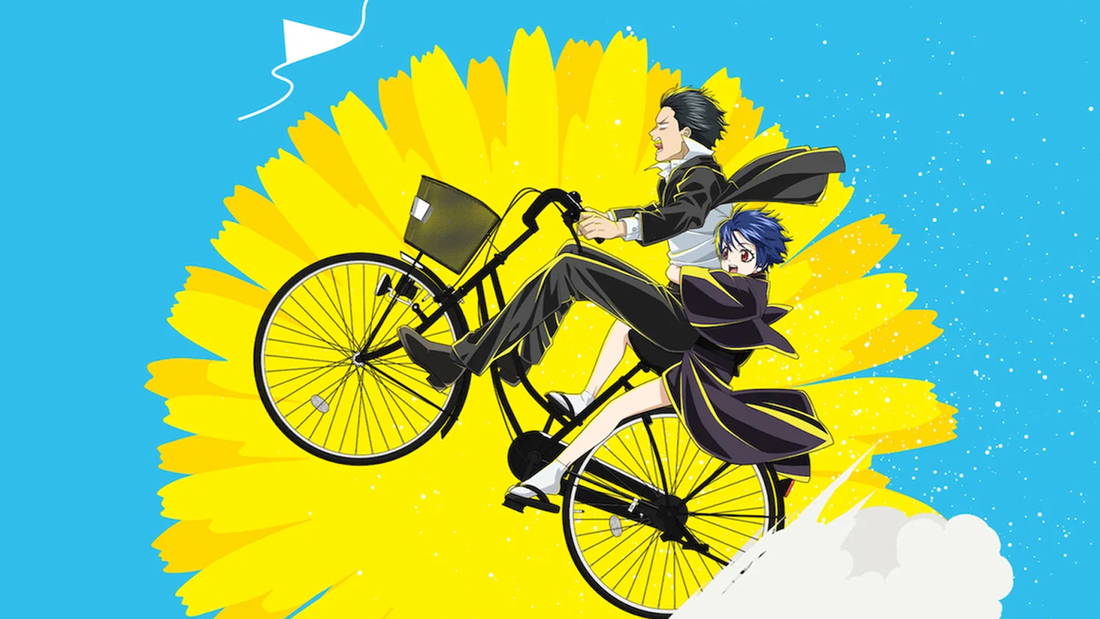
Starting off with the opening of the show i can't help but instantly vibe from the very first few seconds and even more so with the follow up of the wonderful dance moves from our main characters. Beautiful, upbeat and funny with each tiny movement and "camera" angle it serves as a great introduction to our anime as well as what is about to come in the upcoming episodes. Almost every episode follows an episodic adventure with a spirit that hasn't passed onto the afterlife and here come our main characters that not only decide to listen to those people's feelings but even help every spirit with a regret or request they might still have from their life fulfilling it and making them pass on peacefully. This brings a lot of emotional and hilarious moments where we get to discover a lot of different perspectives in life from characters of different age or status that never fails to disappoint or bore you in any way.
We also get to meet our 3 main characters acting as the blueprint of the relationship of Gintoki, Shinpachi and Kagura with mostly the same traits and comic skits as Sorachi's later work. In my opinion this doesn't make this show any less appealing cause you have already experienced it but its fascinating seeing an artist's work before its really finalized in their own head. So many scrambling ideas and little moments alongside easter eggs for Gintama and of course other shows with the parody skits we know and love is always a delight. The story itself when it tries to conclude isn't anything to write home about, its your typical cliche villain fight off where they want to destroy the world for one way or another and get redeemed as a good misunderstood person when the world is saved. If you are looking for an overarching plot with great twists or an amazing new world with its own rules and complexity then you will be disappointed because it never was the intention of a show like this. If you enjoy the comedy aspects that Gintama has or the interweaving of emotional dramatic backstories with action and comedy skits to bring back the laughs after said backstories are revealed then look no further. I will try and talk about the strongest suit of the anime which are the characters and justify it alongside the plot and writing decisions below.
Misaki in the beginning seems to be more of a comic relief character being the prototype of what kagura would become as a chibi destruction machine that moves at lighting fast speeds and obliterates everything when someone is in danger. I loved how much of a slacker she is alongside Tatsuo teasing him as the captain by name only as she doesn't want to deal with duties most of the time and would rather play her video games. I love episode 4 where we get to see her backstory and understand the character a little more with how she came to be the captain of dandelion squad as well as a glimpse into Tetsuo's decision making that make him a compelling character as well. The moment where she reunites with her mom trying to play it off without showing who she is brings a moment of tension and with just hearing Misaki's name the mother immediately remembers her daughter and everything that they had been through only to have her memories erased after the heartfelt confrontation and apology to her daughter.
Masaki is another interesting character with a memorable introduction that serves as the "bad" guy watching over our protagonists to make ends meet with their work only to get completely mesmerized by how they accomplish their work instead. He gets pressured by his father to meet quotas and improve efficiency, to throw his emotions away if they don't align with work completely disregarding his own beliefs and feelings in the process. From episode 5 were we meet with the evil scientist its the only time he ever takes matters into his own hands eventually trusting a criminal thinking he is doing the right thing and never learning the truth. This innocent lie from Tetsuo is what finally pushes Masaki forward to follow his own path just like his mother taught him and live his short life the way he always wanted. The robots that his father despised turn out to be one of the most efficient ways of getting people to move on with a heartfelt memory shown to them right before that. He changed from an emotionless robot because of the inspiration our 2 main heroes bring him in this dull unforgiving world where they were the only angels to get to know the wandering spirits and help them without questions just because its the right thing to do. Souls aren't objects they are the people's hearts and when their final moments are in fear of a robot apocalypse it turns out they cant just be reborn again. Masaki finally discards his manipulative father joining Tetsuo to defeat the evil spirits and bring order back into the human world teaming up with everyone they can find. I have to say i am not a huge fan of the ending villain being spirits that took over the father cause its the same cliche we have seen countless times but i digress since its overall a conclusion you have to give in a short series without too much explanation.

Tetsuo is by far my favorite character, the blueprint of what gintoki would become with all his goofy moments alongside the seriousness when the situation demands it. If there is anyone you can rely on to do the correct thing and always act unclouded with personal feelings its always this guy. He instantly makes the decision of leaving his status behind to help innocent Misaki, downgrading himself completely as a laughing stock cause its the right thing to do. No hesitation, no questions but always following his heart in anything he does you cant help but cheer for him not because he is the main character and the "good guy" but because his charm as well as how relatable he can sometimes be is enough to convince you to like him. Even when Masaki makes the mistake with the crazy scientist he lets the situation unfold ready to clean up someone else's mess cause its the only time Masaki trusts someone and believes in someone since his youth. In that moment Tetsuo decides to make him grow out and be more sympathetic for once even when he is gonna hit his head in the wall with that decision, he wants to help and understands that he can make the bad outcome disappear anyways. Tetsuo is the guy you can always rely on, a great friend and a role model not only for his world but ours, it is exactly why i love Gintoki so much as well, he teaches you life lessons, acts goofy when he wants to and always makes sure to do the right thing for the right people in his life without any hesitation whatsoever.
Overall the characters are interesting enough with their own little stories, from Masaki with his story of constantly trying to meet expectations of others and finally learning to chase his own path, Misaki's story with her mother and the redemption of learning to let go of your loved ones even if that deeply hurts as well as Tetsuo learning to live a life without regrets embracing the right in a world where most of it might be evil but you can always try to fit in with people that have a shining light of righteousness inside of them. If you are looking for a deep philosophical understanding of life and death or an expanding world building in the realms between life and death then this wont be for you. On the other hand if you are looking for surface level emotional stories and comedy throughout the show there is no way you are not gonna be left with a smile on your face or at least with the feeling that you didn't have a fun time. It might be experimental and the first ever one-shot manga Sorachi wrote testing the waters till he improved enough to make something like Gintama but its still fulfilling enough to deserve a watch in this jam-packed season of great new anime in Spring 2026. If you enjoyed this anime and its structure be sure to check out Hanada Shounen-shi which has a similar premise mixing comedy and emotional send offs.

Whatever you do don't end up in a place like this, trapped inside a world of what ifs but instead live a life of no regrets.~~~~

Chainsaw Man both as a manga and as an anime I've held close to my heart for a while now, it was one of the first mangas that I had picked up and truly enjoyed, and to see now almost 5 years later where it's at now, is something that any fan is happy for. To me Chainsaw Man has what little other shows have, that perfect line between full force action and the sonorous beauty that evokes emotion within the viewer.
I don't consider myself to be a pro film critic by any means, this is my first review after all (I was inspired by a certain someone here to start writing reviews, you know who you are). But you don't need to be a pro to feel moved by something, to truly look at something and enjoy it on a much deeper level. I simply write how I feel.
The Reze arc is a story about what? Love and betrayal, Good versus evil, A spider and a butterfly or even chainsaws and bombs. It tells a story that can be as intricate as the viewer wants it to be, as for me I see it as a love story torn by the hands of death bringing the viewer back into the harsh world the author put us in, damn you Fujimoto.
As a huge fan of Fujimoto’s other works such as “Fire Punch”, “Goodbye, Eri” and “Look Back” I still think there's this ambiance that's present between the action in Chainsaw Man that's just isn't there in his other works (not to put his other works down as I believe his other works are great in their own ideas and context).
I like to think that being a true fan of something means being able to criticize it in some way or form to which I normally would have for Chainsaw Man’s previous 12 episode season However I've found it pretty hard to find criticism in the Reze arc when analyzed solely on its own.
Overall I found the continuity of animation, character design and character development to be top tier. The film sets a great tone that evolves over the course of an hour and forty minutes. I believe there is enough exposition and context that one could enjoy it without having seen the previous season (Although I would not recommend this).
Even after all this time I haven't really gotten over the movie. It was the first time I ever watched a movie 3 times in theaters. It gave me a chance to really experience the film and to see things I hadn't seen before on a previous watch.
One part that I really want to touch on is the sound design & music. Sound plays a huge role in any great film, It's the ambience for scenes with no words, It's the height at the most climactic scenes, It's the soothing sounds reminiscent of a melancholic past. And sometimes it's the sound of rain that will blossom a flower, the calm before the storm so to speak. The music by Kenshi Yonezu & Hikaru Utada honesty brought the whole film together and just would not be the same without them.
You can really tell that the Reze arc as a film was truly a passion project, a feast for the eyes in various different ways and an emotional rollercoaster that I think everyone should experience at least once.

Summary: HAIKYU!! follows Hinata, a short and inexperienced volleyball player with unstoppable determination, as he chases his dream of being an ace like is idol, the "Little Giant". Alongside former opponent and rival Kageyama, a prodigy setter, he aims to restore the fallen powerhouse Karasuno High back to its former glory. Their contrasting personalities and shared ambition creates a dynamic partnership that drives forward the journey of their volleyball careers.
Characters (9/10): A standout point of this anime is the depth and layers added to each of its characters throughout the series. Both main and minor characters are written in a way that makes them feel human and relatable, as they struggle with their own thoughts and insecurities, making it easy to get emotionally attached to them, despite the fact that they can often be on opposing sides. Furthermore, the characters' unique personalities and comedic, complex relationships make for a very enjoyable watch. This is especially true when viewing how individuals interact with each other in competitive matches knowing the strengths and weaknesses of each other while in high pressure situations, where split second decisions are necessary.
Story (9/10): As expected of a sports anime, the matches are fast paced and intense, with pressure constantly being placed on players to perform in the moment. However, the show balances this well with training arcs, where bonds are developed, and periods of school life which excellently demonstrates how volleyball impacts their academic careers. Furthermore these glimpses of normal partnered with the inclusion of flashbacks and internal monologues during intense moments adds context and help viewers understand the characters’ journeys and emotions during key scenes.
Animation & Sound (8.5/10): Despite the noticeable changes in animation seen in later seasons, especially season 4 due to a 4 year time break in production, it stays consistently very good and the sound effects used during major moments perfectly encapsulate the atmosphere and helps the viewers immerse themselves in the dramatic volleyball games.

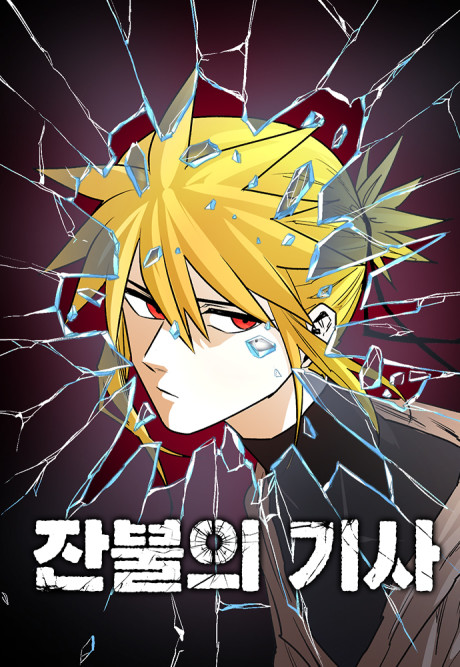
If you’re tired of the "overpowered protagonist" trope where the hero wins simply because they have a bigger sword or a higher level, The Ember Knight is the breath of fresh air you’ve been looking for.
It is a masterclass in psychological warfare, tension, and the art of the "bluff."
The story follows Nagyunn, a young man who is physically weak—painfully so. When his twin brother, Najin (a prodigious knight candidate), is murdered, Nagyunn decides to take on his brother's identity to find the killers.
The catch? Everyone expects him to be the god-tier warrior his brother was. Nagyunn has zero superpowers, zero stamina, and zero combat skill. All he has is his brother’s armor and a mind that works like a grandmaster’s chessboard.
Most manhwa resolve conflicts with a new transformation or a power-up. In The Ember Knight, Nagyunn survives solely through manipulation, observation, and gaslighting. He has to convince world-class killers that he is a threat without ever actually landing a meaningful hit. Watching him navigate a room full of monsters using only his wits is genuinely nerve-wracking.
The art style is distinct—sharp, moody, and highly expressive. The illustrator excels at "the look"—those moments where a character’s eyes convey a shift in the power dynamic. The action sequences are choreographed with a focus on positioning and physics, making every movement feel heavy and consequential.
There are no clear-cut "heroes" here. The world is populated by Knights who are often as terrifying as the villains they hunt. Nagyunn himself is a gray character; his obsession with revenge forces him to make cold, calculating decisions that keep you questioning his humanity.
The lore is deep but revealed naturally. It shares a universe with the author’s previous work, Epic of Gilgamesh, but you don't need to have read that to enjoy this. The power system is based on "Traces" and weapons that feel ancient and earned, rather than gamified.
The Ember Knight is a high-stakes game of poker where the protagonist is holding a 2 and a 7, but has convinced the entire table he has a Royal Flush. It’s tense, brilliantly written, and features one of the most compelling "weak" protagonists in the medium.
Final Score: 9.5/10
Ideal for fans of: Death Note, Tower of God (early seasons), and Hunter x Hunter.
A quick tip: Pay close attention to the dialogue. Half the "battles" are won through what Nagyunn says (or doesn't say) rather than what he does with his weapon.
The fact that the author gives limited information about the story and the characters at the early chapters really keeps me on my toes and maintains the thrill and suspense to look forward to reading the next chapter.

Hello everyone, this is my first time writing a review on this site and English is not my native language, but I really want to share my opinion about this manga. I'm just impressed. I hope I don't spoil anything, so I wrote everything simply and abstractly, without mentioning character names."
Great manga that I finished in 5 days, but it's being released… oops, what to do, I don't know. Well, in 10 years another 95 chapters will come out, oh well.
In terms of overall detail, I haven't read a better manga. The plot and worldbuilding are wonderfully developed. There's some real action after chapter 60, and before that it's a pretty cute manga.
What's pleasing is that characters develop and are fleshed out – no one just stands around doing nothing. Some mangaka like to repeat the same plot every 30 chapters, but that's not the case here. Here they develop characters, there are plot twists, every character will be explored. At first you think a character sucks, then you realize they're good. You wonder who the enemy is, who's lying, who has what secrets, why some characters act the way they do, and somehow everything gets an answer.
The manga isn't particularly cruel, it's actually quite cute. Over time, of course, in the best traditions, they hand the characters a bucket for tears. There's even some body horror, and they touch upon some mature themes.
What's cool is that they show how the magical world that the main heroine imagined falls apart, her perception changes, she matures, she faces difficulties – her facial expression changes from a naive smile to the very embodiment of hatred.
I'm very glad that the anime's release pushed me to read this manga, because it gave me many different emotions. I had fun reading it, it was cute, sad, interesting. In any creator's work, the main thing is that it gives an impact – how to put it – that the reader feels something. Indifference is the worst thing. Of course, many authors often give a simple emotion – hatred – and use it to hook the audience, repeating again and again how the hero is underestimated or bullied, or how everyone treats them badly, and this repeats over and over. There's none of that here. Here it's a parade of emotions – that's cool.
And there's also a stunning artbook.
So, 95 chapters read. Now I'll read slowly along with everyone else when new chapters come out.
I want to recommend this manga to everyone who craves adventure, who wants to read a good fantasy manga, who wants to experience a range of different emotions and enjoy stunning artwork. It's truly an excellent work in its genre.
The end.
10/10
Art 10/10
Characters 10/10
Character development 10/10
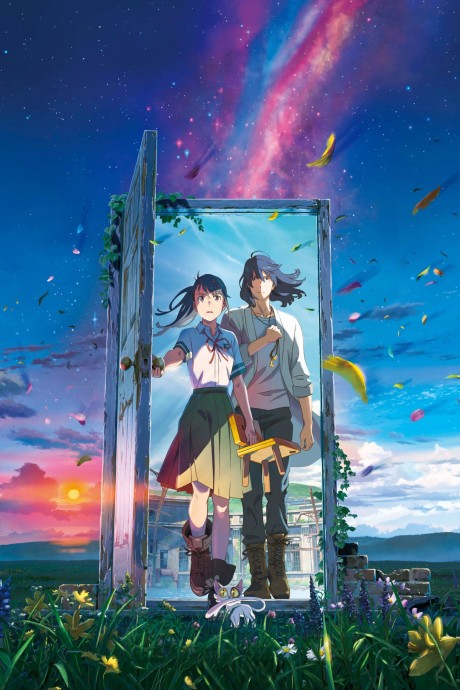
There is a moment in Suzume no Tojimari where a teenage girl looks at a three-legged chair — her childhood companion, now inexplicably inhabited by the soul of a young man she has known for approximately forty-eight hours — and decides, without much deliberation, to follow it across the entirety of Japan. If that sentence made you pause, good. It should. Makoto Shinkai's 2022 disaster-fantasy is exactly that kind of film: strange, gorgeous, emotionally sincere, and structurally maddening in equal measure. It is the work of a director operating at the absolute ceiling of his visual craft while simultaneously bumping his head against the limits of his narrative one.
The Visuals
Let's begin where the film is unimpeachable.
The backgrounds in Suzume are not animation backgrounds. They are something else entirely — closer to grief made painterly, to nostalgia given a color temperature and left to bleed across a frame. Dandelion Animation Studio produces imagery that makes you want to pause every third scene just to sit inside it for a moment. The abandoned resort at dawn. The ruined school overtaken by wildflowers. The endless cosmic corridor where stars hang like held breath. Shinkai has always been a visually gifted director, but here he arguably surpasses even Your Name in terms of sheer environmental storytelling. Light doesn't just illuminate these spaces. It mourns them.
The film understands, at a bone-deep visual level, that post-disaster Japan carries a specific texture of absence — the particular silence of places that used to hold people and no longer do. It renders that absence with aching precision. You feel the weight of the empty roller coaster, the overgrown classroom, the rusted gate. These are not just pretty backdrops. They are arguments the film is making about what it means to lose something so completely that the place itself forgets what it was for.
The technical accomplishment doesn't stop at environments. Nanoka Hara as Suzume delivers voice work calibrated with unusual care — never overselling the emotion, which is a genuine risk in a role that demands vulnerability without self-pity. The animation is fluid in a way that feels almost unfair. Action sequences carry real kinetic weight. Quieter moments breathe with the kind of subtle physical detail that separates great animation from merely competent animation. Whoever signed off on every frame of this film made the right calls. The craft is immaculate in a way that makes the story's failures more frustrating rather than less.
The following section discusses specific plot details and symbolic elements. Skip ahead to remain spoiler-free.
Where the film earns its most sophisticated points is not in its set pieces but in its quieter symbolic architecture.
Suzume's childhood chair — the one that eventually houses Souta's displaced soul — appears throughout the narrative with three legs instead of four. The film never announces this. It never underlines it or asks you to notice. But it is always there: a structural incompleteness, something missing that the object has compensated for so long it reads almost as normal. As an externalization of Suzume's grief — a childhood fractured by disaster and maternal loss, a wound so old it has calcified into personality rather than pain — it is more elegant than a dozen expository monologues would be. She has been standing on something broken for so long she no longer registers the tilt.
The time-loop revelation deepens this further. When Suzume discovers that the figure who handed her the chair at her lowest childhood moment was her own future self, the film arrives at something genuinely moving. The comfort she needed — the specific reassurance that she would survive, that she would grow up, that the incomplete thing in her would not be the thing that finally collapsed her — was never available from any adult around her. No one else could give it. Only she could. Shinkai constructs this with real delicacy, and in that single sequence the film justifies its more ambitious emotional aspirations entirely.
It is the kind of scene that doesn't reach for tears. It simply earns them.
The Problems
The door-closing mechanic opens with genuine eerie momentum. The sealed passages to a supernatural realm, the ritual containment of catastrophic energy, the mythology of the Keystones — there is something genuinely uncanny about the early sequences, a sense that the rules of the world are stranger and older than they first appeared. Then the film repeats the mechanic. And repeats it again. Prefecture, door, emotional speech, closure. What begins as ritual becomes procedure. By the time the climax arrives, the audience has already emotionally rehearsed it twice, and the third iteration has to work considerably harder than it should to land with any force.
Plot holes accumulate throughout with the casual confidence of a film that trusts its visual momentum to carry you past them. Often it does. The images are persuasive enough that you follow the logic even when the logic isn't quite there. But occasionally you surface, blinking, aware that something didn't add up and the film has already moved on without addressing it.
The following section discusses the film's climax and central relationships in detail.
The grandfather subplot is the film's most significant structural failure, and it is significant precisely because it is load-bearing. The climax leans on that relationship for its emotional weight — needs you to feel its full complexity in real time — but the film has given it the development space of a minor character. You can feel the machinery straining in those final scenes. The emotion the film is reaching for is real emotion, attached to real themes about family and guilt and the particular ache of people who love each other badly. But the infrastructure isn't there to support it. You cry at maybe sixty percent capacity, aware the whole time that you should be crying harder, and that gap between what you feel and what the film intended is its own quiet frustration.
Souta becoming a chair is, conceptually, a genuinely bold swing. A romance conducted partially between a girl and a piece of furniture, played with complete sincerity, could be audacious and darkly funny and emotionally resonant simultaneously. Shinkai doesn't quite commit to any of those registers fully. The result is a tonal no-man's-land — the absurdity isn't acknowledged enough to be funny, and isn't suppressed enough to be purely moving. You are being asked to sustain genuine romantic longing on behalf of a three-legged chair, and the film never quite gives you the tools to do it unselfconsciously. It is emblematic of the whole: almost audacious, almost perfectly calibrated. The distance between almost and actually is where the film lives.
Verdict
Suzume no Tojimari is the purest encapsulation of Shinkai's particular genius and his particular limitation. He thinks in images first and in narrative second, and when those two things align — as they do in scattered, brilliant moments throughout — the result is cinema that lodges itself in the chest and refuses to leave. When they don't align, you are watching breathtaking visuals wrapped around a story that cannot quite hold their weight.
A 7.7 is an honest score. Not a dismissal — the film is too genuinely beautiful, too emotionally sincere, too symbolically intelligent in places for that. But not an overstatement either. Suzume is a flawed film made by someone incapable of making an ugly one. That is both its greatest achievement and its most persistent frustration.

It has been quite a long time since I got invested into anime like my first time with it. I pick up shows, all enthusiastically, and end up dropping them after a few episodes. This is my current trend in watching anime recently, and it really breaks my heart. But not all is in despair, as a very few anime come into my life, and just make me complete them, showing me once again why I fell in love with this medium. The Fragrant Flower Blooms with Dignity is one such rare find in these tough times of my life. I am so glad I decided to click on "Start Watching" on Netflix, as I had heard it was good, and oh well, I lived a part of my life, some very beautiful days, watching this series - so much so that I decided to write a review after I don't know how many years!
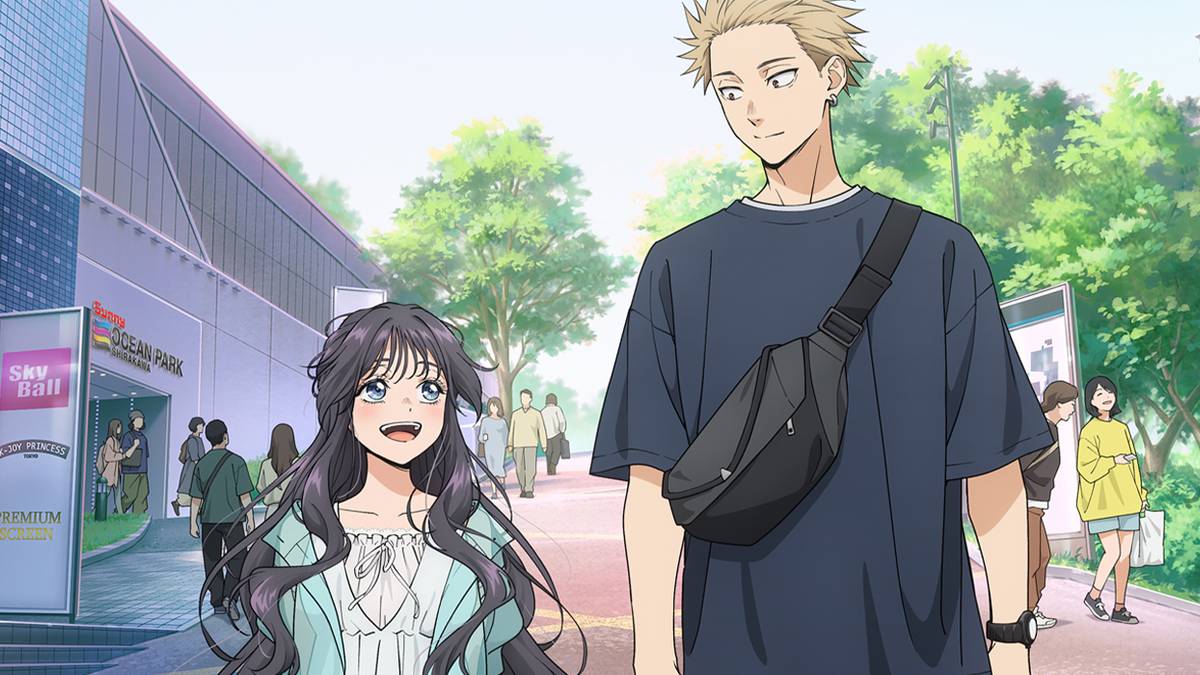
The premise is nothing new, a boy named Rintaro Tsumugi and a girl, Kaoruko Waguri, have a chance encounter in the former's family-run cake shop, starting the story. What's kind of interesting is the fact that these two go to two schools that apparently don't like each other, despite being placed side to side. The main characters, except these two, are Rintaro's three best friends, and one of Waguri, along with the boy's mother who runs the shop. Limited to only these characters, the story unravels at a very calm nature, a slow-burn if you will, but it always gives us something interesting for the next episode. It is a Slice of LIfe, Comedy, Romance show which any average anime watcher must have seen a hundred times - but this one has a very satisfying ending which lacks in most shows of these genres. Rest assured, dear viewer, you will get what you wait for, and it is very beautiful. The ending manages to pull off a twist which I didn't see coming at all, but yes, it was a welcome one!
The story revolves mostly around the two characters getting to know each other better (romance), while they continue their daily school activities (slice of life), tackling the two school's rivalries to get close to each other. The other main characters do get a lot of screen time and character development which was very nice to see. I liked the storyline of Waguri's best friend, Hoshina Subaru, as she has some baggage she has been carrying for many years, and her interaction with the other characters slowly make for a pleasant experience, which left a smile on my face (this is not the only time this has happened!). I agree, this show does nothing new with its storyline, but that does not mean that a simple story couldn't pull off a great ride. I enjoyed it thoroughly and although my usual fatigue kicked in after a few episodes, I managed to complete it, which is a statement in itself for me! The three besties of Rintaro also make for an engaging watch, as you are hooked on with the character dynamics. Also, Rintaro's mom is so sweet!
This show made me relive my own high school days, the last of which I was able to find someone that I loved. Although that didn't end well, this show made me go through those subtle anxieties and sheer joys of a person falling in love for the first time. Oh this show is so damn wholesome - I cannot recommend it enough! Another great point of this series is its beautiful animation, all thanks to the incredible studio CloverWorks. If you are into these genres, and looking for a happy ride of only 13 episodes, I definitely recommend this to you. You see, I had to some out of my own hiatus of writing reviews on AniList to praise this show and let you all know that this is a great series! Thanks for reading ...
Reviewed on April 17, 2026 by Sekhar.

There were like... two good characters. Old dude and hot lady with a mole. That's all I can think of. Koichi isn't BAD, but he sure isn't good either; he's kind of just there. Pink hair lady is kind of just annoying throughout, and Captain whatever was even worse
To expand on Koichi, bro barely does anything and he's one of the main characters! His best moment I guess is the runaway bus scene, and even then that scene was just alright. He feels like a very low effort ripoff of Deku, very similar personality and he's even obsessed with All Might. His "suit" is even All Might themed like Deku's! Like, really? Can't be anymore subtle with this guy? He's so boring and does nothing in his own show. Completely wasted character, he could be taken out of the show and it wouldn't change much
The animation is good at least. By My Hero standards it's about average, but still good
This story felt so insignificant and boring, there were like maybe three decent episodes, and then the last three episodes (especially episode 11) were so bad I could barely get through them. Episode 11 is the worst episode in My Hero history, and the finale didn't even have much going on and barely felt like a finale
There are no super exciting scenes in the entirety of the show. At most, scenes had me like "Ah, that was neat"
And sexualizing pink hair girl, a like fifteen year old or something, is just disgusting. You know, not surprising considering this is an anime, but still
Even the dialogue was lackluster, and that's the easy part to make! There were so many times I physically cringed at this show
This doesn't feel like My Hero in the slightest, even when the main show characters make a cameo. It just feels like average bad anime with superheroes also being there
Then the twist of annoying villain lady being the daughter of old dude? Felt out of no where, wasn't some emotional thing and just felt boring and lazy. Her defeat wasn't anything to write home about either
The only actual good thing about this show is the intro, and even then it's not super great or anything
At this point, this show has me hoping and praying that none of these characters make a cameo in the main show. Keep them far away. I don't want them sullying my goat My Hero. If they do crossover, I hope they all die tragic deaths lmaoooooooooo
This was wildly, WILDLY disappointing. My Hero (besides the first half of season 7) is good throughout, amazing even, in some moments it's top tier cinema peak. I was so looking forward to Vigilantes, I thought it was a really cool concept, and then I got... this.
If I ever rewatch My Hero, I will NOT be rewatching whatever this was lmao
Vigilantes? More like BADilantes, amiright? Haha, amiright?!

Not gonna lie, when this was first announced, I already had low expectations considering this was Sorachi's first one shot in Jump. It goes without saying that usually the first work of any writer wouldn't be the greatest but after watching all 7 episodes, I came out of this pretty satisfied. Obviously not a perfect show, but it has all the charm and comedy that Sorachi is known for, and it's really easy to tell how this was the framework for what would eventually be 'Gintama'.
 Tetsuo and Kurogane (left to right) share the same kind of relationship like Gintoki and Kagura (sorta like a father/daughter duo) except Kurogane has superiority over Tetsuo. But she doesn't really enforce her authority as his captain almost at all, which I did appreciate. If anything, she takes a backseat at her position, which I found funny as hell. Gave off the impression she doesn't care about her job at all, but she does have a soft spot for giving these spirits one more chance to do what they desire before ascending. Same thing with Tetsuo, but to a different degree. They offer most of the comedic relief, as they're known as the failing subdivision in their department, the Dandelion group. They can never meet their quotas for catching spirits as it will take them an entire day to deal with one spirit that has a lingering regret (similar to Gin's odd Jobs in Gintama). I found the backstory for how these two became so close really wholesome, yet at the same time, did feel a little generic with the setup, but still really good regardless.


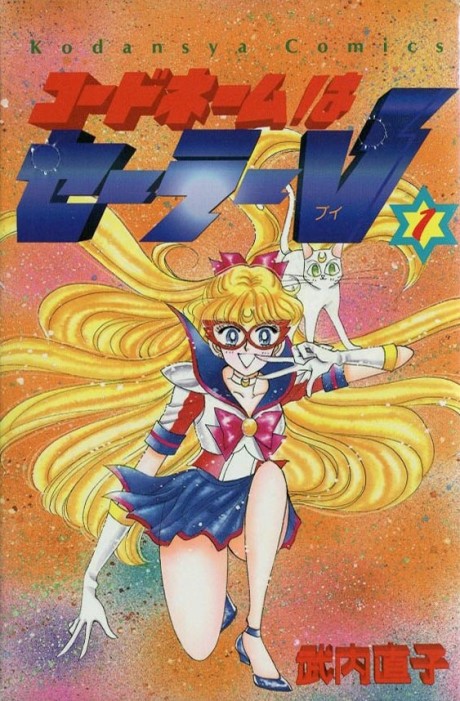
Before there was Sailor Moon, there was Sailor V. In 1991, mangaka Naoko Takeuchi, at the time popular for her figure-skating manga The Cherry Project, was offered the chance to do a one-shot story about anything she wanted. Being a fan of both magical girl and tokusatsu shows, she created Codename: Sailor V, intended to be a humorous one-off in which a girl has powers due to her connection to Venus, both the planet and the goddess, and fights a bunch of bad guys. Toei took notice of it and contacted Takeuchi in hopes of expanding it into an anime, though one with more characters and in the style of a Super Sentai show. Eventually that series became Sailor Moon. Codename: Sailor V is basically proto-Sailor Moon, only focusing on one girl, Minako Aino, and is a more comedic villain-of-the-week style story. Honestly, I don't see much point in explaining the plot, as it's literally what I just described. Minako has a problem, Artemis gets mad at her for her antics, a villain of the week appears causing trouble, Minako turns into Sailor V and saves the day, rinse and repeat.
It's easy to see the character tropes, designs, and plots that would get reused for Sailor Moon later on. Yes, by designs, I mean character designs. Hikaru is just Naru if she had Ami's hairstyle, Amano is literally just Umino but rich, and Phantom Ace is ground zero for Tuxedo Mask. Though why does that police chief lady who looks like Rei have the exact same name as Usagi's teacher? Minako herself is literally just Usagi but more athletic, which is funny because people think Minako a rip-off of Usagi when it's actually the other way around. Granted, that becomes muddied by the fact that the final two chapters tie more into Sailor Moon and inform Minako's backstory before she joins the other Sailor Guardians in the series proper. Not that Minako's backstory does much to make her a more rounded character because Codename: Sailor V isn't interested in deep characterization, or exploring any other characters for that matter. Yeah, I'm just gonna rip this band-aid off, none of the characters here are particularly interesting or memorable. They're just a bunch of one-note archetypes, especially the villains, who are just there to be one-off villains of the week and that's it. Many of them are just templates that Takeuchi would use for characters in Sailor Moon, and because of this, they don't change or develop at all, resulting in them all being as bland as white rice. Oh, and some of the villains are VERY unflattering racial stereotypes. Need I say more?
This could also be the result of Codename: Sailor V's overall format. Originally intended as a one-shot, it got expanded into three volumes...and I think it probably should have either stayed a one-shot, or cut down on chapters, because a lot of them are just reusing the same formula I mentioned above. The narrative just consists of Minako getting into episodic fights with the villain of the week and solving a problem with the power of Deus Ex Machinas she pulls out of her ass and that's it. Other than the last two chapters, every single chapter follows this exact plot. There isn't much of an overarching story, and what little story it has is woefully predictable, even by the standards of the nineties, so as a result, the manga drags on for longer than is necessary. Even the plot progression can come off as super clunky at some points, often with very little in the way of transition, making it seem like two things happen back to back with no proper lead-up to them. You could skip a bunch of chapters and lose absolutely nothing in the process. Granted, Takeuchi learned from this and made Sailor Moon's story much more substantial and engaging, though whether she succeeded is a point of debate to this day.
As for the artwork, it's...okay. Takeuchi makes no secret of the fact that she loves her long-legged women, though there's a significant amount of anatomical issues. Minako is said to be 13, but when she's in Sailor V form, she's often drawn in a way that makes her look much older than her stated age. Overusage of screentones makes it hard to actually see what's happening at various points, and the paneling and backgrounds can get very cluttered most of the time. Furthermore, all its attempts at humor range from falling flat on their face to relying on outdated jokes that would absolutely not fly today, one of which the English translation smartly got rid of. You know the one. That said, while I admittedly didn't enjoy Codename: Sailor V, it can't be denied that its existence paved the way for Sailor Moon, so fans of the series owe Sailor V that much. It's not the best story in the world, but we wouldn't have Sailor Moon if Codename: Sailor V didn't set down the pavement for it. I still wouldn't recommend reading it though, especially if you want a more serious story and don't want to deal with unfunny episodic villain-of-the-week plots.
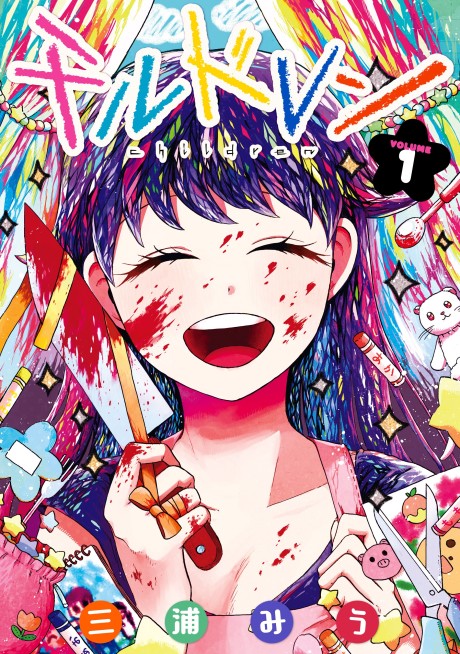
A short work that has its share of positive aspects, even if it doesn’t fully explore its potential. From the very beginning, the presence of gore is clear and consistent, serving as one of the main draws of the story. It establishes a tone that leans heavily into visceral impact, which can be appealing for readers looking for something more intense and immediate. The artwork and depiction of these elements help maintain a certain level of engagement, especially in a story that doesn’t rely heavily on complex narrative structures.
The characters are another highlight, at least on a surface level. They each have distinctive traits and personalities that make them stand out individually, even within a relatively short runtime. There’s a certain charm in how quickly the story manages to present them and give a glimpse of who they are. However, while they are interesting at first glance, the narrative doesn’t spend enough time developing them in a deeper or more meaningful way. As a result, their potential feels somewhat underutilized, leaving the reader with the impression that there could have been much more to explore if the story had allowed itself to breathe.
One of the main issues with the work lies in its lack of depth when it comes to the overall plot. The story introduces ideas and situations that could have been expanded into something more substantial, but it ultimately chooses not to delve too deeply into them. This creates a sense that the narrative is somewhat aimless, or at least not fully committed to exploring its own themes. There isn’t a strong sense of purpose driving the events forward, which can make the experience feel a bit hollow despite its more striking elements.
That being said, this simplicity can also be seen as part of its appeal, depending on what the reader is looking for. Not every work needs to be complex, and Children seems to embrace a more straightforward approach. It offers a quick and easy reading experience that doesn’t demand much mental effort or emotional investment. In that sense, it works well as a form of casual entertainment—something you can pick up, read in a short amount of time, and move on from without feeling the need to reflect too deeply on its meaning.
In summary, while the work may fall short in terms of narrative depth and thematic exploration, it still succeeds as a fast-paced, visually engaging read. It’s the kind of story that serves best as a way to pass the time, delivering immediate, surface-level enjoyment without requiring much thought. A typical “turn-your-brain-off” type of entertainment, but one that still has enough style and intrigue to make it worth a brief look.
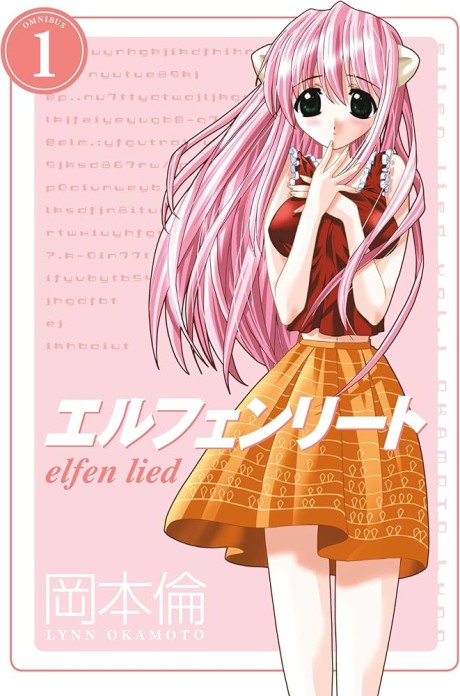
Reading this work in 2026 felt deeply nostalgic, and I can’t deny that this emotional lens heavily influenced my overall rating. Revisiting Elfen Lied after so many years brought back a mix of memories from when I first encountered it, along with a renewed perspective shaped by time and changing tastes. That sense of familiarity made certain moments hit harder than they probably would have otherwise, especially the more emotional and violent scenes that define the series’ identity.
Putting nostalgia aside as much as possible, there are still several elements that stood out to me in a positive way. The gore remains striking and, in a way, almost stylized, contributing to the shock value that Elfen Lied is known for. The horror aspects are well-executed, particularly because of the epidemic-like theme that underpins the narrative. This concept adds an extra layer of tension and unease, making the story feel more expansive than just a typical character-driven drama. I also found some of the main characters genuinely engaging, with enough emotional depth to keep me invested in their arcs, even when the plot veers into more extreme or exaggerated territory.
However, not everything aged as well in my eyes. One of the main drawbacks was the presence of several secondary characters who felt either underdeveloped or outright annoying. What stood out even more was that I barely remembered some of them from my previous experiences with the series, which says a lot about how little impact they ultimately had. Their inclusion sometimes disrupted the pacing or diluted the emotional weight of the central storyline, making certain scenes feel less compelling than they could have been.
Another aspect that didn’t resonate with me was the strong presence of ecchi and harem elements. These tropes have never really appealed to me, and revisiting them now only reinforced that feeling. It becomes even more uncomfortable when considering that most of the characters involved are portrayed as underage, which makes these elements feel more awkward than entertaining. They often clash with the darker, more serious tone of the narrative, creating a kind of tonal inconsistency that can be difficult to ignore.
That said—and this is where my own contradiction comes into play—I have to admit that some of the almost-lesbian scenes were, in a strange way, enjoyable. There’s a certain irony in criticizing the fanservice while still finding parts of it entertaining, and I’m fully aware of that hypocrisy. It’s one of those cases where personal taste doesn’t always align neatly with critical judgment, and I can acknowledge that without trying to justify it too much.
In the end, revisiting Elfen Lied was a mixed experience shaped by both nostalgia and a more critical perspective. While it still succeeds in delivering memorable horror elements, emotional moments, and a unique atmosphere, it also shows clear flaws in its character handling and use of fanservice. Even so, the experience of returning to it after so long was worthwhile, if only for the opportunity to see how my perception has evolved over time.

Log:
15-jan-26,1,1
rewatch as it's 3 months
15-apr-26, (recap 1),2-7,6 till 12:20am
16-apr-26, (recap 5-7), 8-12,5 till 8:48pm
FAV
OP "Megane wo Hazushite (メガネを外して)" by noa
ED "Pure feat. Eriko Hashimoto (ピュア feat. 橋本絵莉子)" by PAS TASTA
Watching this show feels like being on cloud nine—it's warm, full of sunshine, and mochiro Iyashikei desu. While many romances rely on unnecessary dram, this story focuses on the innocent, heart-warming wholesome good 'ol high school life relationships. It's so sweet that it feels almost diabetic yet it remains grounded in a way that makes you wish you were right there with the characters.
The show establishes its pace immediately. The first episode ends with a proposal, but rather than rushing the story, it uses that moment as a foundation focusing on the day-to-day nuances of a developing relationship
it may has the best character progression i have ever seen in a long time in a romance show under just 12 episodes (Cour-1)
The production stands out not through hyper-realistic detail, but through masterful screen direction.
Every character in this show feels like a "main character." They are all "green flags," which creates a unique sense of realism in their interactions, even if the world itself feels like a happy fantasy. Instead of the typical drama you would get in a show, here you are to see more about the characters around the main leads. On a personal, I found myself relating to each of them and like "Wakaruu!!"
Seeing a relationship this healthy actually triggered a bit of an existential crisis—making me wonder, "Will this ever happen in my life?".
this show sprouts seeds about the ideal kinda relationship you want
I recommend to watch the show if you ever liked what i talked about till now (without going into the spoilers as going in blind is always the best)
The Beauty of Seihantai is that the side characters are so well-developed they could lead their own shows. or Actually I'm considering This is a Story of All the characters not just the main lead, Honesty i relate with them each one at least about one thing.
While it moves through the main lead and their subtle nuanced changes, as they started to date, it also shows the other character and their Seihantai pair, it shows different stages of relationship from sparking which hooked me and never let my attention away
it manages to show three different stages of romance simultaneously (as of Cour-1):
The main pair growing together.
The shy, mutually interested pair.
A pair stuck in their own personalities, whose development is slow and subtle. but those who watch would know who i'm talking about
Maybe it creates a Troupe of Seihantai itself like the 3 pair shown are all Seihantai (Polar Opposites) but it's actually done so damn well that even tho it's not realistic it's butterflies, i found myself cheering with all my heart for the 2nd pair. Their dynamic--being
Seihantai na Kimi to Boku is a masterpiece of its genre because it knows when to speak and when to be silent. It captures the "subtle nuances" of high school romance without falling into tired tropes. It dervies it's own trope from Gap-moe probably
I’ll be binging the full story again when Cour 2 is released around October, but for now, it remains one of the few shows that truly makes me smile from ear to ear.
This reminded me of Makeine
unplugged reactions from where this review was created: https://anilist.co/activity/1059465498