— — — —— — —
×
— —— —

To me it doesn't freaking matter why you had that short temper. It was one of the first interactions I had with you, and you presented yourself in a pretty bad light. That's not how one convinces people.
In the quote from Dunkan, in what world do you think that qualifies as an "answer"?
It is an "answer" in the way that It was just the reply to the post from which I quoted you. You didn't rebut his claim, thus my conclusion. If it makes you happy, switch the word answer with reply.
Okay, after this I'll confidently say that you're conflating correlation with causation. You are completely ignoring related factors like the target/fostered audience of this site, and it's size, as to compared to say MAL. Making definitive statements without presenting data to back them on.
Also, how can you be so confident in saying
But with the current system nobody is writing reviews, so nobody reads, and the arbitrary limit stagnates the review economy.
How do you know that the 2200 character limit is the sole reason why there are such a low number of reviews in general? Yes, there are almost 0 reviews with a character count below 2200, but how do you know for certain that this directly leads to a lower number of reviews with a character count above 2200?
Anyhow, the prominently featured and much easier to use anime/manga-in-progress widget and the global micro-blogging feed on the home page of anilist creates an entirely different culture than other sites centered around film and tv-shows where social interaction primarily happens through reviews, their comment sections and if available, forums. While Anilist's culture is primarily centered around inside jokes and memes, people shouting what's ontop of their mind into the void, fluff events and nomination games. The people interacting with reviews and the forum are likely a tiny subset of overall users by virtue of the related widgets not taking center stage on the /home and /anime /manga sites.
Another site that's roughly similar on a surface level inspection to anilist, kitsu.io even shut down their review system completely, in favor of short micro-blogging reactions only, because the community culture produced too few and overall low quality of reviews.
Or look at these very forums we're conversing in. Just because Anilist has forums with little to no barrier to entry doesn't mean that much in-depth and high quality discussion is going on related to works. There aren't even episode discussion threads for a lion's share of shows barring the absolute most popular ones.
That's why people rather go to IMDB to have a decent chance at finding mediocre to good reviews instead of browsing reviews on trakt.tv. If say twitter would launch a review feature for film, tv and music, do you think that 480 character culture would translate into meaningful and good reviews?
There are crucially important data-points that we're lacking to make definitive statements like
This site's limited reviews, and their low quality, are evidence of this sites failed review policy, and the failed logic of those who defend said policy.
Among others. Without data to inform the discussion, it's just rash to propose simplistic answers to a problem that potentially requires restructuring of anilist as a whole to mold it's audience towards a better review culture. You might be right in saying it's an economic problem. But without data to go on, the reason could just as well be that the intersection between the meme and trend focused audience that anilist garnered, and people that write good reviews just isn't big enough to support a bigger review scene than the site already has.
Also: you might want to look up what cognitive dissonance means. I doubt that your hard hitting points brought up similar discomfort to what say a christian might feel when confronted with the all-powerful cruel god problem. And how would that even work "collectively"? How would I experience discomfort when another user messes up their line of reasoning?
Quote them, you liar.
Woah there, slow down okay? Well, at least now I experience myself how short tempered you are to have arrived at the conclusion you'd have been bullied by the currently most liked top level response in the thread. For someone who feels bullied by language completely devoid of insults, you're pretty fast to dish them out yourself.
Back on topic..
You wrote:
[...] The bad/short reviews just don't get as many upvotes as the well-written longer ones. [...]
To which @Dunkan85 answered:
[...]bottom of the barrel, types of review that you even admit are bad with zero positive impact [...]
You then didn't respond to that point specifically, from which I assumed you are well aware that the majority of low word count reviews are low effort ones. The 80/20 rule applies, but a word count limit seriously cuts down on the amount of 80's.
Nobody is ignoring your point. It's just that you seem to ignore all the counter arguments posed. Like just now:
I have explained half a dozen times now that a lower barrier to entry will drive competition and raise the quality of the top reviews.
Which I already called into question with:
In contrast to your reasoning for a lower word count resulting in better reviews, comparing to other sites —which might conflate correlation with causation— curbing low word count reviews directly leads to less low effort content.
You seriously conflate corellation with causation if you think no word count limitations alone is what makes other websites have better review culture. It's not a simplistic problem.
Other people made the case for why low word count reviews generally result in low effort bottom of the barrel content, and you admitted as much.
In contrast to your reasoning for a lower word count resulting in better reviews, comparing to other sites —which might conflate correlation with causation— curbing low word count reviews directly leads to less low effort content.
I spoke in another reply to you about how fostering a good review culture isn't a simplistic problem, and it definitely has no simplistic and counterproductive answers like the ones you offer.
Great illustration of the guidelines right here.
I think the zeroes on the word/character count limits look scarier than they are. Reading 500 words is 2-3 minutes of time.
Assuming that the work in question has at least one review, I don't see how the number of reviews written influences the number of review readers.
More content does not necessarily result in more engagement. Look at unsuccessful writers, indie filmmakers that never get off the ground, streamers at 1-2 viewers, the millions of hours of uploaded video content on youtube that never hit a retina besides the ones of their creators.
However, I can agree on this part:
more people read reviews -> more people vote on reviews -> more people are inclined to write better reviews based on what is voted
So the key to better reviews is to encourage more review reading. And analyzing why the audience for that is lacking requires better data and analytics than some forum shitposters like us have available to us.
Fostering a review culture isn't a simplistic problem, and as such doesn't have simplistic answers.
But when a word-limit is introduced there is less competition for reviews, leading to an overall lower quality as well as lower supply.
I think you should have put that reasoning into the OP.
While I personally don't agree and don't see how low effort, low word count reviews would spur writers to make better, dense, and well reasoned ones; I think putting your reasoning up front could have saved you some agony from replying to people that are utterly baffled at the conclusion low word count -> more better reviews.
Awesome stuff! While I likely won't use it, I'm amazed at the concept. And, a bit jealous that Jellyfin folks don't have something similar :^)
I once posted some questions to try to answer in a review, as a comment in a thread that was directed at the author of that infamous Akira review a while back.
Another conclusion I came to since, was that there is only one objective quality to writing, and that is internal consistency, verisimilitude or really what ever you want to call it.
Our reality largely operates under the principles of cause and effect, and stories that follow this principle should be more satisfying than ones that don't. And any script that is great at elliciting emotion in the audience while breaking this verisimilitude, would still be better if it was consistent while hitting the same story beats.
Basically avoiding plot holes and non-sequitur progression of events. I further elaborated on this line of thinking in this thread here.
It certainly got easier to understand since E03.
If you had trouble understanding stuff, take a look at my posts about the show. Since the first episodes were very confusing, I got into the habit of taking notes on every character, organization, and plot-device to help myself piece stuff together.
But yeah, E04-05 are super straight forward for now.
I feel you! Populating the database the first time is such a huge hassle.
1.) Well, the Kodi + trakt.tv user experience is just bliss, I tell you.
I don't know the situation here. Is the api is already capable of such, or would the open-source roadmap goal enable this? Has there just not been a community developer wanting to do it yet? Either way, I'd love to see a plugin integrating anilist functionality into Kodi.
2.) Sometimes, I rewatch single episodes of a show. With stuff like star-trek, comedy, or episodic shows, I also started to watch them in shuffle mode. As such I watched some episodes more than twice or thrice, and others only one time.
I didn't test yet how browser extensions like scrobbly handle rewatches, but in the case user input is required for them, this would also greatly streamline UX for users of those extensions, or a potential Kodi plugin.

You could also get in the habit of using a password manager, to alleviate that email forgetting problem on a global level.
Fluff:
I didn't make a case for show don't tell, but the reverse, tell don't show. Omitting exhaustive explanations to lore bits, instead relying on either telling as a status quo e.g. magic existing in Harry Potter from the get go, we don't get an explanation to it's exact rules. The same with relying on in-universe characters unequivocally believing in the truth of an element e.g. the Kessel Run in SW.
Man, you didn't see either? I always use these as examples to visualize such writing quips since they're normally so ubiquitous.
Gridman Fixer Beam Situation:
We'll never know what would have happened otherwise, but from what the text says, it was only through the successful application of power of friendship that Akane and her emotions, the power source for Alexis Keribs battle form, were able to be healed, and Alexis defeated.
I don't think that the crucial part to beating Alexis was the fixer beam, but him losing the power source to maintain that form. He is not beaten by the fixer beam, but by a thorough punching after Akane is saved and the fixer beam subsided.
Akane being turned into a Kaiju:
This may be tied to my suspension of disbelief being broken
Yes I think so. With the whole show telling us that negative emotions are what Alexis feeds upon, taking the source of those emotions and making a Kaiju out of it isn't even a little stretch.
One-cour topic:
I am of the impression that it did address the quote. Key point being that lore != creative writing (exhaustively explaining every dangling thread or detail of the world building) Otherwise I just went into why I feel lamenting the format of a creative work amounts to bad faith criticism. Furthermore, I did address the plot threads you felt needed time to breathe and went into, scattered through the post, in the same way, scattered throughout my post. I mean, you addressed some of them in your response, even.
Defending my defense:
I'm saying that I believe this ties into her character arc, which doesn't itself directly tie into the theme.
Main thematic debate of the show: escapism vs self-acceptance with the help of power of friendship. Yes?
Akanes villainous arc -murder, meddling with memories, trapping the alliance in a dream etc- directly plays into the escapism theme. Correcting inconveniences in Tsutsujidai with violent force is in accordance to escapism.
If you're still disagreeing on this, can you please make a case for that?
Exactly. I know this is the case. This is why I said the following to begin with:
That complete paragraph was in response to you feeling it necessary for the show to explore Akanes IRL ailments and her relationship to Alexis. These weren't necessary for the narrative to have dramatical stakes and a good payoff. What we can infer about both (depression, desperate loneliness, Alexis using those emotions as a source of power and to nurture his own desires) is plenty enough. I won't repeat all of the same arguments, and will refer to the last post.
At the end of the day, what is there to take away from Gridman?
This is why I asked for a comparison to a similar work, or even ones of other genres tackling similar themes in my first post. I can't parse the meaning of you saying it doesn't say anything of substance, without gauging your standards on this matter.
Because, well, I'm coming at this from a completely different perspective. The topic of using escapism in the face of depression, social anxiety and other mental problems ailing especially the anime viewing demographic, but also in general the lower and middle classes in a post industrial world is hugely relevant.
No, SSSS.Gridman doesn't necessarily say something entirely original, but what work does? LotR is a copy of Beowulf, which is a copy of Hrolfs Saga, which plagiarized Bear Son Tale, which is inspired by the Odyssey. Using truly original thought as a standard to measure art is a futile exercise, as having one is exceptionally rare. What is praiseworthy is the way Trigger synthesizes something new by bringing the spectacle they're known for together with highly relevant themes that inspire thought and can be quite cathartic to a big part of the anime viewing demographic.
You're not alone. Whenever. Forever. Let the power of friendship help kickstart your journey of healing, is the romanticised version of what Gridman is saying. The realities of going to weekly therapy is the real mundane thing, which doesn't lend itself to the kind of story the show tried to tell.
Hodgepodge of ideas:
Yes, I feel otherwise.
Please elaborate how they don't fit together. Because I just don't compute.
The whole setting plays out in an escapist fantasy of Akane. All the adversaries in the way between Gridman and healing Akane are either reflections of negative emotions of hers, directly mirroring the entire narrative of the show (the dream inducing Kaiju) or the Villain behind it all that empowered Akane to escape there in the first place.
Also, elaborate how the relationship could have been explored more. What did you want more from it?
He's a mustache twirling villain, feeding off of negative emotions. Akane sought him out, and thus begins the story. The show could have addressed this in a montage or text crawl, but is as easily inferred from what we've seen. What else was there to tell? The relationship didn't look like much more than this, no mentor to pupil or parental figure to lonely daughter thing going on.
Nonchalant resolutions:
I went on to explain them because most of the stuff you mentioned were just climaxes to long running threads. You lamented about lack of time to breathe, while In my eyes with most of the stuff you mentioned, the whole show was a breathing exercise, to see how long they could hold it during E12. Okay that metaphor might have been a stretch. With the exception of the hospital fallout, the events you describe were either foreshadowed, or heavily featured and built up to through the whole run of the show. Akane stabs Yuuta in E10 I mean, I can't imagine how you come to this conclusion. I urge you to read that part of my last post back.
Inconsistent visuals:
Can you point out specific recommendations? I'd like to widen my horizon and media literacy.
To be honest, I said this mostly because I think either making or defending claims on the topic of visuals is a rather tiring exercise. If we were to go by the saying "a claim made without evidence, can be dismissed without evidence" we'd be sitting here for a week compiling comparison clips and screenshots. And again, without those comparisons I just can't gauge the merit of your claims. In contrast to your claims I'd say:
Because from my experience with mixed 3D/2D animation, SSSS.Gridman did an excellent job. In some scenes I'm even hard pressed to distinguish between both. Some even remind of the excellent nearly invisible Kill la Kill CG
And we're essentially just throwing words past each other, since we don't have a common platform of media literacy to argue from. I'll let this topic rest.
Flat characters:
Rikka:
Sorry, what is the point here? Downplaying her role as a reflection of IRL Akane is kind of outrageous in my eyes. I need you to elaborate on that.
I forgot to mention it, but her being the key actor to socialise Anti, also lifts both her nuance and importance. Metaphorically starting to rebuild the bridge to Akane by way of putting Anti, a part of herself, on the path of redemption. While opening the opportunity for the internal conflict represented as an action setpiece at the beginning of E12.
Utsumi:
1) You were the one that initially brought up how unexplored power of friendship was, but I think Utsumi makes for a good display of it. His achievement is that element of friendship.
Having proactive protagonists is sometimes seen as a good thing in storytelling. Between Rikka, who was distraught between between mourning over her friends, and all survivors being unable to remember them, and the wavering Yuuta who was kind of lost in the wake of his Amnesia, Utsumi fills that proactive role in the Gridman Alliance.
He is the one hearing the call to action the loudest, even though he is just a human bystander. He is the one initially lifting Yuuta over the hump and giving him mental support to cope with the Amnesia and re-forging the friendship they had before it. As the text presents the narrative, without him the whole Gridman Alliance thing would have never happened.
The contradiction between his Kaiju obsession, and him realizing the mayhem and loss of life resulting from the fights, is not his "arc" but only an element to give his character nuance, and one aspect to bring him to the low point of his real arc. His arc is about friendship. Rebuilding his relationship to Yuuta and propping him up during times where the life and death depend on him is what starts it. He and his capacity for genuine friendship gets tested during the dream episode, where he, along with the others, makes it clear to Akane that her disingenuous means to achieve that friendship are despicable. Two things bring him to the low point: seeing himself powerless in the face of the stabbing and the wake of it, together with his Kaiju contradiction. Lifting him back up to resolve his arc is when Rikka and Yuuta help him with his crisis of conscience and he gets to take part in the big power of friendship display sandwiched between the two shots of the fixer beam.
2) As far as I'm concerned, not only did he end that line of thought of his own volition, in his dialogue to anti that thread reached it's natural conclusion.
Utilitarianism wins over altruism and his internal contradictions. What else did you wish for the show to explore here?
Question of morality:
Please, you're doing this so often, saying something wasn't explored, but how? What did you miss from the show? I'm not playing dumb here, I really have no Idea how to parse this.
From just the actions unfolding in the narrative, it is clear as day that pragmatism and utilitarianism are of greater value to Gridman than anything else in the context of fighting Kaiju. The Kaiju were content to continue to ravage the city, whether or not Gridman fought them.
On all three:
I am aware of all of this, but the characters being largely defined by another character while a thematic necessity doesn't make for fun or interesting characters.
Why? The character sheet of even the most intriguing D&D PC, with all the stats, abilities and the backstory on it doesn't inherently make for an interesting character. Without the player role playing the PC, the PC is just a collection of stats on a sheet.
What makes a character interesting is how he deals with the conflicts they are faced with during the narrative. Else they're either just background characters, cannon fodder, or exposition dispensers. SSSS.Gridman just so happens to put it's characters into situations where they are faced with external, rather than internal conflict.
Strip any character of any creative work of the conflicts they are faced with and the characterization that results from that, and then they all are uninteresting. This is why I think this argument is a bit disingenuous.
They each jump over their shadows and decide to reach out and help the de-facto dictator, which is employing all methods in the book to control the inhabitants of the world to her liking. Memory altering and mind programming, lotus-eater machines and murder. Healing Tsutsujidais despicable dictator is testing each of their respective senses for justice. Each at their own pace, but everyone gets significantly further on this path with the lotus-eater machine dream episode. Gridman/Yuuta discovers it as his sole purpose after a while. Rikka senses the deep kinship to her, in spite of her distress and mourning in the beginning of the series. Utsumi takes the longest, needing to be reminded of power of friendship until the last episode.
I admit, they are not the most interesting characters. But in the face of a one-cour show, with heavy monster-of-the-week/tokusatsu focus (and you even lamented the action scenes to be too short), the creators squeezed some interesting things out of them. And that is to be commended. In the end, I think your initial claim of them being flat past a two line development is disingenuous.
You may have noticed a large part of this comment is me saying you either misinterpreted what I was saying or add something as if I doubted it's validity when I never did.
I'm kind of left in the dark here. Can you point to specifics? Aside from when I omitted something, since I thought It didn't need addressing or I agreed, I tried addressing your stuff in serial manner. Your sentiment about me adding stuff could stem from my obsession with over-explaining the reasoning behind my conclusions. It comes from the headache I get from people under-explaining their reasoning and leaving me guessing as to what they tried to say.
On the topic about the Alexis-Akane relationship and dealing with Akanes IRL ailments, in relationship to my statement about exhaustive retelling of lore vs creative writing and script doctoring, which I think you're referring to here, I think you plain misunderstood what I said. But I addressed it above, so that's that.
One request though: If we continue discussion on that topic, can we condense it into one connected paragraph, instead of spreading this thin throughout the post? I feel that because of this neither of us quite got their points across/interpreted the others points quite right. I made a mistake, and failed to direct that whole paragraph about HP, SW, tell don't show, and drama through exposition, rising tension, resolution vs exhaustive lore, back to the Alexis-Akane relationship and her IRL ailments topic.
I wish I could understood where you're coming from, but I can't quite clearly. I get the feeling you have an exceptionally high standard for the art you consume to the point that it requires both genius to create and to read it. I'll reiterate: that's why I asked for comparisons to other works. I see a well focused thematic synergy combined with the trademarked trigger spectacle and am in awe, while all I'm getting from you are some small and bigger nitpicks. There weren't any crucial flaws or holes in the plot, and most of your criticism about the last episode were about testing your suspension of disbelief.
Now I'm having a hard time to come up with some creative send-off, but know that whether or not we come to an agreement isn't really of importance to me. Borrowing from battle shounen themes, testing my opinion against adversity is a growth exercise for me. I'm learning here.
Had good fun here. Be well and take care.
The characters are pretty flat past a two-line development:
As a primer I want to say, that this general topic about characterization or lack thereof in discussion of creative works, especially defending can quickly result in a heap of work for the defendant. Tallying up every occasion of organic characterization through either bouncing off of other characters and situations, or circumstantional exposition on a scene by scene basis is a truck load of work.
Yuuta: This is admittedly weak, but excused by him being the vessel of Gridman's choosing. The context I presented in my last post of him being a huge symbol and clue of the Rikka = IRL Akane argument, him falling for Rikka in spite of how idealised Akane is and how she is flaunting her sexuality to him, makes him interesting enough for me.
Rikka: She has a cool interaction with Yuuta in the first episode, pointing to a possible confession, or otherwise romantic innuendos between them two before Yuuta woke up.

This is just one other aspect that falls back into the Rikka = IRL Akane argument I lined out in the rest of the post, and most prominently in my last one. So yes, she is mainly involved with the Akane framework plot, as you put it, but one of the integral parts of it. She is the main proponent of redeeming Akane in the debate the Gridman Alliance has about the topic. She begins this journey slowly even in the beginning of the series, getting more resolute about it when buying the pass-holder during E06, and fully determined by the time they all learn that Akane is the tortured god of Tsutsujidai. Then when the big shit happens during E12, she, being the biggest champion for the cause of redeeming Akane, convinces Utsumi to join them. I'll touch on that again later.
Utsumi: In contrast to his own statements, he was not entirely useless to the narrative. Especially during the beginnings of the series, he filled the void that was left by our amnesiac protagonist of being the proactive actor in the Gridman Alliance. He was the driving force to get the three together in the first place, even with his motive to fight being too keen.
I don't think his resolution to his arc is left hanging, though.
You somehow spun a good case for his arc in a criticism by way of omitting this earlier importance of his character as a driving force of the Gridman Alliance. Yes, during the hospital fallout his contradictions between nutting over Kaiju fans as an otaku and realizing the mayhem and loss of life as a result surface. He is only cut off because practicailty of doing so and quickly getting GridKnight to fight the Kaiju that are wreaking said mayhem right this moment is a higher priority. And he does so himself. Utsumi is the one realising the right order of priorities in that situation.
Also, quickly on "the question of the morality of a hero who realistically has to kill people and destroy large parts of the city because he is so gigantic":
Considering the concept of the work and what is pretty much going on during the whole runtime of it, pragmatism and utilitarianism are likely of more importance to Gridman, rather than pure altruism. It's not a debate that the show sought to ask the viewer to have, I think. If you want a show that poses a debate about monopoly or distribution of force/violence in a great way, I recommend Planet With.
I'll just broadly summarize what happens in the first half of the show, and gives them ample "time (left) to be people.", before getting into some core things about specific characters.
On all three and why they all are important to healing Akane:
-The importance of the dream sequences during E09-
They all three arrive at the same conclusion, that Akanes means of mending her desperate loneliness by way of abusing her powers are despicable, but still remarking that if it happened differently, there would have been a decent chance of all of them individually hitting it off with Akane. All in service of furthering the escapism vs self-acceptance by way of power of friendship theme. After realizing that they're trapped in a dream, Yuuta comes around because he remembers his feelings for Rikka/IRL Akane, Utsumi does so in spite of them sharing their nerdy interests, and in retrospect with the added context Rikka essentially foreshadows the Rikka = IRL Akane concept and further arguing against escapism:
After they all escape that dream, Akane falls deeper into depression
And the Gridman Alliance goes to fight the dream inducing Kaiju while motivating themselves as they run to the Junk Shop:
Once again defeating a Kaiju borne of Akanes heart, chipping away at the goal of setting her on the path of self acceptance. Barring the variation of them 3 being trapped in the dream, this episode is essentially encapsulating the entire main thematic throughline of the series.
-The importance and need for all 3 of them, the Gridman Fixer Beam situation-
I explained most of this earlier when first talking about the Gridman Fixer Beam situation, but I'll reiterate for convenience sake.
Gridman using the Fixer Beam is only opening the door for the Gridman Alliance to reach out to Akane. With the added bonus of the power of friendship they are finally able to set Akane on the path of self-acceptance, after Anti failed to do so alone, symbolising Akanes internal conflicts. Akane can finaly begin the journey she must walk herself to heal her contradictions and mental/social problems IRL.
There is still room to argue, that maybe Utsumi was not essential for this to play out like it did, but they show did it's earnest to win at least me over in believing he was important to the effort.
The green Kaiju girl:
She is actually named Anosillus the 2nd. I don't know where this came from, it was certainly not mentioned in the show, that much is clear. But her appearance and importance to the narrative was foreshadowed. Especially her appearance in the OP is of notice here.
Image in spoiler
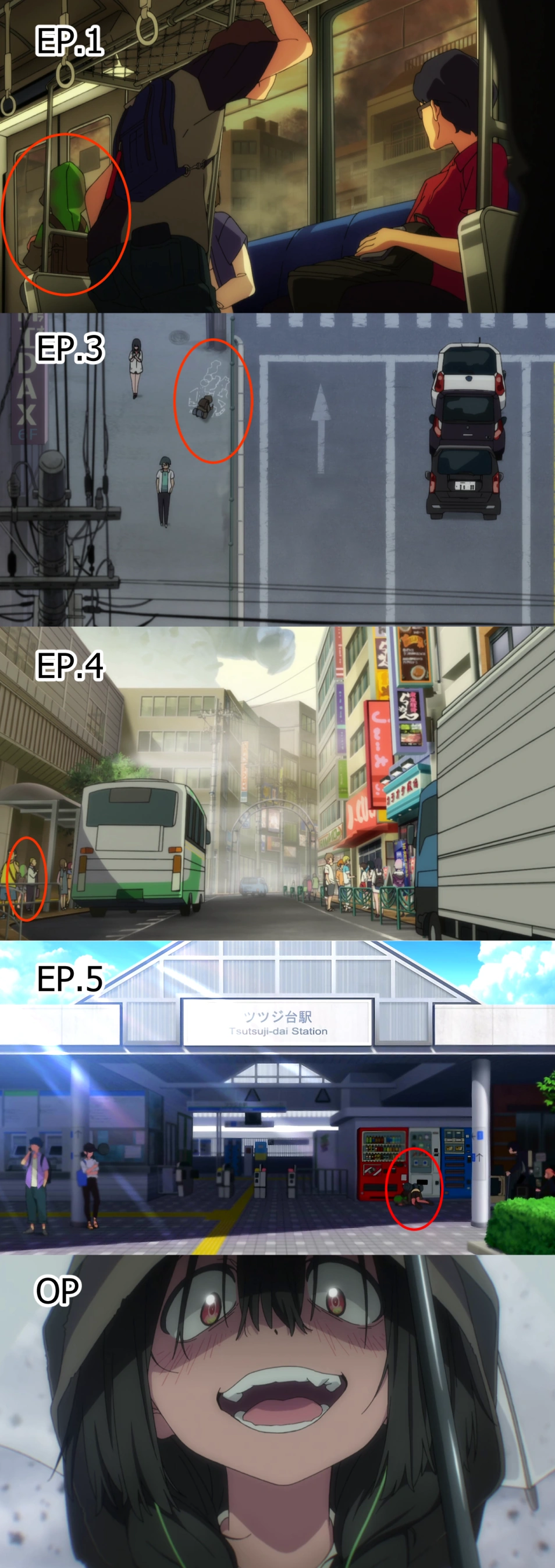
As an aside, not intended to play into the argument, as I understand your grief about absolutely relying on knowledge about previous works: Her appearance is in large parts a big easter egg for fans of the franchise. Especially so since the original Anosillus appears during the little scene between her and Anti at the end of E12
Images in spoiler
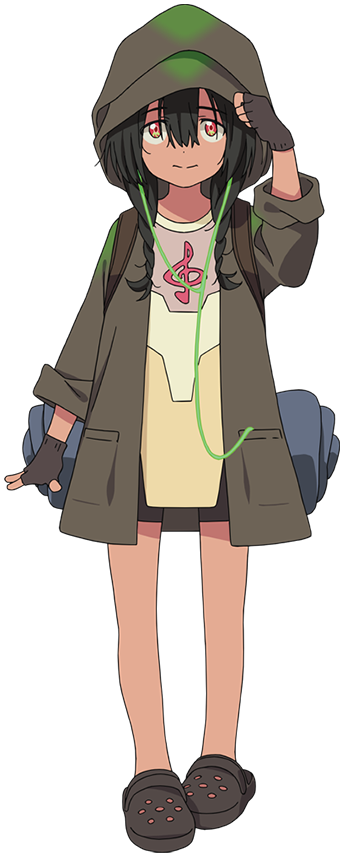
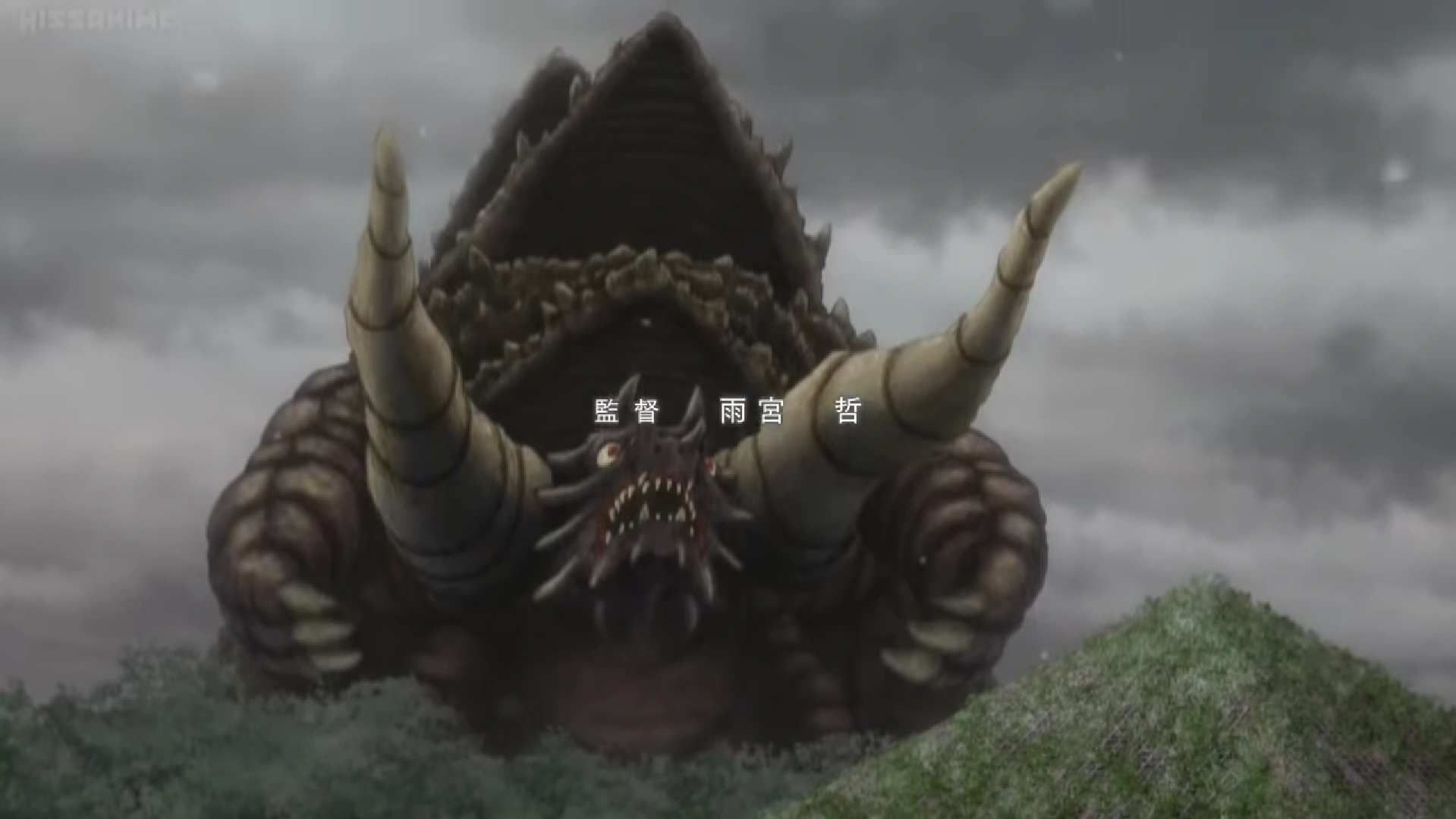
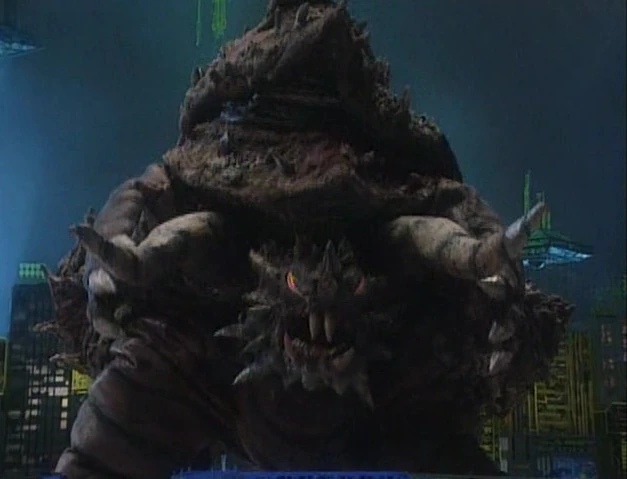 Anosillus was a monster that appeared in a previous installment. It's a callback to OG Gridman E06 where Unison, a "sound spirit", begs Gridman to spare Anosillus. Now Anosillus II claiming Gridman helped her out in the past, and the design of her, with the earbuds and the clef symbol (sorry I'm not a musician) on her shirt, make much more sense.
I don't claim to have figured this shit out by myself, as I already pointed out I'm not a tokusatsu fan myself, instead this twitter thread was a great resource on understanding all the OG Gridman references. I totally recommend perusing this guy's ramblings.
Again, to reiterate: Thank you for the conversation so far! Hopefully you had a good time reading my ramblings. Now that you're through reading this shit, I can tell you that It took me at least 5 hours compiling this.
So, If you're up to continue the conversation and in order to save me some time, I'll state beforehand: When you're rebutting on points of mine where I feel I don't have much more to say, I'll just not answer those specifically. If I feel you argued well enough against something I said, I'll also readily admit that to you, just to save us both the headache of running in circles and the limbo of "did he back down on that or is he still confident in that point?".
So, thanks for reading and have a good day. Take care.
As this bullshit post is already over 4000 words long, I'll need to get some stuff out of the way:
I also just realised that there is a 20000 character limit, so this will be divided into two posts.
Moelancholy: I also thought you seemed like a nice person to argue with that isn't immediately judgemental, but alas, here we are...
I'm honestly very disappointed right now. This was in no way necessary.Odjn: it's better to not make generalizations
Gotek: (Referring to Odjn) You're right. Which is why I only reluctantly come to that conclusion, but am still ready to voice opinion that I organized and thought through, in hopes of finding like-minded people. [read: those capable of formulating complete arguments]
Or just generally be surprised with a pleasant discussion.
I'm ready to eat my words, and walk back on that derogatory statement, you proved yourself an exception and me wrong. I'm sorry.
And I'm thankful for the conversation so far. Have a good time reading my stream of consciousness that follows, which I'm not ready to admit how much time I spent writing. And a good day in general!
The Gridman fixer beam situation:
SSSS.Gridman morphing into OG Gridman is not entirely lacking foreshadowing. Forgive my inability to exactly pinpoint when it happens, but sometime during the first episode, Gridman and the New Century Junior High students (Neon Genesis was not a Eva reference, but a mistranslation) descent into Tsutsujidai, as symbolized by a flashing star in the sky, dividing into five little stars and falling down. They are parts of Gridmans consciousness that were divided from him after he lost a previous battle against Alexis Kerib. This is, as far as I know, told in the audio dramas that were released alongside the show. But even without this added knowledge, the symbolism of the dividing star imagery, together with a bit of suspension of disbelief, would be enough to set up the New Century students and Gridman fusing back together once Gridman/Yuuta reconsile their situation with enough verisimilitude.
I can't do anything about you feeling that was anti-climactic, but I'll still rebut your statement of this being a one and done deal.
The OG Gridman vs Alexis Kerib conflict was not an instantaneous Saitama style situation. The Gridman Fixer Beam scene has this heartfelt moment for all 4 main characters sandwiched in between the first and last shot of the fixer beam. Gridman unleashing the fixer beam is the key to literally open the door for Utsumi (to clear this up, he is called Utsumi Sho, not Utsushi), Yuuta and Rikka to call out to Akane, much in line with the tagline of the show "You are not alone, whenever, forever" but still, in the end, much like real depression, they can only help Akane help herself. It is still an internal conflict between Akanes own contradictions, much like Akane vs Anti was, but this time with the help of the power of friendship! Neatly synergising the escapism vs self-acceptance theme with the friendship theme (which I admittedly failed to elaborate on)
Alexis Kerib transforming Akane into a Kaiju:
Wait, how exactly is this coming out of left field? The whole schtick of Alexis during the whole show was that he is able to exploit the negative feelings of a person to give these Kaiju life. They are all borne of Akanes heart, best example being Anti, a "failed" creation given a separate conscious existence which itself is able to grow and learn from humanity. With the Kaiju being borne of Akane, how is having herself be transformed into one then such a big jump? Especially contrasting against Yuuta/Anti who themselves are able to transform into Gridman/Kaiju/Gridknight, either with their own power, or the help of a catalyst with Junk. Alexis Kerib is Akanes catalyst for transformation in this case.
[...]No, I do not have a quick comparison ready. Because I don't believe that Gridman being a one-cour show and with good parts focusing on action set-pieces is an excuse for anything I mentioned in my comment. [...] There were some plot threads that definitely needed time to breathe [...]
I come at this situation with a general distaste for the practice of script doctoring many people practice in discussion around creative works, and a respect for the creators' decision to choose the length/format/medium they arrived at. More often than not, especially in the anime space with all the differing interests in a production committe those choices are not in the discretion of the anime studio in question.
I'm also a staunch believer in the idea that not every little detail in the world building needs explicit explanation. I see a clear difference between creative writing -exposition, rising tension, resolution; or in one word, drama- and plain old boring lore.
Allow me to elaborate on this notion with a example of Star Wars:
Luke and Ben arrive at the Mos Eisley Cantina and speak with Han about hiring him to escape from the planet. Han, being the boasting scum of the earth smuggler he is, exclaims: "The Millennium Falcon is the fastest ship in the Galaxy! It makes the Kessel Run in under 12 parsecs!" Luke and Ben, despite being resolute in choosing whoever would take them from this desolate rock, are still amazed and ready to put up whatever sum Han asks for.
This is a best case scenario for "Tell, don't show" storytelling. Exactly explaining to the viewer what a parsec or the Kessel run is, is unnecessary. The characters in universe demonstrably know what is talked about, and are amazed by the remark. That throwaway line only serves to raise the stakes in that particular conversation. In comparison, the real explanation for the Kessel Run (Han Solo movie/Legends explanation) pale to what could be happening in the head-canon of the viewer at that moment. In this case the Kessel Run, a piece of lore, is just in service of raising the tension in the conversation. The lore itself is rather boring in comparison.
Or another example, this time with Harry Potter: We don't need the novels to exactly explain how magic works in accordance or in spite of the Standard Model of Physics, since the world simply presents magic as a normal part of the status quo of Harry Potters world on the outset.
The point being: If a work presents some peculiar situation as the status quo from the start of its run, while still managing to uphold that delicate suspension of disbelief the reader/viewer deliberately exercises to follow the work, then leaving little details unexplained can either be inconsequential or at least less so, or even spark the imagination of the reader/viewer further.
But, admittedly, this depends on the varying taste and degree of which the reader/viewer is ready to suspend their disbelief.
Defending my case:
I think there are two details you might have missed
Not only did I fail to mention that, but also the actual text of the OP/ED lyrics reinforcing the escapism/self-acceptance/healing themes (which is admittedly not a huge observation to make). And the fact that the backgrounds of the ED are actual live-action photographs, reinforcing the argument that's presented by the live-action ending scene. And that in the ED, the first few shots show Rikka (presumably IRL Akane), walking around the school and with her friends, until Akane shows up and they're entirely alone, wearing identical outfits, which is not the case for the other students. They spend time together and grow close to easchother, until Akane needs to leave again, leaving Rikka alone in winter, essentially making the ED a retelling of the show as a whole. The winter imagery (as indicated by her cold breath and scarf), is calling back to the ending of E12 where it starts to snow, which is in itself symbolic with it's "snow means love" interpretation common to anime works, making the Yuuta/Rikka Anti/Anosillus II (green girl) ships real.
You say Akane's nonchalant brutality ties into the theme, but I disagree.
Since when can't character arcs tie into the theme of a work? Does Dragonball Z have no themes, since personal growth through overcoming adversaries isn't allowed to be a theme?
One thing to make this a bit clearer: I subscribe to the argument, that Tsutsujidai must have had a template in the real world on which it is based on. I'm not overly familiar with other tokusatsu works myself, from what I can gleam from twitter threads and the ultraman wiki, this computer world might be a constant throughout the series, with Akane just modifying that one. I'm not sure so pay more weight to the reasons we can find in SSSS.Gridmans own text as follows. Tsutsujidai having inspiration in a real world template must be the case because/else:
The points you make about the characters in the show being part of her fantasy and how you explain the main theme of the show is all nice and all, [...]
I already addressed Akane being magically healed, to which I'll point to the Gridman Fixer Beam situation above.
Addressing Akane living in her own dream world in the first place:
Depending on what one demands of the show, the merits of this criticism are debatable. If one explicitly want's and expects the work to touch on the reasons for the premise, then yes, it failed to do so.
As I already pointed out in earlier, I have a distaste for script doctoring and respect for creators decision of focus. From this perspective, I think the entire setup of the concept of the show makes it abundantly clear that is not necessarily what the creators want to talk about. It's about the Hyper Agent Gridman (essentially a police officer of the Hyper World), travelling into computer worlds to save and heal people like Akane. That was the scope of the story, not necessarily more. The lines between the main cast in the Gridman Fixer Beam scene essentially summarise this. Akane must leave the world out of her own free will. She is not alone in the world, but friends can only help her start the journey of healing, she must walk most of the way out of her own volition.
Exactly knowing what Akanes ailments were is not necessarily required for the drama that unfolds to have stakes. Depending on how you'd go about it, continuing Akane's story of dealing with her mental health or social situation would also delve into a completely different genre, out of the original concept of the show, and slow the pacing down to a crawl. From the story that is told however, we can gleam that she is at the very least depressed, desperately lonely and likely a social pariah. I don't know how likely it is for a japanese student to experience social hostility for being a otaku, especially a female one, and living in their own refuse, so this is a bit of speculation, but still very close to whats told in the text of the work.
Having the last episode have been a double length one would have opened more space to resolve the healing of Akane, or give an outlook of her journey forward, but also destroy the nice concise book-ending that the short live-action scene gave us (mirroring the opening title card scene with IRL Akane posing exactly like Gridman)
Your case on Gridman:
I think the main theme of Akane's hikkikomori prison didn't tie well into the rest of the show:
Please elaborate more, as I seem to lack perspective on this. With the few allusions to Akane's personal deficiencies (being most popular/beautiful despite living in own refuse) and especially after E06 I was wholly convinced that the show was all about this. The whole setting of Tsutsujidai is symbolising the hikkikomori prison of her own making. Basically my entire earlier post, as well as this one is in opposition to this statement. I'm a little flustered at this, so please excuse me for not addressing this in particular, and letting the rest of the post speak to this instead.
The resolutions were all presented kind of nonchalantly:
Yes, the pacing of the last few episodes was indeed very fast, but In my opinion not necessarily to the degree that it was to the detriment of the show.
Stabbing of Yuuta:
Even before knowing about the situation that Rikka is IRL Akane, speaking in abstract terms, the stabbing of Yuuta is the climax of Akanes villainous arc. After she realises the conclusion of the means vs end debate during the dreams in E07, and that Anti, borne of her own heart is capable of empathy and growth- even learning good manners from Rikka (wow, thinking about this with the context of Rikka = IRL Akane gives new perspective again)- this is the result of her crisis of conscience and contradictions of her tortured mind. Killing Gridman; partly influenced by Alexis Kerib; partly out of spite for him still not falling for her in spite of how idealised she is in Tsutsujidai, and instead Rikka the representation of her IRL self.
Akane being transformed into a Kaiju:
I already addressed this during the Gridman Fixer Beam situation above.
Hospital Fallout:
What about it? In part addressed later during "The characters are pretty flat past a two-line development:"
Every part of the crew now getting access to access flash:
Addressed earlier, during the Gridman Fixer Beam situation above. In essence, yes, but it was foreshadowed.
Gridman's purpose to be the helaing of Akane:
I mean, if you only now caught onto that fact, then this would seem like it "had no room to breathe" But a healing Akane arc was setup since the reveal that Anosillus II gave Yuuta during E06. Together with Rikka feeling a close connection to Akane -again Rikka = IRL Akane giving new context to Rikkas inner dialogue at the bus stop scene wondering to herself why she and Akane stopped walking to the bus stop in the mornings- to the point that she is willing to remedy what ever stands between them with the gesture of gifting the pass holder, which she bought in E06. In fact I did a status post here on anilist after E06 speculating about Akane having a redemption or self-sacrifice with that pass holder being a catalyst to kickstart that. This didn't turn out that way, but the general notion of Akane making a turn for the better was pretty clear from the midpoint of the show.
The visuals are inconsistent:
I'm not confident in speaking about visuals in anime, as I think this topic is entirely too dependant on a tug of war between personal preference, taste, ability to parse quality or lack thereof. As such finding even just a common platform to argue from is very problematic in my eyes. I'm ready to just take your word on this stuff and grant you these points if you insist.
But, let me make one tatement in isolation and as a tangent: I generally think that the anime viewing audience is a bit too harsh on CG, and shoots itself in the foot when disregarding shows from the outset for use of it. The path forward is arguably directed in a space where more CG will be used. People should ready themselves for it and instead of deriding the whole concept, instead push studios to pursue techniques like Arc System Works (Dragon Ball Fighter Z) outlined during their GDC presentation, or find entirely new directions to take 3D CGI into, like the creators of Land of the Lustrous did. I'm also currently watching JoJo Part 3, and fuck me do the OP's of Part 1-3 look splendid. Having them be native 1080p instead of the generally upscaled hand drawn animation (as according to anibin.blogspot.com still happens for over ~90% of shows) helps.
that some people might not like it
Being tolerant of and respecting another persons' opinions
Can this power be learned?
it's better to not make generalizations
You're right. Which is why I only reluctantly come to that conclusion, but am still ready to voice opinion that I organized and thought through, in hopes of finding like-minded people. Or just generally be surprised with a pleasant discussion.
I'll think about touching it up. Thanks for the recommendation.
When I put some thought into a show, I pride myself on the opinion I have and the ability to back it up with referring to the text of the work in question. Criticism or Praise, it doesn't matter.
But if I didn't put that effort into understanding a work, then I shut the fuck up about it, especially if my opinion isn't high. I find it highly arrogant to be so quick to assume a position without thought, in the face of the thousands of manhours that the creators put into a work.
I'd like to think others operate under the same kind of mode, but alas, here we are.
It is clear that the people you are talking too didn't punt an ounce of thought in what they were seeing and this reflects in their hollow criticism.
I joined the anime fandom only a few months ago, and this conclusion is one I'm slowly but surely, and mostly reluctantly, arriving at. That isn't different from any other popular media though.
Or really, make this a dislike for criticizing in broad strokes, without backing up any claims, in general.
This is what get's me the most. People are so confident in their opinions, but fail to specify them to make it at least reasonably easy to rebut them, always leaving the opportunity to steer in another direction away from the received rebuttal, open.
I get it, this is not as good as Welcome to the NHK in portraying the mind and life of a hikkikomori. But do you have a quick comparison to another single cour show, with good parts of it focusing on action setpieces, that deals with similar themes?
Otherwise I can't gauge the merit of what you're saying without really knowing your standards for such things.
And, before you get scared by the wall of text: Yes, Original Gridman using that fixer beam is relying on previous knowledge, which is not a huge expectation to have, since the creators clearly stated that this would not be a reboot. Gridman used that fixer beam in most every episode to repair the damages of the fights, since the scenery Kaiju in SSSS are kind of a new thing afaik. So, most of the "asspulls" of E12, aren't such, if one accepts that SSSS isn't a fully standalone work.
Also, I dislike the notion of how people tend to talk in broad strokes when adressing lack of exploration of themes, without pointing out in which specific areas the work lacked or which areas the critic would have liked to be explored more.
It's kind of easy to just deride a lack of thematic synergy, without specifying the claims. It makes it unnecessarily hard to argue against it. So I'm kinda shooting into the darkness here.
Or really, make this a dislike for criticizing in broad strokes, without backing up any claims, in general.
What do you think was Gridman all about if not saving Akane out of her hikkikomori prison? It's a rebirth plot, debating between escapism and self acceptance. The action surrounding this thematic throughline is just window dressing.
I personally think the show did a great deal to explore the mind and habits of a hikkikomori, considering it's 12 episode run and expectations of a great deal of action over exposition placed on a tokusatsu and or trigger work.
So my case for Gridman:
First things first, because of the live-action ending scene, with Akane's haircut and the outfit consisting of the white cardigan and school uniform scattered in her room being eerily similar to Rikkas, it is very likely that Rikka in Tsutsujidai (the SSSS city) is a replica of Akane's IRL self, sans tokusatsu obsession. Rikka telling Akane that "she knows all about her" in the ending also plays into this. Akane-sama is an idealised version of IRL Akane. Huge mansion instead of modest apartment, huge breasts and regarded as beautiful in universe, super popular. But keeping all the nerdy otaku traits that likely made her a social pariah in the first place.
At first the show slowly clues us into the fact of Akane having supernatural powers in that realm, with how she's regarded as super popular and beautiful by Utsumi, in spite of her living in her own trash and refuse, likely having personal hygiene problems in accordance. Or how the seating arrangement in their homeroom places Rikka on the other side of the room, as opposed to what is shown in the ED. With Yuuta filling that space.
We as viewers also constantly witness Akane ridding Tsutsujidai of any person inconveniencing her with violent force and complete disregard for the brutality of her actions. At this point we did not yet know that Tsutsujidai is a computer world, but in retrospect this also ties into the theme. Tsutsujidai is her hikkikomori retreat, and she is designing it to numb all the pains of being a social pariah IRL, including murdering for revenge on mild inconveniences.
Then comes the Akane = Kami reveal in E06. This is self-explanatory.
Knowing about the live-action ending and the "Rikka is a copy of IRL Akane" argument, E07 and the dream sequences have added context. Here we see Akane arguing for and stating her wish to stay in a dream forever to the Utsumi, Yuuta and Rikka, further building on the escapism theme. But to the gridman alliance members, who see through the ruse, the means of winning them over to fill the biggest hole in Akane's heart, her desperate loneliness, are despicable to them. Especially knowing that Rikka is IRL Akane, this is furthering the debate of escapism vs self-acceptance by a long shot.
With knowledge of the ending, having Akane and Yuuta be paired as a potential ship in that dream is no mistake of the creators. It tells us that Akane likely always had a crush on him. So, now even through the presence of Gridman, Yuuta's feelings for Rikka, which existed even before then, shine through. With Yuuta rooting for Rikka, there was no better vessel for Gridman to choose than the one guy that loves the person that represents the IRL Akane, to which our Hyper Agent wants her to return to by way of self-acceptance.
Then there's Anti, whose signature move is copying his adversaries. Him being a creature borne of Akanes heart, able to redeem himself, plays neatly into Akane having copied Rikka into existence in Tsutsujidai and foreshadows the redemption of herself in the end.
The symbolism of having Anti, the "failed creation" when looked at from Akane's escapist perspective, but capable for empathy he learned from humans, at first battling against Kaiju Akane, representing an internal conflict of her longing for redemption vs the remorse that catched up to her for murdering the various inhabitants of Tsutsujidai, stabbing Yuuta and the abyssal depression and self-loathing resulting from it.
With all that in mind, the ending of E12 neatly falls into place with all this and is kind of self explanatory. But I'd still like to mention some lines of Rikka further emphasising the "Rikka is IRL Akane" debate.
"I know. I know all the things that you are" Yeah, naturally.
"So wherever you go you're just like me" After giving Akane the pass holder, that is found again in the IRL shot at the very end, together with matching earbuds, the white cardigan etc.
"I want to be together with you. Lets hope that my wish never comes true." I wish for you to never ever feal reason to retreat into old patterns and use Tsutsujidai for escapism again, so return to IRL (metaphorically: fuse with me).